Why Your Interactive Demo Is Just an Interactive PowerPoint (And Why That Matters)

Executive Summary
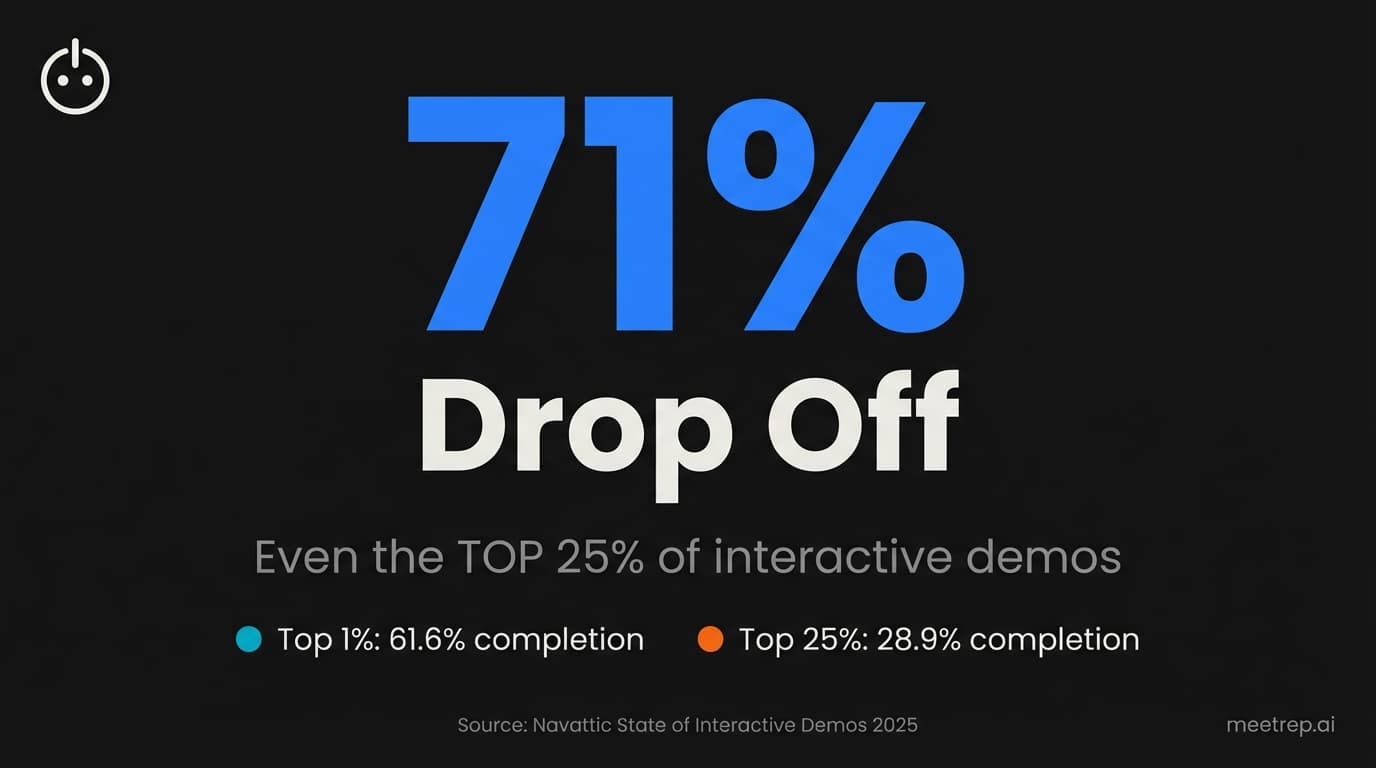
- Even top 1% interactive demos see only 61.6% completion—average demos likely have 70%+ drop-off
- Click-through demos are static screenshot captures that break with every UI update
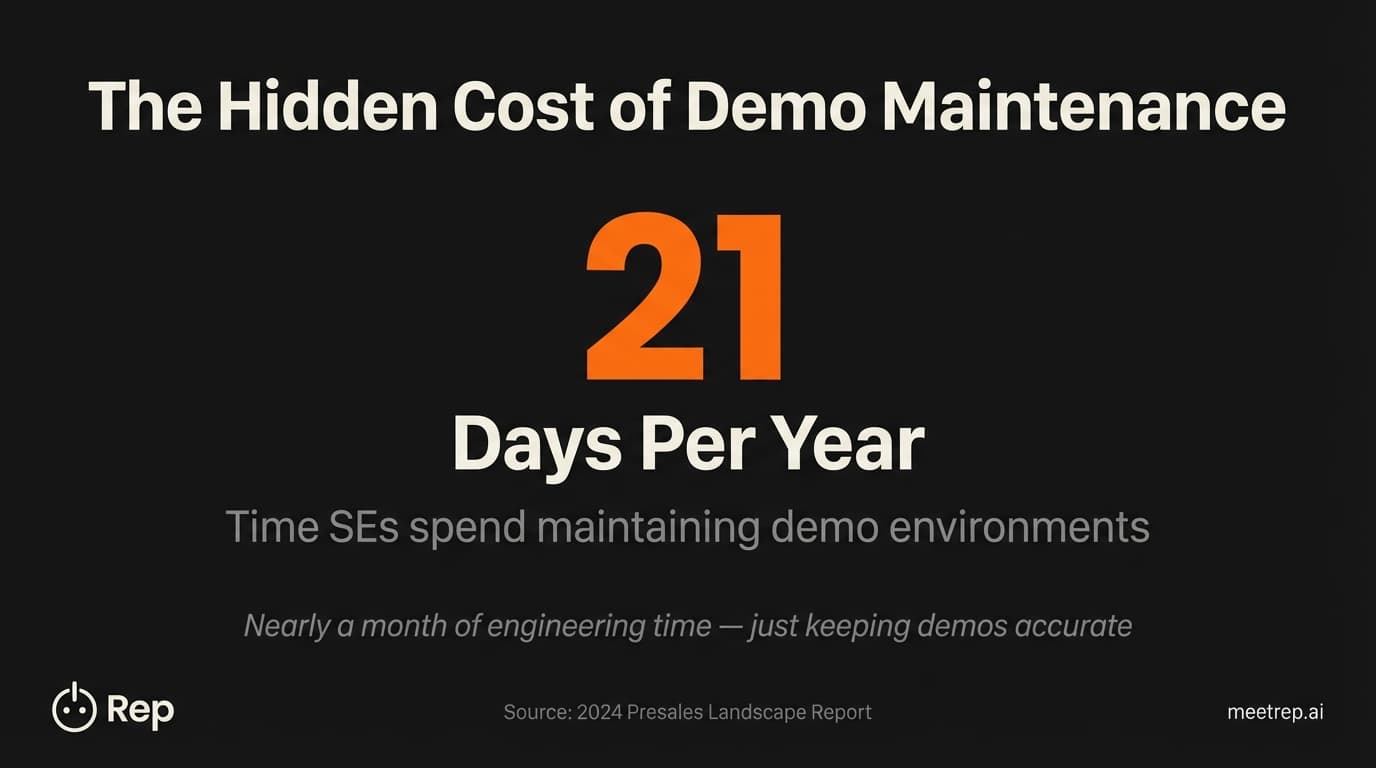
- SEs spend 21 days per year maintaining demo environments
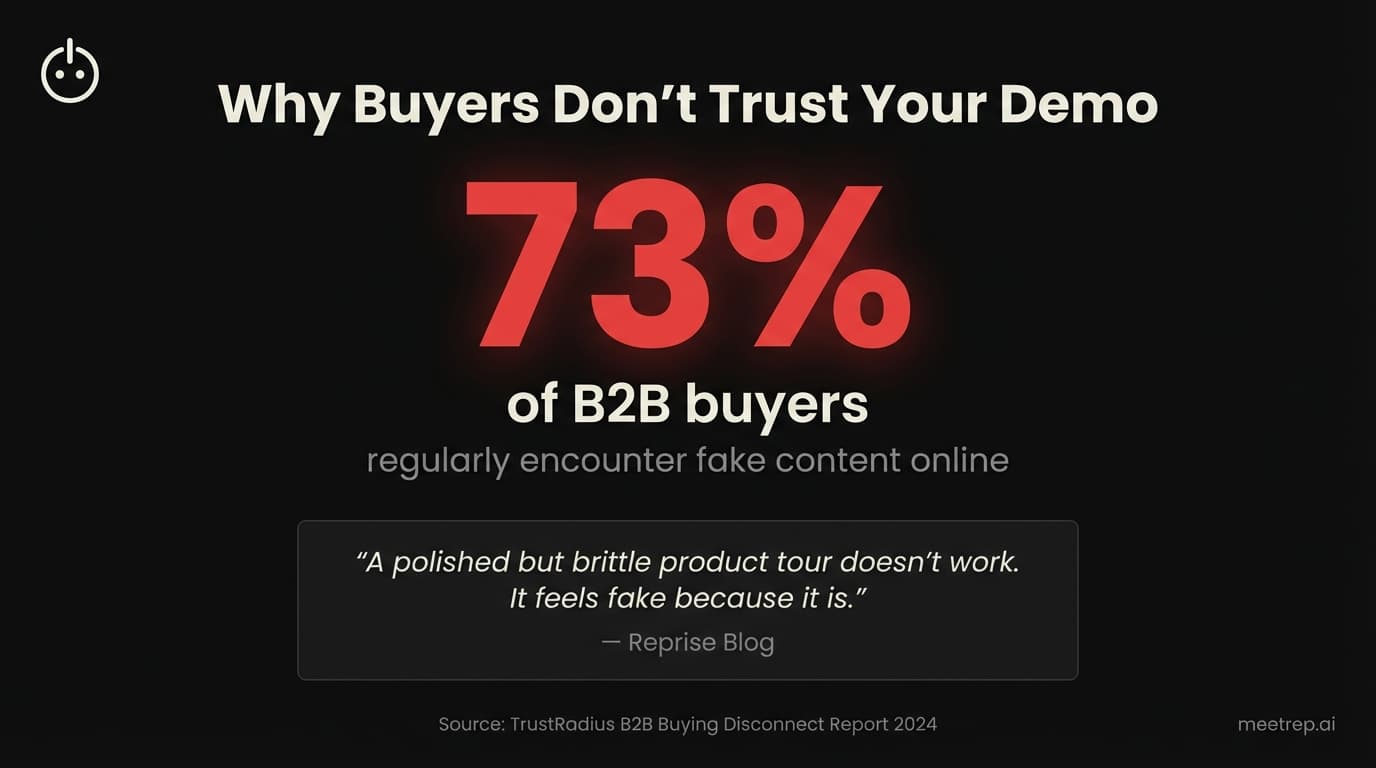
- 73% of buyers regularly encounter fake/misleading content online—and screenshot demos feel fake because they are
- The market is shifting from static click-throughs to autonomous agents that navigate live products
Here's an uncomfortable truth about interactive demos: even the best-performing ones lose 38% of viewers before completion. The average? Probably worse than you think.
I've spent years building sales automation tools—first at GoCustomer.ai, now at Rep. And I've watched the interactive demo space explode with promises of "self-serve buying" and "24/7 product experiences." But there's a growing gap between the marketing pitch and what actually happens when prospects click that demo link.
The interactive demos limitations nobody talks about aren't bugs. They're architecture. These tools are fundamentally screenshot-based slideshows with hotspots. They work great for awareness. They fall apart when stakes rise.
This isn't a hit piece on demo platforms. It's an honest look at where they work, where they fail, and what's coming next. My goal here is to give you the data nobody else is sharing so you can make better decisions.
What Interactive Demos Actually Are (And Aren't)
Interactive demos are self-guided, clickable simulations of software products that let prospects explore features without creating accounts or talking to sales. They use static screenshots or HTML captures stitched together with pre-defined click paths—letting users "experience" your product by clicking hotspots that advance to the next captured screen.
Here's what they're not: live software.
When a prospect clicks a button in an interactive demo, they're not triggering real functionality. They're advancing a slideshow. The button doesn't actually do anything. The form doesn't actually submit. The workflow doesn't actually run.
Think of it like sitting in a car showroom but only hearing a recording of the engine.
That's not necessarily a problem for simple product overviews. But it becomes a problem when prospects start asking questions the slideshow can't answer. Or when they try to explore a path you didn't pre-capture. Or when your UI changes and suddenly none of your demos match reality.
Key Insight: Interactive demos are optimized for the happy path—the scripted, linear flow your marketing team designed. Real buyers don't follow happy paths.
The 71% Drop-Off Problem Nobody Talks About
Let's look at the data. And I mean actually look at it, not the cherry-picked stats in vendor marketing.
Navattic's 2025 State of Interactive Demos analyzed over 28,000 demos. Here's what they found:
| Demo Performance Tier | Completion Rate | What This Means |
|---|---|---|
| Top 1% of demos | 61.6% | Even the best lose 38% of viewers |
| Top 10% of demos | 43.5% | More than half abandon |
| Top 25% of demos | 28.9% | 71% drop off before completion |
Read that again. The top 25% of interactive demos—demos that are already outperforming most—see 71% of viewers leave before finishing.
What about average demos? HockeyStack's analysis of 24 B2B SaaS companies found demo pages have a 70% bounce rate. Seven out of ten visitors leave without engaging at all.
And it gets worse on mobile. Navattic reports desktop demos have 52% higher click-through rates than mobile. In 2026, when most B2B research happens on phones during commutes and between meetings, that's a problem.
The Data: Top 1% demos achieve 61.6% completion. Top 25% demos achieve 28.9% completion. Average demos likely see 70%+ abandonment based on demo page bounce rates. Source: Navattic 2025, HockeyStack 2024
So what's happening? Why do people click a demo link and then leave?
Part of it is attention spans. Part of it is poor demo design. But a big part is something more fundamental: prospects can tell it's fake.
The Trust Problem: Buyers Know It's a Simulation
This is where it gets uncomfortable for demo platform vendors.
According to TrustRadius's 2024 B2B Buying Disconnect Report, 73% of buyers regularly or sometimes encounter fake or misleading content online when researching products.
Buyers are trained skeptics. They've been burned by marketing promises that don't match product reality. And when they click through a demo that feels polished but doesn't behave like real software? Their radar goes off.
Reprise, one of the leading demo platforms, acknowledged this directly on their blog: "A polished but brittle product tour doesn't work. It feels fake because it is."
That's a demo platform vendor admitting the core problem with demo platforms.
I call this the Uncanny Valley of sales. The demo looks almost real. But something's off. Buttons that don't quite behave right. Workflows that skip steps. Data that's obviously fake. Prospects notice. And that moment of "wait, this isn't real" erodes trust in your actual product.
Hot take: The more polished your interactive demo looks, the more jarring the "fakeness" feels when prospects notice it. A simple video might actually perform better because expectations are clearer.
Gartner's 2024 research backs this up: 69% of buyers report inconsistency between website information and what sellers tell them. Demo-to-reality gaps are a real problem. And when your demo is literally screenshots of an old version of your product, that gap widens every time you ship a feature.
The Hidden Cost: Maintenance Hell
Here's the part that doesn't show up in demo platform pricing pages.
Interactive demos are built from captured screenshots or HTML clones. Every time your product changes—new feature, updated UI, moved button—your demos break. They don't just become outdated. They become actively wrong.
The numbers are brutal:
According to the 2024 Presales Landscape Report, Solutions Engineers spend 21 days per year maintaining demo environments. That's nearly a month of engineering time just keeping demos from lying to prospects.
But it gets worse. A G2 review of Reprise from an Account Executive put it bluntly: "Any updates or changes made to the actual product necessitate recreating all existing clones from scratch."
From scratch.
Reddit threads from r/SaaSSales tell the same story. One practitioner described spending "2-3 weeks initially building flows" plus requiring a "monthly review process" because "every UI change breaks something."
What we learned building Rep: This maintenance burden is exactly why we built Rep to work with live products instead of capturing screenshots. When your demo automation works with your actual software, UI changes don't break anything—the agent sees the new interface and adapts.
And here's the kicker on adoption. Sales Enablement Collective's 2025 report found that 79.7% of reps use less than 40% of their enablement platform features. Nearly 80% of the platform you're paying for? Shelfware.
| Hidden Cost | Impact | Source |
|---|---|---|
| SE maintenance time | 21 days per year | 2024 Presales Landscape Report |
| Initial build time | 2-3 weeks | Reddit r/SaaSSales |
| Ongoing fixes | Monthly review required | Reddit r/SaaSSales |
| Feature adoption | 79.7% use <40% of features | Sales Enablement Collective 2025 |
| Platform costs | $9,000-$100,000+ annually | Arcade |
You're not just paying a subscription fee. You're paying for an ongoing maintenance burden that compounds with every product update.
The Five Documented Limitations of Interactive Demos
Demostack's analysis provides the clearest breakdown of interactive demo limitations I've seen. Here's the reality:
1. Inconsistency Across the Buying Cycle
Marketing shows one demo. Sales shows another. Post-call leave-behinds show a third. Every touchpoint has a different experience, and Gartner found 69% of buyers report this inconsistency actively confuses them.
2. Tooling Is Cheap, Upkeep Is Expensive
The subscription looks affordable. Then you realize someone has to rebuild every demo after each release. Then you realize that someone is your already-stretched SE team. Then you realize it's 21 days per year of their time.
3. Can't Win Live Calls
This one hurts. As Demostack themselves admit: "Tours are optimized for marketing, and they rarely hold up when buyers ask tough questions in a live sales call."
A prospect asks about a use case you didn't pre-capture. What then? You can't click to a path that doesn't exist. Your beautiful interactive demo becomes useless, and you're back to screen sharing anyway.
4. Post-Call Blind Spot
You send the demo link after the call. And then? Silence. You don't know if they watched it. You don't know what parts they cared about. You don't know what questions they had. The demo happens in a black box.
5. Doesn't Handle Complex Apps or Flows
Interactive demos force linear paths. Real B2B products have branching workflows, conditional logic, integrations that pull live data. Stitching together screenshots can't show data flowing through a system. It can only show static snapshots of what data looked like when you captured them.
Common mistake: Treating interactive demos as a complete replacement for live demos. They work for awareness and simple overviews. They fail for complex evaluation, objection handling, and high-stakes deals.
When Interactive Demos Work—And When They Don't
I don't want to be unfair. Interactive demos do work in specific contexts. My take is that they're a tool with a narrow sweet spot, not a universal solution.
Where they work:
- Top-of-funnel awareness (simple product overview)
- PLG motions with simple, self-serve products
- Embedding on marketing pages for quick "see how it works" moments
- Short demos under 12-15 steps
Where they fail:
- Complex products requiring live data or integrations
- Enterprise buyers who need answers to specific questions
- Demos longer than 15 steps (completion drops dramatically)
- Mobile users (52% lower engagement)
- Products with frequent UI updates
- High-stakes evaluations where trust matters
Here's the data point that should make you pause: Gartner's research shows buyers are 1.8x more likely to complete high-quality deals when using digital tools WITH a sales rep versus independently.
Self-serve isn't always better. Sometimes it's just... lonely.
The "Rep-Free" Paradox
This is the part that confuses people.
Gartner's 2025 survey of 632 B2B buyers found that 61% prefer a "rep-free" buying experience.
Great, you think. Interactive demos are the answer.
But wait.
Gartner's August 2025 research predicts that 75% of B2B buyers will prefer human interaction over AI by 2030—a reversal of the current trend.
What's going on?
Buyers want autonomy. They don't want to be "sold to." But they also want their questions answered. They want context. They want someone—or something—that can actually help them understand if the product fits their situation.
A click-through demo doesn't provide that. It provides information. It doesn't provide intelligence.
Key Insight: "Rep-free" doesn't mean "help-free." Buyers want self-service that actually serves them—not static slideshows that force them down pre-defined paths. As Alice Walmesley, Director Analyst at Gartner, put it: "Instead of offering generic information that buyers can find elsewhere, sellers should offer unique guidance, acting as a sounding board for buyers."
What's Coming Next: From Click-Throughs to Autonomous Agents
The market is shifting. And it's shifting fast.
Forrester's 2026 predictions frame this as the year of "proof over promises"—AI missteps will demand pragmatic reset as wary buyers seek evidence.
Static demos are promises. Live product interaction is proof.
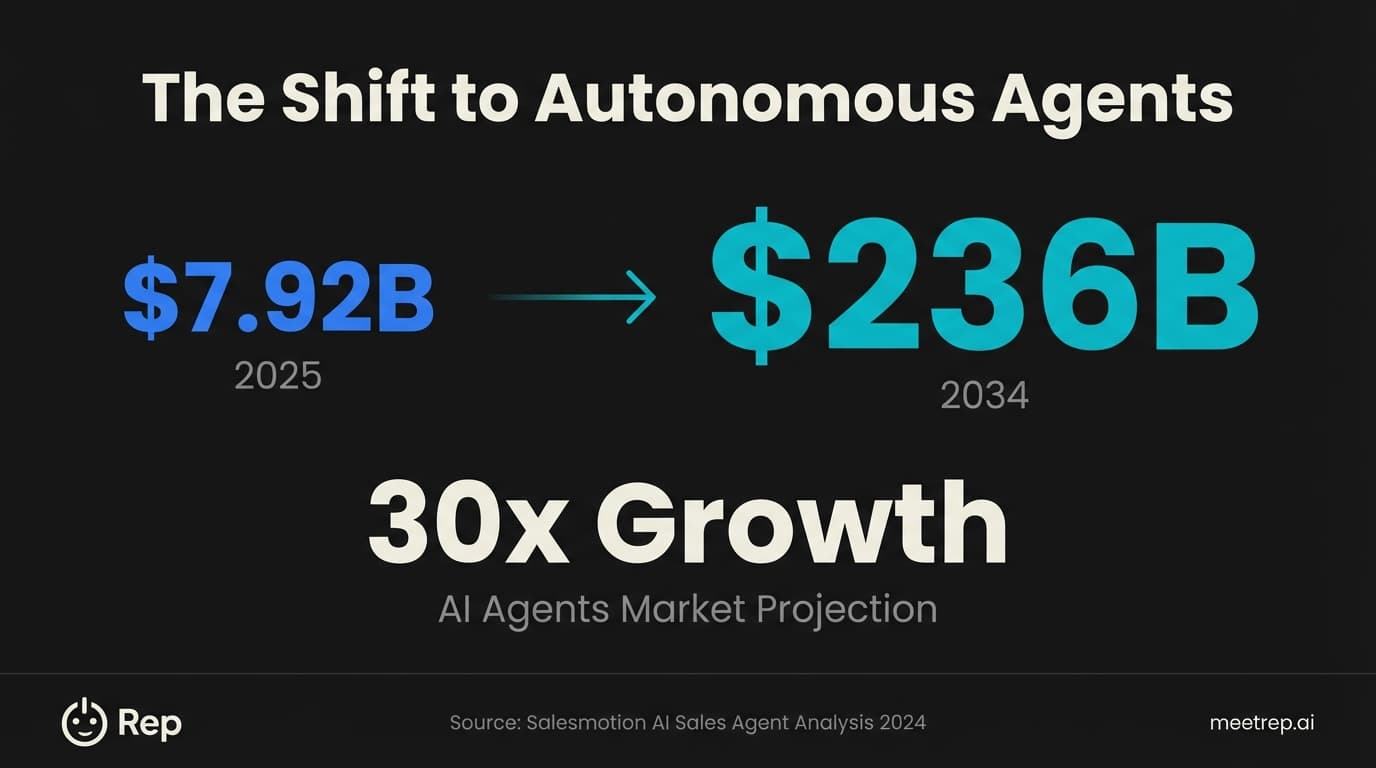
The emerging alternative isn't better screenshot tools. It's autonomous agents that can navigate live products, answer real questions, and adapt to what prospects actually want to see. According to Salesmotion's analysis, the AI agents market is projected to grow from $7.92B in 2025 to $236.03B by 2034—a 30x expansion.
| Capability | Click-Through Demo | Autonomous Agent |
|---|---|---|
| Product shown | Screenshots from weeks/months ago | Live product, real-time |
| Q&A capability | Pre-written tooltips only | Answers from knowledge base |
| Path flexibility | Fixed, linear paths | Goes wherever prospect asks |
| Maintenance | Rebuild after every UI change | Adapts automatically |
| Trust signal | "This is a simulation" | "This is your actual product" |
This is why we built Rep the way we did. Rep joins video calls, shares its screen, and moves through your actual product live. Prospects ask questions; Rep answers from your knowledge base. They want to see a specific feature; Rep goes there. No screenshots. No pre-defined paths. No rebuilding when you ship a new release.
It's not a better interactive demo. It's a different approach entirely.
The interactive demo market isn't dying. But it is maturing. And maturity means acknowledging what these tools actually are: sophisticated slideshows that work for simple awareness use cases.
For everything else—complex products, real questions, high-stakes deals—buyers need more. They need something that can actually show them your product. Not a screenshot of it.
That's the gap we built Rep to fill. Not better screenshots. Live demos, 24/7, with an AI that can actually move through your product and answer questions.
My recommendation? Audit your current demo completion rates. If you're seeing the 70%+ drop-off that the data suggests is typical, it might be time to rethink the approach entirely.
The future of sales demos isn't interactive PowerPoints. It's autonomous intelligence.

Nadeem Azam
Founder
Software engineer & architect with 10+ years experience. Previously founded GoCustomer.ai.
Nadeem Azam is the Founder of Rep (meetrep.ai), building AI agents that give live product demos 24/7 for B2B sales teams. He writes about AI, sales automation, and the future of product demos.
Frequently Asked Questions
Table of Contents
- What Interactive Demos Actually Are (And Aren't)
- The 71% Drop-Off Problem Nobody Talks About
- The Trust Problem: Buyers Know It's a Simulation
- The Hidden Cost: Maintenance Hell
- The Five Documented Limitations of Interactive Demos
- When Interactive Demos Work—And When They Don't
- The "Rep-Free" Paradox
- What's Coming Next: From Click-Throughs to Autonomous Agents
Ready to automate your demos?
Join the Rep Council and be among the first to experience AI-powered demos.
Get Early AccessRelated Articles
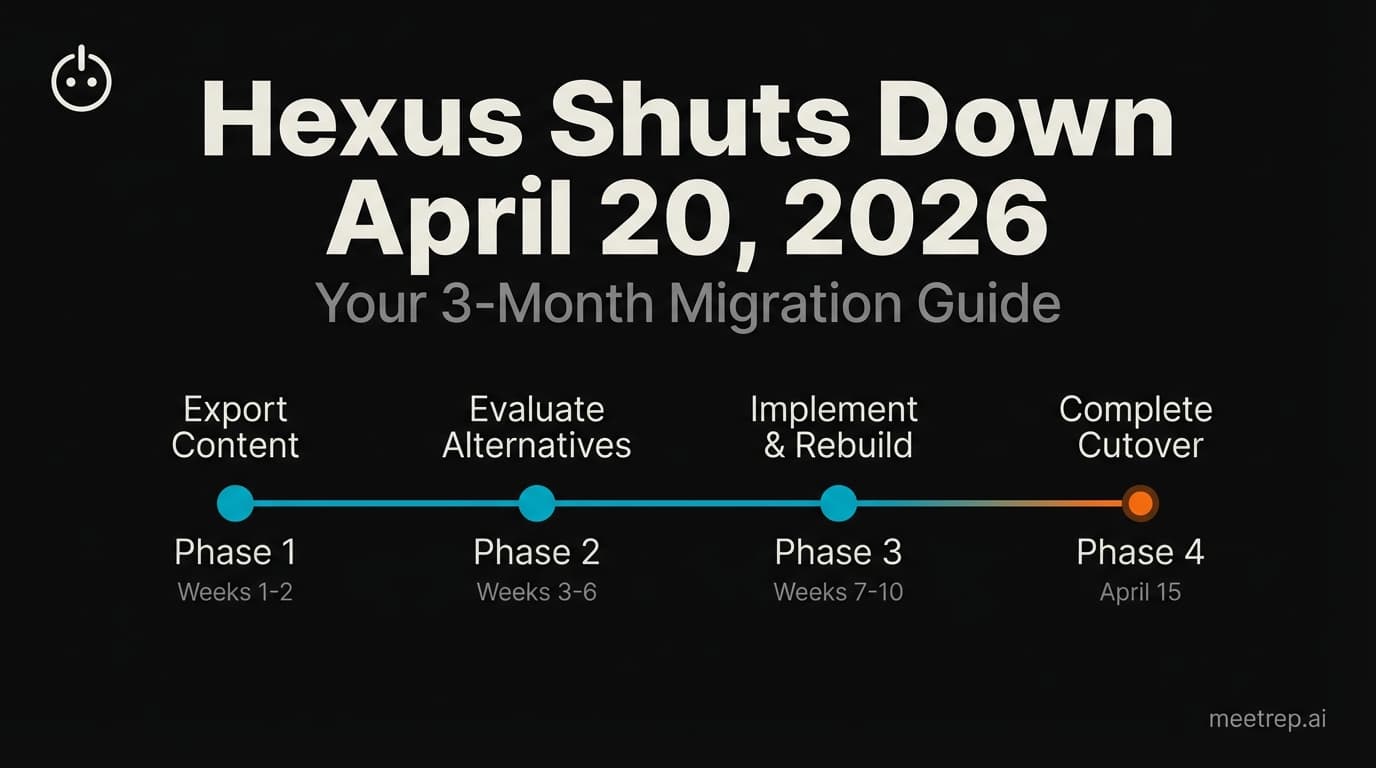
Hexus Acquired by Harvey AI: Congrats & What It Means for Demo Automation Teams
Hexus is shutting down following its acquisition by Harvey AI. Learn how to manage your migration and discover the best demo automation alternatives before April 2026.
Why the "Software Demo" is Broken—and Why AI Agents Are the Future
The traditional software demo is dead. Discover why 94% of B2B buyers rank vendors before calling sales and how AI agents are replacing manual demos to scale revenue.
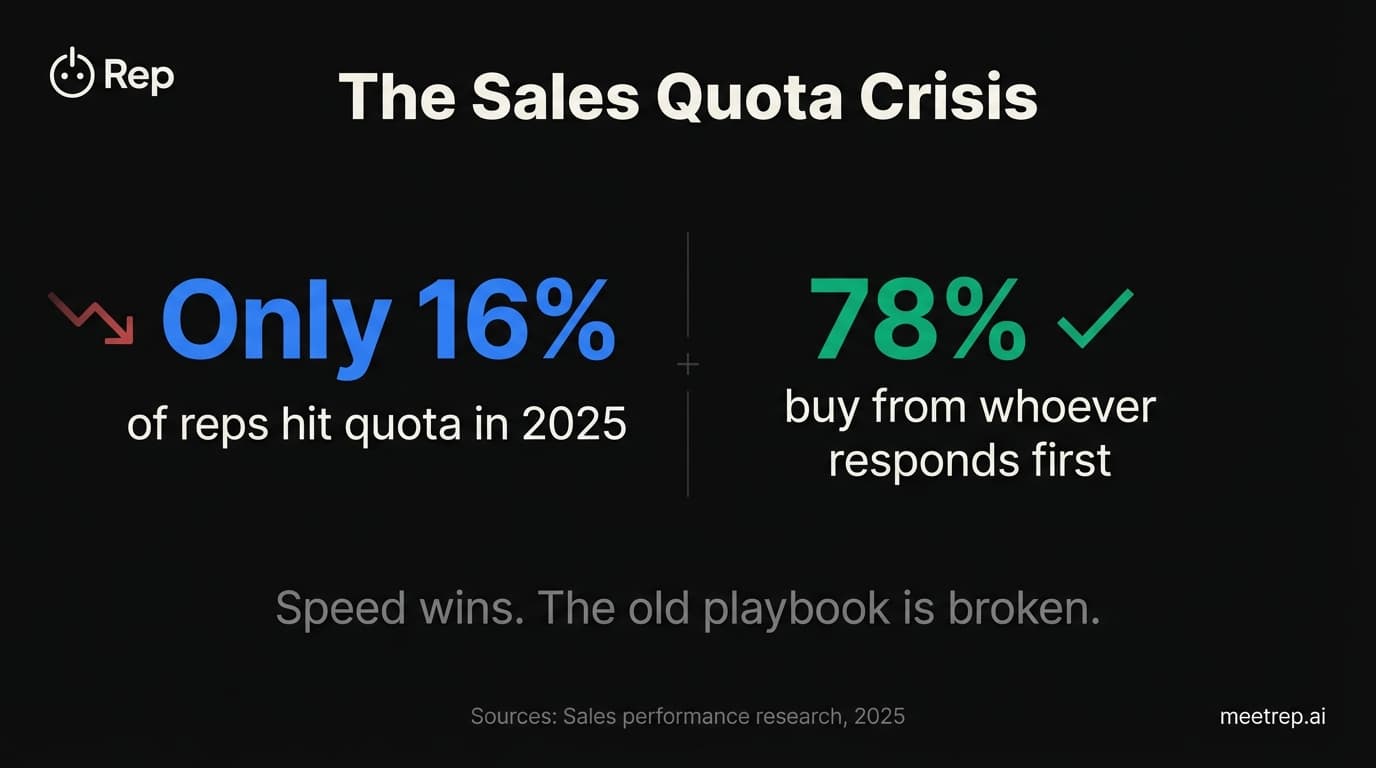
Why Autonomous Sales Software is the Future of B2B Sales (And Why the Old Playbook is Dead)
B2B sales is at a breaking point with quota attainment at 46%. Discover why autonomous 'Agentic AI' is the new standard for driving revenue and meeting the demand for rep-free buying.