Why Sales Engagement Software is the Future of B2B Sales (And Why "Agents" Are Replacing "Tools")

Executive Summary
- The Shift: 80% of B2B sales interactions will be digital by 2025.
- The Problem: Average rep ramp time has ballooned to 5.7 months.
- The Solution: Agentic AI reduces operational sales costs by 40–60%.
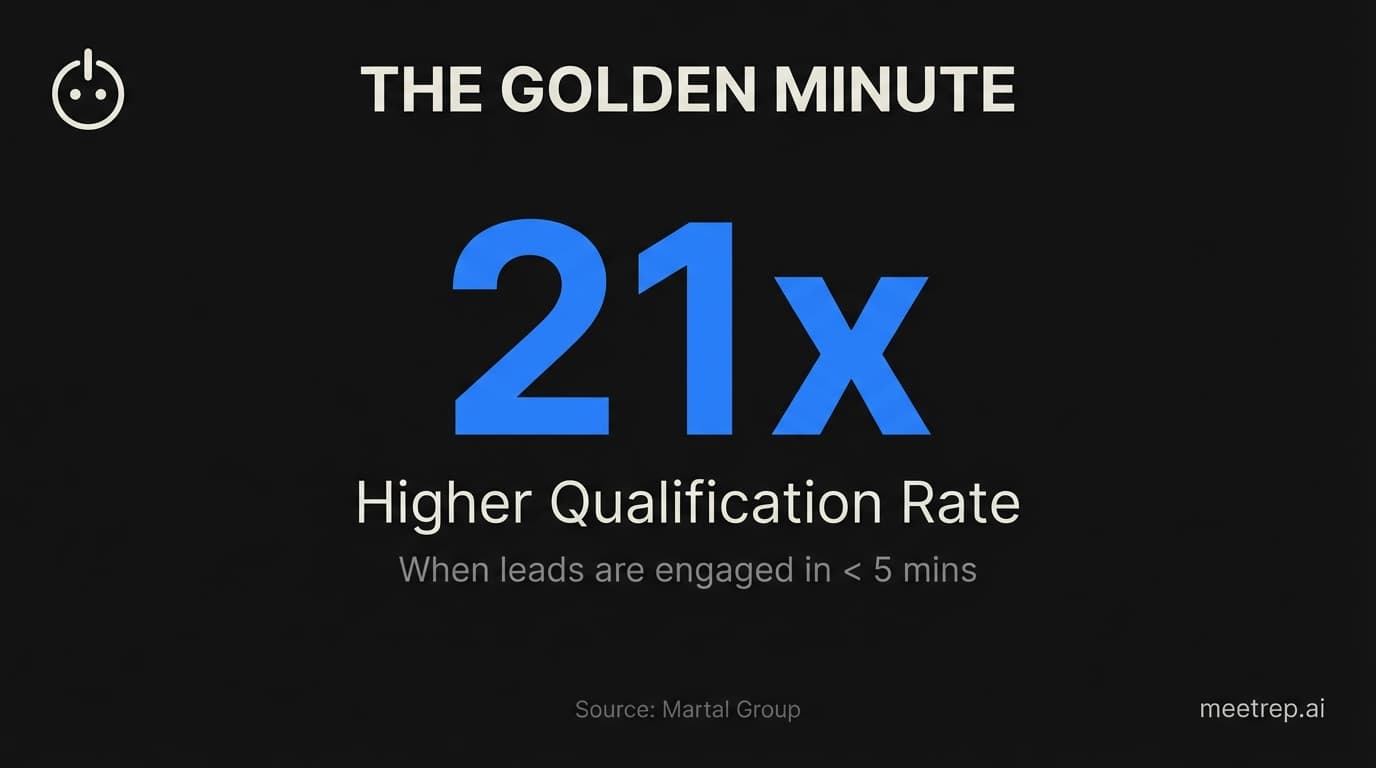
- The Risk: After 5 minutes, your odds of qualifying a lead drop by 21x.
The "Golden Hour" is dead.
For years, sales leaders preached that responding to a lead within 60 minutes was the gold standard. Not anymore. We are now living in the era of the "Golden Minute." If you don't engage a prospect immediately, you lose them.
I’ve spent the last decade building sales technology—first at GoCustomer.ai and now at Rep. And if there’s one thing I’ve learned, it’s that the traditional model of "sales engagement" is broken. We keep buying tools to help humans work faster, but we’ve hit a biological wall. Humans can’t work 24/7. Humans can’t respond in 30 seconds at 2 AM. Humans burn out.
Sales engagement software is the future of B2B sales, but not in the way most RevOps leaders think. We aren't just adding more workflows. That's the old way. We are moving from managing sales activity to automating it completely with AI agents.
The State of B2B Sales in 2026: Digital & Demanding
The market has shifted beneath our feet.
Sales engagement software is no longer just about email sequencing or dialing power. It has evolved into a digital infrastructure that runs interactions between buyers and sellers across every channel—email, voice, and live video.
Why the shift? Because your buyers changed first.
According to Gartner, 80% of B2B sales interactions will occur in digital channels by 2025.
Think about that. Four out of every five touchpoints happen without a handshake.
At GoCustomer.ai, we built tools to help reps manage this digital volume. But here's the kicker: buyers don't just want digital. They want autonomous. A staggering 75% of B2B buyers now prefer a rep-free sales experience, according to Gartner’s research.
This puts RevOps in a vice. On one side, you have buyers who want instant answers without a salesperson. On the other, you have sales reps who want to protect their commission. The only bridge between these two realities is intelligent software.
The "Human Bottleneck": Why Traditional Models Are Failing
Here is the hard truth nobody likes to talk about in QBRs: Your humans are the bottleneck.
I don't say this to be mean. I say it as an engineer who looks at system efficiency. When you rely solely on humans to handle inbound leads, you introduce massive latency and cost into your funnel.
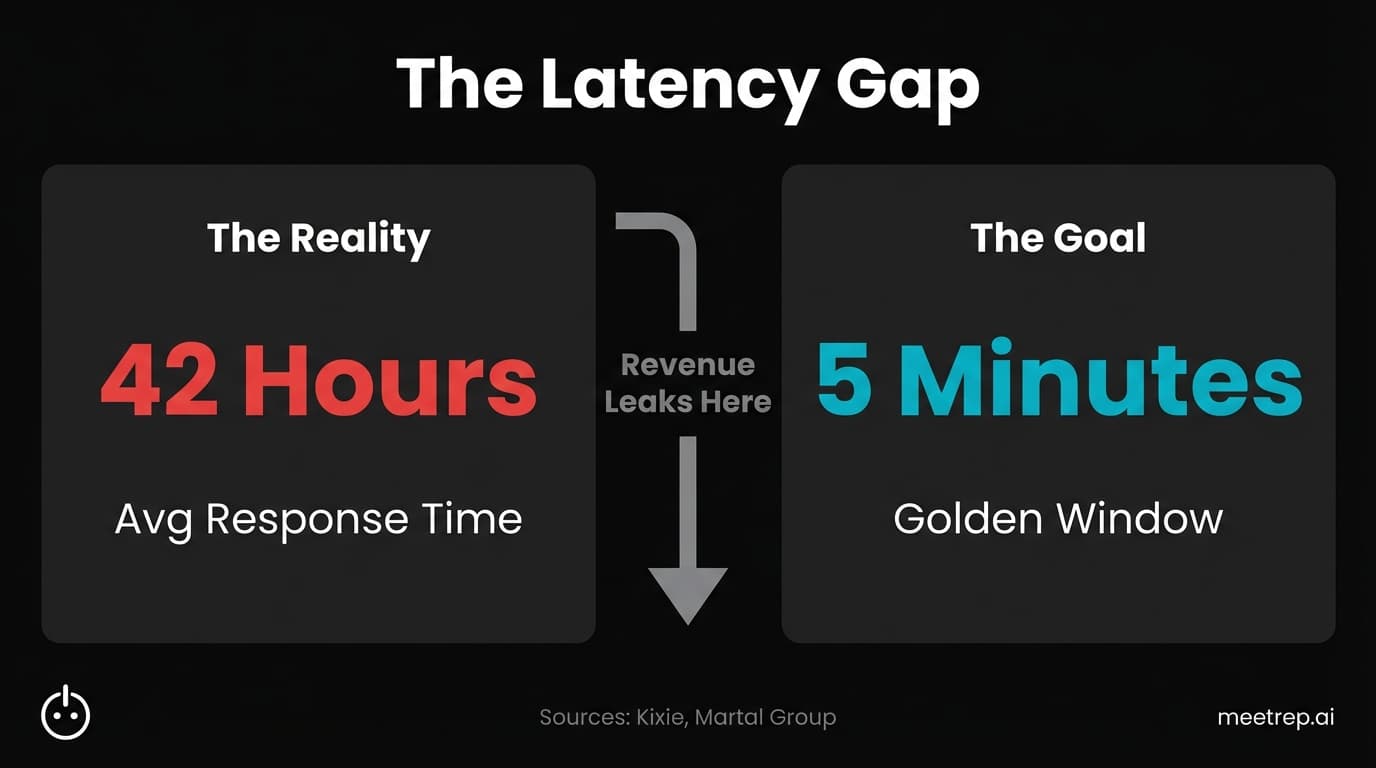
The Data: According to Kixie, the average B2B lead response time is 42 hours.
Forty-two hours. In internet time, that's a lifetime.
Compare that to the "speed imperative." Research shows that leads contacted within 5 minutes are 21x more likely to qualify than those contacted after 30 minutes (Martal Group).
So, you have a 42-hour average response time, but a 5-minute window of opportunity. That math doesn't work.
And throwing more bodies at the problem isn't the answer anymore. Why?
- Ramp time is exploding. It now takes 5.7 months to ramp a SaaS sales rep, up 32% since 2020 (Salesso).
- They aren't selling. Reps spend only ~30% of their time actually selling (Landbase).
We saw this constantly at GoCustomer. Companies would hire expensive SDRs, spend six months training them, and then burn them out with data entry and 100 daily dials. It’s unsustainable.
Enter Agentic AI: From "Tools" to "Teammates"
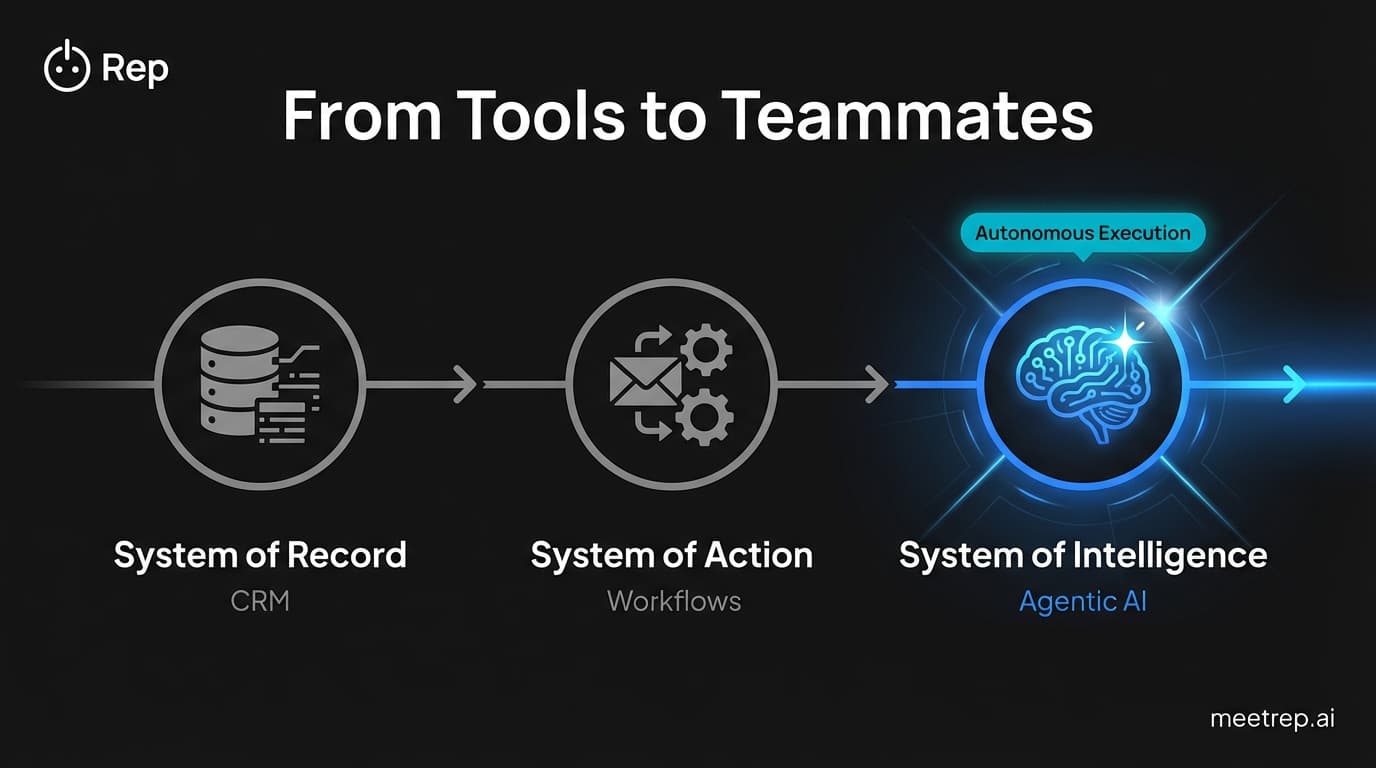
So, what is the actual future? It's not better email templates. It's Agentic AI.
Sales engagement software is splitting into two categories:
- Workflow Platforms (Legacy): Tools like Outreach and Salesloft that help humans organize their tasks.
- Autonomous Agents (Future): AI systems that execute the tasks themselves.
"Agentic AI" is different from the ChatGPT interface you use to write emails. These are agents that can navigate browsers, join Zoom calls, update CRMs, and book meetings without human intervention.
Why we built Rep this way: When we started designing Rep, we knew that just "booking the meeting" wasn't enough. The real friction happens during the demo. An AI SDR can book a slot, but then the prospect waits 3 days for a human AE to get on a call. We built Rep to be an autonomous voice agent that joins the video call immediately, shares its screen, and demos the product live. No waiting.
This is the shift from "Copilot" (helping you fly) to "Autopilot" (flying the plane).
The ROI of Autonomy (Verified Case Studies)
Skeptical? I get it. "AI" is slapped on everything right now. But the companies moving to autonomous sales engagement aren't just seeing marginal gains. They are seeing structural changes in their P&L.
According to Landbase, companies deploying AI sales automation reduce operational sales costs by 40–60%.
Let's look at real examples (because theory is cheap):
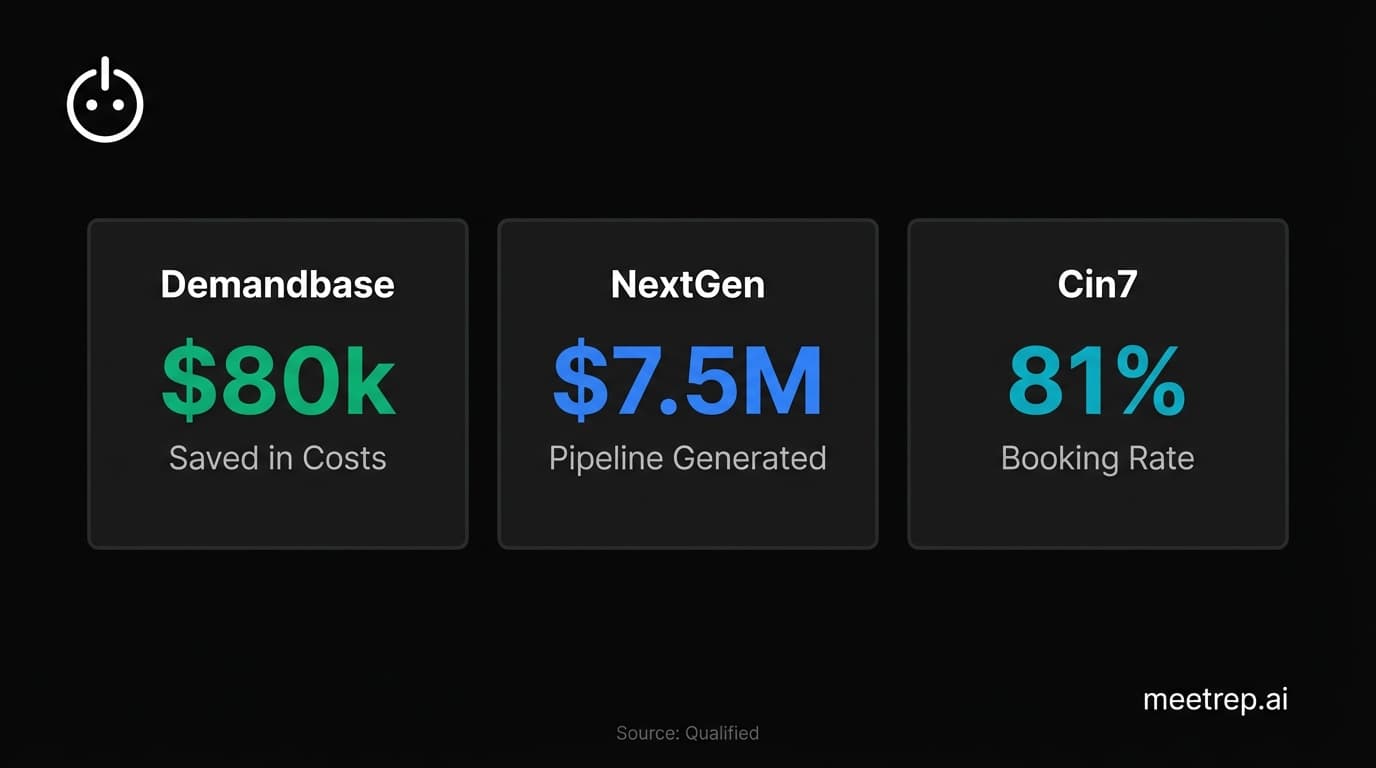
- Demandbase implemented an AI SDR agent to handle inbound qualification. The result? They saved $80,000 in SDR headcount costs in just two months while doubling their pipeline (Qualified).
- NextGen Healthcare used an AI agent called Piper to handle missed chats. They generated $7.5 million in pipeline from traffic that was previously slipping through the cracks (Qualified).
- Cin7 deployed an AI agent and achieved an 81% meeting booking rate, up from 70% with their previous process (Qualified).
These aren't small optimizations. These are business-altering numbers.
How to Build a "Hybrid" Sales Force
Does this mean you fire your sales team tomorrow? Absolutely not.
My recommendation—and what we’re seeing work best—is a hybrid model. You let the AI handle the high-volume, high-speed work, and you let your humans handle the high-stakes, high-emotion work.
Here is how the split should look:
| Feature | Human SDR/AE | AI Sales Agent (e.g., Rep) |
|---|---|---|
| Availability | 8 hours/day, Mon-Fri | 24/7/365 |
| Response Time | Avg. 42 hours (Kixie) | < 5 minutes (Martal) |
| Ramp Time | 5.7 months (Salesso) | Instant (after setup) |
| Consistency | Varies by mood/energy | 100% consistent messaging |
| Best Use Case | Complex negotiation, relationship building | Speed-to-lead, initial discovery, product demos |
My take: Use AI for the first 20 minutes of the relationship. Let the agent respond instantly, qualify the lead, and even give the initial product walkthrough. If the prospect is qualified and serious, then loop in your senior AE to close the deal. You stop wasting your expensive humans on unqualified leads, and you stop losing qualified leads to slow response times.
The Bottom Line
The era of the "spam cannon"—blasting generic emails and hoping for a reply—is over. And the era of waiting 42 hours for a callback is ending with it.
We are moving toward a world where sales engagement software isn't a tool you log into; it's a digital teammate that works alongside you. The winners in 2026 won't be the teams with the most SDRs. They will be the teams with the fastest, most intelligent agents.
Don't let your leads sit in a queue for two days. The technology exists to answer them now.
If you're ready to stop losing deals to speed, it’s time to hire your first AI rep. Check out how we're solving the demo bottleneck at Rep.

Nadeem Azam
Founder
Software engineer & architect with 10+ years experience. Previously founded GoCustomer.ai.
Nadeem Azam is the Founder of Rep (meetrep.ai), building AI agents that give live product demos 24/7 for B2B sales teams. He writes about AI, sales automation, and the future of product demos.
Frequently Asked Questions
Table of Contents
- The State of B2B Sales in 2026: Digital & Demanding
- The "Human Bottleneck": Why Traditional Models Are Failing
- Enter Agentic AI: From "Tools" to "Teammates"
- The ROI of Autonomy (Verified Case Studies)
- How to Build a "Hybrid" Sales Force
- The Bottom Line
Ready to automate your demos?
Join the Rep Council and be among the first to experience AI-powered demos.
Get Early AccessRelated Articles
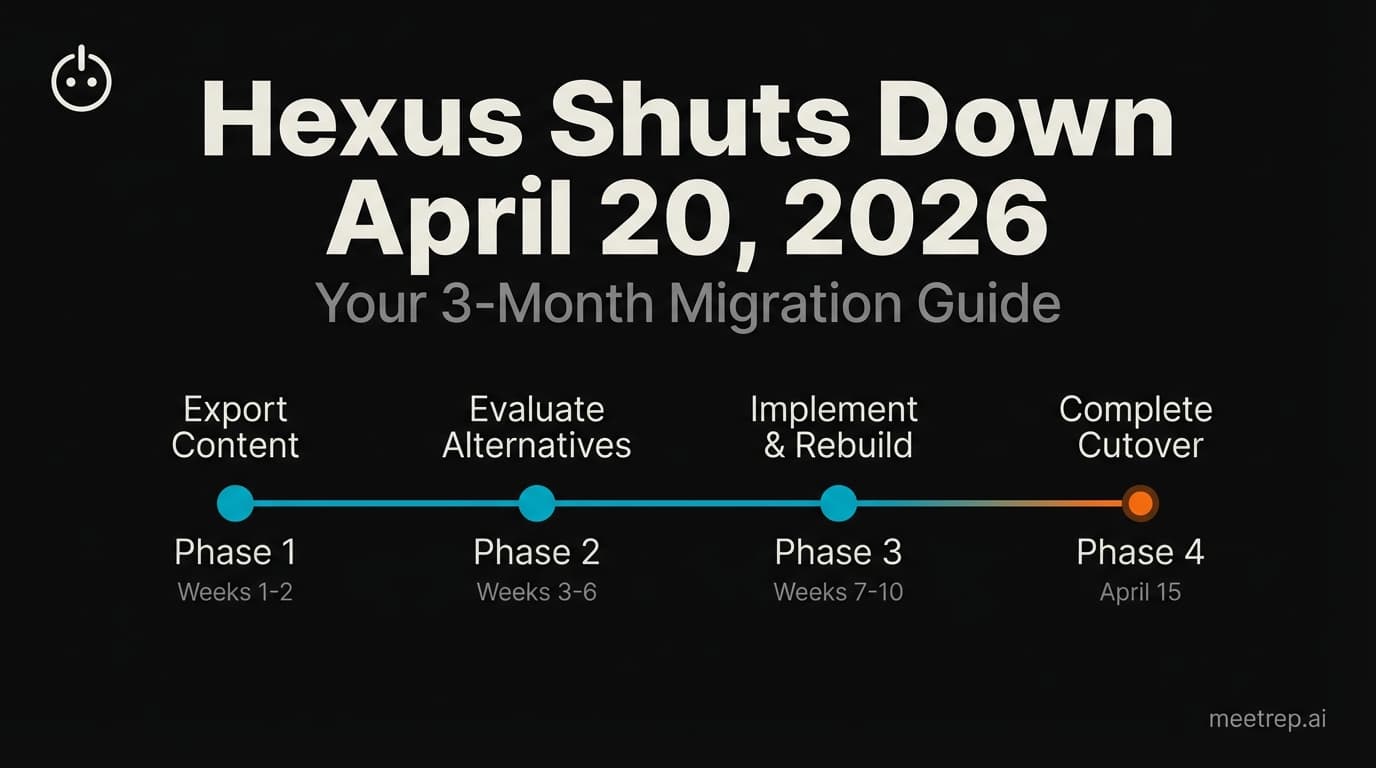
Hexus Acquired by Harvey AI: Congrats & What It Means for Demo Automation Teams
Hexus is shutting down following its acquisition by Harvey AI. Learn how to manage your migration and discover the best demo automation alternatives before April 2026.
Why the "Software Demo" is Broken—and Why AI Agents Are the Future
The traditional software demo is dead. Discover why 94% of B2B buyers rank vendors before calling sales and how AI agents are replacing manual demos to scale revenue.
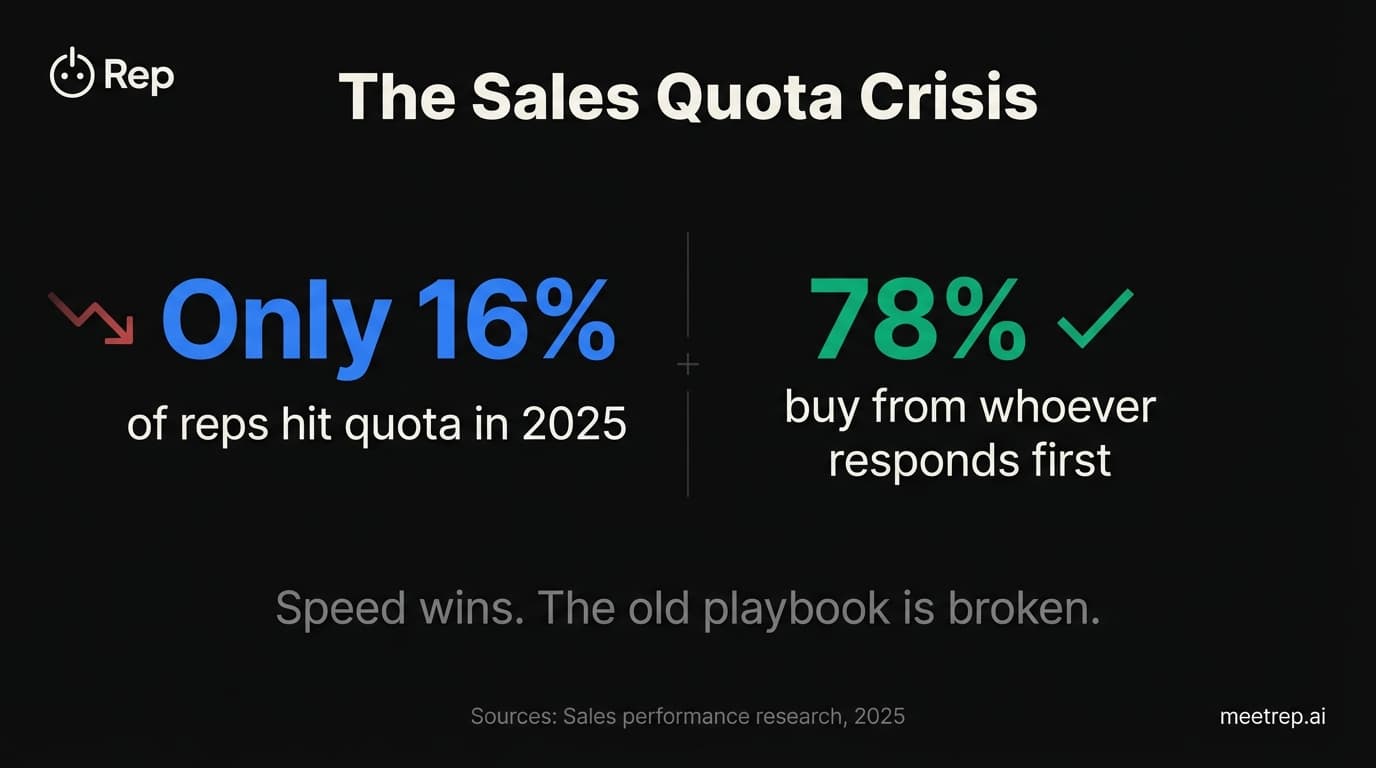
Why Autonomous Sales Software is the Future of B2B Sales (And Why the Old Playbook is Dead)
B2B sales is at a breaking point with quota attainment at 46%. Discover why autonomous 'Agentic AI' is the new standard for driving revenue and meeting the demand for rep-free buying.