Why "Product Demos Meaning" Has Changed Forever: The Rise of Agentic Sales

Executive Summary
- The Shift: Buyers now define a "demo" as an on-demand, autonomous experience, not a scheduled meeting.
- The Gap: Buyers wait 6-10 days for human demos, giving competitors a massive opening.
- The Solution: Agentic AI (like Rep) bridges the gap between static screenshots and live human selling.
- The Balance: Humans are still required for complex negotiations; AI handles the discovery and demo.
Stop thinking of a product demo as a calendar invite.
For decades, the product demos meaning was static: a scheduled 30-minute block where a human salesperson walked a prospect through a slide deck and a generic environment. But if you’re still operating on that definition in 2026, you aren’t just behind the curve. You’re actively losing revenue.
I’ve built sales automation tools for years—first at GoCustomer, and now at Rep. If there is one thing I’ve learned from watching millions of interactions, it’s that buyers have fundamentally changed how they verify value. They don't want to wait. They don't want to be "discovery called" to death.
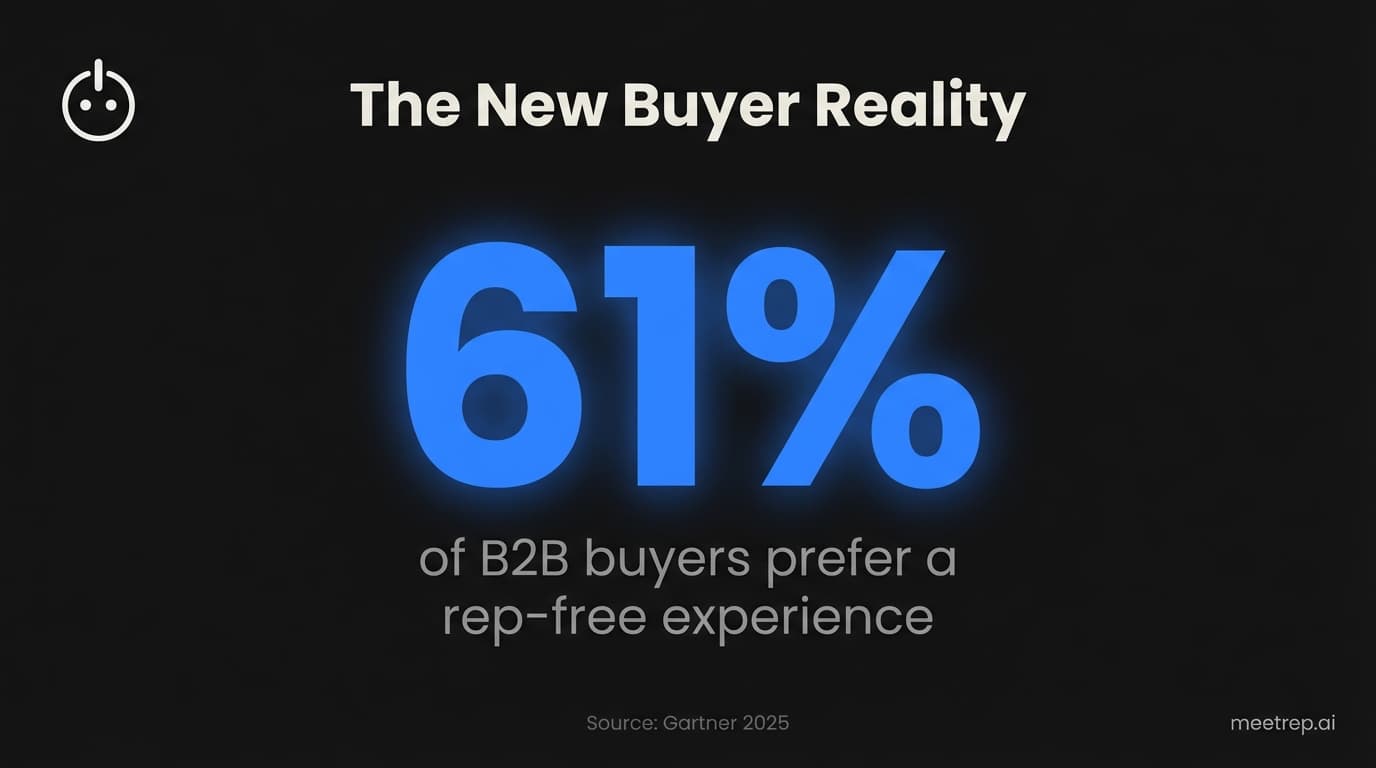
The data backs this up. According to Gartner, 61% of B2B buyers now prefer a rep-free buying experience.
That statistic should terrify any sales leader relying solely on human-led outbound. The definition of a demo has shifted from presentation to instant verification.
What Is the Meaning of Product Demos in 2026?
In 2026, the product demos meaning is no longer defined as a sales presentation delivered by a human at a scheduled time. Instead, it is an interactive, often autonomous experience where a prospect verifies a product's value on their own terms. Modern product demos use Agentic AI to navigate live software, answer questions in real-time, and adapt to buyer intent without human intervention.
This is a massive departure from even two years ago.
Back then, "demo automation" mostly meant "interactive screenshots" (think tools like Navattic or Arcade). Those are great for marketing. But they aren't selling.
Real selling requires reasoning. It requires handling objections. It requires what we call at Rep "contextual intelligence."
According to Gartner, 80% of B2B sales interactions between suppliers and buyers will occur in digital channels by 2025. If your "demo" requires a human to be awake, online, and available, you are effectively closed for business during 80% of the buyer's research time.
The "Rep-Free" Reality Check
Here is the hard truth most VPs of Sales don't want to admit: your buyers are avoiding your team.
It’s not personal. It’s efficiency.
In our experience building sales tech, we've seen that modern buyers treat sales calls as a last resort. They scour documentation, watch YouTube videos, and read G2 reviews before they ever fill out your "Book a Demo" form.
By the time they do reach out, they want answers now. But what do they get? A calendar link for next Tuesday.
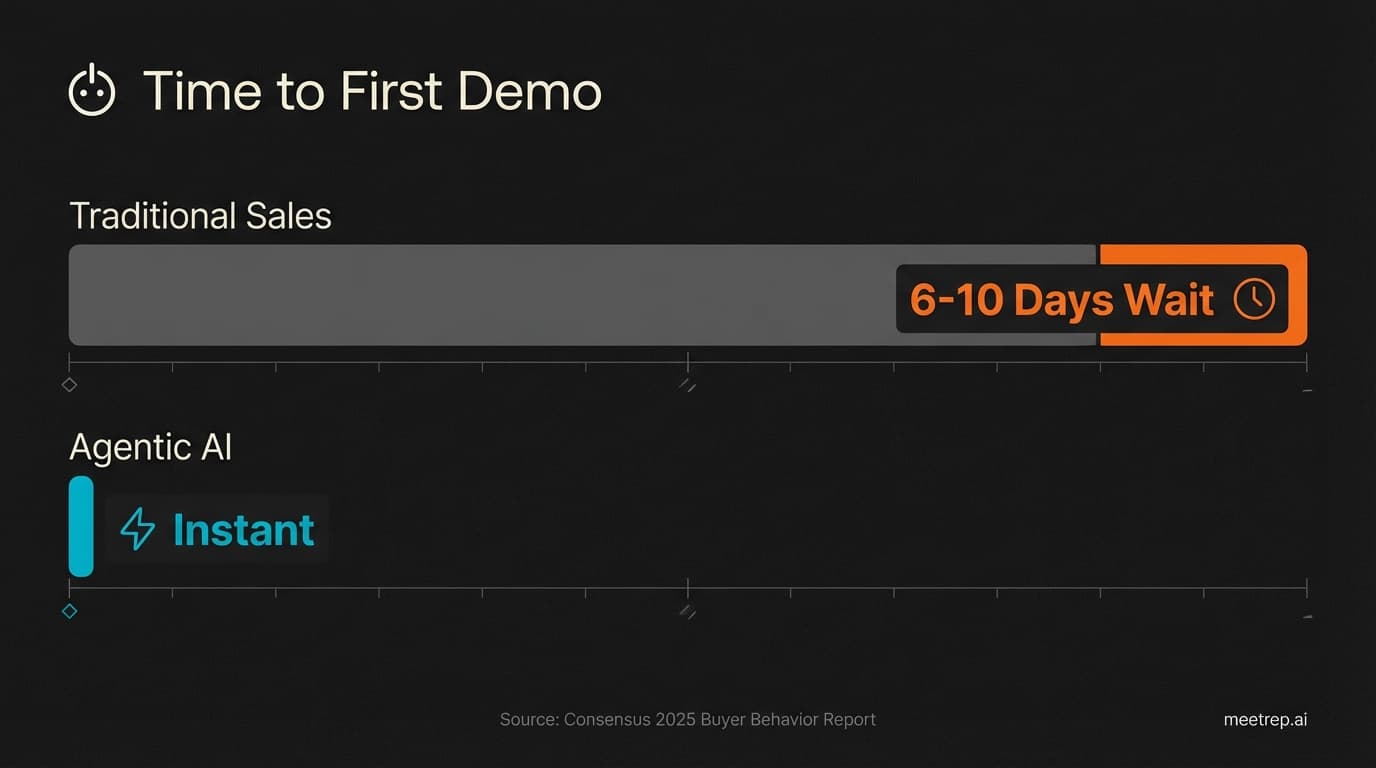
The Data: Buyers wait an average of 6-10 days before even talking to sales, according to the Consensus 2025 Buyer Behavior Report.
Think about that gap. Six to ten days.
In that window, their interest cools. Or worse, they find a competitor who lets them see the product immediately.
We built Rep specifically to kill this waiting period. We realized that if you can put an autonomous agent in front of a buyer the second they show interest, you don't just speed up the cycle—you capture demand that would otherwise evaporate.
And it’s not just about speed. It’s about access. Gartner data shows that sellers only get ~17% of a buyer's total time during the sales cycle. The other 83% happens when you aren't in the room.
If your demo strategy relies 100% on that 17% window, you are playing a losing game.
Beyond "Click-Through" Tours: The Rise of Agentic AI
There is a lot of confusion right now between "Interactive Demos" and "Agentic AI."
I see this constantly on LinkedIn. People lump everything into the "AI Sales" bucket. But if you are evaluating tools, you need to understand the architectural difference.
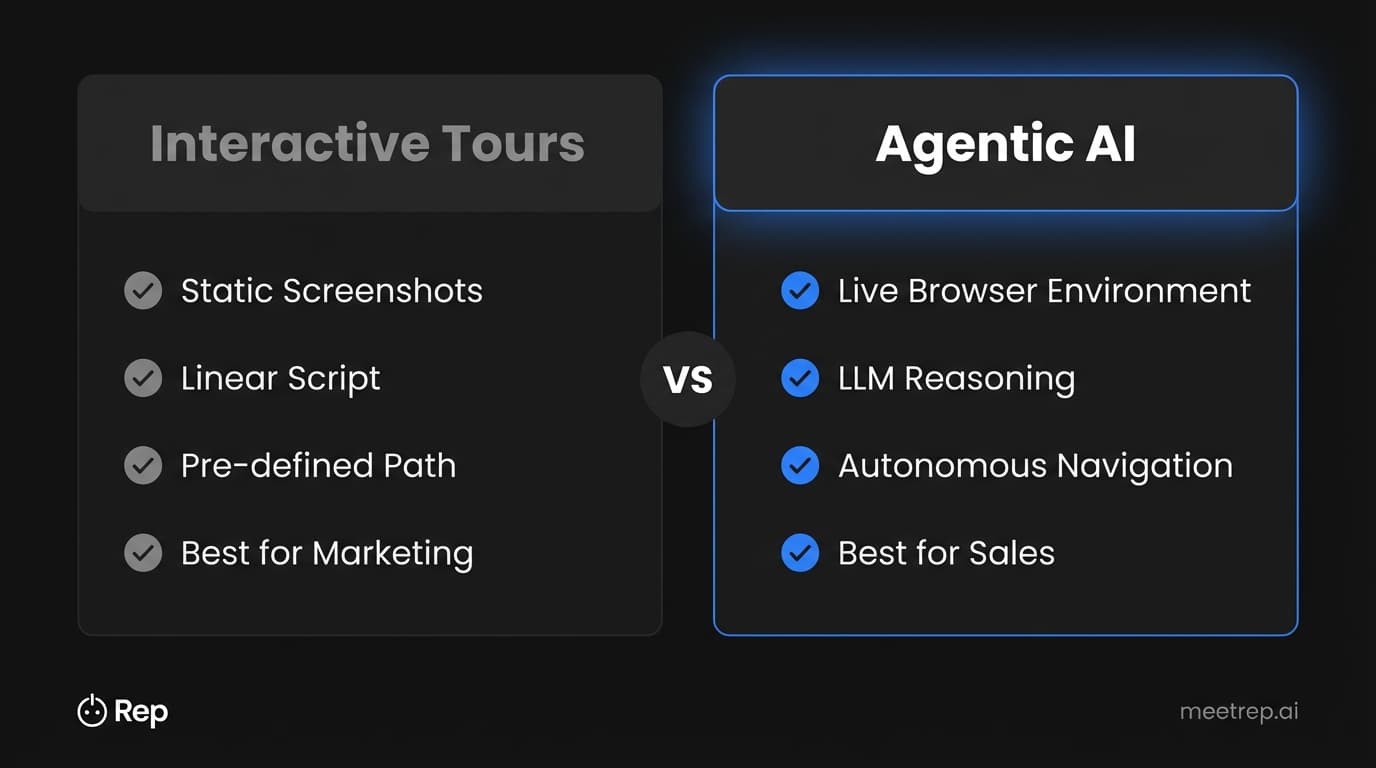
Interactive Demos (The Old Way) These are guided tours. You take screenshots or capture HTML, stitch them together, and add tooltips. It’s a "choose your own adventure" book. It’s safe, but it’s rigid. If the buyer has a specific question that isn't on the pre-programmed path ("Hey, how does this integrate with my specific SAP instance?"), the experience breaks.
Agentic AI (The New Way) This is what we are building at Rep. An "Agent" isn't a script. It’s a system that can perceive, reason, and act.
Key Insight:Agentic AI systems don't just follow a decision tree. They use large language models (LLMs) to understand intent, navigate a live browser environment, and execute workflows autonomously.
MarketsandMarkets reports that companies implementing agentic AI in sales can expect an 80% reduction in lead response times (see the Market Report).
Why? Because an agent can reason.
When a prospect asks Rep, "Can you show me how to export this to CSV?", the AI doesn't look for a pre-written "export" tooltip. It actually identifies the export button in the DOM (Document Object Model), clicks it, and confirms the action. It’s doing the work, not just simulating it.
| Feature | Interactive Tours (Navattic/Arcade) | Agentic AI (Rep) |
|---|---|---|
| Core Technology | HTML/Screenshot Capture | Browser Automation + LLM Reasoning |
| Experience | Click-through static slides | Live navigation of actual product |
| Interaction | Text/Tooltips only | Voice conversation & Screen sharing |
| Adaptability | Rigid (Linear paths) | Fluid (Pivots based on conversation) |
| Setup Time | Fast (Hours) | Medium (Training required) |
| Best For | Website Marketing Embeds | Replacing SDR First Calls |
The "Uncanny Valley" & The Human Paradox
Now, I know what you're thinking.
"Nadeem, if I replace my SDRs with AI agents, won't customers hate it? Won't it feel robotic?"
This is a valid fear. I’ve seen plenty of bad AI implementations that feel like interacting with a frantic IVR phone tree.
But here is the nuance that most people miss: Buyers want autonomy, not isolation.
They want the information and the navigation of a demo without the social pressure of a sales rep "handling" them. However, they still crave the conversational aspect. They want to ask, "Wait, why did you click that?" or "Does this work for enterprise teams?"
This is why text-based chatbots often fail in complex sales. They lack the high-bandwidth communication of voice and visual demonstration.
The Data: By 2030, 75% of B2B buyers will prefer sales experiences that prioritize human interaction over AI for complex transactions, according to Gartner.
Wait. Doesn't that contradict the "61% want rep-free" stat?
Not at all. It clarifies it.
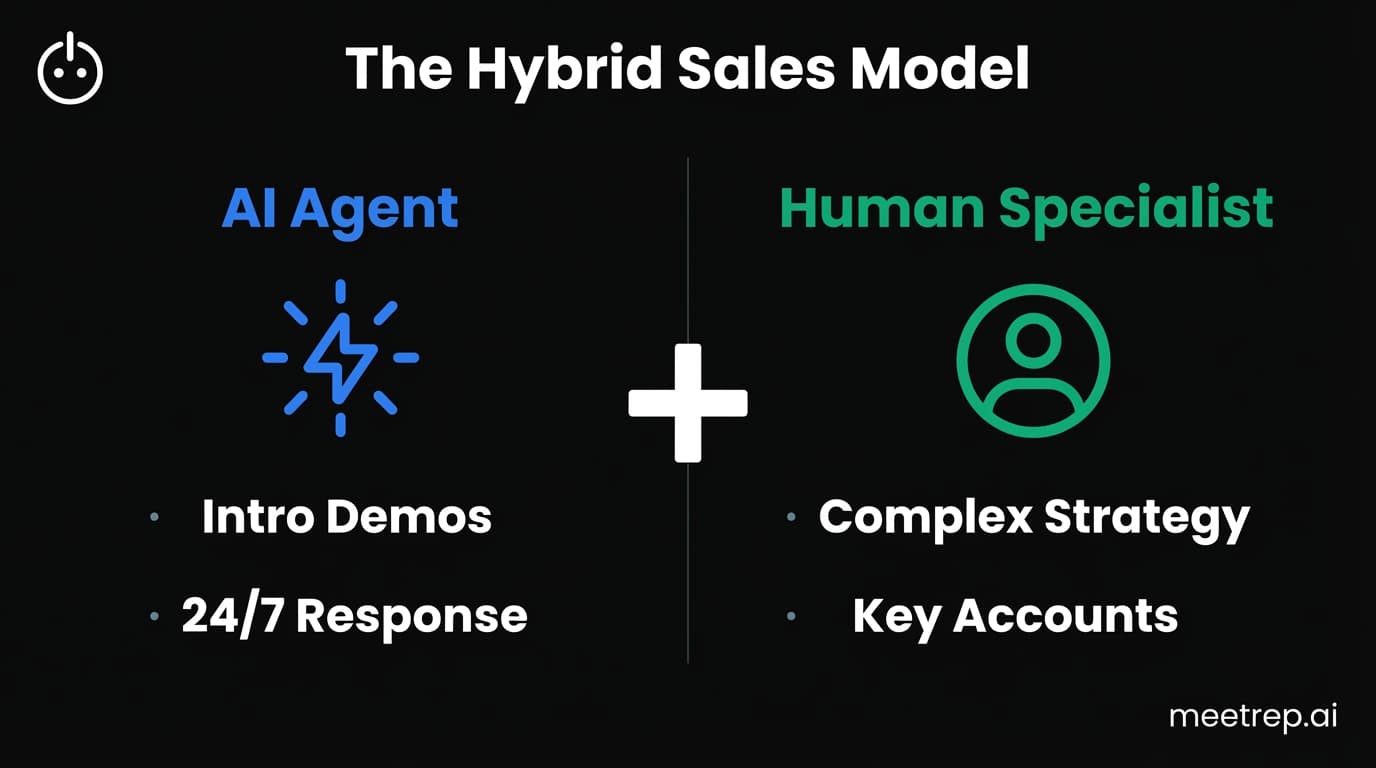
Buyers want rep-free discovery (the first 1-2 calls), but human-led negotiation (the closing).
My recommendation: Don't try to automate the close. Use Agentic AI to handle the repetitive, top-of-funnel discovery demos that burn out your SDRs. Let the AI qualify the lead, demonstrate the core value, and answer 80% of the functional questions.
Then, when the buyer says, "This looks great, let's talk pricing and implementation," the Agent hands off to a senior Account Executive.
That is the hybrid model that wins in 2026.
Case Studies: The ROI of Autonomous Demos
You might be wondering if this actually moves the needle, or if it's just cool tech.
While Agentic AI is new, the shift toward "self-service" verification is already generating massive returns for companies that adopted the early versions of this tech.
- RudderStack used interactive demos to scale their product launches. The result? They generated 2x pipeline from launches and reduced sales training time by 83% (Source: Arcade).
- Coupa, a massive enterprise platform, faced a huge backlog of demo requests. By implementing demo automation, they decreased buying cycle times by 29% and discovered 900 net new stakeholders in a single quarter (Source: Consensus).
- Zapier started sending personalized interactive demos in their cold outreach emails instead of just text. They saw a 70% increase in booked meetings (Source: Skywork/Arcade).
What we learned at GoCustomer: When we built sales automation at GoCustomer, we saw that speed was the single biggest predictor of conversion. If you responded within 5 minutes, you were 100x more likely to qualify the lead. Agentic AI is the only way to guarantee a 5-second response time, 24/7, globally.
The Bottom Line
The market has spoken. The era of "fill out a form and wait 48 hours for a discovery call" is over.
If you are a VP of Sales, you have two choices. You can cling to the old definition of a product demo—the one that relies on human stamina and calendar availability. Or, you can accept that the product demos meaning has changed to "instant, autonomous verification."
My take? The companies that win in 2026 will be the ones that respect their buyers' time enough to get out of the way. They will use Agentic AI to serve the 61% who want a rep-free experience, and they will save their expensive human talent for the complex conversations that actually require a heartbeat.
Don't let your leads sit in a 10-day scheduling gap. Give them an Agent.

Nadeem Azam
Founder
Software engineer & architect with 10+ years experience. Previously founded GoCustomer.ai.
Nadeem Azam is the Founder of Rep (meetrep.ai), building AI agents that give live product demos 24/7 for B2B sales teams. He writes about AI, sales automation, and the future of product demos.
Frequently Asked Questions
Table of Contents
- What Is the Meaning of Product Demos in 2026?
- The "Rep-Free" Reality Check
- Beyond "Click-Through" Tours: The Rise of Agentic AI
- The "Uncanny Valley" & The Human Paradox
- Case Studies: The ROI of Autonomous Demos
- The Bottom Line
Ready to automate your demos?
Join the Rep Council and be among the first to experience AI-powered demos.
Get Early AccessRelated Articles
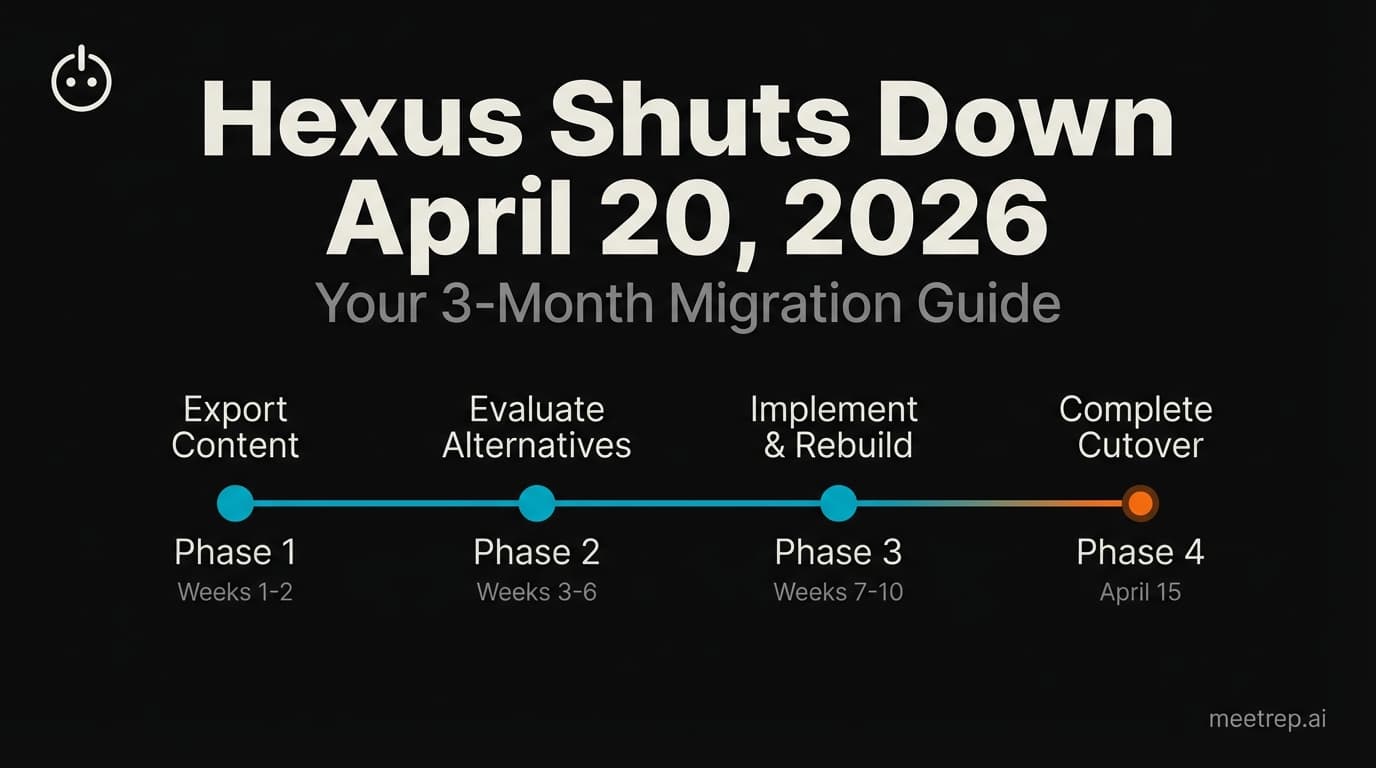
Hexus Acquired by Harvey AI: Congrats & What It Means for Demo Automation Teams
Hexus is shutting down following its acquisition by Harvey AI. Learn how to manage your migration and discover the best demo automation alternatives before April 2026.
Why the "Software Demo" is Broken—and Why AI Agents Are the Future
The traditional software demo is dead. Discover why 94% of B2B buyers rank vendors before calling sales and how AI agents are replacing manual demos to scale revenue.
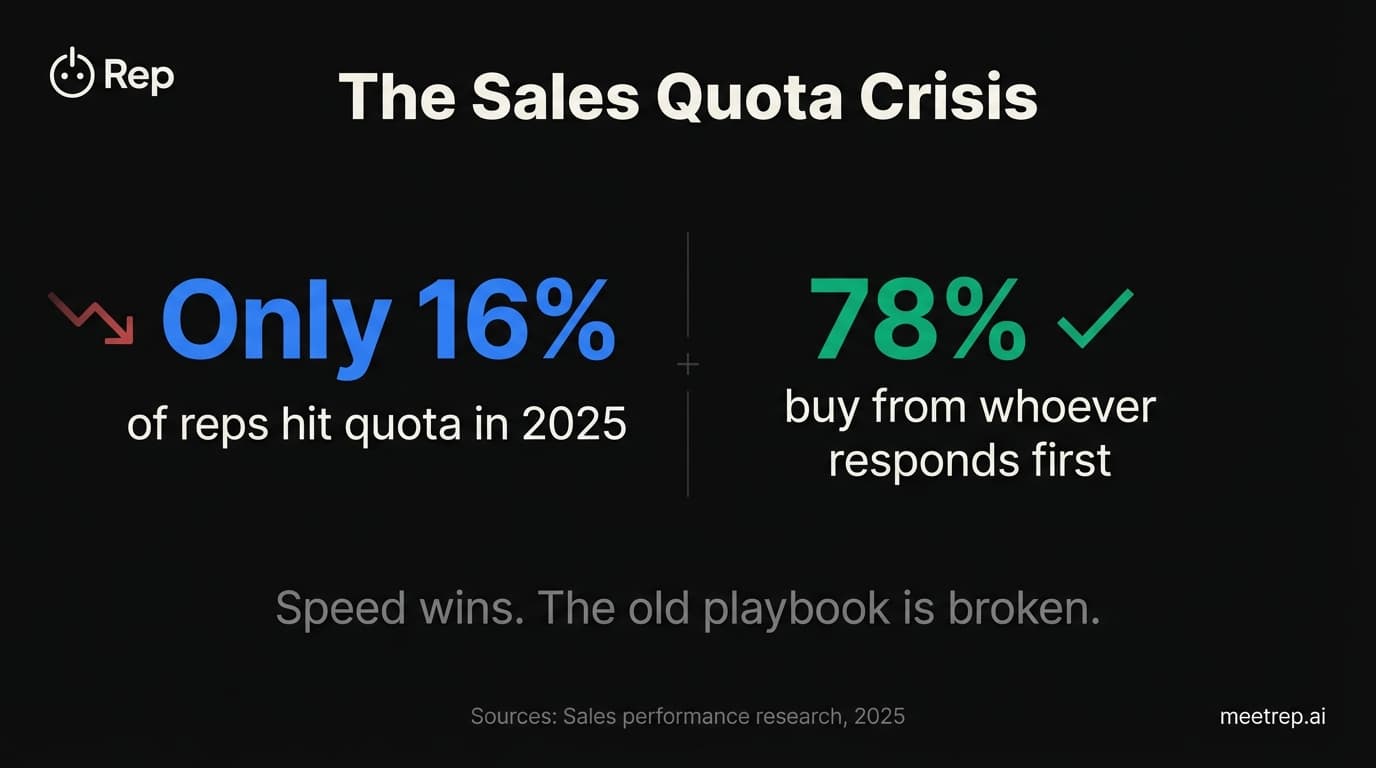
Why Autonomous Sales Software is the Future of B2B Sales (And Why the Old Playbook is Dead)
B2B sales is at a breaking point with quota attainment at 46%. Discover why autonomous 'Agentic AI' is the new standard for driving revenue and meeting the demand for rep-free buying.