Why Consensus Demos Fail Complex Enterprise Deals (And What Actually Works)

Executive Summary
- Consensus excels at top-of-funnel qualification (Visma reduced unqualified demos from 50% to 5%)
- Video demos hit a wall when deals involve 13+ stakeholders who need different answers
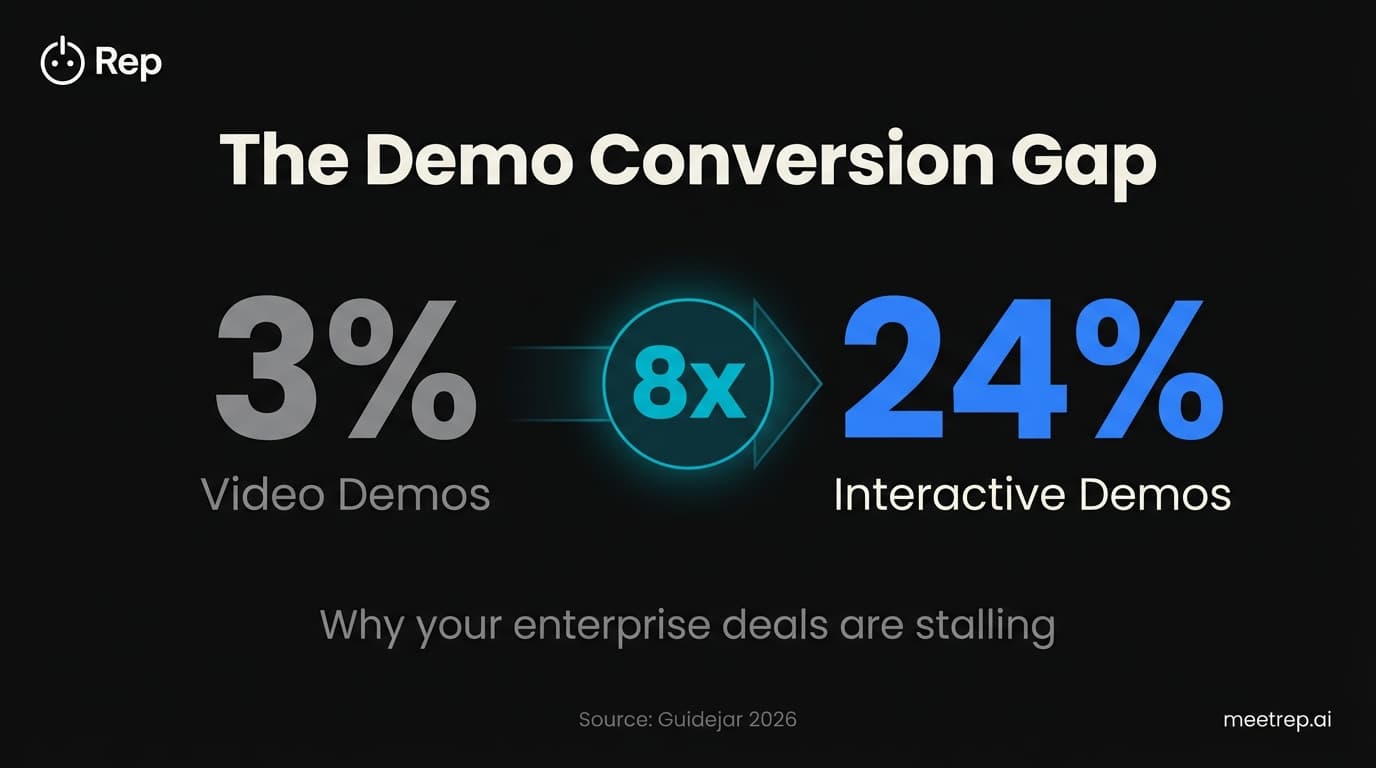
- Interactive demos convert at 24.35% vs 3.05% for video—an 8x difference
- The fix isn't replacing Consensus; it's matching demo formats to deal complexity
Here's the uncomfortable truth about your Consensus demo investment: it's probably working exactly as designed. The problem? It was never designed for the deal you're trying to close.
When Forrester surveyed 16,000 B2B buyers in December 2024, they found that 86% of purchases stall during the buying process. Not because of bad products. Not because of competitors. Because of internal complexity that pre-recorded video content simply cannot address.
I've built two sales automation companies. At GoCustomer.ai, we learned this lesson the hard way. And it's why we built Rep completely differently.
This isn't about bashing Consensus. It's about understanding what video demos can and cannot do—so you stop expecting a screwdriver to hammer nails.
What is a Consensus demo, and what is it actually good at?
A Consensus demo is a video-based product demonstration that prospects watch on their own schedule, selecting features they care about and receiving personalized video content in return. It's demo automation—not live selling.
And for what it's designed to do, it works.
Consensus pioneered this category in 2013. Today, 15 of the top 30 software companies use the platform, including Oracle, Salesforce, SAP, and Atlassian. The company holds a 4.7/5 rating from 1,187 G2 reviews—that's not nothing.
The wins are real:
- Oracle scaled presales by 20%+ without adding headcount
- Bazaarvoice reduced SMB sales cycles by 33%
- Visma cut unqualified demos from 50% to 5%
So what's the problem?
Key Insight: Consensus was built to solve a qualification problem, not a consensus-building problem. The name is aspirational, not descriptive.
The platform excels at filtering out tire-kickers and giving busy prospects self-serve access to product information. For transactional deals with one or two decision-makers, it's genuinely effective.
But most enterprise deals don't look like that anymore.
The 13-stakeholder problem: Why video demos hit a wall
Enterprise B2B purchases have changed. And video demos haven't kept up.
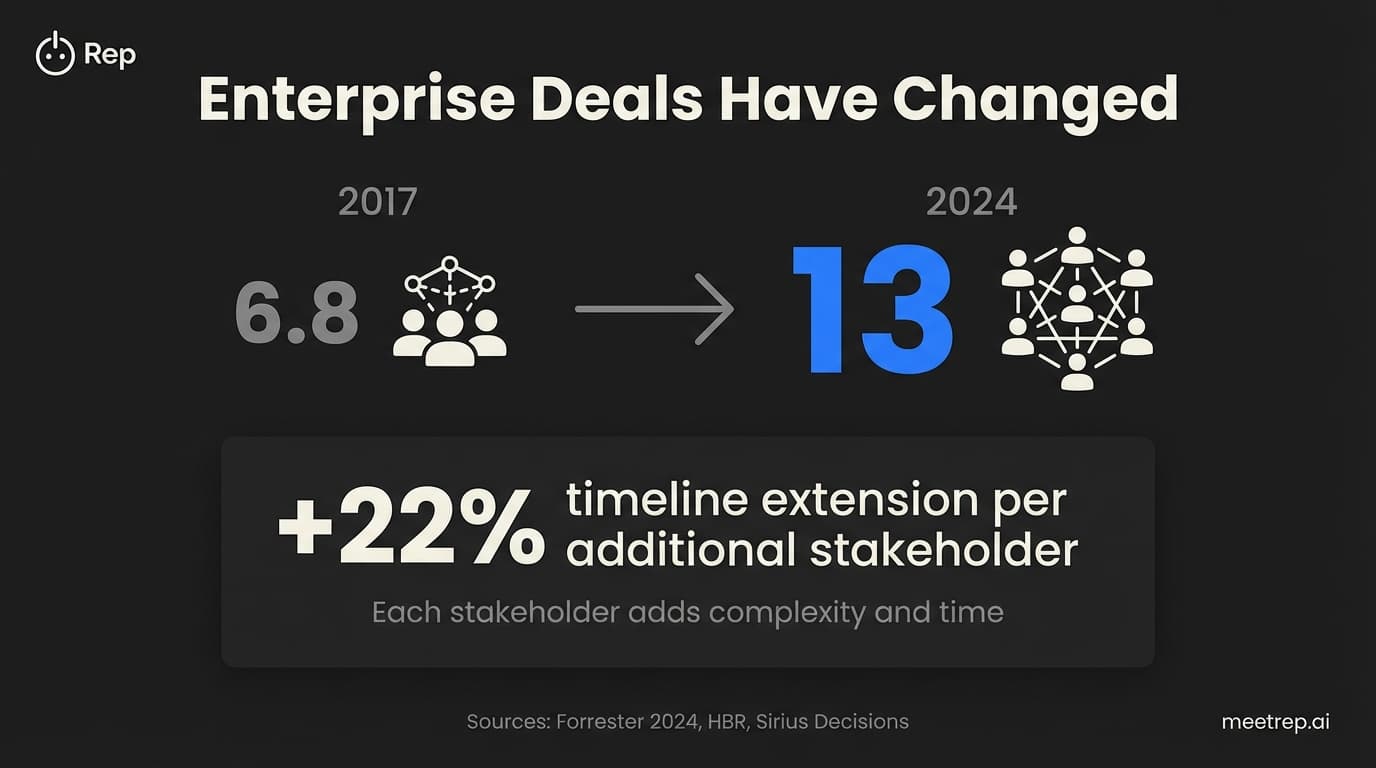
Forrester's 2024 State of Business Buying Report found that the average B2B purchase now involves 13 stakeholders. Not two. Not five. Thirteen people who need to align before a deal closes.
| Year | Average Stakeholders | Source |
|---|---|---|
| 2017 | 6.8 | HBR |
| 2024 | 13 | Forrester |
That's nearly double in seven years.
And here's the kicker: 89% of buying decisions now cross multiple departments. Finance. Legal. Security. IT. Operations. Each stakeholder brings different questions, different concerns, different definitions of "success."
The Data: Each additional stakeholder extends the purchase timeline by 22% (Sirius Decisions). A 13-person committee isn't just harder to reach—it's exponentially slower to close.
A pre-recorded video can't answer the CFO's TCO questions while simultaneously addressing the CISO's security concerns and showing the end-user how the daily workflow actually works.
It just can't. That's not a criticism. It's physics.
Why 40-60% of your deals die to "no decision"
Here's the stat that should keep sales leaders up at night: 40-60% of B2B deals are lost to "no decision"—not to competitors.
The JOLT Effect research broke this down further:
- 56% of no-decision losses stem from customer indecision
- 44% stem from status quo preference
Translation: your prospects aren't choosing your competitor. They're choosing to do nothing. And they're doing nothing because they couldn't get their internal stakeholders aligned.
What we learned at GoCustomer: We built workflow automation that worked beautifully for individual users. But when deals required buy-in from multiple departments, our demos fell flat. The product was fine. Our demo format was wrong for the complexity of the sale. That lesson shaped everything about how we approached Rep.
When Corporate Visions analyzed 100,000 B2B purchase decisions, they found something painful: 53% of deals marked "lost" were actually winnable. The deals didn't die because of product-market fit. They died because of process-complexity fit.
A video demo running in the background of someone's browser isn't going to solve stakeholder misalignment. It can't even detect it.
Consensus's own data shows the engagement cliff
I'm not making this argument in a vacuum. Consensus's own 2025 benchmark report tells the story.
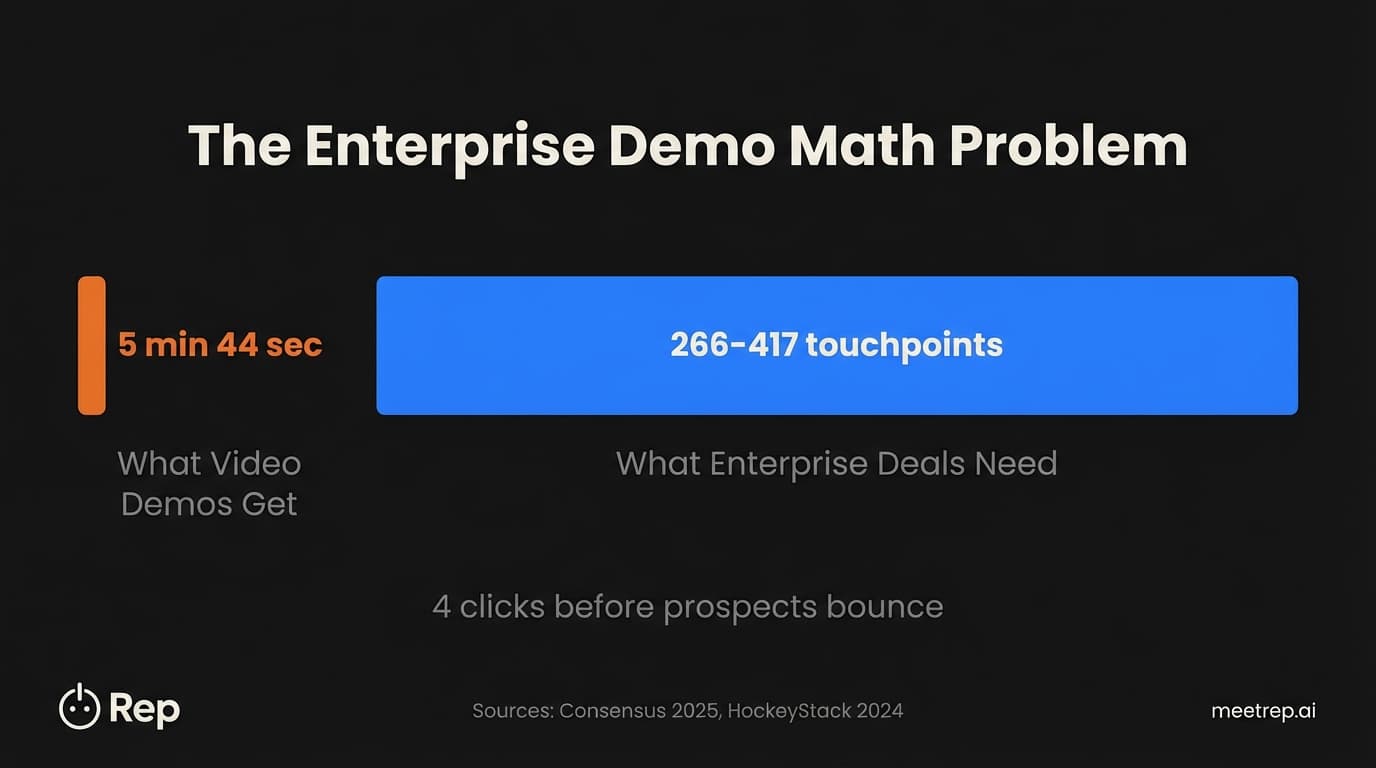
Most users only click through 4 steps of a product tour before they bounce. Average demo view time? 5 minutes and 44 seconds.
That's it.
For comparison, closing an enterprise deal requires an average of 266 touchpoints according to HockeyStack's 2024 analysis of 150 B2B SaaS companies. For deals over $100K ACV, that number jumps to 417 touchpoints.
| Metric | Reality |
|---|---|
| Consensus average view time | 5 min 44 sec |
| Touchpoints needed to close (average) | 266 |
| Touchpoints needed to close ($100K+) | 417 |
| Steps before user bounces | 4 clicks |
Video completion rates tell the same story (Wistia/Swydo 2025 benchmarks):
| Video Length | Completion Rate |
|---|---|
| Under 30 seconds | 35-45% |
| Under 1 minute | 65-66% |
| 1-2 minutes | 56% |
| Over 60 seconds | Below 20% |
So you've got prospects watching 5:44 of video, clicking through 4 steps, and then... nothing. Meanwhile, you need 266+ touchpoints to close the deal.
The math doesn't work.
The conversion gap: Interactive vs. video demos
Let's talk numbers. Because the gap between interactive and video demos isn't incremental. It's an order of magnitude.
The Optifai Sales Ops Benchmark analyzed 939 B2B companies in 2025. Here's what they found:
| Demo Type | Conversion Rate | vs. Baseline |
|---|---|---|
| Generic screen share | 18% | Baseline |
| Interactive demo | 38% | +52% |
| Customized demo | 25% | +39% |
| Multi-stakeholder demo | 31% | +72% |
| Live implementation POC | 42% | +133% |
Guidejar's 2026 analysis found an even starker contrast: interactive demos convert at 24.35% compared to just 3.05% for static video demos. That's an 8x difference.
The Data: Interactive content generates 2-3x more engagement than static content. That gap widens as deal complexity increases (Marketing LTB).
Why? Because buyers don't want to watch. They want to explore. They want to click around, ask questions, test assumptions. A video doesn't let them do that. An interactive experience does.
And here's what really matters: the conversion gap gets worse as deal size increases.
| Deal Size | Conversion Rate |
|---|---|
| Under $10K ACV | 35% |
| $10-100K ACV | 25% |
| Over $100K ACV | 15% |
The bigger the deal, the more stakeholders involved, the less effective passive video becomes.
What buyers actually need (and video can't provide)
Buyers aren't static. Their needs shift throughout the sales process. Corporate Visions research found that buyers change their problem definition an average of 3.1 times during a deal.
Three times.
Think about that. The pain point they mentioned on the first call isn't the same pain point they're trying to solve by the time procurement gets involved. The feature that excited the end-user isn't the feature that matters to the CFO.
A pre-recorded video can't pivot. It shows Feature A, then Feature B, then Feature C—in the same order, with the same emphasis, regardless of who's watching or what they actually need to see.
When 81% of sellers report losing a deal specifically because of a "bad demo", this is what they mean. Not technical failures. Not bugs. Generic content that didn't speak to the specific person watching.
Key Insight: The problem isn't that video demos are low quality. The problem is that one video can't serve 13 different stakeholders with 13 different concerns who change their minds 3 times each.
And here's the thing: 75% of B2B buyers now prefer a rep-free sales experience for initial research. They want self-serve content. But when it's time to make a decision—when there's budget on the line and careers at stake—they need something more adaptive than a video playlist.
The real difference between automation and AI agents
This is where the conversation shifts from "what's broken" to "what's possible."
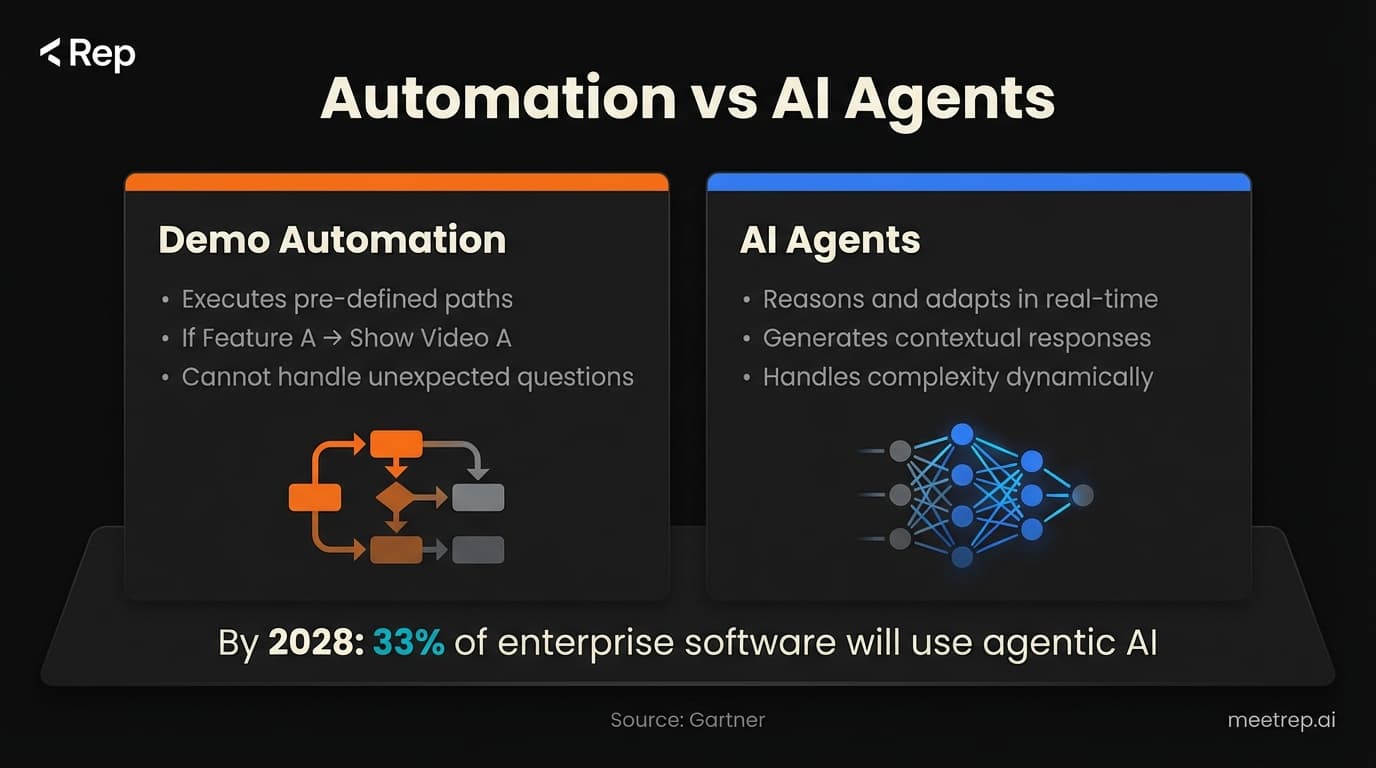
Demo automation—whether it's Consensus, Navattic, or any video-based tool—executes pre-defined paths. If the prospect selects "Feature A," they see Video A. If they select "Feature B," they see Video B. It's sophisticated branching logic, but it's still logic. It can't improvise.
AI agents are different. They reason. They adapt. They handle questions that weren't anticipated when the demo was created.
The Data: Gartner predicts that by 2028, 33% of enterprise software will use agentic AI, which can reduce sales cycles by up to 40% by handling complex interactions that static video cannot (Salesloft, Danish Lead Co.).
When a prospect asks an unexpected question about compliance, an automation system fails or redirects to a human. An AI agent generates a contextual response in real-time using your knowledge base.
That's not a marginal improvement. It's a category shift.
At Rep, this is exactly why we built an AI that joins video calls, shares its screen, and moves through your actual product live—answering questions as they come up, pivoting based on what the prospect cares about, and doing it all at 2 AM if that's when your APAC prospects are available.
This isn't about replacing human sellers. It's about handling the demos your team doesn't have time for—the early-stage discovery calls, the after-hours requests, the "I just want to see if it's worth my time" moments that pile up in the calendar.
When to use Consensus vs. when you need something different
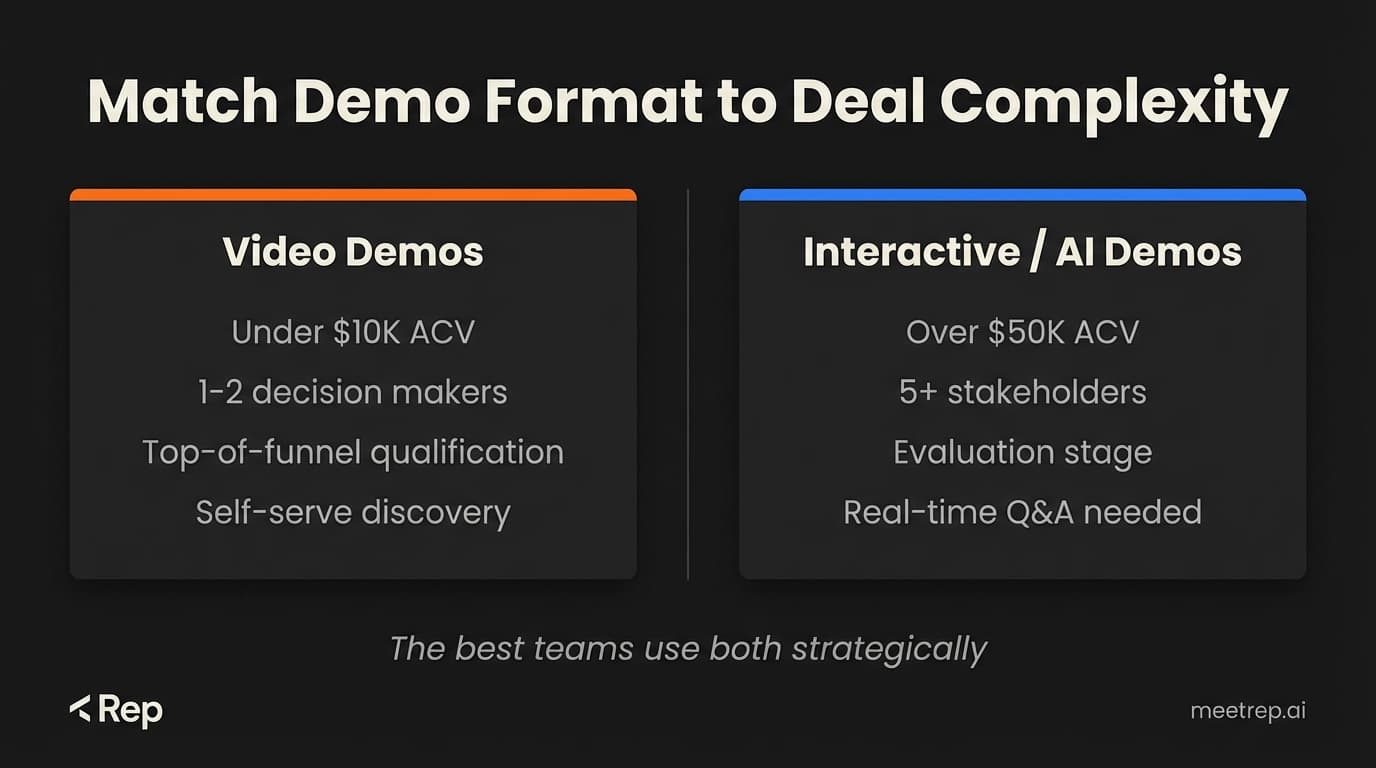
Here's my actual take: Consensus isn't the problem. Using Consensus wrong is the problem.
Your video demo platform has a job. That job is top-of-funnel qualification and scaling initial product awareness. For those use cases, it works.
Use video demos (Consensus) when:
- The deal is transactional (under $10K ACV)
- There's 1-2 decision-makers
- Prospects need to self-qualify
- You're scaling awareness, not closing deals
- Your SDR team needs to handle volume without burning out
Use something interactive or live when:
- Deal size exceeds $50K ACV
- Buying committee is 5+ stakeholders
- Prospects are in evaluation stage, not discovery
- Questions require real-time, contextual answers
- You're competing for a shortlist spot
My recommendation: Stop trying to make one tool do everything. Your tech stack should match demo format to deal complexity. Consensus for TOFU. Interactive or AI-driven demos for MOFU and BOFU. The companies winning enterprise deals in 2025 aren't choosing between automation and live engagement—they're using both, strategically.
The mistake I see most often? Sales leaders buy Consensus expecting it to accelerate enterprise deals. Then they're frustrated when complex opportunities still stall. The tool isn't broken. The expectation is.
What this means for your demo strategy in 2025
Let me bring this back to what actually matters: your pipeline.
The "Pipeline Paradox" is real. Salesso.com documented what many sales leaders already feel: activity is up 23%, but win rates are down 18%. More emails, more calls, more demos—and worse results.
Why? Because volume-focused automation doesn't solve complexity-focused problems.
When multi-threaded deals deliver a 480% higher win rate according to UserGems, and 78% of reps are still single-threaded (LinkedIn Sales Solutions/Ipsos), the issue isn't effort. It's approach.
A video demo that goes to one stakeholder doesn't multi-thread your deal. It doesn't surface the hidden buyers in Legal or Security who will kill the deal in week 11. It doesn't capture the insight that the CFO cares about implementation cost more than license cost.
What we learned building Rep: The gap isn't "automation vs. no automation." The gap is "passive content vs. active engagement." When buyers can ask questions and get real answers—in real time, about their specific situation—deals move faster. That's true whether the answerer is human or AI.
Here's what it comes down to: your demo strategy needs to match your deal complexity.
Video demos work. For the right use case. Consensus built a strong product for qualification and top-of-funnel awareness. But if you're wondering why your $200K enterprise deals keep stalling at the 11-person buying committee stage, the answer isn't "more video."
When 86% of B2B purchases stall and 40-60% end in "no decision," the solution isn't more content. It's adaptive engagement that meets each stakeholder where they are.
That's what we're building at Rep—AI that actually talks to your prospects, shows them your product live, and answers their questions in real-time. Not because video is bad. Because complex deals need something video can't be.
The question isn't whether to automate your demos. It's whether your automation can handle the complexity of how enterprise buyers actually buy.

Nadeem Azam
Founder
Software engineer & architect with 10+ years experience. Previously founded GoCustomer.ai.
Nadeem Azam is the Founder of Rep (meetrep.ai), building AI agents that give live product demos 24/7 for B2B sales teams. He writes about AI, sales automation, and the future of product demos.
Frequently Asked Questions
Table of Contents
- What is a Consensus demo, and what is it actually good at?
- The 13-stakeholder problem: Why video demos hit a wall
- Why 40-60% of your deals die to "no decision"
- Consensus's own data shows the engagement cliff
- The conversion gap: Interactive vs. video demos
- What buyers actually need (and video can't provide)
- The real difference between automation and AI agents
- When to use Consensus vs. when you need something different
- What this means for your demo strategy in 2025
Ready to automate your demos?
Join the Rep Council and be among the first to experience AI-powered demos.
Get Early AccessRelated Articles
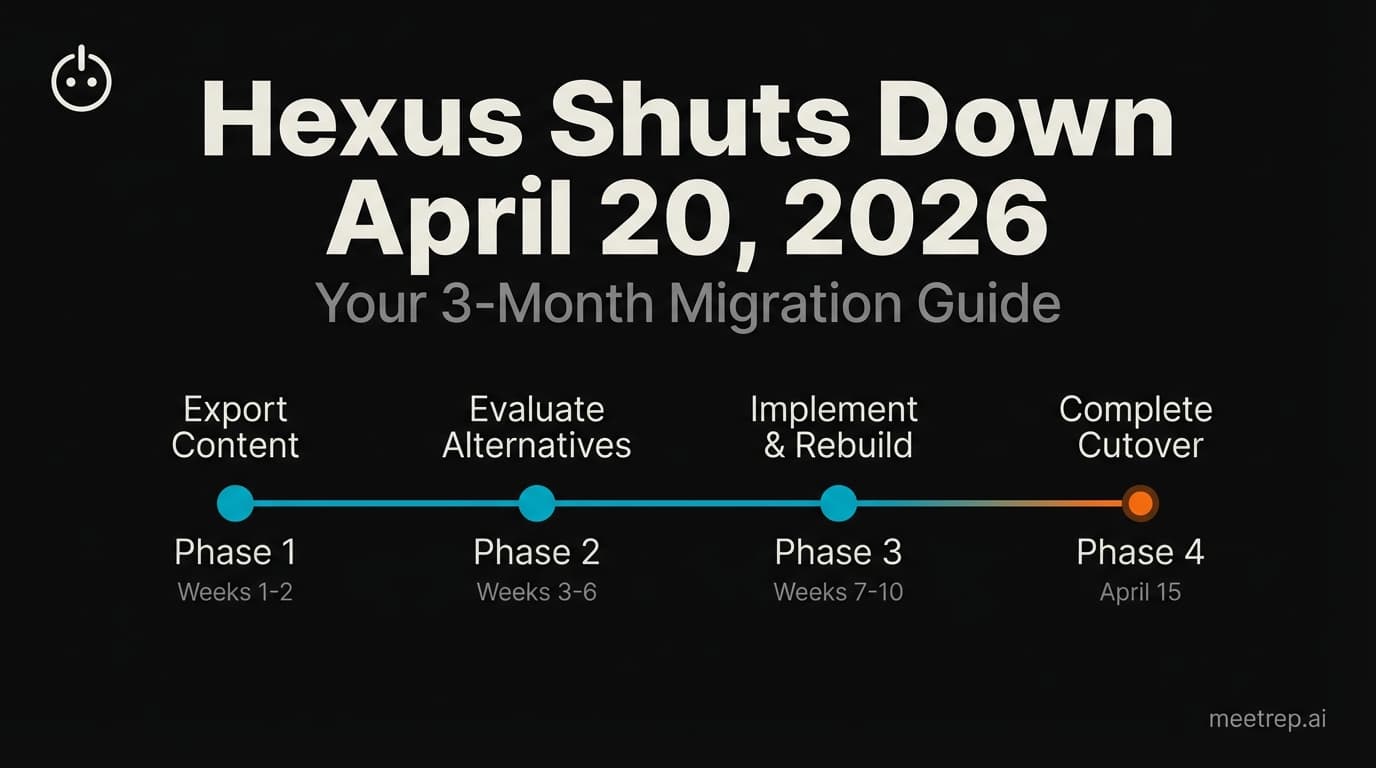
Hexus Acquired by Harvey AI: Congrats & What It Means for Demo Automation Teams
Hexus is shutting down following its acquisition by Harvey AI. Learn how to manage your migration and discover the best demo automation alternatives before April 2026.
Why the "Software Demo" is Broken—and Why AI Agents Are the Future
The traditional software demo is dead. Discover why 94% of B2B buyers rank vendors before calling sales and how AI agents are replacing manual demos to scale revenue.
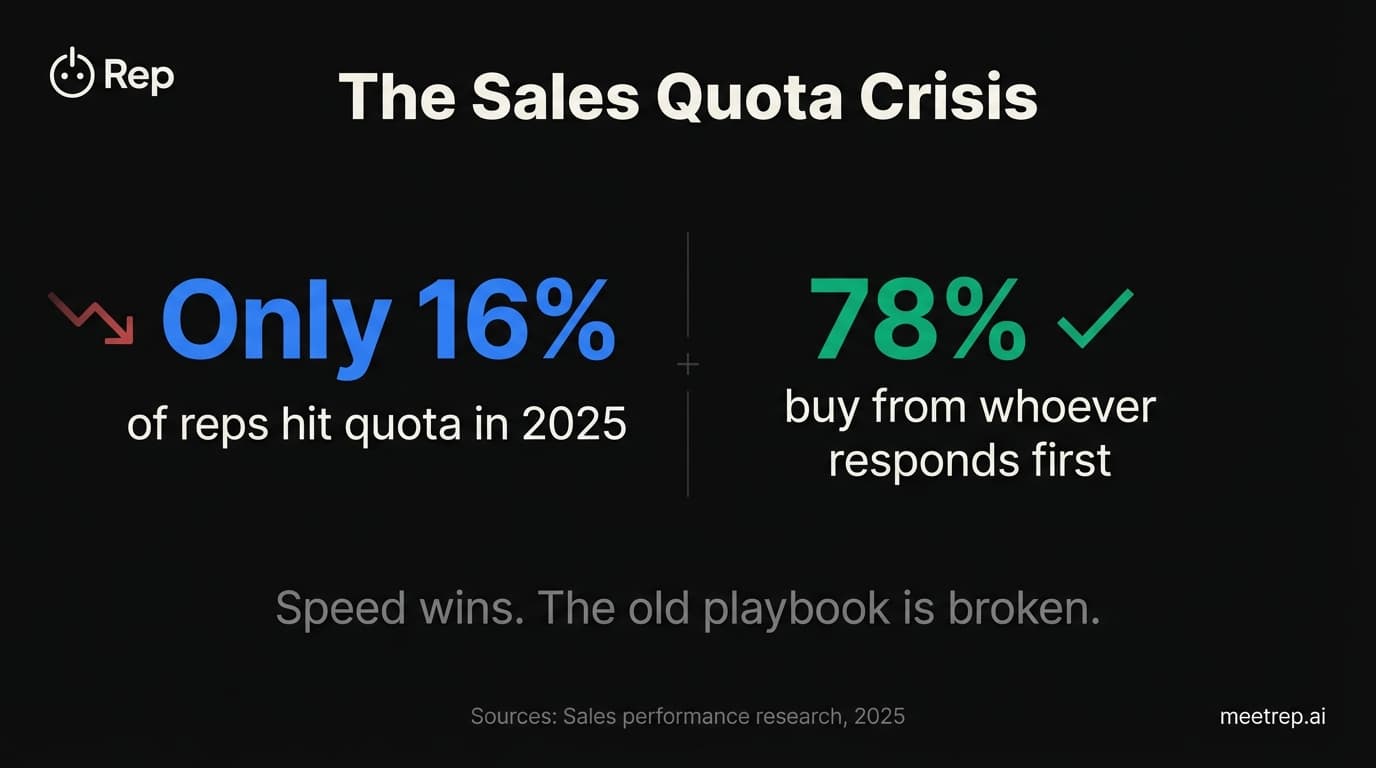
Why Autonomous Sales Software is the Future of B2B Sales (And Why the Old Playbook is Dead)
B2B sales is at a breaking point with quota attainment at 46%. Discover why autonomous 'Agentic AI' is the new standard for driving revenue and meeting the demand for rep-free buying.