What is Autonomous Sales Demonstration? The Complete Guide

Executive Summary
- Autonomous sales demonstration uses AI agents to deliver live, interactive product demos without human involvement
- Unlike recorded videos or static tours, autonomous demos join video calls and converse in real-time
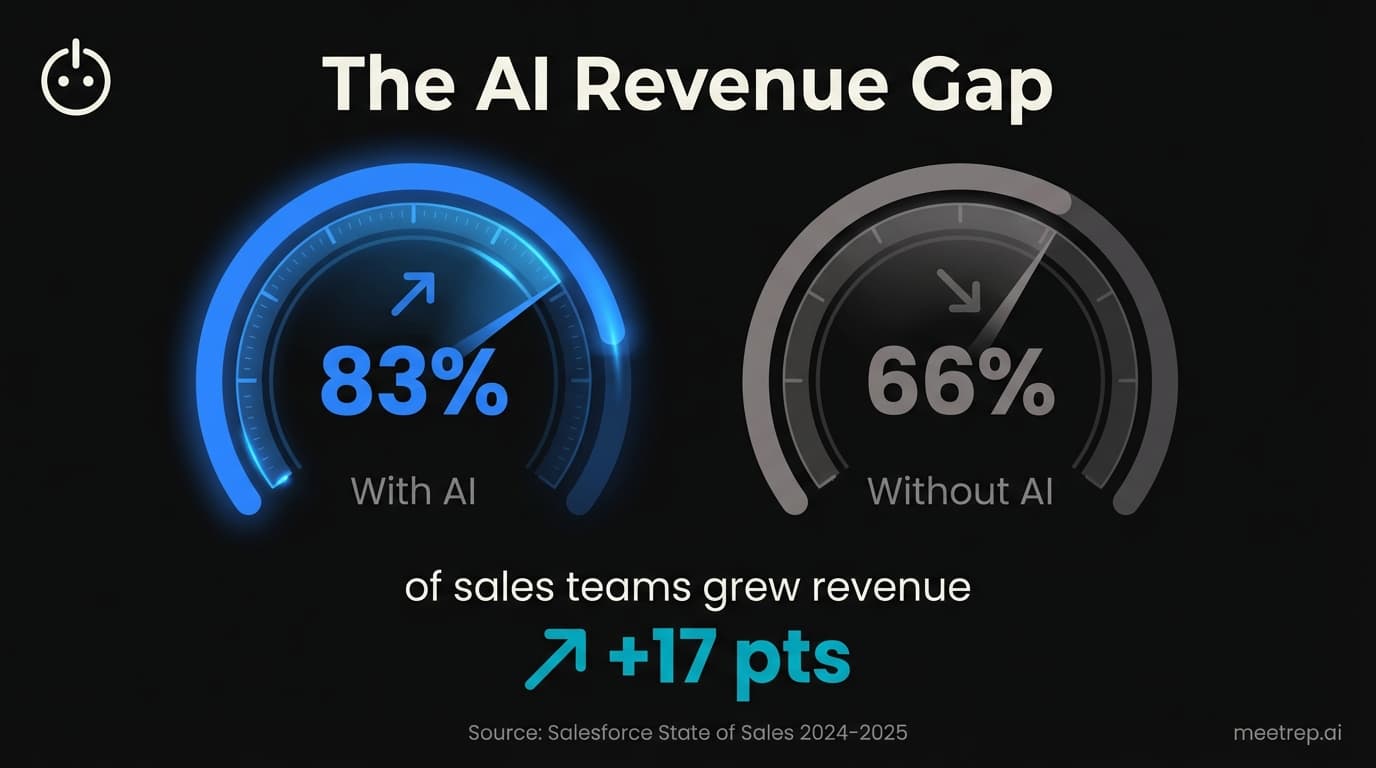
- 83% of sales teams using AI report revenue growth vs. 66% without AI (Salesforce)
- This isn't about replacing SEs—it's about eliminating demo scarcity
- The category is new (2024-2026), so honest evaluation matters
Your sales engineers are stretched thin. Prospects wait days for demos. And by the time you get on a call, half of them have already moved on.
That's the demo bottleneck—and it's costing you deals.
An AI sales demo sounds like the solution. But here's the problem: most "AI demo" tools aren't actually conducting demos. They're serving pre-recorded videos or click-through simulations. Useful, sure. But not the same thing.
Autonomous sales demonstration is different. It's AI that joins a video call, shares its screen, navigates your actual product, and has a real conversation with your prospect. No human required. I've spent the last year building in this space at Rep, and I'll walk you through exactly how it works—what's real, what's hype, and whether it makes sense for your team.
What Is Autonomous Sales Demonstration?
Autonomous sales demonstration is software that uses AI agents to deliver live product demos without a human sales rep or engineer on the call. The AI joins video meetings, shares its screen, navigates your actual product interface, and answers prospect questions through natural conversation—24/7, without scheduling constraints.
That definition matters because it's specific. And specificity matters in a category drowning in vague "AI-powered" claims.
Here's what autonomous demos are NOT:
- Not pre-recorded video demos (like Consensus offers)—those are passive, can't adapt to questions, and get stale fast
- Not interactive product tours (like Navattic or Storylane)—those are clickable simulations with preset paths, not live conversations
- Not chatbots on your website—those answer text questions but don't show your product
Autonomous demos sit in a different category entirely. The AI is an active participant. It talks. It shows. It responds to what the prospect actually asks.
Key Insight: The word "autonomous" is doing real work here. It means the AI operates independently—not as a helper to a human rep, but as the rep itself.
Why Traditional Demo Approaches Hit a Wall
The math on demos is brutal.
Sales engineers earn a median salary of $121,520 per year, according to the Bureau of Labor Statistics. And they're not giving demos all day—79% of SEs spend more than an hour weekly just maintaining demo environments. That's before the actual demo prep, delivery, and follow-up.
Meanwhile, sales professionals spend just 34% of their time actively selling (per industry benchmarks). The rest? Administrative work, internal meetings, CRM updates. Not revenue-generating activity.
So what happens when inbound demo requests spike? Three bad options:
- Make prospects wait. They schedule a demo for next week. Half go cold. Some evaluate competitors who responded faster.
- Hire more SEs. At $120K+ fully loaded, that's expensive. And ramping takes months.
- Push unqualified prospects to AEs. Now your closers are doing intro demos instead of closing.
None of these scale well. And every day you're stuck in this loop, deals slip away.
The Data:83% of sales teams with AI grew revenue compared to 66% without. The gap isn't subtle—it's 17 percentage points. (Salesforce State of Sales, 2024-2025)
And the adoption curve is steep. 43% of sales reps actively use AI tools in 2024, up from 24% in 2023—a 79% year-over-year increase, according to HubSpot.
The demo bottleneck is real. And autonomous demos are one way to break it.
How AI Actually Conducts Live Demos
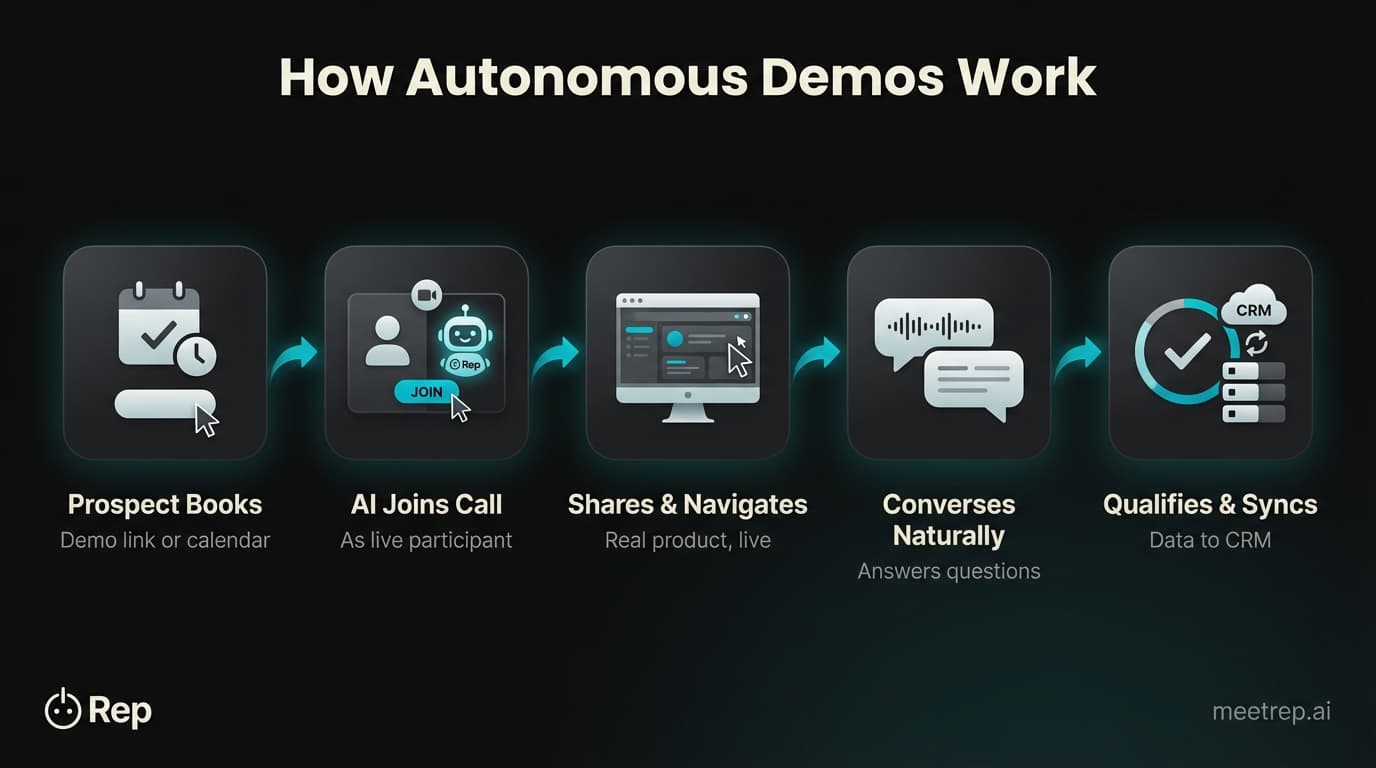
This is where most explanations get vague. "AI conducts demos" sounds impressive until you ask: how, exactly?
Here's the technical reality of how autonomous demo platforms work:
- Prospect books or clicks a demo link. This can be a calendar integration, a website button, or a link in an email sequence.
- AI agent joins the video call as a participant. Not a recording. Not a chat widget. An actual participant in the room, with audio and video presence.
- Agent shares its screen and launches your product. The AI controls a real browser in the cloud, logged into your demo environment with stored credentials.
- Natural language conversation begins. The prospect speaks. The AI listens, processes, and responds conversationally. No scripted menus.
- AI navigates based on the conversation. If the prospect asks about reporting, the AI clicks to the reports section. If they want to see integrations, it navigates there. Real-time adaptation.
- Knowledge base provides accurate answers. When technical questions arise, the AI queries documentation, FAQs, and trained content to respond accurately—not hallucinate.
- Qualification signals get captured. Pain points, objections, questions, decisions—these are extracted automatically and synced to your CRM.
- Follow-up happens automatically. Materials, summaries, next steps—sent without human intervention.
What we learned building Rep: The hardest part isn't the conversation. It's the browser automation. Making an AI reliably click the right button, fill the right form, scroll to the right section—in a live product that changes—took us months to get right. Most teams underestimate this.
By 2027, Gartner predicts 95% of seller research workflows will begin with AI, up from less than 20% in 2024. Autonomous demos are part of that shift—moving AI from research assistant to active participant.
Three Types of Demo Automation Compared
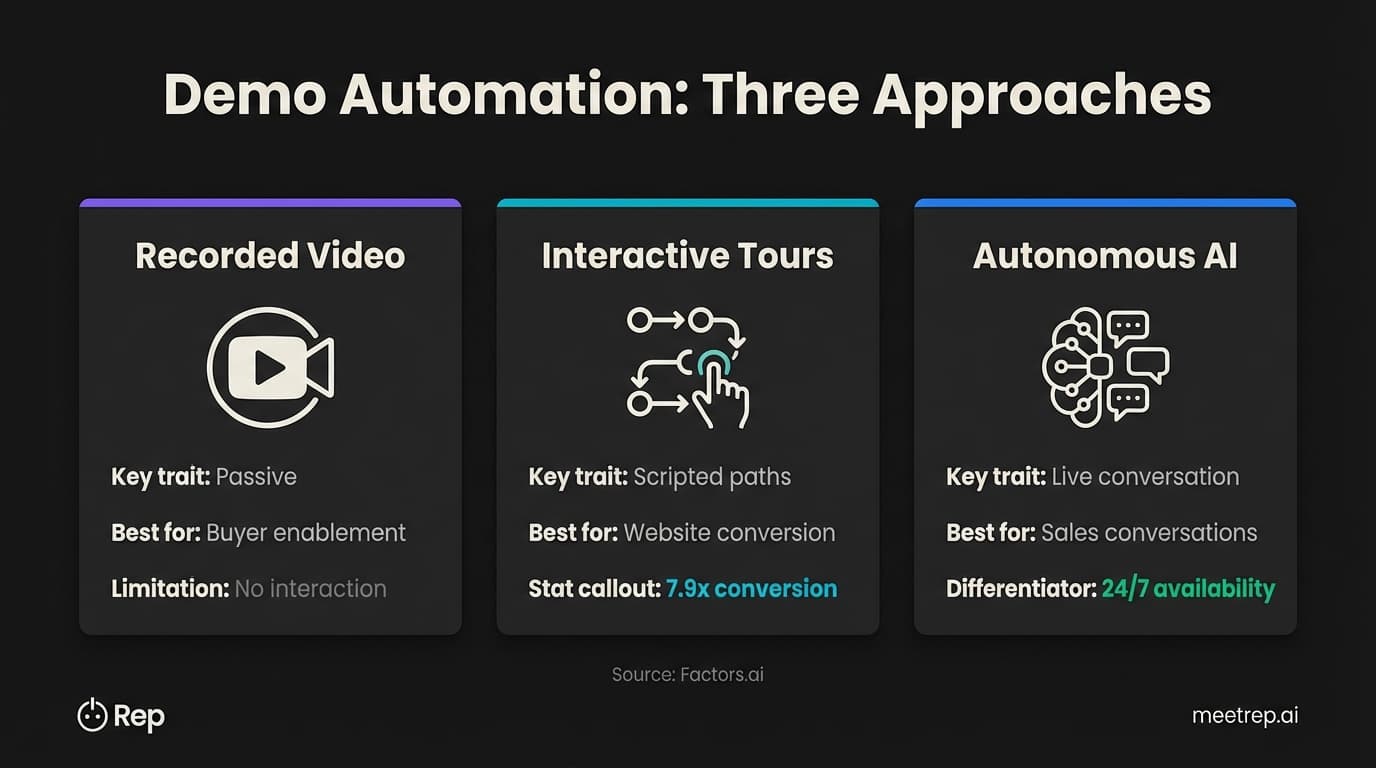
Not all "AI demos" are the same. The category splits into three distinct approaches, and picking the wrong one for your use case is an expensive mistake.
| Type | How It Works | Interaction Level | Best For | Key Limitation |
|---|---|---|---|---|
| Recorded Video Demos | Pre-recorded demos viewers watch on-demand | Passive (no interaction) | Buyer enablement, async sharing | Can't answer questions, gets outdated |
| Interactive Product Tours | Clickable HTML/CSS simulations of your product | Limited (preset paths) | Website conversion, self-service | No real conversation, scripted only |
| Autonomous AI Demos | Live AI agent on video calls with real product | Full conversation | True sales conversations, 24/7 availability | Requires knowledge base setup |
Recorded video demos (Consensus is the leader here) work well for buyer enablement—sending a video after a call so the champion can share internally. But they're not sales conversations. The prospect watches; they don't interact.
Interactive product tours (Navattic, Storylane, Walnut) are clickable simulations. Great for website conversion—interactive demos convert at 24.35% vs. 3.05% for traditional approaches, according to Factors.ai. That's 7.9x better. But prospects follow predetermined paths. They can't ask "what about X?" and see X.
Autonomous AI demos (Rep, and Saleo's recent announcement) are live conversations with AI agents that can adapt. This is the newest category—most platforms launched in 2024-2026.
Common mistake: Buying an interactive tour platform when you need autonomous demos, or vice versa. They solve different problems. Tours handle high-volume website conversion. Autonomous demos handle sales conversations.
What Real Companies Are Achieving
Let me share some verified results—not from our platform, but from the broader demo automation space. I want you to trust this guide, and that means showing what's working across the category, not just pushing our own numbers.
Enterprise scale:
- Oracle NetSuite deployed Consensus to 2,000 users overnight, delivering 20,000+ demos in 4 months with 1,600+ hours of engagement
- Salesforce Tableau rolled out to 13,000+ users with Consensus
- SAP Concur has delivered 100,000+ demos through automation, with 1,500+ hours of engagement
Mid-market results:
- Gainsight saw 25% higher win rates and cut demo response time from 48 hours to 1 hour using Demostack
- Trainual achieved 450% lift in free trial signups with interactive demos via Navattic
- Klue generated $1M in new pipeline from their Demo Arena, with 3x higher demo-to-opportunity conversion
Efficiency gains:
- Synack reduced demo prep from 100+ hours to 10 hours using Demostack
- meez grew self-serve revenue from 10% to 50% of total in 12 months with Navattic
These aren't cherry-picked outliers. This is what happens when you remove the demo bottleneck.
The Economics of Demo Automation
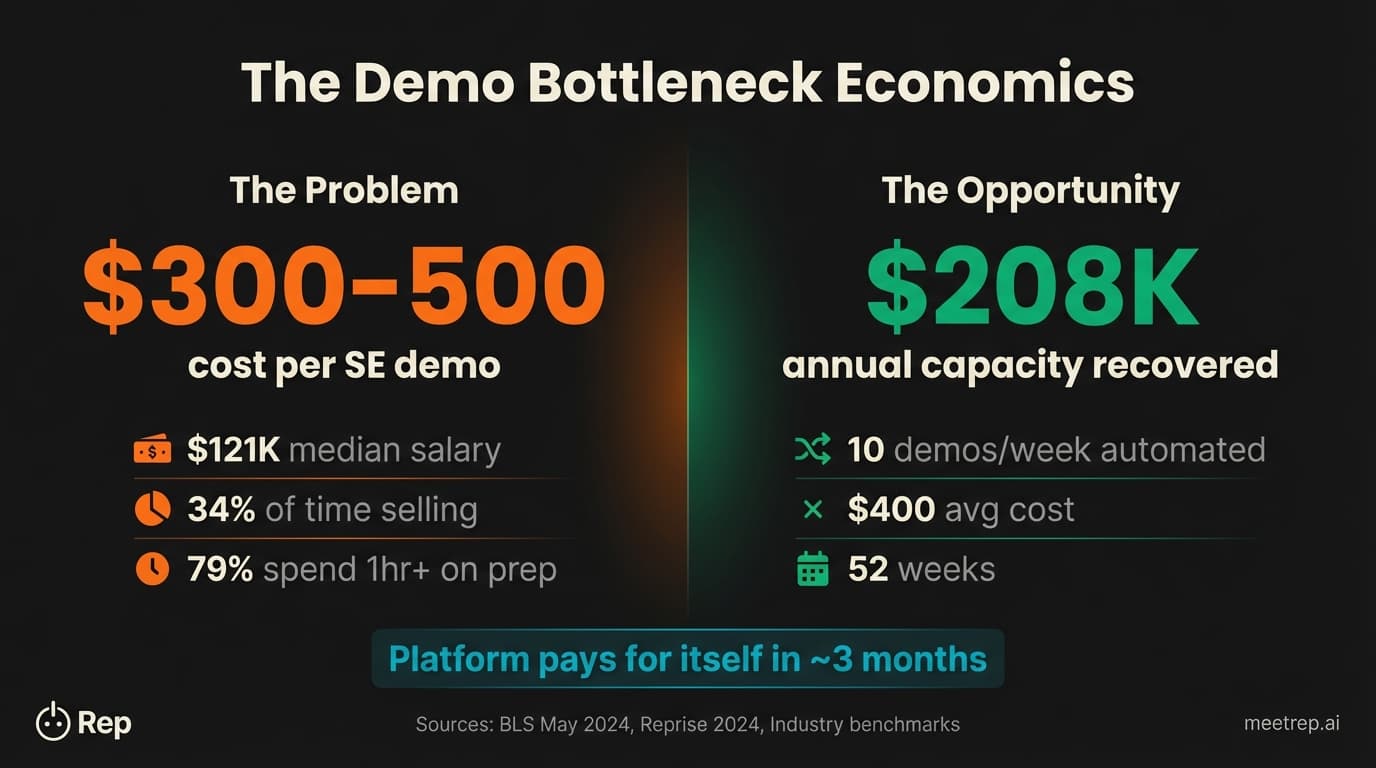
Let's do the math. This is usually where budget conversations die, so I'll be direct.
The SE cost problem:
| Factor | Number | Source |
|---|---|---|
| Median SE salary | $121,520 | BLS, May 2024 |
| Time spent on demo environments | 1+ hour/week (79% of SEs) | Reprise 2024 |
| Time actually selling | 34% of work hours | Industry benchmarks |
| Effective hourly cost per demo | $300-500+ | Loaded cost calculation |
So every SE-delivered demo costs you $300-500 in labor alone. That's before opportunity cost—what else could that SE be doing?
Demo automation costs:
- Entry-level platforms: $10K-$25K/year
- Mid-market: $25K-$55K/year
- Enterprise: $55K-$100K+/year
The ROI math:
If automation handles 10 demos per week that would otherwise require an SE, at $400 per demo, that's $4,000/week in recovered capacity. Or $208,000/year.
Even a $50K platform pays for itself in 3 months at that rate.
The Data: Organizations that benchmark their demos report 2x higher close rates, 33% shorter sales cycles, and 27% larger deals, according to Gartner research shared by Walnut. The compounding effects are real.
But I'll be honest: implementation isn't free. Demostack implementations can take a few months. Knowledge base setup requires real effort. ROI typically takes 7-17 months to fully realize, based on G2 data.
If someone tells you this is plug-and-play, they're selling you something. It's not.
Can AI Replace Sales Engineers?
This is the fear nobody wants to say out loud. So let me say it: no, autonomous demos won't replace good SEs.
Here's why.
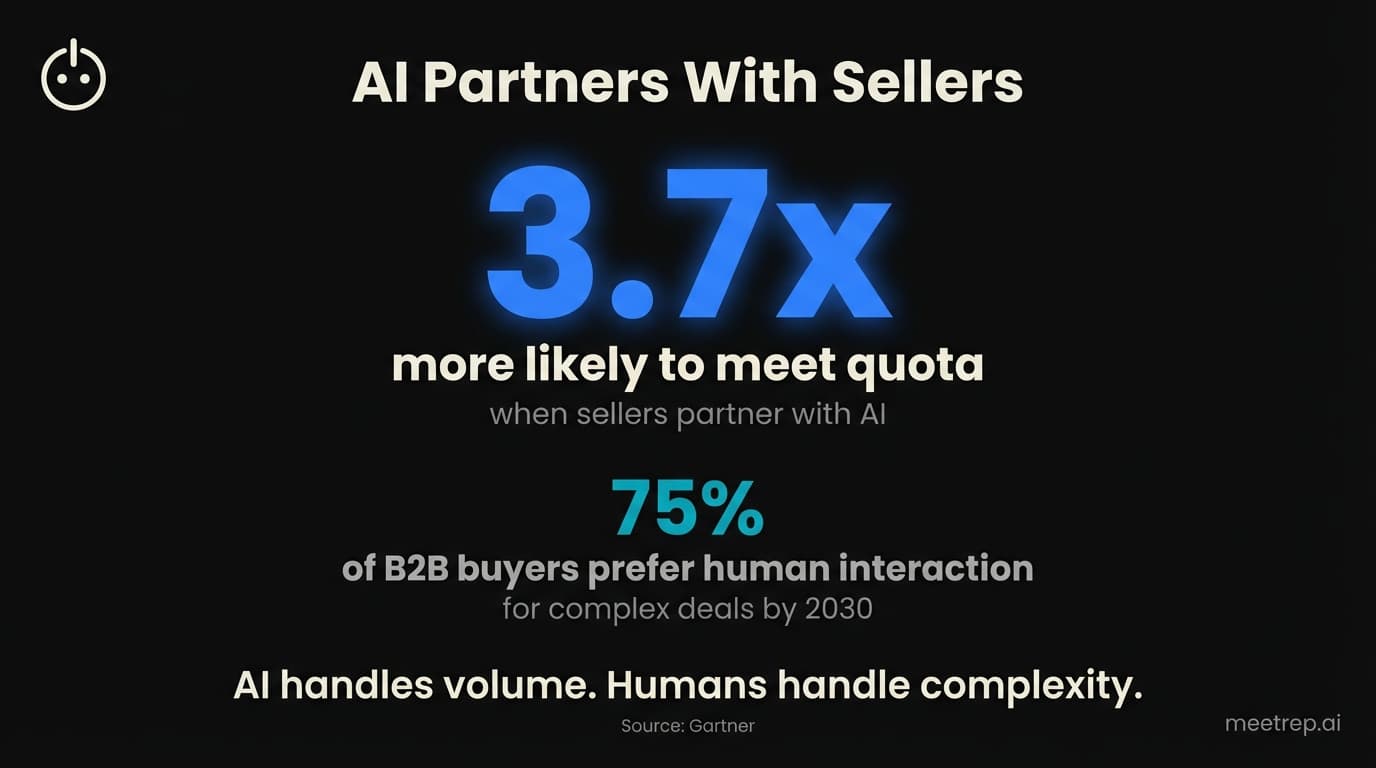
Gartner predicts 75% of B2B buyers will prefer human interaction over AI by 2030. For complex, high-stakes deals—enterprise contracts, multi-year commitments, technical integrations—buyers want a human who understands their business.
And the data backs this up: sellers who effectively partner with AI are 3.7x more likely to meet quota, according to Gartner. The key word is "partner." AI handles volume; humans handle complexity.
SE employment is actually projected to grow 5% from 2024-2034, with ~5,000 openings annually. Demand isn't disappearing.
What IS changing is the SE role. Instead of being the bottleneck for every intro demo, SEs become strategic advisors on deals that actually need them.
My take: The best SEs I know hate doing repetitive intro demos. It's boring. It's beneath their skillset. Autonomous demos free them to do the technical deep-dives and custom solutions work they actually enjoy—and that actually moves deals.
As one SaaStr commentary put it: "AI will make the best salespeople even better by freeing them up...while replacing the mediocre ones who don't add value beyond what AI can already provide."
That's not a threat. It's a filter.
How to Evaluate Autonomous Demo Platforms
If you're evaluating platforms, here's what actually matters. Skip the feature matrices and focus on these:
1. Demo type fit Does the platform match your use case? Video for buyer enablement. Interactive tours for website conversion. Autonomous agents for sales conversations.
2. Implementation reality Ask for honest timelines. "2-3 months" is normal. "2 weeks" is a red flag.
3. Integration depth CRM sync (Salesforce, HubSpot)? Calendar integration? Marketing automation? Evaluate based on your actual stack.
4. Knowledge base requirements What does the AI need to perform well? Some platforms require extensive documentation. Others can learn from watching demos.
5. Analytics and extraction What data do you get back? Engagement metrics are table stakes. Look for pain point extraction, qualification signals, conversation intelligence.
6. Pricing transparency If pricing isn't on the website, ask early. Enterprise platforms range $30K-$100K+. Get real numbers before investing in evaluation.
Current vendors:
| Platform | Primary Approach | Best For |
|---|---|---|
| Consensus | Video-based | Enterprise buyer enablement |
| Navattic | Interactive HTML | Website conversion, mid-market |
| Demostack | Full product cloning | Enterprise sandboxes |
| Reprise | Multiple demo types | Flexibility across use cases |
| Walnut | Sales demo templates | Standardized demos |
| Rep | Autonomous AI agent | Live conversations, 24/7 availability |
I'm obviously biased toward Rep—it's what we're building. But I also know it's not right for everyone. If you need buyer enablement videos, Consensus is proven. If you need website conversion, Navattic has strong results. Pick based on your actual problem.
The autonomous sales demo isn't about replacing your best people. It's about eliminating the scarcity that makes demos a bottleneck in the first place.
With SEs costing $120K+ annually and spending only 34% of their time selling, the math is clear: companies that automate routine demos will have more human capacity for deals that actually need it. And 84% of sales reps using AI say it saves them time, according to HubSpot's 2025 report.
The category is new. The technology is real. And if demo scheduling is strangling your pipeline, it's worth a serious look.
Want to see what autonomous demos actually look like in practice? Watch Rep in action and decide for yourself.

Nadeem Azam
Founder
Software engineer & architect with 10+ years experience. Previously founded GoCustomer.ai.
Nadeem Azam is the Founder of Rep (meetrep.ai), building AI agents that give live product demos 24/7 for B2B sales teams. He writes about AI, sales automation, and the future of product demos.
Frequently Asked Questions
Table of Contents
- What Is Autonomous Sales Demonstration?
- Why Traditional Demo Approaches Hit a Wall
- How AI Actually Conducts Live Demos
- Three Types of Demo Automation Compared
- What Real Companies Are Achieving
- The Economics of Demo Automation
- Can AI Replace Sales Engineers?
- How to Evaluate Autonomous Demo Platforms
Ready to automate your demos?
Join the Rep Council and be among the first to experience AI-powered demos.
Get Early AccessRelated Articles
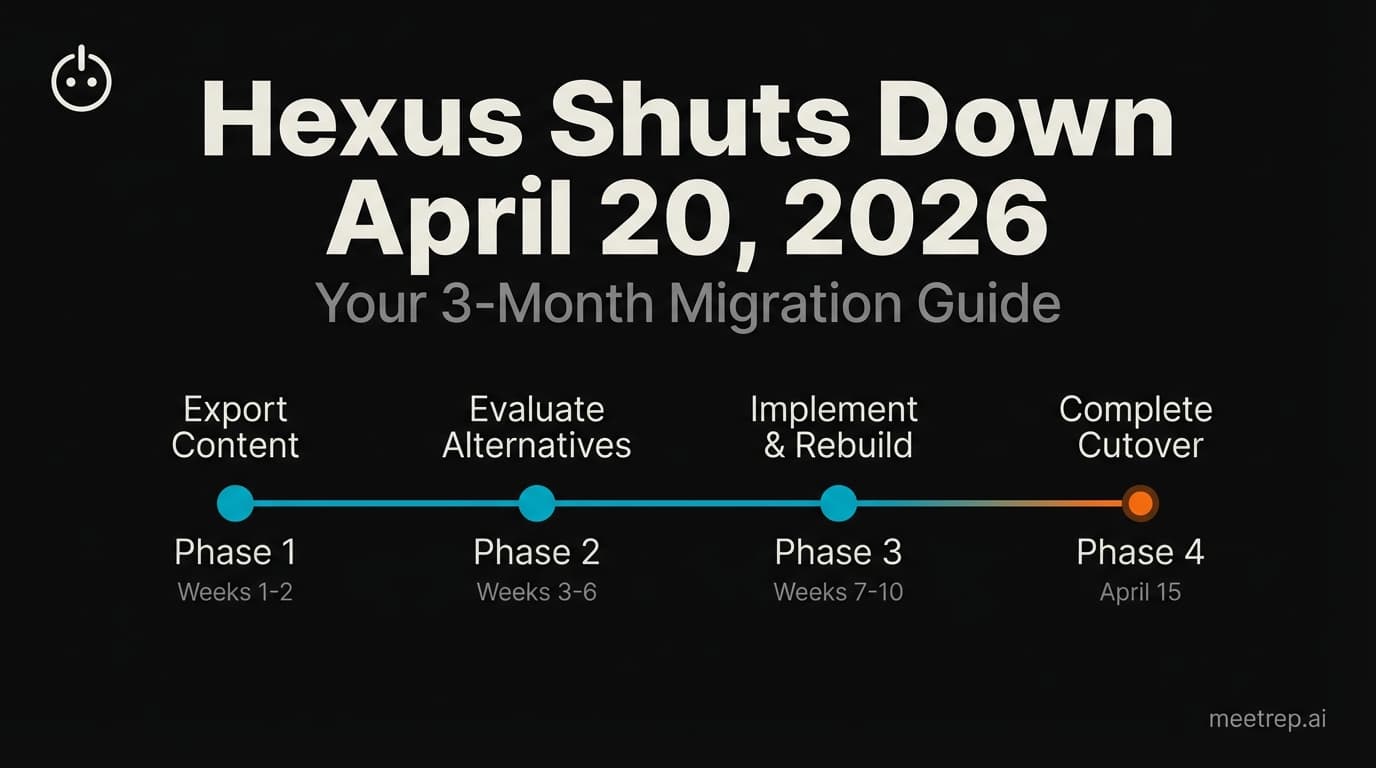
Hexus Acquired by Harvey AI: Congrats & What It Means for Demo Automation Teams
Hexus is shutting down following its acquisition by Harvey AI. Learn how to manage your migration and discover the best demo automation alternatives before April 2026.
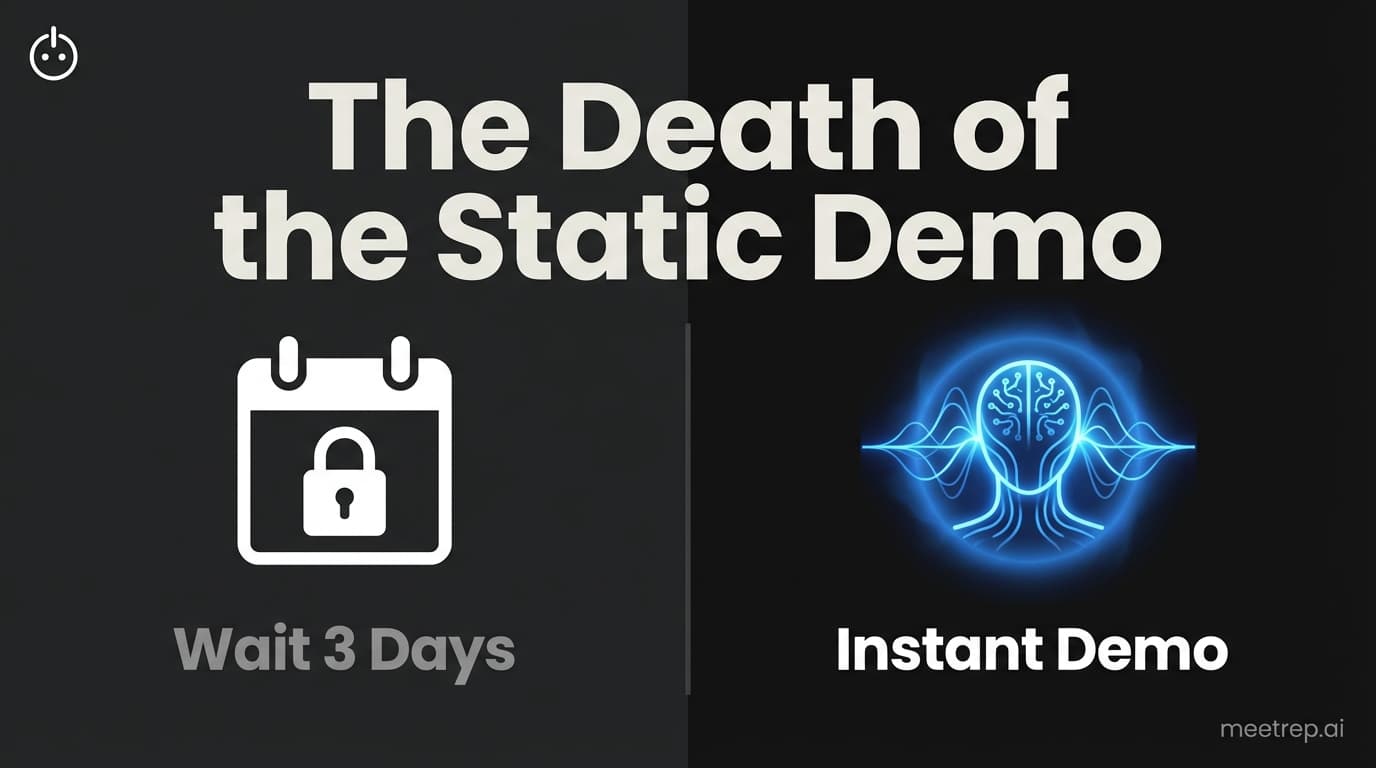
Why the "Software Demo" is Broken—and Why AI Agents Are the Future
The traditional software demo is dead. Discover why 94% of B2B buyers rank vendors before calling sales and how AI agents are replacing manual demos to scale revenue.
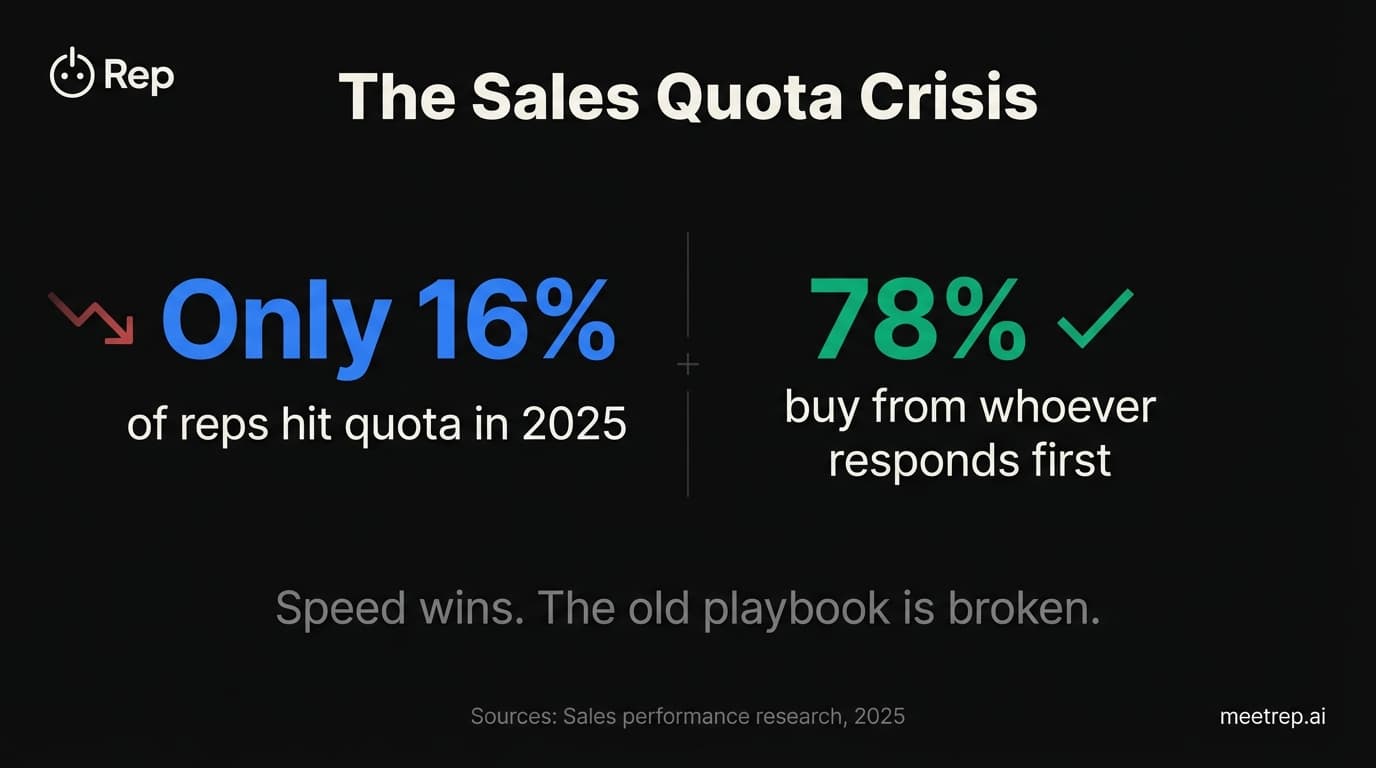
Why Autonomous Sales Software is the Future of B2B Sales (And Why the Old Playbook is Dead)
B2B sales is at a breaking point with quota attainment at 46%. Discover why autonomous 'Agentic AI' is the new standard for driving revenue and meeting the demand for rep-free buying.