Voice Over Examples in 2026: From Scripts to AI Sales Agents

Executive Summary
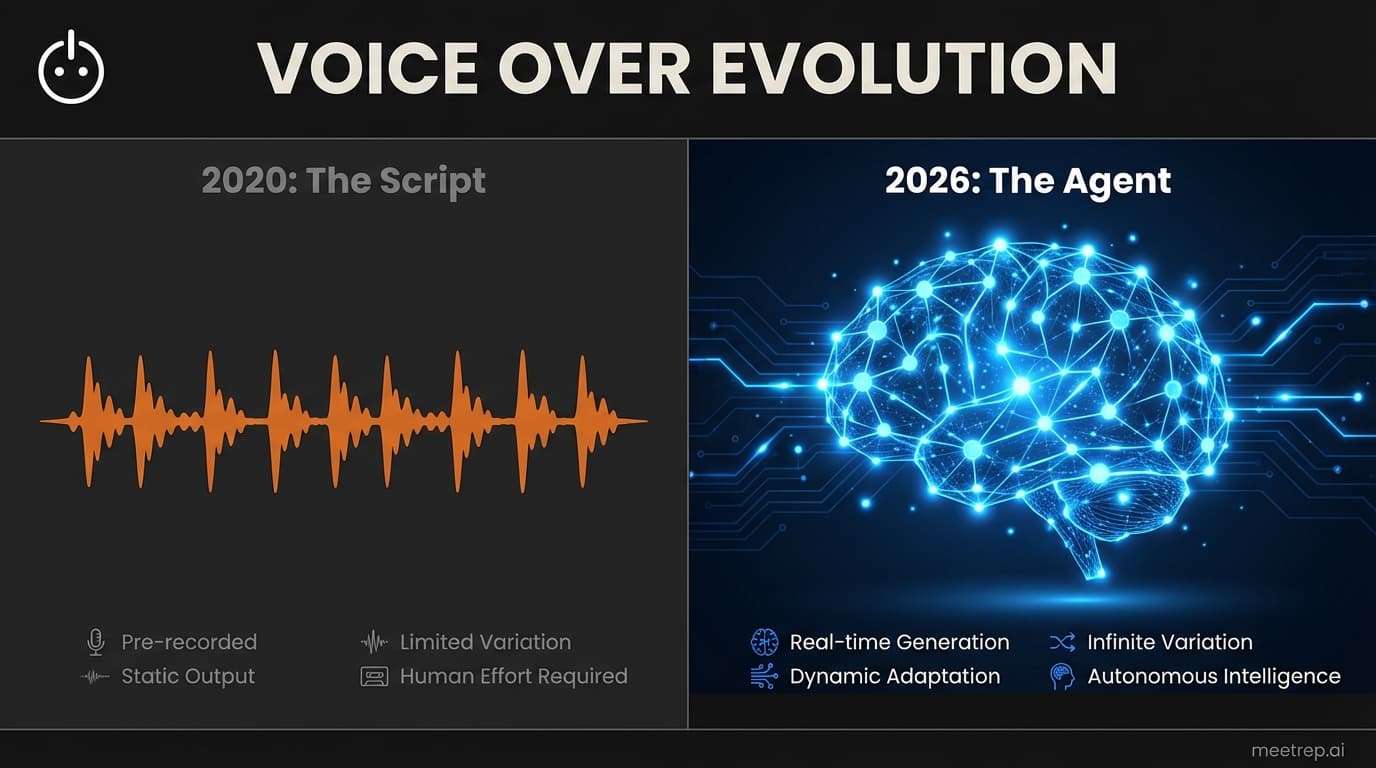
- The Shift: "Voice over" has split into two categories: Passive (narrative) and Active (agentic).
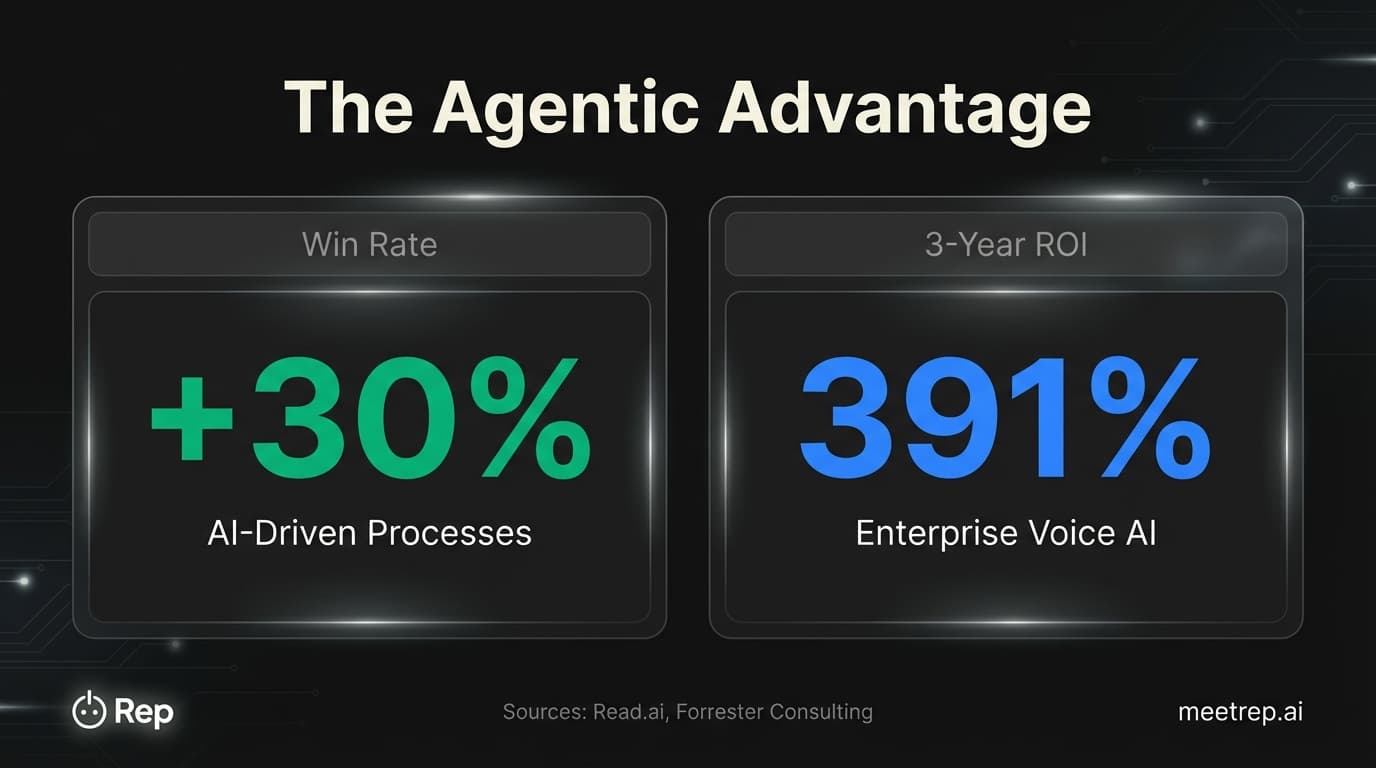
- The Money: AI-driven sales processes are showing a 30% improvement in win rates (Read.ai).
- The Risk: Speed is everything. A 1-second delay in response time drops customer satisfaction by 16% (VoiceInfra.ai).
- The Fix: Stop writing linear scripts. Start designing conversation flows.
Most marketing leaders searching for voice over examples are looking for the wrong thing.
Usually, they want a script for an explainer video or a polished recording for a webinar intro. In 2020, that was enough. But in 2026, the game has changed entirely. We aren't just broadcasting audio at prospects anymore; we are having conversations with them.
At Rep, we’ve watched this shift happen in real-time. The teams winning right now aren't looking for a "voice that reads." They are looking for a "voice that sells."
I’m talking about Agentic AI.
This isn't about replacing a voice actor for a 30-second ad spot. It's about deploying autonomous agents that can handle discovery calls, run product demos, and answer objections at 2 AM. The market is moving fast—Juniper Research projects that AI agents will handle 34 billion interactions by 2027.
If you're still writing static scripts, you're solving yesterday's problem. Here is how to master voice over in the age of the autonomous agent.
What Are Voice Over Examples in 2026?
A voice over example in 2026 falls into one of two distinct categories: Passive Narrative (recorded audio for video/ads) or Active Agentic (dynamic AI that converses in real-time). While passive voice over is still used for brand awareness, active voice agents are rapidly taking over mid-to-bottom funnel activities like sales demos and support.
Understanding this split is critical. If you apply "passive" rules to "active" agents, you will fail.
The Two Types of Voice
| Feature | Passive Voice Over (Old School) | Active Voice Agents (The New Standard) |
|---|---|---|
| Format | Static .WAV / .MP3 file | Real-time, bi-directional stream |
| Primary Use | Explainer videos, TV ads, Pre-roll | Live demos, SDR screening, Support |
| Input | Linear Script | Knowledge Base + Guardrails |
| Goal | Awareness / Education | Conversion / Booking Meetings |
| Example Tools | Voices.com, Murf.ai | Rep, PolyAI, Retell |
When we built GoCustomer.ai, we saw how limited static content was. You could send a perfect video, but if the prospect had one specific question the video didn't answer, the deal stalled.
Active agents fix this. They don't just read; they react.
3 Active Voice Over Examples You Can Steal
When you move to active voice agents, you stop writing "scripts" and start designing "flows."
At Rep, we don't tell the AI exactly what to say word-for-word. That sounds robotic. Instead, we give it a persona, a goal, and a knowledge base. Here are three examples of how this looks in practice.
1. The "24/7 Demo" Flow (Inbound)
This is the most common use case we see. A prospect lands on your site at 11 PM. They want to see the product now, not next Tuesday when your AE has an opening.
The Old Way (Passive):
- Asset: A 3-minute pre-recorded Loom video.
- Result: Prospect watches 45 seconds, gets bored, leaves.
The New Way (Active Agent):
- Asset: An interactive Rep agent.
- Voice Style: Helpful, concise, consultative.
- The Flow:
Why this works: It's immediate gratification. And the data backs it up—Read.ai reports that AI-driven sales processes are improving win rates by 30% on average.
2. The "Objection Pivot" (Loss Framing)
This is where most "chatbots" fail. They give generic answers. A good voice agent uses psychology.
Scenario: The prospect says, "This looks great, but it's too expensive for us right now."
Bad Voice Example:
"I understand. Our pricing is competitive. Would you like to see the pricing page?"
Good Voice Example (Active):
"I get that. Budget is always tight. But think about what it costs to not have this. If your team is spending 10 hours a week scheduling meetings, you're losing about $25k a year in productivity alone. We usually pay for ourselves in month two. Want to see the ROI calculator?"
This is loss framing. We built Rep to understand these conversational nuances. It doesn't just answer; it reframes.
3. The "Qualification Handoff"
Active agents shouldn't try to close enterprise deals alone. Their job is to get the ball to the 1-yard line so your human AE can score.
The Flow:
- Qualify: Agent confirms budget, authority, need, and timeline (BANT).
- Hook: "Based on what you told me about [Problem X], I think our Enterprise plan is the right fit."
- Handoff: "I see Sarah, our Senior AE, has time tomorrow at 2 PM. Want me to book that for you?"
It happens instantly. No email ping-pong.
The Metrics That Matter: Latency & Emotion
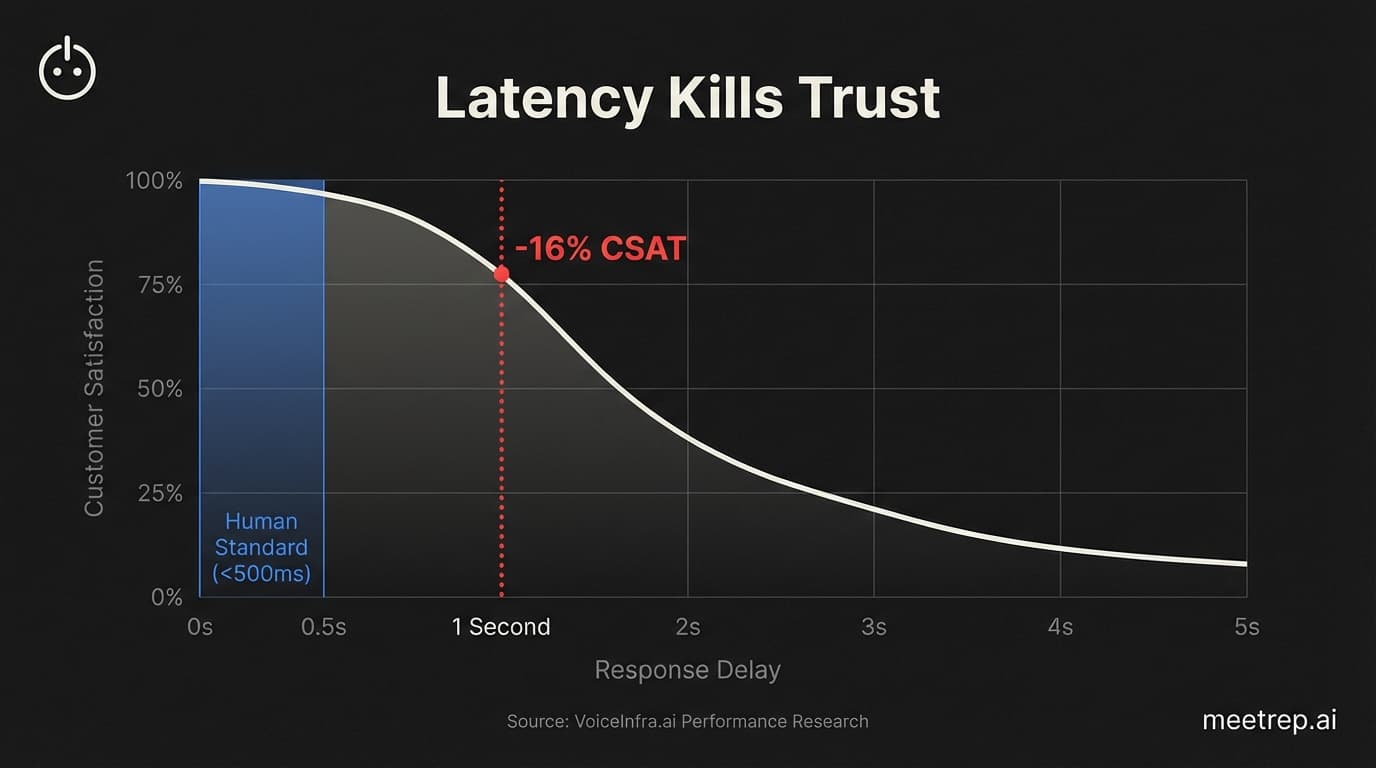
If you take nothing else from this post, remember this: Latency kills trust.
In the world of voice over examples, "sounding human" isn't just about tone. It's about speed. When humans talk, we overlap. We respond in milliseconds.
The Data: According to research cited by VoiceInfra.ai, there is a 16% reduction in customer satisfaction (CSAT) for every single second of latency in voice interactions.
Why We Built Rep for Speed
When we started architecting Rep, we realized that standard LLM (Large Language Model) responses were too slow. Waiting 3 seconds for an answer makes the AI sound like a walkie-talkie from the 90s. It breaks the illusion immediately.
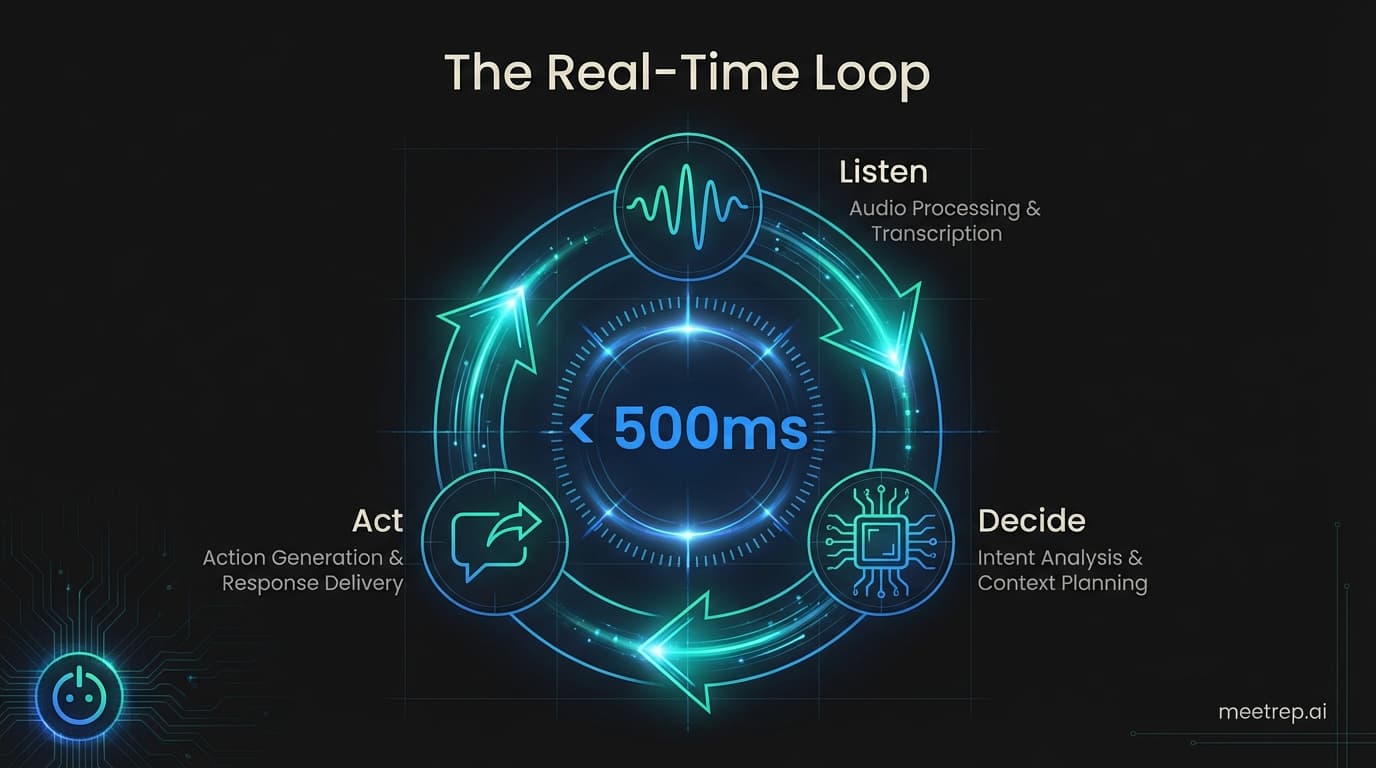
We had to build what’s called a "flash planner" architecture. This allows the agent to:
- Listen to the input.
- Decide on an action (click a button, speak, wait).
- Execute that action.
All in under 500ms.
If you are evaluating voice AI tools, stop looking at their "voice skins" and start looking at their response times. If they don't publish their latency metrics, run.
The "Vibe" Factor
Speed is the foundation, but emotion is the finish.
Modern text-to-speech (TTS) engines have moved way beyond robotic monotones. We can now use "style prompts" to direct the AI's emotional state.
- [Excited]: "You're going to love this next feature."
- [Serious]: "Security is our top priority."
- [Empathetic]: "I know migrations can be a nightmare."
According to Voices.com's 2025 Trends Report, 52% of voice buyers are focusing specifically on "brand marketing" qualities. They want character, not just clarity.
Real-World Success Stories (Verified)
You might be thinking, "This sounds cool, but does it actually work at scale?"
The answer is yes. But don't take my word for it. Look at the data from the last 12 months.
PolyAI (The ROI Case)
PolyAI is a major player in the enterprise voice space. A Forrester Consulting study commissioned by them found that their conversational AI delivered a 391% ROI over three years.
Think about that. Nearly 4x return. The study also noted a 50% reduction in call abandonment rates. Why? Because people didn't have to wait on hold.
Klarna (The Scale Case)
Klarna famously deployed an AI assistant that handled 2.3 million conversations in its first month—equivalent to the work of 700 full-time agents (Klarna Press Release).
Key Insight: While Klarna later announced plans to re-hire humans for complex issues, this proves the massive scalability of voice and chat agents for Tier 1 support. The future is hybrid: AI for scale, humans for nuance.
Writing for AI Voice Agents: A New Skill Set
You can't just copy-paste your video script into an agent. It won't work.
When writing for active voice over, you are engaging in Prompt Engineering, not scriptwriting. You are defining the boundaries of the conversation, not the exact words.
3 Rules for Voice Agent Prompts
- Define the Guardrails: Don't just say "Sell the product." Say, "If asked about pricing, give a range of $10k-$50k, but do not quote a specific number without asking for seat count first."
- Set the Persona: "You are Puck. You are helpful, energetic, and concise. You avoid jargon. You speak in short sentences."
- Feed the Knowledge Base: The agent is only as good as its data. At Rep, we allow you to upload your existing sales playbooks and documentation. The agent "reads" these instantly and uses them to ground its answers.
Before vs. After: The Prompt Upgrade
| The "Bad" Prompt (Script Style) | The "Agentic" Prompt (Guardrail Style) |
|---|---|
| "Say exactly: 'Hello, our pricing is $50/month. Do you want to buy?'" | "Greet the user warmly. If they ask about price, confirm they are a B2B business first. If yes, quote $50/month. If no, refer them to the consumer page." |
| Why it fails: It breaks if the user asks a question first. | Why it works: It adapts to the user's input logic. |
Common Mistake: Trying to make the agent sound too human by adding fake typing sounds or pretending to "look something up." Users hate being tricked. It's better to be a helpful, super-fast AI than a fake human.
Conclusion
The era of searching for "voice over examples" and getting a list of MP3 files is over.
In 2026, voice is software. It’s dynamic, it’s integrated, and it’s agentic. You have a choice: you can keep recording static assets that talk at your prospects, or you can deploy agents that talk with them.
My recommendation? Start small. Pick one high-traffic, low-complexity touchpoint—like your inbound demo request flow—and test an agent there. You'll likely see what we see: higher engagement, faster qualification, and a sales team that finally has time to focus on closing.
Don't just hire a voice. Hire a Rep.

Nadeem Azam
Founder
Software engineer & architect with 10+ years experience. Previously founded GoCustomer.ai.
Nadeem Azam is the Founder of Rep (meetrep.ai), building AI agents that give live product demos 24/7 for B2B sales teams. He writes about AI, sales automation, and the future of product demos.
Frequently Asked Questions
Table of Contents
- What Are Voice Over Examples in 2026?
- 3 Active Voice Over Examples You Can Steal
- The Metrics That Matter: Latency & Emotion
- Real-World Success Stories (Verified)
- Writing for AI Voice Agents: A New Skill Set
- Conclusion
Ready to automate your demos?
Join the Rep Council and be among the first to experience AI-powered demos.
Get Early AccessRelated Articles
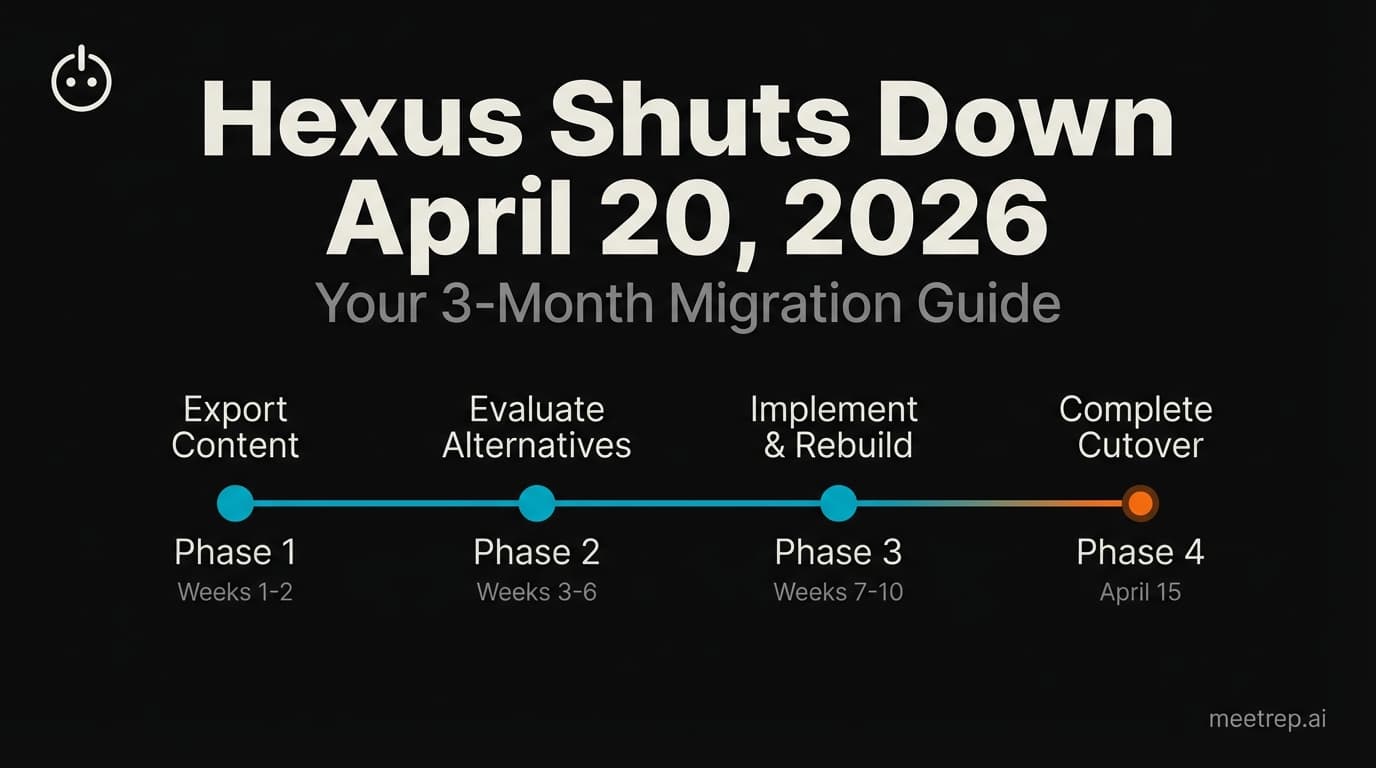
Hexus Acquired by Harvey AI: Congrats & What It Means for Demo Automation Teams
Hexus is shutting down following its acquisition by Harvey AI. Learn how to manage your migration and discover the best demo automation alternatives before April 2026.
Why the "Software Demo" is Broken—and Why AI Agents Are the Future
The traditional software demo is dead. Discover why 94% of B2B buyers rank vendors before calling sales and how AI agents are replacing manual demos to scale revenue.
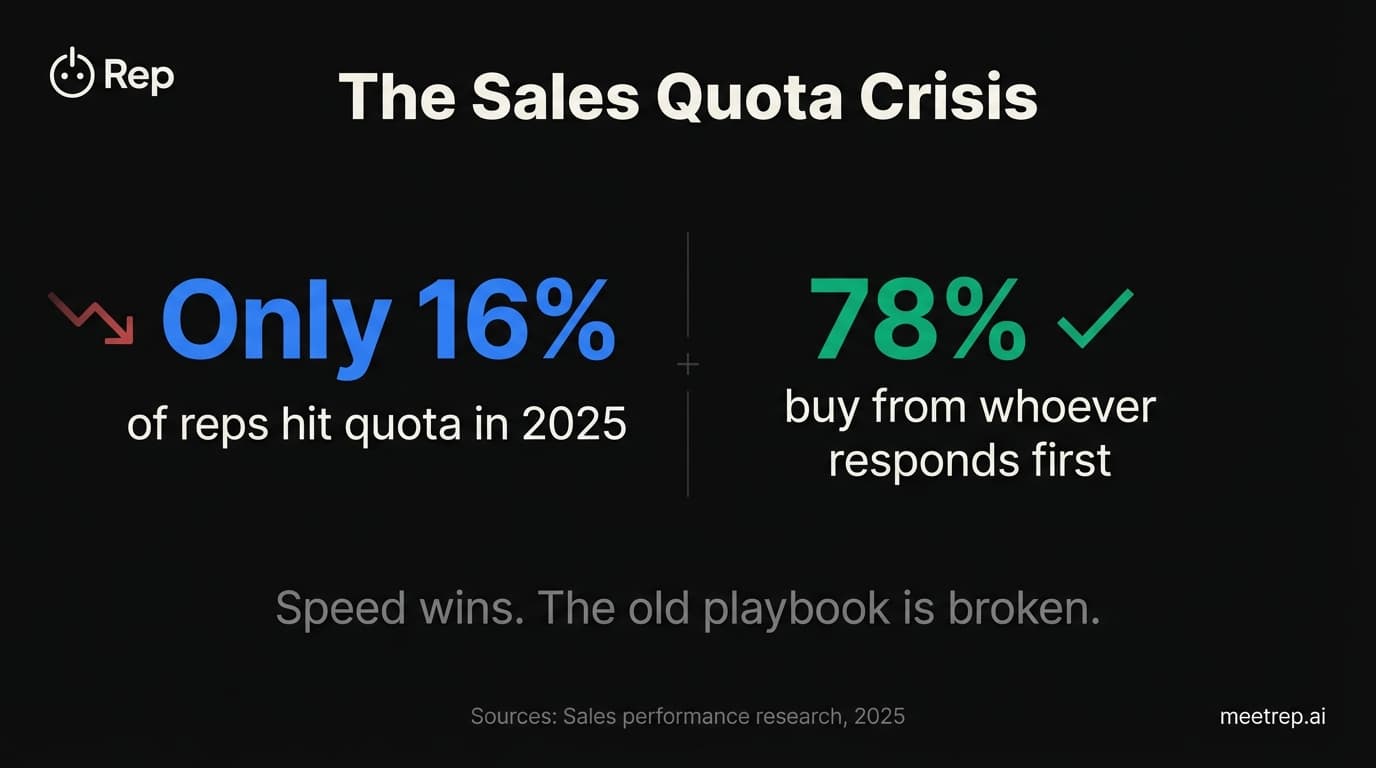
Why Autonomous Sales Software is the Future of B2B Sales (And Why the Old Playbook is Dead)
B2B sales is at a breaking point with quota attainment at 46%. Discover why autonomous 'Agentic AI' is the new standard for driving revenue and meeting the demand for rep-free buying.