Top Demoboost Alternatives To Scale Sales Demos (2026 Guide)

Executive Summary
- Best for Autonomous Selling: Rep (Your AI sales agent that joins calls 24/7).
- Best for Marketing Embeds: Storylane (Fastest setup, lightweight).
- Best for Sales Personalization: Walnut (High-fidelity, no-code customization).
- Best for Live Data Injection: Saleo (Changes data in your live app).
- Best for Enterprise Sandboxing: Demostack (Clones full environments).
If you are reading this, you probably hit the wall with Demoboost. Maybe the overlay setup got too complex. Maybe you saw the G2 reviews about "slow loading" times. Or maybe you just realized that in 2026, buyers want more than a static click-through tour.
They want answers. Now.
I get it. When we built GoCustomer.ai, we saw how desperate teams were to automate their sales motion. But automation often meant losing the human touch. That is the trade-off most tools force you to make: speed or quality.
But the market has shifted. According to Forrester, more than 50% of large B2B transactions will be processed through self-serve channels in 2025. You can't afford friction.
This guide breaks down the top Demoboost alternatives based on my experience building in this space. We will look at the new wave of Agentic AI (like Rep), the marketing favorites (like Storylane), and the heavy-duty enterprise sandboxes (like Demostack).
TL;DR: The Top Contenders
- Best for Autonomous Selling: Rep (Your AI sales agent that joins calls 24/7).
- Best for Marketing Embeds: Storylane (Fastest setup, lightweight).
- Best for Sales Personalization: Walnut (High-fidelity, no-code customization).
- Best for Live Data Injection: Saleo (Changes data in your live app).
- Best for Enterprise Sandboxing: Demostack (Clones full environments).
Why Look for a Demoboost Alternative?
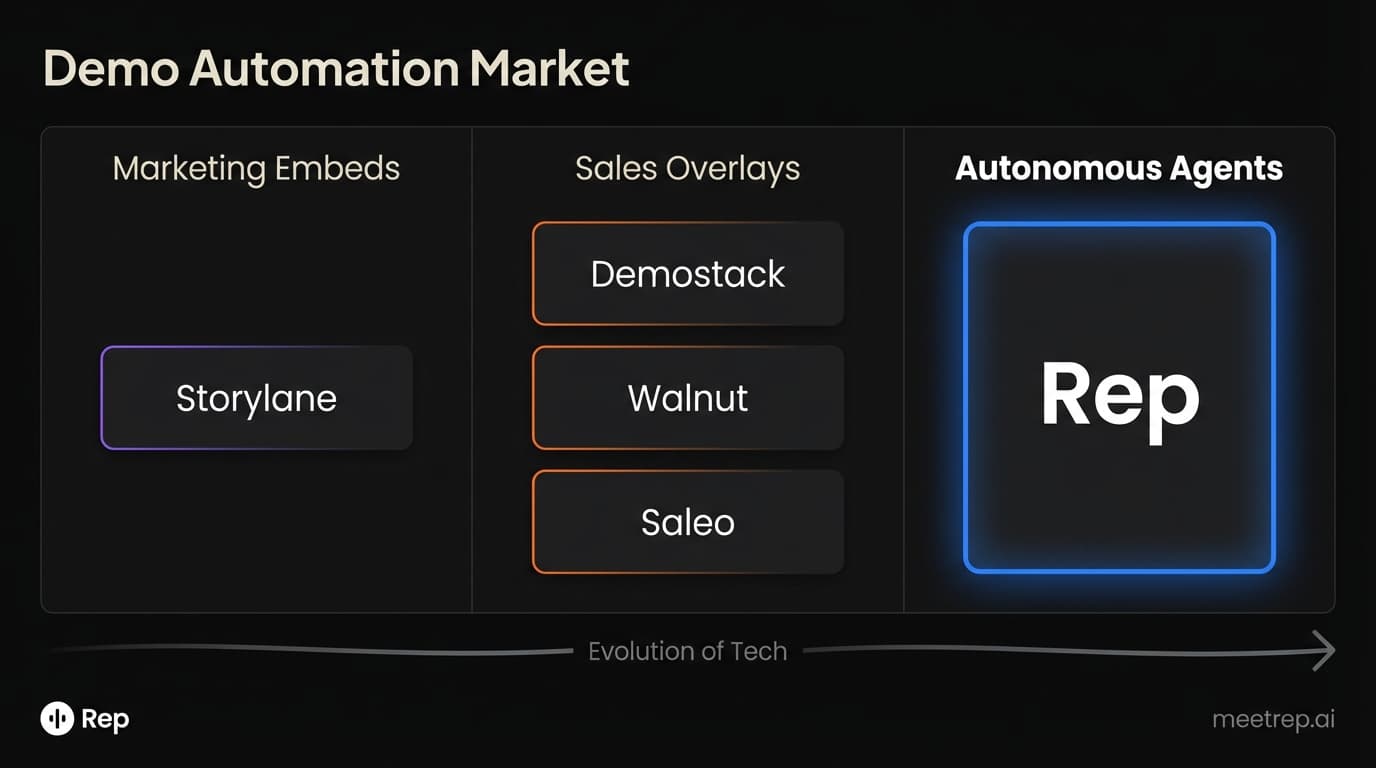
Top Demoboost alternatives generally offer faster implementation speeds, lighter-weight loading times, or more advanced "agentic" capabilities than Demoboost's traditional overlay model. While Demoboost is strong for complex presales enablement, teams often switch to reduce technical overhead or to access autonomous AI features that can actually sell, not just show.
Here is the reality. Demoboost operates in the "overlay" category. It sits on top of your product to guide users.
But user feedback paints a mixed picture. Verified reviews on G2 mention that demonstrations can sometimes take "too long to load," which deters customers. In a world where attention spans are measured in milliseconds, a loading spinner is a deal-killer.
The Data: According to Forrester and Corporate Visions, 86% of B2B purchases stall during the buying process. Friction—like slow demos or waiting for a rep—is the primary culprit.
So, what should you use instead? It depends on your goal. Are you trying to put a teaser on your website (Marketing)? Or are you trying to replace that first unqualified demo call (Sales)?
Let's look at the best options.
1. Rep (The Autonomous AI Sales Agent)
Rep is the industry's first autonomous AI sales agent. Unlike traditional demo tools that rely on pre-recorded clicks or static screenshots, Rep creates a "Digital Twin" of your best salesperson that joins video calls, shares its screen, and navigates your actual product live.
Best For: Scaling sales capacity, handling inbound leads 24/7, and MOFU/BOFU stages where prospects have questions.
Why it's different
When we built Rep, we knew that "clicking through slides" wasn't selling. Selling involves listening.
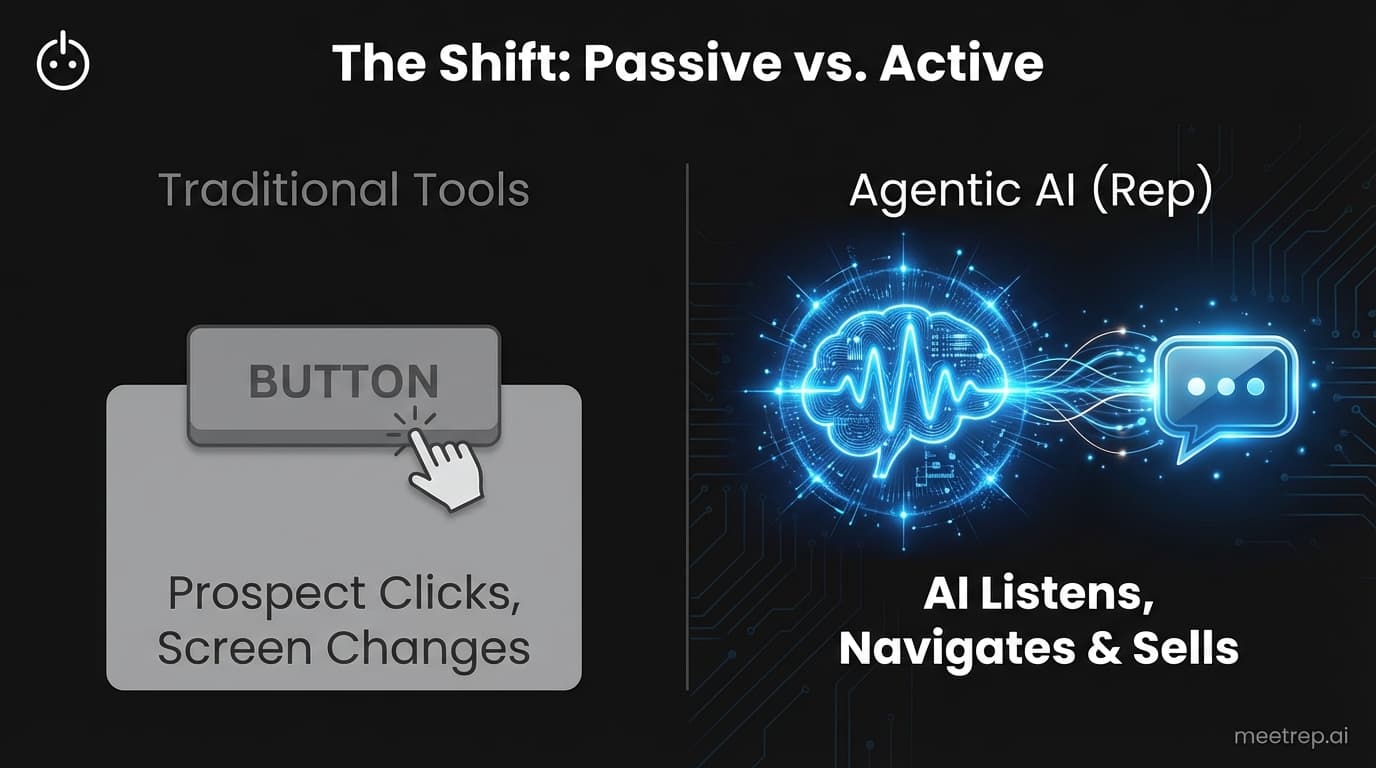
Most tools in this list are passive. The prospect clicks; the screen changes. Rep is active. It uses what Gartner calls "Agentic AI" to actually do the work.
Rep joins the Zoom/Google Meet. It talks to the prospect with a natural voice. It navigates the browser. If the prospect asks, "Can you show me the reporting dashboard?" Rep hears it, clicks the dashboard, and explains the data.
The Results
Does an AI agent actually convert? Yes.
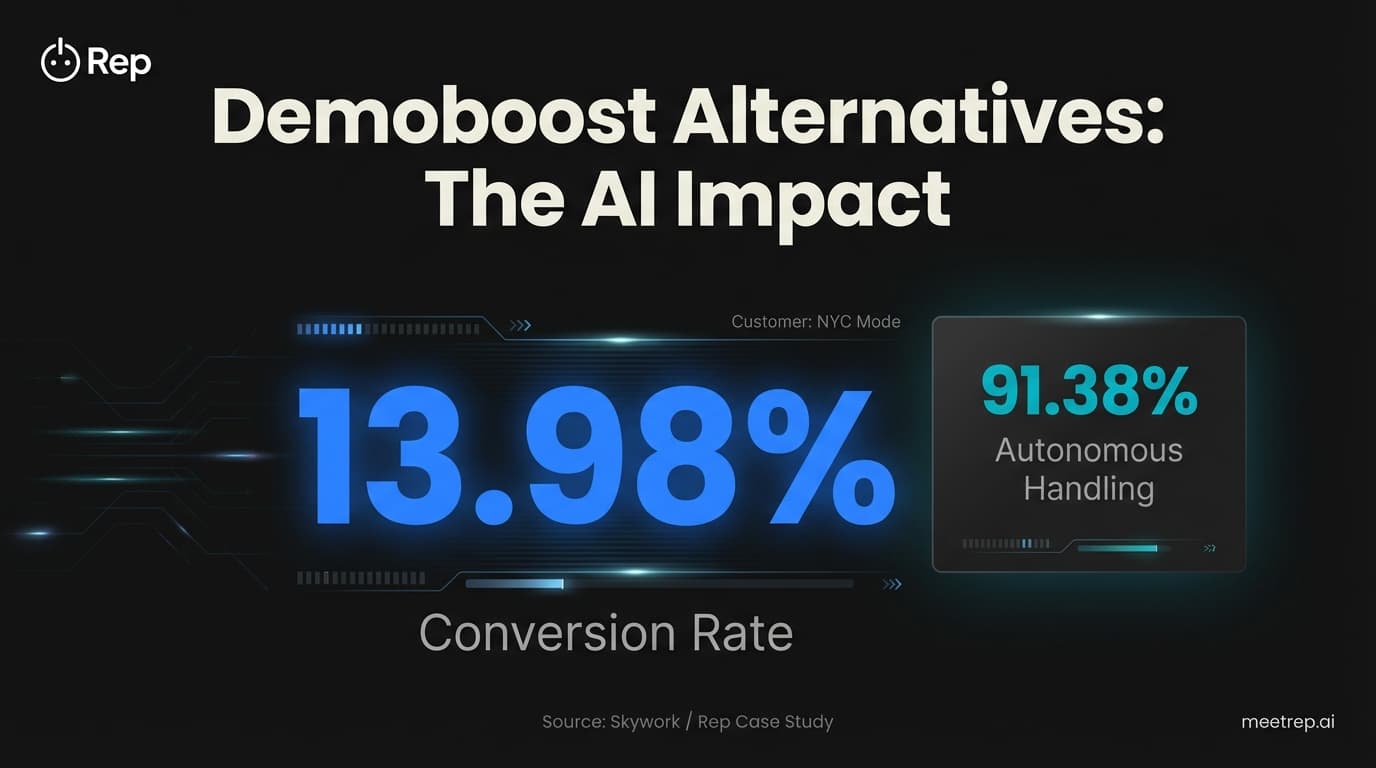
What we learned at Rep: Retail brand NYC Mode implemented Rep to handle product inquiries. The AI agent achieved a 13.98% conversion rate and handled 91.38% of questions without ever escalating to a human. Source: Skywork / Rep Case Study
My Take
If you are trying to replace Demoboost because it's too heavy, you might just need a lighter tool like Storylane. But if you are replacing it because you want to sell more without hiring more people, you need an agent.
Static demos are great for a "Product Tour" page. They are terrible for handling objections. Rep sits in that gap between a static website and a human Account Executive.
Pros vs Cons
| Pros | Cons |
|---|---|
| Truly Autonomous: Handles the full demo, including Q&A. | New Paradigm: Requires shifting mindset from "content" to "agents." |
| Real-Time: Navigates live software, not screenshots. | Voice-First: Best for prospects who want to talk, not just click. |
| 24/7 Availability: Sells while your team sleeps. |
2. Storylane (The Marketer's Choice)
Storylane is a leader in the interactive product tour category. It captures HTML and CSS from your application to create a lightweight, clickable replica that you can embed on your website or send in email sequences.
Best For: Top-of-funnel marketing assets, website embeds, and "Product Led Growth" (PLG) motions.
My take
Storylane is fast. If Demoboost feels heavy or complex, Storylane is the antidote. You can install the extension, capture a flow, and publish it in about 10 minutes.
It is perfect for that "Aha!" moment on your homepage. But be careful—it's not a sales rep. It can't answer questions or handle objections. It shows the "Happy Path" beautifully, but if a prospect has a specific edge case, they are stuck.
The setup is where Storylane shines. While Demoboost often requires careful configuration of overlays, Storylane just grabs your front-end code. It creates a sandbox that looks real but is actually just a clever recording.
Pros vs Cons
| Pros | Cons |
|---|---|
| Speed: Fastest "Time to Value" in the market. | Static: It's a recorded flow, not a live environment. |
| Free Tier: Excellent for startups testing the waters. | No Logic: Can't handle complex prospect questions. |
| Reliable: Less prone to the "loading" issues of heavy overlays. |
3. Walnut (The Sales Personalization Engine)
Walnut focuses heavily on the sales team's need for personalization. It allows Account Executives (AEs) to create "template" demos that they can customize for specific prospects without needing engineering support.
Best For: Sales teams sending "leave-behinds" or AEs who want a fail-safe demo environment that looks like the real product.
The Differentiator
Walnut positions itself around the "Buying Committee." They know that the person you demo to isn't the only one making the decision.
Their "Deal Rooms" feature lets you bundle the demo with decks and contracts. It is a smart move. However, it comes with a price tag. Public pricing data suggests plans start around $9,200/year, which is a significant commitment compared to lighter tools.
Common Mistake: Teams often buy Walnut thinking it will automate the demo. It doesn't. It automates the prep. Your AE still has to deliver the demo (or send the link). It doesn't replace the headcount; it just makes the rep more efficient.
My Take
Walnut is a direct competitor to Demoboost's presales use case. It is generally considered more user-friendly for non-technical sales reps. If your AEs are complaining that Demoboost is "too hard to edit," Walnut is the logical swap.
Pros vs Cons
| Pros | Cons |
|---|---|
| High Fidelity: Looks and feels very close to real software. | Cost: Expensive entry point (~$9k+). |
| No-Code: AEs can edit text/images without breaking code. | Maintenance: Templates break when your product UI updates. |
4. Saleo (The Live Data Overlay)
Saleo takes a completely different approach. Instead of capturing screens (like Storylane) or cloning environments (like Demostack), Saleo injects data into your live production environment via a browser extension.
Best For: Complex enterprise software where you need to show real-time graphs, charts, and data manipulation.
Why consider it?
If you are selling a complex analytics platform, screenshots don't cut it. Prospects want to filter a date range and see the graph change. Saleo makes your empty demo account look like it has 5 years of data.
But this magic is technical. It is an overlay injection. It is incredibly powerful, but it is also expensive (often cited in the $16k - $40k range) and requires a complex implementation.
My Take
Demoboost and Saleo share some DNA—they both mess with the live layer of the application. Saleo is superior if your main problem is "bad data." If your demo environment looks empty, Saleo fills it. But it does not solve the "I need to clone this environment" problem.
Pros vs Cons
| Pros | Cons |
|---|---|
| Real Interactivity: Users are in your actual app. | Price: Enterprise pricing only. |
| Data Control: Graph/chart manipulation is smooth. | Complexity: Heavy implementation; relies on extension. |
5. Demostack (The Enterprise Sandbox)
Demostack spins up a complete clone of your product environment. It isolates the demo from your production database, meaning sales reps can't accidentally delete a real client's data.
Best For: Large enterprise teams where security is paramount and "demo data" is a nightmare to manage.
The Operational Win
The value here is pure efficiency for the presales team. Managing demo data is a slog.
The Data: Cybersecurity firm Synack used Demostack to reduce their demo prep time from 100 hours to under 10 hours. Source: Demostack Case Study
If your Sales Engineers are spending 20 hours a week scrubbing data just to get a demo ready, Demostack pays for itself. If you just need a quick website tour, it's overkill.
My Take
Demostack is the heavy lifter. It is not for the faint of heart. It copies your entire front-end and back-end logic into a sandbox. This makes it incredibly stable (no production bugs), but also expensive to maintain. If Demoboost feels too "light" for your needs, Demostack is the upgrade.
Pros vs Cons
| Pros | Cons |
|---|---|
| Security: Complete isolation from production. | Heavy: Overkill for simple products. |
| Stability: No "screen of death" during live calls. | Cost: Significant investment. |
Summary Comparison Table
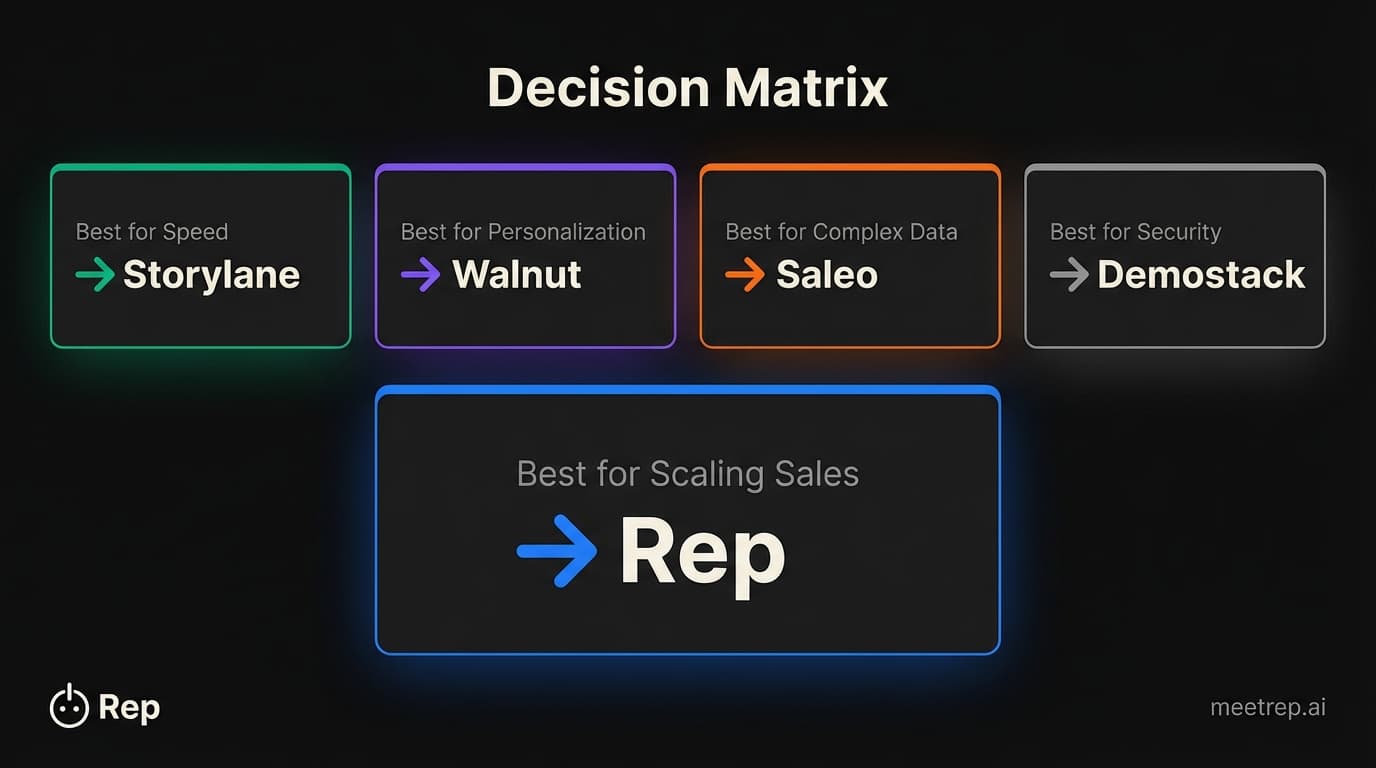
Here is how the market looks at a glance:
| Platform | Type | Best Use Case | Pricing Model |
|---|---|---|---|
| Rep | Autonomous Agent | Scaling live demos & 24/7 inbound | Contact for Pricing |
| Storylane | Interactive Tour | Marketing website embeds | Free / ~$40/mo+ |
| Walnut | Sales Enablement | Personalized leave-behinds | ~$9,200/yr+ |
| Saleo | Live Overlay | Complex data injection | ~$16k - $40k/yr |
| Demostack | Environment Clone | Enterprise security & data management | Contact Vendor |
| Demoboost | Presales Overlay | Legacy presales support | Contact Vendor |
Conclusion
The market has split. You no longer have to choose between "hiring more humans" or "using a static click-through tool."
If your goal is simply to put a product tour on your website, Storylane is the clear winner for speed and ease. If you need deep data cloning for enterprise security, Demostack is the heavyweight champion.
But if you are trying to solve the scaling problem—if you need to give more live demos than your human team physically can—then you need to look at Rep.
The future isn't just about recording screens. It is about autonomy.
My recommendation: Don't let your demos be part of the 86% of stalled deals. If you are ready to see what an AI sales agent can do, see how Rep works.

Nadeem Azam
Founder
Software engineer & architect with 10+ years experience. Previously founded GoCustomer.ai.
Nadeem Azam is the Founder of Rep (meetrep.ai), building AI agents that give live product demos 24/7 for B2B sales teams. He writes about AI, sales automation, and the future of product demos.
Frequently Asked Questions
Table of Contents
- Why Look for a Demoboost Alternative?
- 1. Rep (The Autonomous AI Sales Agent)
- 2. Storylane (The Marketer's Choice)
- 3. Walnut (The Sales Personalization Engine)
- 4. Saleo (The Live Data Overlay)
- 5. Demostack (The Enterprise Sandbox)
- Summary Comparison Table
- Conclusion
Ready to automate your demos?
Join the Rep Council and be among the first to experience AI-powered demos.
Get Early AccessRelated Articles
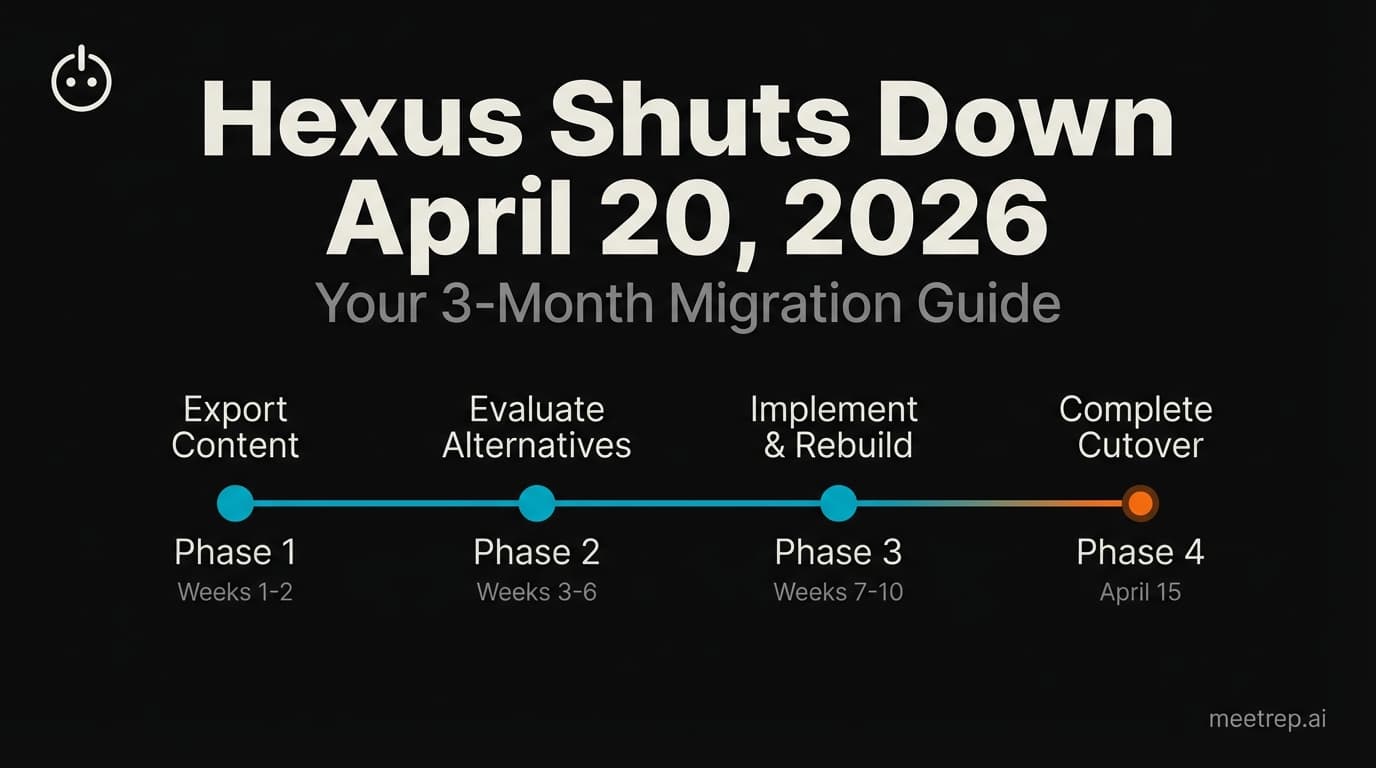
Hexus Acquired by Harvey AI: Congrats & What It Means for Demo Automation Teams
Hexus is shutting down following its acquisition by Harvey AI. Learn how to manage your migration and discover the best demo automation alternatives before April 2026.
Why the "Software Demo" is Broken—and Why AI Agents Are the Future
The traditional software demo is dead. Discover why 94% of B2B buyers rank vendors before calling sales and how AI agents are replacing manual demos to scale revenue.
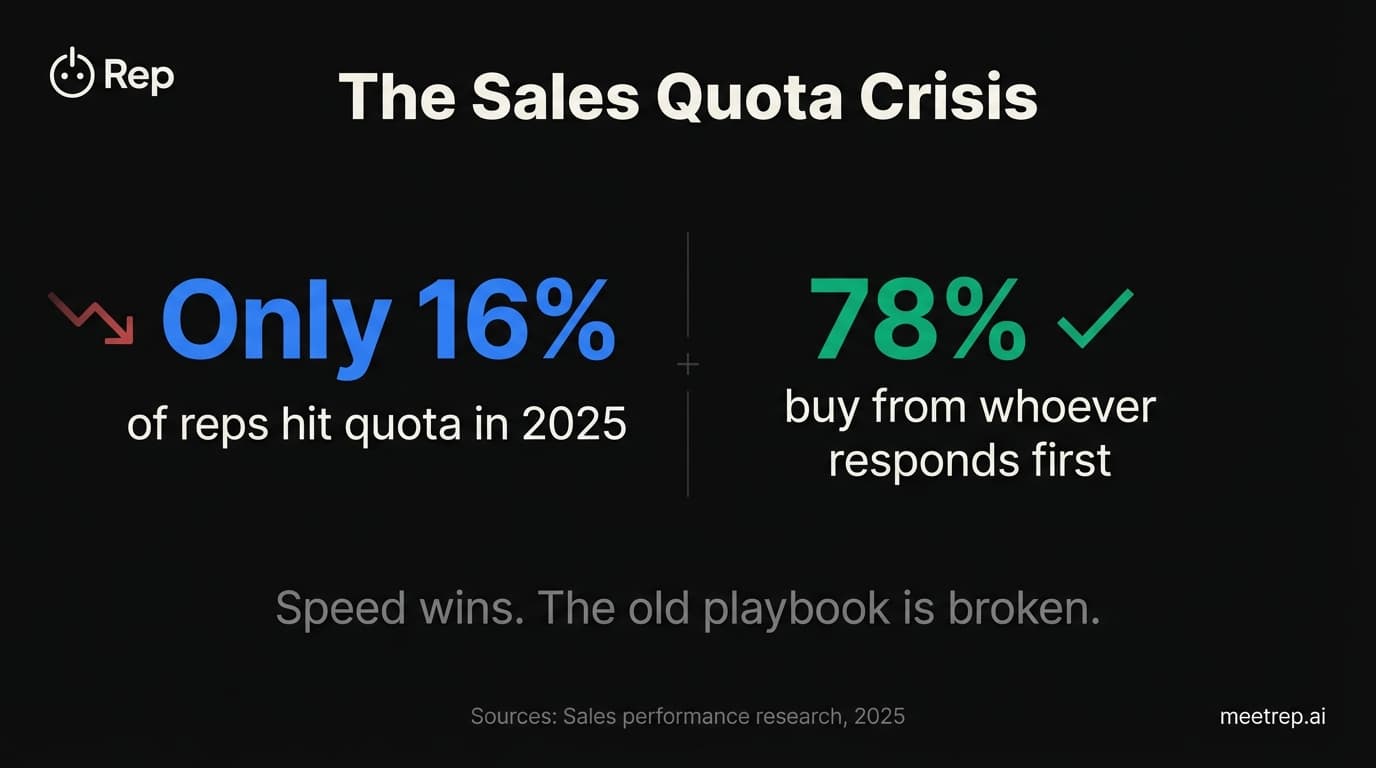
Why Autonomous Sales Software is the Future of B2B Sales (And Why the Old Playbook is Dead)
B2B sales is at a breaking point with quota attainment at 46%. Discover why autonomous 'Agentic AI' is the new standard for driving revenue and meeting the demand for rep-free buying.