The Era of AI Leads: How Agents Are Rewiring B2B Sales

Executive Summary
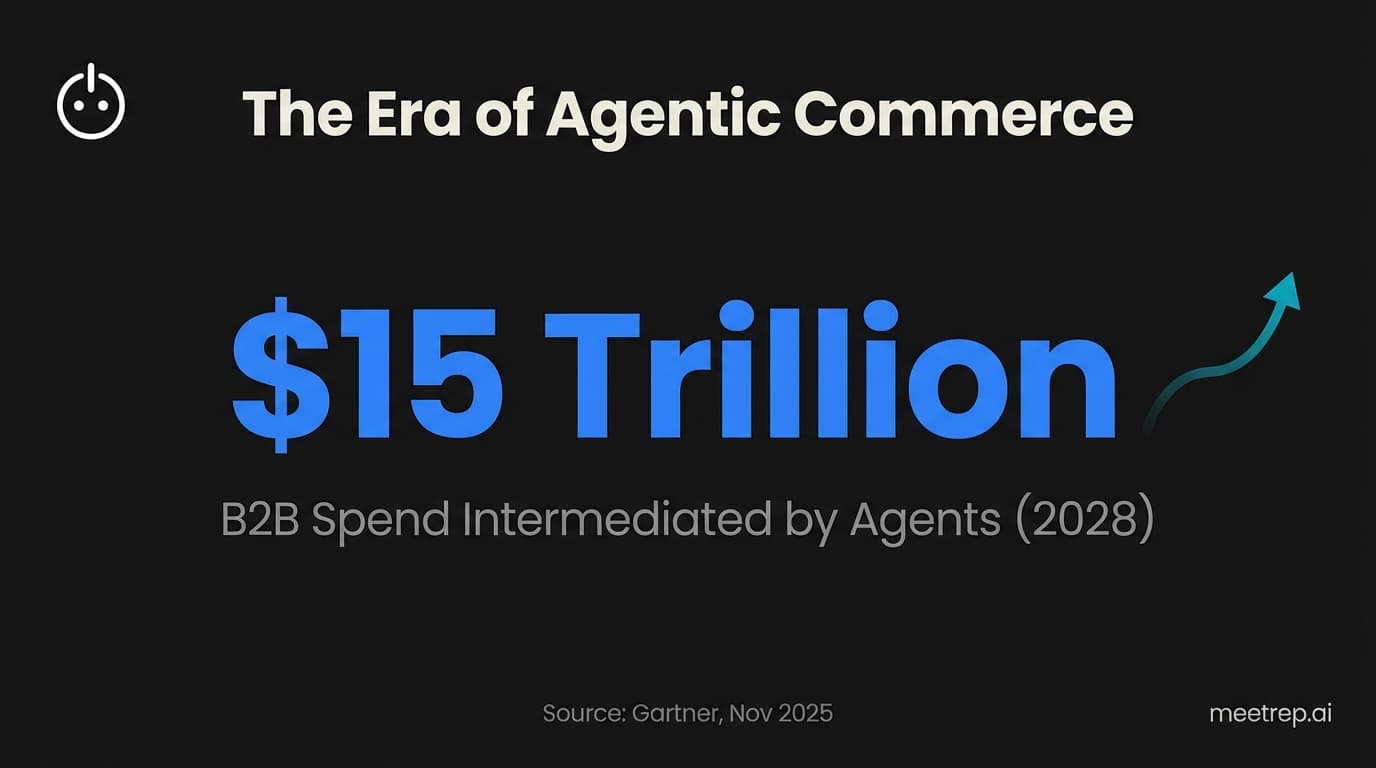
- The Shift: By 2028, AI agents will intermediate $15 trillion in B2B spend [Gartner].
- The Demand: 50% of large B2B deals ($1M+) are now self-serve [Forrester].
- The Problem: Most teams use AI for "spam" (outbound) instead of "service" (inbound demos).
- The Solution: You need autonomous agents, not just bigger contact lists.
For the last decade, a "lead" meant one thing: a row in a spreadsheet. Name, email, LinkedIn URL. If you wanted more leads, you bought a bigger list and hired more SDRs to hammer the phones.
That era is over.
We are entering the age of agentic commerce. The definition of ai leads has shifted from data to action. It's no longer about who you can spam; it's about who your software can autonomously engage, qualify, and demo to while your team sleeps.
I've spent years building sales automation tools—first at GoCustomer, and now at Rep. I've seen the shift firsthand. We used to focus on volume (sending more emails). Now, we focus on intelligence (having better conversations).
If you’re still buying static lists in 2026, you aren't just wasting budget. You’re invisible.
What Are "AI Leads" in 2026? (It's Not Just a List)
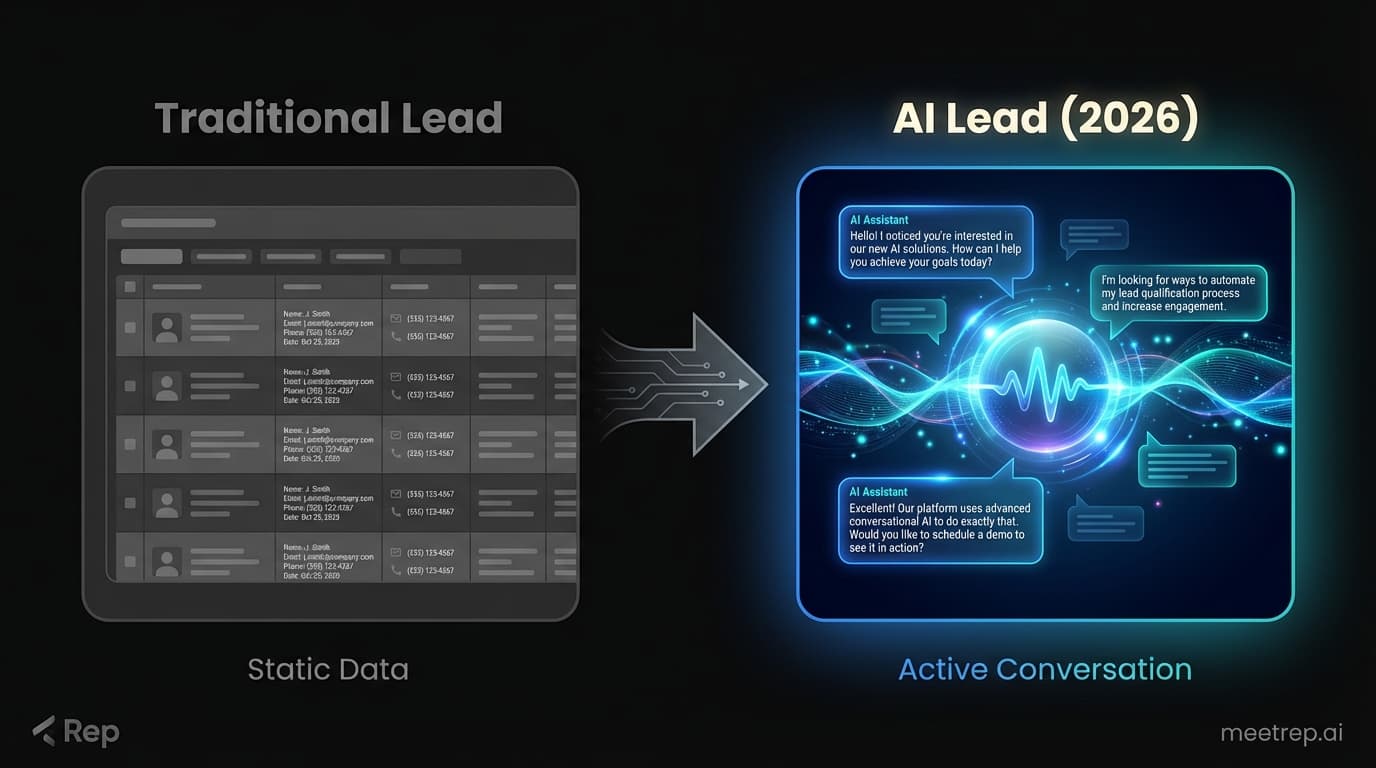
AI leads are sales opportunities where an autonomous agent has identified, engaged, and qualified the prospect before any human intervention occurs. Unlike traditional leads—which are static data points waiting for a manual cold call—AI leads are dynamic, active conversations managed by software.
Think about the difference.
In the old model, a "lead" was a person you hoped to talk to. You chased them. You annoyed them.
In the new model, the "lead" is the result of an interaction. An agent (like Rep) sat on your website, answered questions, gave a product tour, and handed you a prospect who is already convinced.
This isn't just semantics. It's a fundamental change in how revenue is generated.
Key Insight: 56% of sales professionals now use AI daily. Those who do are 2x more likely to exceed their sales targets compared to non-users. — Source: LinkedIn / State of Sales 2025
The table below breaks down why this shift is happening:
| Feature | Traditional Leads | AI Leads (2026) |
|---|---|---|
| Source | Static Lists / Forms | Real-time Conversations |
| Engagement | Passive (Wait for email) | Active (Instant Agent Interaction) |
| Qualification | Manual (SDR Call) | Autonomous (Behavioral Analysis) |
| Availability | 9-5 Business Hours | 24/7 Global Coverage |
| Cost Model | High (Human Labor) | Low (Software Scale) |
The $15 Trillion Shift: Why Buyers Are Using Agents
You might be skeptical. "Will enterprise buyers really talk to a bot?"
Yes. In fact, they prefer it.
According to Gartner, by 2028, AI agents will intermediate more than $15 trillion in global B2B spending. This signals a massive shift from human-to-human negotiation to machine-to-machine commerce.
Buyers are tired. They're tired of "hopping on a quick call" just to see pricing. They're tired of waiting three days for a demo. They want answers now.
Forrester backs this up with an even starker stat: In 2025, more than 50% of large B2B transactions (valued at US$1 million or greater) will be processed through digital self-serve channels.
The Data: "By 2028, AI agents will intermediate more than $15 trillion in global B2B spending." — Source: Gartner, Nov 2025
My take: If your sales motion requires a human to open the door (gatekeeping pricing or demos), you are invisible to the algorithms controlling that $15 trillion. You aren't losing to competitors; you're losing to friction.
The Productivity Paradox: Why "More AI" Doesn't Always Mean "More Sales"
Here is the trap most sales leaders fall into. They see these numbers and think, "Great, I'll buy 10 different AI tools to automate everything."
Then revenue stays flat. Or worse, it dips.
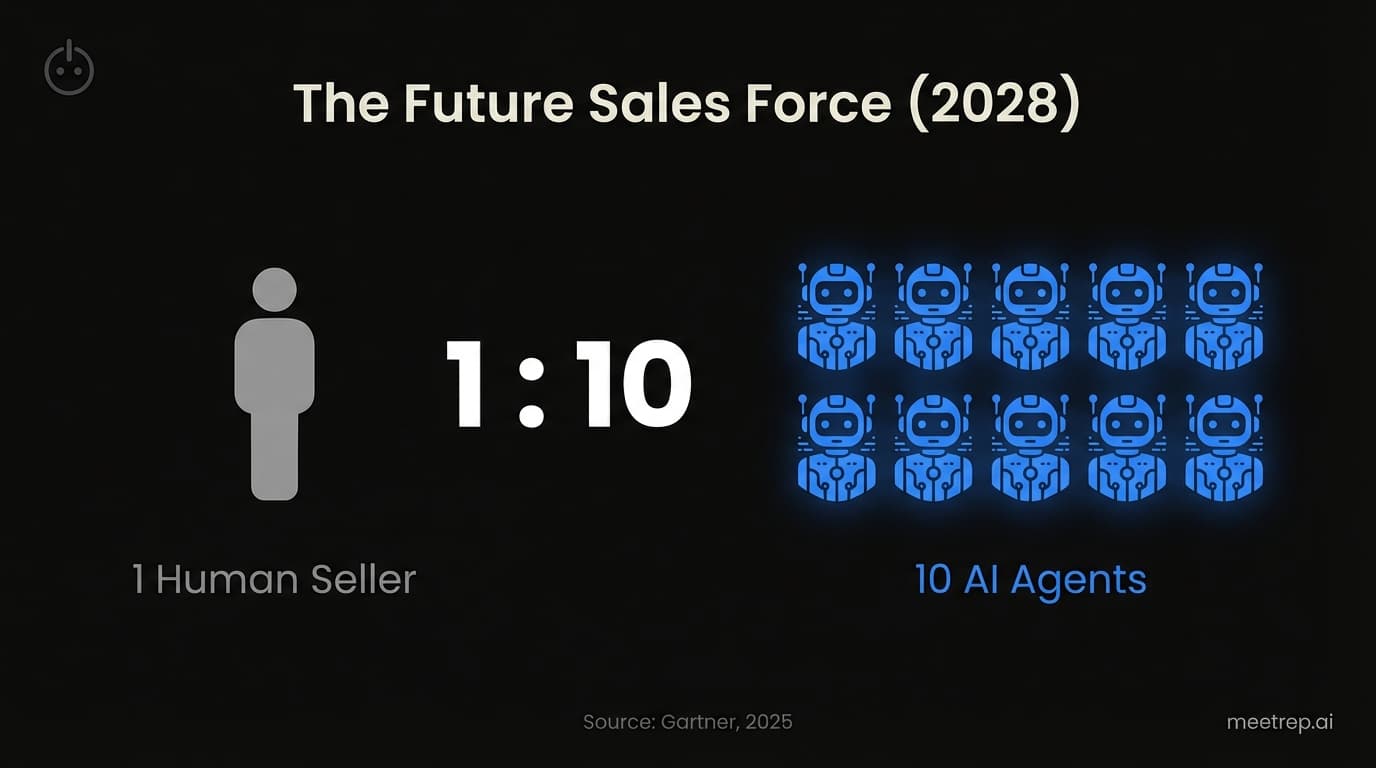
Gartner calls this the "productivity paradox." They predict that by 2028, AI agents will outnumber human sellers by 10x, yet fewer than 40% of sellers will report that AI agents improved their productivity.
What we learned at GoCustomer: When we built sales automation tools, we saw teams use AI to send 10,000 bad emails instead of 100 good ones. The result wasn't more deals; it was domain ruin and angry prospects. Volume is not value. It's a mess.
The problem isn't the AI. It's the application.
If you use AI to spam (outbound), you contribute to the noise. If you use AI to serve (inbound), you capture value.
This is why "AI Leads" are misunderstood. The best AI lead isn't a name scraped from LinkedIn by a bot. It's a prospect who landed on your site at 2am, asked a technical question, and got an immediate, accurate video walkthrough from an autonomous agent.
How to Capture AI Leads: The Autonomous Demo Playbook
So how do you actually execute this? You stop treating your website like a brochure and start treating it like a 24/7 sales floor.
The mechanism for capturing ai leads is the autonomous demo agent.
This is why we built Rep. We realized that while tools like Consensus or Navattic are great for clicking through screenshots, they aren't agents. They don't talk back. They don't handle objections.
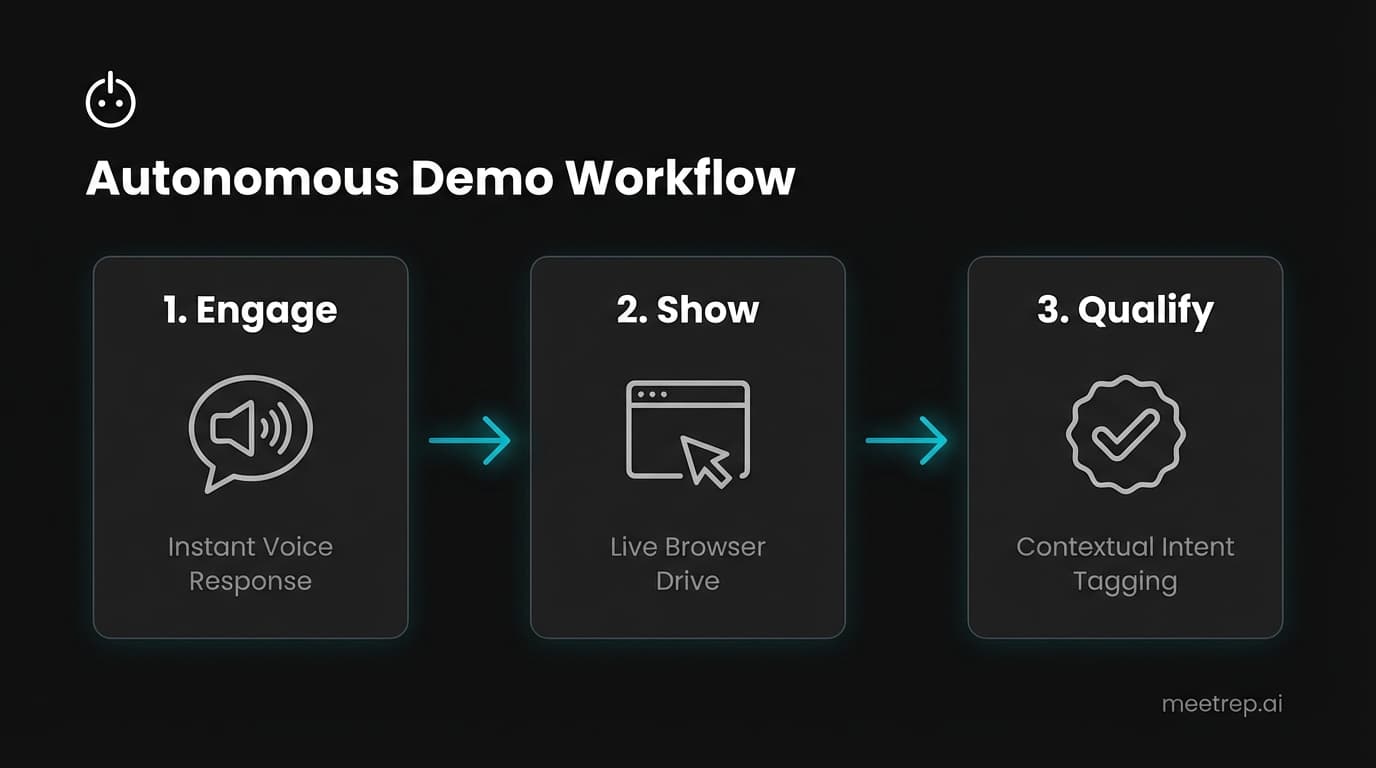
To capture AI leads effectively, your stack needs to do three things:
- Engage Instantly: When a buyer asks "Does this integrate with Salesforce?", an agent needs to answer immediately. Not a chatbot text bubble—a voice agent.
- Show, Don't Just Tell: The agent must be able to drive the browser. It should share its screen and navigate your actual software.
- Qualify Contextually: Based on the questions asked ("How does enterprise pricing work?"), the agent tags the lead as "High Intent."
The Data: Early AI deployments in sales have boosted win rates by more than 30%. — Source: Bain & Company, Sept 2025
When you replace the "Book a Demo" form with an actual autonomous rep, you stop bleeding leads to scheduling friction. You capture the demand in the moment it exists.
Case Studies: Who Is Winning?
Talk is cheap. Who is actually making money with this?
The companies winning with AI leads are the ones using intelligence to fix their pipeline, not just fill it.
Paycor is a prime example. By implementing AI pipeline intelligence (specifically via Gong), they didn't just "save time." They saw a 141% increase in deal wins. They used AI to identify which leads were real and which were ghosts.
Klarna took it a step further on the service side. Their AI assistant handled 2.3 million conversations in a single quarter—work equivalent to 700 full-time agents.
Common Mistake: Looking at Klarna's numbers and thinking, "I should fire my support team." Don't. Klarna recently rehired humans for complex issue resolution. AI handles the volume (the simple leads); humans handle the nuance (the complex deals).
The Data: Klarna reduced customer service costs per transaction by 40% using AI assistants. — Source: Klarna Earnings / CX Dive
The Bottom Line
The "Agent Economy" isn't a futurist prediction. It's a $15 trillion reality that is already here.
We can keep buying lists, dialing numbers, and hoping for a 1% conversion rate. Or we can accept that buyers have changed. They want autonomy. They want answers instantly. And they are perfectly happy talking to an AI to get them.
My advice? Start with your website. Look at your "Book a Demo" button. If that button leads to a calendar link for next Tuesday, you are losing money every single night.
Don't let your best leads slip through the cracks just because your team is asleep. Equip your site with an autonomous agent and start capturing the revenue you're already generating.
Ready to see an autonomous agent in action? Meet Rep today.

Nadeem Azam
Founder
Software engineer & architect with 10+ years experience. Previously founded GoCustomer.ai.
Nadeem Azam is the Founder of Rep (meetrep.ai), building AI agents that give live product demos 24/7 for B2B sales teams. He writes about AI, sales automation, and the future of product demos.
Frequently Asked Questions
Table of Contents
- What Are "AI Leads" in 2026? (It's Not Just a List)
- The $15 Trillion Shift: Why Buyers Are Using Agents
- The Productivity Paradox: Why "More AI" Doesn't Always Mean "More Sales"
- How to Capture AI Leads: The Autonomous Demo Playbook
- Case Studies: Who Is Winning?
- The Bottom Line
Ready to automate your demos?
Join the Rep Council and be among the first to experience AI-powered demos.
Get Early AccessRelated Articles
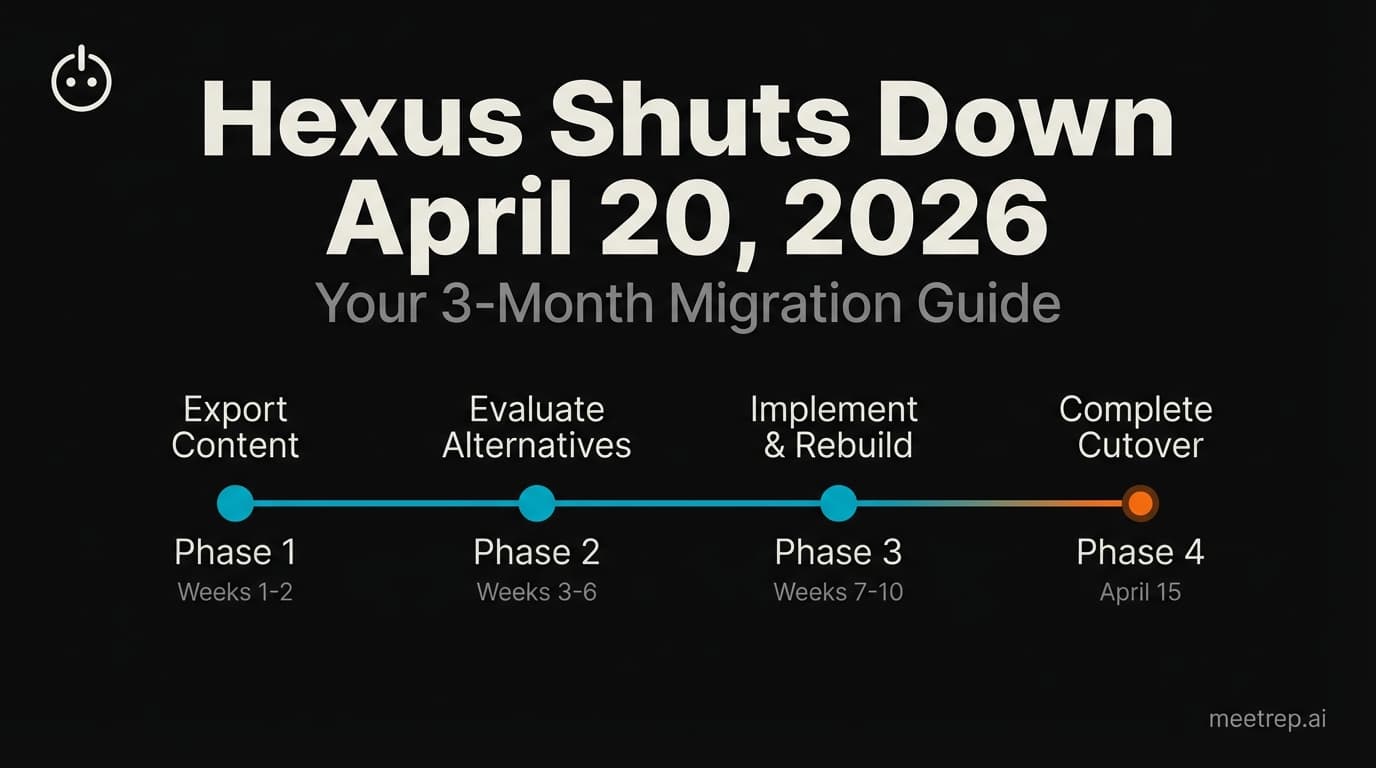
Hexus Acquired by Harvey AI: Congrats & What It Means for Demo Automation Teams
Hexus is shutting down following its acquisition by Harvey AI. Learn how to manage your migration and discover the best demo automation alternatives before April 2026.
Why the "Software Demo" is Broken—and Why AI Agents Are the Future
The traditional software demo is dead. Discover why 94% of B2B buyers rank vendors before calling sales and how AI agents are replacing manual demos to scale revenue.
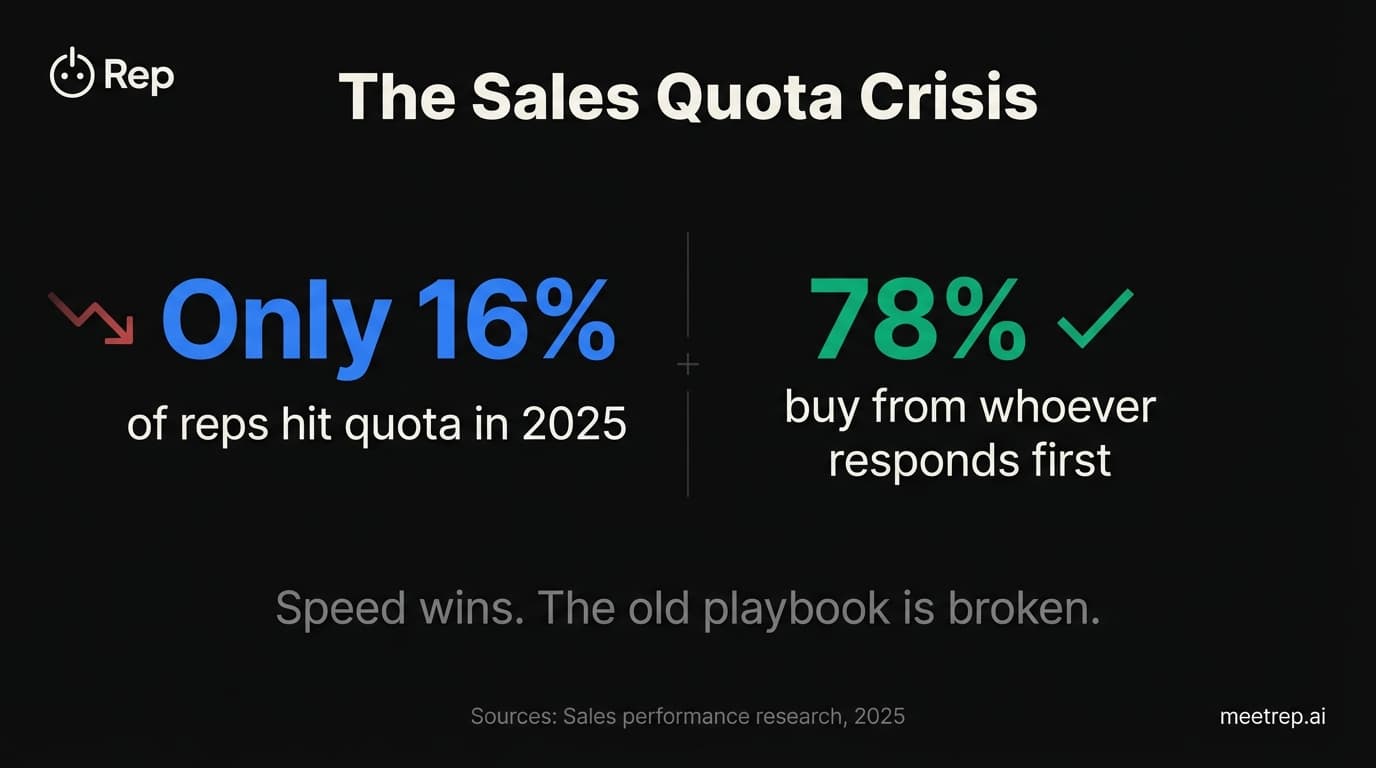
Why Autonomous Sales Software is the Future of B2B Sales (And Why the Old Playbook is Dead)
B2B sales is at a breaking point with quota attainment at 46%. Discover why autonomous 'Agentic AI' is the new standard for driving revenue and meeting the demand for rep-free buying.