The Best Storylane Alternative for Sales Teams: Rep vs Storylane Compared

Executive Summary
- Storylane excels at creating embeddable interactive demos for marketing (4.8/5 G2 rating, 6-minute median publish time)
- The $40/month Starter plan is screenshot-only—HTML capture requires Growth at $6,000/year minimum
- Rep is an AI voice agent that joins video calls and gives live demos autonomously
- Choose Storylane for top-of-funnel marketing assets; choose Rep for automating actual sales conversations
If you're searching for a Storylane alternative, you've probably hit one of two walls. Either you're frustrated with screenshot maintenance, or you just discovered that the $40/month plan doesn't include the features you actually need.
Both are valid reasons to look elsewhere. But here's what most comparison articles won't tell you: Storylane and Rep aren't really competitors. They solve different problems.
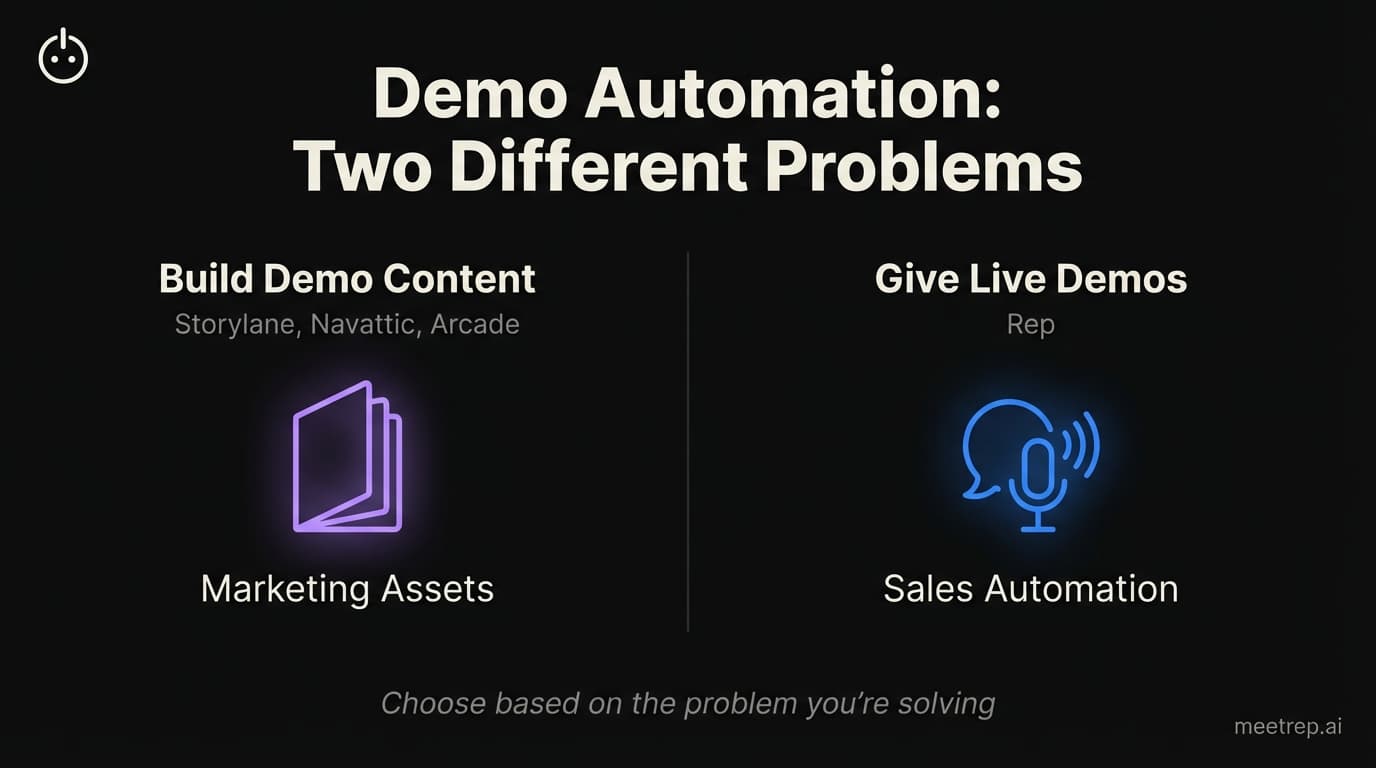
Storylane helps you build interactive demo content. Rep gives live demos autonomously. That distinction matters more than any feature checklist.
I'm Nadeem, founder of Rep. Yes, I'm biased—but I'll be upfront about where Storylane wins and where we think the market is heading. My goal is to help you make the right choice, even if that choice isn't us.
How Interactive Demos Actually Affect Conversions
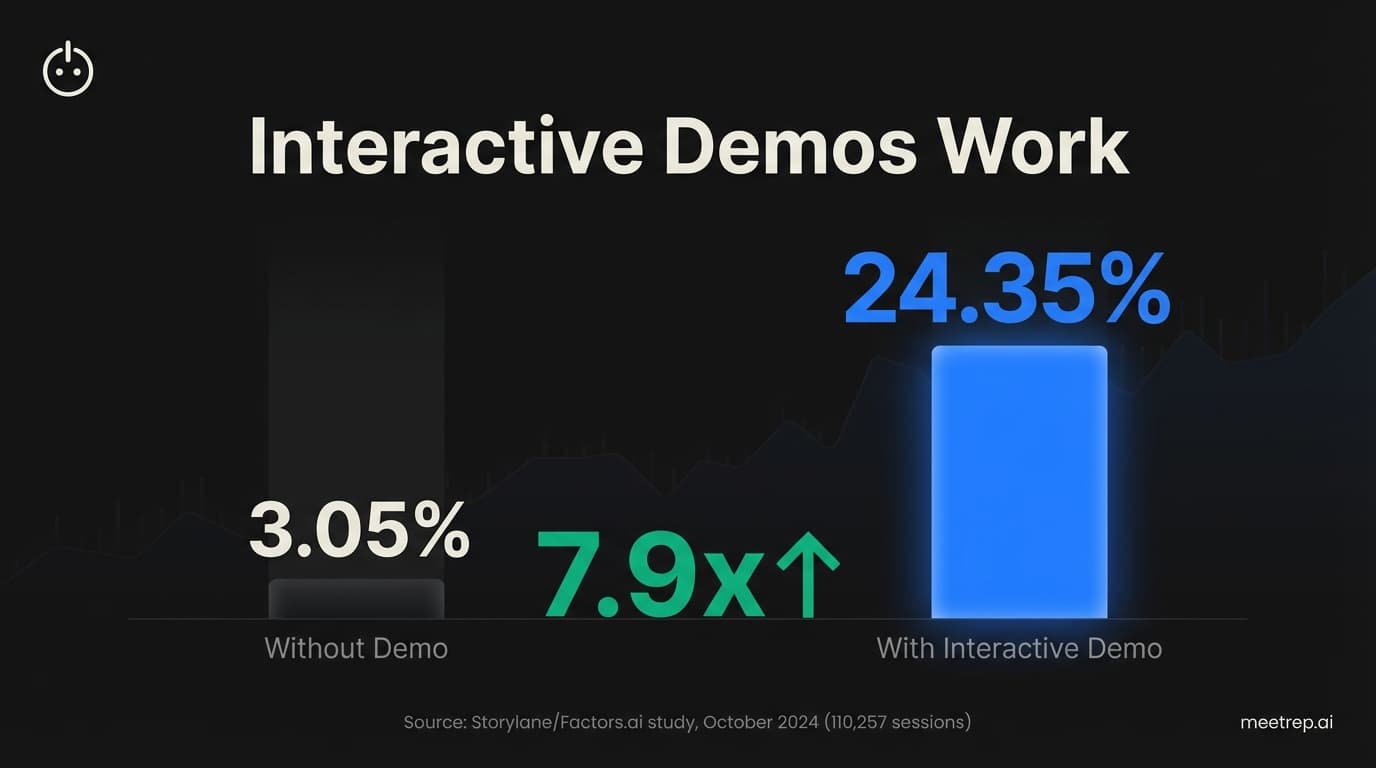
Interactive demos work. The data is clear on this. Visitors who engage with interactive demos convert at 24.35% compared to 3.05% for those who don't—a 7.9x improvement, according to a Storylane/Factors.ai study of 110,257 web sessions in October 2024.
That's not a small bump. That's a fundamental difference in how prospects engage with your product.
The Data: Companies without interactive demos lose roughly 87% of potential website conversions compared to those with embedded product tours.
But here's what that stat doesn't tell you: it measures marketing conversions. Someone clicked on your website, engaged with a tour, and submitted a form.
That's valuable. And Storylane is genuinely good at that use case.
The question is what happens next. Does that lead get a callback in 48 hours? Does an SDR spend 30 minutes walking them through the same intro demo? According to Gartner's June 2025 research, 61% of B2B buyers prefer a rep-free buying experience. They wanted to keep exploring. They didn't want to wait.
This is the gap we built Rep to fill.
What Is Demo Automation? The Two Categories
Demo automation refers to software that reduces or eliminates manual effort in delivering product demonstrations. But that definition covers two very different approaches.
Content creation tools (Storylane, Navattic, Arcade) let you build interactive demos once and embed them everywhere. Think of them as "demo building" platforms.
Autonomous demo agents (Rep) actually conduct live demo conversations. Think of them as "demo giving" platforms.
Both fall under "demo automation," but they solve different problems at different funnel stages.
Storylane's Core Technology: What It Does Well
Storylane uses HTML capture and screenshot-based editing to create guided product tours. You record your product, annotate the captures, add hotspots and tooltips, and publish. The median time to publish a demo? Six minutes, according to G2 data.
Six minutes. That's genuinely impressive for content creation speed.
Their approach works well for:
- Website-embedded product tours
- In-app onboarding sequences
- Sales leave-behinds after calls
- Self-serve exploration before booking a meeting
G2 users rate Storylane 4.8/5 stars with 9.5/10 for ease of use. They ranked #6 on G2's Fastest Growing Products of 2024 out of 117,579 products. The customer satisfaction numbers are real.
Key Insight: Storylane has earned its market position through excellent UX and fast time-to-value for marketing teams building demo content.
Enterprise customers like Microsoft, Nasdaq, and SentinelOne use Storylane. SentinelOne reported saving 300+ hours of demo time and influencing $280k+ in pipeline within three months. Those are real results.
So what's the catch?
The Pricing Cliff Nobody Mentions
Storylane's pricing looks simple until you dig in. Let me break down what actually happens.
| Plan | Listed Price | What You Actually Pay | What You Get |
|---|---|---|---|
| Free | $0 | $0 | 1 demo, 1 seat, basic features |
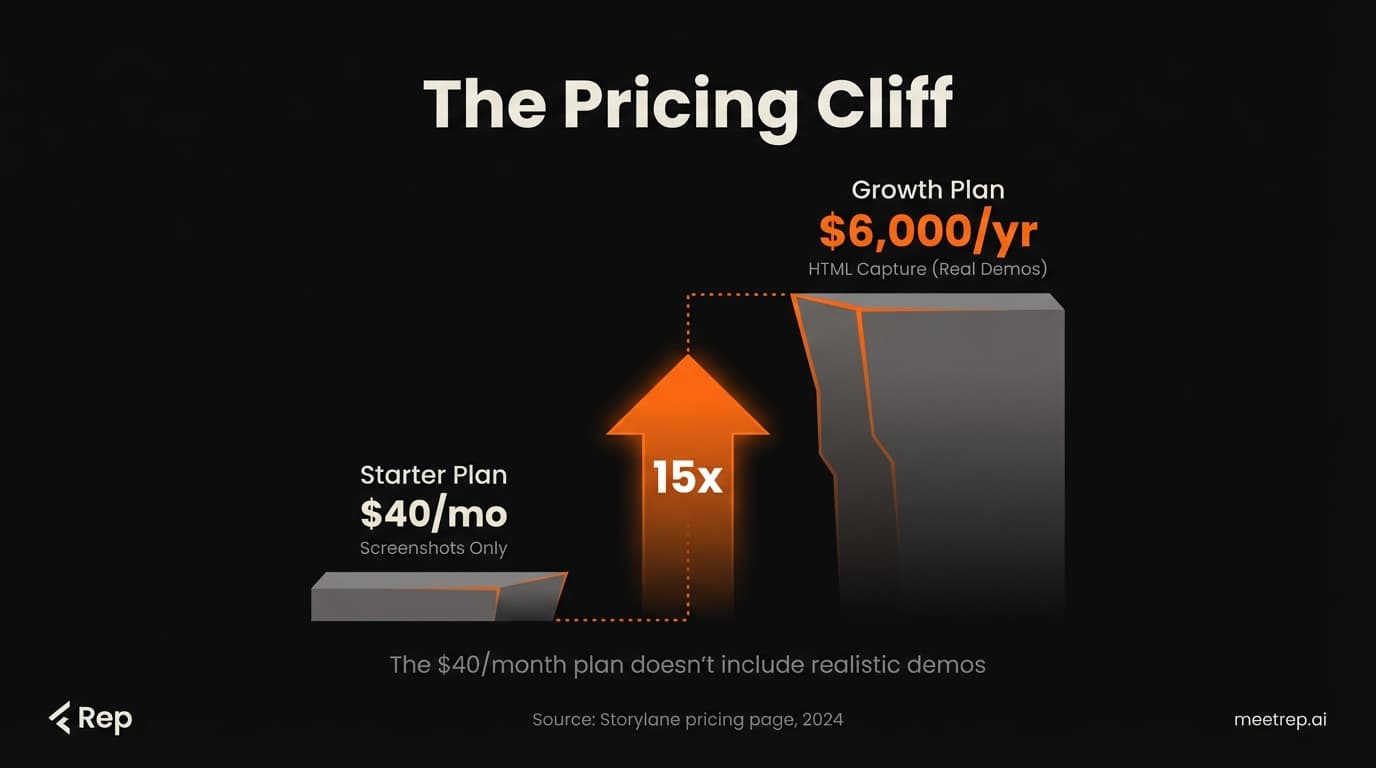
| Starter | $40/month | $480/year | Screenshots/video only. No HTML capture. 2-seat minimum for HubSpot. |
| Growth | $500/month | $6,000/year minimum | HTML demos, personalization, A/B testing. 5-seat minimum required. |
| Premium | $1,200/month | $14,400/year | Salesforce, SSO, offline demos. 10 seats. |
| Enterprise | Custom | Custom | Sandboxes, API access |
Source: Storylane pricing page and Supademo analysis
The Starter plan at $40/month? That's screenshots and video only. No HTML capture. And you can't even get HubSpot integration without two seats.
If you want demos that feel like your actual product—HTML capture that lets prospects click around realistically—you need Growth. And Growth requires five seats minimum at $500/month.
That's $6,000/year before your first demo goes live.
Common mistake: Teams sign up for Starter expecting full functionality, then discover HTML capture—the feature that makes demos feel real—requires a 12x price jump.
I'm not saying Storylane is overpriced. For marketing teams building extensive demo libraries, the math might work out. But the published "$40/month" creates expectations that don't match reality for most use cases.
The Technical Difference: HTML Capture vs. Live Browser Automation
This is where the technology actually diverges. And it matters more than most comparison articles explain.
Storylane's Approach: HTML Capture
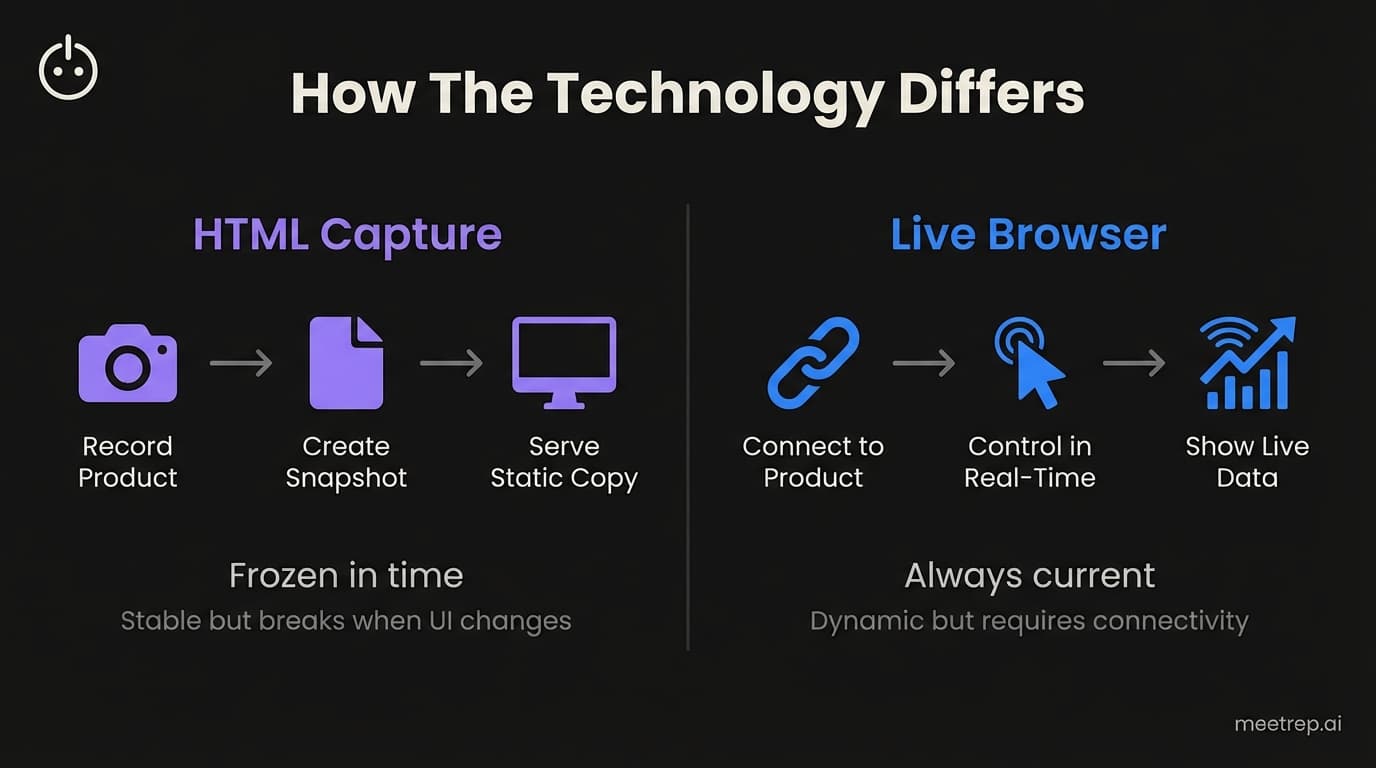
Storylane "clones" your product's front-end code to create a sandbox. This happens once during capture. From then on, the demo runs from that snapshot.
Strengths:
- Fast to create (6-minute median)
- Stable—no live dependencies
- Works offline
Weaknesses:
- 36 G2 reviews mention screenshot capture issues
- Can't show cross-tab interactions or real-time data
- Breaks when your UI updates (requires re-capture)
- 50 G2 mentions of limited customization options
One user on Arcade's blog put it bluntly: "Screenshot-based editing is a pain. It involves a ton of manual work, and grabbing screenshots introduces constant errors."
Rep's Approach: Live Browser Automation
Rep controls a real browser in the cloud. During a demo, Rep navigates your actual product in real-time, showing live data and real functionality.
When we built Rep, we specifically chose this approach over HTML capture. Why? Because we wanted Rep to handle complex workflows—the stuff that breaks in captured demos. Multi-tab comparisons. Real data processing. Flows that span multiple tools.
The trade-off is real: Rep needs your product to be accessible. HTML capture doesn't. For simple product tours embedded on a website, that stability matters. For live sales conversations where prospects ask "can you show me X?"—live navigation wins.
Storylane's AI: Meet Lily
Storylane launched Lily AI in 2025. It's a conversational agent that sits within the demo widget.
What Lily does:
- Answers text-based questions during tours
- Qualifies leads via chat
- Recommends specific demos based on visitor intent
- Generates AI avatars and voiceovers
Lily is genuinely useful for adding an interactive layer to static demos. Prospects can type questions and get responses without leaving the tour.
But Lily is a chatbot. It chats. Within a pre-built tour.
Rep is a voice agent. It talks. While controlling a live browser. On a video call.
| Capability | Storylane (Lily) | Rep |
|---|---|---|
| Communication | Text chat in widget | Voice conversation on video call |
| Demo navigation | Pre-built tours | Live browser control |
| Context | Within tour content | Full product access |
| Prospect questions | Text responses | Voice answers with live demonstration |
| Availability | Embedded on pages | Joins scheduled or instant calls |
That's not a knock on Lily. It's a different product solving a different problem. Lily helps your marketing demos feel more interactive. Rep replaces your intro sales calls entirely.
When to Choose Storylane
Let me be honest about where Storylane makes sense.
Choose Storylane if:
- Your primary goal is website-embedded product tours
- You want marketing assets, not sales automation
- Your product is simple enough that HTML capture shows it accurately
- You have 5+ team members to justify the Growth plan pricing
- You value 6-minute publish times over live demo capability
Storylane is a solid tool. Their G2 scores are earned. For marketing teams building self-serve exploration experiences, it's a strong choice.
And if you're only doing top-of-funnel lead capture—getting people to engage before they talk to sales—Storylane does that well.
When to Choose Rep
Choose Rep if:
- You want to automate actual sales conversations, not just create content
- Prospects need live Q&A with real-time product demonstrations
- Your product requires complex workflows that HTML capture can't show
- You're trying to scale demo capacity without adding headcount
- You want 24/7 demo availability via video calls
Here's my take: the demo automation market is splitting into two categories. Content creation tools (Storylane, Navattic, Arcade) and autonomous agents (Rep, and eventually others).
My recommendation: If you're evaluating these tools, first clarify what problem you're solving. Building marketing assets? Storylane is great. Replacing early-stage sales calls? That's what we built Rep for.
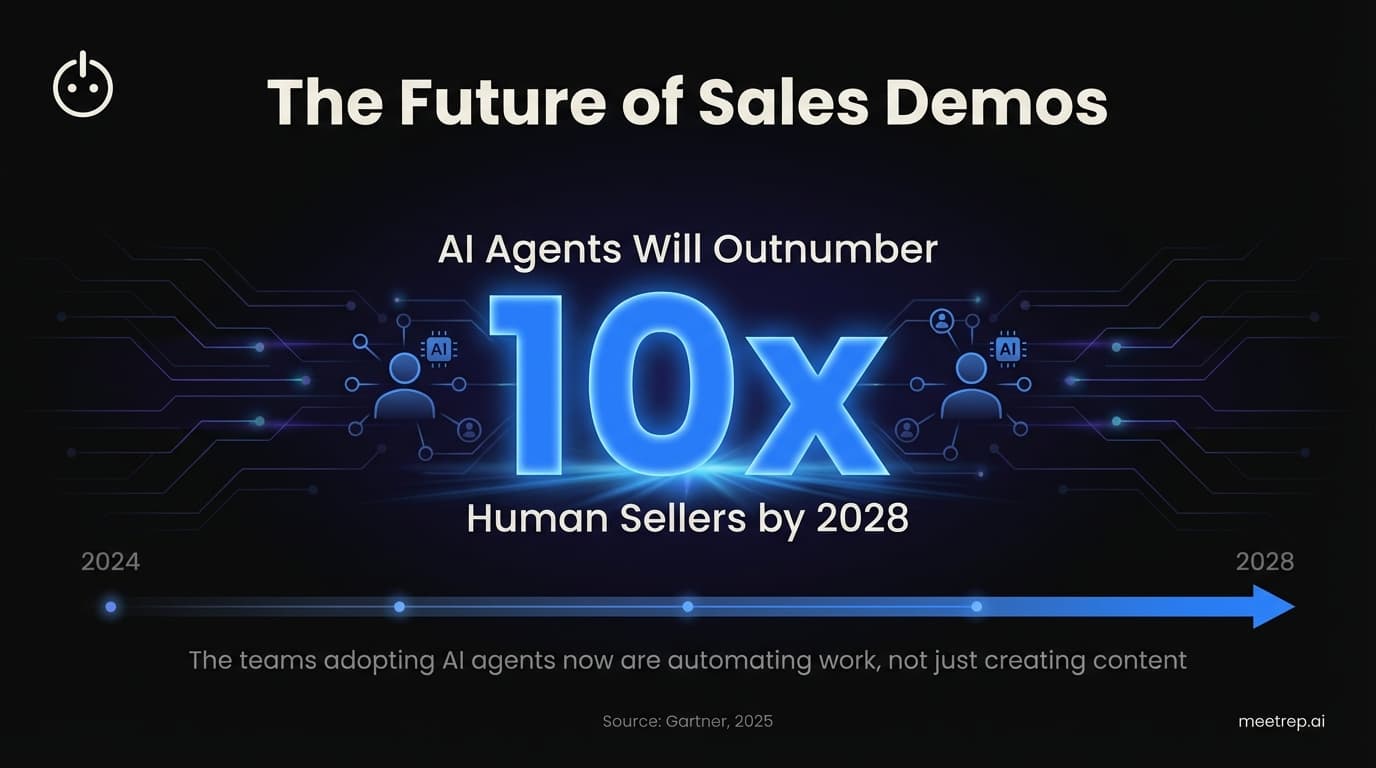
Gartner predicts that by 2028, AI agents will outnumber human sellers by 10x. The trend is clear: buyers want self-serve experiences, and the technology to deliver that is maturing fast.
We're betting Rep on that future.
The Honest Comparison Table
| Factor | Storylane | Rep |
|---|---|---|
| Primary use case | Create embeddable demo content | Give live demos autonomously |
| G2 Rating | 4.8/5 (1,133 reviews) | Emerging (new category) |
| Technology | HTML capture / screenshots | Live browser automation |
| AI capability | Lily: text chat in widget | Voice agent on video calls |
| Minimum viable cost | $6,000/year (Growth, 5 seats) | Contact for pricing |
| Time to publish | 6 minutes (median) | Training session required |
| Best for | Marketing teams | Sales teams |
| Maintenance | Re-capture when UI changes | Always current (live product) |
| Offline demos | Yes (Premium tier) | No (requires connectivity) |
The Bottom Line
I'll be direct: Storylane is a good product that solves a real problem. Their G2 scores reflect genuine user satisfaction. For marketing teams building embeddable demo content, it's a strong choice.
But if you're searching for a Storylane alternative because you need more than content creation—if you want an AI that actually gives demos, answers questions live, and scales your sales capacity—you're looking at a different category entirely.
The cost of inaction is real. Every week without demo automation means more SDR hours spent on repetitive first calls, more prospects waiting 48+ hours for callbacks, and more pipeline lost to faster competitors.
83% of sales teams using AI saw revenue growth in the past year, compared to 66% without AI, according to Salesforce's October 2024 State of Sales report. The teams adopting AI agents aren't just creating better content. They're automating work.
That's what we're building at Rep. If that sounds like what you need, book a demo with us—a live one, given by our AI agent.

Nadeem Azam
Founder
Software engineer & architect with 10+ years experience. Previously founded GoCustomer.ai.
Nadeem Azam is the Founder of Rep (meetrep.ai), building AI agents that give live product demos 24/7 for B2B sales teams. He writes about AI, sales automation, and the future of product demos.
Frequently Asked Questions
Table of Contents
- How Interactive Demos Actually Affect Conversions
- What Is Demo Automation? The Two Categories
- Storylane's Core Technology: What It Does Well
- The Pricing Cliff Nobody Mentions
- The Technical Difference: HTML Capture vs. Live Browser Automation
- Storylane's AI: Meet Lily
- When to Choose Storylane
- When to Choose Rep
- The Honest Comparison Table
- The Bottom Line
Ready to automate your demos?
Join the Rep Council and be among the first to experience AI-powered demos.
Get Early AccessRelated Articles
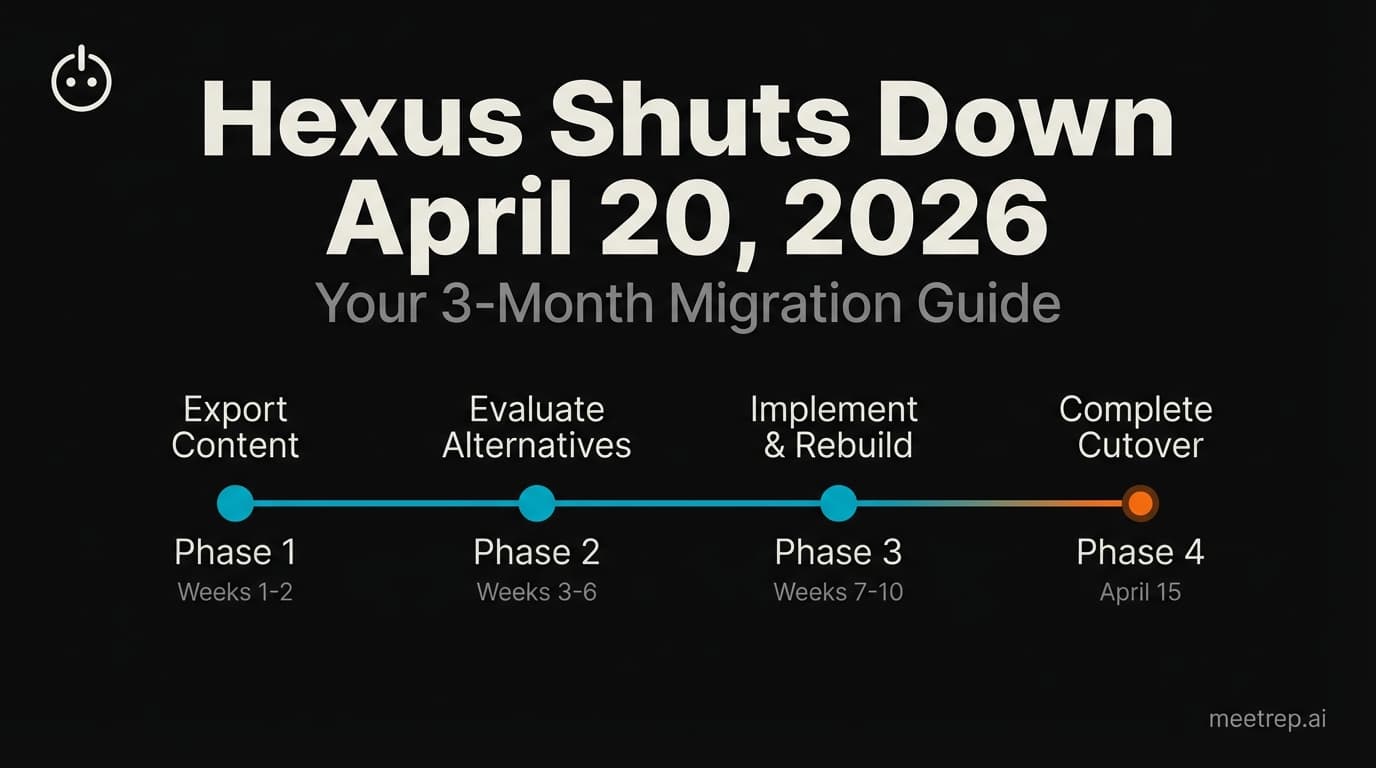
Hexus Acquired by Harvey AI: Congrats & What It Means for Demo Automation Teams
Hexus is shutting down following its acquisition by Harvey AI. Learn how to manage your migration and discover the best demo automation alternatives before April 2026.
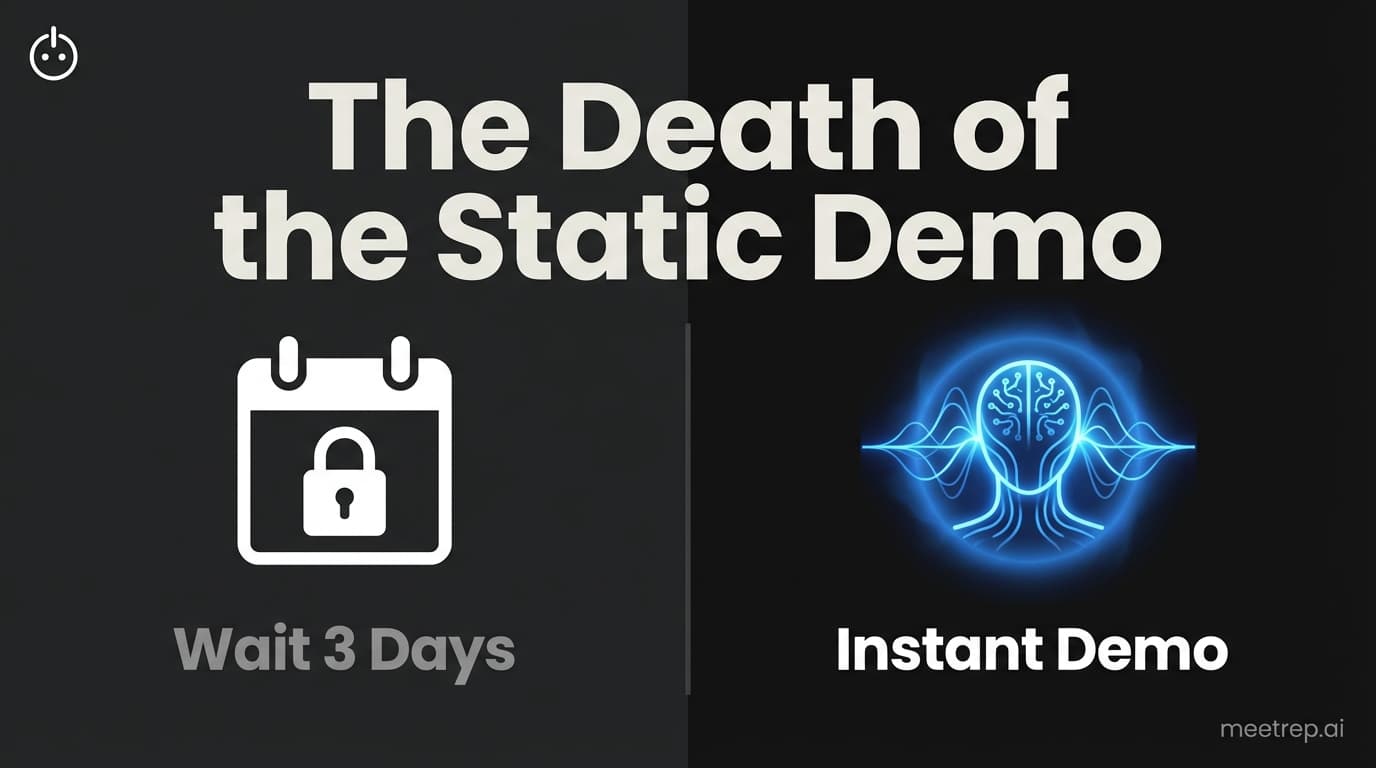
Why the "Software Demo" is Broken—and Why AI Agents Are the Future
The traditional software demo is dead. Discover why 94% of B2B buyers rank vendors before calling sales and how AI agents are replacing manual demos to scale revenue.
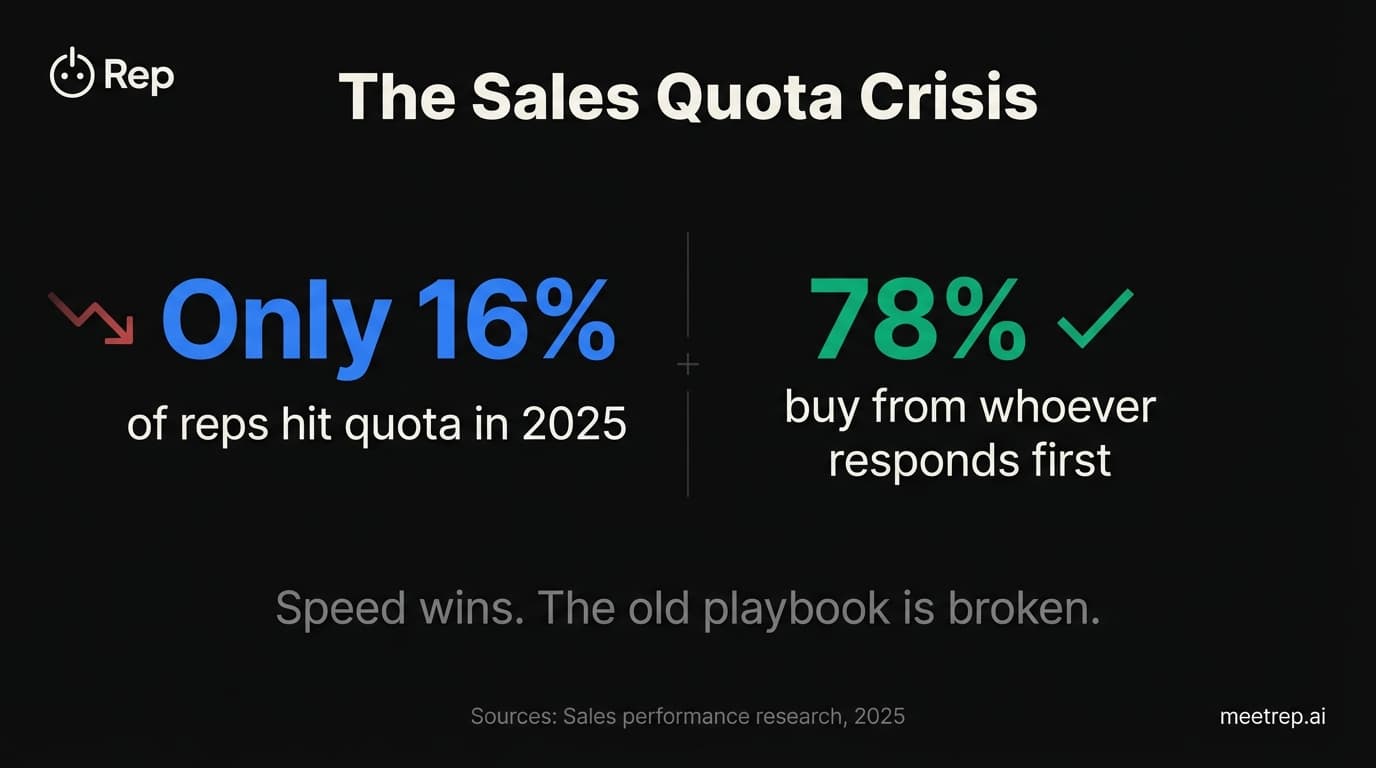
Why Autonomous Sales Software is the Future of B2B Sales (And Why the Old Playbook is Dead)
B2B sales is at a breaking point with quota attainment at 46%. Discover why autonomous 'Agentic AI' is the new standard for driving revenue and meeting the demand for rep-free buying.