The 2026 Guide for Sales Engineering Leaders: Scaling Presales in an AI-First World

Executive Summary
- The Shift: SEs are moving from "demo jockeys" to strategic consultants.
- The Waste: 35% of SE demos are unqualified. Stop doing them manually.
- The Solution: Use AI agents for the "intro" demo; use humans for the "closing" demo.
- The Metric: Shift focus from "activity" to "Technical Win Rate" and "Response Time."
The "growth at all costs" era is dead. If you lead a Sales Engineering team today, you know the new mandate: efficient growth.
But here’s the problem. Your team is likely drowning. According to Consensus, 70% of all sales deals now require presales support.
Yet, budgets are flat. You can't just hire more bodies to throw at the problem.
When we built GoCustomer.ai, I saw this firsthand. We had brilliant technical minds wasting hours on "harbor tour" demos for prospects who—frankly—were never going to buy. It was burning cash and burning out our best people.
The role of the Sales Engineer leader has changed. You aren't just a manager of people anymore. You are a manager of capacity—both human and digital.
The State of Sales Engineering in 2026
Sales Engineering Leadership is the strategic function of aligning technical expertise with revenue goals. In 2026, it shifts from managing people to managing capacity—orchestrating human and AI resources to deliver technical validation across the entire buyer journey.
And that journey has changed fundamentally.
Buyers don't want to talk to us. Not at first.
According to data from Dock, B2B buyers spend only 17% of their total purchase journey meeting with potential suppliers. That’s it. The other 83%? They are researching anonymously, comparing specs, and watching videos.
If your SE team only engages when a meeting is booked, you are missing the vast majority of the cycle.
At Rep, we realized that the old model—wait for a lead, book a meeting, do a discovery call, schedule a demo—is simply too slow. By the time your SE gets on a call, the buyer has likely already made up their mind based on what they found (or didn't find) on your website.
Key Insight: The goal isn't to force buyers into your process. It's to insert your technical expertise into their process, often before they ever speak to a human.
The "Efficiency Paradox": Why Hiring More SEs Isn't the Answer
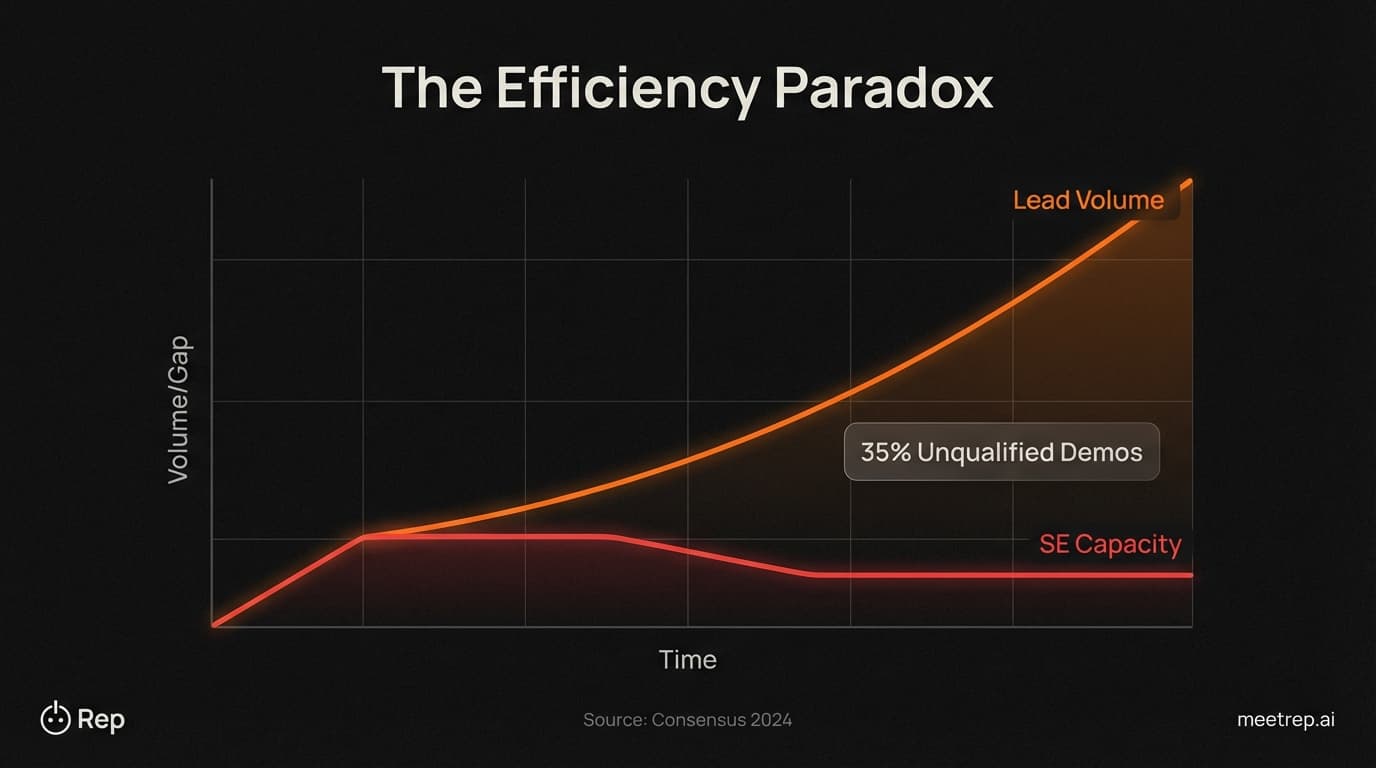
Here is the math that keeps most SE Directors up at night.
Demand for technical validation is skyrocketing. But scaling your team linearly? Impossible.
Consensus reports that the average base salary for an individual contributor SE is now $123,946. If you add overhead, commissions, and tools, a single "fully loaded" SE costs the business nearly a quarter-million dollars.
You cannot spend $250k to solve a capacity problem if your deal sizes don't justify it.
Plus, there's the waste factor.
We found that roughly 35% of demos delivered by SEs are considered unqualified or underqualified (source).
Think about that. One out of every three hours your team works is wasted.
This leads to the "Efficiency Paradox": The more successful your marketing is, the more your SE team suffers. More leads = more unqualified demos = more burnout. It's no wonder 40% of leaders have considered leaving their roles due to stress (HR Dive).
Common Mistake: Assuming that "more demos" equals "more revenue." It doesn't. More qualified demos equal more revenue.
Integrating AI Agents: The Rise of the "Digital SE"
So how do you scale? You decouple "demo volume" from "headcount."
You need a Digital SE.
When I talk about a Digital SE (or AI Agent), I don't mean a chatbot on your pricing page or a passive video recording. I mean an autonomous system that can demonstrate your product. At Rep, we built our agents to join video calls, share their screen, and actually navigate the software live.
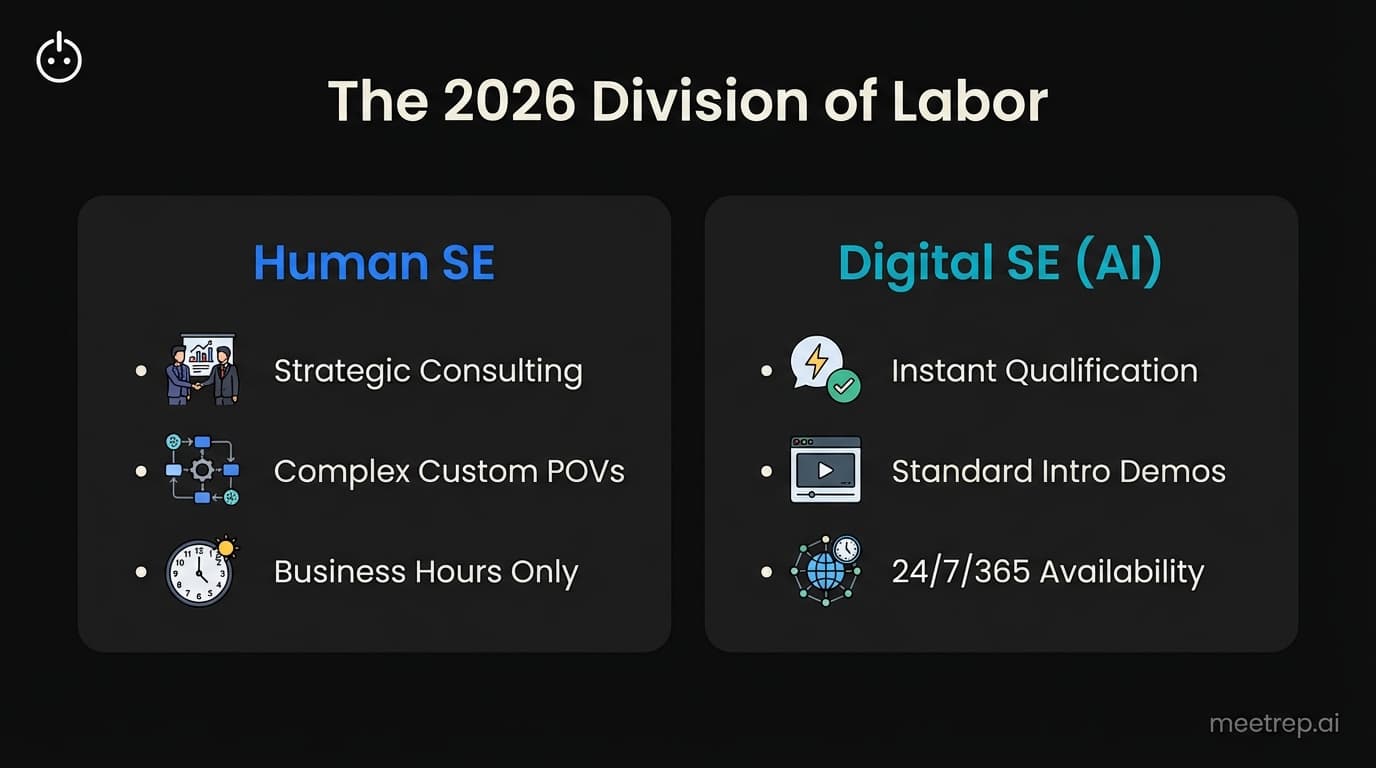
Here is where the division of labor needs to land in 2026:
| Capability | Human Sales Engineer | AI Sales Agent (Digital SE) |
|---|---|---|
| Primary Goal | Strategic consulting & closing | Speed, qualification, & coverage |
| Demo Type | Custom, complex, bespoke POV | "Harbor tour," intro, feature overview |
| Availability | 9-5 (Business Hours) | 24/7/365 |
| Cost to Scale | High (Linear headcount) | Low (Software margins) |
| Response Time | Days (requires scheduling) | Seconds (instant join) |
The Speed Imperative
There is another reason to use AI here: Speed kills.
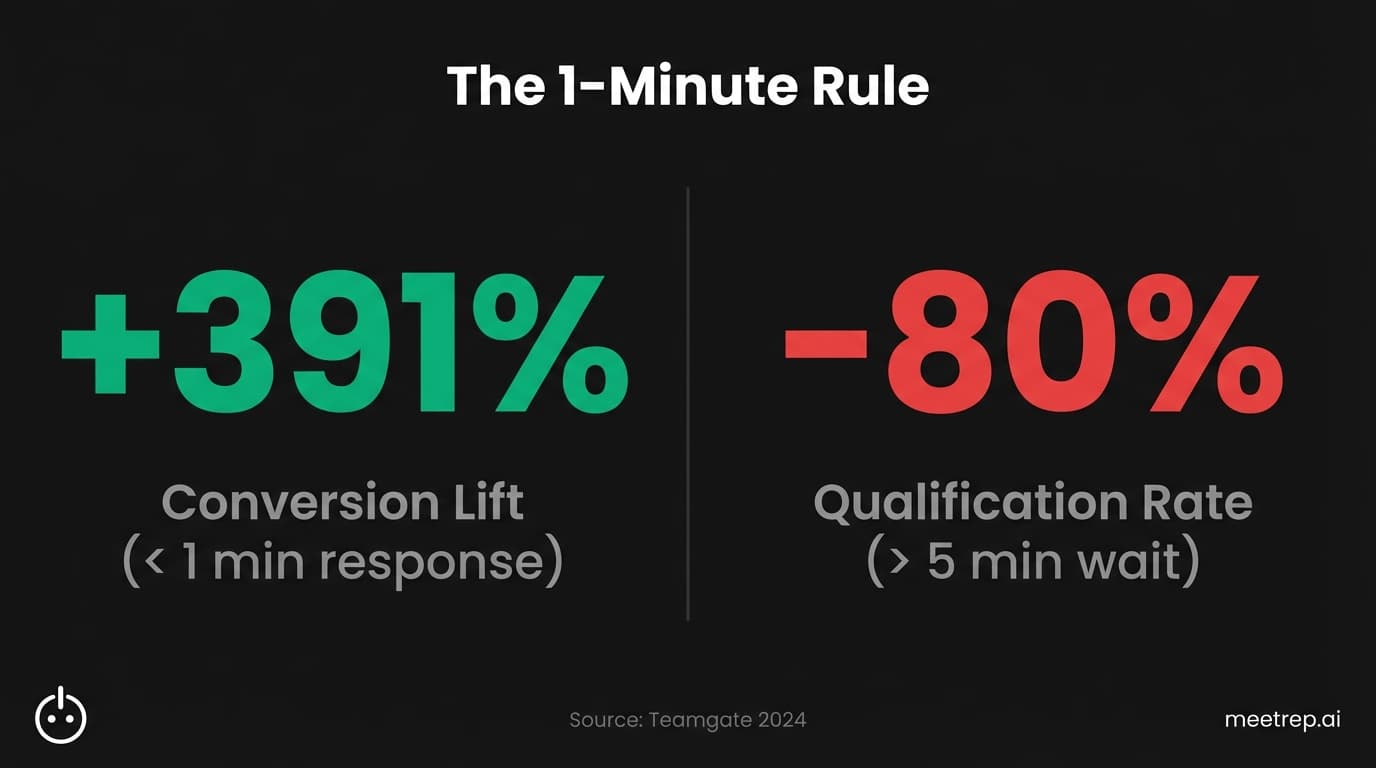
Data from Teamgate shows a 391% increase in conversion rates when you contact a lead within one minute of inquiry.
If you wait five minutes? You reduce the likelihood of qualifying that lead by 80%.
Humans cannot physically respond in one minute, 24/7. An SE might be on another call, at lunch, or sleeping. An AI agent can engage instantly.
Why we built Rep this way: We designed Rep to handle that critical first 5-minute window. It joins the call, shows the product, and answers questions while the intent is high. By the time the human SE gets involved, the prospect is educated, qualified, and serious.
Buyer Enablement vs. Sales Enablement
Most organizations have "Sales Enablement." They focus on training sellers. Few have "Buyer Enablement." They focus on training buyers.
As an SE leader, you own the product truth. That means you are best positioned to own Buyer Enablement.
HubSpot data suggests that organizations are flattening their structures, with AE:SE ratios approaching 4:1. To support four AEs, an SE cannot be holding the buyer's hand through every basic question.
You need to give buyers tools to sell themselves:
- Interactive Demos: Put ungated, clickable product tours on your site.
- Digital Sales Rooms (DSRs): Create shared spaces for content.
- AI Agents: Allow buyers to ask questions to a "Digital SE" without waiting for a meeting.
This isn't just about efficiency. It's about data.
When a buyer interacts with an automated demo, you get analytics. You know they spent 4 minutes on the "Reporting" module and skipped the "Admin" setup.
The Data: 9+ demo views on a shared demo board correlates with an 8–10x higher close rate (Consensus).
Key Metrics for SE Leaders in 2026
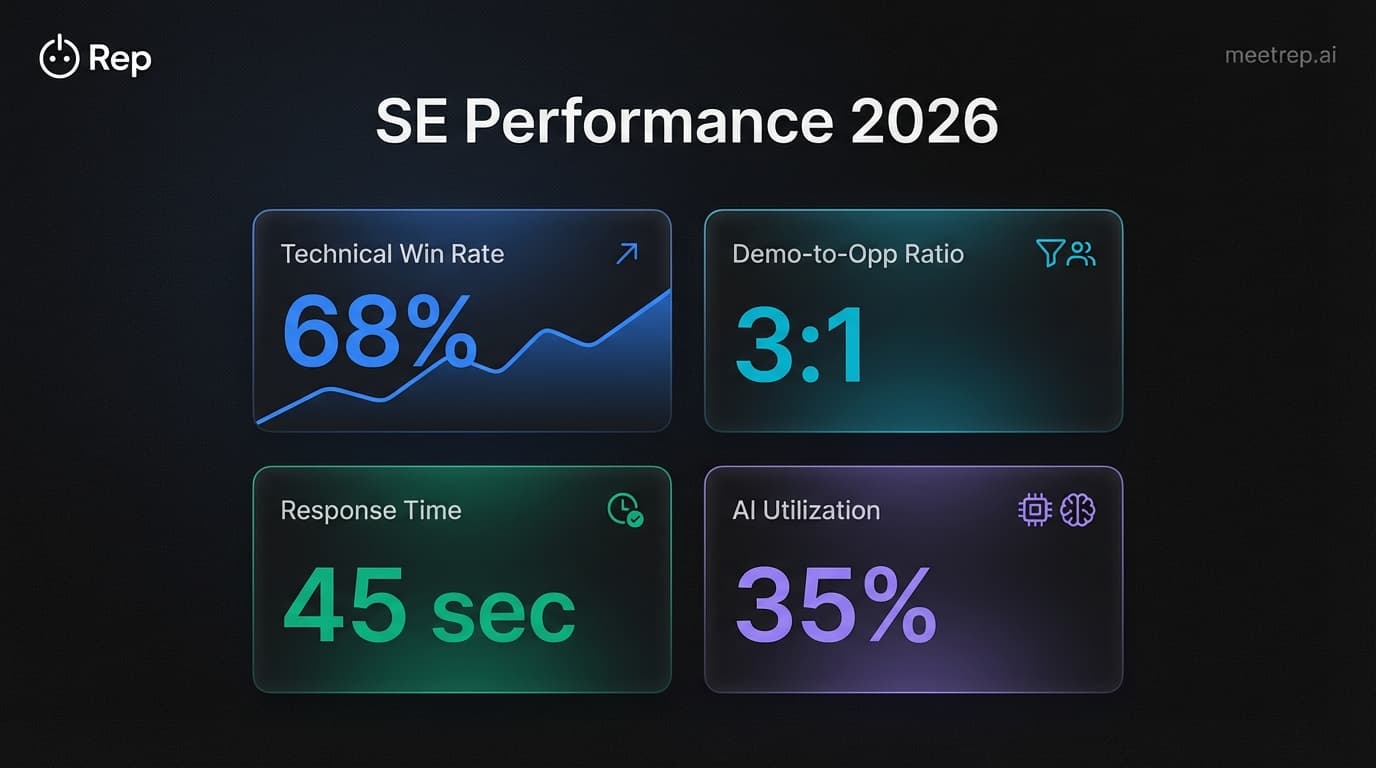
If you change how you work, you must change what you measure.
Stop counting "number of demos performed." That incentivizes waste. Here are the four metrics that actually matter:
1. Technical Win Rate
This is the ultimate truth. Did the SE secure the technical "yes"? Even if the deal is lost later due to budget or timing, the SE did their job. This separates SE performance from AE negotiation skills.
2. Demo-to-Opportunity Ratio
This measures your qualification filter. If your team is doing 100 demos to get 10 opportunities, your filter is broken. You want this ratio to be tight.
3. Response Time (Target: <5 Minutes)
How fast does a prospect see the product after asking? If the answer is "next Tuesday when Steve is free," you are losing deals to competitors who are faster.
4. AI Utilization Rate
What percentage of first touches are handled by your Digital SE? I recommend aiming for 30-40% of initial inquiries handled autonomously. This frees up your humans for the high-value POVs.
Hot Take: If your SEs are answering the same question more than 5 times a week, that question belongs to the AI.
The Hybrid Future
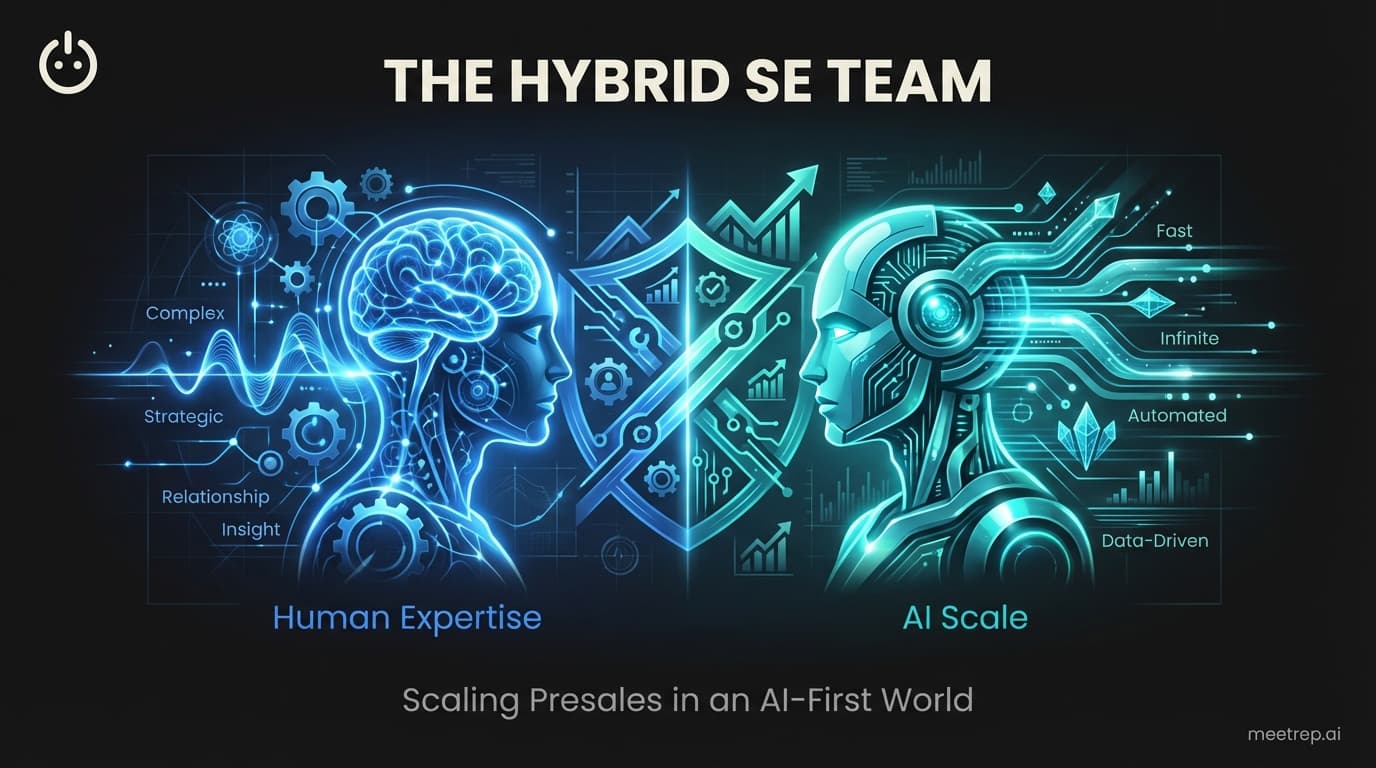
The future of the Sales Engineering team isn't human-only, and it isn't AI-only. It's hybrid.
Your best engineers shouldn't be exhausted from explaining the same dashboard 15 times a week. They should be fresh, focused, and ready to win the complex deals that actually move the needle.
We built Rep to handle the rest. The intro demos. The qualification calls. The instant responses.
If you are ready to stop burning out your team and start scaling your capacity, it’s time to look at autonomous demos.

Nadeem Azam
Founder
Software engineer & architect with 10+ years experience. Previously founded GoCustomer.ai.
Nadeem Azam is the Founder of Rep (meetrep.ai), building AI agents that give live product demos 24/7 for B2B sales teams. He writes about AI, sales automation, and the future of product demos.
Frequently Asked Questions
Table of Contents
- The State of Sales Engineering in 2026
- The "Efficiency Paradox": Why Hiring More SEs Isn't the Answer
- Integrating AI Agents: The Rise of the "Digital SE"
- Buyer Enablement vs. Sales Enablement
- Key Metrics for SE Leaders in 2026
- The Hybrid Future
Ready to automate your demos?
Join the Rep Council and be among the first to experience AI-powered demos.
Get Early AccessRelated Articles
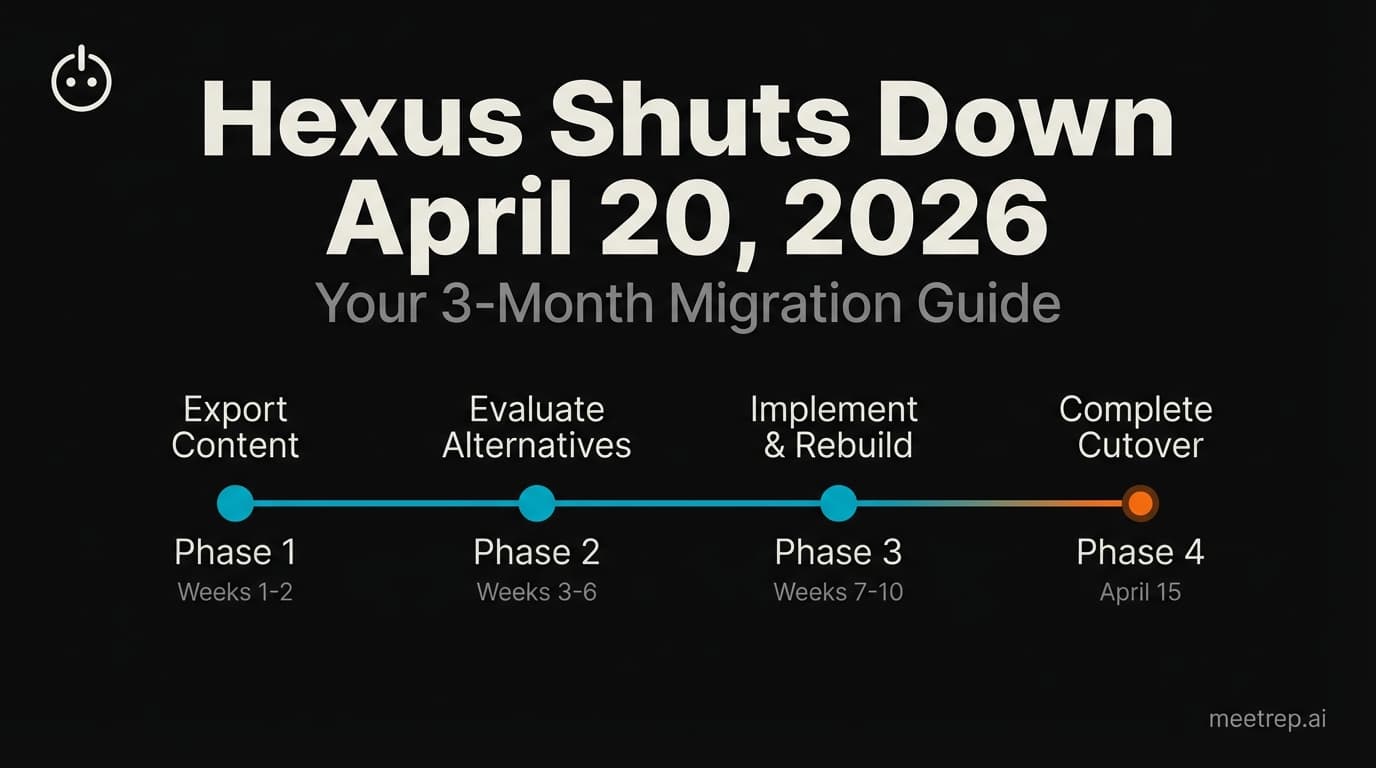
Hexus Acquired by Harvey AI: Congrats & What It Means for Demo Automation Teams
Hexus is shutting down following its acquisition by Harvey AI. Learn how to manage your migration and discover the best demo automation alternatives before April 2026.
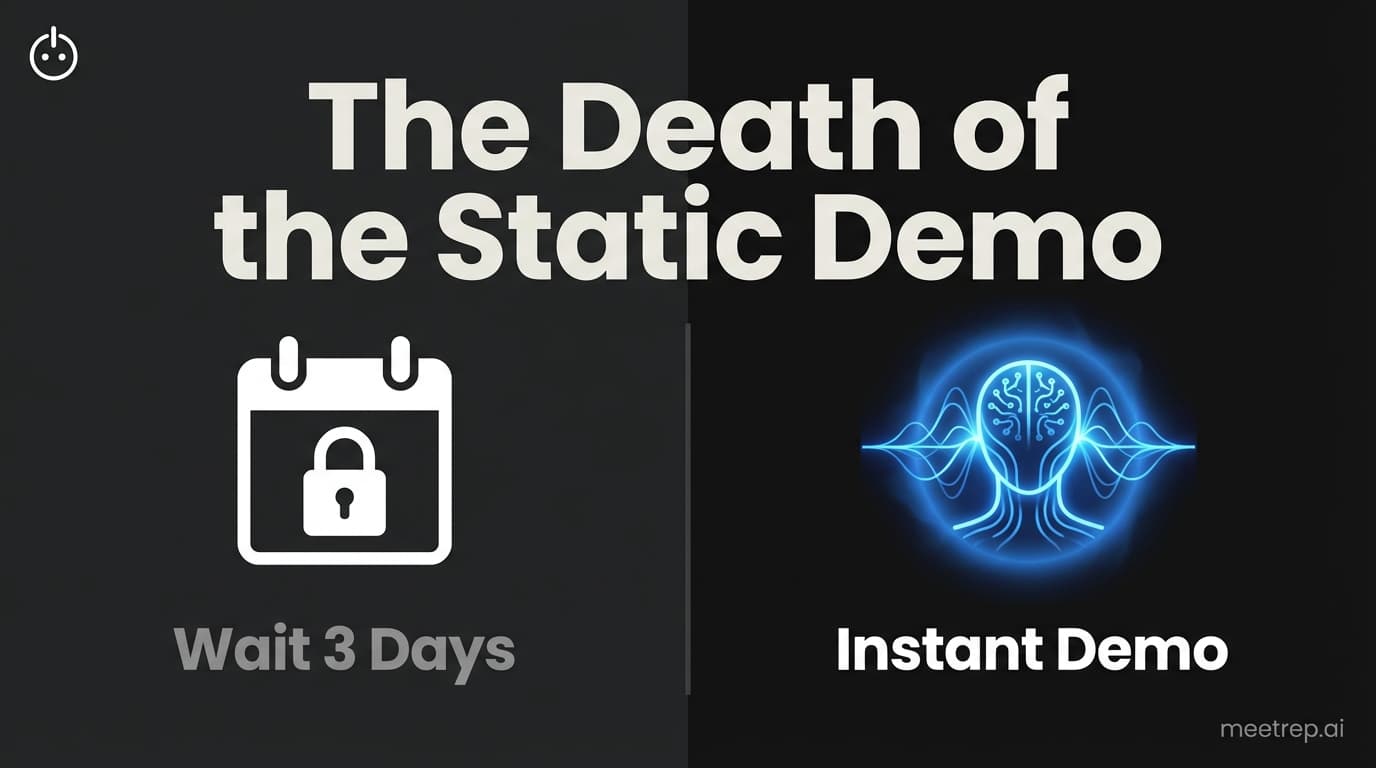
Why the "Software Demo" is Broken—and Why AI Agents Are the Future
The traditional software demo is dead. Discover why 94% of B2B buyers rank vendors before calling sales and how AI agents are replacing manual demos to scale revenue.
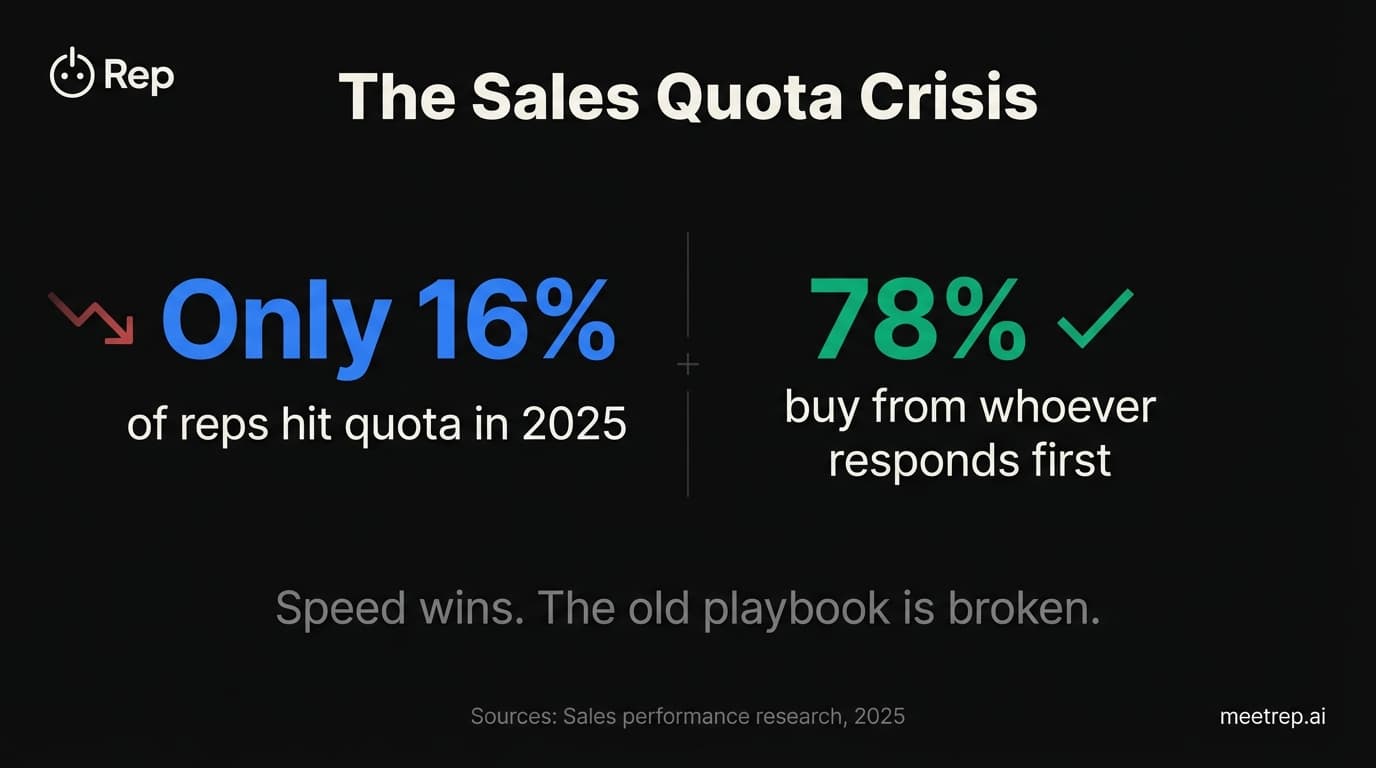
Why Autonomous Sales Software is the Future of B2B Sales (And Why the Old Playbook is Dead)
B2B sales is at a breaking point with quota attainment at 46%. Discover why autonomous 'Agentic AI' is the new standard for driving revenue and meeting the demand for rep-free buying.