Sales Engagement Platforms: Complete Buyer's Guide for 2026

Executive Summary
- The category is shifting from "Sales Engagement" to "Revenue Orchestration"—but most teams don't need that complexity
- Email effectiveness dropped 30% year-over-year. Multi-channel is no longer optional.
- Real pricing: Entry-level $29-49/user/mo, mid-market $75-125/user/mo, enterprise $100-165+/user/mo
- My pick for most teams: Apollo.io for value, Salesloft for proven ROI, skip Outreach unless you're 500+ reps
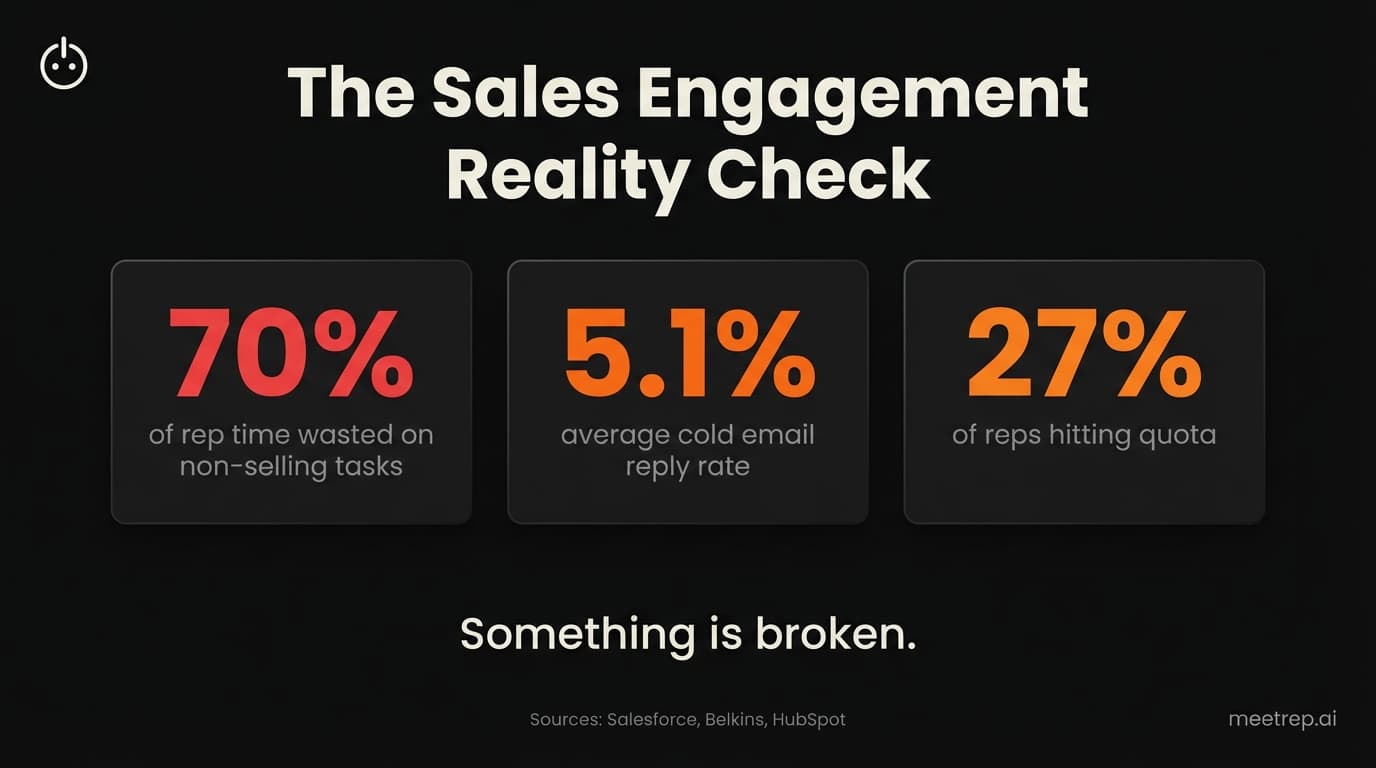
Here's what nobody tells you about sales engagement platforms: the category that promised to save your reps time is actually eating it alive. Your SDRs still spend 70% of their time on non-selling tasks. Cold email reply rates have collapsed to 5.1-5.8%. And only 27% of reps are hitting quota.
Something's broken.
I've been building in this space for years—first with GoCustomer.ai (a sales automation platform we exited in 2024), now with Rep. This guide is what I wish existed when I was evaluating these tools. No vendor spin. Real pricing. Honest takes on what works.
What Is a Sales Engagement Platform?
A sales engagement platform is software that helps sales teams automate, manage, and track prospect interactions across email, phone, social, and SMS. Unlike your CRM (which stores data), a sales engagement platform creates activity—automating sequences, tracking engagement, and telling reps what to do next. Think of it as the action layer on top of your system of record.
But here's what's changed: the industry is actively moving away from the term "sales engagement platform" entirely.
Forrester coined "Revenue Orchestration Platform" in late 2024. Gartner renamed their Magic Quadrant to "Revenue Action Orchestration" in 2025. The shift reflects a fundamental change—from tactical email automation to strategic orchestration of the entire buyer journey using AI.
Key Insight: The category name is changing, but most buyers still search for "sales engagement platform." Don't let terminology confusion slow your evaluation—the core capability (automating multi-channel outreach) remains the same.
What does this mean for you? If you're a 50-person SDR team, you probably don't need enterprise-grade "Revenue Orchestration." You need something that works. The platforms I'll cover range from straightforward engagement tools to full orchestration suites. I'll help you figure out which you actually need.
Sales Engagement vs CRM vs Sales Enablement: What's the Difference?
Before you buy anything, you need to understand what you're buying. These categories overlap but solve different problems. Getting this wrong means buying the wrong tool—or worse, buying three tools that should be one.
| Category | Primary Function | What It Does | Who Uses It | Examples |
|---|---|---|---|---|
| CRM | Data Warehouse | Stores contacts, accounts, deals, activities. System of record. | Entire company | Salesforce, HubSpot CRM, Microsoft Dynamics |
| Sales Engagement Platform | Action Layer | Executes outreach, automates sequences, tracks engagement, prioritizes tasks | SDRs, AEs | Outreach, Salesloft, Apollo.io |
| Sales Enablement | Internal Training | Content management, onboarding, coaching, playbooks | Sales + Enablement teams | Highspot, Seismic, Allego |
Here's my honest take: most teams need a CRM and a sales engagement platform. Sales enablement is valuable but often comes later as you scale.
The confusing part? The lines are blurring. HubSpot combines CRM and engagement in one platform. Gong started as conversation intelligence but now competes in revenue orchestration. And Salesloft just got acquired by Clari, a forecasting company.
What we learned at GoCustomer: When we built GoCustomer.ai, we saw teams struggle with this constantly. They'd buy a sales engagement platform expecting it to replace their CRM. It doesn't. Or they'd buy enablement tools thinking it would fix outreach problems. It won't. Know what problem you're solving first.
Do you need all three? For teams under 50 reps, probably not. Start with CRM + engagement. Add enablement when onboarding new reps becomes painful.
Why Your Current Sales Engagement Isn't Working
Let me share some data that should concern you. The traditional "spray and pray" model that most sales engagement platforms enable? It's dying.
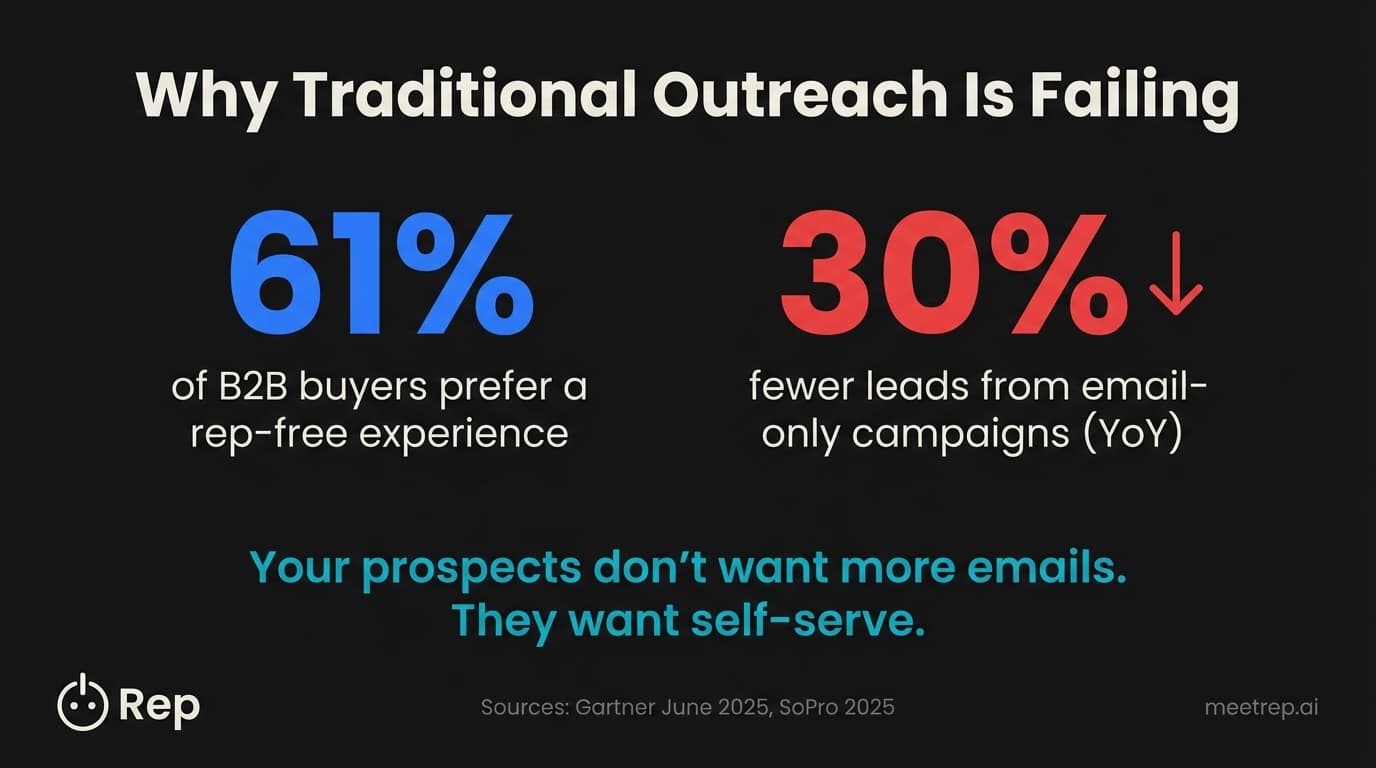
The Data:Email-only campaigns are generating 30% fewer leads year-over-year. Cold email reply rates dropped from ~7% to 5.1-5.8% in 2024 (Belkins analyzed 16.5M emails across 93 domains). And 73% of B2B buyers actively avoid suppliers who send irrelevant outreach.
Your prospects can smell a generic template from a mile away. They're blocking your domain. They're unsubscribing. They're telling procurement to never talk to you.
And here's the really uncomfortable truth: 61% of B2B buyers prefer a rep-free buying experience. That's from Gartner's June 2025 survey of 632 B2B buyers. Most of your prospects don't want to talk to your SDRs. They want to research, evaluate, and buy on their own timeline.
So why is your sales engagement platform pushing more emails, more calls, more touches?
The tools that will win in the next five years are the ones that respect buyer preferences. Multi-channel orchestration (not just email). Self-serve options (demos, pricing, trials without a rep). And AI that actually personalizes at scale—not AI that writes marginally better spam.
What Actually Matters in a Sales Engagement Platform (2026 Edition)
I've evaluated dozens of these tools. Here's what separates the winners from expensive shelfware.
1. Multi-Channel Actually Works
Email alone is dead. You need platforms that orchestrate across email, phone, LinkedIn, and SMS—with conditional branching. "If email opens but no reply in 3 days, trigger LinkedIn connection request." That kind of logic.
What to test: Can you build a sequence that adapts based on prospect behavior? Or is it just a linear drip campaign?
2. CRM Integration That Doesn't Break
This is the #2 complaint in every review I read while researching this guide. "Syncing between Salesforce and Salesloft should be improved... can't automate syncing for accounts" (Capterra review). "The HubSpot integration is horrifically bad and keeps breaking" (G2 review).
Bidirectional sync sounds simple. It's not. Before you buy, test the actual integration with your actual CRM and your actual custom fields. Don't take the demo's word for it.
3. AI That Does Real Work (Not Just Better Autocomplete)
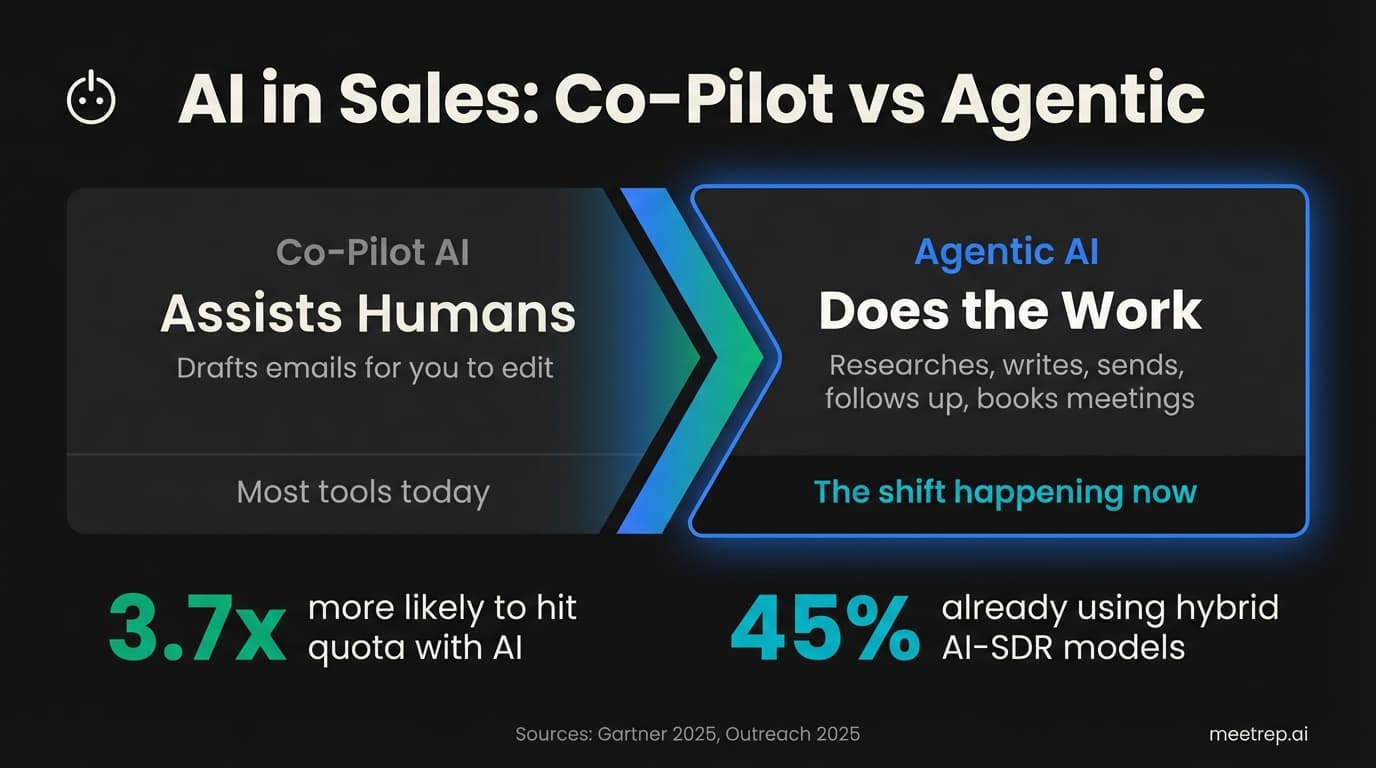
Gartner found that sellers partnering with AI are 3.7x more likely to meet quota. But there's a massive difference between "AI-powered" marketing and actual agentic AI.
Here's how I think about it:
Co-Pilot AI (what most tools have): Assists humans. "Here's a draft email for you to edit." Helpful, but you're still doing the work.
Agentic AI (the real shift): Does the work autonomously. Researches the prospect, writes personalized outreach, sends at optimal time, follows up, books the meeting. You review the results, not the drafts.
By 2028, 15% of day-to-day work decisions will be made autonomously by agentic AI, up from 0% in 2024, according to Gartner. That's not a distant future—that's 36 months away.
Right now, 45% of teams are already using hybrid AI-SDR models where AI handles first-touch and qualification. The tools catching up to this reality include 11x.ai (AI SDRs named "Alice" and "Jordan"), Apollo.io's AI Research Agent, and demo automation platforms like Rep.
4. Speed to Value
Here's a stat that should guide every conversation with vendors: Deals closed within 50 days have a 47% win rate. Beyond 50 days, it drops to 20% or lower (Outreach 2025 analysis).
Speed matters. And that applies to your sales engagement platform too. If implementation takes 6 months, you've already lost. Look for platforms with:
- Setup in 2-4 weeks, not months
- Pre-built cadences and templates
- Fast rep onboarding (under 3 hours of training)
Cisco's Salesloft deployment reportedly achieved "nearly zero time to see benefits." That should be your bar.
5. Analytics That Change Behavior
You need to answer: Which sequences work? Which channel drives meetings? Where do prospects drop off?
Most platforms provide activity metrics (emails sent, calls made). The good ones provide outcome metrics (meetings booked, deals influenced, revenue attributed). Demand the latter.
The Best Sales Engagement Platforms: Honest Reviews
I'm going to give you my actual opinion on each platform. Not "it depends on your use case" hedging—real recommendations based on who should (and shouldn't) buy each tool.
Outreach
Best for: Enterprise teams (500+ reps) with complex forecasting needs
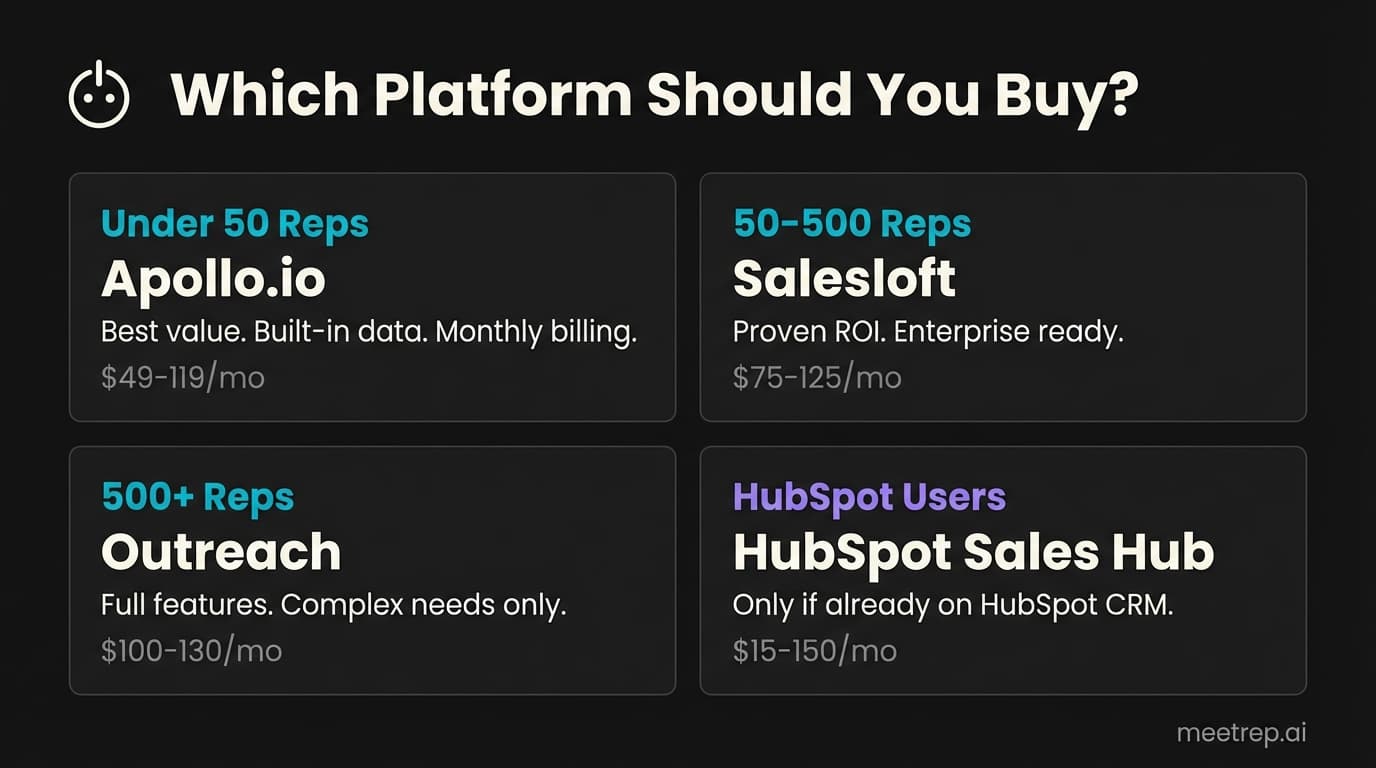
Pricing: $100-130/user/mo (annual contract required)
What they do well: Outreach is the most full-featured platform in the category. Their forecasting is genuinely strong. Kaia AI handles prioritization reasonably well. If you have 500+ reps and need to unify engagement, forecasting, and pipeline management, this is the enterprise choice.
What they don't do well: Customer support. "Received horrible support from Outreach after being subscriber for over two years" shows up in Trustpilot reviews repeatedly. The learning curve is steep. And no free trial means you're committing blind.
The numbers: High adopters see 2.25x more meetings and 70% more revenue per quarter (Outreach's own data).
My recommendation: Skip Outreach unless you're truly enterprise scale. The complexity isn't worth it for teams under 300-500 reps. And the support issues are a real risk.
Salesloft
Best for: Mid-market to enterprise teams (50-1,000 reps) who need to prove ROI
Pricing: $75-125/user/mo (annual), plus mandatory $3,000 onboarding fee
What they do well: Salesloft has the best third-party ROI validation I've found. The Forrester TEI study from April 2025 showed 3.3x ROI over three years, 12% higher close rates, and payback in under 8 months. That's a composite analysis of a $7B revenue enterprise—real methodology, not marketing math.
They also move faster than Outreach. Cisco reported "nearly zero time to see benefits." HBX Group scaled from 20 to 500 licenses in a single quarter.
What they don't do well: CRM sync issues appear in reviews consistently. "Syncing between Salesforce and Salesloft should be improved" (Capterra). The new UI has frustrated users. And that mandatory $3K onboarding fee is annoying.
The numbers:3.3x ROI, 236% return over 3 years (Forrester TEI, April 2025).
My recommendation: Salesloft is my pick for mid-market teams who need to justify spend to finance. That Forrester study is real ammunition for your business case.
Apollo.io
Best for: SMB to mid-market teams (10-200 reps) who want data + engagement in one
Pricing: $49-119/user/mo (monthly plans available—rare in this category)
What they do well: Apollo combines a 275M+ contact database with sales engagement in one platform. That's huge. Most competitors require you to buy data separately (ZoomInfo, Cognism) for $50-150/user/mo additional. Apollo includes it.
Their AI Research Agent is genuinely useful—it autonomously builds target lists and researches accounts. And they published real numbers: 46% more meetings and 35% increase in bookings for AI users (Apollo aggregate data).
They also offer a free tier (limited to 50 contacts/month) and monthly billing. That signals confidence in the product.
What they don't do well: Less sophisticated than Outreach or Salesloft for enterprise needs. Conversation intelligence is basic. Not ideal for complex sales cycles with 6-10 stakeholder buying committees.
The numbers: Smartling achieved 10x productivity increase using Apollo AI Research Agent.
My recommendation: Apollo is my default recommendation for most teams under 200 reps. Best value in the category. The built-in database alone saves thousands annually.
HubSpot Sales Hub
Best for: Teams already using HubSpot CRM
Pricing: $15/seat/mo (Starter) to $150/seat/mo (Enterprise)
What they do well: If you're already paying for HubSpot CRM, Sales Hub is the path of least resistance. Zero integration work. One vendor relationship. One bill.
Sequences, templates, tracking, meeting scheduling—it's all "good enough" for teams that don't need cutting-edge engagement capabilities.
What they don't do well: It's not best-in-class at anything. The ironic thing: "HubSpot integration is horrifically bad and keeps breaking" appears in G2 reviews about other tools integrating with HubSpot. Even native sometimes struggles.
The numbers: 400K+ customers in the HubSpot ecosystem.
My recommendation: Only consider HubSpot Sales Hub if you're already committed to HubSpot CRM. Switching from Salesforce to HubSpot just for engagement features rarely makes sense.
Gong
Best for: Teams prioritizing coaching and conversation intelligence
Pricing: Custom enterprise pricing (typically $1,000-1,500/user/year)
What they do well: Gong's conversation intelligence is unmatched. Call recording, transcription, deal risk identification, competitor mention tracking, coaching analytics—they pioneered this category and still lead it.
They've expanded into broader revenue orchestration, but conversation intelligence remains the core strength.
What they don't do well: Expensive. Overkill if you just need email sequences. And you'll still need a separate engagement tool for outbound sequences.
My recommendation: Add Gong when coaching becomes a priority. It's not your primary engagement platform—it's your intelligence layer.
The Emerging Players
11x.ai: True "digital worker" approach. Their AI SDR "Alice" autonomously prospects, qualifies, and books meetings. Pricing is per-lead or per-meeting (not per-seat). Worth testing if you want to experiment with AI SDRs before replacing humans.
Instantly: Best for agencies and high-volume cold email. Flat pricing ($37-286/mo) for unlimited email accounts. Excellent deliverability optimization. Email-only, though—no phone or LinkedIn.
Lemlist: Best personalization tools in the category. Video personalization, dynamic images, LinkedIn automation. Good for boutique firms sending highly customized campaigns to smaller prospect pools.
The Real Costs (What Vendors Won't Tell You)
Pricing opacity in this category drives me crazy. Neither Outreach nor Salesloft publicly display their prices. You have to "talk to sales" to get a quote—which means they're sizing you up to maximize extraction.
So here's what I've pieced together from reviews, industry analysis, and conversations:
Base Software Costs
| Platform | Entry Tier | Mid Tier | Enterprise | Contract |
|---|---|---|---|---|
| Outreach | N/A | $100-130/user/mo | Custom | Annual required |
| Salesloft | $75/user/mo | $100-125/user/mo | Custom | Annual required |
| Apollo.io | $49/user/mo | $79/user/mo | $119/user/mo | Monthly available |
| HubSpot Sales Hub | $15/seat/mo | $90/seat/mo | $150/seat/mo | Monthly available |
| Gong | N/A | N/A | ~$1,000-1,500/user/yr | Annual required |
| Instantly | $37/mo flat | $97/mo flat | $286/mo flat | Monthly available |
| Lemlist | $39/user/mo | $69/user/mo | $79/user/mo | Monthly available |
Hidden Costs (The Part That Hurts)
| Cost Category | Range | What You Need to Know |
|---|---|---|
| Implementation | $1,000-$8,000 | CRM integration, custom field mapping, sequence migration |
| Onboarding/Training | $1,500-$3,500 | Salesloft charges a mandatory $3,000 onboarding fee |
| Data Enrichment | $50-150/user/mo | If you need ZoomInfo or Cognism on top of engagement |
| Email Warmup | $30-100/mo | Warmbox, Lemwarm—needed if you're scaling cold email |
| Premium Support | 15-20% of contract | For faster response times |
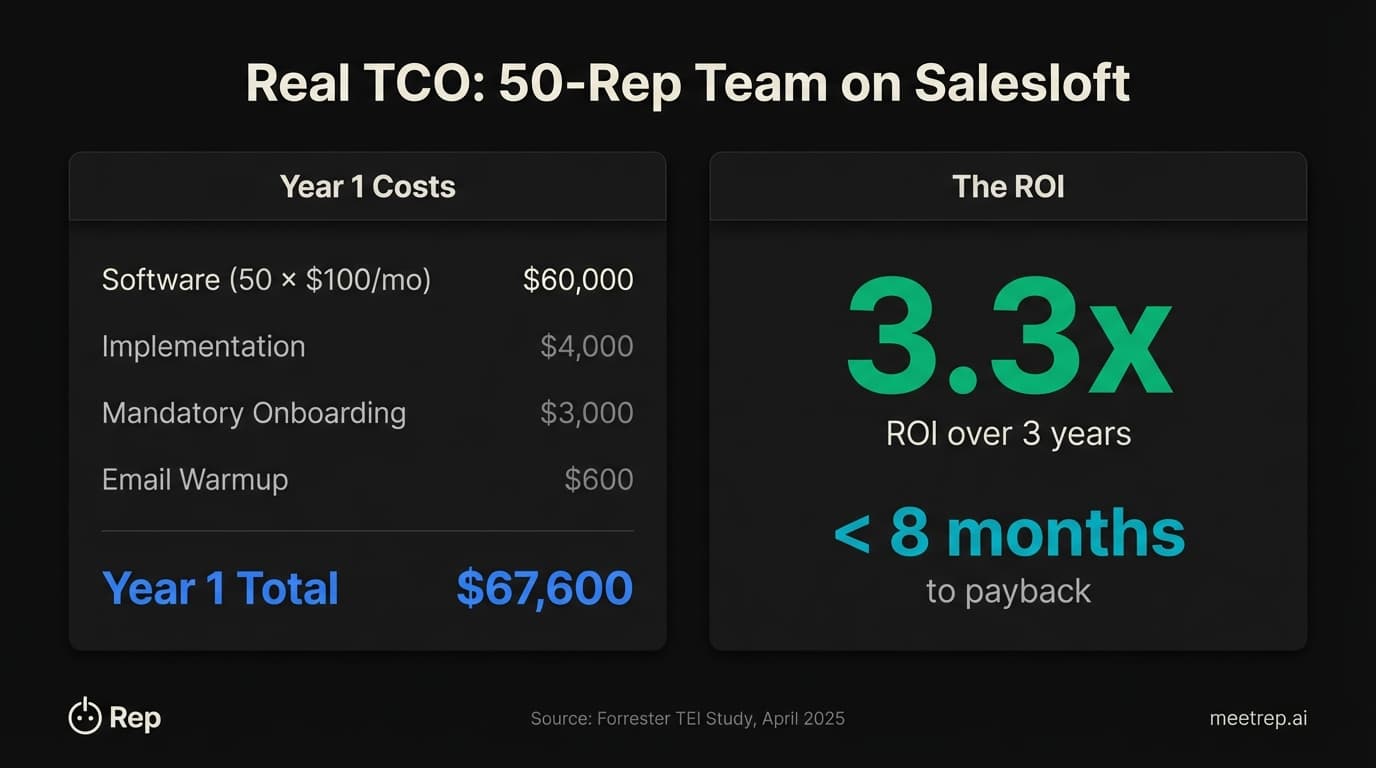
Real-World TCO Example
Let's say you're a 50-rep mid-market company choosing Salesloft Professional:
Year 1:
- Software: $100/user/mo × 50 = $60,000/year
- Implementation: $4,000
- Mandatory onboarding: $3,000
- Email warmup: $600/year
- Year 1 Total: $67,600 ($1,352 per seat)
Year 2+:
- Software with 10% renewal uplift: $66,000/year
- 3-Year Total: ~$200,000
That's real money. But the Forrester TEI study found most organizations recover investment in under 8 months, with 236% ROI over three years.
My recommendation: Always ask for multi-year discount (10-15% for 3-year commitment), negotiate free implementation, and push for Q4 when vendors are desperate to hit quota.
Making the Decision (And Getting Buy-In)
Your CFO doesn't care about features. They care about ROI and risk. Here's how to frame it.
The Business Case
The Problem (Loss Frame):
- 70% of rep time wasted on non-selling tasks = $X per rep annually in lost productivity
- Only 27% of reps hitting quota = missed revenue targets
- Email effectiveness down 30% = current investments failing
The Solution:
- Sales engagement platform: $1,000-1,500/seat annually
- Expected outcomes: 25% productivity increase (industry average), 3.3x ROI over 3 years (Forrester)
- Payback period: Under 8 months
Risk Mitigation:
- Start with 10-20 seat pilot for 90 days
- Define success metrics upfront (meetings booked +15%, reply rates +X%)
- If pilot fails, exit with limited exposure
The Questions to Ask Every Vendor
- "What's the all-in cost including implementation, onboarding, and fees?" (Don't let them hide costs)
- "What's your typical renewal uplift?" (Some vendors hit you with 20% annual increases)
- "Show me the CRM integration live. What happens when a deal closes?" (Don't trust demos—watch real data flow)
- "Can I export my data if I leave?" (Avoid lock-in)
- "What's your response time for critical support issues?" (Get it in writing)
Red Flags
- "Implementation takes 6 months" (too long)
- No formal training included (adoption will fail)
- Auto-renewal clauses without 90-day notice period (contract trap)
- "Uplift" language without a cap (unlimited price increases)
The Future Is Autonomous
Here's where I see this going—and why we built Rep.
61% of buyers prefer rep-free experiences. They don't want to wait for a demo. They don't want to schedule a call. They want to explore your product on their timeline.
The platforms winning in 2026 and beyond are the ones meeting buyers where they are:
- Self-serve demos that work 24/7 (our focus at Rep—AI voice agents that give live product demos without a human)
- AI SDRs that handle qualification autonomously (11x.ai, Apollo's AI agents)
- Signal-based selling that reaches out at the right moment, not on a pre-set cadence
By 2028, 33% of enterprise software will include agentic AI, up from less than 1% in 2024. That's not a prediction from some startup pitch deck—that's Gartner.
The teams that adopt these tools now get a 3-year head start. The teams that wait will wonder why their "best-in-class" sales engagement platform stopped working.
The category is shifting. Email is declining. Buyers want self-serve. AI is real.
If you're evaluating sales engagement platforms today, my honest advice: start smaller than you think. Apollo.io handles most mid-market needs at a fraction of enterprise cost. Add Salesloft when you need to prove ROI at scale. Skip Outreach unless you're truly enterprise.
And if you're thinking about how to meet buyers where they actually want to be—exploring your product without scheduling a call—that's exactly why we built Rep. Live AI demos, 24/7, with real conversations and real screen sharing.
The future is autonomous. The teams that get there first win.

Nadeem Azam
Founder
Software engineer & architect with 10+ years experience. Previously founded GoCustomer.ai.
Nadeem Azam is the Founder of Rep (meetrep.ai), building AI agents that give live product demos 24/7 for B2B sales teams. He writes about AI, sales automation, and the future of product demos.
Frequently Asked Questions
Table of Contents
- What Is a Sales Engagement Platform?
- Sales Engagement vs CRM vs Sales Enablement: What's the Difference?
- Why Your Current Sales Engagement Isn't Working
- What Actually Matters in a Sales Engagement Platform (2026 Edition)
- The Best Sales Engagement Platforms: Honest Reviews
- The Real Costs (What Vendors Won't Tell You)
- Making the Decision (And Getting Buy-In)
- The Future Is Autonomous
Ready to automate your demos?
Join the Rep Council and be among the first to experience AI-powered demos.
Get Early AccessRelated Articles
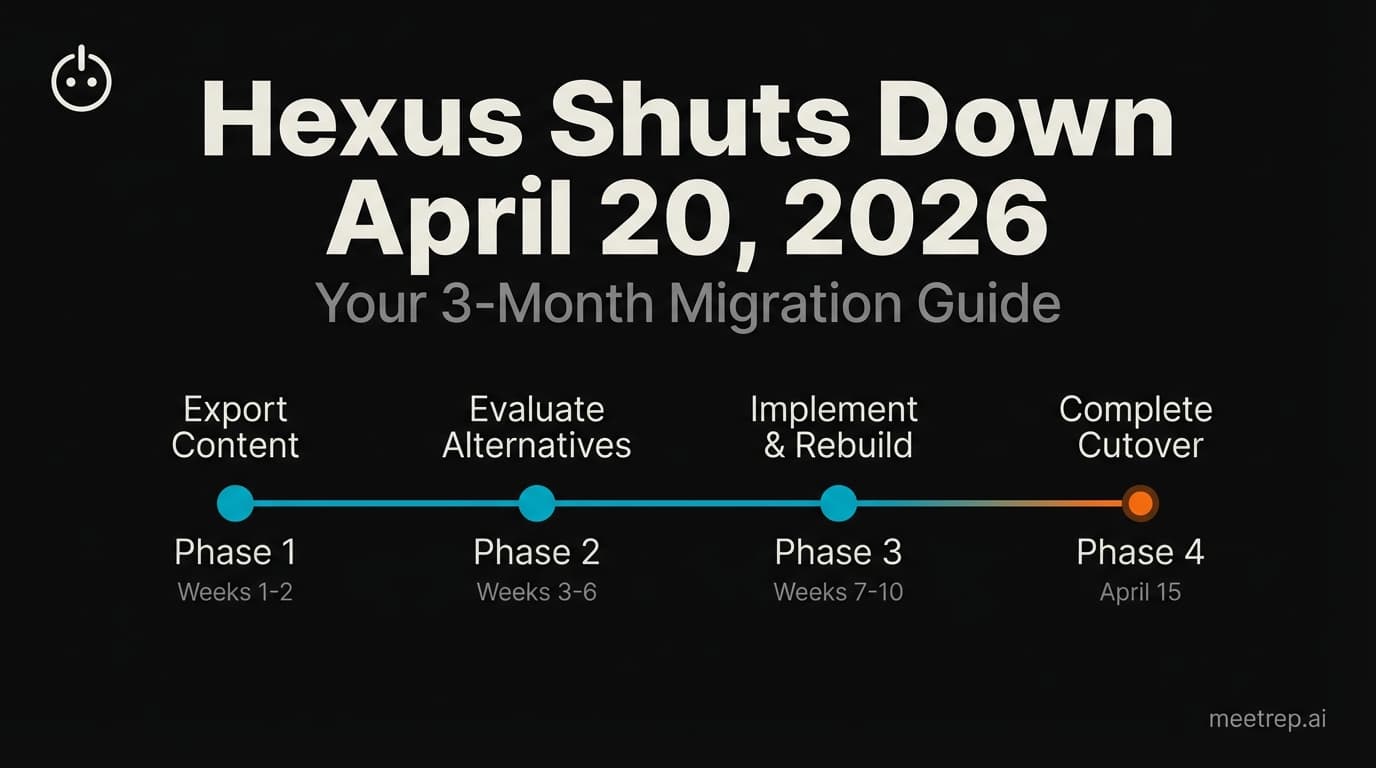
Hexus Acquired by Harvey AI: Congrats & What It Means for Demo Automation Teams
Hexus is shutting down following its acquisition by Harvey AI. Learn how to manage your migration and discover the best demo automation alternatives before April 2026.
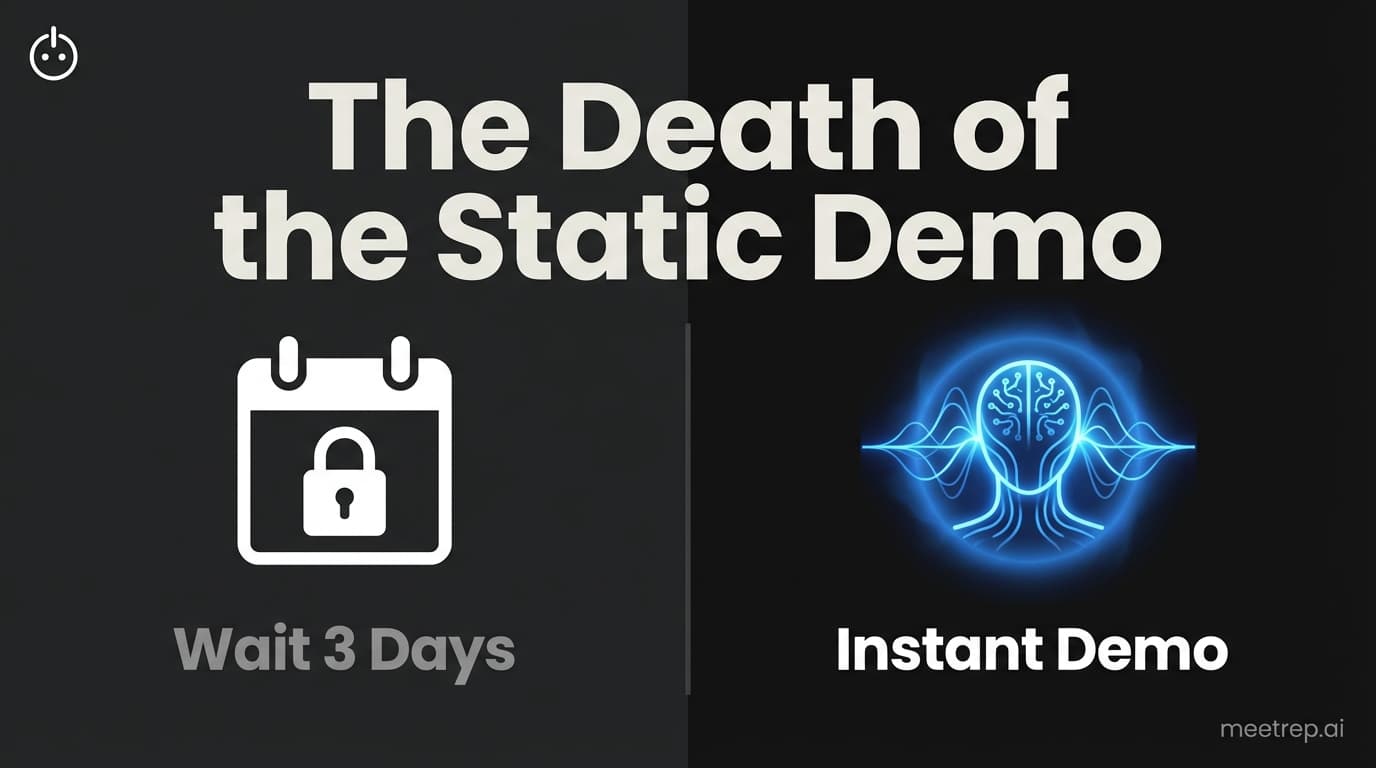
Why the "Software Demo" is Broken—and Why AI Agents Are the Future
The traditional software demo is dead. Discover why 94% of B2B buyers rank vendors before calling sales and how AI agents are replacing manual demos to scale revenue.
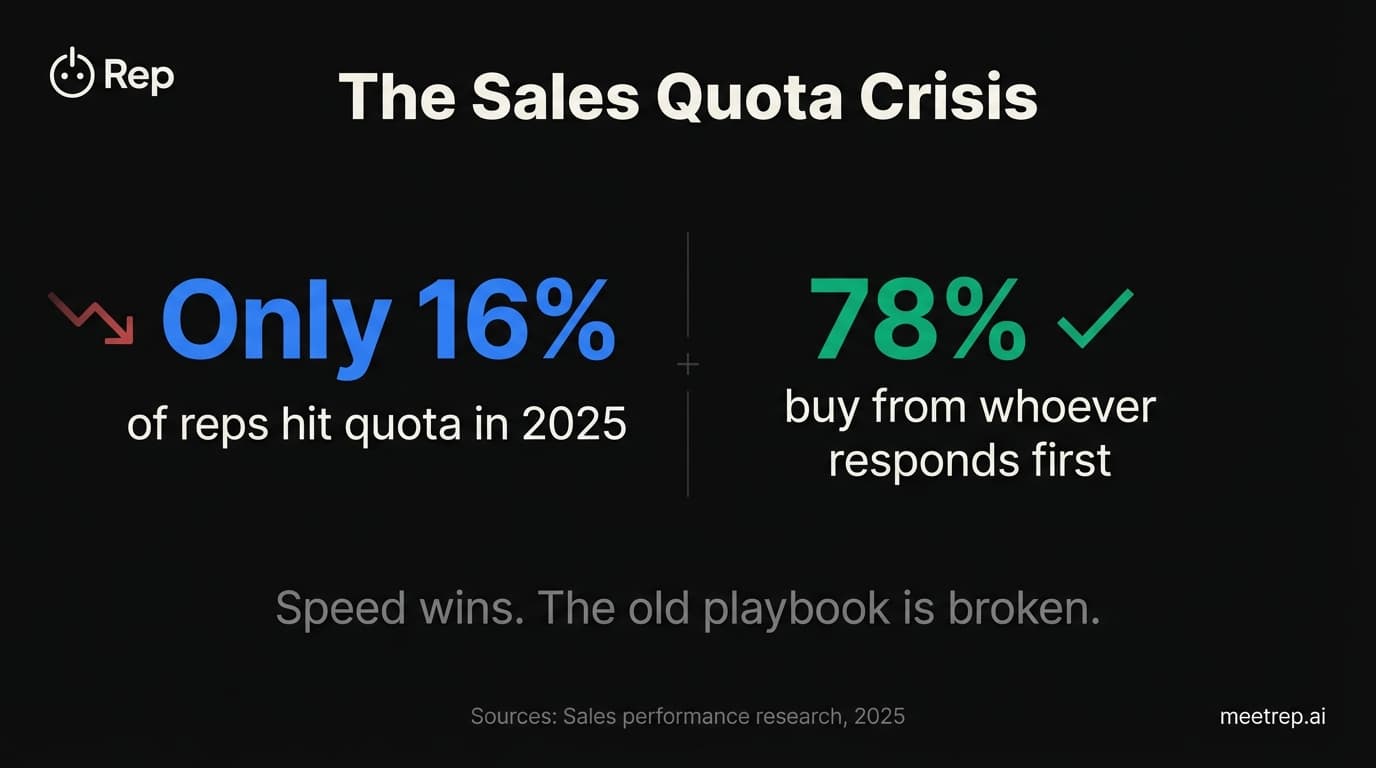
Why Autonomous Sales Software is the Future of B2B Sales (And Why the Old Playbook is Dead)
B2B sales is at a breaking point with quota attainment at 46%. Discover why autonomous 'Agentic AI' is the new standard for driving revenue and meeting the demand for rep-free buying.