Sales Demo Best Practices: 8 Tactics That Convert 52% More Deals

Executive Summary
- Personalized demos generate 4X more requests than generic ones—personalization isn't optional
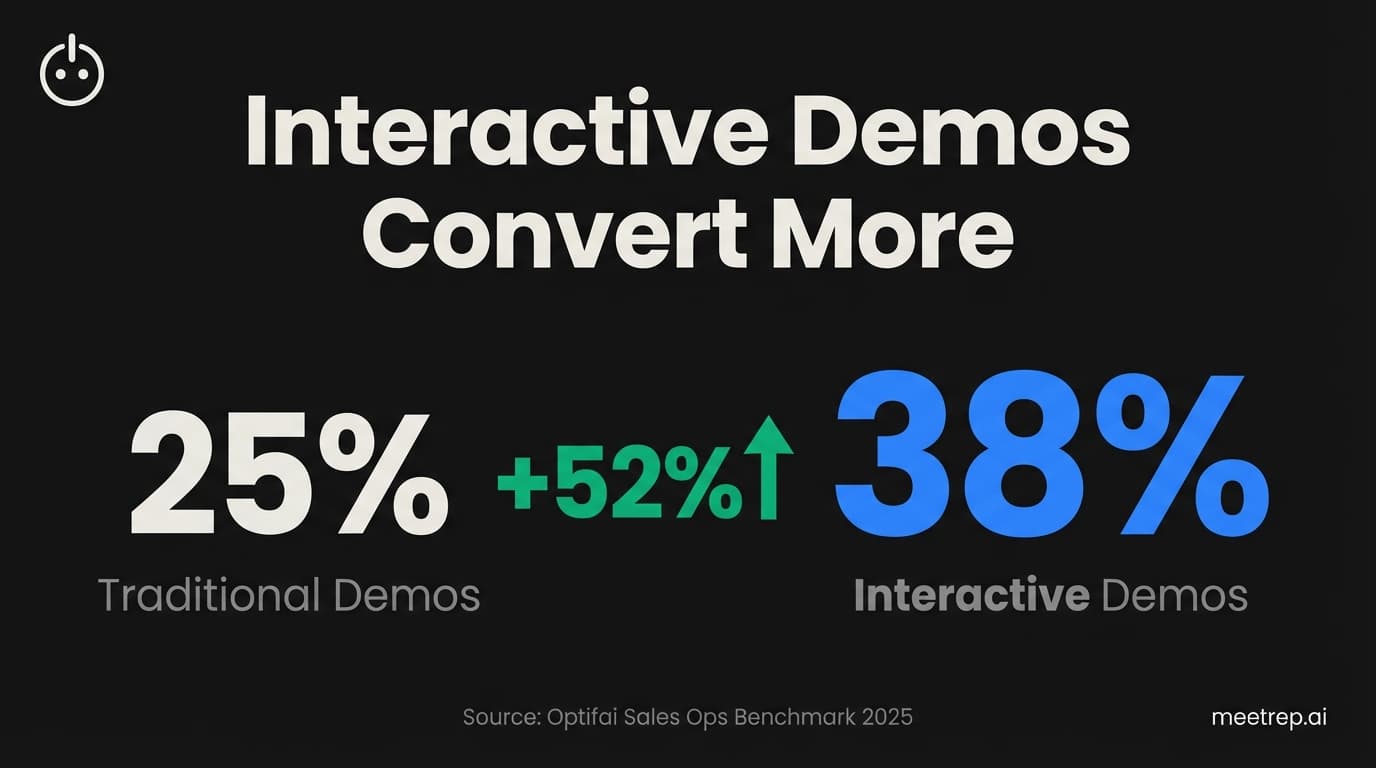
- Interactive demos convert at 38% vs. 25% for traditional screen-shares (52% improvement)
- 70%+ of deals die when you fail to establish clear next steps before ending the call
- 80% of sales require 5+ follow-ups, but nearly half of reps give up after one
- The single biggest lever? Stop feature-dumping. Start with discovery.
Your demo ended with "thanks for your time." No questions. No urgency. No next meeting on the calendar. Just silence and a vague promise to "circle back."
Sound familiar?
Sales demo best practices are proven tactics for delivering product demonstrations that convert prospects into customers—but most teams execute them poorly or skip them entirely. The gap between winning and losing demos isn't talent. It's preparation, structure, and follow-through.
I've been building sales automation tools for years now. First at GoCustomer.ai, and now at Rep, where we're tackling the demo problem head-on. What I've learned: most demo advice is vague garbage. "Know your audience." "Tell a story." Great. How?
This is the tactical playbook. Real numbers. Specific frameworks. The stuff that actually moves deals.
Why Most Demos Fail (And What the Data Shows)
Most demos fail because reps show up unprepared and dump features on prospects who don't care. That's the uncomfortable truth. In my experience building demo tools, I've seen the same pattern hundreds of times: reps who wing it convert maybe one in five or six demos. Reps who actually prepare? They close two or three times that rate. The difference isn't minor. It's the difference between making quota and missing it.
Peter Cohan, who literally wrote the book on demos, calls this the "Harbor Tour Delusion"—presenting a long, tortured demo that attempts to cover every possible customer need before any real discussion. You've seen it. Maybe you've done it. The prospect sits there glazed over while you click through screens they'll never use, solving problems they don't have.
Here's what makes it worse: the buying committee keeps growing. Consensus's 2024 SE Compensation and Workload Report found a 19% increase in stakeholders per deal. You're not just convincing one person anymore. You're convincing six, eight, sometimes ten. And your generic Harbor Tour? It speaks to none of them.
The Data: According to Gong research, close rates plummet by over 70% when you fail to discuss next steps before ending the demo. Seventy percent. That's not a rounding error—that's most of your pipeline disappearing because you ended with "any questions?" instead of "let's get the next meeting scheduled."
The fix isn't complicated. But it requires discipline most teams lack.
The 8 Practices That Separate Top Performers
Here's what actually works. Not theory. Tactics you can use on your next call.
1. Conduct Deep Discovery First
Never demo blind. Before showing anything, understand the prospect's specific pain points, current solutions, and what "success" looks like for them. The Reprise 2024 Presales Landscape Report found that 39% of SEs report AEs don't share discovery info soon enough. Almost four in ten demos are handicapped before they start.
The best demo script isn't a script at all. It's a framework built around what you learned in discovery.
2. Personalize Every Time
This is the biggest lever most teams ignore because it's hard. ON24's 2024 Digital Engagement Benchmarks Report found that personalized demos generate 4X more demo requests than generic experiences. Four times.
And yet. Most teams run the same vanilla demo for everyone because customization takes time.
3. Follow the Rule of Three
Show only the three features most relevant to this specific prospect's stated problems. Not five. Not seven. Three. Everything else is noise that dilutes your message and gives the prospect reasons to object.
Key Insight: Your prospect doesn't care how many features you have. They care whether you can solve their problem. Three features that nail their pain points beat fifteen features that might be relevant.
4. Create Engagement Every Eight Minutes
Gong Labs analyzed 67,149 sales demos and found top performers ask questions every three to four minutes and create engaging moments every eight minutes. This isn't random. Attention wanders. You need to pull it back.
Ask opinion questions. Check understanding. Pause for reactions. A demo is a conversation, not a presentation.
5. Use Interactive Demos
Optifai's Sales Ops Benchmark 2025, analyzing 939 B2B companies, found interactive demos convert at 38% compared to 25% for traditional screen-share demos. That's a 52% improvement.
Why? Interactive demos let prospects drive. They explore what matters to them, not what you decided to show. And Navattic's State of Interactive Product Demo 2025 found interactive demo users achieve 24.35% website conversion compared to 3.05% without—a 7.9X difference.
6. Lock Down Next Steps Before You End
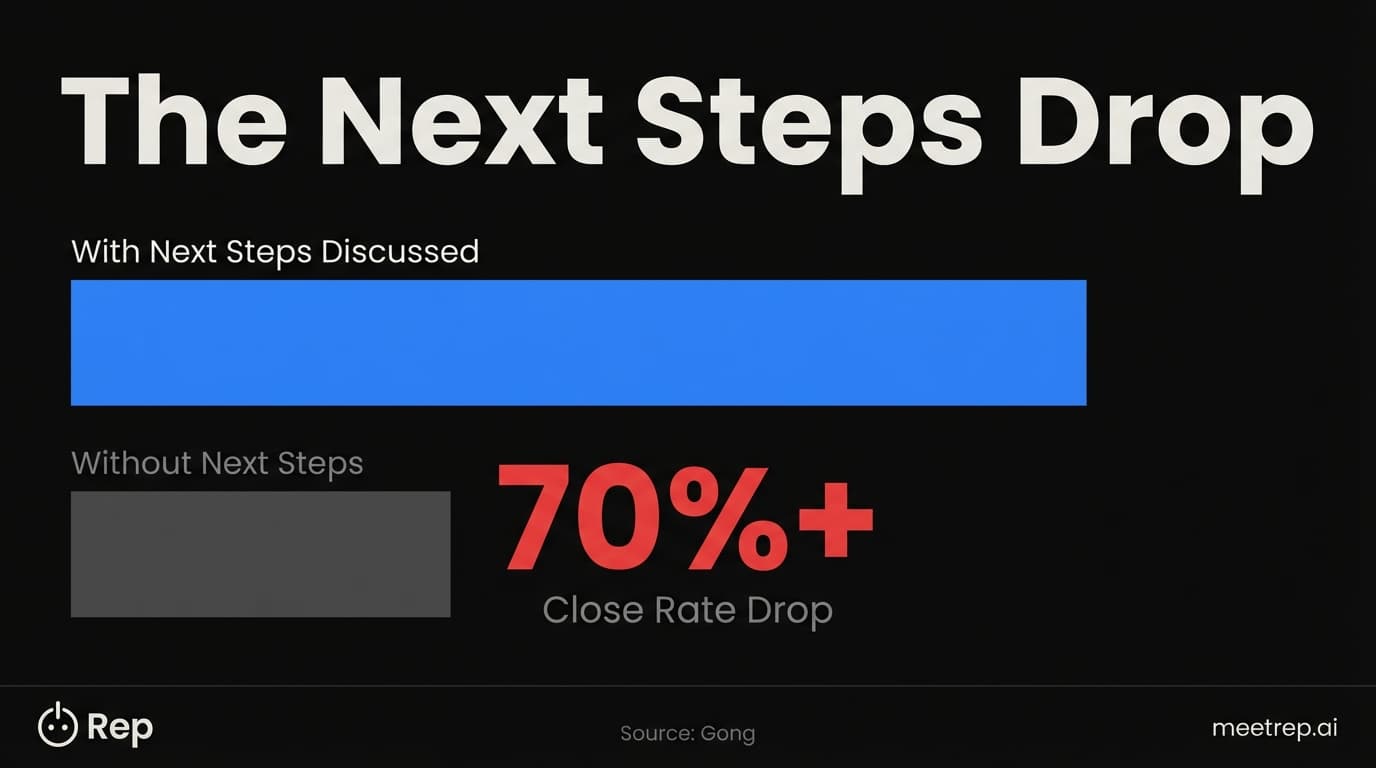
This is non-negotiable. That 70% close rate drop we mentioned? It happens when you end demos with "I'll send over some materials" instead of "I've got 2pm Thursday open—does that work for a follow-up with your team?"
Get the next meeting on the calendar before you hang up. Period.
7. Minimize Scheduling Friction
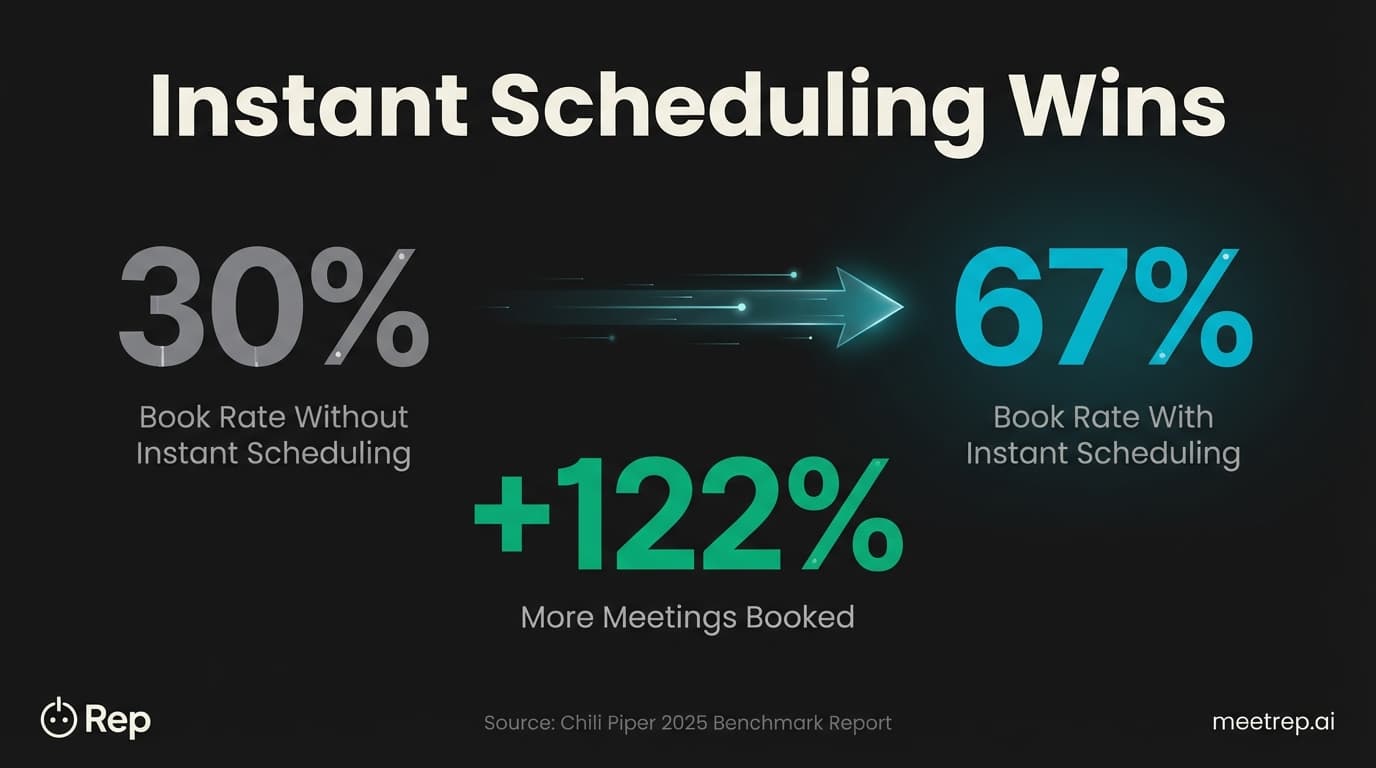
According to Chili Piper's 2025 Benchmark Report, analyzing 4 million form submissions, only 30% of demo form-fills convert to booked meetings without instant scheduling. With instant booking? 66.7%. That's a 122% improvement just by letting prospects self-schedule immediately.
Every day of delay costs you deals. Reply.io's 2024 study of 2,900 meetings found same-day scheduling keeps no-show rates at 6.9%. Schedule a demo 8+ days out? No-shows jump to 23%.
8. Follow Up More Than You Think You Should
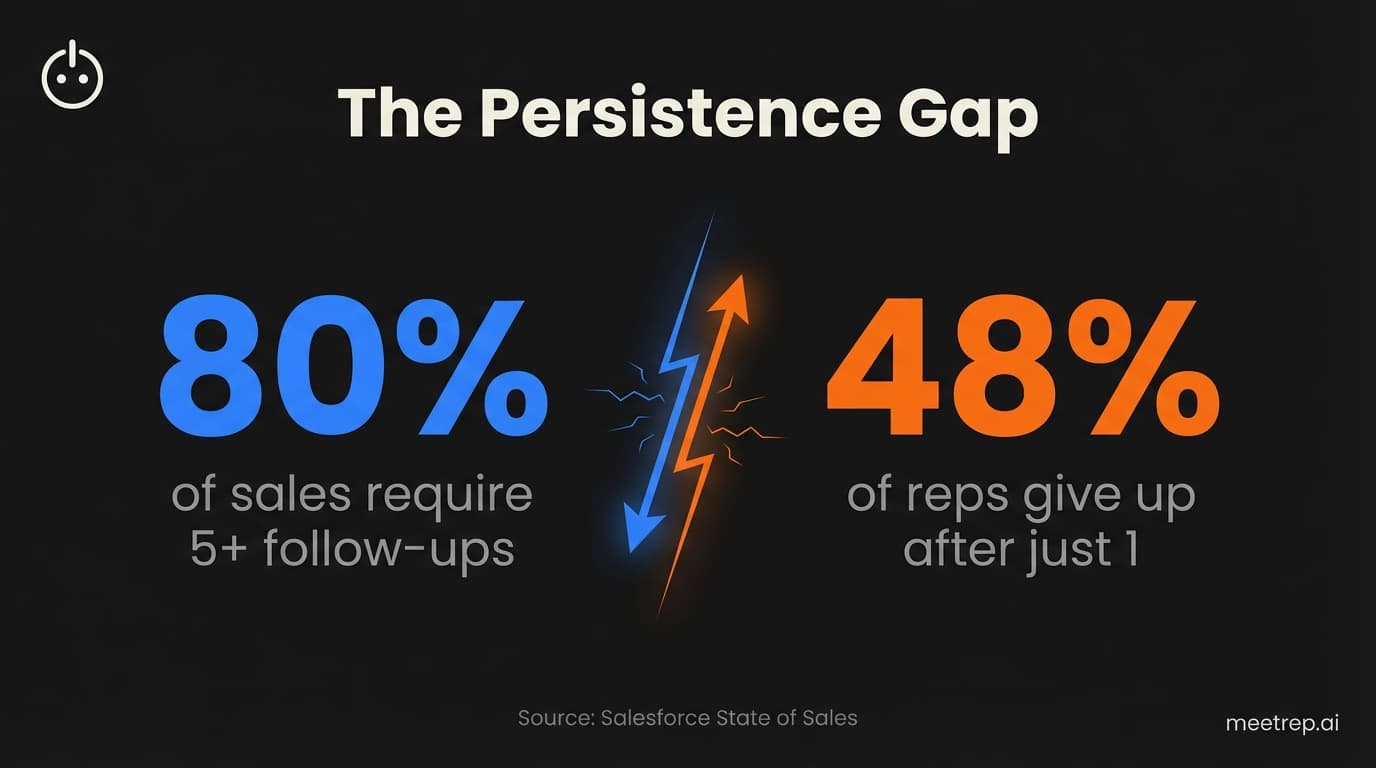
SPOTIO, citing Salesforce's State of Sales, reports 80% of sales require five or more follow-ups—but 44-48% of salespeople give up after just one. Almost half your competition quits after a single attempt. Persistence isn't annoying. It's expected.
| Practice | Impact | Source |
|---|---|---|
| Personalized demos | 4X more requests | ON24 2024 |
| Interactive demos | 52% higher conversion | Optifai 2025 |
| Instant scheduling | 122% more bookings | Chili Piper 2025 |
| Locking next steps | 70%+ close rate preserved | Gong |
| 5+ follow-ups | Matches 80% of sales needs | Salesforce |
Before the Demo: Preparation That Pays
The demo is won or lost before you join the call. What you do in the 24 hours before determines everything.
Start with the basics: who's on the call? What are their roles? What do they care about? If you're demoing to a CFO and a technical lead, you're speaking two languages. Prep for both.
Common Mistake: Treating prep as "reviewing the prospect's website for 5 minutes." That's not prep. That's procrastination dressed up as work. Real prep means knowing their pain points (from discovery), their competitive situation, and exactly which three features you'll lead with.
Build a simple pre-call checklist:
| Prep Item | Why It Matters |
|---|---|
| Stakeholder list with roles | Tailor messaging to each person's priorities |
| Pain points from discovery | Lead with relevance, not features |
| Three features to show | Avoid the Harbor Tour trap |
| Demo environment tested | Technical failures kill credibility |
| Questions to ask | Keep it interactive |
| Next step you'll propose | Lock down momentum |
And test your demo environment. Reprise's 2024 report found SEs spend 21 days per year just cleaning and maintaining demo environments. Nearly a month of selling time, gone. If your demo account is broken, your credibility is broken.
How Long Should a Sales Demo Be?
Here's a contrarian take: stop obsessing over demo length.
The reality is more complicated than "shorter is better" or "longer wins." Gong Labs' analysis of 67,149 demos found successful demos average 47 minutes—30.5% longer than unsuccessful ones at 36 minutes. Longer demos win more often.
But that doesn't mean you should pad your demos. The correlation isn't "longer equals better." It's "more engagement equals better, and engagement takes time."
The real metric? Interaction frequency. Top performers create engaged moments every eight minutes. They ask questions every three to four minutes. If your 30-minute demo has zero interaction, you've lost. If your 50-minute demo is a genuine back-and-forth conversation, you're building the relationship that closes deals.
My recommendation: plan for 45 minutes, but stay flexible. If the prospect wants to go deep on something, go deep. If they're clearly ready to move forward at minute 20, don't force them to sit through your prepared demo script. Read the room.
Key Insight: The goal isn't to fill time or minimize time. It's to create enough engaged moments that the prospect feels heard, informed, and ready to take the next step.
During the Demo: Engagement Tactics That Work
You're live. The prospect is watching. Here's how to keep them engaged.
Start with their problem, not your product. Open by confirming what you learned in discovery. "Last time we talked, you mentioned [specific pain point]. Is that still the biggest priority?" This shows you listened and frames everything that follows around their needs.
Narrate as you click through. Don't navigate silently. Explain what you're doing and why. "I'm going to show you how we handle [their problem]—this is usually where teams save the most time." Context transforms clicking into storytelling.
Ask questions constantly. "Does this match how your team would use this?" "Is this the workflow you were imagining?" "What questions are coming up for you?" Questions keep prospects present. They also surface objections early, which is exactly what you want.
Handle multi-stakeholder complexity. With a 19% increase in stakeholders per deal, you need a demo strategy for the whole committee. Consider sending leave-behind demos to stakeholders who couldn't attend. Consensus reports their leave-behind demos get 3X engagement compared to static videos.
What We're Building at Rep: This multi-stakeholder problem is exactly why we're working on Rep—AI-powered demos that can engage prospects 24/7, so the champion who saw your demo can share a live, interactive experience with their CFO at 10pm. Same quality demo, no scheduling required.
Recover from technical failures gracefully. Things break. Screens freeze. Wifi drops. Have a backup plan. Can you share a recording while troubleshooting? Can you pivot to a whiteboard conversation? Honestly, the worst thing you can do is panic. Prospects understand tech issues—they don't understand falling apart under pressure.
After the Demo: Follow-Up That Closes
The demo ended well. The prospect seemed interested. Now what?
Send follow-up within 24 hours. Not a week later. Not "when you have time." Within 24 hours, while the demo is fresh. Include a personalized summary of what you discussed, answers to any questions you couldn't fully address live, and a clear next step with a specific time.
Don't stop after one email. Remember: 80% of sales require five or more follow-ups. Almost half of reps quit after one. Be in the other half.
Respect the 50-day cliff.Outreach's Sales 2025 Data Report found opportunities closed within 50 days have a 47% win rate. After that threshold? Win rates collapse to 20% or lower. If your deal is dragging, something is wrong. Either you haven't addressed a concern, you're missing a stakeholder, or the deal isn't real.
Share interactive leave-behinds, not static PDFs. Prospects who couldn't attend the demo need context. A static slide deck doesn't cut it. Interactive demos that let them explore get 3X the engagement and help your champion sell internally.
The Data: The average demo no-show rate is 13.3%, according to Reply.io. Schedule 8+ days out, and that jumps to 23%. One in four prospects ghost you. Speed matters at every stage.
How Do You Measure Demo Success?
You can't improve what you don't measure. Here are the metrics that actually matter.
Demo-to-close conversion rate is the ultimate metric. Industry average is around 25%. SaaS companies benchmark at 30%. Interactive demos hit 38%. Know your number.
Demo-to-meeting conversion tracks whether your demos create momentum. Are prospects booking follow-ups? 50-60% is typical; 70%+ is exceptional.
No-show rate tells you about scheduling and qualification issues. The benchmark is 13.3%. If you're significantly higher, you're either booking too far out or qualifying poorly.
Engagement time (for interactive/recorded demos) shows what resonates. Navattic reports average viewing time of 6.5 minutes for interactive demos. What are prospects watching? What do they skip? That's gold for iteration.
Stakeholder coverage matters in complex deals. Did you reach the economic buyer? The technical evaluator? The end users? With 19% more stakeholders per deal, missing a key persona can kill your deal silently.
| Metric | Benchmark | What to Watch |
|---|---|---|
| Demo-to-close | 25% avg, 38% interactive | Compare to your baseline |
| Demo-to-meeting | 50-60% | Are prospects booking next steps? |
| No-show rate | 13.3% avg | Scheduling delays, qualification quality |
| Engagement time | 6.5 min average | What content resonates? |
| Stakeholder coverage | Varies | Did you reach all decision-makers? |
What Companies Are Actually Seeing
Theory is cheap. Results are expensive. Here's what real companies report.
Gainsight saw a 25% increase in win rate after implementing Demostack for interactive demos. Demo response time dropped from days to under an hour.
Hunters Security cut their sales cycle in half—from nine months to four months—using the same approach.
Sovos, a tax compliance company with 27,000 employees, reduced live SE calls by 67% and accelerated their SMB sales cycle by 60% using Consensus for automated demos.
And Labelbox, an AI/ML company, saw a 30% increase in MQL submissions and 9X increase in homepage CTA clicks after adding interactive demos.
The pattern is consistent. Interactive, personalized, well-timed demos outperform generic, static, delayed demos. Every time.
Demo excellence isn't magic. It's preparation, personalization, and relentless follow-through. The teams that win aren't more talented. They're more disciplined.
At Rep, we're building tools to make this easier—AI that can deliver live, personalized demos 24/7 so your team can focus on the high-value conversations. But the principles stay the same whether you're using AI, interactive demos, or running every call yourself.
Prepare like the deal depends on it. Because it does.

Nadeem Azam
Founder
Software engineer & architect with 10+ years experience. Previously founded GoCustomer.ai.
Nadeem Azam is the Founder of Rep (meetrep.ai), building AI agents that give live product demos 24/7 for B2B sales teams. He writes about AI, sales automation, and the future of product demos.
Frequently Asked Questions
Table of Contents
- Why Most Demos Fail (And What the Data Shows)
- The 8 Practices That Separate Top Performers
- Before the Demo: Preparation That Pays
- How Long Should a Sales Demo Be?
- During the Demo: Engagement Tactics That Work
- After the Demo: Follow-Up That Closes
- How Do You Measure Demo Success?
- What Companies Are Actually Seeing
Ready to automate your demos?
Join the Rep Council and be among the first to experience AI-powered demos.
Get Early AccessRelated Articles
Hexus Acquired by Harvey AI: Congrats & What It Means for Demo Automation Teams
Hexus is shutting down following its acquisition by Harvey AI. Learn how to manage your migration and discover the best demo automation alternatives before April 2026.
Why the "Software Demo" is Broken—and Why AI Agents Are the Future
The traditional software demo is dead. Discover why 94% of B2B buyers rank vendors before calling sales and how AI agents are replacing manual demos to scale revenue.
Why Autonomous Sales Software is the Future of B2B Sales (And Why the Old Playbook is Dead)
B2B sales is at a breaking point with quota attainment at 46%. Discover why autonomous 'Agentic AI' is the new standard for driving revenue and meeting the demand for rep-free buying.