SaaS Demo Best Practices: From Request to Close

Executive Summary
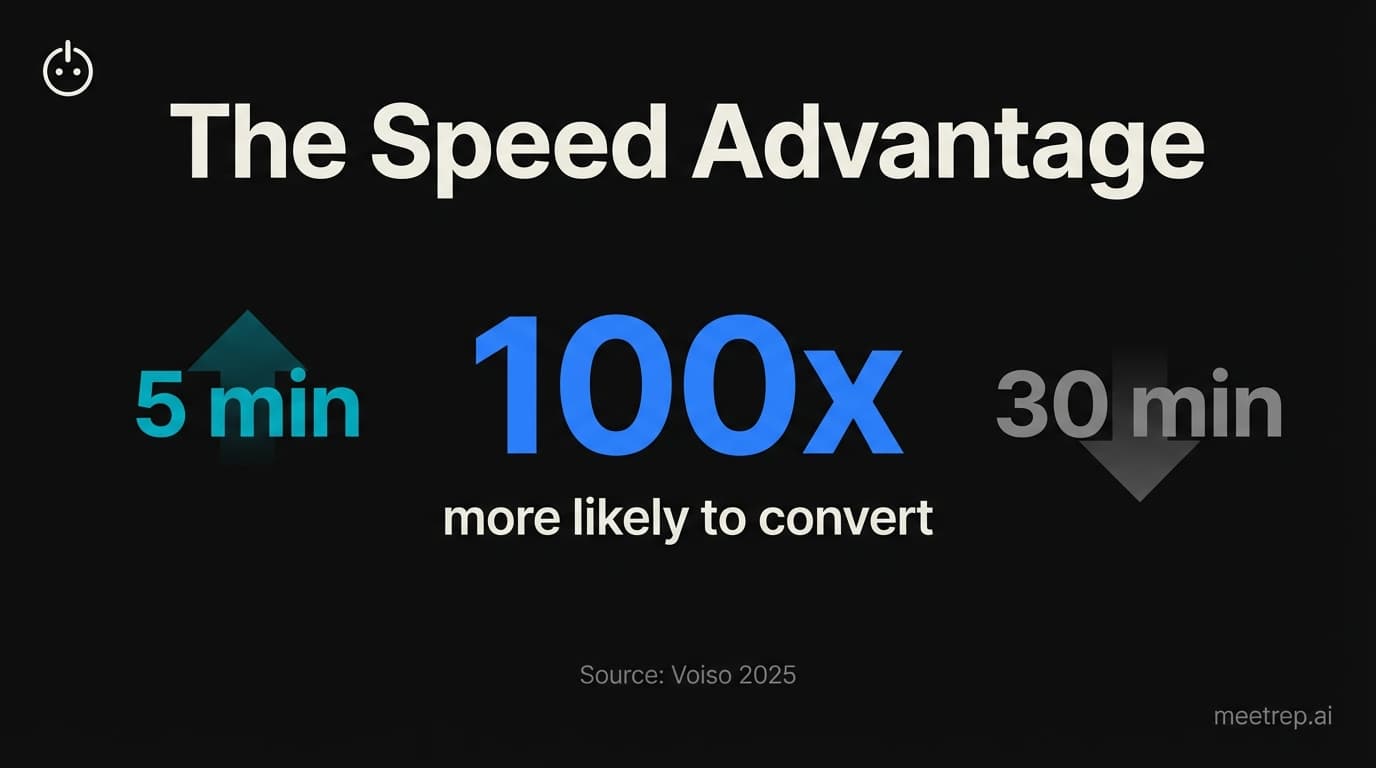
- Speed wins: Responding in 5 minutes makes you 100x more likely to convert than waiting 30 minutes
- Quality matters: 81% of sales pros have lost deals specifically due to bad demos
- Interactive beats passive: 38% close rate for interactive demos vs 25% for screen shares
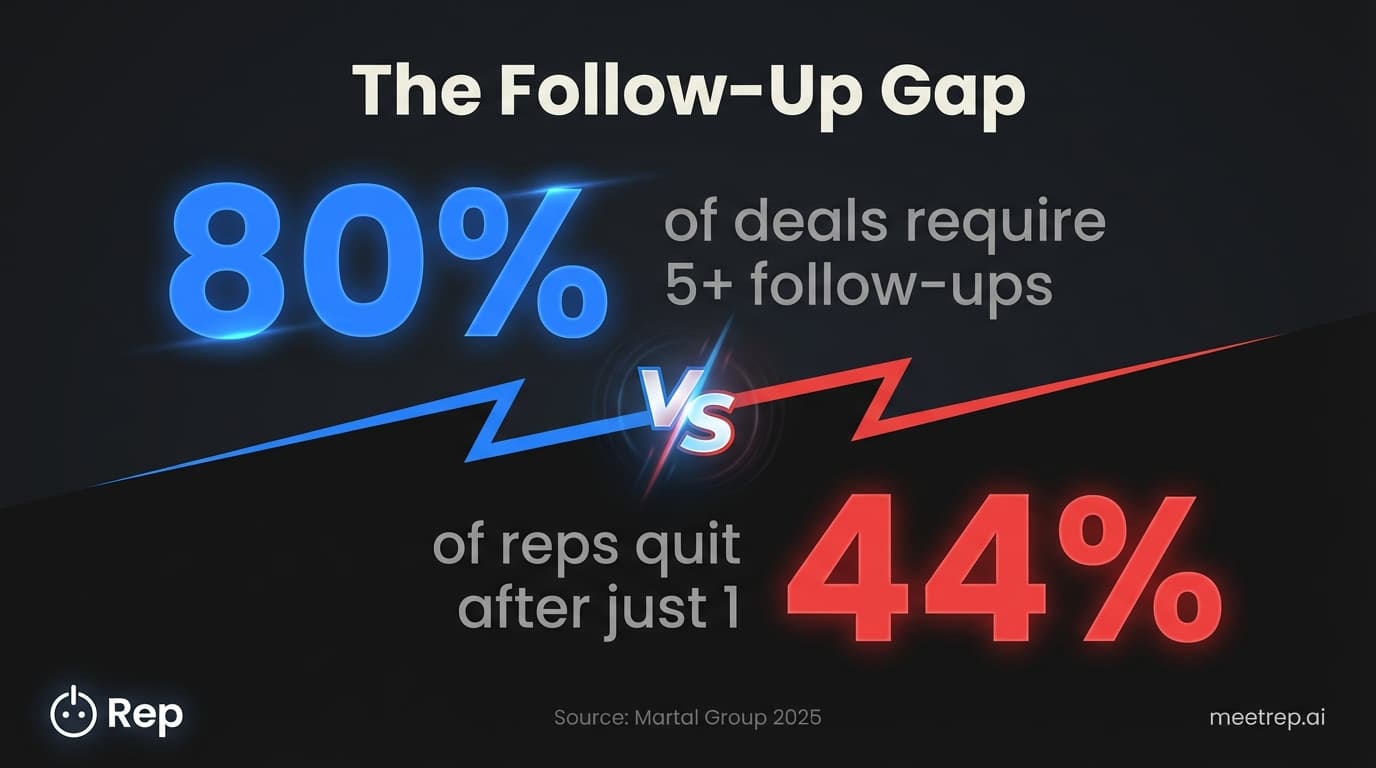
- Follow-up persistence: 80% of sales require 5+ touches, but 44% of reps quit after one
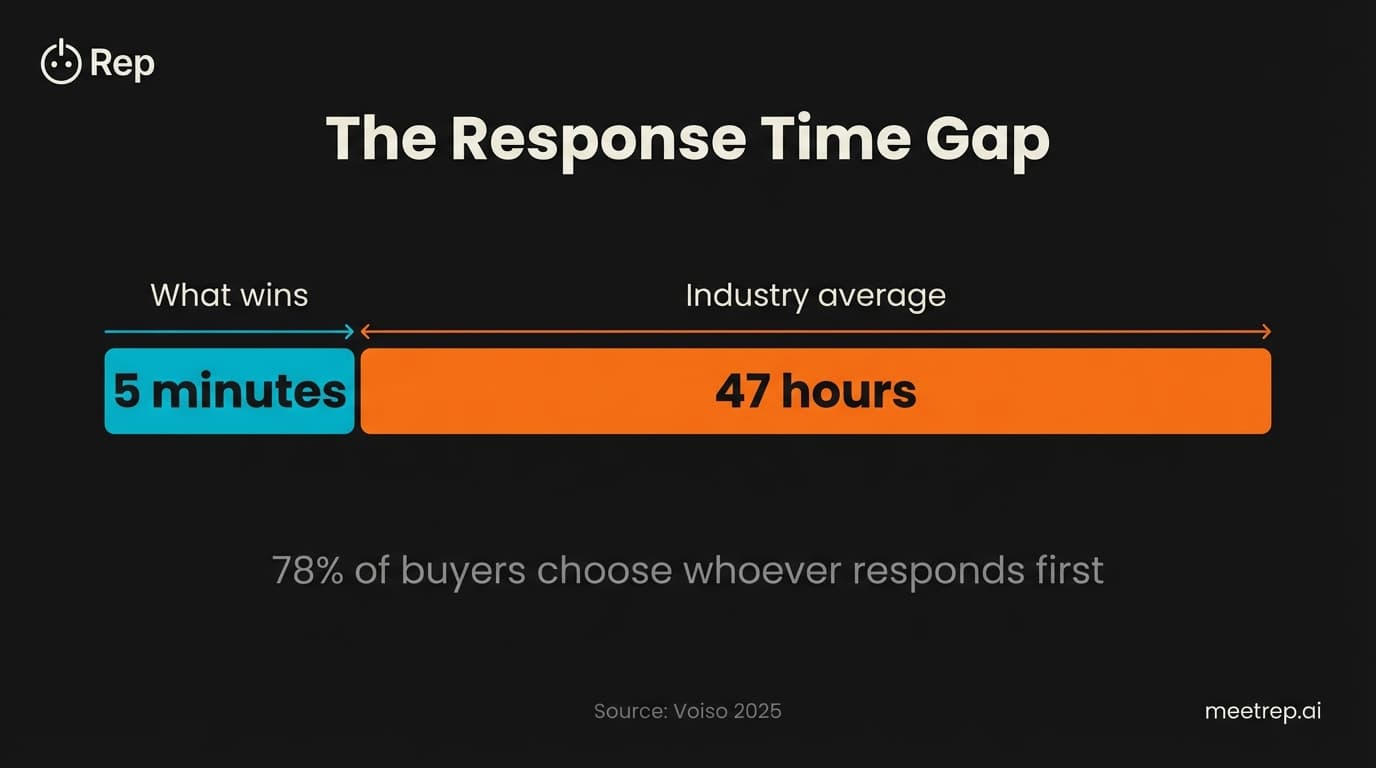
Here's a stat that should make you uncomfortable: the average response time to a demo request is 47 hours. Almost two full days. And 78% of customers buy from whoever responds first.
That gap is where deals go to die.
I've spent years building sales automation tools—first at GoCustomer.ai, now at Rep—and I keep seeing the same pattern. Companies obsess over perfecting their SaaS demo script while prospects wait. And wait. By the time your AE reaches out Monday morning, the prospect already had three demos from competitors over the weekend.
This guide covers what actually moves the needle: speed, structure, and smart use of automation. No fluff about "building rapport" or "telling your story." Just the practices that improve demo-to-close rates based on 2024-2025 research and real company results.
What is a SaaS demo?
A SaaS demo is a live, recorded, or interactive presentation that shows prospects how your software solves their specific problems. Unlike static marketing content, demos let buyers experience your product—clicking through interfaces, seeing real workflows, and asking questions in real-time.
But here's where most definitions stop short. In 2025, "demo" has splintered into several formats, and choosing the wrong one kills deals.
| Demo Type | Engagement Level | Scalability | Best For |
|---|---|---|---|
| Live screen share | Medium | Low (1:1 time) | Complex enterprise, late-stage |
| Pre-recorded video | Low (passive) | High | Top-of-funnel awareness |
| Interactive product tour | High | Very high | Self-serve qualification, MOFU |
| Live AI agent | High | High | Instant response, 24/7 coverage |
| Sandbox environment | Highest | Medium | Technical proof, post-demo exploration |
The shift happening right now? 61% of B2B buyers prefer a rep-free experience for initial research, according to Gartner's 2025 sales survey. They want to explore on their own terms before talking to anyone.
Key Insight: The "schedule a demo" button is becoming a conversion killer for early-stage buyers. They want to see your product now, not next Tuesday at 2pm.
This doesn't mean human demos are dead. Far from it. But the role has shifted. Self-serve demos handle discovery. Humans handle decisions.
The speed problem nobody talks about
I'll be direct: most demo best practices content ignores the thing that matters most.
Speed.
The data here is brutal. Companies responding within 5 minutes are 100x more likely to convert compared to those waiting 30 minutes. Not 10% more likely. Not 2x. One hundred times.
And yet the average response time sits at 42-47 hours. Almost two business days.
The Data:78% of customers buy from the company that responds first (Voiso 2025). With average response times of 47 hours, most companies are losing deals before they even start competing.
Sound familiar? A prospect fills out your demo request form on Friday afternoon. Your SDR sees it Monday morning. By then, the prospect has already spoken to two competitors and is halfway to a decision.
What we learned at GoCustomer: When we built GoCustomer.ai, we obsessed over email copy and sequence timing. Those things matter. But the response time data kept screaming at us—nothing else mattered if we were second to respond. Speed beats perfection every single time.
The fix isn't just "respond faster." It's architectural. You need:
- Instant scheduling on your demo request page. Companies with instant booking hit 66.7% form-to-meeting conversion vs 30% for those without (Chili Piper 2025).
- 24/7 availability through self-serve demos or AI agents. Your Singapore prospect shouldn't wait for San Francisco business hours.
- Qualification during response. Don't just book the meeting—start the demo process immediately.
This is why we built Rep to join calls instantly and conduct live demos 24/7. When a prospect wants a demo at 11pm on Saturday, they get one. Not a placeholder meeting for next week.
What actually makes demos convert
Let's talk about what happens once someone shows up.
The baseline isn't pretty. Only 25% of B2B buyers find online demos useful. That's according to Forrester's 2024 Buyers' Journey Survey. Three out of four demos fail to deliver value.
And the cost of bad demos? 81% of sales professionals report losing a deal specifically because of a bad demo (Reprise 2025).
So what separates effective demos from forgettable ones?
Lead with the problem, not features
Common mistake: Starting with your company background, then walking through features top to bottom. This is the "harbor cruise" approach—showing everything regardless of what the prospect cares about.
Buyers don't want a product tour. They want to know: "Will this solve my problem?"
Start with their specific pain point. Acknowledge it explicitly. Then show exactly how your product addresses it—in the first 5 minutes.
The Tell-Show-Tell framework works:
- Tell them what problem you're about to solve
- Show the relevant feature in action
- Tell them the outcome/value
Skip the features that don't apply. Nobody cares about your reporting module if they came for your automation capabilities.
Personalization beats polish
94% of buyers want demos tailored to their specific use case (TrustRadius 2024). Not your industry vertical. Their use case.
Gainsight saw a 25% increase in win rates after implementing personalized demo environments with Demostack. They also cut response time from 48 hours to under 1 hour.
What does personalization actually look like?
- Pre-loading the prospect's industry terminology
- Using company-similar data in your demo environment
- Addressing their specific pain points (mentioned in the form submission) within the first 2 minutes
- Skipping irrelevant features entirely
Interactive beats passive
Here's where the data gets interesting.
| Demo Format | Demo-to-Close Rate | Source |
|---|---|---|
| Traditional screen share | 25% | Optifai 2025 |
| SaaS average | 30% | Optifai 2025 |
| Interactive demos | 38% | Optifai 2025 |
That's a 52% improvement for interactive demos over screen shares, according to Optifai's 2025 Sales Ops Benchmark (n=939 companies).
Why? Engagement. Prospects who click, explore, and interact remember more and understand more. Interactive demos drive 7.2x more engagement than video content (Arcade 2024).
Klue generated $550K in new pipeline within 60 days after launching a multi-use-case demo center with Navattic. Their conversion rate tripled.
Demo request page design that converts
Your demo page is where the funnel narrows—or leaks.
The basics matter: clear headline, social proof, form that doesn't ask for blood type. But three things move the needle more than design aesthetics.
1. Instant scheduling beats "We'll contact you"
I can't overstate this. Only 8% of top B2B SaaS companies offer form scheduling according to Chili Piper's 2025 research. That's a massive gap.
Add calendar integration directly to your demo request page. Tools like Chili Piper, Calendly, or RevenueHero embed directly. Prospect fills form, immediately books a time, gets confirmation. No SDR middleman. No delay.
2. Give a self-serve option
38% of buyers are less likely to purchase if required to contact sales for a demo (TrustRadius 2024). They want to look before they talk.
Embed an interactive product tour directly on your demo page. Let them explore before (or instead of) booking a live call. 71% of top-performing demos are ungated (Navattic 2025).
3. Set expectations clearly
Tell prospects exactly what happens next. "Book a 20-minute call with Sarah to see [specific outcome] in action." Not "Request a demo and someone will reach out." The vagueness kills conversions.
The post-demo problem
Here's where most companies hemorrhage deals.
80% of sales require 5 or more follow-up touches (Martal Group 2025). That's not surprising. B2B buying is complex, involves multiple stakeholders, and moves slowly.
What's shocking: 44% of sales reps give up after just one follow-up attempt.
Let that sink in. Nearly half your team quits before the deal even has a chance.
Key Insight: You're not losing deals to competitors. You're losing them to follow-up fatigue. Your reps give up before the buyer is ready to decide.
The fix involves three things:
Leave-behind assets — Don't send a PDF deck. Send an interactive demo they can share with their team. Champions need ammunition for internal selling. Give them something their CFO can click through.
Multi-threaded follow-up — Don't just email your main contact. You should be reaching the economic buyer, the technical validator, and the end user with tailored content.
Automated persistence — Companies using AI for follow-ups report 83% higher revenue (Martal Group 2025). The AI doesn't forget to follow up on day 5, day 10, and day 21.
Demo conversion benchmarks (2025)
I get asked about benchmarks constantly. My view? Track three numbers weekly before anything else: speed-to-first-response, show rate, and demo-to-opportunity conversion.
Here's what the 2024-2025 data shows:
| Metric | Typical | Strong | Exceptional | Source |
|---|---|---|---|---|
| Form-to-meeting | 30% | 66.7% | 70%+ | Chili Piper 2025 |
| Demo-to-close (B2B avg) | 25% | 30% | 38%+ | Optifai 2025 |
| Demo-to-close (SMB) | 32% | 40% | 50%+ | Optifai 2025 |
| Demo-to-close (Enterprise) | 18% | 22% | 28%+ | Optifai 2025 |
| No-show rate | 20-30% | 10-15% | <10% | Reply.io 2024 |
Some context here. Enterprise deals close at lower rates (18%) not because demos are worse, but because buying cycles are longer and more stakeholders are involved. Don't compare your enterprise motion to SMB benchmarks.
And no-show rates are time-dependent. Same-day demos see 6.9% no-show rates vs 24.5% for demos booked 8+ days out (Reply.io 2024). Speed again.
Where AI fits (and doesn't)
I have obvious bias here—we're building an AI demo agent at Rep. But I'll try to be honest about where this technology actually helps.
The market is moving fast. 89% of revenue organizations now use AI-powered tools (Gartner 2025), up from 34% in 2023. Gartner labeled "Interactive Demo Applications" as a formal category in their 2025 Hype Cycle with "high benefit" and "adolescent maturity."
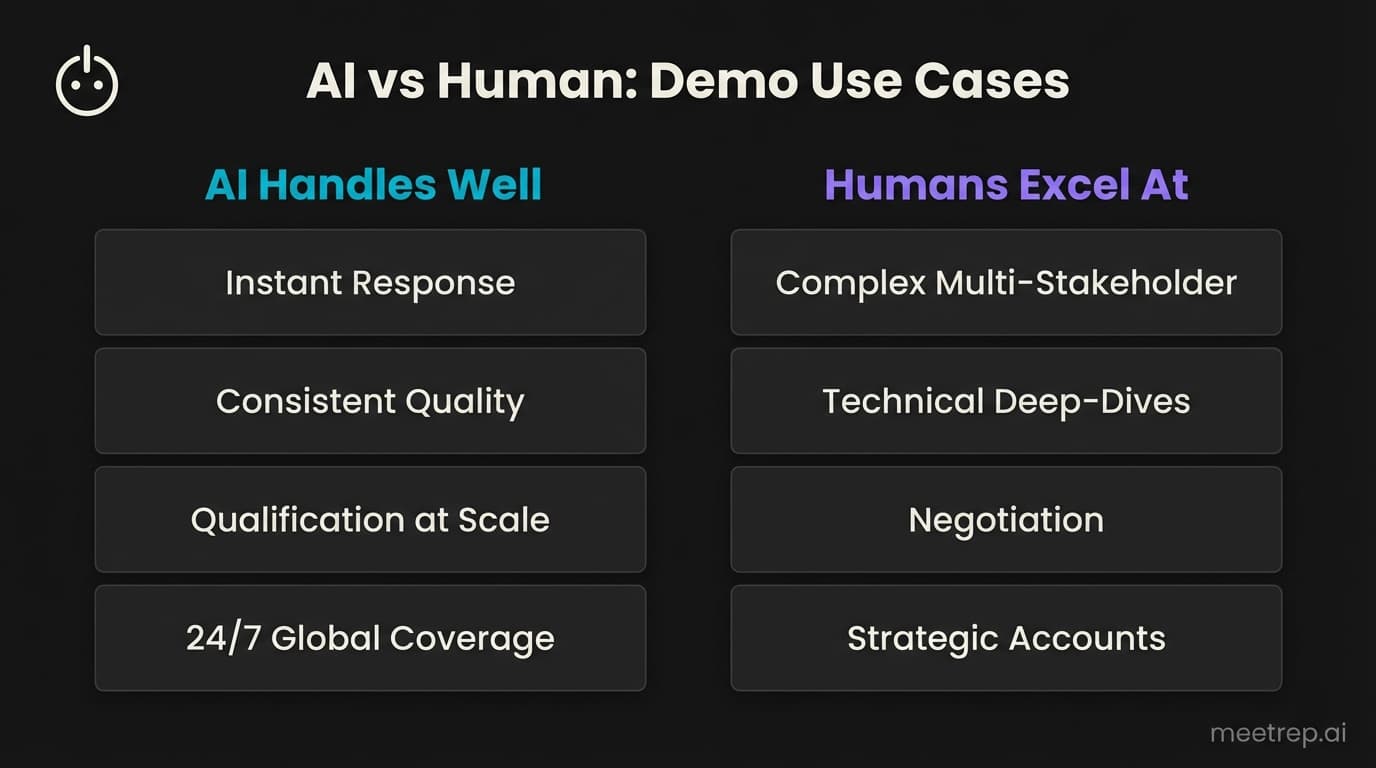
What AI handles well today:
- Instant response — No waiting for a human. A prospect requests a demo at 2am, they get one at 2am.
- Consistent quality — No bad days, no rushed demos, no forgetting key talking points.
- Qualification at scale — Handling the first demo that determines whether a deal is real.
- 24/7 global coverage — Time zones become irrelevant.
What still needs humans:
- Complex multi-stakeholder deals — When you need to handle internal politics and build relationships.
- Technical deep-dives — When prospects have edge-case questions requiring architecture discussions.
- Negotiation — AI shouldn't be agreeing to custom pricing.
- Strategic accounts — Your top prospects deserve white-glove treatment.
Sovos cut live SE calls by 67% and accelerated SMB cycles by 60% after implementing Consensus. They didn't eliminate SEs. They redirected them to qualified, complex deals instead of first-touch discovery.
That's the pattern. AI handles volume and speed. Humans handle complexity and relationships. The companies winning in 2025 are doing both.
At Rep, we built our AI agent to join video calls, share its screen, and work through your actual product live—just like a human would, but available instantly, any time. It's designed for that critical first demo where speed matters most.
The playbook for 2025 isn't complicated. Respond faster. Make it interactive. Don't quit on follow-up.
Most companies know this. Few execute on it. The 47-hour response gap persists because changing workflows is hard, adding headcount is expensive, and "we've always done it this way" is comfortable.
But the data is clear. First responder wins. Interactive beats passive. Persistence beats perfection.
At Rep, we're betting that AI agents can close the speed gap without sacrificing the live, conversational experience buyers want. Whether that's the right bet—you'll have to see for yourself.

Nadeem Azam
Founder
Software engineer & architect with 10+ years experience. Previously founded GoCustomer.ai.
Nadeem Azam is the Founder of Rep (meetrep.ai), building AI agents that give live product demos 24/7 for B2B sales teams. He writes about AI, sales automation, and the future of product demos.
Frequently Asked Questions
Table of Contents
- What is a SaaS demo?
- The speed problem nobody talks about
- What actually makes demos convert
- Demo request page design that converts
- The post-demo problem
- Demo conversion benchmarks (2025)
- Where AI fits (and doesn't)
Ready to automate your demos?
Join the Rep Council and be among the first to experience AI-powered demos.
Get Early AccessRelated Articles
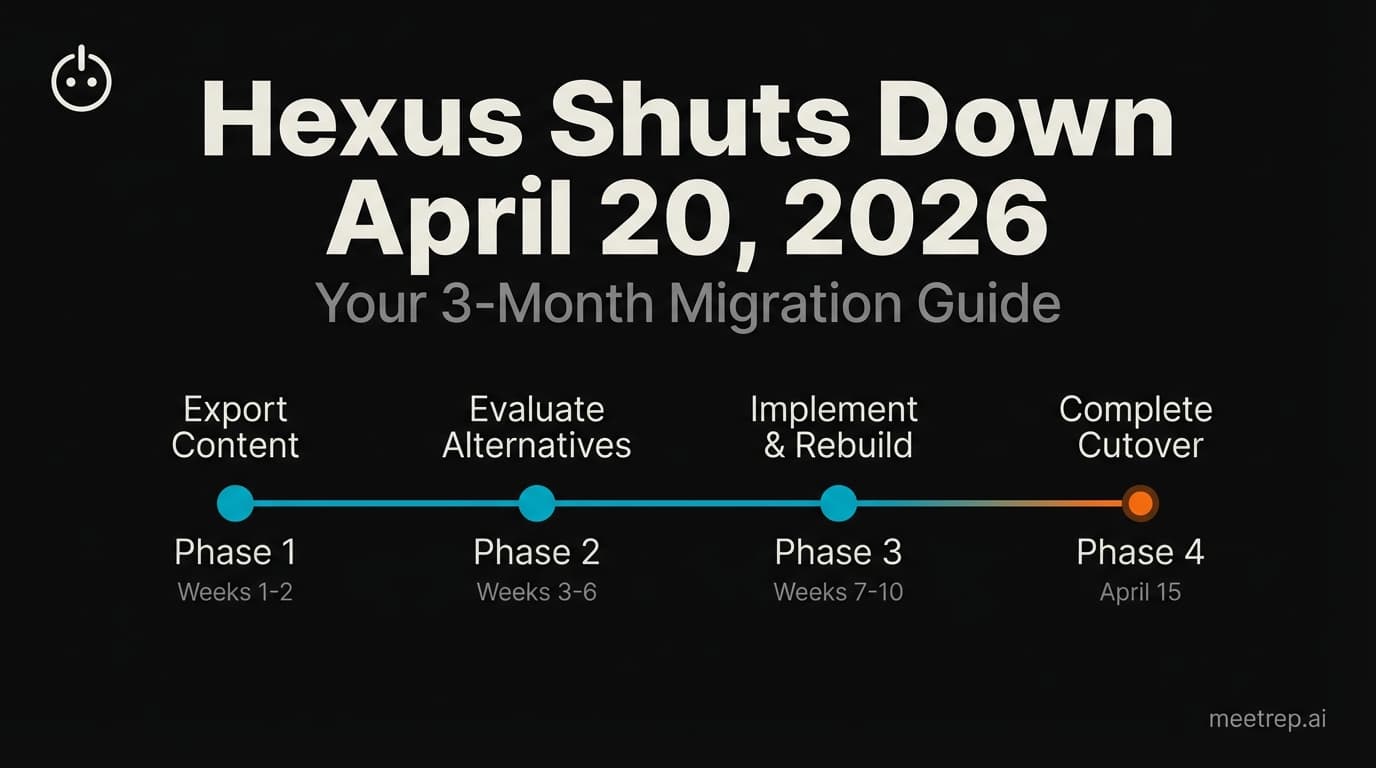
Hexus Acquired by Harvey AI: Congrats & What It Means for Demo Automation Teams
Hexus is shutting down following its acquisition by Harvey AI. Learn how to manage your migration and discover the best demo automation alternatives before April 2026.
Why the "Software Demo" is Broken—and Why AI Agents Are the Future
The traditional software demo is dead. Discover why 94% of B2B buyers rank vendors before calling sales and how AI agents are replacing manual demos to scale revenue.
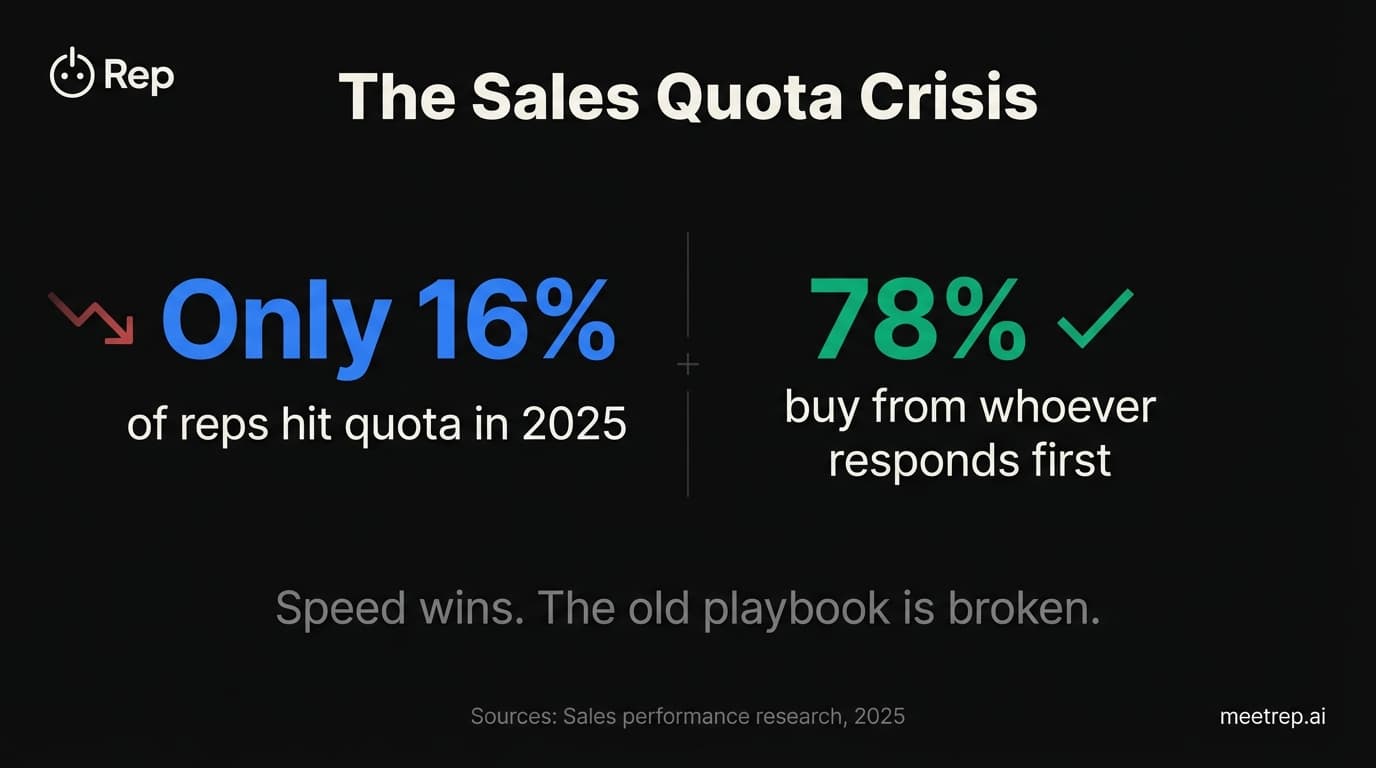
Why Autonomous Sales Software is the Future of B2B Sales (And Why the Old Playbook is Dead)
B2B sales is at a breaking point with quota attainment at 46%. Discover why autonomous 'Agentic AI' is the new standard for driving revenue and meeting the demand for rep-free buying.