The ROI of Velocity: How Product Demo Analytics Accelerates Sales Cycles (New Data)

Executive Summary
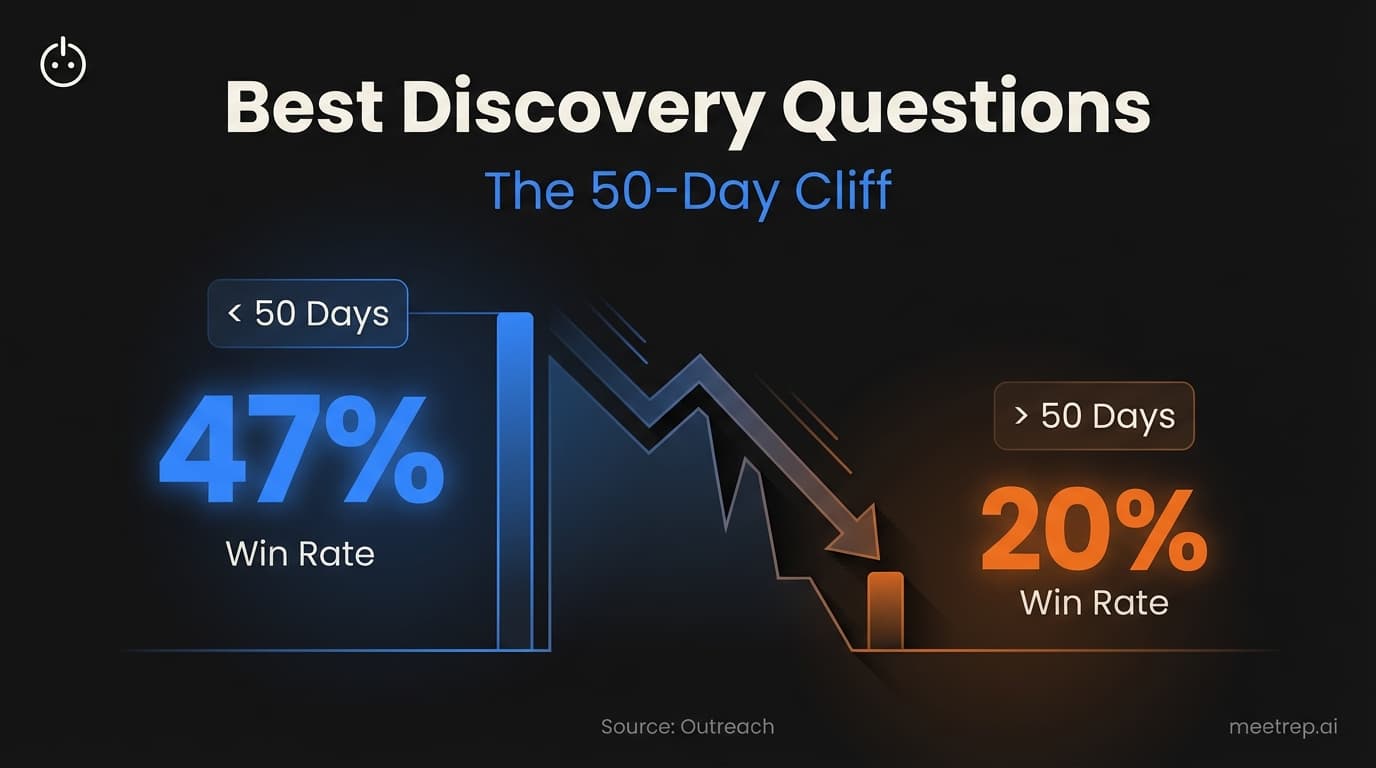
- The 50-Day Cliff: Win rates drop from 47% to <20% if deals extend beyond 50 days (Outreach).
- The Benchmark: Median B2B sales cycles have hit 84 days due to larger buying committees (Optifai).
- The Solution: Interactive demo analytics cut time-to-call by 2 weeks (Navattic) and accelerate cycles by 20-40% (Rev Empire).
- My Take: Passive analytics aren't enough. You need active agents like Rep to physically move deals forward 24/7.
There is a "Pipeline Paradox" happening in B2B sales right now.
Pipeline generation is up 23%, but win rates are down 18% (Salesso). I saw this pattern constantly while building GoCustomer.ai. Teams would celebrate "record pipeline" in Q1, only to miss revenue targets in Q2 because those deals just... sat there.
They didn't close lost. They simply drifted.
The culprit? Time.
According to new data from Optifai, the median B2B sales cycle has lengthened to 84 days—a 22% increase since 2022.
If you are a CFO or RevOps leader, you don't need more leads. You need velocity. This post breaks down how product demo analytics accelerates sales cycles, using verified 2025-2026 data to prove the ROI of treating speed as your primary metric.
The "Pipeline Paradox": Why More Leads Are Closing Less
The math of sales velocity is unforgiving.
When we look at the Sales Ops Benchmark 2025, the trend is clear: buying committees have swelled to an average of 6.8 stakeholders. That means for every deal in your pipeline, your champion has to convince almost seven other people.
This creates the "messy middle" of the sales cycle. Interest is high, but momentum dies in scheduling loops and internal reviews.
Here is the specific danger:
According to Outreach's Sales 2025 Data Analysis, there is a "50-Day Cliff." Opportunities closed within 50 days have a 47% win rate. Once a deal drags past that 50-day mark, the win rate plummets to below 20%.
Every day your sales team spends "nurturing" a stalled deal, the probability of revenue drops.
So, how product demo analytics accelerates sales cycles isn't just about efficiency. It's about survival. You have to beat the 84-day median to stay on the right side of that 47% win rate.
The Data Layer: What "Demo Analytics" Actually Reveals
Most people hear "analytics" and think of page views.
That's a mistake. In 2026, product demo analytics is the tracking and analysis of prospect interaction data within product demonstrations. It reveals buyer intent by measuring engagement time, features explored, and drop-off points.
When we built Rep, we realized that tracking clicks wasn't enough. You need to track intent.
There are two types of data you can get, and they drive very different results:
| Feature | Passive Analytics (e.g., Navattic, Arcade) | Active Agent Analytics (e.g., Rep) |
|---|---|---|
| Data Source | Click-throughs on pre-recorded screens | Live conversation & real-time browser navigation |
| Primary Metric | Completion Rate | Prospect Questions & Objections |
| Context | "They clicked button A" | "They asked about SSO integration twice" |
| Actionability | Low (Send an email) | High (Agent handles objection instantly) |
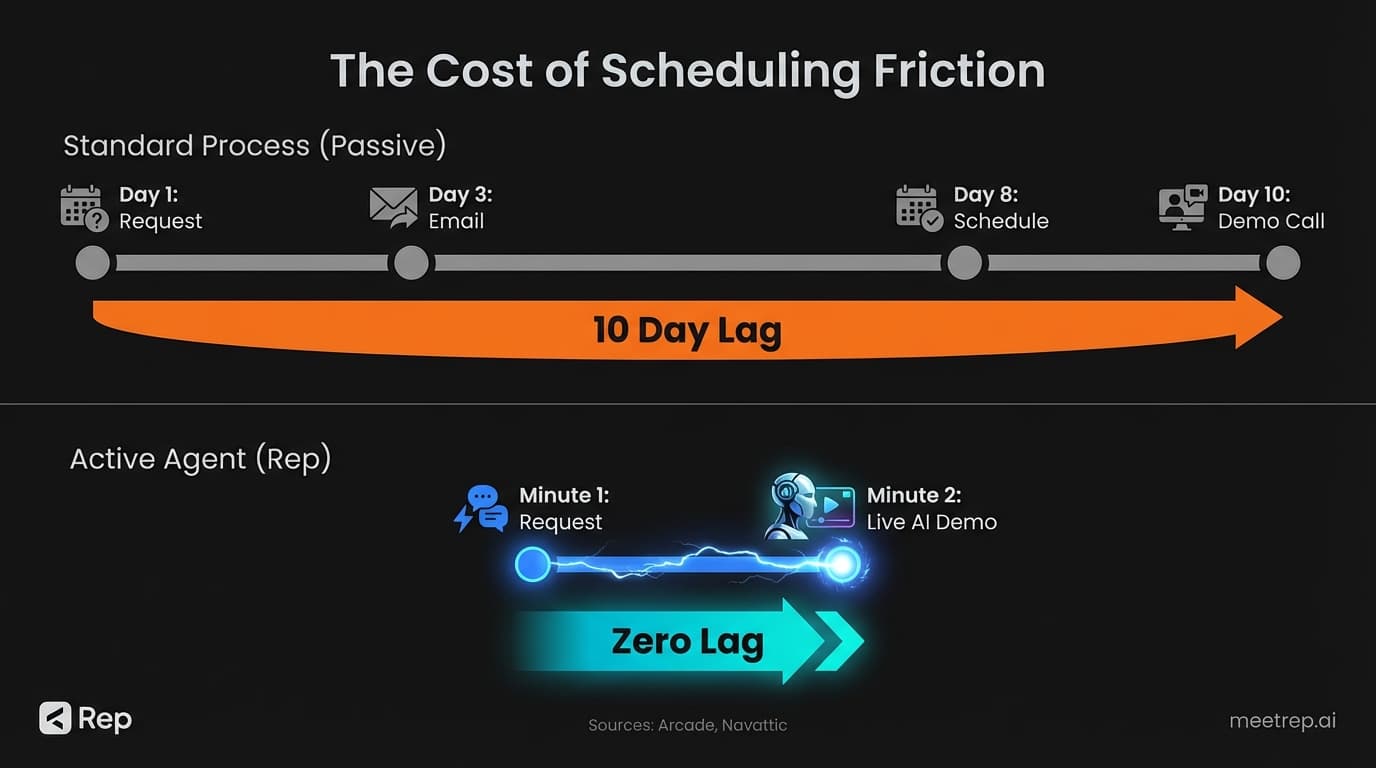
| Velocity Impact | ~2 weeks faster to call | Immediate qualification (Zero lag) |
The Data: According to Navattic's State of the Interactive Product Demo, the top 1% of interactive demos achieve a 54% click-through rate. But more importantly, prospects who view these demos get on sales calls 2 weeks faster than those who don't (Arcade).
Why? Because they're educated. They aren't showing up to the first call asking, "So, what do you guys do?" They're asking specific questions about fit.
Key Insight: If you can skip the "feature dump" intro call, you automatically shave 6-10 days off your sales cycle (Consensus). That 10-day saving pushes a 60-day deal back into the 50-day "safe zone."
Velocity Math: How Shaving Days Multiplies Revenue
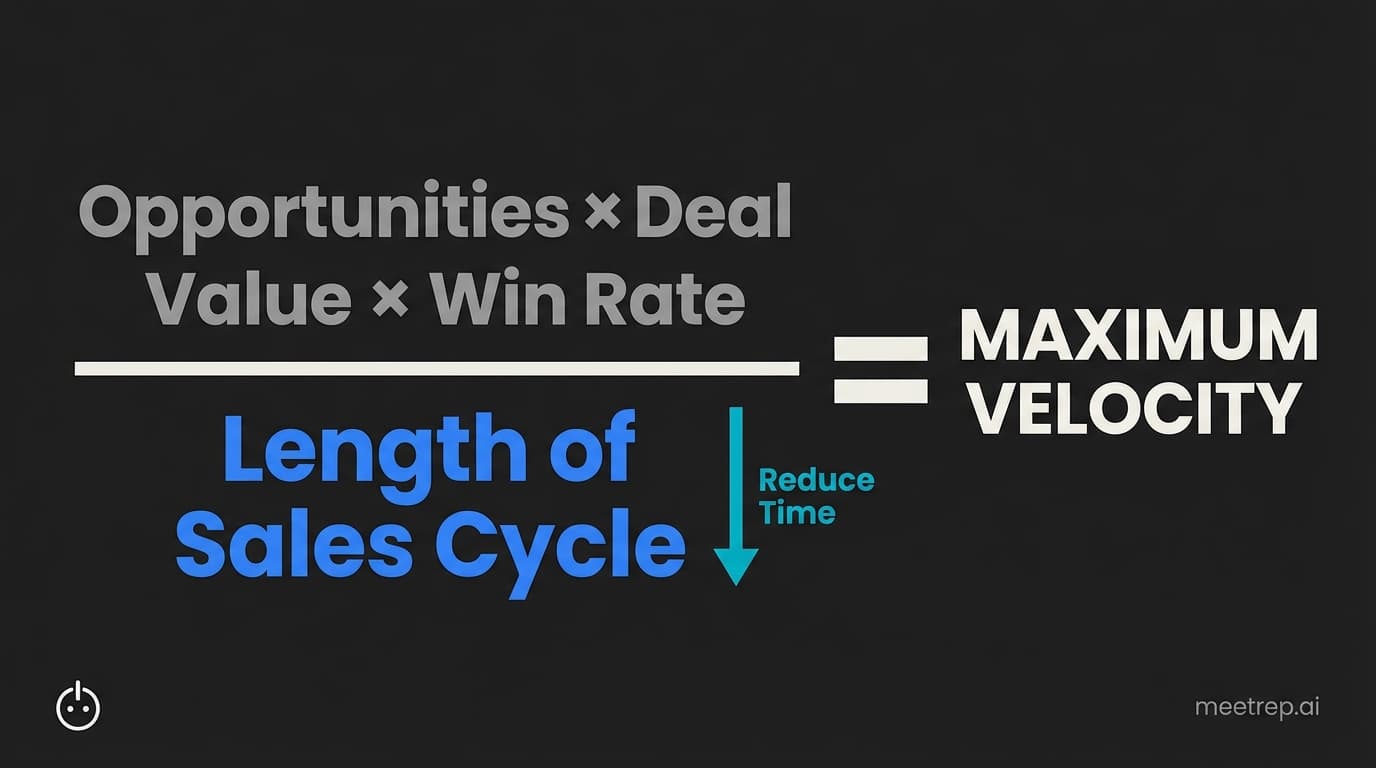
Let's look at the Sales Velocity Equation:
$$Velocity = \frac{(Opportunities \times Deal Value \times Win Rate)}{Length of Sales Cycle}$$
Most RevOps teams obsess over the numerator (getting more Opps or higher Deal Value). But the denominator (Length of Sales Cycle) is the most powerful lever you have.
The Cost of Inaction: If your average cycle is 84 days and your win rate is 20% (the "slow deal" average), you are fighting an uphill battle.
If you use demo analytics to identify high-intent buyers and prioritize them, reducing that cycle to 50 days, your win rate naturally jumps to 47% (Outreach).
You hit the numerator AND the denominator simultaneously.
At NutraBio, using Rep's AI concierge led to a 17% increase in sales. They didn't just get more traffic. They converted the traffic they had faster and more effectively because the AI was handling the "demo" portion 24/7.
From Passive Analytics to Active Acceleration (Rep Integration)
Here is where my builder perspective might differ from the standard advice.
Passive analytics—seeing that someone clicked through a screenshot tour—is good. It's better than nothing. But it still relies on a human SDR to look at a dashboard, interpret the data, and send an email.
That is still friction.
When we designed Rep, we asked: "Why just measure the demo? Why not do the demo?"
Rep is an autonomous AI agent. It doesn't just track that a prospect is interested; it joins the video call, shares its screen, and navigates your actual product live.
The Technical Difference
Passive tools capture clickstreams. Active agents capture conversation.
If you're technical, here is the difference in the data payload you get. A passive tool tells you what happened. An active agent tells you why.
Passive Payload (Standard):
{
  "event": "step_completed",
  "step_id": "feature_dashboard_view",
  "time_on_page": 45
}
Active Intent Payload (Rep):
{
  "event": "objection_handled",
  "topic": "security_compliance",
  "prospect_sentiment": "skeptical",
  "question": "Do you support SOC2 Type II?",
  "outcome": "resolved_with_evidence",
  "next_action": "send_security_whitepaper"
}
This isn't just data. It's a playbook for your Account Executive. When they walk into the next meeting, they already know the prospect is worried about SOC2 compliance.
Why we built Rep this way: I learned at GoCustomer that the biggest drop-off wasn't lack of interest—it was the scheduling lag. The average lag time between a demo request and a meeting is 6-10 days. Rep eliminates that gap entirely by taking the call immediately.
Real-World ROI: Companies Beating the Benchmarks
The 86% of finance teams who say they see "no value" from AI (Gartner) are usually buying generative tools that write emails.
The companies seeing ROI are buying agentic tools that do work.
NutraBio: By deploying an active agent to handle inquiries and guide purchases, they saw a 17% sales jump and a 10% higher Average Order Value (AOV) (Ecommerce Fastlane).
Wrike: Using interactive demos for onboarding and qualification, Wrike saw a 65% increase in paid conversions (Arcade).
Satya Jewelry: Using Rep's conversational AI, they boosted AOV by 37% with an 11% conversion rate (HelloRep).
These aren't soft metrics. That is revenue.
Stop Analyzing the Slowdown
The data is clear. Cycles are getting longer, and time kills deals.
You can't solve this by asking your SDRs to work harder. They're already maxed out trying to handle 7-person buying committees.
My recommendation? Stop looking at demo analytics as a reporting function. Start looking at it as an acceleration function. If a tool tells you a deal is stalling, that's useful. If a tool picks up the phone at 2 AM and moves the deal forward, that's revenue.
Don't let your pipeline fall off the 50-day cliff.

Nadeem Azam
Founder
Software engineer & architect with 10+ years experience. Previously founded GoCustomer.ai.
Nadeem Azam is the Founder of Rep (meetrep.ai), building AI agents that give live product demos 24/7 for B2B sales teams. He writes about AI, sales automation, and the future of product demos.
Frequently Asked Questions
Table of Contents
- The "Pipeline Paradox": Why More Leads Are Closing Less
- The Data Layer: What "Demo Analytics" Actually Reveals
- Velocity Math: How Shaving Days Multiplies Revenue
- From Passive Analytics to Active Acceleration (Rep Integration)
- Real-World ROI: Companies Beating the Benchmarks
- Stop Analyzing the Slowdown
Ready to automate your demos?
Join the Rep Council and be among the first to experience AI-powered demos.
Get Early AccessRelated Articles
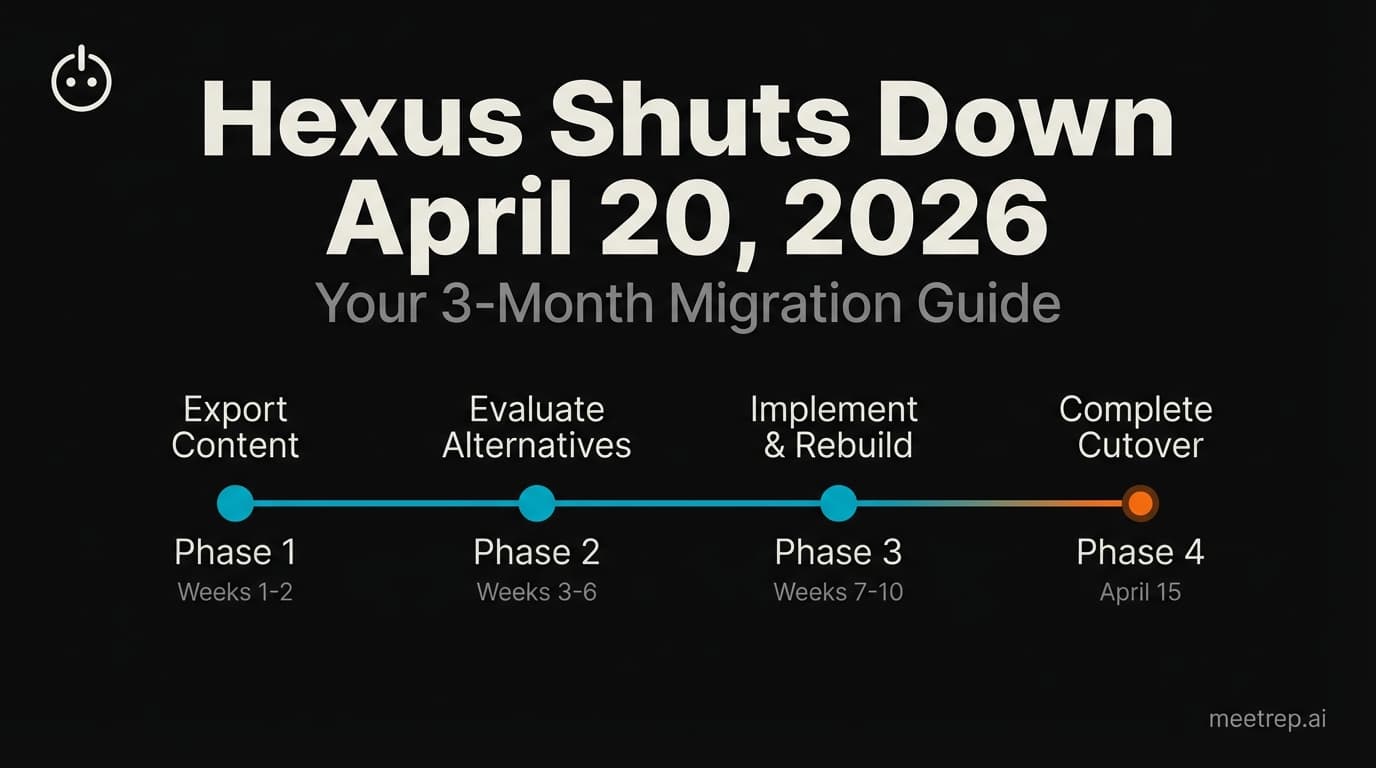
Hexus Acquired by Harvey AI: Congrats & What It Means for Demo Automation Teams
Hexus is shutting down following its acquisition by Harvey AI. Learn how to manage your migration and discover the best demo automation alternatives before April 2026.
Why the "Software Demo" is Broken—and Why AI Agents Are the Future
The traditional software demo is dead. Discover why 94% of B2B buyers rank vendors before calling sales and how AI agents are replacing manual demos to scale revenue.
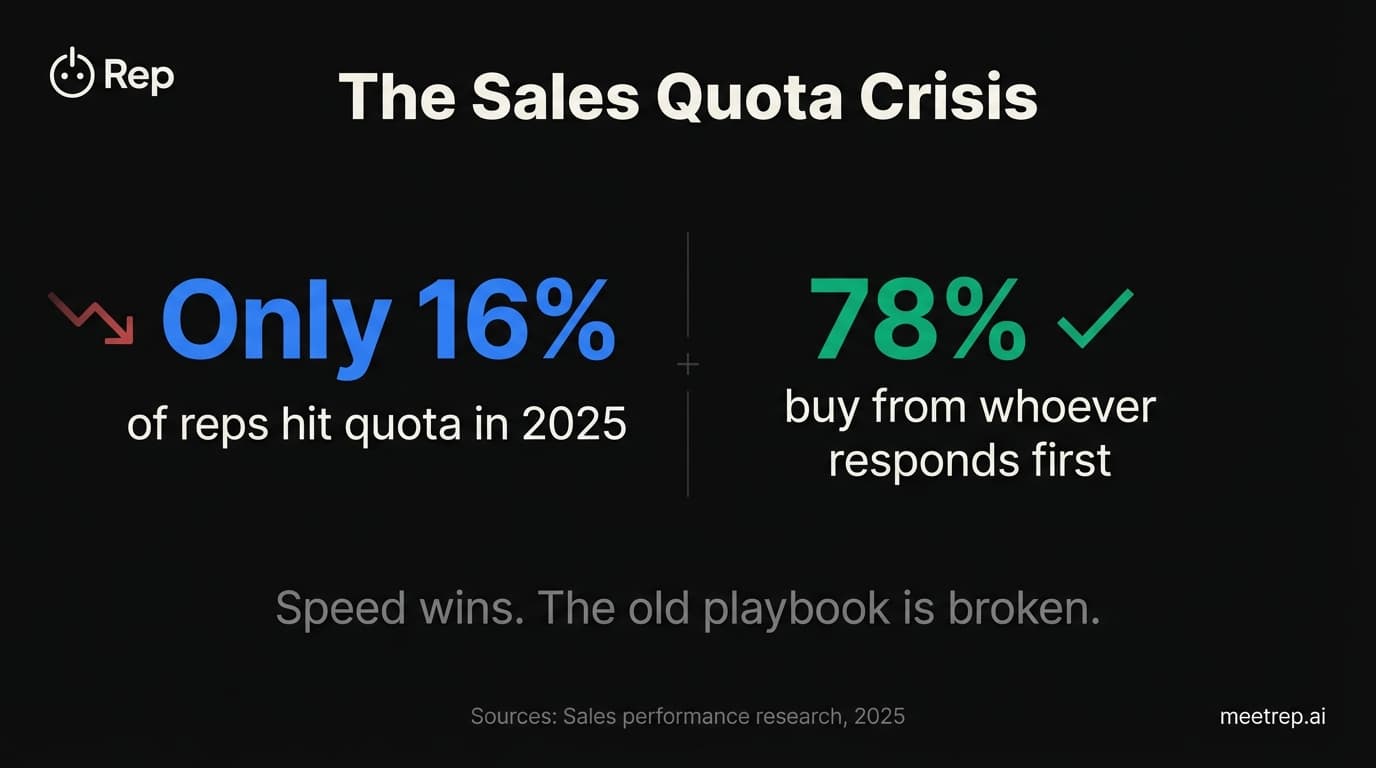
Why Autonomous Sales Software is the Future of B2B Sales (And Why the Old Playbook is Dead)
B2B sales is at a breaking point with quota attainment at 46%. Discover why autonomous 'Agentic AI' is the new standard for driving revenue and meeting the demand for rep-free buying.