The ROI of Reducing Manual Demo Scheduling: New Data for 2026

Executive Summary
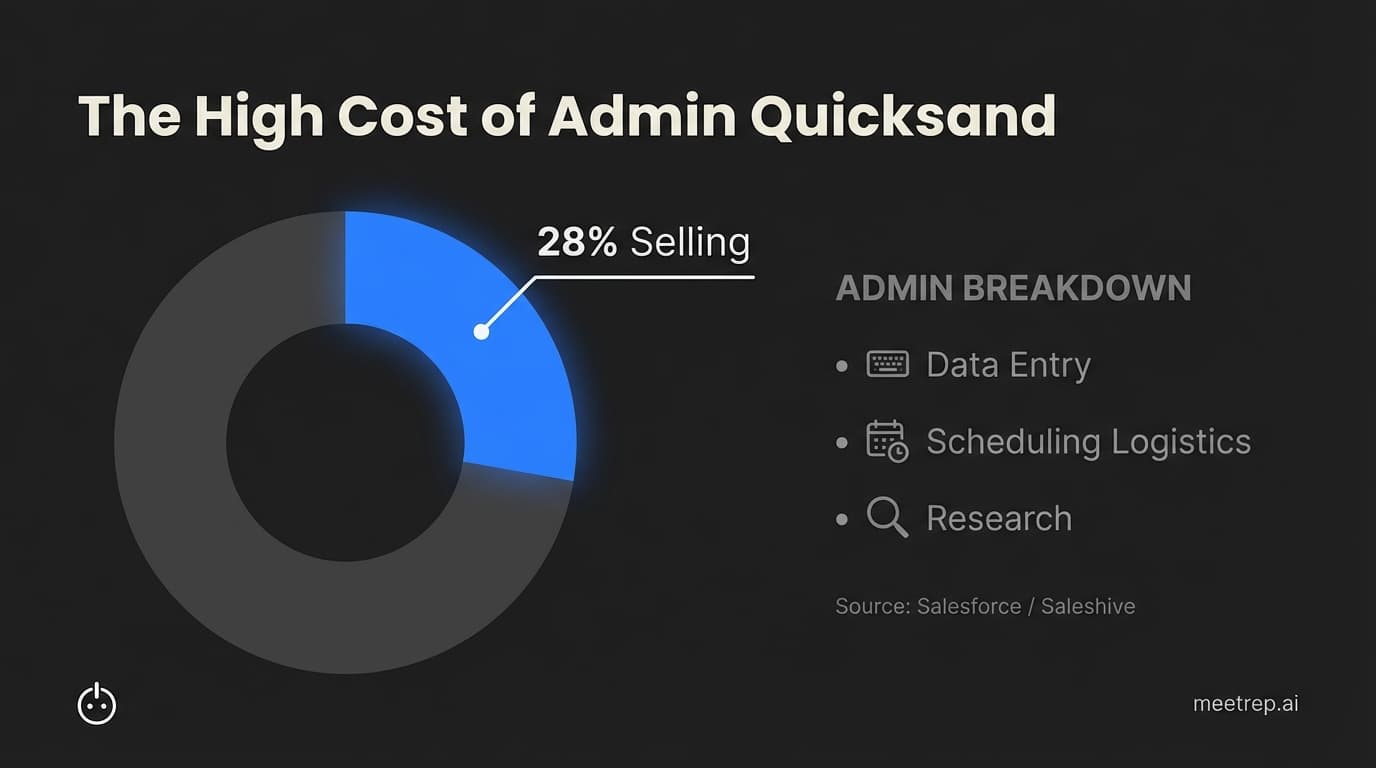
- The Problem: Reps spend only 28% of their time actually selling.
- The Shift: The market is moving from "Speed to Lead" (fast replies) to "Speed to Demo" (instant access).
- The Gain: Automating this friction point drives a 14.5% increase in sales productivity.
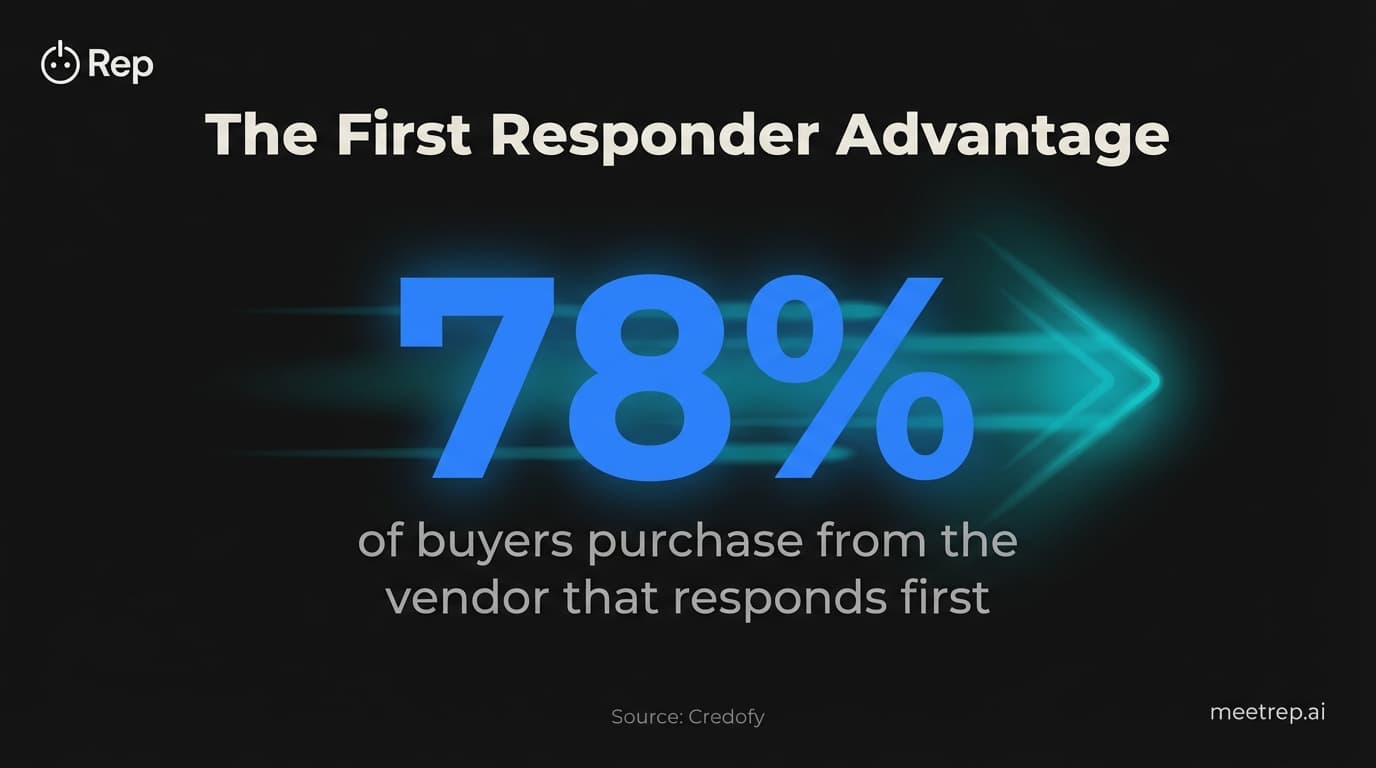
- The Risk: 78% of buyers purchase from the company that responds first. If you wait to schedule, you lose.
We have a math problem in B2B sales. And if you’re a CFO or RevOps leader, it’s likely keeping you up at night.
We pay sales representatives 100% of a salary, yet we only get them for about a quarter of the week. The rest? It vanishes into what I call "admin quicksand"—data entry, CRM updates, and the endless email ping-pong required just to get a prospect on a calendar.
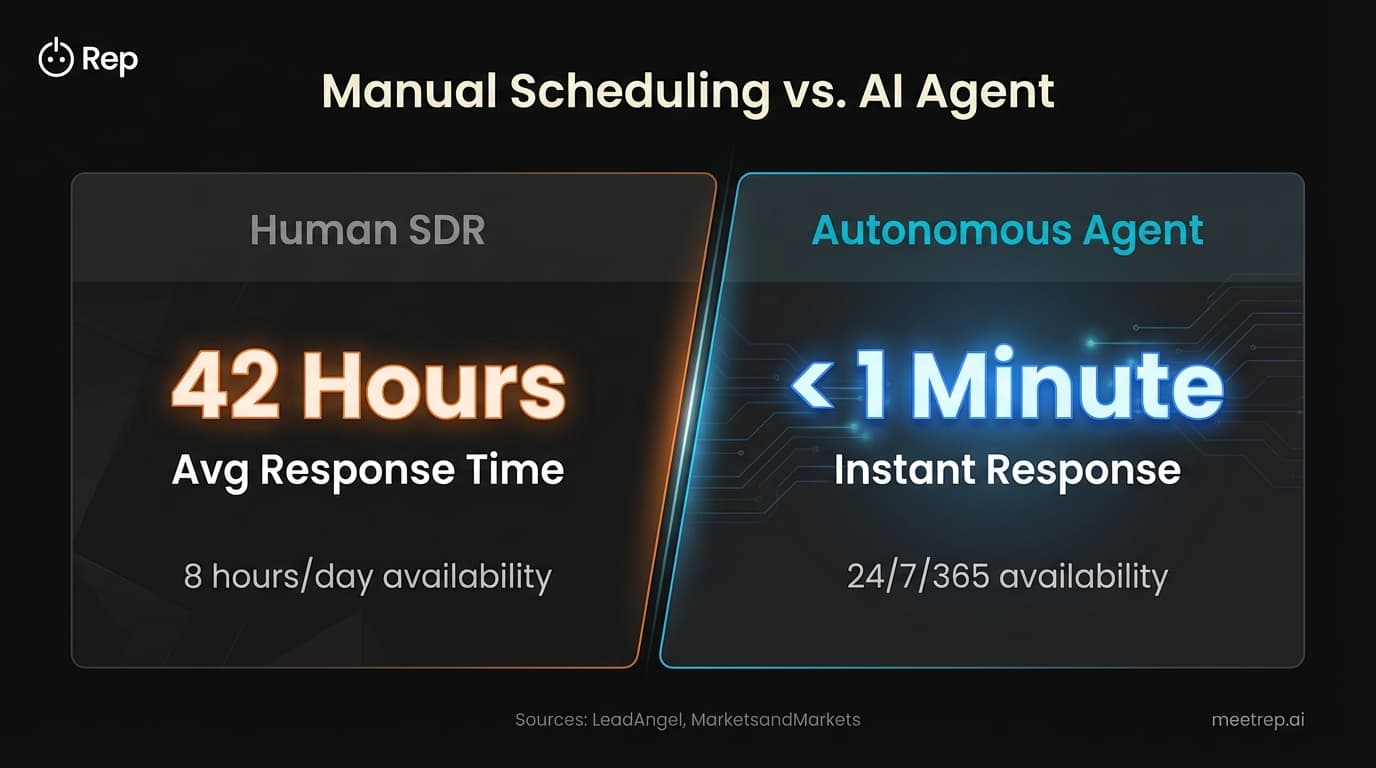
I saw this firsthand founding GoCustomer.ai. We built tools to help reps move faster, but we kept hitting the same wall: human latency. No matter how fast a rep works, they cannot be awake 24/7. They cannot respond in milliseconds.
In 2026, the strategy has changed. We aren't just trying to make humans faster anymore; we are offloading the work entirely to agents.
Here is the data on why that shift is happening, and the ROI you can expect if you fix your scheduling friction.
The High Cost of "Admin Quicksand" (New 2025 Data)
Finding effective reduce manual demo scheduling b2b sales strategies isn't just a long-tail keyword search; it's a financial imperative. Why? Because the cost of manual administration is eating your margins.
According to Salesforce data cited in 2025 reports, sales representatives spend only 28% of their week actually selling. The remaining 72% is consumed by administrative tasks, research, and scheduling logistics [3].
Think about that.
If you are paying an SDR $60,000 a year, you are essentially paying $43,200 for them to be a professional calendar coordinator and data entry clerk.
But the cost isn't just salary waste. It's lost revenue.
When we built Rep, we looked at where the deals were actually falling out of the funnel. It wasn't during the demo. It was before the demo ever happened. It was in the friction of finding a time slot.
Here is how the cost model changes when you move from manual to autonomous scheduling:
The Data: Bad data—often resulting from manual entry errors during scheduling—costs the U.S. economy over $3 trillion annually. Businesses can lose up to 25% of revenue due to poor data quality according to MarketsandMarkets [4].
Speed-to-Lead is Dead. Long Live Speed-to-Demo.
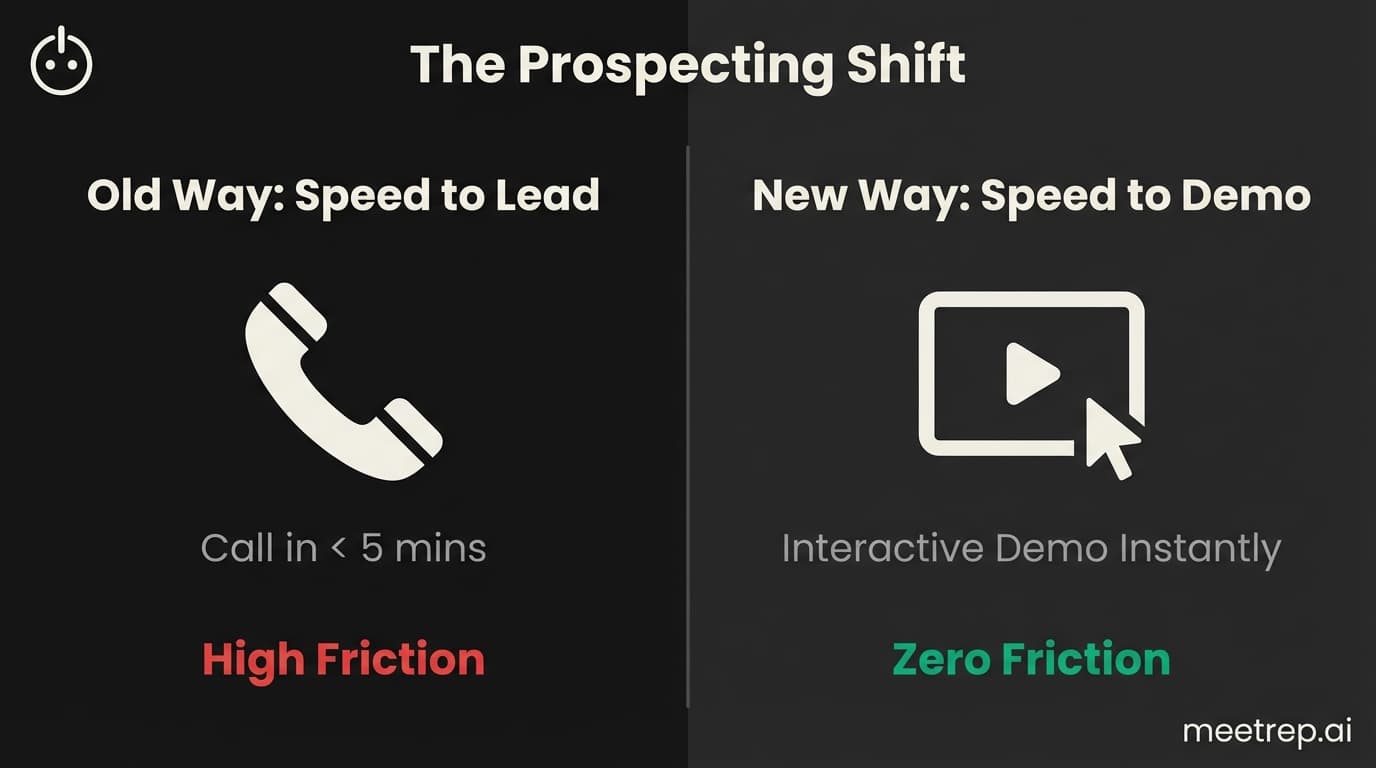
For the last decade, we obsessed over "Speed to Lead." The goal was to call the lead back within 5 minutes.
But here is the reality in 2026: Buyers don't want a phone call.
They want to see the product. Now.
The data supports this aggressive shift in buyer psychology. According to LeadAngel, responding to a lead within 5 minutes makes you 100x more likely to connect and 21x more likely to qualify that lead compared to waiting just 30 minutes [8].
Wait longer? You die.
Even scarier is the "First Responder" advantage. A staggering 78% of customers buy from the company that responds to their inquiry first[6].
If your process involves a rep seeing a notification, opening their email, and sending a Calendly link, you have already lost to the competitor whose AI agent booked the meeting instantly.
Common Mistake: Many RevOps leaders think a "Thank you for your interest, we will be in touch" email counts as a response. It doesn't. A response is an action—a booked meeting or a started demo.
The Financial Impact of Agentic Sales (ROI Analysis)
So, what happens to the bottom line when you remove manual scheduling?
It’s not just soft "time savings." It’s hard revenue.
According to a 2025 Sales Automation Guide by MarketsandMarkets, companies using sales automation tools report a 14.5% increase in sales productivity and a 12.2% reduction in marketing overhead[1].
Let's look at a specific example. HubSpot, partnering with SuperAGI, reported a 25% increase in sales pipeline and a 15% improved conversion rate, resulting in $1.2M in additional revenue after deploying agentic outreach [4].
This aligns with what we see at Rep. When you remove the human bottleneck from the top of the funnel, volume increases. But more importantly, conversion increases because the intent is captured at its peak.
Key Insight: The biggest bottleneck in the 2025 B2B SaaS funnel is MQL→SQL conversion, averaging just 15–21%[13]. Fixing scheduling friction is the fastest way to widen this choke point.
Beyond Scheduling: The Rise of the AI Sales Rep
When I say "reduce manual demo scheduling," I don't mean "send a better calendar link."
In 2026, Agentic Sales refers to the deployment of autonomous AI agents that execute complex sales workflows—such as prospecting, qualifying, and conducting live product demos—with minimal human intervention.
This is why we built Rep the way we did. We realized that scheduling a meeting for next Tuesday is often too late.
If a prospect is on your site at 2 AM, they don't want to book a slot. They want answers. Rep joins the video call immediately, shares its screen, and navigates the product just like a human engineer would.
This shift is inevitable. Gartner (cited by Martal Group) predicts that by the end of 2025, 80% of all B2B sales interactions between suppliers and buyers will occur in digital channels [10].
The companies that win will be the ones that offer digital, on-demand, interactive experiences. Not static forms.
Strategic Implementation for RevOps Leaders
So, how do you actually implement this without breaking your current flow?
My recommendation is to start at the top of the funnel (TOFU) where the volume is highest and the human capital waste is most severe.
Step 1: Audit your "Time-to-Demo" Look at your CRM. Calculate the exact time difference between a "Demo Request" form fill and the actual calendar start time of the meeting. If it's over 24 hours, you have a revenue leak.
Step 2: Identify the Bottleneck Is it the SDR's response time? Or is it the prospect's unwillingness to book? Usually, it's the back-and-forth.
Step 3: Deploy Autonomous Agents for Inbound Don't replace your Account Executives. Use agents to handle the initial qualifying demo. Let the AI handle the "Show me what this does" conversation at 8 PM, so your AE can handle the "How much does this cost?" conversation at 10 AM the next day.
My recommendation: Do not try to automate the closing call yet. The trust required for a $50k+ decision still needs a human. But the initial discovery and product walkthrough? An agent handles that faster, more consistently, and without complaining about the time zone.
The data is clear. The era of "I'll check my calendar and get back to you" is over.
You can continue paying humans to be calendar coordinators, or you can let them sell. But understand this: your competitors are already making the switch. They are capturing the 2 AM leads. They are qualifying instantly. And they are doing it with 14.5% higher productivity.
Don't let manual friction be the reason you miss your Q1 target.
If you're ready to stop losing deals to scheduling lag, it's time to hire your first digital worker. See how Rep can handle your demos autonomously, 24/7.

Nadeem Azam
Founder
Software engineer & architect with 10+ years experience. Previously founded GoCustomer.ai.
Nadeem Azam is the Founder of Rep (meetrep.ai), building AI agents that give live product demos 24/7 for B2B sales teams. He writes about AI, sales automation, and the future of product demos.
Frequently Asked Questions
Table of Contents
- The High Cost of "Admin Quicksand" (New 2025 Data)
- Speed-to-Lead is Dead. Long Live Speed-to-Demo.
- The Financial Impact of Agentic Sales (ROI Analysis)
- Beyond Scheduling: The Rise of the AI Sales Rep
- Strategic Implementation for RevOps Leaders
Ready to automate your demos?
Join the Rep Council and be among the first to experience AI-powered demos.
Get Early AccessRelated Articles
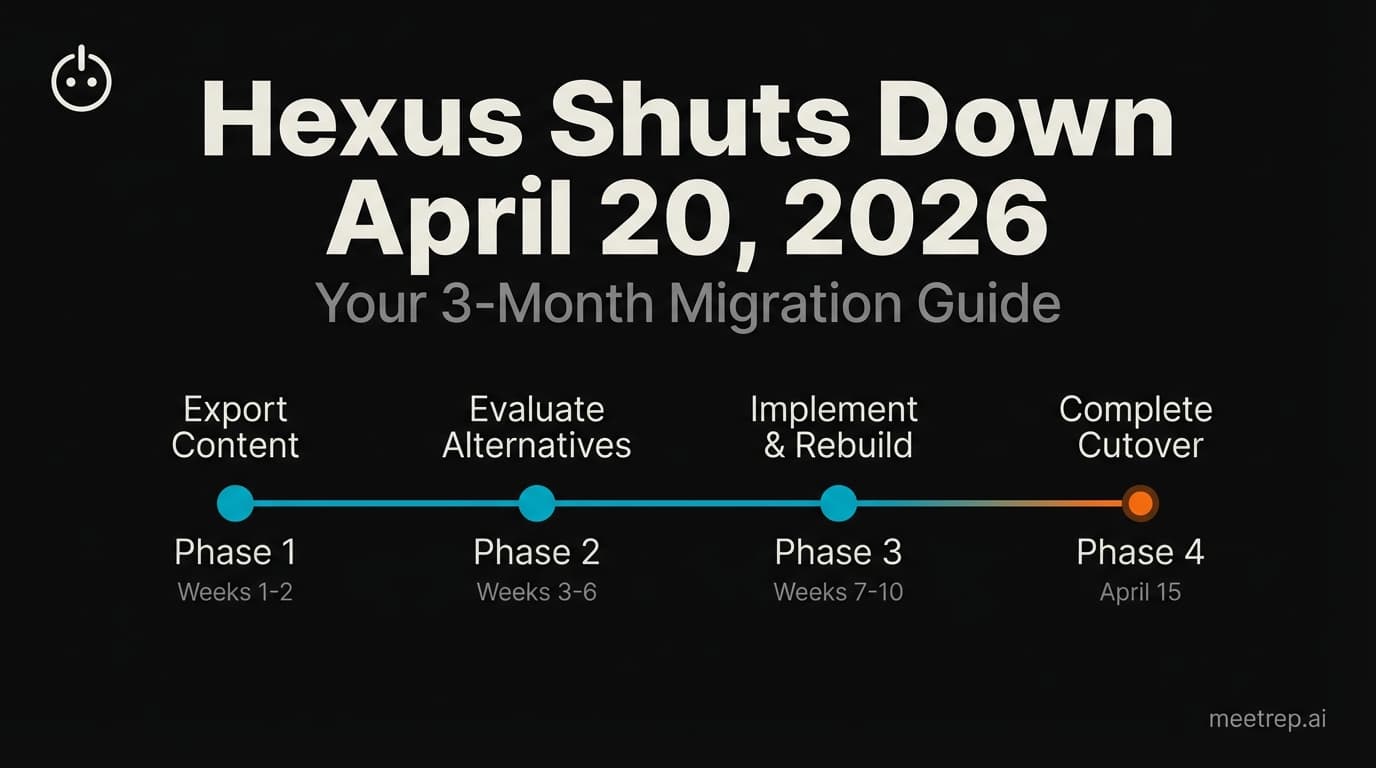
Hexus Acquired by Harvey AI: Congrats & What It Means for Demo Automation Teams
Hexus is shutting down following its acquisition by Harvey AI. Learn how to manage your migration and discover the best demo automation alternatives before April 2026.
Why the "Software Demo" is Broken—and Why AI Agents Are the Future
The traditional software demo is dead. Discover why 94% of B2B buyers rank vendors before calling sales and how AI agents are replacing manual demos to scale revenue.
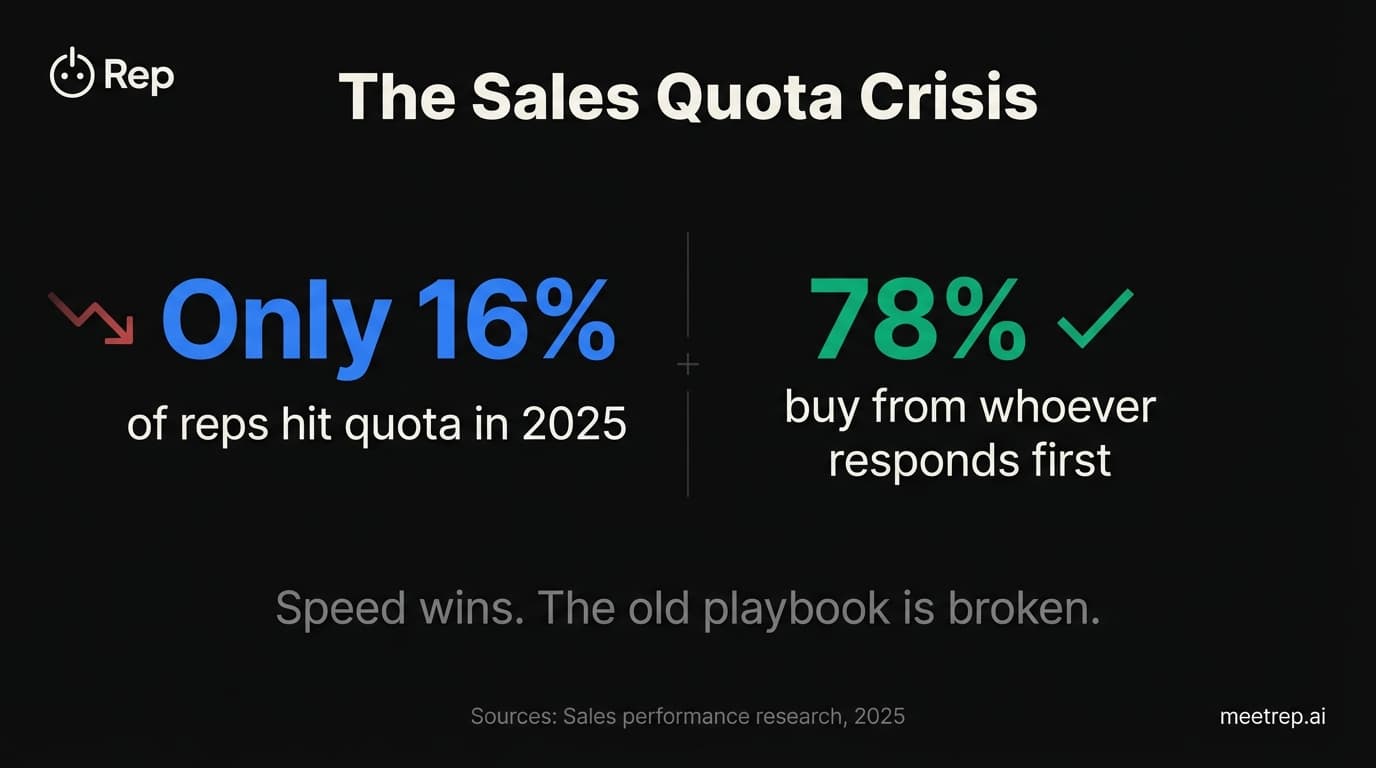
Why Autonomous Sales Software is the Future of B2B Sales (And Why the Old Playbook is Dead)
B2B sales is at a breaking point with quota attainment at 46%. Discover why autonomous 'Agentic AI' is the new standard for driving revenue and meeting the demand for rep-free buying.