The ROI of How To Demonstrate CRM Integrations In Product Demos: New Data

Executive Summary
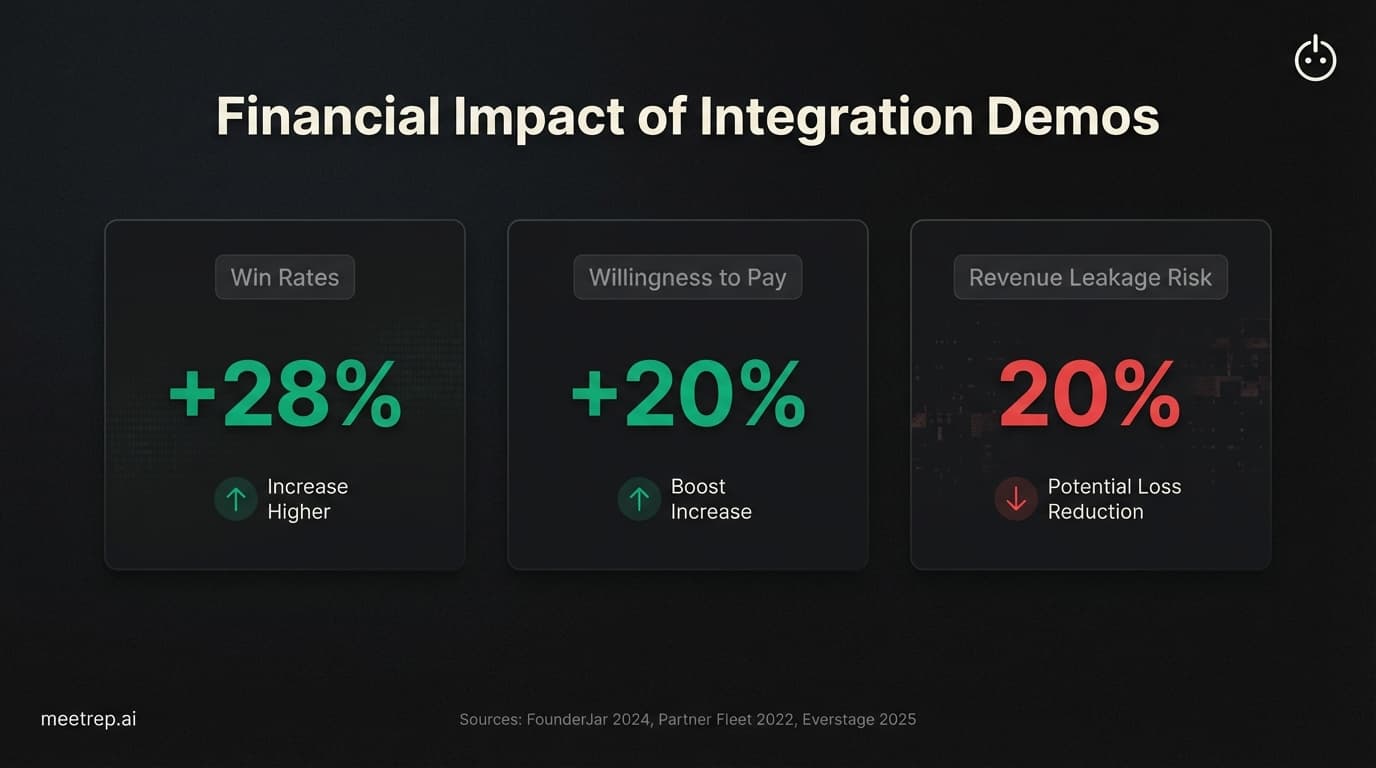
- Win Rates: Increase by 28% when integrations are demonstrated clearly.
- Willingness to Pay: Buyers pay 20% more for products with verified integrations.
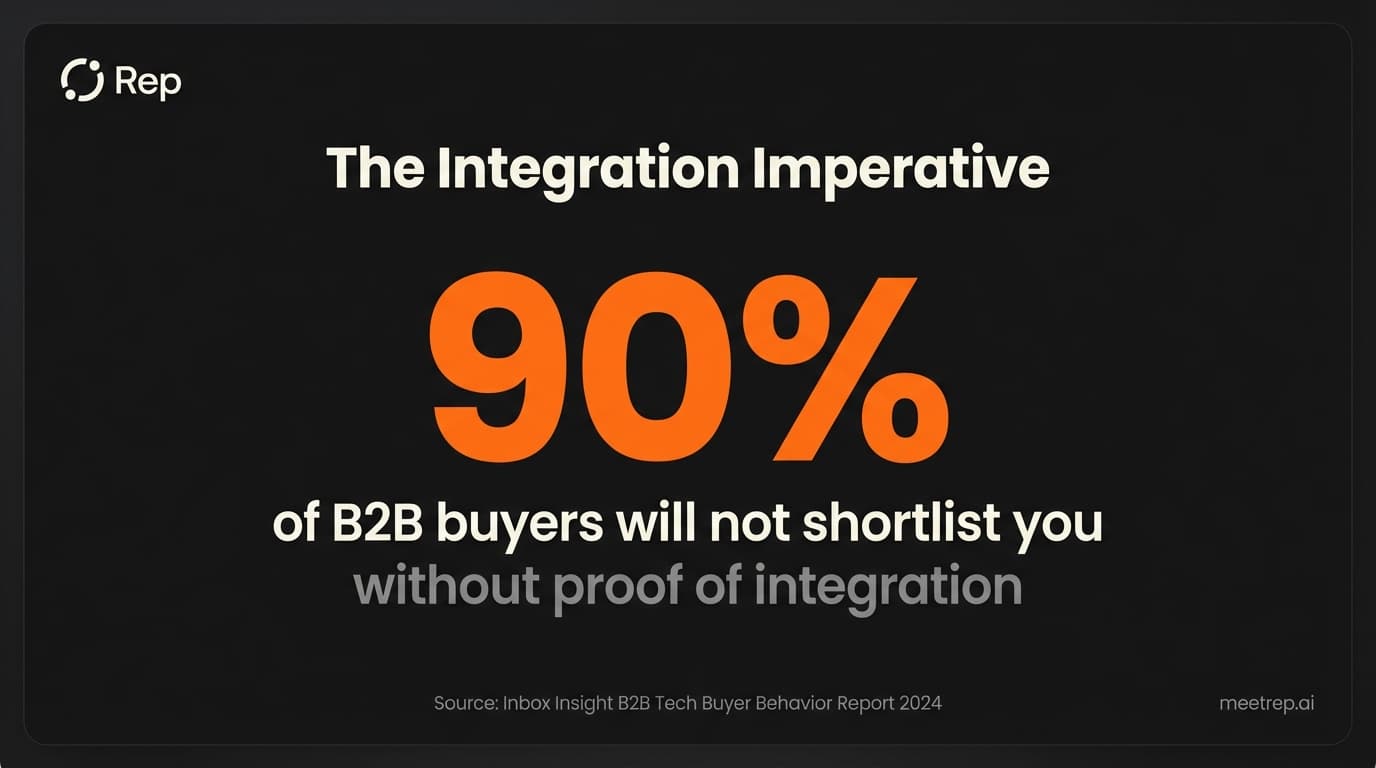
- Shortlist Factor: 90% of buyers won't even shortlist you without integration proof.
- The Risk: Poor data integration costs companies ~20% of annual revenue.
The "Harbor Tour" demo is dead.
You know the one. The sales rep logs in, clicks through every menu item from left to right, and says, "And here is our settings page."
It’s boring. It’s ineffective. And in 2026, it’s costing you deals.
Buyers—especially RevOps leaders and CFOs—don't care about your settings page. They care about flow. They want to know if your tool creates data silos or destroys them.
I've built two sales automation platforms, GoCustomer and now Rep. I’ve learned that the moment you prove your product actually talks to Salesforce or HubSpot, the energy in the room changes. It stops being a "nice-to-have" conversation and starts being an infrastructure conversation.
But you don't have to take my word for it. New data from 2026 shows that knowing how to demonstrate CRM integrations in product demos isn't just a technical skill—it's a financial lever.
The "Shortlist" Imperative: Why Integrations Are No Longer Optional
Demonstrating integrations is no longer about technical validation; it is the primary filter for initial qualification. If you cannot prove your tool fits into the existing stack within the first few interactions, you likely won't make the cut.
According to the 2024 B2B Tech Buyer Behavior Report by Inbox Insight, 90% of B2B buyers agree that a vendor’s ability to integrate with their existing tech stack is a key factor in deciding who makes the shortlist.
Think about that. 90%.
If your demo script leaves the CRM integration until the end—or worse, just mentions it as a bullet point on a slide—you are failing the qualification criteria for nine out of ten buyers.
At Rep, we see this constantly. Buyers come to us not asking "What features do you have?" but "Do you break my Salesforce reporting?" If the answer isn't a visual "no," the deal stalls.
The Data: According to Partner Fleet’s 2025 State of SaaS Integrations Report, 84% of businesses say integrations are "very important" or a "key requirement."
The Hard ROI of Integration Demos (2026 Data)
Most sales leaders think of integrations as a "check-the-box" feature. But the financial data tells a different story. Demonstrating these connections directly impacts your pricing power and your close rate.
Willingness to Pay (WTP) Lift
When you show a prospect that your tool plays nice with their ecosystem, you reduce their perceived Total Cost of Ownership (TCO). They don't have to build custom middleware. They don't have to hire a consultant to fix the data.
The market rewards this. Research cited in the Partner Fleet State of SaaS Integrations Report shows that businesses with 5+ integrations are willing to pay 20% more for the same core product.
Win Rate Velocity
Beyond pricing, it speeds up the deal.
According to CRM Statistics 2024 by FounderJar, win rates improve by up to 28% when sales teams utilize integrated CRM systems to demonstrate value.
Why? Because trust.
When I see a rep click a button in their app, switch tabs to Salesforce, refresh the page, and show me the data appear instantly—I believe them. When they show me a slide that says "We integrate with Salesforce," I assume it's going to be a six-week implementation nightmare.
The "Harbor Tour" vs. The "Workflow Demo"
The biggest mistake I see teams make is structuring their demo around features rather than workflows.
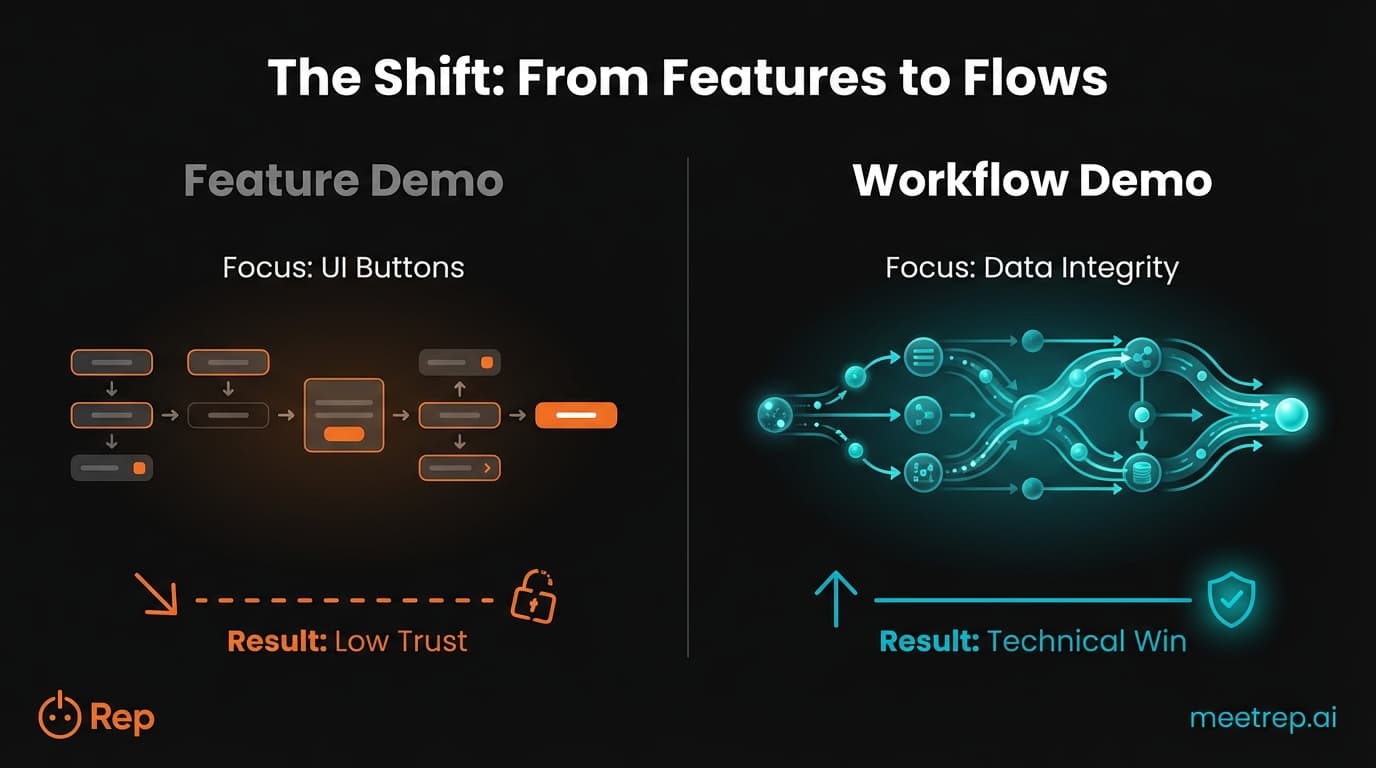
The "Harbor Tour" (a term popularized by Great Demo!) is a feature dump. "Here is the dashboard. Here is the reporting. Here are the users." It forces the buyer to do the mental math of how this fits their day.
The "Workflow Demo" focuses on data movement.
What is a CRM Integration Demo? A CRM integration demo is a sales demonstration that visualizes the real-time data flow between a product and a prospect's system of record (like Salesforce or HubSpot). Unlike standard feature demos, it proves data integrity and bi-directional sync capabilities, directly addressing RevOps concerns about data silos.
| Feature Demo (Harbor Tour) | Workflow Demo (Integration First) |
|---|---|
| "Here is our contact page." | "Let's say you find a lead. Watch what happens in Salesforce." |
| Focuses on UI buttons. | Focuses on data integrity. |
| Mentions integrations at the end. | Proves integration at the start. |
| Buyer asks: "Does this work?" | Buyer asks: "How much does it cost?" |
| Result: Low trust. | Result: Technical win. |
How To Demonstrate CRM Integrations In Product Demos
This is the part that trips people up. You know you should do it, but actually executing it live is risky. The demo environment might break. The API token might expire.
But you have to do it. Here is the exact sequence that works, based on what we’ve seen close deals.
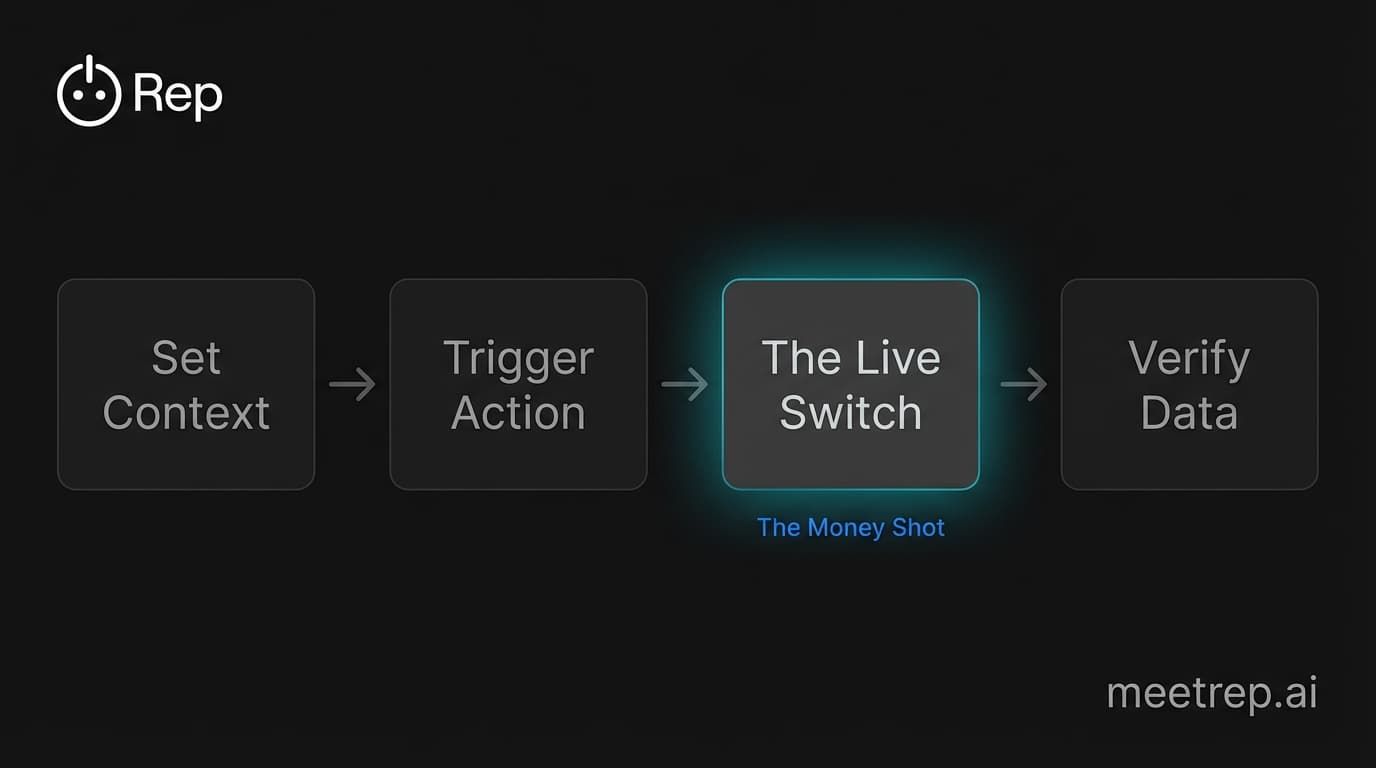
1. Set the "Data Pain" Context
Don't just show the feature. Frame it against the pain of manual entry. "You know how your reps hate manually logging activity in Salesforce? And how that messes up your attribution reporting?"
2. The Trigger Action
Perform the action in your product. Keep it simple. "I’m going to engage this prospect here in our platform."
3. The "Live Switch" (Critical)
This is the money shot. Do not use a slide. "Now, I’m not going to touch anything else. Let’s switch tabs over to your Salesforce instance."
4. The Verification
Refresh the page. Point to the specific field. "There it is. The activity is logged, the deal stage moved, and the attribution source is updated. No manual entry."
Common Mistake: Many teams try to fake this with screenshots or "interactive product tours" (like Navattic or Storylane). Those tools are great for marketing websites, but for a live sales call with a technical buyer? They feel hollow. A RevOps director knows the difference between a captured HTML slide and a live database query.
The Engineering Problem (and the Fix)
The reason most teams don't do this is resource cost. Maintaining a live Salesforce sandbox with clean data for every demo is expensive. It requires Engineering or Sales Ops hours that you don't have.
This is exactly why we built Rep the way we did.
Rep isn't just a chatbot; it's an autonomous AI agent that controls a real web browser. When Rep gives a demo, it actually logs into a live Salesforce sandbox. It navigates the UI. It performs the "Live Switch" I described above.
It allows you to show a live, verified integration demo 24/7 without needing a Sales Engineer on the call.
The Cost of Inaction: The Price of Data Silos
If the potential gain in win rate doesn't motivate you, perhaps the guaranteed loss will.
In B2B sales, loss aversion is a stronger driver than gain. The fear of making a mess is stronger than the desire to improve.
According to Everstage’s 2025 RevOps report, 31% of admins revealed that poor-quality data (often caused by lack of integration) costs them at least 20% of their annual revenue.
That is revenue leakage. That is money pouring out of the bucket because systems don't talk to each other.
When you fail to demonstrate your integration, you aren't just failing to show a feature. You are signaling to the buyer that you might be another source of revenue leakage.
Key Insight: Enterprise organizations achieve a 299% average ROI over three years with verified integration platforms, according to Forrester's 2026 data. The upside is massive, but only if you can prove it works.
Conclusion
Integrations are the new feature war. In 2025 and 2026, buyers are consolidating stacks, not expanding them. They want fewer tools that do more, connected by a reliable data fabric.
My take? If you can't show it, you don't have it.
Don't let your deals die because you relied on a slide to explain a database connection. Show the workflow. Show the data moving.
And if your team is too stretched to build these demo environments manually, let AI handle it.
See how Rep navigates live integration demos autonomously at meetrep.ai.

Nadeem Azam
Founder
Software engineer & architect with 10+ years experience. Previously founded GoCustomer.ai.
Nadeem Azam is the Founder of Rep (meetrep.ai), building AI agents that give live product demos 24/7 for B2B sales teams. He writes about AI, sales automation, and the future of product demos.
Frequently Asked Questions
Table of Contents
- The "Shortlist" Imperative: Why Integrations Are No Longer Optional
- The Hard ROI of Integration Demos (2026 Data)
- The "Harbor Tour" vs. The "Workflow Demo"
- How To Demonstrate CRM Integrations In Product Demos
- The Cost of Inaction: The Price of Data Silos
- Conclusion
Ready to automate your demos?
Join the Rep Council and be among the first to experience AI-powered demos.
Get Early AccessRelated Articles
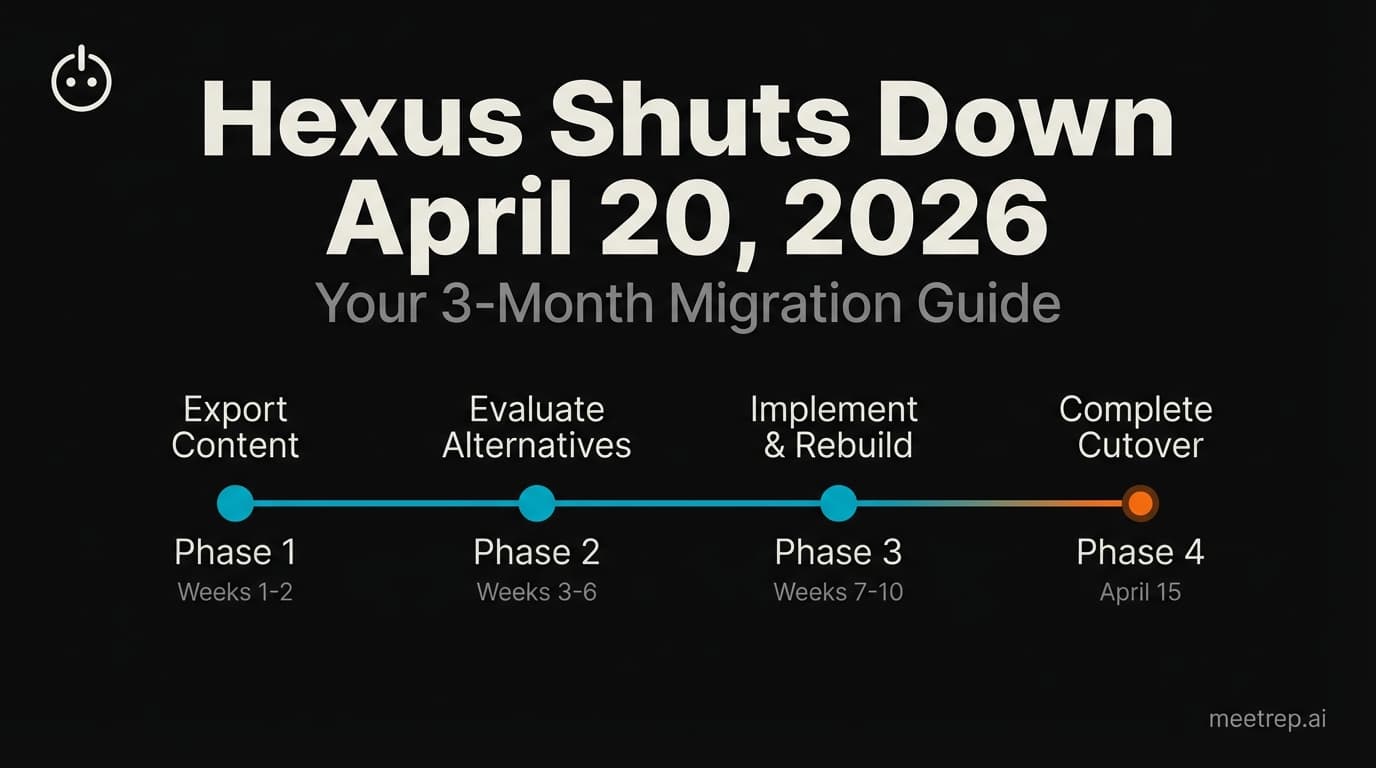
Hexus Acquired by Harvey AI: Congrats & What It Means for Demo Automation Teams
Hexus is shutting down following its acquisition by Harvey AI. Learn how to manage your migration and discover the best demo automation alternatives before April 2026.
Why the "Software Demo" is Broken—and Why AI Agents Are the Future
The traditional software demo is dead. Discover why 94% of B2B buyers rank vendors before calling sales and how AI agents are replacing manual demos to scale revenue.
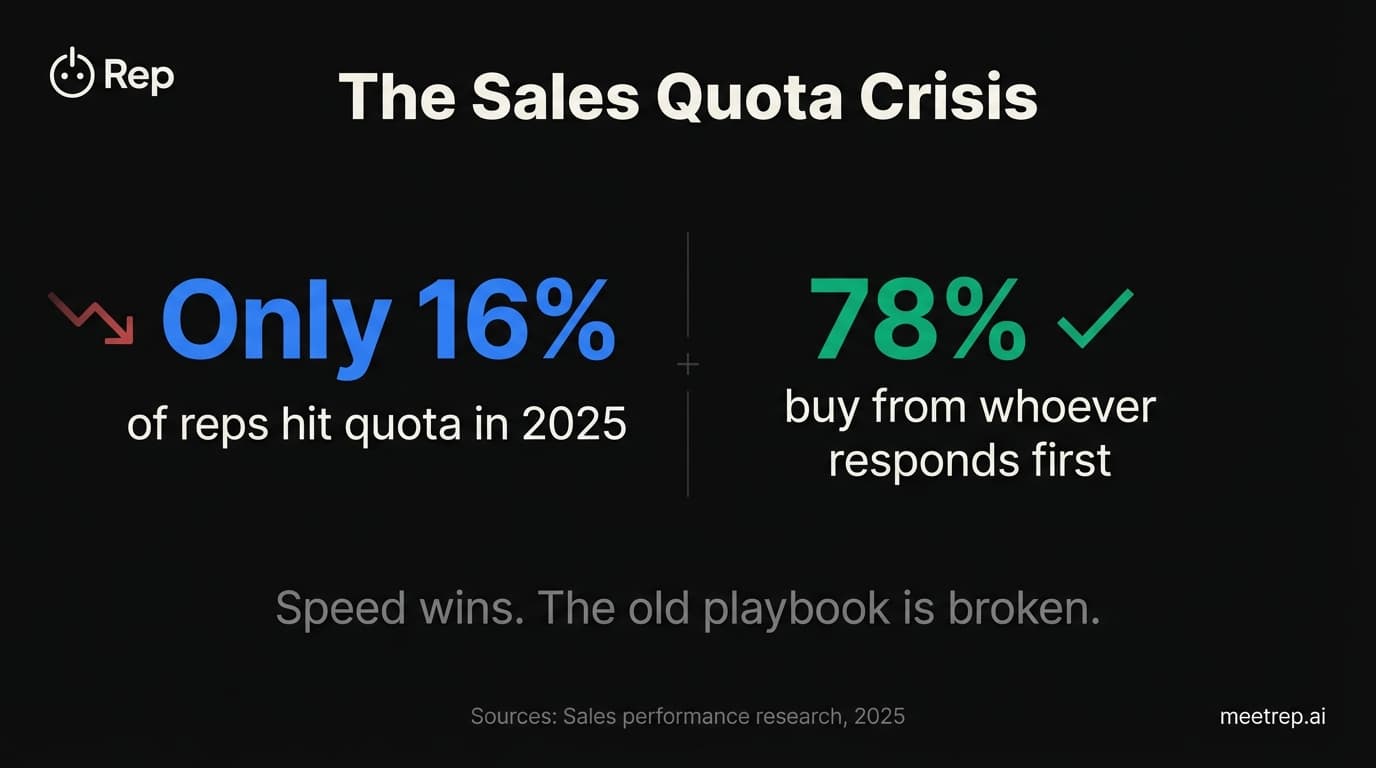
Why Autonomous Sales Software is the Future of B2B Sales (And Why the Old Playbook is Dead)
B2B sales is at a breaking point with quota attainment at 46%. Discover why autonomous 'Agentic AI' is the new standard for driving revenue and meeting the demand for rep-free buying.