Rep vs Walnut: Live AI Demos vs Static Clones

Executive Summary
- Walnut captures HTML screenshots for click-through product tours—great for website embeds and marketing
- Rep runs live AI voice demos with real browser control—built for qualification and sales conversations
- Walnut costs $9,200/year minimum with no free trial; G2 satisfaction score is 32/100
- The right choice depends on your use case: TOFU marketing (Walnut) vs. MOFU/BOFU qualification (Rep)
If you're evaluating Walnut demo software, you've probably noticed something frustrating. Your interactive demos get clicks. But they're not converting to meetings the way you expected.
You're not alone. 69% of sales reps missed quota in 2024/2025. And here's the thing—most teams I talk to have already tried the "scale with interactive demos" playbook. It's not working the way the vendors promised.
I've spent years building sales automation tools. First at GoCustomer.ai, now at Rep. What I've learned: the demo tool category just split in two. There's "interactive demos" (Walnut, Navattic, Storylane)—click-through screenshots. And there's "AI agents" (Rep)—live voice conversations with real browser control.
Different tools. Different jobs. This comparison will help you figure out which one actually fits your sales motion.
What is Walnut demo software and how does it work?
A Walnut demo is an interactive product demo created by capturing your software's front-end HTML and CSS. It creates a pixel-perfect simulation—not your actual product—that prospects can click through at their own pace. Walnut positions itself as the company that "invented the category" of interactive demo platforms.
Here's the technical reality. When you build a Walnut demo, you're essentially taking screenshots of your product's interface. Advanced screenshots that preserve clickable elements, but screenshots nonetheless. The prospect sees a cached copy of your UI from whenever you last captured it.
This approach has real advantages. Your demo can't crash. Slow servers don't affect load times. You can show features that aren't fully built yet. And you can personalize text and logos at scale through Walnut's AI editing tools.
But it also means you're showing a frozen-in-time version of your product. Every time your engineering team ships a UI update, someone needs to recapture those screens. According to the 2024 Presales Landscape Report, SEs spend 21 days per year just maintaining demo environments. That number gets worse with screenshot-based tools.
Key Insight: Walnut demos are simulations, not live products. This makes them safe and consistent—but it also means they can't adapt, answer questions, or handle objections in real-time.
How Walnut compares to live AI demos
The core difference isn't feature lists. It's the fundamental approach to what a "demo" should be.
Walnut gives prospects a self-guided tour. They click through predefined paths. They read the text you wrote. If they have a question, they need to book another call with a human to get it answered.
Rep takes a different approach. Our AI agent joins a video call, shares its screen, and navigates your actual product while having a voice conversation with the prospect. It's not a recording. It's not a script. It's live interaction.
| Dimension | Walnut | Rep |
|---|---|---|
| Format | Click-through HTML clone | Live video call + screen share |
| Technology | HTML/CSS capture (simulation) | Live browser automation (real product) |
| Interaction | Silent, self-paced clicking | Voice conversation, real-time |
| Navigation | Predefined paths only | Adaptive—responds to questions |
| Question handling | None (static text) | Real-time via knowledge base |
| Maintenance | High (re-capture on updates) | Low (learns live product) |
| Best for | Website embeds, marketing | Qualification, sales conversations |
| Availability | 24/7 (asynchronous) | 24/7 (synchronous voice calls) |
Why does this matter? Because of what I call the "5:44 problem."
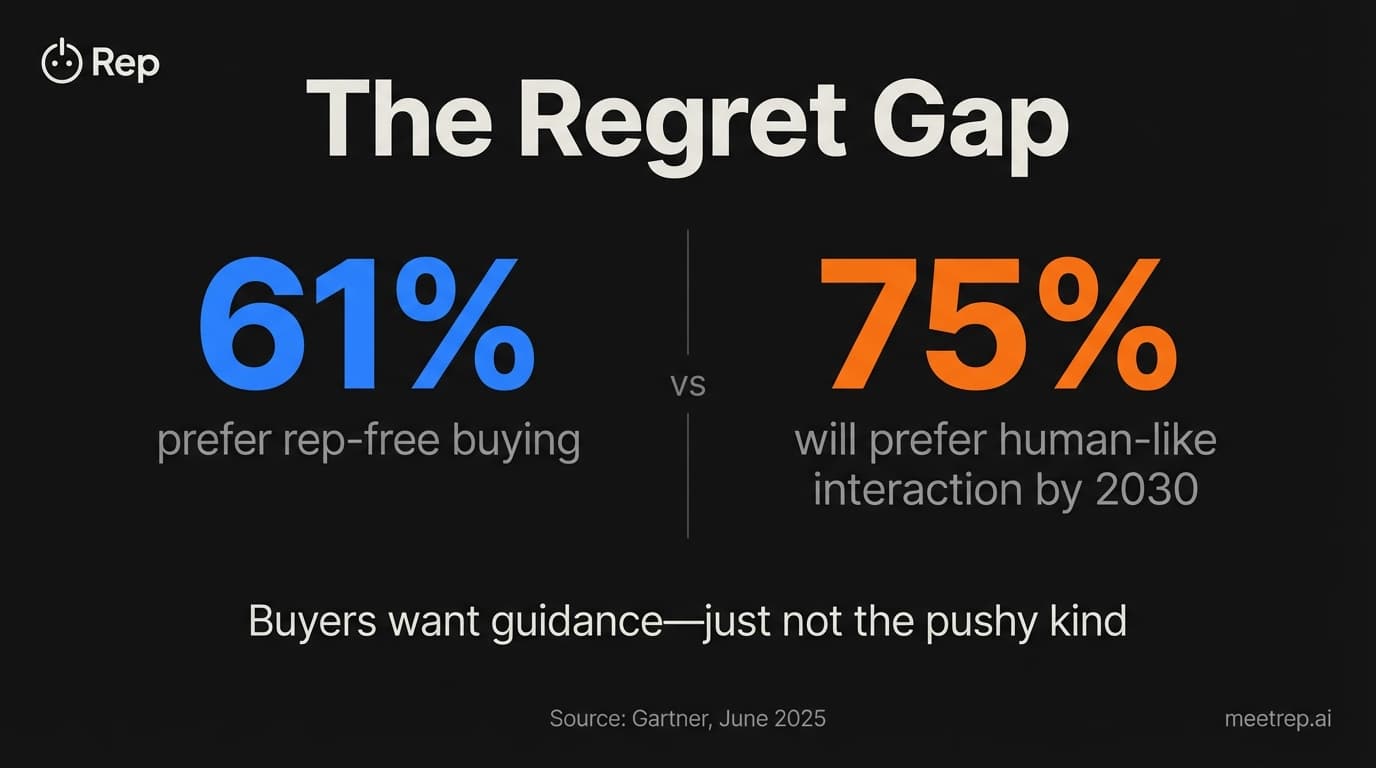
Consensus's 2025 Buyer Behavior Report found that the average interactive demo view time is just 5 minutes and 44 seconds. But most demos are 15+ minutes long. Prospects are bouncing before they see the good stuff. And when they bounce, they take their questions with them.
The Data: Average interactive demo view time is 5:44—yet demos are 15+ minutes long. That's a lot of unanswered questions walking out the door. (Source: Consensus 2025)
The buyer psychology problem nobody talks about
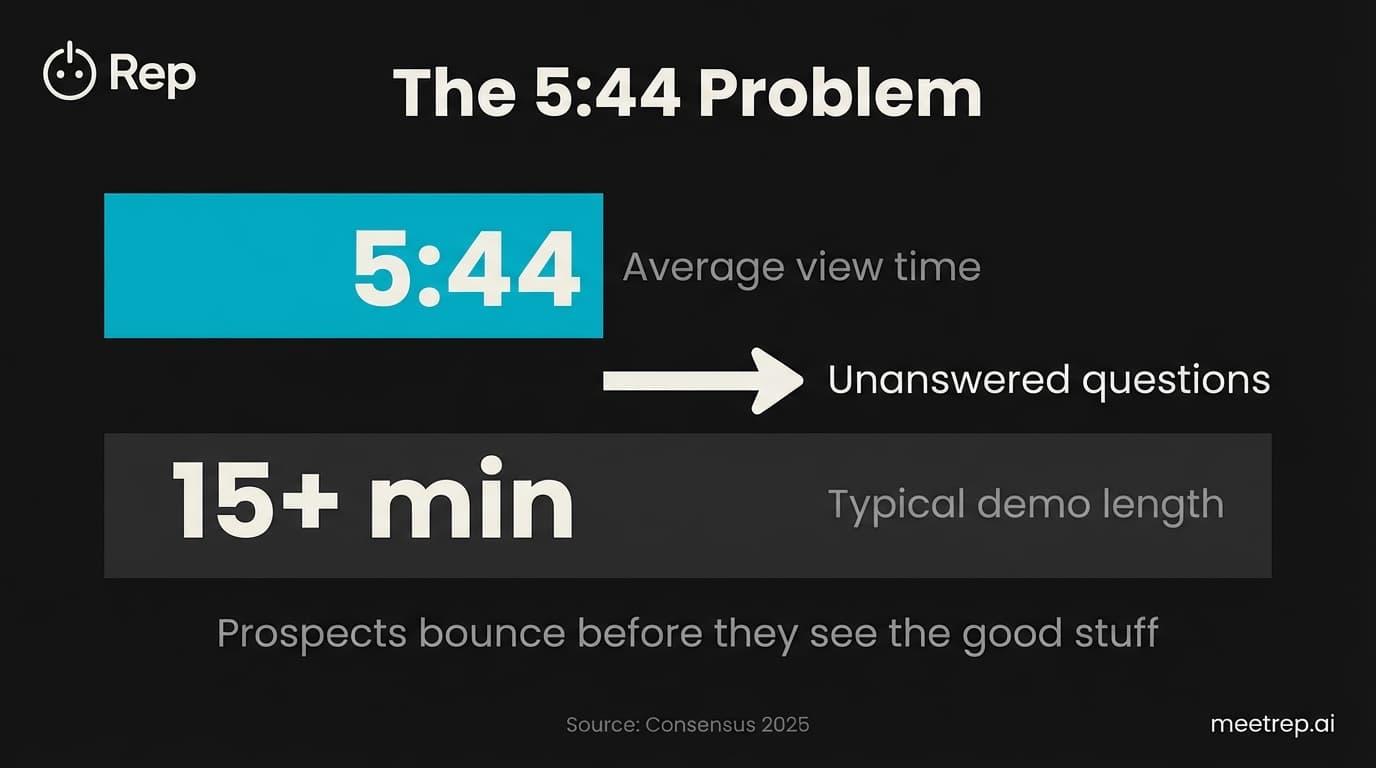
Here's what caught my attention in Gartner's June 2025 research. Two stats that seem to contradict each other:
Stat 1: 61% of B2B buyers prefer a rep-free buying experience.
Stat 2: By 2030, 75% of buyers will prefer human (or human-like) interaction due to purchase regret from digital-only journeys.
Wait. Buyers want to avoid reps... but they also regret buying without guidance?
This is the "regret gap." And it explains why interactive demos get clicks but don't convert.
Prospects want control. They hate being trapped in sales calls for products they're not sure about. So they click the Walnut demo, explore for 5 minutes, and leave. They didn't get their questions answered. They're not sure if it's right for them. They ghost you.
What they actually needed was guidance—just not the pushy, calendar-blocking kind. They needed someone (or something) that could answer "Does this integrate with Salesforce?" or "How does this handle our compliance requirements?" in the moment.
That's the gap Rep fills. A prospect clicks your demo link, joins a video room instantly, and has a real conversation with an AI that can show them exactly what they ask about. No waiting for an SE's calendar. No silence.
What we learned building GoCustomer: Self-service feels efficient until the prospect has a question. Then silence kills deals. We built Rep specifically to eliminate that silence.
Walnut's real strengths (being honest here)
I'm not here to bash Walnut. They built something genuinely useful for specific use cases.
Where Walnut shines:
Marketing website embeds. That "Take a Tour" button on your homepage? Walnut is purpose-built for this. Prospects can explore your product without talking to anyone. It's low-friction top-of-funnel engagement.
Scalable personalization. Their AI editing tools let you swap logos, company names, and data sets across hundreds of demos. If you're doing ABM outreach and want each prospect to see their brand in the demo, Walnut handles this well.
Safe, controlled environments. No risk of your production system crashing mid-demo. No slow-loading pages. No bugs appearing at the worst moment. The experience is consistent every time.
Enterprise security. SOC 2, GDPR compliant. Deep Salesforce integration. For large organizations with strict compliance requirements, these checkboxes matter.
Customer support. G2 reviewers consistently praise Walnut's support team—it's mentioned in 11 separate reviews as a top strength.
So why the friction? Why are users frustrated?
The maintenance burden problem
Here's what Walnut's marketing won't tell you, but their G2 reviews will.
Walnut's G2 satisfaction score is 32 out of 100. Their star rating is 4.5/5, which looks great in isolation. But satisfaction—which measures whether users would recommend the product—tells a different story.
The reviews reveal a pattern:
"Saves don't work half the time. That 30 minutes? Gone."
"Initial learning curve could be simpler. Some advanced features require time to fully understand."
"Loading time of the demos is sometimes a bit slow depending on the browser or network."
"Customizing very complex or deeply interactive workflows can sometimes be challenging, since it's still a simulated environment."
But the biggest complaint? Maintenance.
When your product team ships a new UI, your Walnut demos become outdated. Someone needs to re-capture screens. Rebuild flows. Update every personalized variant. This is the hidden cost of screenshot-based demos—they freeze your product at a point in time.
Common mistake: Teams buy Walnut for "scale" without budgeting for ongoing maintenance. Three months later, half their demos show outdated UI and nobody has time to fix them.
Walnut pricing: what you'll actually pay
Walnut isn't cheap. And they don't offer a free trial.
| Plan | Annual Cost | What You Get |
|---|---|---|
| Lite | $9,200/year | Core features, unlimited demos, basic integrations |
| Pro | $20,000/year | Dedicated CSM, expert training, advanced Salesforce |
| Enterprise | Custom | Custom requirements, white labeling, SSO |
| Sandbox (Accelerate) | $18,600/year | Full sandbox environments |
No free tier. No free trial. Annual contract required.
Compare this to competitors like Storylane (starts at $40/month with free tier) or Navattic (similar HTML approach, lower cost). Walnut is positioned as a premium enterprise solution.
If you're spending $9,200+ annually, the ROI question becomes urgent. Are you getting enough meetings from those demos to justify the cost plus the maintenance hours?
When to choose Walnut vs. Rep
This isn't about which platform is "better." It's about which one fits your use case.
Choose Walnut if:
- You need website-embedded demos for top-of-funnel marketing
- You're sending demos via email as leave-behinds after meetings
- You require enterprise security certifications (SOC 2, GDPR)
- You have deep Salesforce integration needs
- Your sales motion is high-volume, low-touch
- You have bandwidth to maintain demos as your product evolves
Choose Rep if:
- You need 24/7 qualification capacity without burning out SEs
- Your demos require handling complex questions and objections
- You want prospects to experience your actual product, not a simulation
- You need voice-based, consultative conversations
- Your product changes frequently (no screenshot maintenance)
- You're targeting technical buyers who ask detailed questions
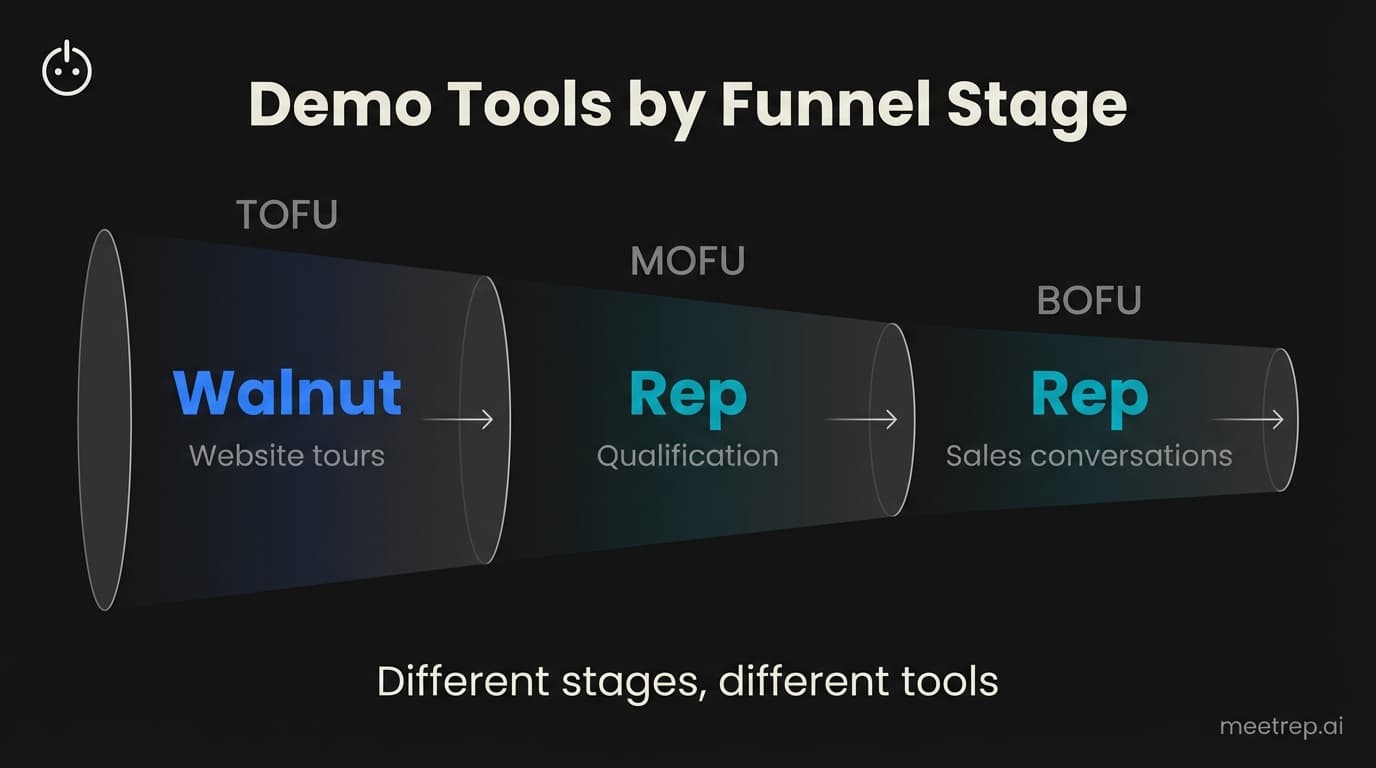
Use both: Put Walnut on your homepage for self-serve exploration (TOFU). Put Rep on your "Book a Demo" flow for instant, live qualification (MOFU/BOFU). Different stages, different tools.
My recommendation: If your main pain is "not enough demo capacity," both platforms help. But if your pain is "demos aren't converting to qualified pipeline," you have a conversation problem—not a content problem. That's where Rep differs.
The AI advantage: why 83% of AI-enabled teams grew revenue
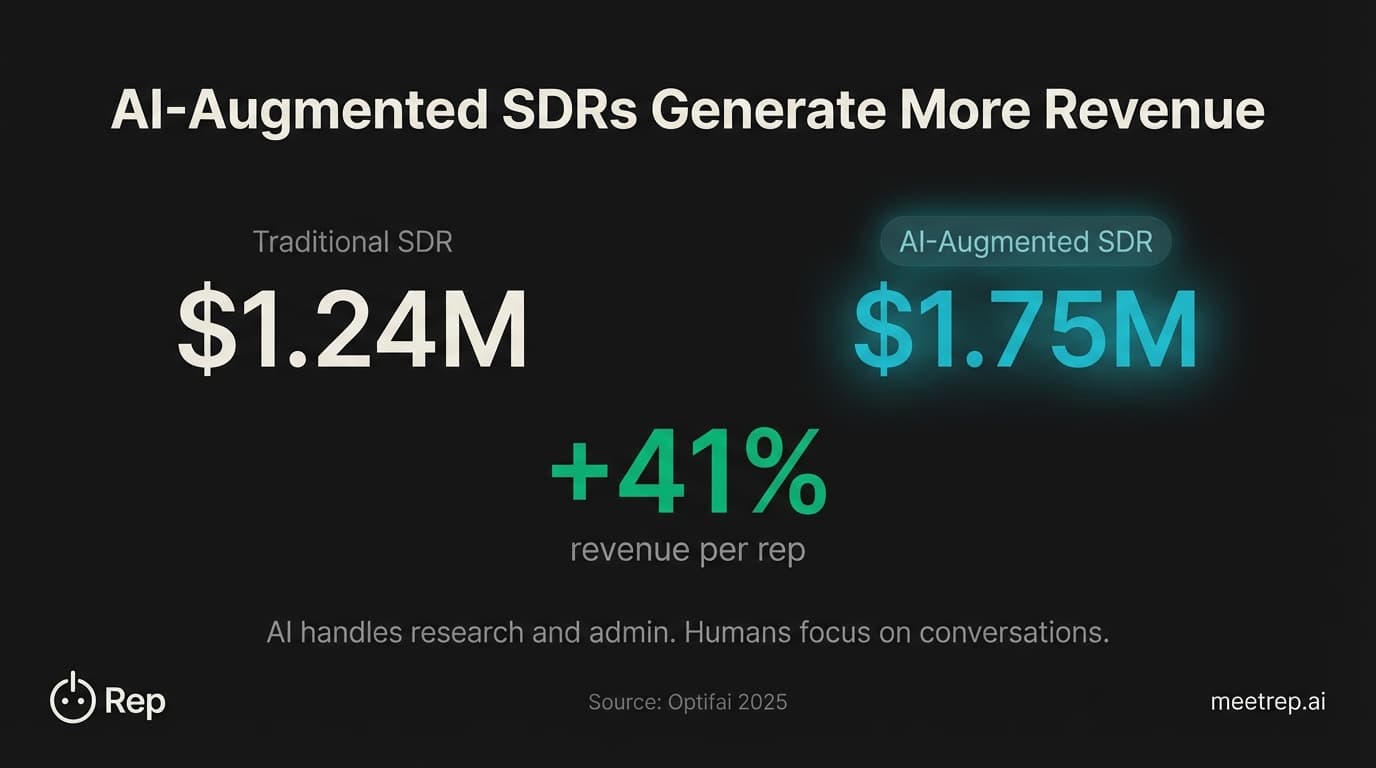
Let me share a stat that reframed how I think about this category.
According to Salesforce's 2025 State of Sales report, 83% of sales teams using AI reported revenue growth—compared to just 66% of teams without AI.
That's not a small gap. And it's not about "AI hype." It's about what AI enables: responsiveness at scale.
Think about what happens when a prospect clicks a Walnut demo at 11pm on a Tuesday. They browse for 5 minutes, have a question, and... nothing. They might fill out a form. Maybe they'll hear back tomorrow. Maybe they'll forget by then.
Now think about Rep. Same prospect, same time. They join a video room. An AI agent greets them by name, shares its screen, and asks what they'd like to see. The prospect says "Show me how this integrates with HubSpot." Rep navigates to the integration settings—live—and explains the setup process while showing the actual screens.
The question gets answered. In the moment. No waiting.
Voice AI converts leads at 2.3x the rate of chatbot-qualified leads. That's because voice feels human. It's responsive. It handles nuance.
The Data: Sales teams using AI saw 83% revenue growth vs 66% for non-AI teams. That 17-point gap is the difference between hitting quota and missing it. (Source: Salesforce 2025)
How Rep actually works (the technical reality)
I want to be specific about what Rep does, because "AI demo" can mean anything.
Rep is an AI voice agent that joins video meetings. When a prospect clicks your demo link, they enter a video room where Rep is waiting. Rep shares its screen and controls a live browser in the cloud—your actual product, logged into a demo account you provide.
During the conversation, Rep:
- Navigates your product based on what the prospect asks
- Answers questions using your knowledge base
- Handles objections with trained responses
- Extracts insights like pain points and next steps automatically
- Remembers context across the entire conversation
The key difference from Walnut: Rep is showing your real product. Not a screenshot. If your team ships a UI update tonight, Rep's demos show the new UI tomorrow. No recapturing screens. No maintenance.
We built it this way deliberately. At GoCustomer, I saw too many teams buy demo automation tools and then spend more time maintaining them than they saved. The "live browser" approach trades some control for zero maintenance burden.
The demo automation market is splitting
Here's my prediction for where this category goes.
The demo automation market hit roughly $500M in 2025 and is projected to reach $2.98B by 2033—a 25% CAGR. That's real growth. But the category itself is fragmenting.
Interactive demos (Walnut, Navattic, Storylane) are becoming table stakes for marketing. Every B2B website will have a "Take a Tour" button. These tools will compete on price, ease of use, and integrations.
AI agents (Rep and what's coming from others) are the new frontier for sales. The ability to have actual conversations—voice, real-time, adaptive—is what separates qualification from content consumption.
I think you'll need both. But they're not interchangeable. And choosing the wrong one for the wrong job is how teams waste $10k+ per year on tools that don't move pipeline.
The demo platform you choose shapes every prospect's first real experience with your product. Walnut gives you scalable, controlled, click-through tours. Rep gives you 24/7 live conversations with an AI that actually answers questions.
My honest take? Most teams need both—just for different stages. Put the interactive tour on your website. Put the AI agent on your "Book a Demo" button.
If you're tired of demos that get clicks but not conversations, see how Rep handles it differently.

Nadeem Azam
Founder
Software engineer & architect with 10+ years experience. Previously founded GoCustomer.ai.
Nadeem Azam is the Founder of Rep (meetrep.ai), building AI agents that give live product demos 24/7 for B2B sales teams. He writes about AI, sales automation, and the future of product demos.
Frequently Asked Questions
Table of Contents
- What is Walnut demo software and how does it work?
- How Walnut compares to live AI demos
- The buyer psychology problem nobody talks about
- Walnut's real strengths (being honest here)
- The maintenance burden problem
- Walnut pricing: what you'll actually pay
- When to choose Walnut vs. Rep
- The AI advantage: why 83% of AI-enabled teams grew revenue
- How Rep actually works (the technical reality)
- The demo automation market is splitting
Ready to automate your demos?
Join the Rep Council and be among the first to experience AI-powered demos.
Get Early AccessRelated Articles
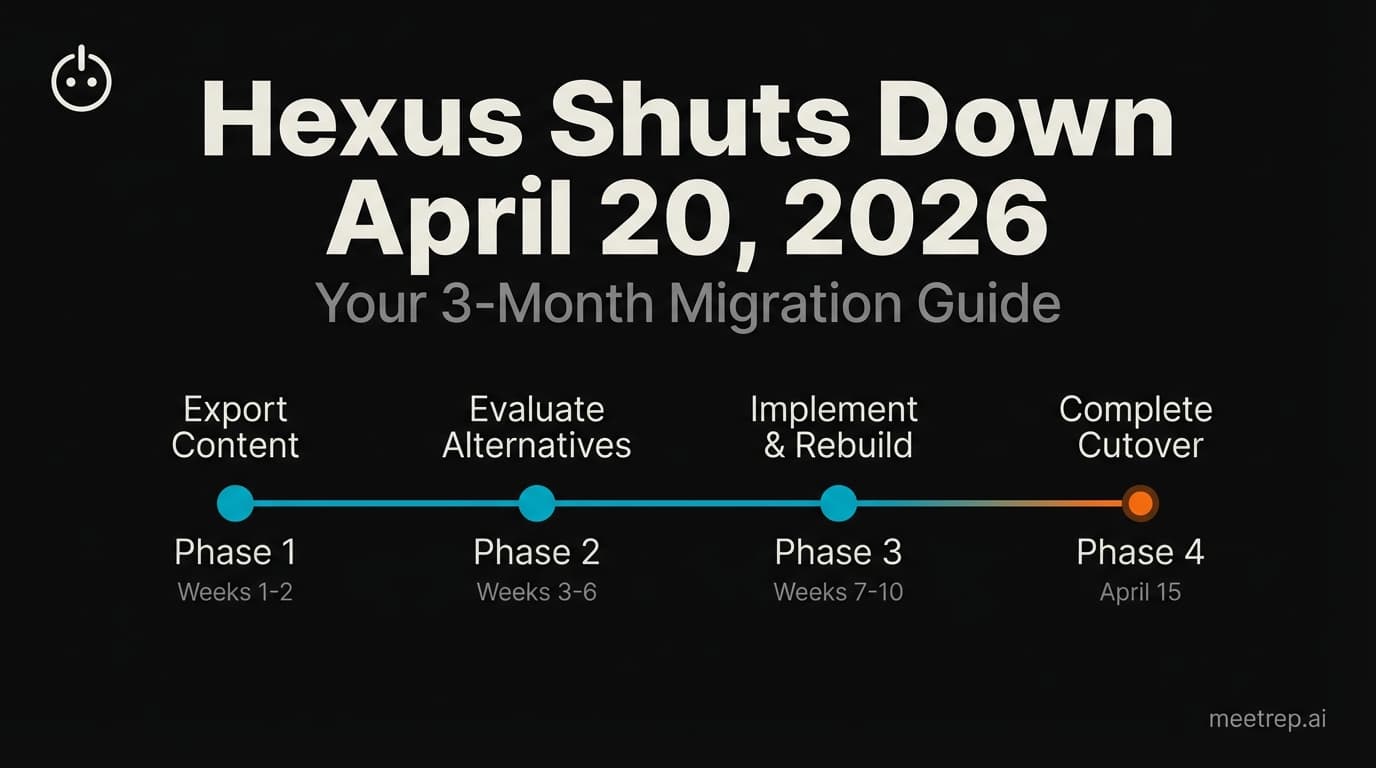
Hexus Acquired by Harvey AI: Congrats & What It Means for Demo Automation Teams
Hexus is shutting down following its acquisition by Harvey AI. Learn how to manage your migration and discover the best demo automation alternatives before April 2026.
Why the "Software Demo" is Broken—and Why AI Agents Are the Future
The traditional software demo is dead. Discover why 94% of B2B buyers rank vendors before calling sales and how AI agents are replacing manual demos to scale revenue.
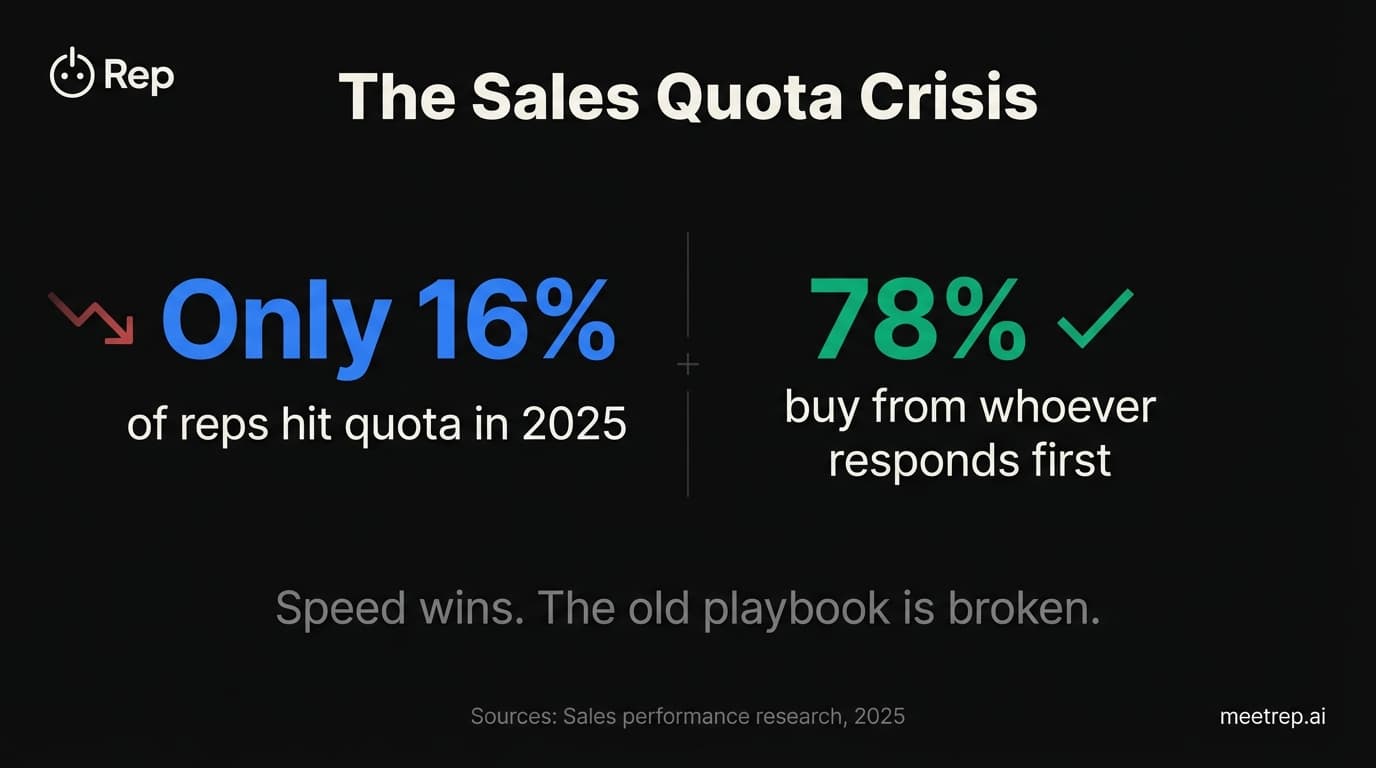
Why Autonomous Sales Software is the Future of B2B Sales (And Why the Old Playbook is Dead)
B2B sales is at a breaking point with quota attainment at 46%. Discover why autonomous 'Agentic AI' is the new standard for driving revenue and meeting the demand for rep-free buying.