The Product Specialist in 2026: A Leader’s Guide to Scaling Presales

Executive Summary
- The Bottleneck: Buyers wait nearly 6 days for demos, killing momentum.
- The Cost: A human demo costs $400–$800. Using humans for unqualified leads is financial suicide.
- The Shift: By 2028, 90% of buying will involve AI agents (Gartner).
- The Fix: Don't just hire more people. Structure a "Hybrid Presales" team where AI handles the first touch.
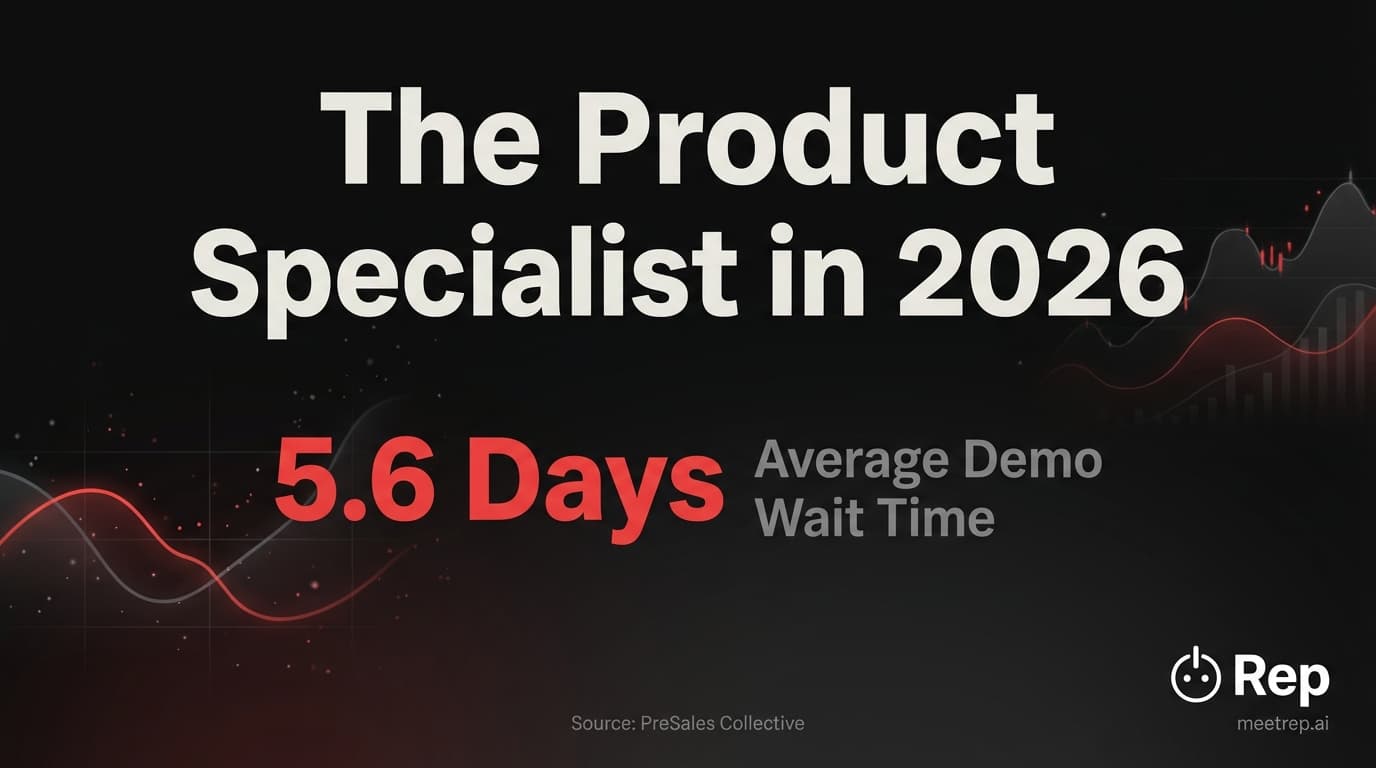
Here is a number that should scare you: 5.6 days.
According to data from the PreSales Collective, that is how long the average B2B buyer waits between requesting a demo and actually seeing your product.
In 2026, that delay is fatal.
If you are a VP of Sales or Presales leader, you already feel the pressure. Your Account Executives (AEs) are demanding more technical resources. Your Sales Engineers (SEs) are burning out from repetitive "Introduction to X" calls. So, the natural reaction is to hire a Product Specialist—a junior technical resource to handle the volume.
I’ve been there. At GoCustomer.ai, I remember staring at a calendar full of "Intro Calls" and realizing my best engineer hadn't written a line of code in three weeks. We faced a capacity crunch that human hiring couldn't fix fast enough.
I can tell you that simply "throwing bodies at the problem" is a mistake.
The role of the Product Specialist isn't disappearing, but it is changing fundamentally. We are moving from a human-only model to a hybrid one, where Agentic AI handles the volume, and your humans handle the strategy.
Here is how to structure this role effectively in 2026.
What Is a Product Specialist?
A Product Specialist is a technical sales expert responsible for demonstrating product value, answering functional questions, and bridging the gap between sales and product teams. Unlike Account Executives who focus on commercial terms and closing, Product Specialists focus on securing the "technical win" through deep product expertise.
In the past, this was purely a human role. Usually a junior hire who knew the product better than the AE but wasn't quite a senior solutions architect.
But today? The definition is expanding.
In 2026, a "Product Specialist" is increasingly likely to be an AI agent for that first interaction. Why? Because the math of using humans for introductory calls no longer works.
When we analyze the data, we see that 70% of sales deals now require presales support. You literally cannot hire fast enough to cover that demand with humans alone without destroying your margins.
Product Specialist vs. Sales Engineer: The Efficiency Gap
One common mistake I see leaders make is treating these two titles as interchangeable. They aren't. Confusing them is a fast track to burning out your most expensive talent.
At Rep, we define the difference by funnel stage and complexity. A Sales Engineer (SE) is your heavy artillery. A Product Specialist is your rapid response unit.
Here is the breakdown:
| Feature | Product Specialist | Sales Engineer (SE) |
|---|---|---|
| Primary Focus | Standard Demos, Functional QA | Custom Architecture, Security, Integrations |
| Avg. Base Salary | ~$86,000 (Source) | ~$124,000 (Source) |
| Funnel Stage | MOFU (Intro/Discovery) | BOFU (Technical Validation) |
| Technical Depth | Feature-level | API/Code-level |
| Burnout Risk | High (Repetition) | Medium (Complexity) |
Key Insight: If you have a Sales Engineer making $124k+ doing the same "Intro to Platform" demo five times a week, you are wasting budget. That work belongs to a Product Specialist—or better yet, an AI agent.
The "Unqualified Demo" Problem
Let’s be honest about what breaks presales teams. It’s not the complex deals. SEs love complex deals. They love solving hard problems.
What breaks them is the junk.
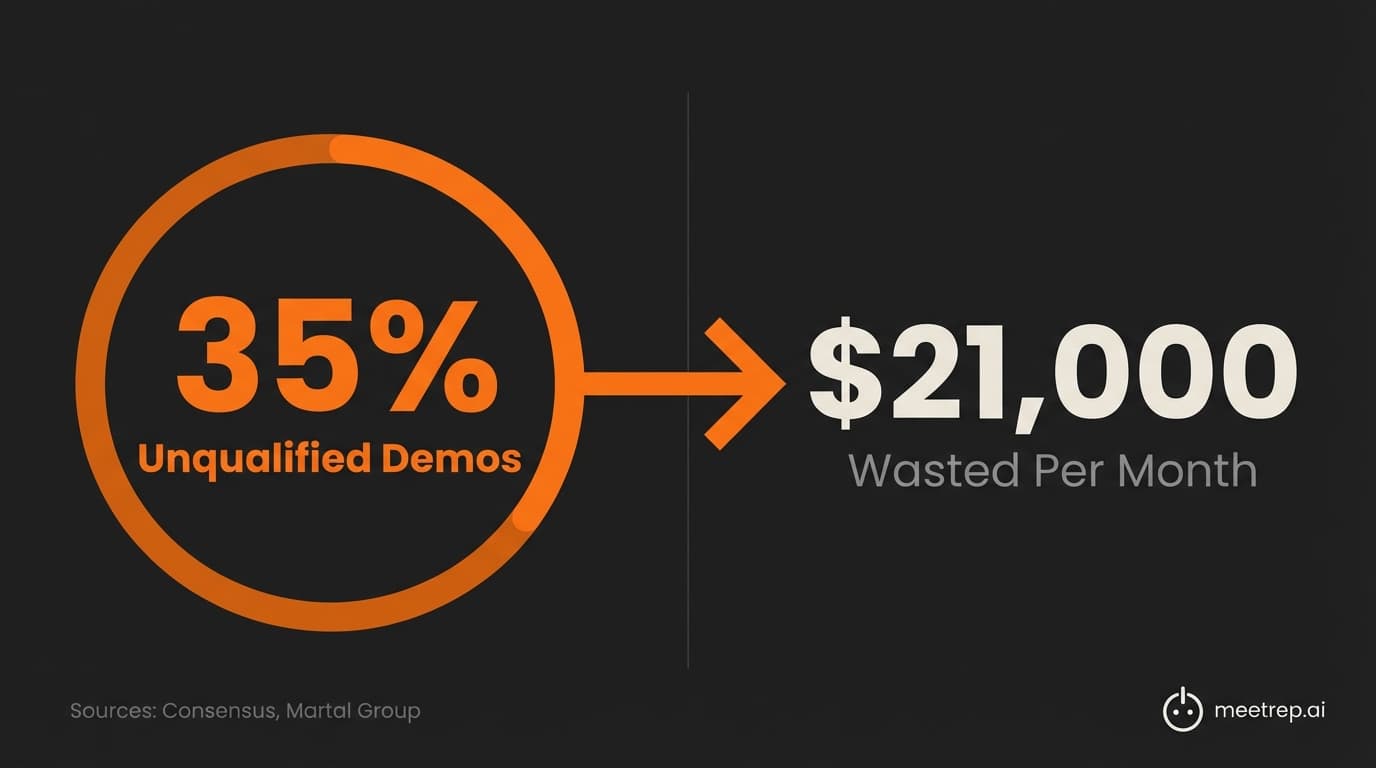
According to the 2025 Sales Engineering Compensation & Workload Report by Consensus, 35% of demos delivered by presales teams are unqualified or underqualified.
Think about that. One in three demos your team delivers is a total waste of time.
If you are scaling a SaaS company, this is a hidden tax on your growth. Martal Group data suggests the average cost per qualified demo ranges from $400 to $800 when you factor in prep time, delivery, and opportunity cost.
The Math of Inefficiency:
- 100 Demos per month
- 35 are unqualified
- Cost: 35 $600 (avg) = $21,000 wasted per month.*
And that’s just the financial cost. The human cost is worse. 60% of Sales Engineers report feeling overwhelmed, and the number one driver is repetitive demo volume.
When I talk to presales leaders, they all say the same thing: "I need to protect my team." But they usually try to do it by adding more friction—stricter qualification forms, longer wait times.
That protects the team, sure. But it kills the buyer experience. Remember that 5.6-day wait time? That is what "protecting the team" looks like to a prospect.
Enter the AI Product Specialist (Agentic AI)
So, how do you fix this? How do you cut the wait time to zero without burning out your humans?
The answer lies in a shift that Gartner identified in their Top Strategic Predictions for 2026: By 2028, 90% of B2B buying will be intermediated by AI agents.
We aren't talking about "interactive demos" where you click through a rigid screenshot tour (like Walnut or Navattic). Those are great marketing assets, but they aren't agents.
Agentic AI—what we are building at Rep—is different.
An AI Product Specialist acts autonomously. It can:
- Join a live video call (Zoom/Google Meet).
- Speak naturally with the prospect in real-time.
- Navigate the actual live product, clicking buttons and filling forms.
- Handle objections using your knowledge base.
Why we built Rep this way: At GoCustomer, we realized that buyers didn't just want to see screens; they wanted to ask questions. "What happens if I click that?" or "Does this integrate with Salesforce?" Static click-throughs can't answer that. An AI agent can.
This isn't about replacing humans. It's about letting your human Product Specialists focus on the deals that actually require empathy and complex strategy.
Structuring the Hybrid Team
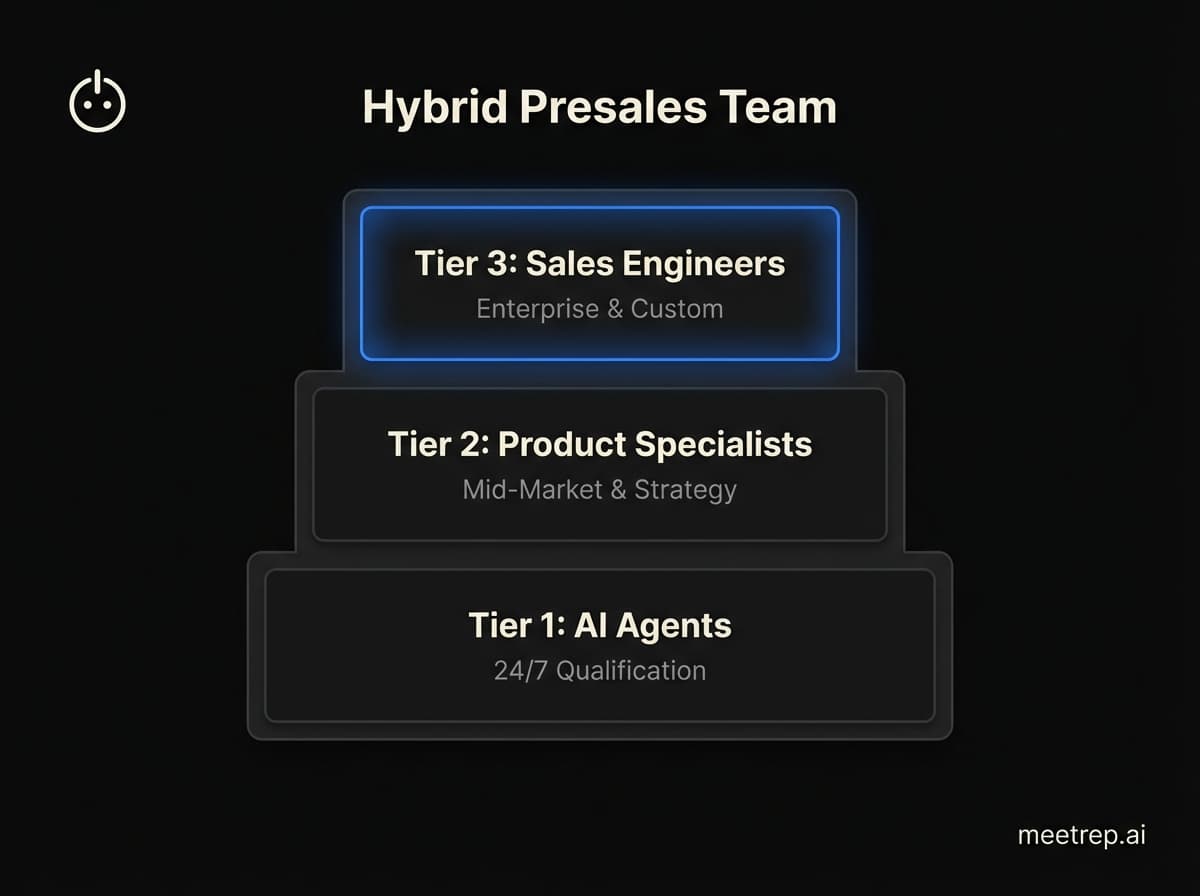
If you are hiring in 2026, I recommend moving away from the "all-human" pod structure. Instead, build a tiered support model.
This structure allows you to scale volume infinitely without linearly increasing headcount.
Tier 1: The AI Agent (Rep)
- Responsibility: Inbound demo requests, <$10k ACV deals, and "curiosity" calls.
- Availability: 24/7.
- Lag Time: 0 minutes.
- Goal: Qualification and education. If the buyer signals high intent or complexity, the Agent loops in a human.
Tier 2: The Human Product Specialist
- Responsibility: Mid-market deals ($10k–$50k), standard POCs, and post-sales adoption training.
- Availability: Business hours.
- Goal: Deeply understanding the user's workflow and mapping features to value.
Tier 3: The Sales Engineer
- Responsibility: Enterprise deals ($50k+), security reviews, custom API integrations, and complex stakeholder management.
- Goal: The Technical Win.
The Data: This approach works. Wrike (a project management platform) implemented demo automation and saved 2,100 hours of FTE time, reducing live calls by 35%. They didn't fire their SEs; they freed them up to win bigger deals.
Common Mistakes When Hiring Product Specialists
Having hired technical teams for years, I’ve seen where leaders go wrong.
1. Hiring for "General Tech" Skills Don't hire a generic "tech person." A Product Specialist needs to be a teacher first and a technologist second. Can they explain a complex concept simply? If not, pass.
2. Treating Them as Junior AEs If you incentivize your Product Specialist purely on closed revenue, they will start acting like AEs—hiding product flaws and overpromising features. Keep their comp tied to the technical win and activity metrics, or use an overlay quota based on the team's performance.
3. Ignoring the Ramp Time It takes 4+ months to fully ramp a human technical resource. If you have a capacity problem today, hiring a human won't solve it until next quarter. This is where AI offers a massive advantage—you can train a Rep agent on your knowledge base and recordings in hours, not months.
The Future is Hybrid
The era of "throwing bodies at the problem" is over. It’s too expensive, and frankly, it’s too slow for the modern buyer.
If your prospects are waiting 5.6 days to see your product, they are already looking at your competitor.
My advice? Stop viewing automation as a threat to your technical team. It is their shield. By automating the Tier 1 unqualified demos, you protect your human talent from burnout and give your buyers the instant gratification they demand.
Build your team for 2026, not 2016.
Ready to see what an AI Product Specialist looks like? Meet Rep and see how we’re solving the demo capacity crisis.

Nadeem Azam
Founder
Software engineer & architect with 10+ years experience. Previously founded GoCustomer.ai.
Nadeem Azam is the Founder of Rep (meetrep.ai), building AI agents that give live product demos 24/7 for B2B sales teams. He writes about AI, sales automation, and the future of product demos.
Frequently Asked Questions
Table of Contents
- What Is a Product Specialist?
- Product Specialist vs. Sales Engineer: The Efficiency Gap
- The "Unqualified Demo" Problem
- Enter the AI Product Specialist (Agentic AI)
- Structuring the Hybrid Team
- Common Mistakes When Hiring Product Specialists
- The Future is Hybrid
Ready to automate your demos?
Join the Rep Council and be among the first to experience AI-powered demos.
Get Early AccessRelated Articles
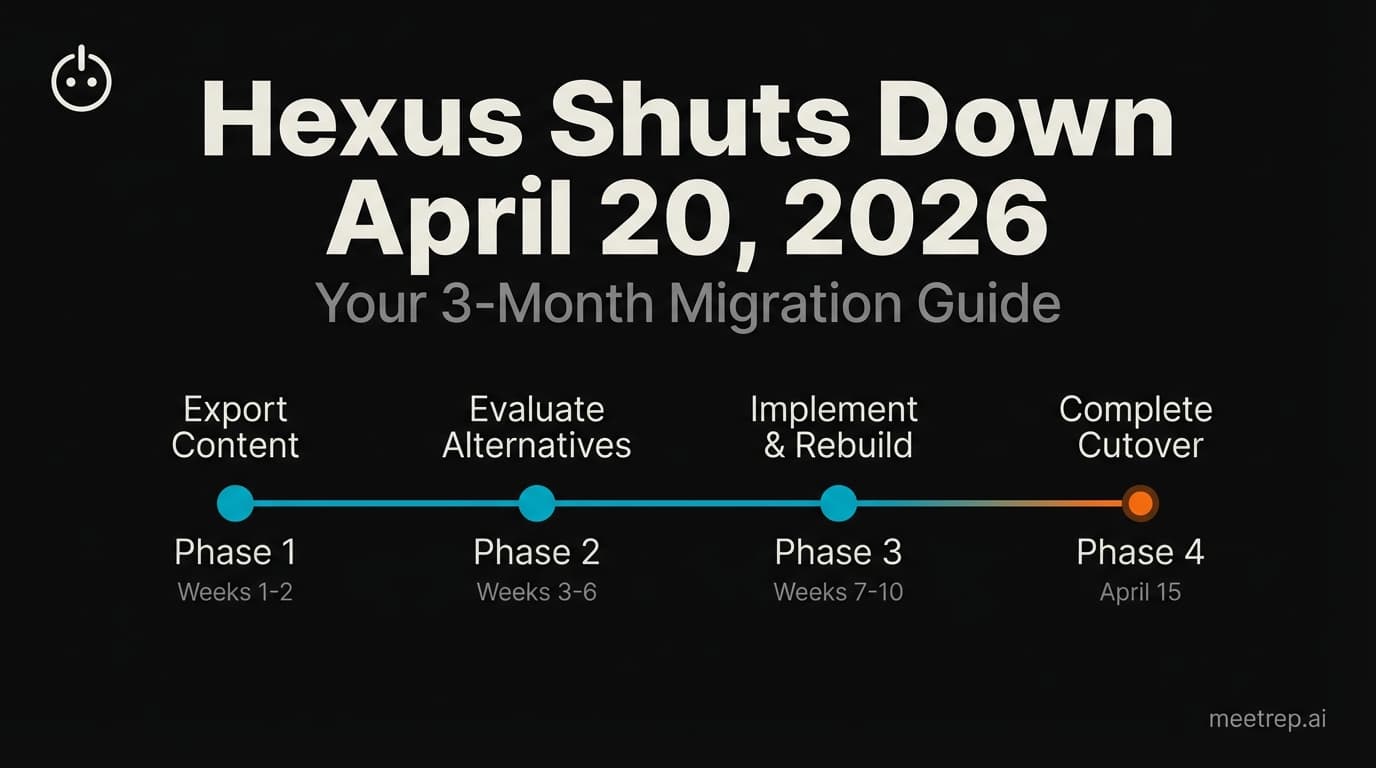
Hexus Acquired by Harvey AI: Congrats & What It Means for Demo Automation Teams
Hexus is shutting down following its acquisition by Harvey AI. Learn how to manage your migration and discover the best demo automation alternatives before April 2026.
Why the "Software Demo" is Broken—and Why AI Agents Are the Future
The traditional software demo is dead. Discover why 94% of B2B buyers rank vendors before calling sales and how AI agents are replacing manual demos to scale revenue.
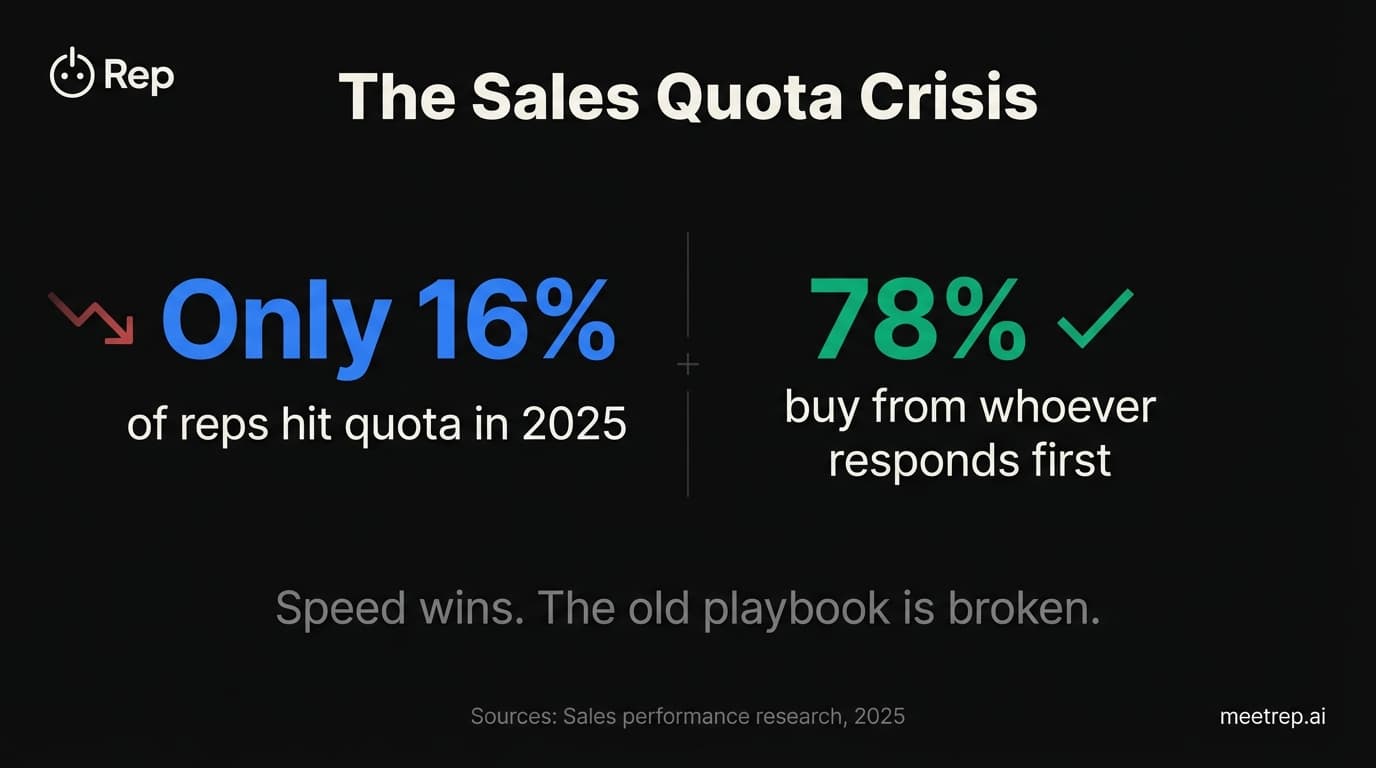
Why Autonomous Sales Software is the Future of B2B Sales (And Why the Old Playbook is Dead)
B2B sales is at a breaking point with quota attainment at 46%. Discover why autonomous 'Agentic AI' is the new standard for driving revenue and meeting the demand for rep-free buying.