Product Marketing Demos: How to Guarantee Perfect Positioning Every Time

Executive Summary
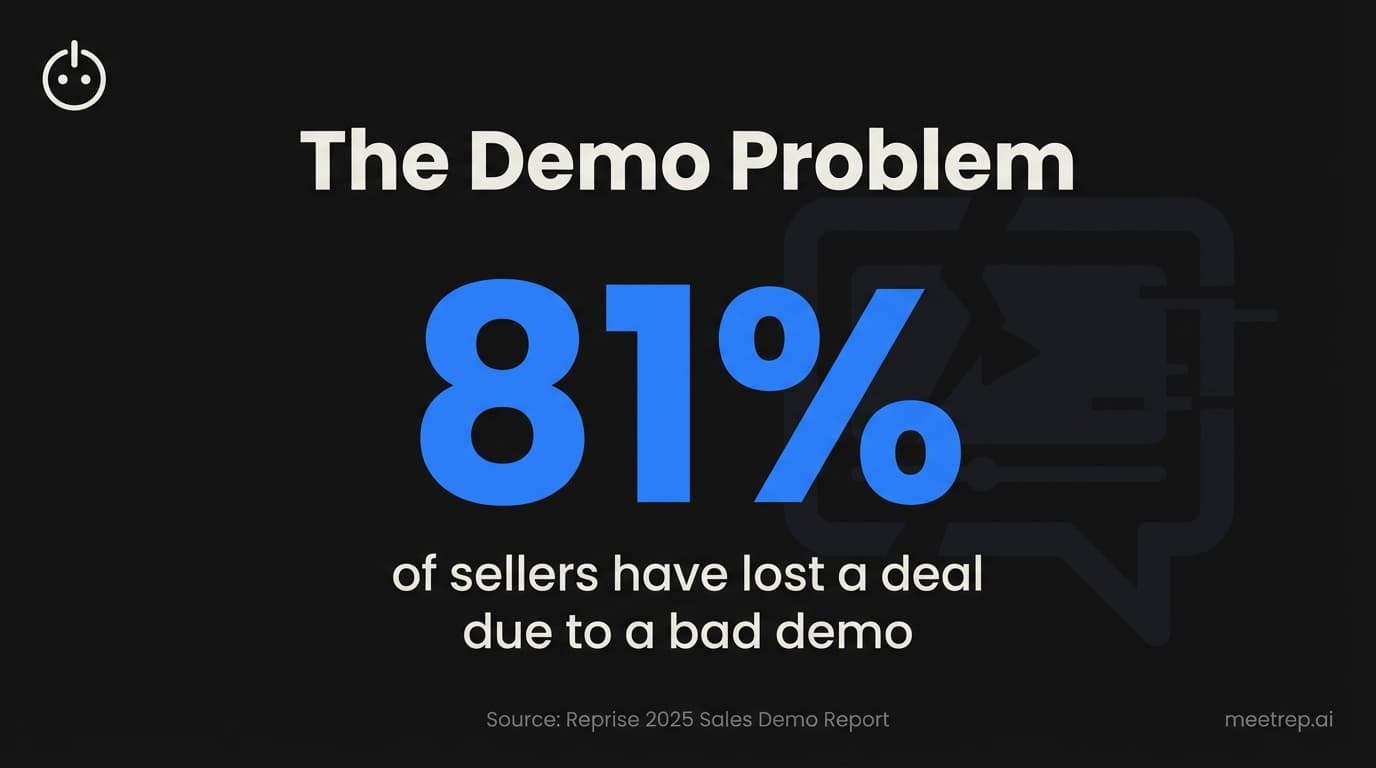
- 81% of sellers have lost deals due to bad demos—and your positioning often gets lost in the chaos
- Scripts fail because humans don't follow them (75% of reps deviate from methodologies)
- Messaging frameworks beat rigid scripts: companies with centralized content see 27.1% higher win rates
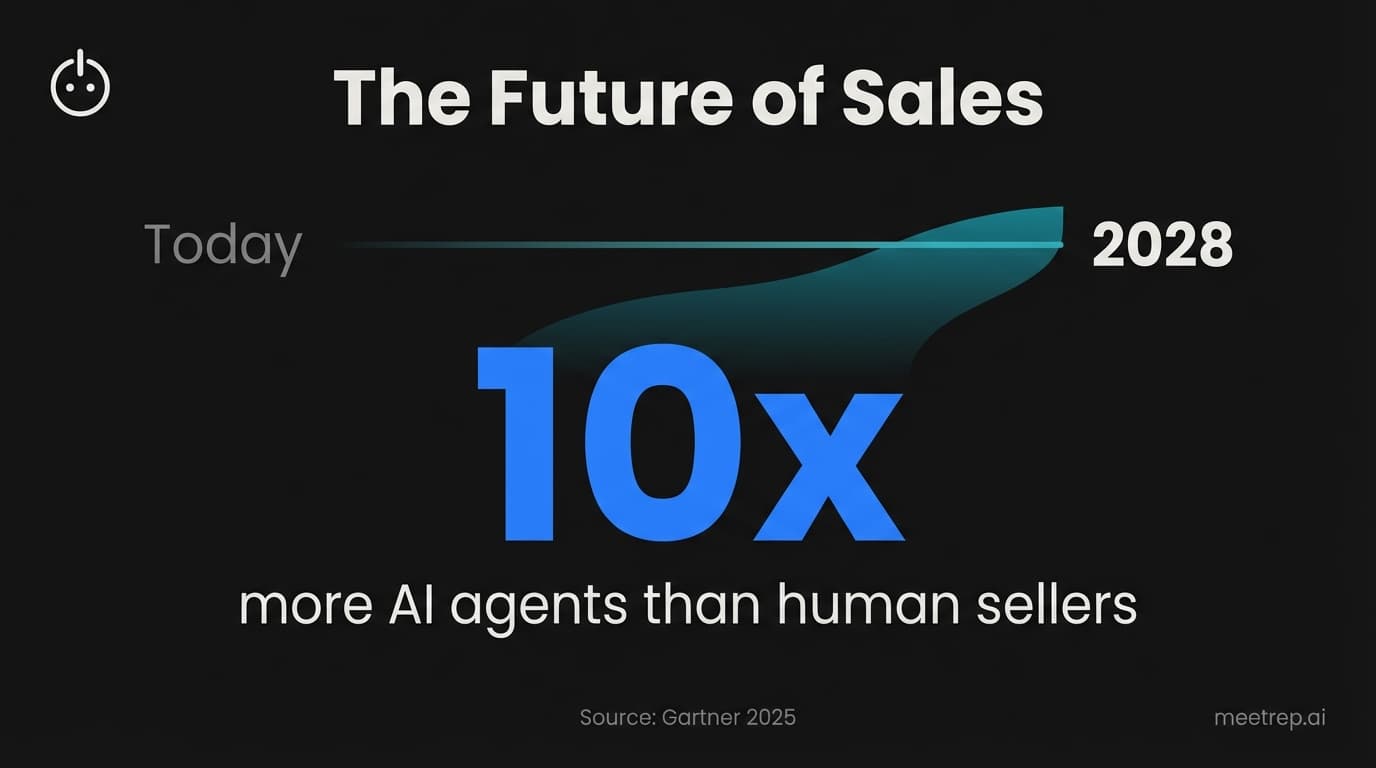
- The future is AI-powered demo delivery: by 2028, AI agents will outnumber human sellers 10x
- You can control demo messaging without micromanaging every call
You spent three months on that positioning. The messaging matrix is perfect. The battlecards are crisp. The sales deck tells a story that actually makes sense.
Then sales gets on a demo and wings it.
This is the reality for most Product Marketing Managers. You build the foundation, hand it to sales, and hope for the best. But hope isn't a strategy. And the data proves it: 81% of sellers have lost a deal specifically because of a bad demo, according to Reprise's 2025 Sales Demo Report.
That's not a small problem. That's a company-wide leak in your revenue engine.
I've been thinking about this problem for years—first at GoCustomer.ai, where we built sales automation tools, and now at Rep, where we're building AI agents that deliver product marketing demos with perfect consistency. Here's what I've learned about why demos go wrong, and what PMMs can actually do about it.
What Is a Product Marketing Demo (And Why Does It Keep Getting Mangled)?
A product marketing demo is a presentation designed to communicate your product's value proposition, features, and positioning to prospects. Unlike generic sales demos that might freestyle based on rep preference, product marketing demos enforce consistent messaging that aligns with your positioning strategy.
That's the theory. Here's the practice.
The Data:89% of companies suffer from sales-marketing misalignment, according to Influ2's 2025 research analyzing 105 companies. Only 11% achieve both effective hand-off AND audience alignment.
The problem isn't that sales reps are bad at demos. It's that the system sets them up to fail. PMMs create positioning. Sales creates their own decks anyway. Marketing produces content that 60-70% of the time never gets used. And demos become a game of telephone where your carefully crafted messaging gets diluted with every iteration.
Sound familiar?
Why Sales Reps Go Off-Script (It's Not What You Think)
Here's a stat that surprised me: 75% of sales reps don't consistently follow their methodologies. Three out of four.
But before you blame sales, consider why this happens:
Rigid scripts sound robotic. Nobody wants to sound like they're reading from a teleprompter. Reps know this. Prospects know this. So reps improvise to sound human—and your positioning goes out the window.
Complex products create fear.46% of sellers avoid demoing certain features because they're too complex or buggy to show live. They're not lazy. They're protecting themselves from embarrassment. But the features they skip might be exactly what the prospect needs.
Discovery doesn't reach the demo. According to Reprise's research, 39% of Solutions Engineers report that Account Executives don't share discovery information soon enough to prepare for demos. So SEs wing it based on incomplete context.
Time pressure kills preparation. When reps are running five demos a day, deep preparation for each one becomes impossible. They default to their comfort zone, which may not match your positioning.
Key Insight: The problem isn't motivation. It's systems. Reps deviate from messaging because the environment makes consistent delivery nearly impossible at scale.
The Real Cost When Demos Go Wrong
Let's talk numbers. Because "messaging consistency matters" is vague. Revenue impact isn't.
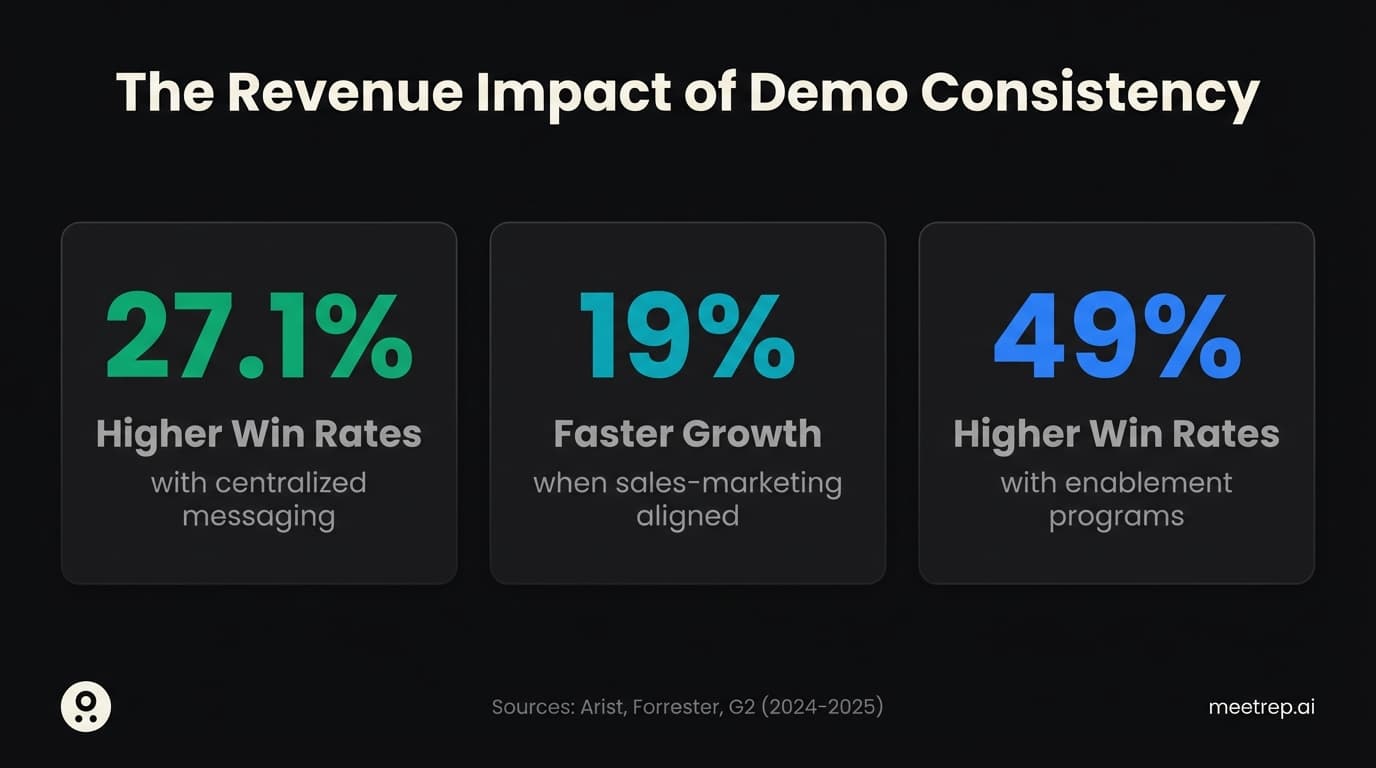
| Metric | Impact | Source |
|---|---|---|
| Deal loss from bad demos | 81% of sellers have lost deals | Reprise 2025 |
| Win rate with centralized content | 27.1% higher | Arist 2024-2025 |
| Content utilization | 60-70% never used | ZoomInfo 2024-2025 |
| Growth rate when aligned | 19% faster | Forrester 2024 |
| Win rate with enablement | 49% higher | G2 December 2024 |
That 27.1% win rate improvement from centralized content? That's not a rounding error. If your team closes 100 deals a year at $50K average, that's potentially $1.35M in additional revenue.
And the inverse is equally painful. Every demo where a rep forgets your key differentiator, stumbles through a feature, or tells a story that doesn't match your positioning—that's a deal at risk.
The Data: Organizations with sales enablement programs achieve 49% higher win rates on forecasted deals, according to G2. But enablement only works if it actually makes it into demos.
Demo Scripts vs. Messaging Frameworks: Why the Difference Matters
I used to think the answer was better scripts. Write it all down. Train reps to memorize it. Problem solved.
I was wrong.
Scripts fail for a fundamental reason: they can't handle variability. Prospects don't ask questions in the order you anticipated. They interrupt. They want to skip ahead. They have use cases you didn't predict.
Rigid scripts break under this pressure. Reps either sound robotic trying to follow them, or they abandon them entirely.
Frameworks are different.
| Aspect | Rigid Scripts | Messaging Frameworks |
|---|---|---|
| Adherence rate | ~25% (75% deviate) | Higher—reps buy in |
| Adaptability | Can't handle unexpected questions | Flexes to conversation flow |
| Authenticity | Sounds robotic | Maintains natural delivery |
| Rep adoption | Resistance due to rigidity | Accepted as helpful guidance |
| Win rate impact | Lower | 27.1% higher with centralization |
A messaging framework gives reps the what—key value props, proof points, positioning pillars—without dictating the how. It says "make sure you cover these three things" instead of "say these exact words."
April Dunford, probably the best-known expert on positioning, puts it this way: "Positioning defines how your product is a leader at delivering something that a well-defined set of customers cares a lot about." That definition? That's what needs to be consistent. The exact words can vary.
7 Ways Product Marketers Can Control Demo Messaging
So what actually works? Here's what I've seen succeed—both from studying the market and from building tools to solve this problem.
1. Create messaging frameworks, not scripts.
Document core value propositions, messaging pillars, and proof points. Make them accessible and searchable. But don't dictate exact wording. Reps need room to sound human.
2. Build demo templates by persona and use case.
Different buyers need different narratives. A CTO demo shouldn't look like a VP Sales demo. Create templates that guide the conversation without scripting every word.
3. Use controlled demo environments with guardrails.
This addresses the 46% feature-avoidance problem. If reps have a clean, reliable demo environment with standardized data, they're more likely to show features they'd otherwise skip. No more "let me show you this in staging—oh wait, it's broken."
4. Run "Demo Like a Pro" training sessions regularly.
Not one-time onboarding. Regular sessions where top performers share what's working. Organizations with enablement achieve 49% higher win rates—but only if enablement is continuous.
5. Provide cues, not scripts.
Give reps key phrases to hit, stories to reference, and objection responses to use. But let them deliver in their own voice. The goal is consistency of positioning, not consistency of performance.
6. Establish feedback loops with sales.
PMMs who don't talk to sales create content in a vacuum. And content created in a vacuum becomes the 60-70% that never gets used. Regular syncs help you understand what's working and what's not.
7. Use AI to ensure perfect positioning every time.
This is where the market is heading. Gartner predicts AI agents will outnumber human sellers 10x by 2028. Not because AI is better at relationships—it's not—but because AI can deliver consistent messaging at scale without the variability of human performance.
What we learned building Rep: When we designed Rep, we built it around messaging frameworks, not scripts. The AI learns your positioning, your demo flow, your proof points—then delivers them naturally in conversation. It sounds human because it's responding to the prospect, not reading from a teleprompter. But the core positioning never drifts.
The Rise of AI-Powered Product Marketing Demos
Here's something that would have sounded like science fiction five years ago: an AI agent that joins a video call, shares its screen, navigates your actual product, and has a real-time voice conversation with prospects.
That's not hypothetical anymore. It's what we built at Rep. And the market is moving fast in this direction.
Forrester predicts that more than 50% of large B2B transactions ($1M+) will be processed through digital self-serve channels in 2025. Buyers want to see your product on their schedule, not yours.
And the results from companies adopting interactive demos are hard to ignore:
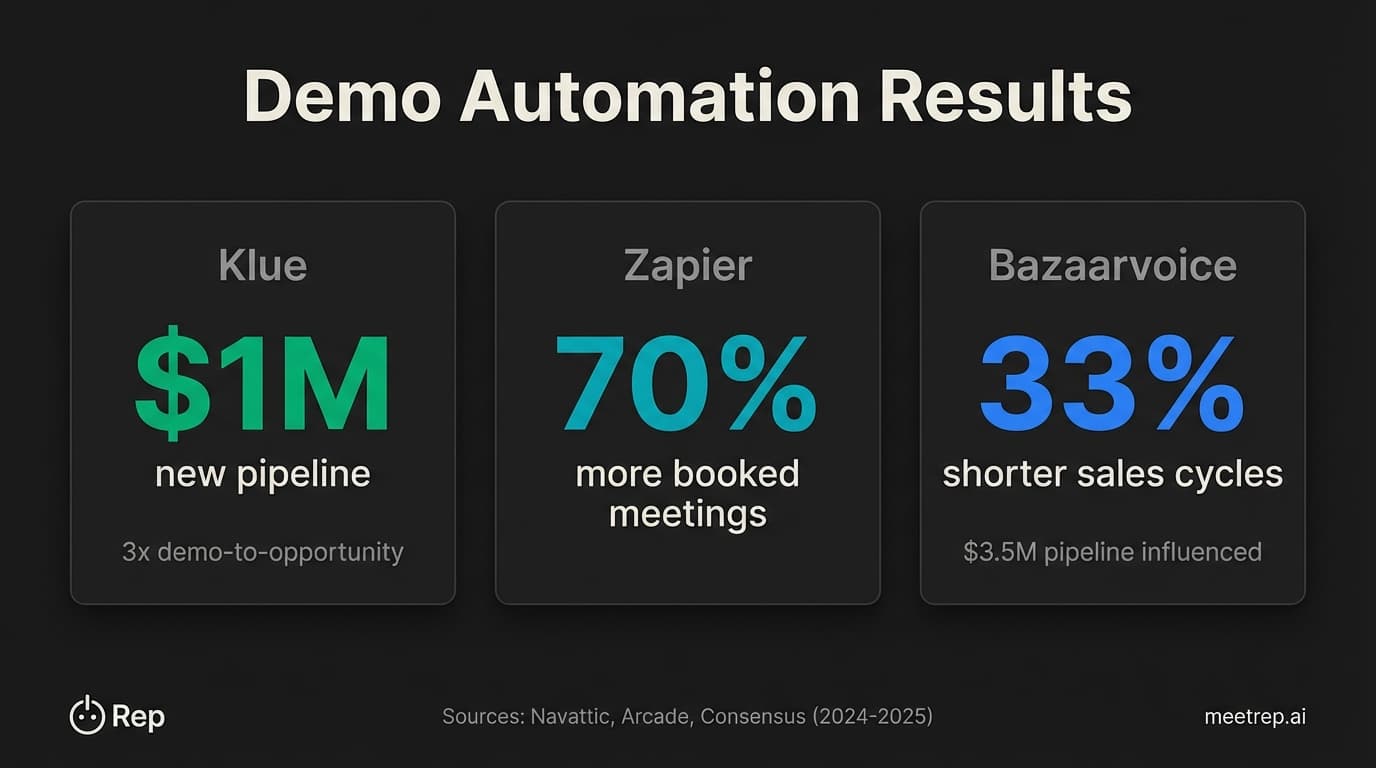
Klue built a demo center and generated $1M in new pipeline with 3x higher demo-to-opportunity conversion.
Zapier implemented interactive demos and saw a 70% increase in booked meetings.
RudderStack built demos for every feature launch—2x more pipeline from product launches and 83% reduction in sales training time.
Bazaarvoice used demo automation to cut SMB sales cycles by 33% and influenced $3.5M in pipeline in Q1.
But here's what matters for PMMs: these tools don't just save time. They enforce consistency. When an AI agent delivers your demo, it doesn't forget your key differentiators. It doesn't get nervous and skip the complex feature. It doesn't have a bad day.
Key Insight: AI demo agents aren't replacing human sellers. They're ensuring your best positioning reaches every prospect, whether it's the 10th demo of the day or the 1,000th.
Measuring Demo Positioning Effectiveness
You can't improve what you don't measure. Here's what to track:
Demo completion rate. Are prospects watching the whole thing? Drop-offs signal messaging problems.
Feature engagement. Which features get the most attention? Which get skipped? This tells you what's resonating.
Demo-to-opportunity conversion. According to Navattic's 2025 research, demo leads account for 10-20% of inbound lead volume with 20-25% increase in website conversion rates.
Sales cycle impact. Interactive demos shortened sales cycles by 7 days on average in Navattic's customer data.
Win rate by demo type. Compare deals where your positioning framework was followed versus deals where reps went off-script. The data will speak for itself.
My recommendation? Start with demo-to-opportunity conversion. It's the clearest signal of whether your positioning is landing.
Here's the reality for PMMs in 2025: you're being asked to support more product launches, more sales reps, and more markets—usually with a team of one or two people. You can't sit on every demo call. You can't enforce consistency through willpower.
But you can build systems that make consistency the default instead of the exception.
Whether that's better frameworks, controlled demo environments, or AI agents that deliver your positioning perfectly every time—the tools exist now. The companies using them are seeing 27% higher win rates and millions in pipeline.
My take? The PMMs who figure this out will stop being seen as "asset shops" and start being recognized as revenue drivers. And the ones who don't will keep watching their positioning get diluted, one off-script demo at a time.
We built Rep to solve exactly this problem—an AI agent that joins video calls, shares its screen, and delivers your product demo with perfect positioning consistency. If you're tired of watching carefully crafted messaging get mangled in live demos, see how it works.

Nadeem Azam
Founder
Software engineer & architect with 10+ years experience. Previously founded GoCustomer.ai.
Nadeem Azam is the Founder of Rep (meetrep.ai), building AI agents that give live product demos 24/7 for B2B sales teams. He writes about AI, sales automation, and the future of product demos.
Frequently Asked Questions
Table of Contents
- What Is a Product Marketing Demo (And Why Does It Keep Getting Mangled)?
- Why Sales Reps Go Off-Script (It's Not What You Think)
- The Real Cost When Demos Go Wrong
- Demo Scripts vs. Messaging Frameworks: Why the Difference Matters
- 7 Ways Product Marketers Can Control Demo Messaging
- The Rise of AI-Powered Product Marketing Demos
- Measuring Demo Positioning Effectiveness
Ready to automate your demos?
Join the Rep Council and be among the first to experience AI-powered demos.
Get Early AccessRelated Articles
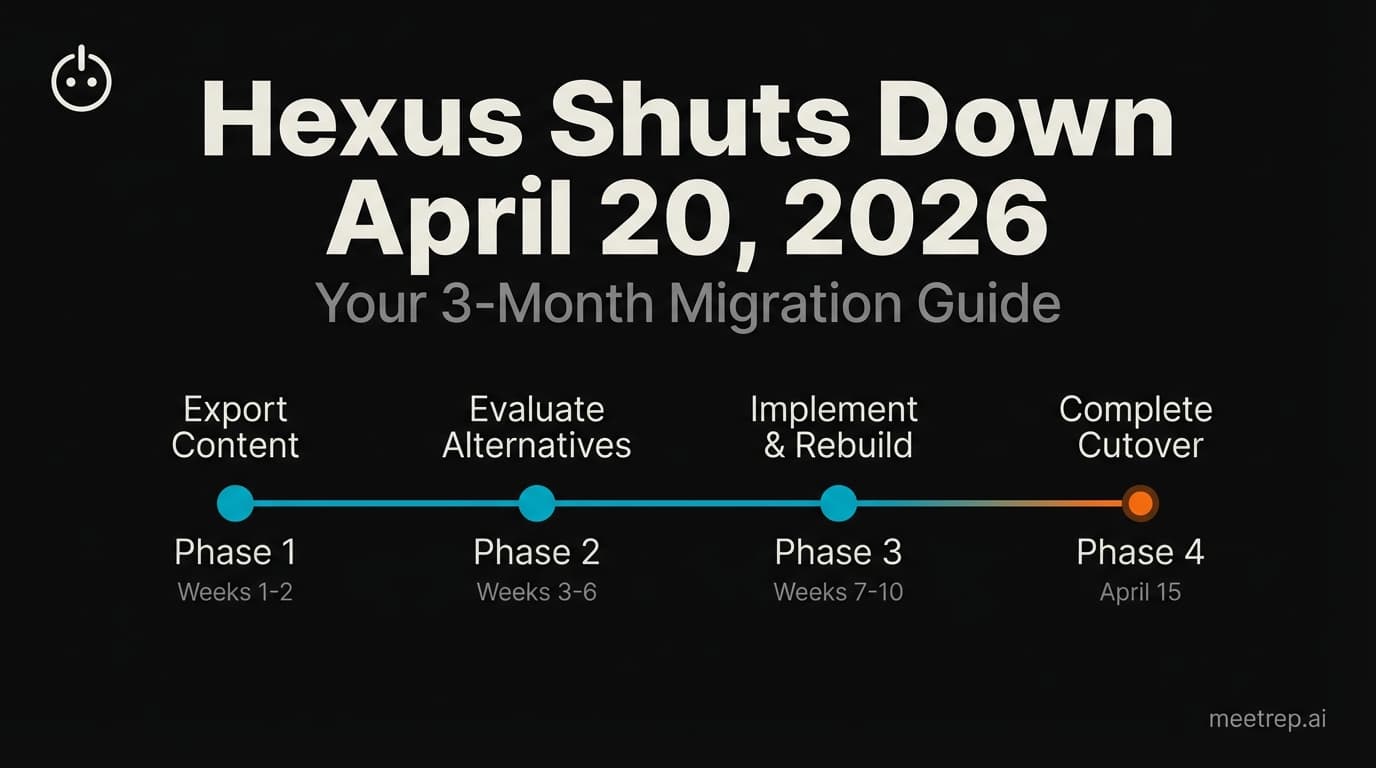
Hexus Acquired by Harvey AI: Congrats & What It Means for Demo Automation Teams
Hexus is shutting down following its acquisition by Harvey AI. Learn how to manage your migration and discover the best demo automation alternatives before April 2026.
Why the "Software Demo" is Broken—and Why AI Agents Are the Future
The traditional software demo is dead. Discover why 94% of B2B buyers rank vendors before calling sales and how AI agents are replacing manual demos to scale revenue.
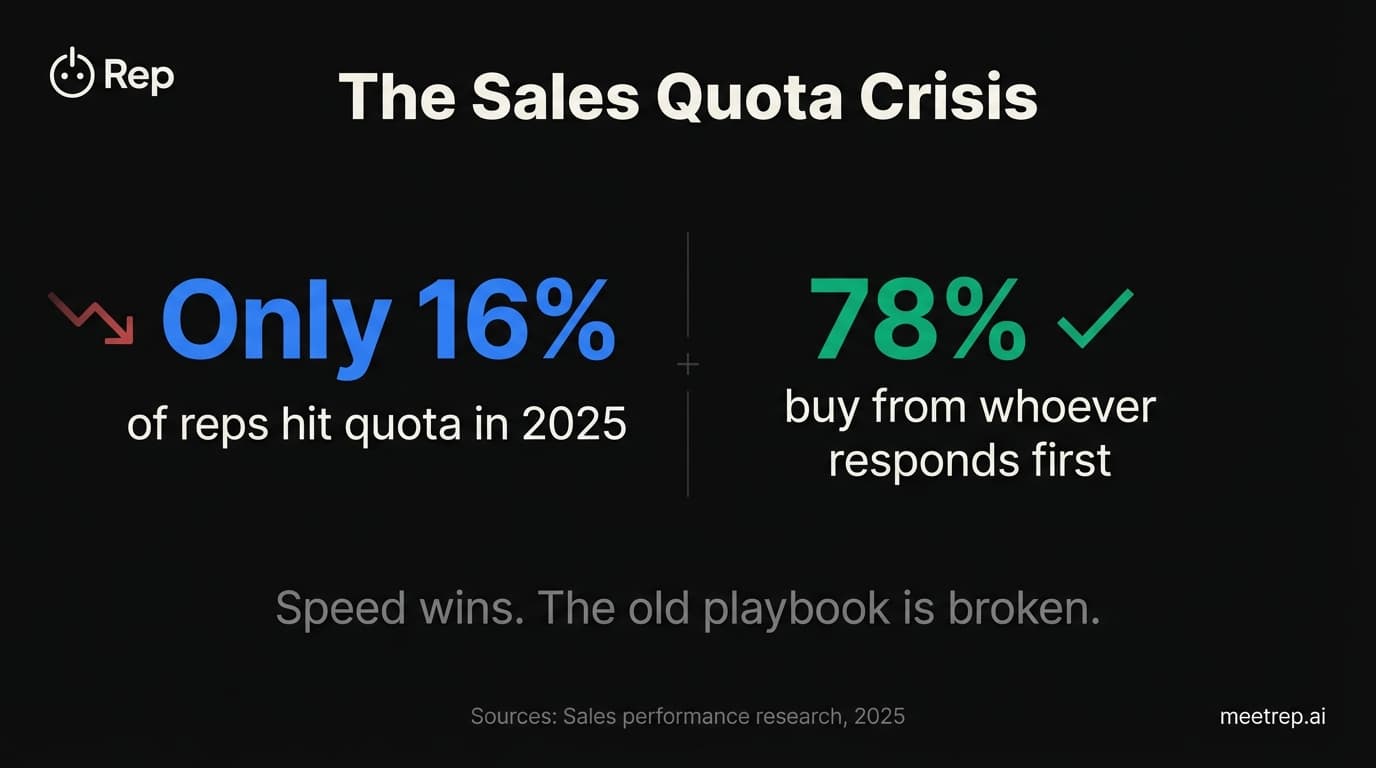
Why Autonomous Sales Software is the Future of B2B Sales (And Why the Old Playbook is Dead)
B2B sales is at a breaking point with quota attainment at 46%. Discover why autonomous 'Agentic AI' is the new standard for driving revenue and meeting the demand for rep-free buying.