Product Demo Webinars: How to Scale Demo Reach Without Burning Out Your Team

Executive Summary
- Product demo webinars let you show your product to hundreds of prospects simultaneously—but most teams execute them poorly
- The 81% "bad demo" problem gets worse at scale unless you change your approach
- Three formats dominate: live webinars, simulive (pre-recorded with live Q&A), and AI agents
- Top companies like Confluent and KnowBe4 generate $25M+ in pipeline by treating webinars as conversion engines, not just awareness plays
- The future is AI agents that can navigate your product and answer questions in real-time—combining scale with personalization
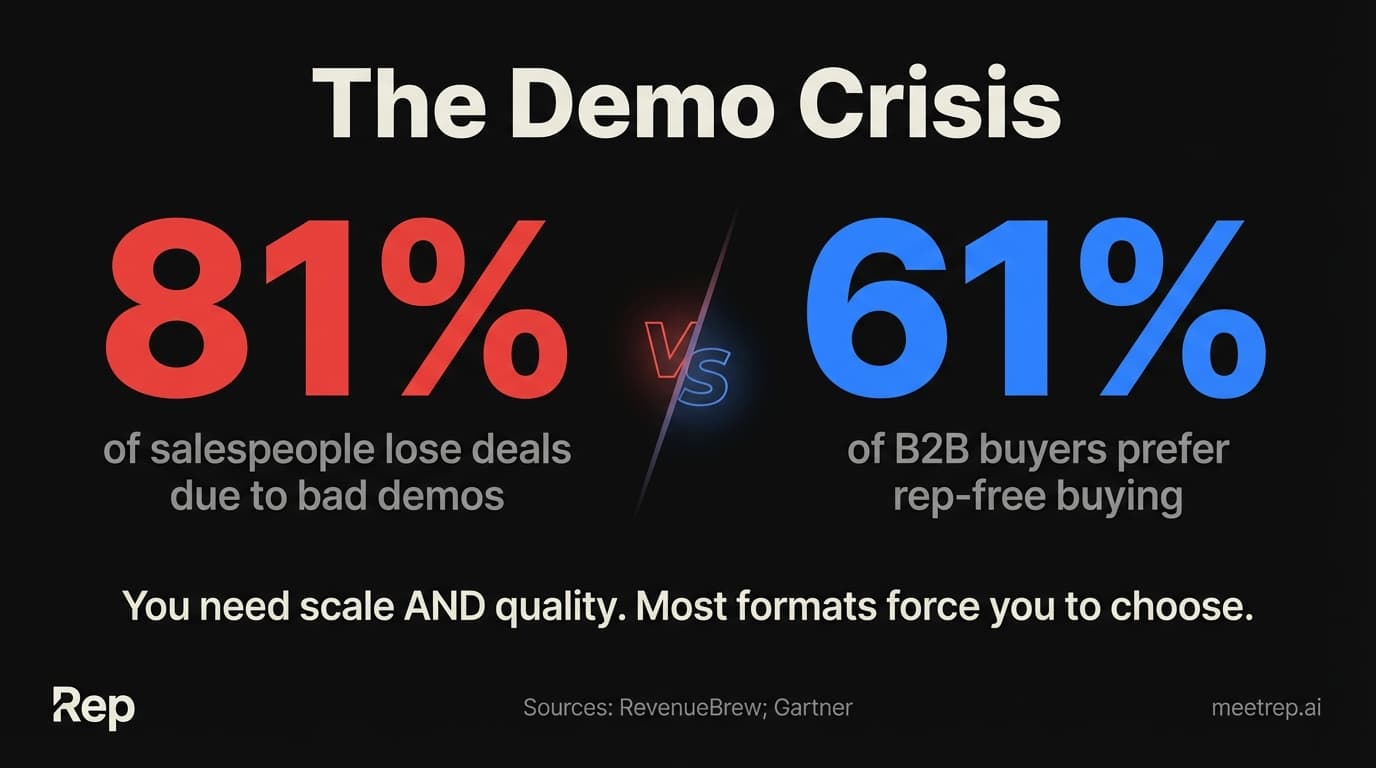
Here's a number that should make you uncomfortable: 81% of salespeople report losing deals specifically because of bad demos. Not bad products. Bad demos.
And here's the tension. Your buyers don't want to wait for a calendar invite. According to Gartner's June 2025 survey, 61% of B2B buyers now prefer a completely rep-free buying experience. They want to see your product now—but your team can only run so many live demo webinars before the quality tanks.
I've spent years building sales automation tools, first at GoCustomer.ai and now at Rep. The product demo webinar is where most teams hit a wall. You need scale. But you also need quality. And those two things fight each other.
Until now.
What Is a Product Demo Webinar (And Why 61% of Buyers Prefer This Format)?
A product demo webinar is a one-to-many presentation where you demonstrate your product to multiple prospects at the same time, either live or through automation. Unlike 1:1 sales calls, it lets demand gen teams show product value to hundreds of leads simultaneously—serving as a middle-of-funnel filter to identify high-intent buyers for sales follow-up.
But here's what makes this format so powerful right now: buyers actively want it.
That 61% rep-free preference from Gartner isn't a fluke. The same survey found that 73% of B2B buyers actively avoid suppliers who send irrelevant outreach. Your prospects are researching you at 11pm on a Tuesday. They don't want to wait three days for your AE's calendar to open up.
The Data:91% of B2B professionals say webinars are their preferred content type, according to Contrast's 2026 research. And 69% of consumers say a product demo best assists them when making a purchase.
So the demand is there. The question is whether you can supply it without destroying your team.
The Demo Scalability Crisis Most Teams Ignore
Let me paint a picture you'll probably recognize.
Your CS team runs product demo webinars "a couple times a month at capacity because of all their other responsibilities," as one practitioner put it. Webinar duty is like a hot potato—nobody wants it. Your SEs spend 21 days per year just cleaning and maintaining demo environments. Meanwhile, 39% of SEs report that AEs aren't sharing discovery information soon enough, so demos feel generic even when someone does show up.
And the results? A lot of effort for inconsistent outcomes.
Here's what I mean by inconsistent: 46% of sales professionals admit their company's features are "too complex or too fragile" to demo live. So they skip parts. They rush through sections. They apologize for bugs. And prospects notice.
What we learned at GoCustomer: We saw this pattern constantly. Teams would hire another SE to "fix" the demo problem. Then another. But headcount doesn't solve inconsistency—it multiplies it. Every new person is another variable. Another style. Another potential bad demo.
The math doesn't work. You can't scale 1:1 demos linearly. Every additional prospect requires additional human time. And according to Goldcast's 2025 B2B Webinar Benchmark Report, webinar activity grew 225% year-over-year. Your competitors figured this out. Have you?
How Top Companies Generate $25M+ in Pipeline from Product Webinars
The gap between average teams and top performers is staggering. Let me show you what good looks like.
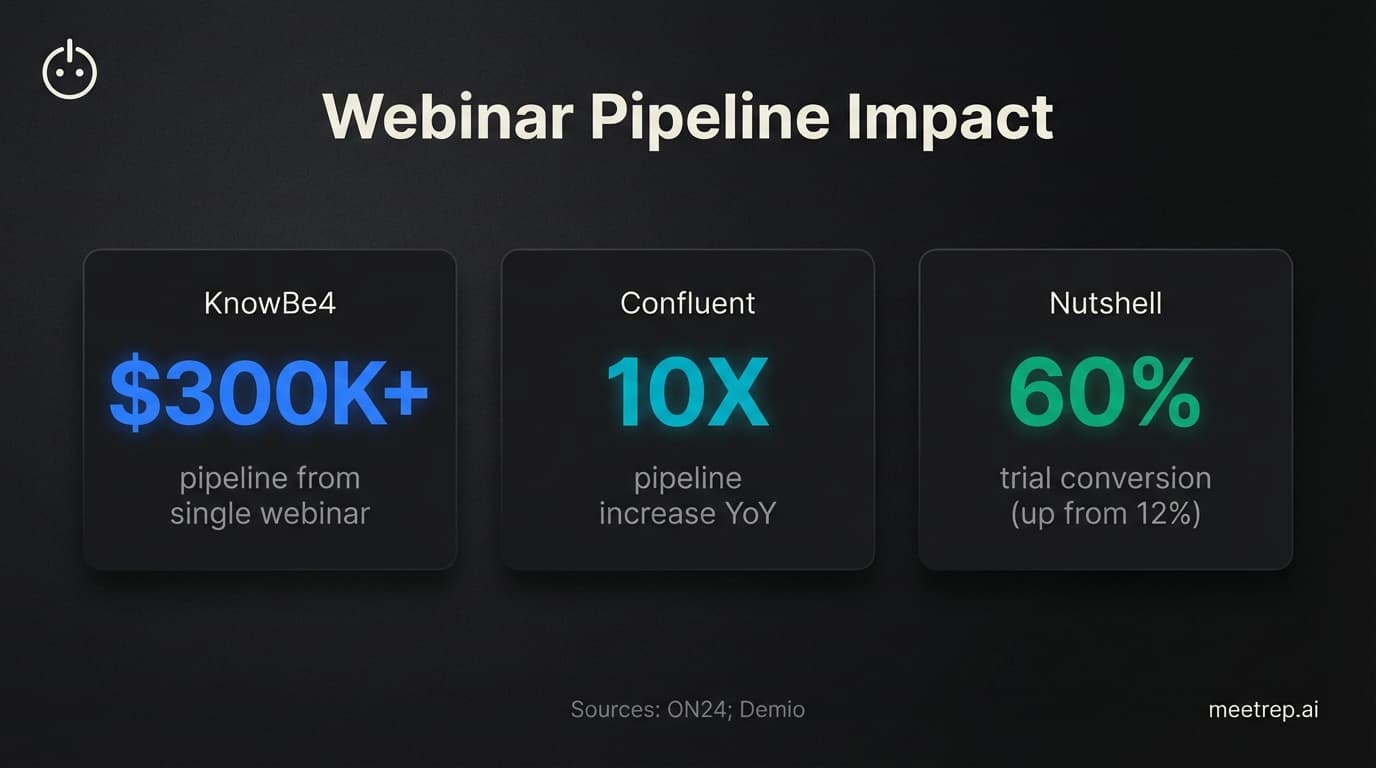
KnowBe4 (cybersecurity, 1,001-2,500 employees) generated over 100,000 leads in one year through their webinar program. One webinar alone produced $300K+ in pipeline with 2,000+ registrants. Their Director of Outbound Marketing, Razan Zaghmout, said: "ON24 allows us to tie our webinars with our overall demand generation strategy, transforming them into multi-touch experiences."
Confluent (data streaming, 2,501-10,000 employees) saw a 10X increase in pipeline year-over-year after running 3 simulive webinars per week across time zones in 5 languages. Their Senior Marketing Manager, Nikki Cousins, noted: "One of our underserved regions saw a 10x increase in pipeline through just repurposing our evergreen content."
Nutshell (CRM platform) achieved a 60% trial conversion rate—up from 12%—using automated webinars through Demio for weekly lunch-and-learns. That's a 5X improvement.
| Company | Results | Key Tactic |
|---|---|---|
| KnowBe4 | $300K pipeline from single webinar | Custom CTAs with demo links, full-funnel content mix |
| Confluent | 10X pipeline growth YoY | Simulive format, 3 per week, 5 languages |
| Informatica | 429% increase in CTA engagement | Self-service content hubs, AI recommendations |
| Nutshell | 60% trial conversion (up from 12%) | Automated weekly demos via Demio |
Key Insight: Notice the pattern. None of these teams scaled by hiring more presenters. They scaled by changing the format. Simulive. Automation. Personalization. These aren't "cost-cutting measures." They're revenue multipliers.
The Three Product Demo Webinar Formats (And When to Use Each)
Not all webinar formats are equal. I've watched teams waste months on the wrong approach. Here's how to choose.
Format 1: Live Webinars
Traditional live demo webinars where a human presents in real-time. Your AE or SE shares their screen, walks through the product, takes questions as they come.
Best for: High-value enterprise deals, complex products requiring detailed explanation, relationship-driven sales motions. The 57% registration-to-attendance rate ON24 reports assumes engaged, qualified prospects.
Worst for: Scale. You're trading time for revenue linearly.
Format 2: Simulive (Pre-Recorded with Live Interaction)
You record your best demo once, then broadcast it as a "live" event while handling Q&A in real-time through chat. This is how Confluent runs 3 webinars per week without exhausting their team.
Best for: Repeatable demos, global coverage across time zones, consistent quality control. No risk of the demo environment breaking mid-presentation.
Worst for: Prospects who ask questions that derail the pre-recorded flow. There's a mismatch when someone asks about Feature X while you're showing Feature Y.
Format 3: AI Agent Demos
AI-powered agents that join video calls, share their screen, navigate your actual product, and converse with prospects in real-time. This is what we built Rep to do—and it's the only format that combines scale with true personalization.
Best for: 24/7 availability, handling high lead volume, consistent quality with personalized responses. Rep joins calls, answers questions about your product using your knowledge base, and actually moves through your software live.
Worst for: Prospects who specifically demand human interaction (though remember—61% prefer the opposite).
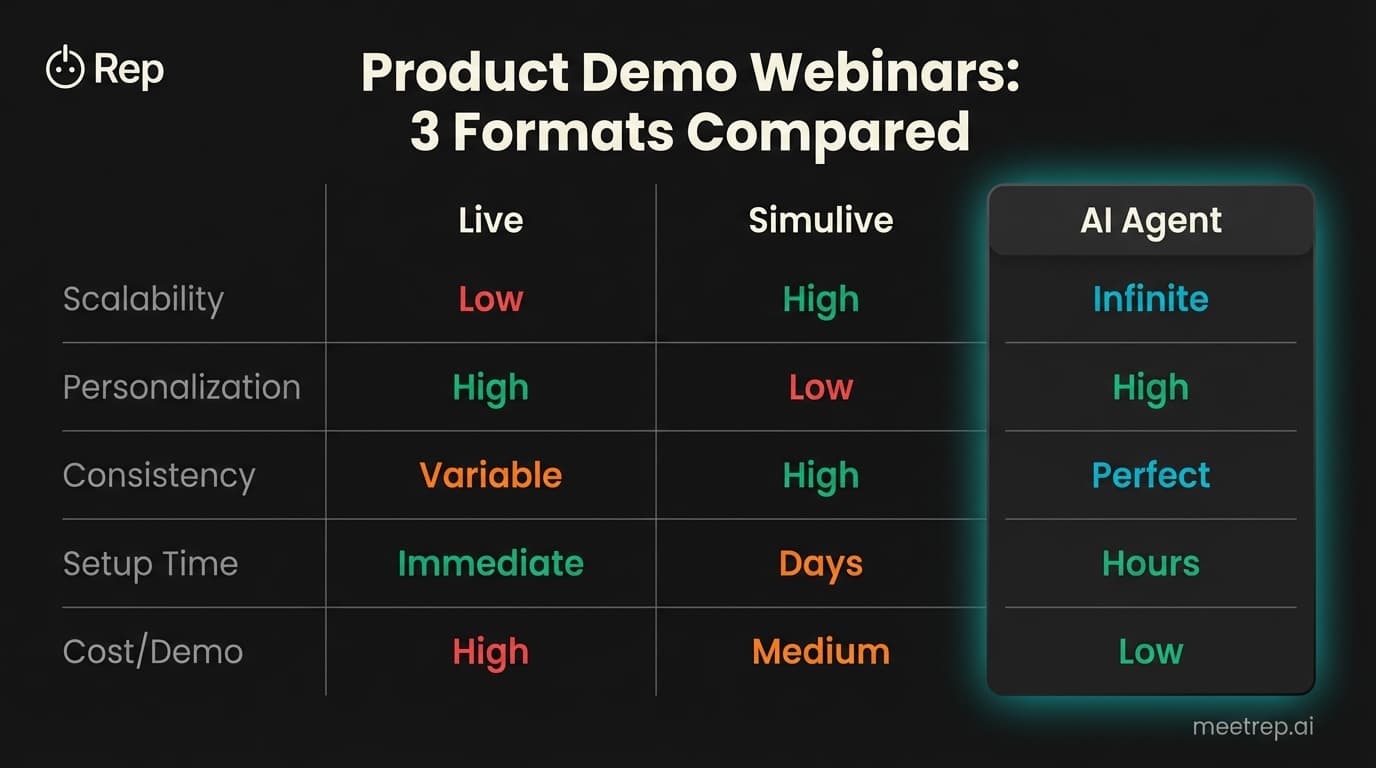
| Factor | Live | Simulive | AI Agent |
|---|---|---|---|
| Scalability | Low (linear headcount) | High (unlimited replay) | Infinite (24/7 availability) |
| Personalization | High | Low (fixed script) | High (context-aware AI) |
| Consistency | Variable (risk of "bad demo") | High (pre-planned) | Perfect (follows playbook) |
| Setup Time | Immediate | Days to record | Hours to train |
| Cost per Demo | High (SE/AE time) | Medium (production) | Low (after initial setup) |
My recommendation: Use all three in a tiered strategy. Live demo webinars for enterprise finals. Simulive for MOFU education at scale. AI agents for 24/7 first-touch demos that never sleep. This is how you multiply coverage without multiplying headcount.
How Long Should a Product Demo Webinar Last?
The ideal product webinar runs 30-60 minutes, with 51 minutes being the average engagement duration according to ON24's 2025 benchmarks. But I'd argue shorter is usually better.
Here's why. Engagement drops off hard after the 45-minute mark. And 47% of all webinar views happen on-demand after the live event. Those on-demand viewers are skipping around. They want to find the relevant section, not sit through your 60-minute "harbor tour" that shows every feature.
Structure it like this:
- 5-10 minutes: Introduction and pain point framing
- 20-30 minutes: Core product demonstration (focused on 2-3 key features, not everything)
- 10-15 minutes: Q&A
And here's a trick that works: use polls every 7-10 minutes. Not because the data is valuable (though it can be), but because interaction resets the attention clock.
The Data:Interactive demos convert at 38%—52% higher than screen share demos, according to Optifai's 2025 Sales Ops Benchmark. The "interactive" part matters more than the length.
Why Ungated Demos Outperform Gated (And What This Means for Lead Capture)
Honestly, this is going to feel counterintuitive if you've been gating everything.
71% of top-performing interactive demos are ungated—no form required to start the experience. Navattic's 2025 research makes this clear: the best demos let prospects explore first, then capture information at high-intent moments.
But wait—doesn't this destroy your lead capture?
No. It changes when you capture leads.
Think about the buyer psychology here. Someone lands on your site at 10pm. They want to see the product. You throw a 7-field form at them. They bounce. You never even know they were interested.
Now imagine they can click "Take a Tour" immediately. No form. They explore for 3 minutes. They click on the pricing section. They try to access the integration settings. That's when you ask for their email—"Want to see how this integrates with Salesforce? Enter your email for a personalized demo."
That's progressive gating. And it works because you're capturing intent, not just contact information.
Key Insight:29.2% more B2B websites use "Take a Tour" CTAs now versus last year. Your competitors are already doing this. The question is whether you'll keep gating everything while they capture the buyers who won't fill out forms.
Measuring Demo ROI Beyond Attendance Rates
Most teams obsess over the wrong metrics. Attendance rate? That's vanity. The number that matters is pipeline generated.
Here's a framework we use:
Tier 1: Engagement Metrics
- Registration-to-attendance conversion (benchmark: 57%)
- Average engagement duration (benchmark: 51 minutes)
- CTA click rate
- Poll/Q&A participation
Tier 2: Conversion Metrics
- Demo-to-close rate (benchmark: 25% average, 30% for SaaS)
- Sales cycle length impact (interactive demos reduce cycles by 6 days on average)
- Meeting booking rate post-webinar
Tier 3: Revenue Metrics
- Pipeline attributed to webinars
- Closed-won revenue from webinar attendees
- Cost per lead vs. other channels
The good news? 68% of marketers can now tie webinars directly to revenue. And 75% say webinars lowered their cost-per-lead compared to other channels. The attribution problem is more solved than most teams realize—you just need to actually set up the tracking.
AI Is Changing Product Demo Webinars—Here's How to Use It
Let's get specific about AI because everyone throws the term around without explaining what it actually means for demos.
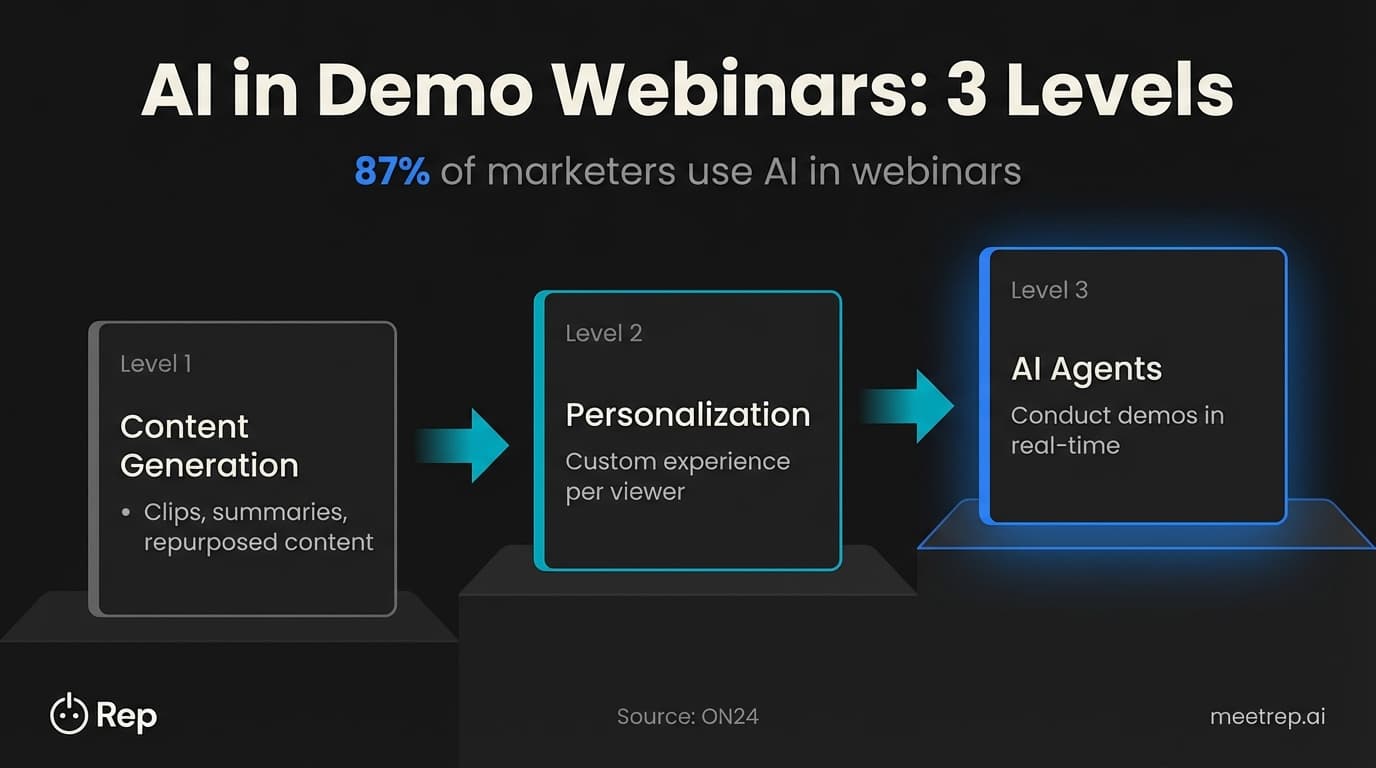
87% of B2B marketers now use AI in their webinar strategy, according to ON24. But "using AI" covers a huge range.
Level 1: AI-Generated Content Tools that create clips, summaries, and repurposed content from your webinar recordings. Goldcast reports a 2,903% increase in AI-generated video clips year-over-year. This is table stakes now.
Level 2: AI-Powered Personalization Customizing the webinar demo experience based on who's watching. ON24's data shows personalization increases demo bookings by 4X and CTA conversion by 48%. This is where most sophisticated teams are today.
Level 3: AI Agents That Host Demos This is the frontier—and it's where we're building with Rep. Instead of recording content or personalizing human-hosted webinars, AI agents actually conduct the demos. They join video calls. They share their screen. They move through your product live. They answer questions conversationally.
The difference is massive. Click-through demos (Arcade, Navattic, Storylane) show screenshots. Simulive webinars play recordings. AI agents do the demo—with real product navigation and real-time conversation.
Why we built Rep this way: When we looked at why demos fail, it wasn't because the information was bad. It was because timing and responsiveness were wrong. Prospects have questions in the moment. Pre-recorded content can't answer them. Human presenters get flustered, go off-script, or miss the point entirely. An AI agent that can move through your product while conversing with the prospect—that's the combination nobody else was delivering.
75% of enterprises are predicted to use AI agents for workflows and customer interactions by 2026. The shift is happening now.
The product demo webinar isn't going anywhere. But the format is evolving fast. Static recordings feel stale. Live demos don't scale. The winners are teams that combine the best of both—consistency without sacrificing responsiveness, scale without sacrificing quality.
My prediction? Within two years, AI-hosted demos will be as common as chatbots are today. The 61% who prefer rep-free experiences aren't going to wait for your calendar to open up. They'll go with whoever shows them the product first.
The question is whether that's you or your competitor. See how Rep handles autonomous product demos—24/7, with real conversations and live product navigation.

Nadeem Azam
Founder
Software engineer & architect with 10+ years experience. Previously founded GoCustomer.ai.
Nadeem Azam is the Founder of Rep (meetrep.ai), building AI agents that give live product demos 24/7 for B2B sales teams. He writes about AI, sales automation, and the future of product demos.
Frequently Asked Questions
Table of Contents
- What Is a Product Demo Webinar (And Why 61% of Buyers Prefer This Format)?
- The Demo Scalability Crisis Most Teams Ignore
- How Top Companies Generate $25M+ in Pipeline from Product Webinars
- The Three Product Demo Webinar Formats (And When to Use Each)
- How Long Should a Product Demo Webinar Last?
- Why Ungated Demos Outperform Gated (And What This Means for Lead Capture)
- Measuring Demo ROI Beyond Attendance Rates
- AI Is Changing Product Demo Webinars—Here's How to Use It
Ready to automate your demos?
Join the Rep Council and be among the first to experience AI-powered demos.
Get Early AccessRelated Articles
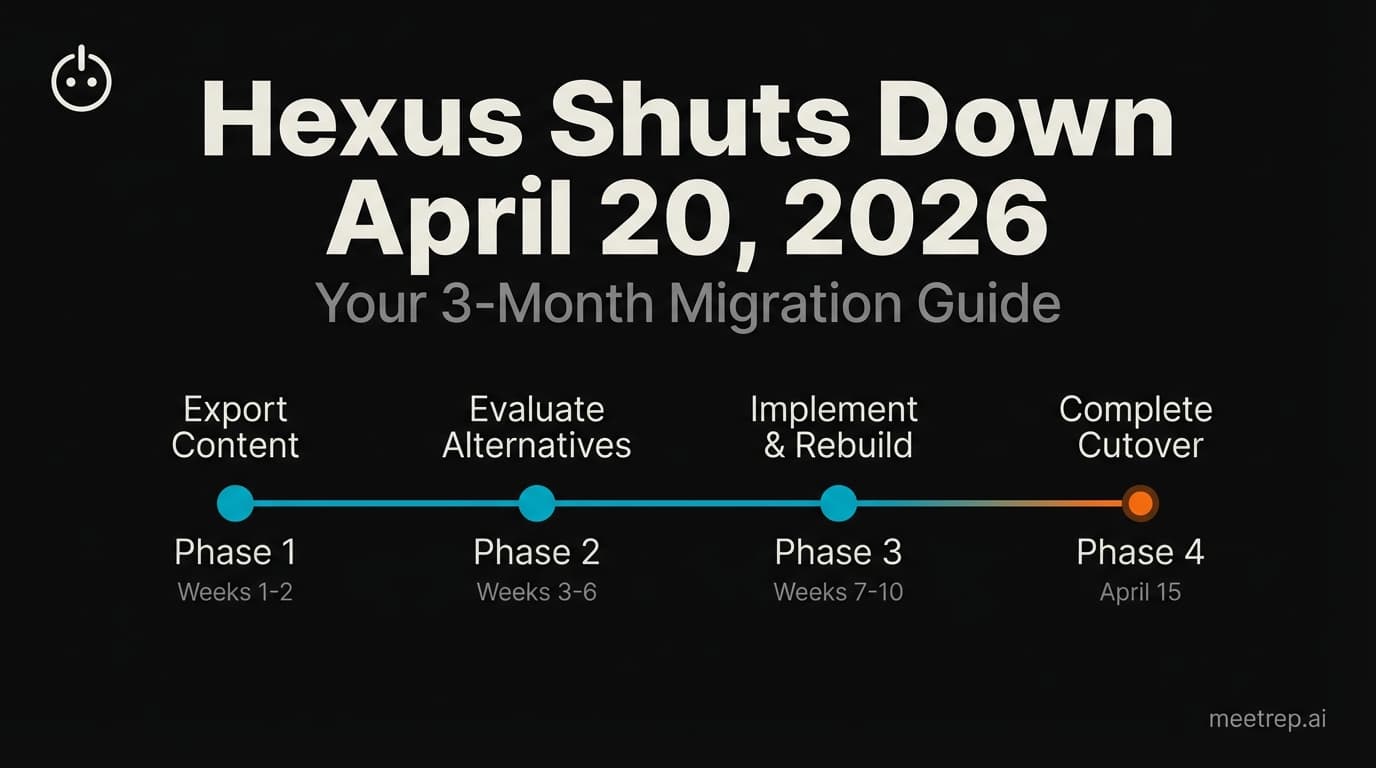
Hexus Acquired by Harvey AI: Congrats & What It Means for Demo Automation Teams
Hexus is shutting down following its acquisition by Harvey AI. Learn how to manage your migration and discover the best demo automation alternatives before April 2026.
Why the "Software Demo" is Broken—and Why AI Agents Are the Future
The traditional software demo is dead. Discover why 94% of B2B buyers rank vendors before calling sales and how AI agents are replacing manual demos to scale revenue.
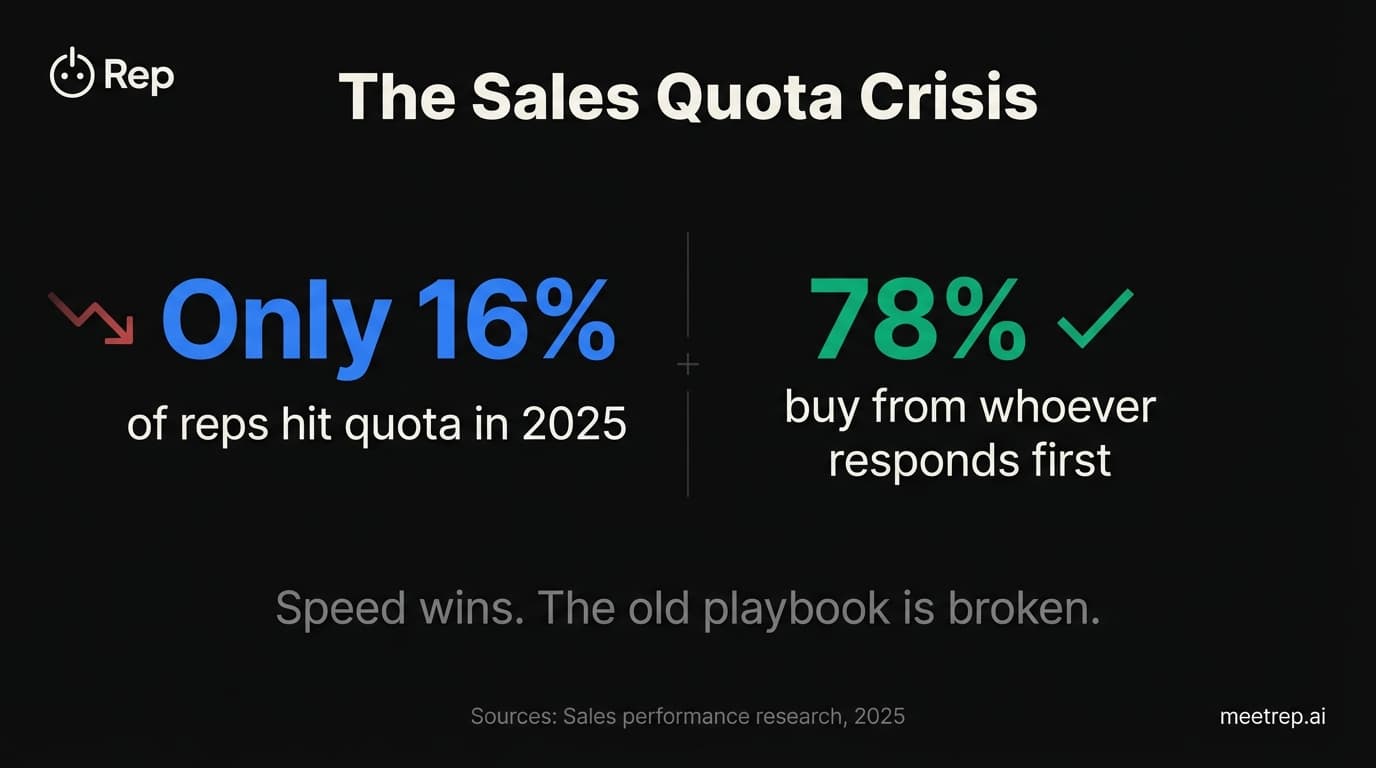
Why Autonomous Sales Software is the Future of B2B Sales (And Why the Old Playbook is Dead)
B2B sales is at a breaking point with quota attainment at 46%. Discover why autonomous 'Agentic AI' is the new standard for driving revenue and meeting the demand for rep-free buying.