Product Demo Examples: 15+ Real Cases With Verified Results

Executive Summary
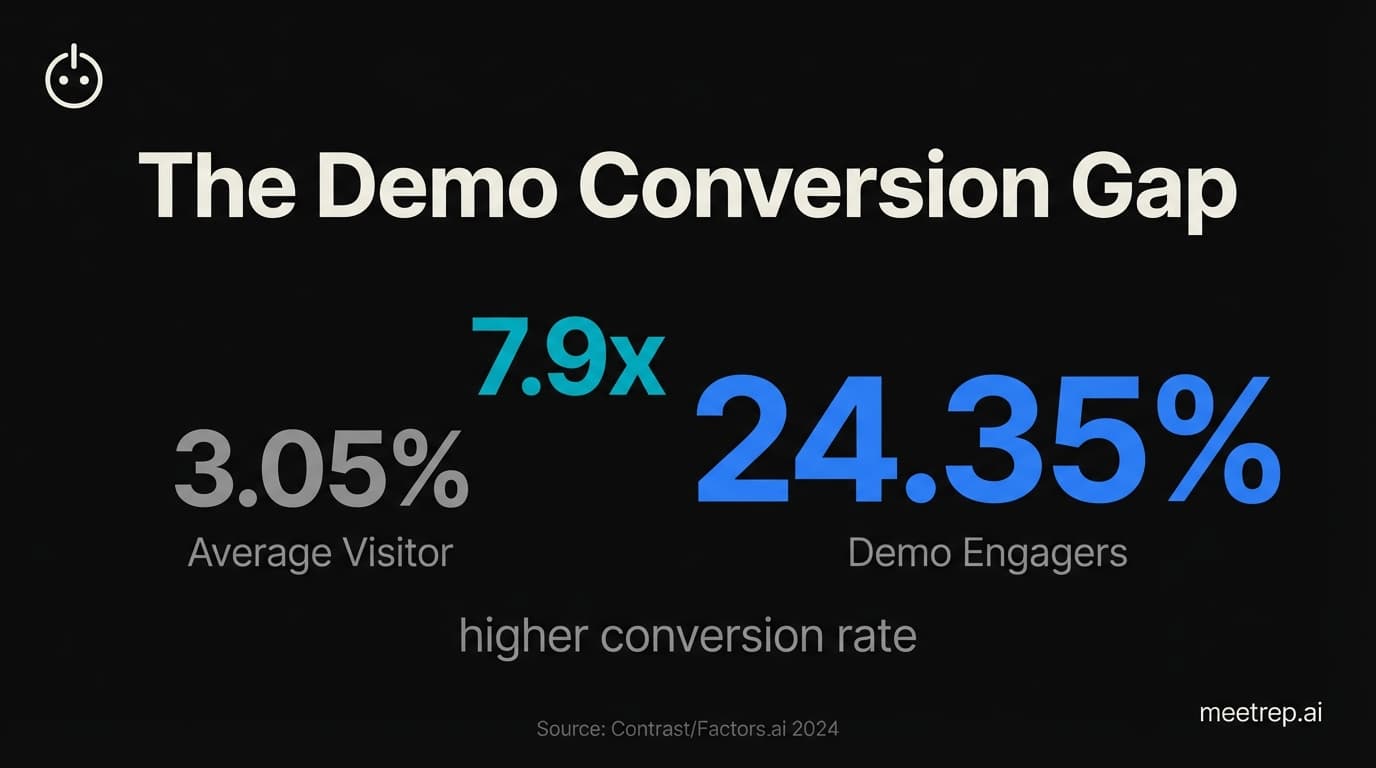
- Prospects engaging with demos convert at 7.9x higher rates (24.35% vs 3.05%)
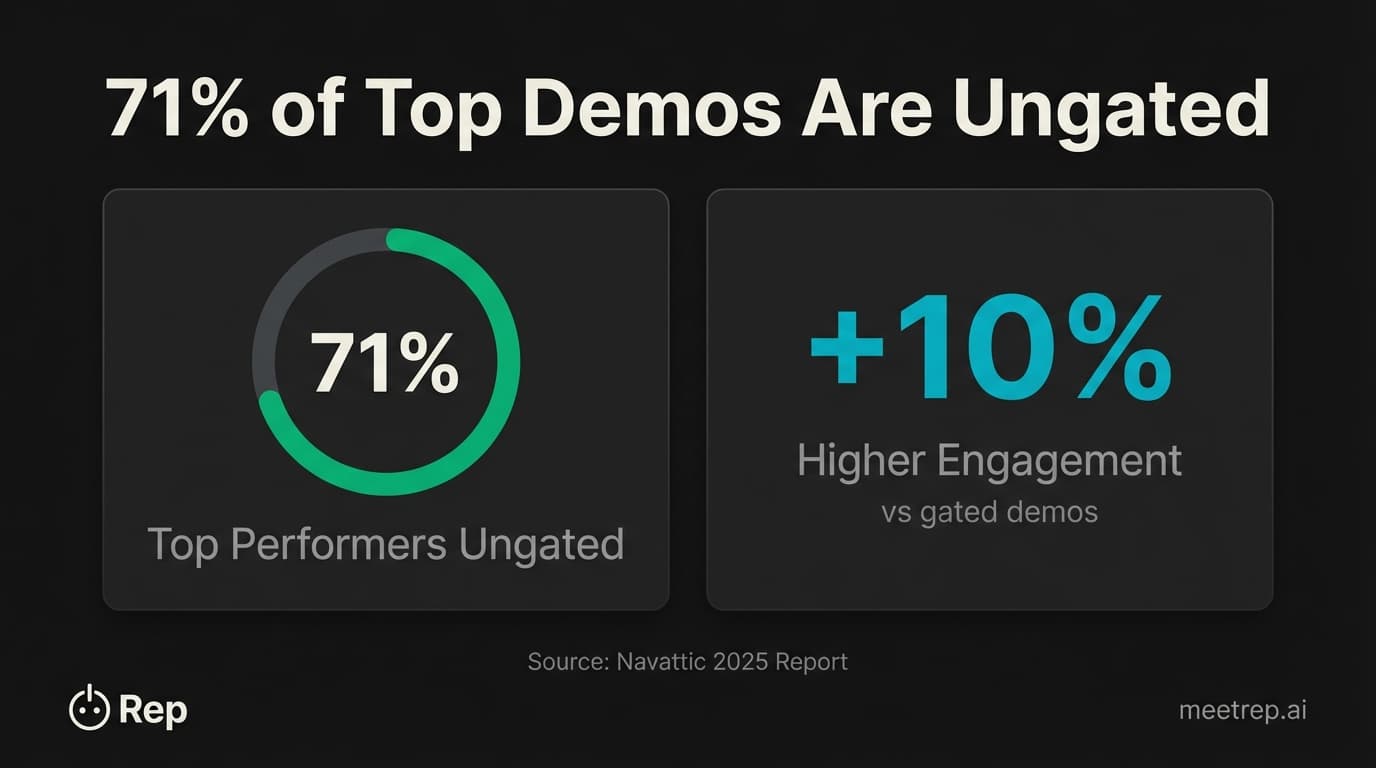
- 71% of top-performing demos are ungated—and ungated demos see 10% higher engagement
- KLUE generated $1M in pipeline by organizing demos into a "Demo Arena" by use case
- The best demos in 2025-2026 are short (5-12 steps), ungated, and increasingly AI-led
Looking for product demo examples that actually moved the needle? Here's a number that should bother you: only 25% of B2B buyers find online demos useful.
That's from Forrester's 2024 Buyers' Journey Survey. Three out of four demos aren't landing. And yet—when demos do work, they work dramatically. Prospects who engage with product demos convert at 7.9x higher rates than those who don't.
So what separates the 25% that work from the rest?
I've spent years building sales automation tools—first at GoCustomer.ai, now at Rep. I've watched thousands of demos succeed and fail. The pattern isn't polish or production value. It's structure, access, and knowing when to get out of the way.
This article breaks down 15+ real product demo examples with verified results. Not theory. Not "best practices." Actual companies, actual metrics.
What Is a Product Demo?
A product demo is a live, recorded, or interactive presentation showing a product's core features and value to prospects or customers. Demos can range from 2-minute video overviews to detailed technical walkthroughs to fully autonomous AI-led demonstrations that happen without any human involvement.
The category has evolved fast. Five years ago, "product demo" meant a sales rep sharing their screen on a Zoom call. Today it means something broader.
| Demo Type | Format | Best For | Typical Length |
|---|---|---|---|
| Live demo | Real-time, human-led | High-value deals, complex products | 30-60 min total (9.1 min presentation optimal) |
| Recorded video | Pre-recorded, polished | Top-of-funnel awareness | 2-5 min |
| Interactive demo | Self-serve, clickable | Mid-funnel qualification | 5-12 steps |
| Autonomous AI demo | AI agent-led, conversational | 24/7 qualification, repetitive intros | 5-10 min |
| Sandbox/POC | Hands-on environment | Technical validation | Days to weeks |
The shift toward interactive and autonomous demos isn't just a trend. It's a response to how buyers actually behave. Navattic's 2025 report found 29.2% more B2B websites now use "Take a Tour" CTAs compared to last year. That's a massive acceleration.
Key Insight: The demo isn't just a sales tool anymore. It's often the first real interaction a prospect has with your product. Treat it that way.
Why Most Product Demos Fail (And What the Data Shows)
Most demos fail because they're built for the seller, not the buyer. They're long. They're gated. They bury the good stuff.
The Forrester 2024 data is brutal: only 25% of B2B buyers find online demos useful or helpful. That's not a small gap—that's systemic failure.
But here's what's interesting. When demos work, the impact is massive. Contrast and Factors.ai analyzed 110,257 website sessions and found prospects who engage with demos convert at 24.35% compared to 3.05% for the average visitor.
That's 7.9x higher conversion.
So the question isn't whether demos matter. They clearly do. The question is why most of them aren't working.
The Data: Interactive demos achieve a 38% demo-to-close rate versus the 25% industry average—a 52% improvement. | Source: Optifai Sales Ops Benchmark 2025
Three patterns emerge from the failed demos:
They're gated too early. You make prospects fill out forms before they see anything. Bad move. The data on this is now unambiguous, which I'll show you below.
They're too long.Gong's analysis of 67,149 demos found that winning demos spend 9.1 minutes on presentation versus 11.4 for losing deals. Less is more.
They bury the value. Most demos build to a conclusion. But Gong's research shows winning demos use an "Upside Down Pyramid"—they start with the most valuable feature, not end with it.
The Ungating Debate Is Over
I want to spend a moment on gating because I think it's where most teams make their biggest mistake.
Here's what Navattic's 2025 benchmark data shows: 71% of top-performing demos do NOT begin with a form gate. And ungated demos have 10% higher engagement than gated ones.
This surprises people. "But we need leads," they say. "How will we know who's looking?"
I get the concern. At GoCustomer, we wrestled with this too. But the math works differently than you'd expect.
When you gate aggressively, you filter out early-stage prospects who could become great fits. They bounce. You never see them again. Your "lead count" looks fine, but your pipeline suffers.
When you ungate—or use a mid-demo form instead of an upfront one—more people engage. They self-educate. They come to you warmer. Navattic's data shows mid-demo forms have 9.7% higher engagement than beginning forms.
My recommendation: Ungate your website tours. Use mid-demo forms if you need contact info. Gate your late-stage, high-touch content. But let people experience the product first.
This isn't just theory. Let me show you companies that did exactly this.
15+ Product Demo Examples With Verified Results
I'm going to walk through real companies with real numbers. These aren't hypothetical "best practices"—they're documented results from Navattic's 2025 report, HowdyGo case studies, Arcade, and Consensus customer stories.
SaaS Interactive Demo Examples
KLUE (Competitive Intelligence)
What they built: A "Demo Arena"—a centralized demo center organizing multiple demos by use case and persona rather than a single monolithic demo.
Results:
- $1M in new pipeline
- $100K in closed-won revenue
- Demo-to-opportunity conversion 3x higher than isolated product pages
Why it worked: Prospects could self-select into the demo most relevant to their role. A product manager didn't have to sit through features designed for sales ops. The experience felt personalized without requiring personalization work.
JET HR (HR Software)
What they built: Interactive tour as a secondary CTA on their hero section, ungated and immediately below the fold.
Results:
- Doubled website high-intent leads
- 100+ leads per month from the tour alone
Why it worked: Low friction. Prospects could explore immediately. The tour lived where people were already looking—the homepage hero—not buried in a nav menu.
Flagsmith (Feature Flags Platform)
What they built: Secondary CTA "Try interactive demo" on homepage leading to a demo center.
Results:
- 1.7x more sign-ups
- 1.54x higher activation
Source: HowdyGo case study
Why it worked: For a PLG product like Flagsmith, the demo served as an on-ramp to the trial. Prospects understood the value before committing to sign up, which meant higher-quality activations.
CaseStatus (Legal Tech)
What they built: Interactive demos integrated with HubSpot ABM, tracking visitor activity across channels.
Results:
- Sales cycle dropped from 30+ days to 24 days
- Prospects engaging in first week now close same month
Why it worked: The demo wasn't isolated—it connected to their ABM motion. Sales could see who engaged with what, then follow up with context.
Searchlight (HR Tech, acquired by Multiverse)
What they built: End-to-end demo mixing staging environment and Figma mockups, deployed across post-call follow-up, website, SDR outreach, and newsletters.
Results:
- 60%+ completion rates
- $3M+ in new business pipeline attributed
- 22 S0 opportunities (33% of total pipeline)
Why it worked: They used one demo asset across five different channels. The efficiency gain was enormous.
Key Insight: The best demo library isn't about having one perfect demo—it's about having the right demo for each context. Searchlight's multi-channel approach generated 33% of their pipeline from a single asset deployed strategically.
Enterprise B2B Demo Examples
Sovos (Tax Compliance Software)
What they built: Demos their sales reps could use 80% of the time, implemented via Consensus with a 6-week pilot.
Results:
- SE specialization increased by 50%
- 11 minutes average view time
- Some SMB deals closing with 35 minutes of internal resource time versus weeks previously
Source: Consensus customer story
Why it worked: They freed their SEs from repetitive demos. Engineers could focus on complex technical deals while automation handled the straightforward ones.
Wrike (Project Management)
What they built: Contextual onboarding demos based on user role.
Results:
- 65% increase in paid conversions for users engaging with onboarding demos
Source: Arcade.software case studies
Why it worked: Role-based branching. A project manager saw PM-relevant features. A team lead saw team lead features. Same product, tailored path.
Labelbox (AI/Data Platform)
What they built: Interactive product tours for complex AI workflows.
Results:
- 30% more MQL submissions
- 50% lift in CTR
Why it worked: AI workflows are notoriously hard to explain in static content. Interactive tours let prospects click through the complexity at their own pace.
Marketing Tech Examples
Komo (Marketing Tech)
What they built: Story-driven interactive demos with F1 racing theme, embedded in email campaigns.
Results:
- >6.5% CTR in email campaigns (their highest-performing asset)
Why it worked: Storytelling plus interactivity. The F1 theme wasn't random—it fit their brand and made the demo memorable.
Tesorio (Finance Tech)
What they built: Demos personalized with company name and industry, links based on role/goals, embedded in hyper-personalized email campaigns.
Results:
- Roughly 2x marketing lead volume
Why it worked: Personalization at scale. The demos felt custom even though they were templated.
Conversion Multiplier Examples
InDebted (Fintech)
What they built: Demo tracking integrated with HockeyStack for attribution.
Results:
- Prospects who view demo are 6x more likely to convert
Why it worked: Attribution. They could prove the demo's value because they measured it properly.
RatedPower (Climate Tech)
What they built: Guided tour as a conversion point.
Results:
- ~9.43% of total YTD pipeline from guided tour
- Became one of top 5 conversion points
- 14% efficiency rate
Why it worked: They treated the demo as a primary conversion mechanism, not a secondary one.
Summer (Student Loan Platform)
What they built: Direct demo request links from tour for users continuing in sales cycle.
Results:
- 121% increase month-over-month for users continuing in sales cycle
Why it worked: Smooth handoff from self-serve exploration to sales engagement.
SwipedOn (Visitor Management)
What they built: Branched demo on website highlighting user journey for three different user types.
Results:
- 44.7% CTR over 6 months
- Leads "much better qualified" per sales team feedback
Why it worked: Branching filtered prospects by use case. Sales got leads who already understood how the product applied to their situation.
Spiralyze (CRO Agency)
What they built: Interactive demos for education, onboarding, and feature showcase.
Results:
- 25% higher conversion rate
- 35% increase in time on page
- 20% reduction in support queries
Why it worked: The demo served multiple purposes—not just sales, but also support deflection. That's efficient content.
What These Demo Presentation Examples Have in Common
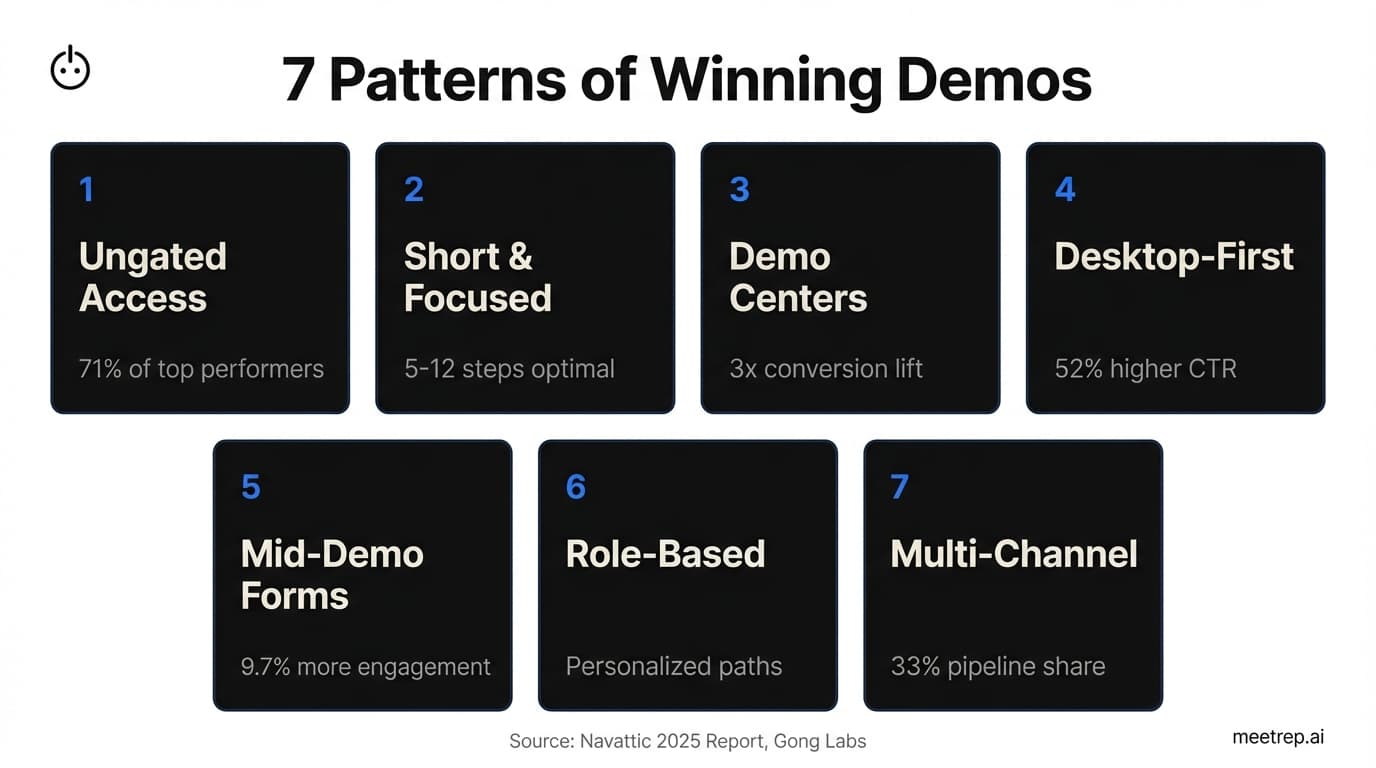
Looking across all 15+ examples, patterns emerge. Not one of these companies succeeded by accident.
The Data: The top 1% of interactive demos achieve 84.4% engagement, 61.6% completion, and 54.0% CTR. The top 1% saw a 68.7% increase in CTR year-over-year. | Source: Navattic 2025 Report
Pattern 1: Ungated access. 71% of top performers don't gate upfront. They let people in.
Pattern 2: Short and focused. Optimal length is 5-12 interactive steps with 13-21 words per tooltip. For live demos, the presentation portion should be around 9.1 minutes.
Pattern 3: Demo centers over single demos. KLUE's 3x conversion improvement came from organizing multiple demos by use case, not perfecting one master demo.
Pattern 4: Desktop-first design. Navattic found desktop demos have 52% higher CTR than mobile. Design accordingly.
Pattern 5: Mid-demo forms. When you do capture information, do it after the prospect has seen value—not before.
Pattern 6: Role-based branching. SwipedOn, Wrike, and Tesorio all personalized by role. The lift is consistent.
Pattern 7: Multi-channel deployment. Searchlight's 33% pipeline attribution came from using the same demo across five channels.
Pattern 8: "Upside Down Pyramid" structure. Lead with your most valuable feature. Don't save it for the end.
What we learned at GoCustomer: When we rebuilt our demo flow to lead with the integration that saved users the most time—instead of building up to it—our completion rate jumped by about 40%. People decided to stay or leave in the first 30 seconds. We learned to front-load the decision.
Interactive Demo vs. Video Demo vs. Autonomous AI Demo
Not all demos are the same, and picking the wrong format for your situation can kill results.
| Factor | Interactive Demo | Video Demo | Autonomous AI Demo |
|---|---|---|---|
| Website conversion | 24.35% (7.9x higher) | 3.05% baseline | Early data: 30%+ win rate boost |
| Demo-to-close rate | 38% | 25% average | Similar to interactive (early data) |
| Engagement | 3x higher, 67% completion | Industry average | Conversational, handles objections |
| User control | Full—self-guided clicks | None—fixed timeline | Full—voice-guided navigation |
| Availability | 24/7 on website | 24/7 on website | 24/7 including live calls |
| Personalization | Role-based branching | None | Real-time conversational adaptation |
| Best for | Mid-funnel, sales enablement | Top-funnel awareness | Qualification, repetitive intros |
Sources: Contrast/Factors.ai 2024, Optifai 2025, Navattic 2025, Bain 2025
My take: interactive demos should be your baseline. Every B2B company should have them on their website, ungated, by now. Video supports them for awareness. And autonomous demos are where this is heading for qualification and scale.
The Emerging Category: Autonomous AI Demos
Something shifted in January 2026. Saleo launched the first fully conversational AI presales agent—an AI that doesn't just guide clicks but actually conducts live demos via voice and screen share.
This isn't a chatbot. It's an AI agent that joins video calls, shares its screen, moves through your actual product, and answers prospect questions in real-time.
Key Insight: The autonomous AI agent market hit $11.5 billion in 2025 and is growing at 45%+ CAGR. Deloitte expects 25% of enterprises to deploy AI agents by end of 2025. | Sources: Meticulousresearch.com, Precedenceresearch.com, Deloitte 2025
Why does this matter for demo strategy?
Consider the math. Salesforce's 2024 State of Sales found sales reps spend only 30% of their time actually selling. The rest goes to admin, prep, and—yes—repetitive demos.
Autonomous demo agents handle the repetitive intro demos that burn out AEs and SDRs. Your humans focus on complex deals. The AI handles the 2am demo requests and the first-touch product overviews.
At Rep, this is exactly what we're building. An AI that joins the call, shares its screen, walks through your product, and answers questions—like your best rep would, but available 24/7.
I'm biased, obviously. But the category is real, and the early data—30%+ win rate boost from early AI deployments according to Bain—suggests this isn't hype.
How to Build a Demo That Actually Converts
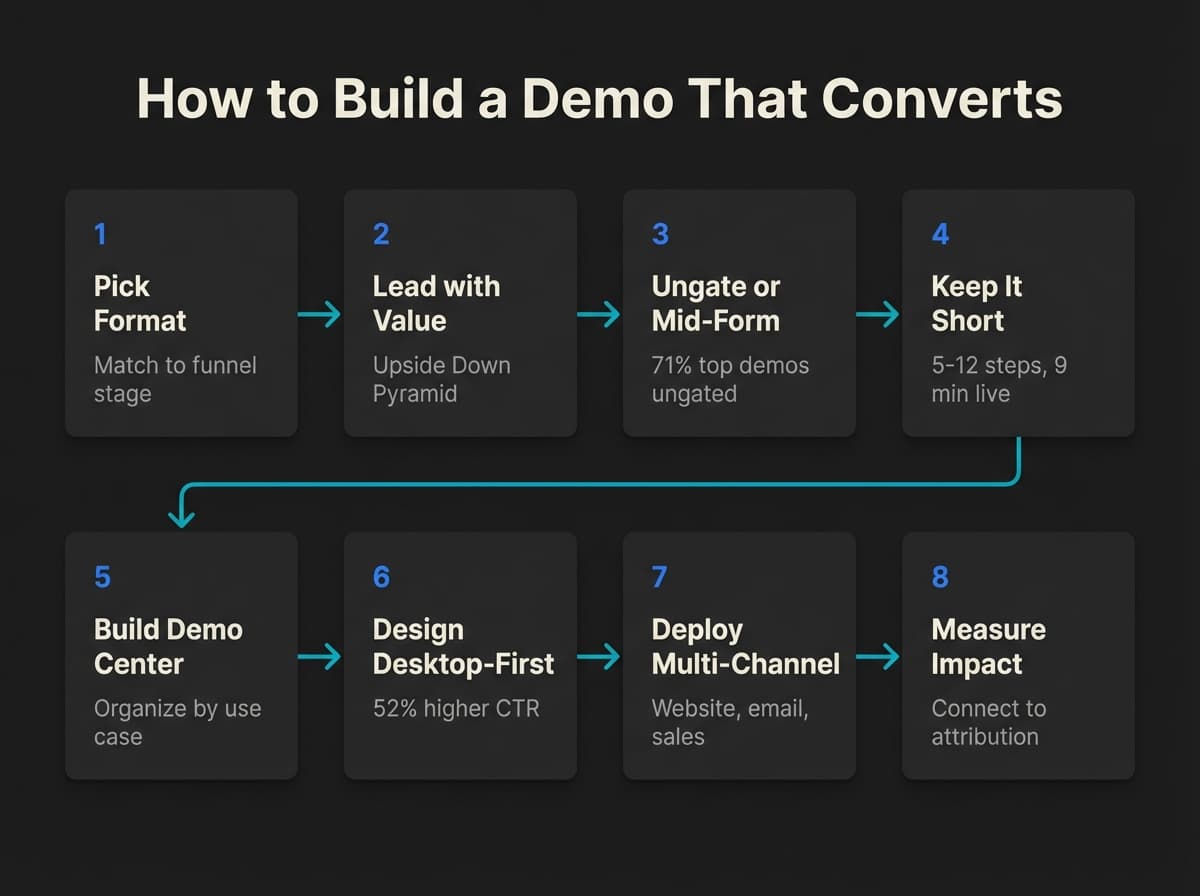
Based on everything above, here's the practical playbook.
Step 1: Pick your format based on funnel stage.
Use interactive demos for mid-funnel (website visitors evaluating options). Use video for top-funnel (awareness, social). Consider autonomous AI for qualification and 24/7 coverage.
Step 2: Structure for the "Upside Down Pyramid."
Lead with your most valuable feature. Don't make people wait. Gong's data shows winning demos front-load value.
Step 3: Ungate or use mid-demo forms.
71% of top performers are ungated. If you must capture info, do it after they've seen value.
Step 4: Keep it short.
5-12 interactive steps. 9.1 minutes for live presentation. Longer isn't better.
Step 5: Build a demo center, not a single demo.
Organize by use case or persona. Let prospects self-select. KLUE's 3x improvement came from this approach.
Step 6: Design desktop-first.
52% higher CTR on desktop. You can support mobile, but optimize for where most B2B research happens.
Step 7: Deploy across channels.
Searchlight got 33% of pipeline from one demo asset used five ways. Your demo belongs on your website, in email campaigns, in sales follow-ups, and in partner materials.
Step 8: Measure properly.
InDebted's 6x conversion insight only happened because they connected demo engagement to HockeyStack. If you can't measure demo impact, you can't improve it.
The gap between demos that work and demos that don't is enormous. 7.9x conversion difference enormous.
But the path to the winning side isn't mysterious anymore. The data is clear: ungate, shorten, organize by use case, and lead with value. The companies doing this—KLUE, Flagsmith, JET HR, Searchlight—aren't guessing. They're following patterns that work.
And the next evolution is already here. Autonomous demos that run 24/7, handle qualification, and free your team to focus on complex deals. That's what we're building at Rep, and it's what the market is moving toward.
Your demo is probably your prospect's first real experience with your product. Seventy-five percent of buyers say current demos aren't useful. That's your opportunity. Make yours one of the 25% that actually lands.

Nadeem Azam
Founder
Software engineer & architect with 10+ years experience. Previously founded GoCustomer.ai.
Nadeem Azam is the Founder of Rep (meetrep.ai), building AI agents that give live product demos 24/7 for B2B sales teams. He writes about AI, sales automation, and the future of product demos.
Frequently Asked Questions
Table of Contents
- What Is a Product Demo?
- Why Most Product Demos Fail (And What the Data Shows)
- The Ungating Debate Is Over
- 15+ Product Demo Examples With Verified Results
- What These Demo Presentation Examples Have in Common
- Interactive Demo vs. Video Demo vs. Autonomous AI Demo
- The Emerging Category: Autonomous AI Demos
- How to Build a Demo That Actually Converts
Ready to automate your demos?
Join the Rep Council and be among the first to experience AI-powered demos.
Get Early AccessRelated Articles
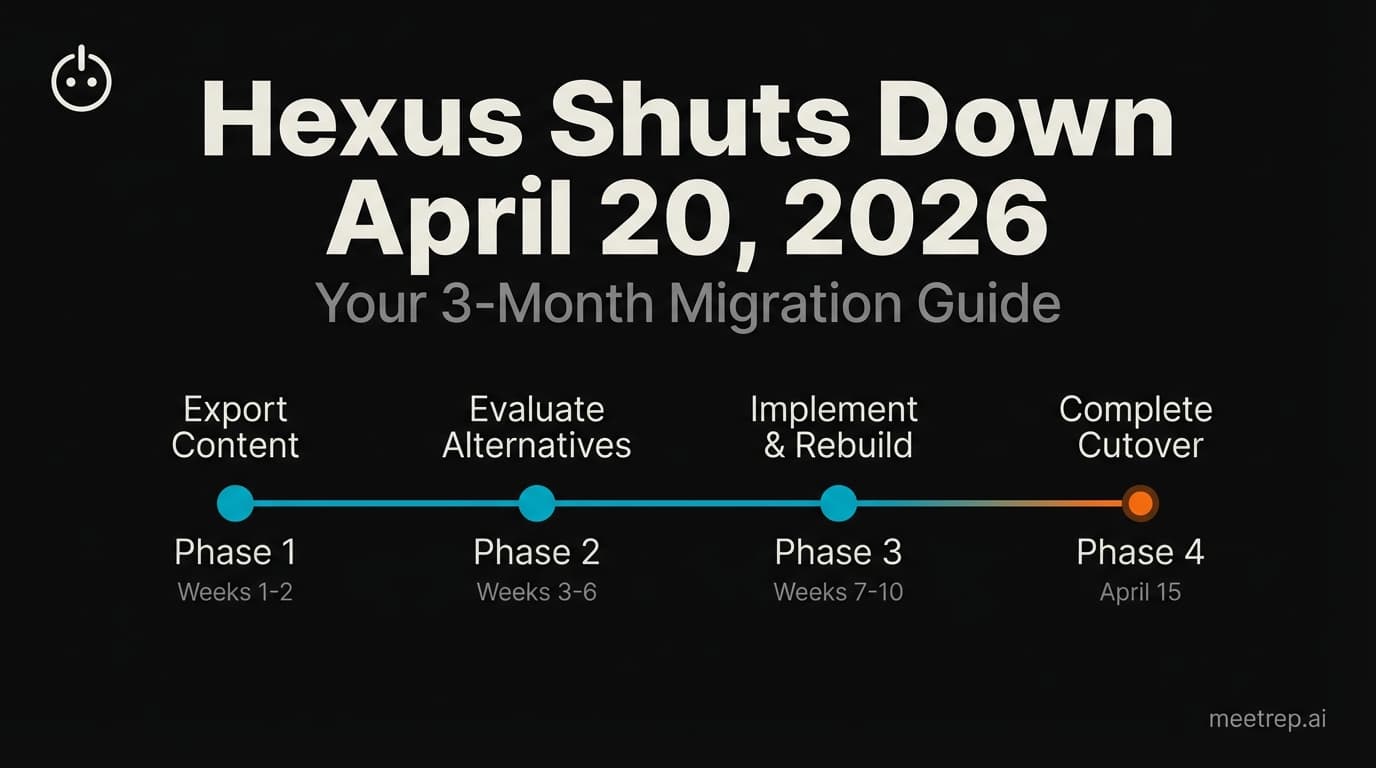
Hexus Acquired by Harvey AI: Congrats & What It Means for Demo Automation Teams
Hexus is shutting down following its acquisition by Harvey AI. Learn how to manage your migration and discover the best demo automation alternatives before April 2026.
Why the "Software Demo" is Broken—and Why AI Agents Are the Future
The traditional software demo is dead. Discover why 94% of B2B buyers rank vendors before calling sales and how AI agents are replacing manual demos to scale revenue.
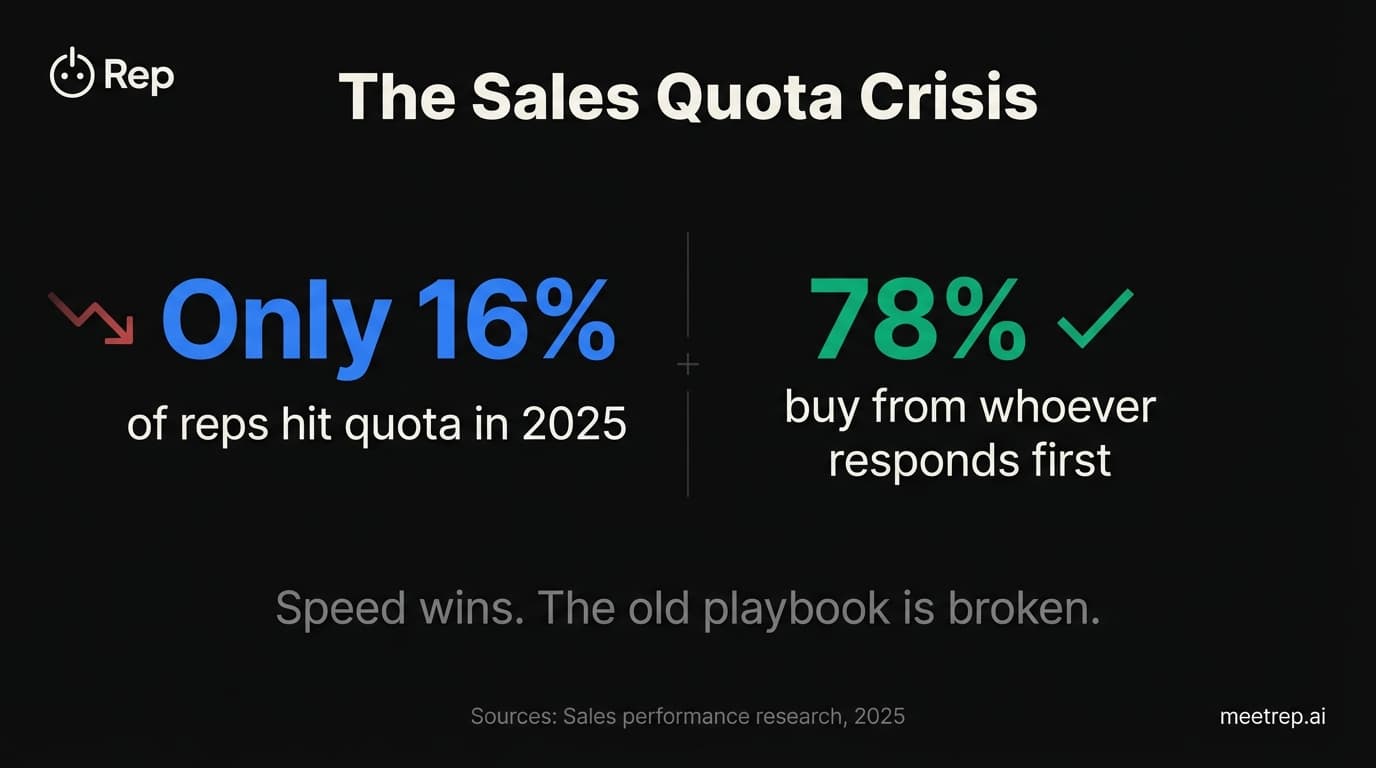
Why Autonomous Sales Software is the Future of B2B Sales (And Why the Old Playbook is Dead)
B2B sales is at a breaking point with quota attainment at 46%. Discover why autonomous 'Agentic AI' is the new standard for driving revenue and meeting the demand for rep-free buying.