Partner Enablement in 2026: How to Scale Your Reseller Program with AI Demos

Executive Summary
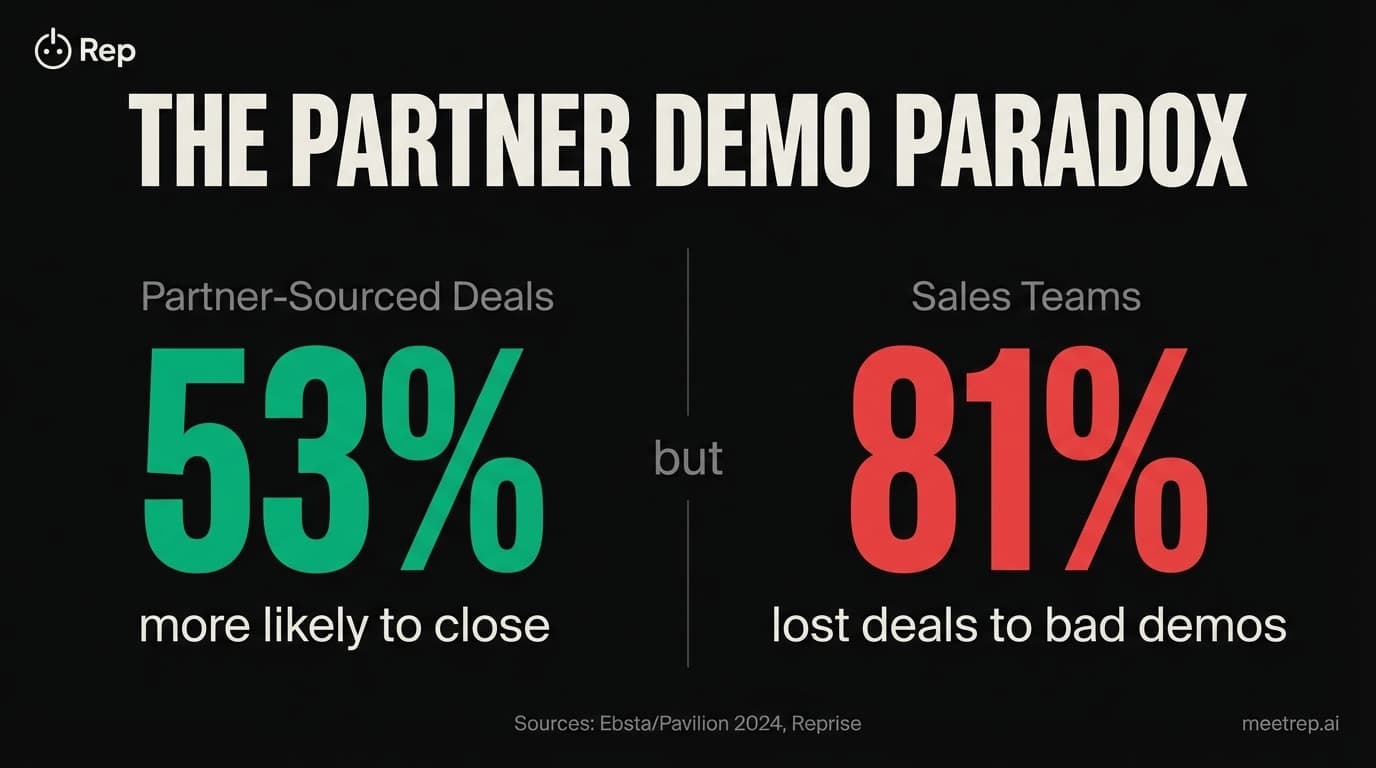
- Partner-sourced deals close 53% more often and are 40% larger—but only if partners can actually demo your product
- 81% of sellers have lost deals specifically because of bad demos
- Traditional partner enablement fails because partners don't have time to master your product
- AI demo agents solve this by removing the need for partner training entirely
Here's something nobody talks about in partner enablement: your training isn't the problem. Your partners sell 15 different products. They don't have time to become experts on yours. And no amount of certification programs, portal updates, or MDF incentives will change that math.
The real bottleneck? Demo delivery.
73% of IT spending flows through channel partners, but most partner programs collapse at the exact moment a prospect says "show me how it works." Partners either wait days for vendor SE support or wing it with outdated slides. Both options kill deals.
I've spent years building sales automation tools—first at GoCustomer.ai, now at Rep. The pattern is always the same: partner programs with great training still fail at demo delivery.
What Partner Enablement Actually Means (And Why Most Programs Fail)
Partner enablement is the process of equipping channel partners—resellers, VARs, MSPs, distributors—with the training, tools, and support they need to sell your product. Unlike internal sales enablement, it requires preparing external organizations who also represent your competitors and often prioritize whoever makes their job easiest.
That last point matters more than most channel leaders admit.
The four pillars look straightforward:
- Product training and certification — Teaching partners what they're selling
- Sales tools and content — Battle cards, demos, collateral
- Technical support — Access to SEs for complex deals
- Incentives — MDF, SPIFFs, tiered rewards
But here's the uncomfortable reality: 63% of vendors report partners don't use provided marketing materials. And 60% of MDF goes unclaimed. Your partners aren't lazy. They're overwhelmed.
Key Insight: Partners prioritize vendors who make selling easy. If demoing your product requires mastering a 40-page playbook or waiting three days for an SE, they'll sell something else.
The Demo Lag Crisis: Where Partner Programs Actually Break
Here's where deals die: the moment a prospect says "can you show me?"
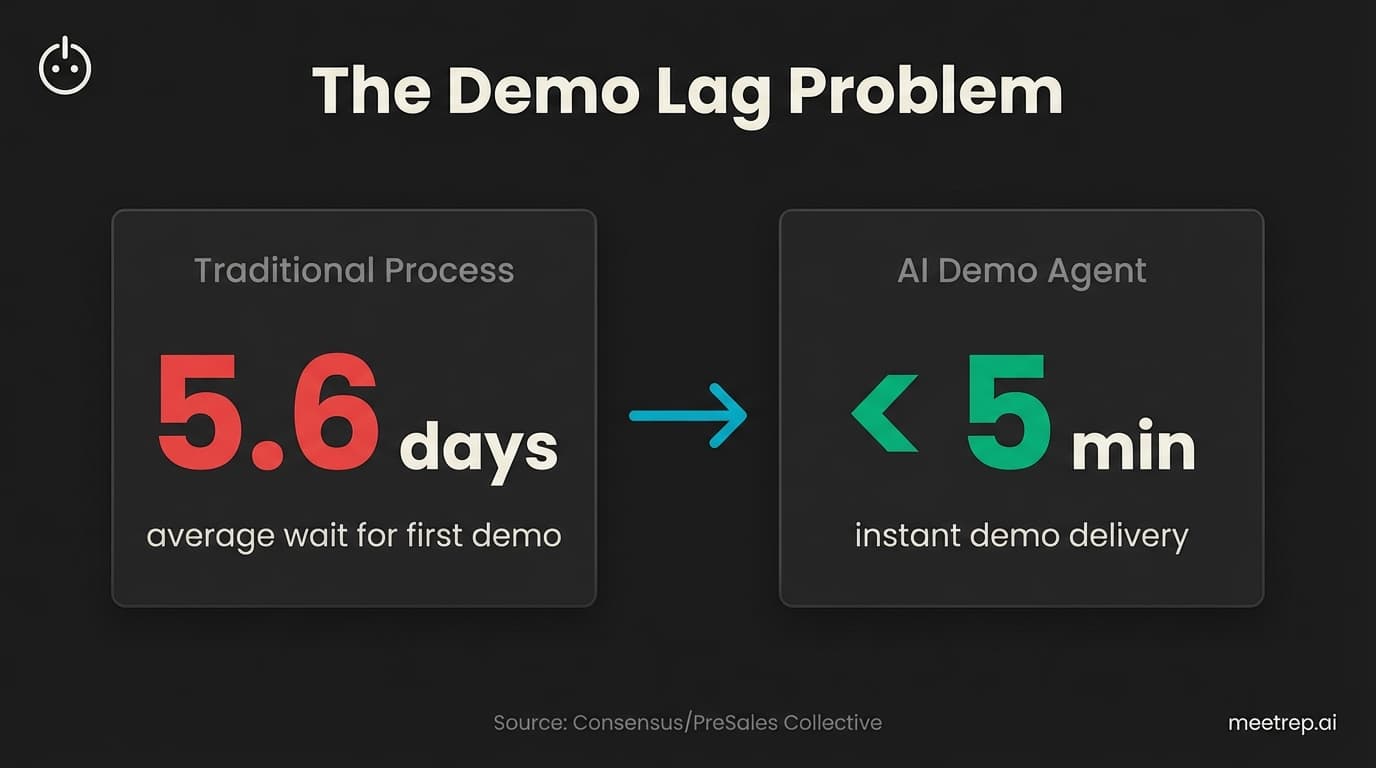
According to Consensus and PreSales Collective research, buyers wait an average of 5.6 days for their first demo. Five and a half days. In enterprise sales, that's an eternity. Competitors are already in the conversation.
And that's for direct sales. Partner demos are worse.
The Data:81% of sellers have lost a deal specifically because of a bad demo. Not a close loss. A deal that died because the demo was bad.
The partner demo problem has two failure modes:
Failure Mode 1: The Wait Partner schedules demo request. Request goes to vendor portal. Vendor assigns SE. SE schedules call for next week. Prospect talks to competitor on Tuesday.
Failure Mode 2: The Wing-It Partner doesn't want to wait. Partner opens product, clicks around, misrepresents features, can't answer technical questions. Prospect loses confidence.
Hot take: Stop training partners to demo your product. It's a waste of everyone's time. They sell 15 products. They'll never master yours. The solution isn't better training—it's removing the need for training entirely.
Why Partner-Sourced Deals Matter More Than Ever
Before we talk solutions, let's talk stakes. Why does partner demo capability even matter?
Because partner-sourced deals are your highest-performing revenue channel. Period.
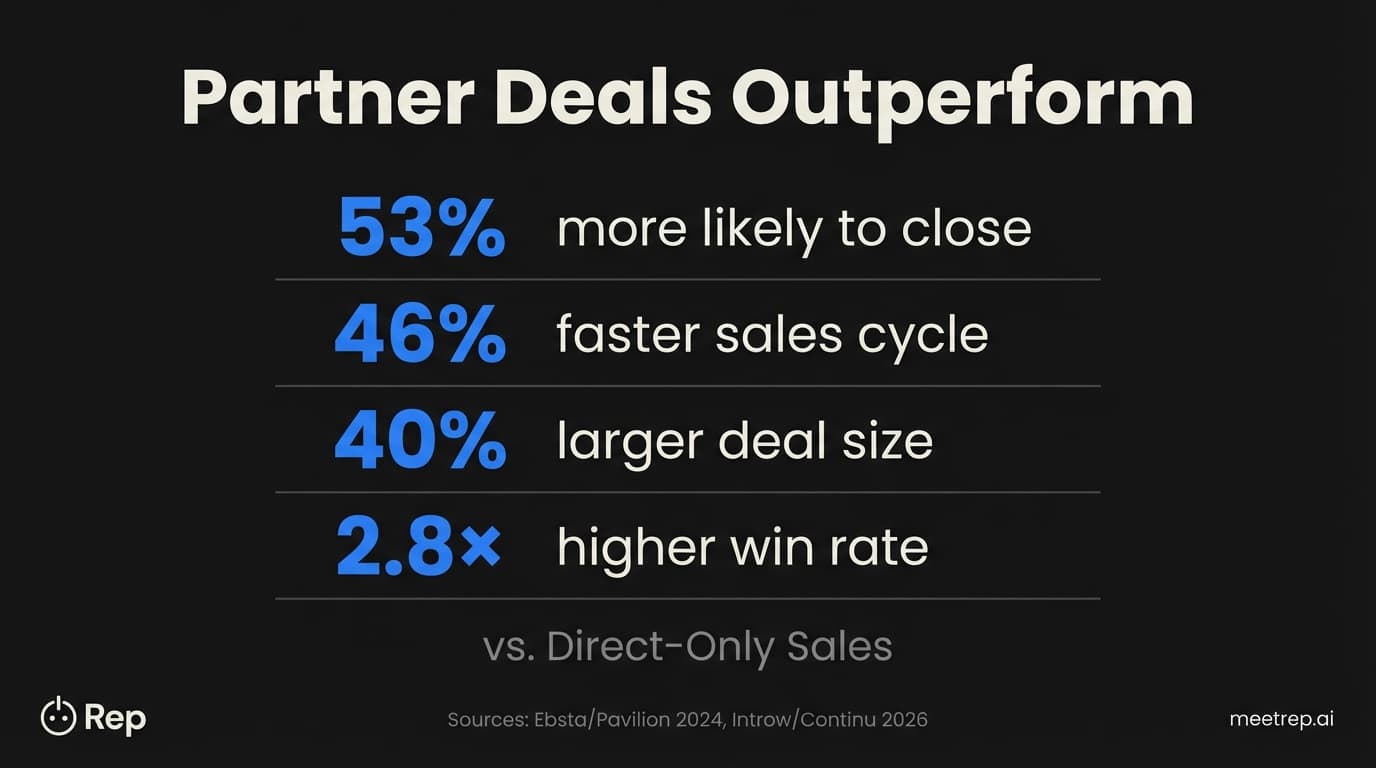
| Metric | Partner-Sourced vs. Direct | Source |
|---|---|---|
| Close rate | 53% more likely to close | Ebsta/Pavilion 2024 |
| Deal velocity | 46% faster | Ebsta/Pavilion 2024 |
| Deal size | 40% larger | Ebsta/Pavilion 2024 |
| Win rate | 2.8× higher | Introw via Continu 2026 |
This isn't marginal improvement. Partner-sourced deals are categorically better than direct sales.
And certified partners earn 6× more revenue than non-certified partners. But certification completion rates are abysmal because the training burden is too high.
Key Insight: Partner deals outperform direct sales by every metric that matters. But 70% of deals require SE support to demo properly—creating an impossible scaling equation.
From MSP to MIP: The Shift That Changes Everything
Something big is happening in channel sales. Gartner dropped a prediction in January 2026 that should get every channel leader's attention:
"By 2028, 60% of brands will use Agentic AI to facilitate streamlined 1:1 interactions... This marks the end of channel-based marketing as we know it." — Emily Weiss, Senior Principal Researcher, Gartner
We're watching the shift from MSPs (Managed Service Providers) to MIPs (Managed Intelligence Providers). The difference? MSPs deliver services. MIPs deliver intelligence—using AI to provide insights, answers, and yes, product demonstrations.
Pax8 is leading this transition with 239% three-year revenue growth. Their CEO, Scott Chasin, put it bluntly: "Partners need to dig in now and think about their own transformation because the pull from customers is coming."
What does this mean for partner programs? The model is shifting from "train partners to sell" to "equip partners with AI that sells."
What we learned building Rep: When we designed Rep's architecture, we started with a simple question: what if partners didn't need to know anything about your product? What if you could give them an AI agent that joins calls, shares its screen, and demos your product better than most humans? That's not a training enhancement. That's a training replacement.
How AI Demo Agents Solve the Partner Bottleneck
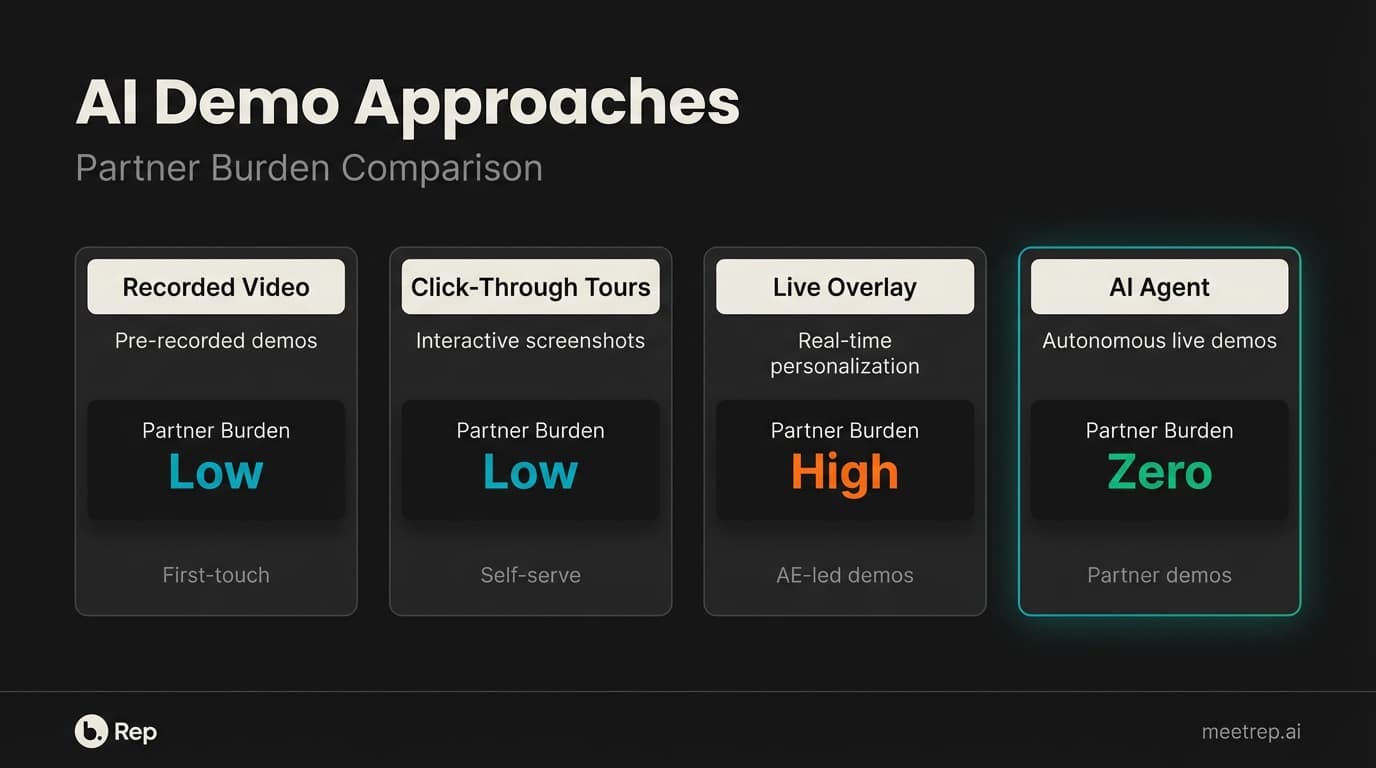
Not all "AI demos" are created equal. Here's how to think about the different approaches:
| Approach | What It Is | Partner Burden | When to Use |
|---|---|---|---|
| Recorded video (Consensus) | Pre-recorded demo videos | Low | First-touch awareness |
| Click-through tours (Navattic, Storylane) | Interactive screenshots | Low | Self-serve exploration |
| Live overlay (Saleo) | Real-time data personalization | High (needs human) | AE-led enterprise demos |
| Autonomous AI agent (Rep) | AI joins call, demos live product | Zero | Partner demos, inbound |
The first three approaches improve specific use cases. But they don't solve the fundamental problem: partners still need to present or prospects still get a canned experience.
Autonomous AI agents are different. The AI joins the video call. Shares its screen. Navigates your actual product in real-time. Answers questions. Handles objections. And does it 24/7, in any time zone, with perfect consistency.
When Wrike implemented demo automation, their Solutions Consulting Lead said something that stuck with me:
"Time kills all deals. There is nothing worse than being ready to sign and then having to wait... Having to align schedules and execute repeat demos for technical sign-off hurt our momentum." — Ty Steciw, Wrike
That's the pain. AI agents eliminate it.
What Market Leaders Are Already Doing
This isn't theoretical. The biggest companies in enterprise software are already moving.
SAP (January 2026): Launched AI-powered demo personalization enabling 2,000+ partner companies and 10,000+ users to customize demo environments in minutes via browser. No backend maintenance. No SE required.
Workday: Scaled partner-sourced ACV from 3% to 9%—a $600M annual run rate—by expanding from zero to 500+ sales partners in a single year.
Foxit: Hit 250-300% year-over-year revenue growth by scaling from fewer than 100 partners to 500+.
The pattern is clear. Companies winning at partner enablement aren't investing in more training. They're investing in removing the need for training.
Key Insight: Companies with unified enablement are 42% more likely to improve win rates. But "unified" doesn't mean more content. It means giving partners tools that work without requiring expertise.
Building Your Partner Enablement Stack: Where AI Fits
Most partner tech stacks have three layers:
- PRM (Partner Relationship Management) — Impartner, Allbound — deal registration, content distribution
- LMS (Learning Management System) — Docebo, Continu — training and certification
- CRM — Salesforce, HubSpot — attribution and pipeline tracking
What's missing? The demo layer.
PRMs store content partners don't use. LMS platforms deliver training partners don't finish. CRMs track outcomes but don't influence them. None of them solve the moment when a prospect says "show me."
That's where AI demo agents fit. They sit between your content and delivery. The AI knows your playbook. It handles the conversation. Partners just share the link.
Here's the ROI math: Average cost per learner for training is $774. Return per $1 spent on sales training is $4.53. But training ROI assumes people complete training and retain knowledge. AI removes both assumptions.
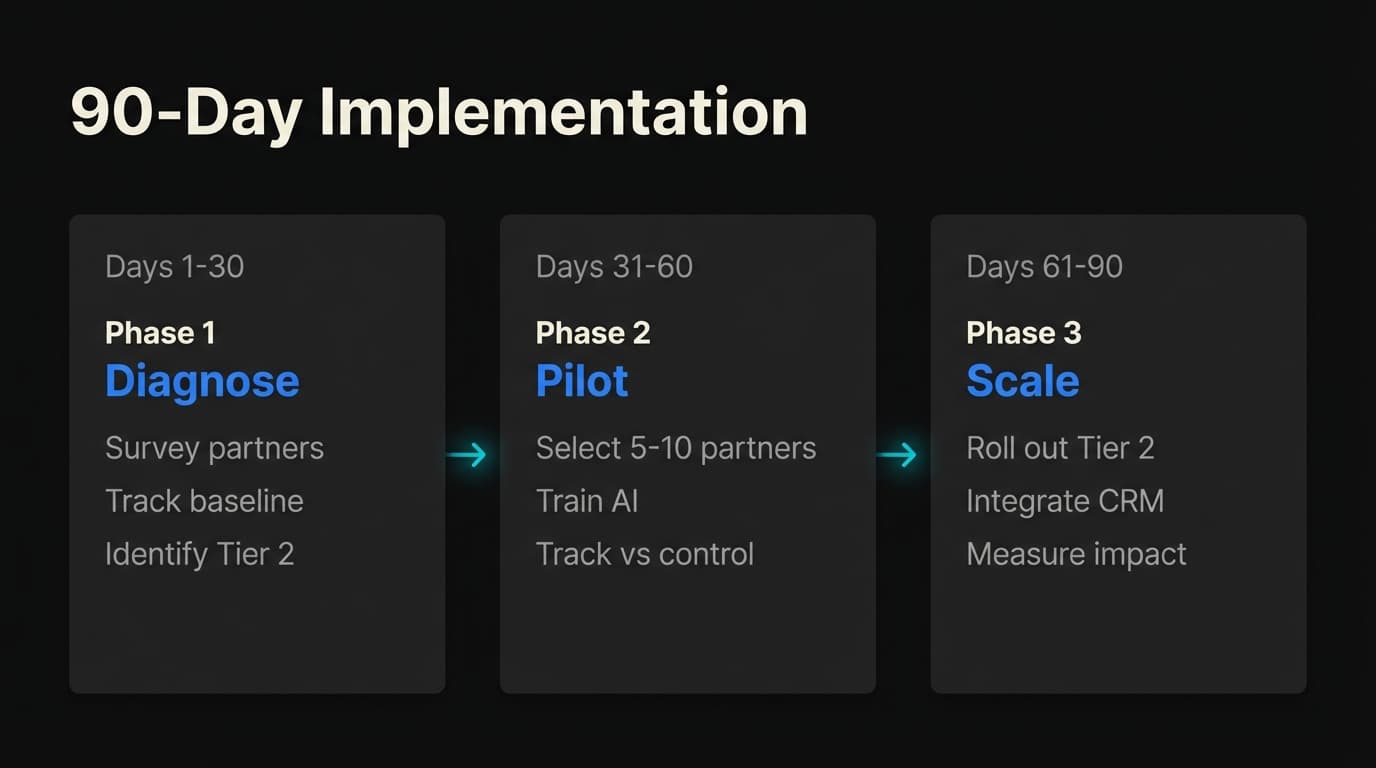
Getting Started: The 90-Day AI Demo Implementation
I'm not going to give you a 15-step framework. You need focus.
Days 1-30: Diagnose
- Survey partners: "What's your biggest friction point in closing deals?"
- Track current demo-to-close conversion (probably around 30%)
- Identify your "Tier 2" partners—the middle 60% who have relationships but need demo support
Days 31-60: Pilot
- Select 5-10 partners for AI demo pilot
- Train the AI on your product
- Deploy AI demo links through your existing PRM
- Track engagement vs. control group
Days 61-90: Scale
- Roll out to Tier 2 partners (this is where the ROI lives)
- Integrate attribution tracking with CRM
- Measure time-to-first-deal improvement
The target: reduce demo wait time from 5.6 days to zero. Partners share a link. Prospects get a demo. No scheduling. No SE required.
My recommendation: Start with partners who have great relationships but poor demo skills. They're your biggest opportunity. An AI agent turns their relationship advantage into closed deals.
The channel is changing faster than most partner programs can adapt. Gartner's calling it "the end of channel-based marketing as we know it." That sounds dramatic, but the underlying shift is real: AI agents are replacing human-delivered demos at scale.
My take? Companies that figure this out in the next 18 months will dominate their partner channels. They'll activate long-tail partners that competitors ignore. They'll close deals that competitors lose to demo lag.
At Rep, we built exactly this—an AI agent that joins video calls, shares its screen, and demos your product live. No partner training required. If you're running a partner program and want to see how it works, book a demo. The AI will show you.

Nadeem Azam
Founder
Software engineer & architect with 10+ years experience. Previously founded GoCustomer.ai.
Nadeem Azam is the Founder of Rep (meetrep.ai), building AI agents that give live product demos 24/7 for B2B sales teams. He writes about AI, sales automation, and the future of product demos.
Frequently Asked Questions
Table of Contents
- What Partner Enablement Actually Means (And Why Most Programs Fail)
- The Demo Lag Crisis: Where Partner Programs Actually Break
- Why Partner-Sourced Deals Matter More Than Ever
- From MSP to MIP: The Shift That Changes Everything
- How AI Demo Agents Solve the Partner Bottleneck
- What Market Leaders Are Already Doing
- Building Your Partner Enablement Stack: Where AI Fits
- Getting Started: The 90-Day AI Demo Implementation
Ready to automate your demos?
Join the Rep Council and be among the first to experience AI-powered demos.
Get Early AccessRelated Articles
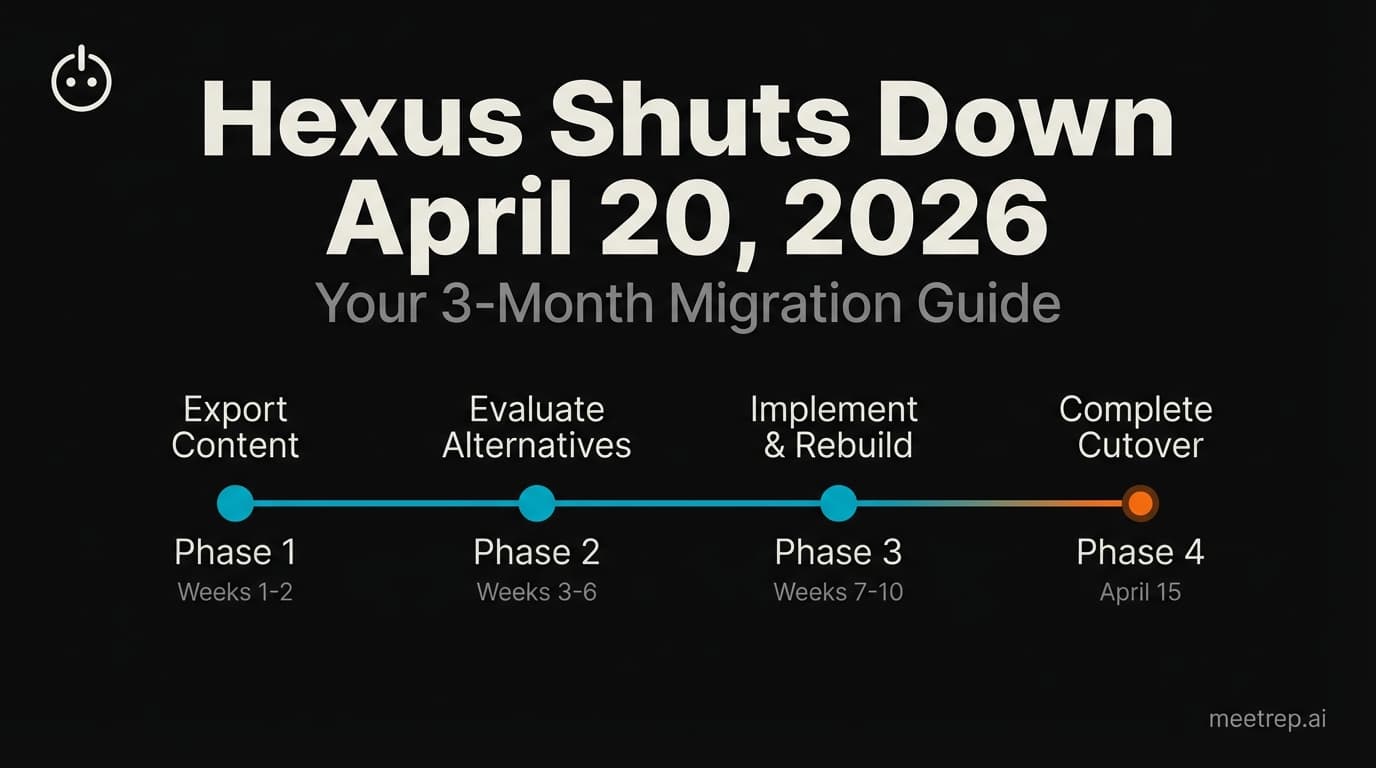
Hexus Acquired by Harvey AI: Congrats & What It Means for Demo Automation Teams
Hexus is shutting down following its acquisition by Harvey AI. Learn how to manage your migration and discover the best demo automation alternatives before April 2026.
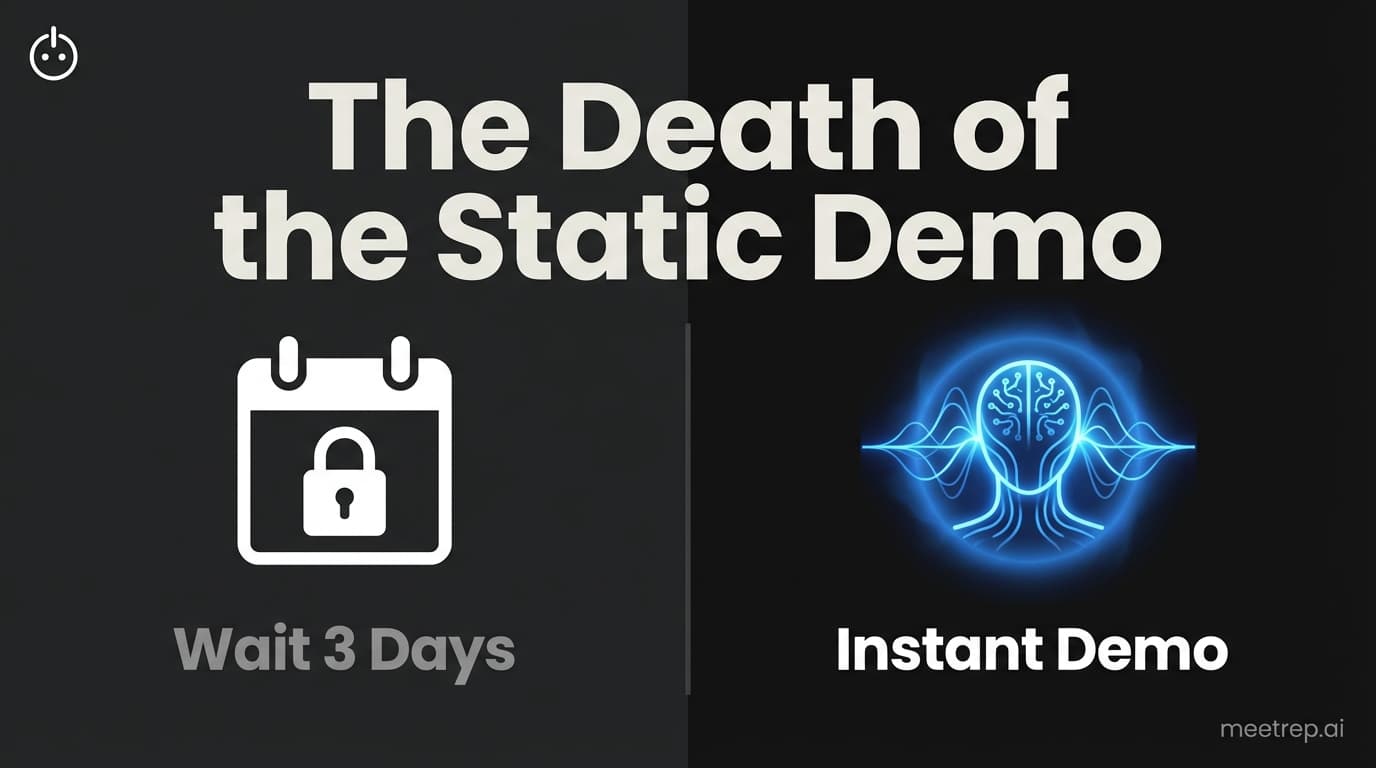
Why the "Software Demo" is Broken—and Why AI Agents Are the Future
The traditional software demo is dead. Discover why 94% of B2B buyers rank vendors before calling sales and how AI agents are replacing manual demos to scale revenue.
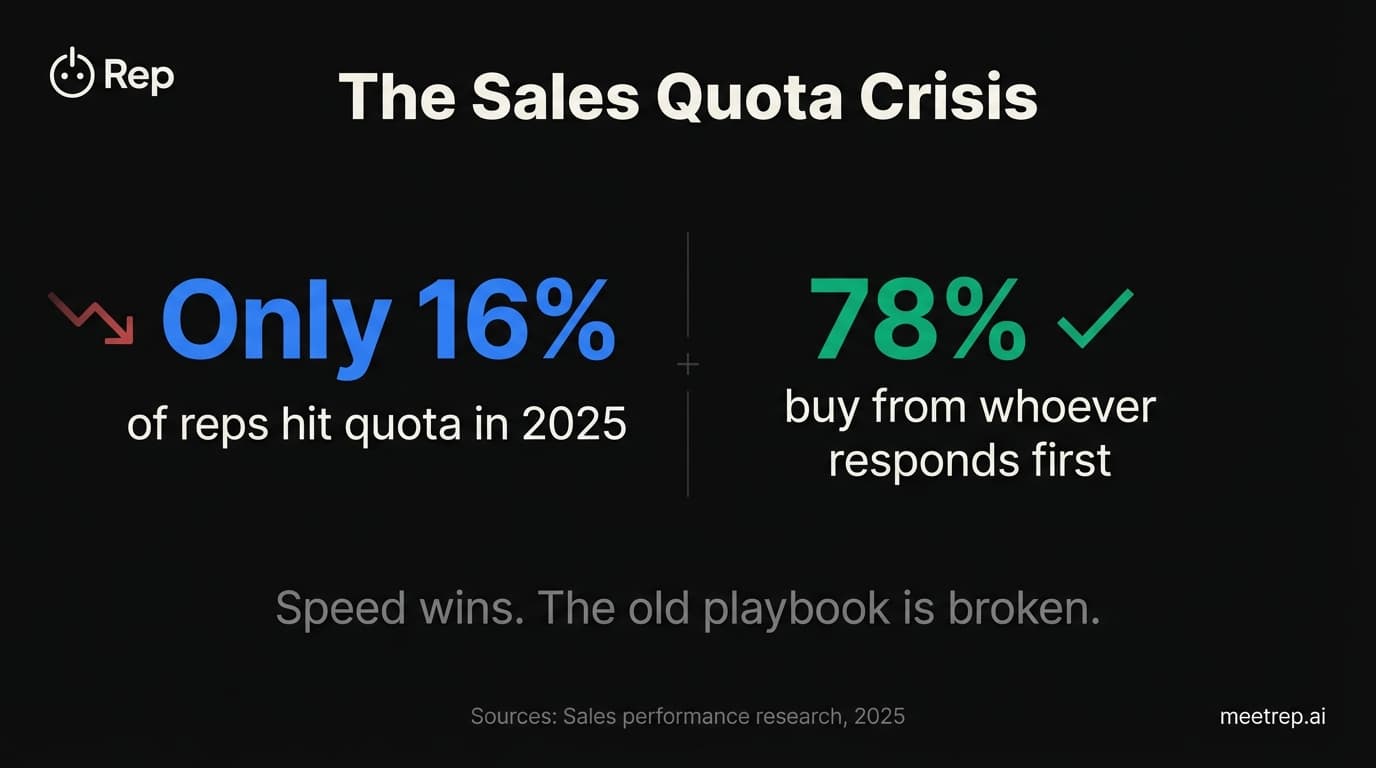
Why Autonomous Sales Software is the Future of B2B Sales (And Why the Old Playbook is Dead)
B2B sales is at a breaking point with quota attainment at 46%. Discover why autonomous 'Agentic AI' is the new standard for driving revenue and meeting the demand for rep-free buying.