Outbound Sales Software: The 2026 Buyer's Guide for Sales Leaders Who Can't Afford to Get This Wrong

Executive Summary
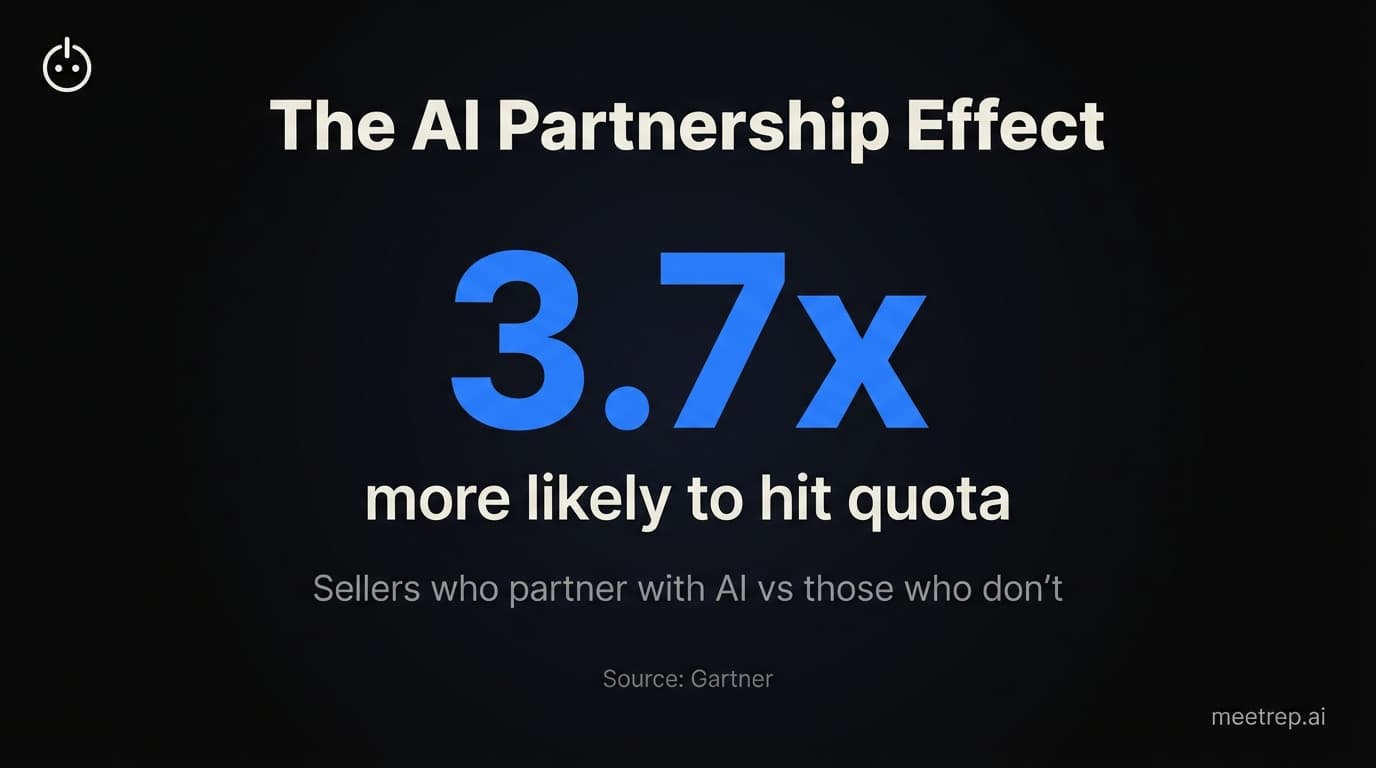
- Sellers partnering with AI are 3.7x more likely to hit quota (Gartner)—but only if they implement correctly
- The "spray and pray" era is dead; signal-based selling and hybrid AI-SDR models are what's working
- Data accuracy matters more than database size—poor data costs organizations $12.9M annually on average
- 45% of teams already run hybrid human-AI SDR models; full replacement isn't the play
- Before signing anything: verify data accuracy with live tests, negotiate contract flexibility, and calculate true TCO including the 5.7-month average ramp time
Cold calling conversion just hit 2.56%. That's down from 4.82% last year, according to Cognism's 2025 research. Email-only campaigns? They're generating 29% fewer leads year-over-year.
And yet—sellers who partner well with AI tools are 3.7 times more likely to meet quota than those who don't. That's not a marginal improvement. That's a different league entirely.
I've built two sales automation products. At GoCustomer.ai, we learned the hard way that most teams buy tools for features and ignore the fundamentals. Now at Rep, I watch teams make the same mistakes with AI-powered outbound sales software. This guide is what I wish someone had given me before we made our first six-figure platform decision.
What outbound sales software actually does in 2026
Outbound sales software is the category of tools that help sales teams proactively reach prospects who haven't raised their hand yet—combining prospecting databases, multi-channel sequencing, conversation intelligence, and increasingly, autonomous AI agents that execute outreach without constant human oversight. But here's what changed: the category has evolved from "email automation" to full revenue orchestration—coordinating signals, channels, and AI agents across the entire buyer journey.
The category now includes sales engagement platforms like Outreach and Salesloft, prospecting databases like ZoomInfo and Apollo.io, conversation intelligence tools like Gong, and a new wave of autonomous AI agents from companies like 11x.ai and Artisan.
The shift that matters: 80% of sales teams now use AI in prospecting, according to Regie.ai's 2025 report. And 62% of teams using AI report "significant or game-changing improvement" in performance.
But tools alone don't fix broken processes.
Key Insight:78% of B2B decision-makers still view outbound as essential to their growth strategy, per Sopro's January 2025 research. Outbound isn't dying—bad outbound is dying. The teams using signal-based targeting and AI-powered personalization are pulling away from everyone else.
The hidden cost of choosing wrong (or choosing nothing)
Let me be direct about what's at stake. 86% of B2B purchases stall during the buying process. That's Forrester's 2024 finding. And 81% of buyers express dissatisfaction with their chosen providers.
Your outbound stack is either accelerating deals or contributing to that stall rate. There's no neutral.
Here's what the wrong choice actually costs:
Time drain: Sales reps spend only about 30% of their time actually selling, according to Salesforce's State of Sales report. The rest? Data entry, tool switching, and chasing bad leads. Poor data quality alone wastes 546 hours per rep annually.
Bad data compounds: Organizations lose an average of $12.9 million annually to poor data quality. That stat from Gartner should scare anyone running a prospecting database with unverified accuracy claims.
Competitive gap widens: Teams using AI generate 77% more revenue per rep than those that don't, per Gong Labs' December 2025 analysis. Every quarter you delay adoption, that gap compounds.
What we learned at GoCustomer: We built features our users asked for and still saw low adoption. The problem wasn't features—it was integration. Tools that didn't live inside Salesforce and Gmail became shelfware within weeks. Reps don't context-switch; they abandon.
The modern outbound stack: Four layers that actually matter
Most comparisons list 50 tools alphabetically. Useless. Here's how to think about your stack architecturally:
| Layer | What It Does | Key Players | Why It Matters |
|---|---|---|---|
| 1. Intelligence & Signals | Identifies who to contact and when | Clay, ZoomInfo, 6sense | Garbage in, garbage out. Data accuracy determines everything downstream. |
| 2. Orchestration & Engagement | Executes multi-channel sequences | Outreach, Salesloft, Apollo.io | Where your reps live day-to-day. Adoption here is make-or-break. |
| 3. Conversation Intelligence | Analyzes calls, coaches reps | Gong, Chorus, Clari | Turns conversations into coaching data at scale. |
| 4. Autonomous Agents | Handles tasks end-to-end without humans | 11x.ai, Artisan, Rep | The new layer. AI that executes, not just assists. |
The mistake I see constantly: teams buy layers 2 and 3 without fixing layer 1. Then they wonder why their sequences underperform. If your data is 65% accurate (which is roughly where Apollo's accuracy sits, based on user reports), 35% of your perfectly crafted outreach is hitting wrong numbers and dead emails.
And layer 4—autonomous agents—is where things get interesting. 45% of teams already run hybrid AI-SDR models, according to Outreach's 2025 data. Not replacing humans. Augmenting them.
Seven features that separate winners from time-wasters
Forget the feature matrices vendors send you. Here's what actually moves numbers:
- Multi-channel sequencing beyond email. Email-only campaigns are down 29% YoY. You need phone, LinkedIn, and email coordinated—not siloed.
- Native CRM integration with bi-directional sync. One-way data export is worthless. If it doesn't sync both ways with Salesforce or HubSpot, your data will drift within weeks.
- AI personalization that goes beyond mail merge. "Hey {FirstName}" isn't personalization. Signal-based timing and context-aware messaging is.
- Built-in deliverability infrastructure. Domain warm-up, bounce protection, and reputation monitoring. Without this, your sequences land in spam.
- Intent data and trigger event alerts. Know when a prospect is actively researching. 70% of B2B buyers complete research independently before engaging a seller.
- Conversation intelligence for coaching. Call recording is table stakes. Pattern analysis that tells you why top reps win is the actual value.
- Transparent pricing without auto-renewal traps. Sounds basic. But I've seen teams locked into contracts they couldn't exit because they missed the 60-day cancellation window.
Common mistake: Signing multi-year contracts with auto-renewal clauses. After the August 2025 Salesloft/Drift breach that affected 700+ organizations, contract flexibility isn't a nice-to-have. It's risk management.
Top outbound platforms compared (honestly)
I'm not going to pretend every tool is "great for the right use case." Some are better than others for specific situations. Here's my actual take:
| Platform | Best For | Strengths | Watch Out For | Pricing |
|---|---|---|---|---|
| Apollo.io | SMB/Mid-market all-in-one | Data + sending combined, lower cost | Data accuracy around 65-70% per user reports | $49-99/seat/month |
| Outreach | Enterprise orchestration | Deep integrations, new AI Revenue Agents | Steep learning curve, $100-160/seat/month | Enterprise pricing ($20k+ annual) |
| Salesloft | Revenue orchestration | Forrester Wave leader, Rhythm prioritization | Complex setup, enterprise-focused | $100-160/seat/month |
| Clay | Advanced data workflows | Waterfall enrichment, highest data accuracy | Requires technical setup, usage-based pricing | Credit-based |
| Gong | Revenue intelligence | Best conversation analysis, coaching insights | Analytics layer, not execution | Contact for pricing |
| Rep | Autonomous demo delivery | AI agent that joins calls, shares screen, demos live | Demo-focused, not full prospecting | Contact for pricing |
My honest assessment: If data accuracy is your bottleneck (and it probably is), start with Clay. If you need an all-in-one that's affordable, Apollo works for smaller teams despite the accuracy issues. If you're enterprise with budget, Outreach or Salesloft plus Gong is the proven combo.
So what about the demo bottleneck? If you're losing qualified prospects because they can't get a demo when they want one—that's what we built Rep to solve. 82% of customers expect a response within 10 minutes. Humans can't scale that. AI agents can.
The hybrid model: What's actually working
Let me be clear about something: full AI replacement of SDRs isn't the play. Not yet. Actually, I'd go further—it might never be the right approach for complex B2B sales.
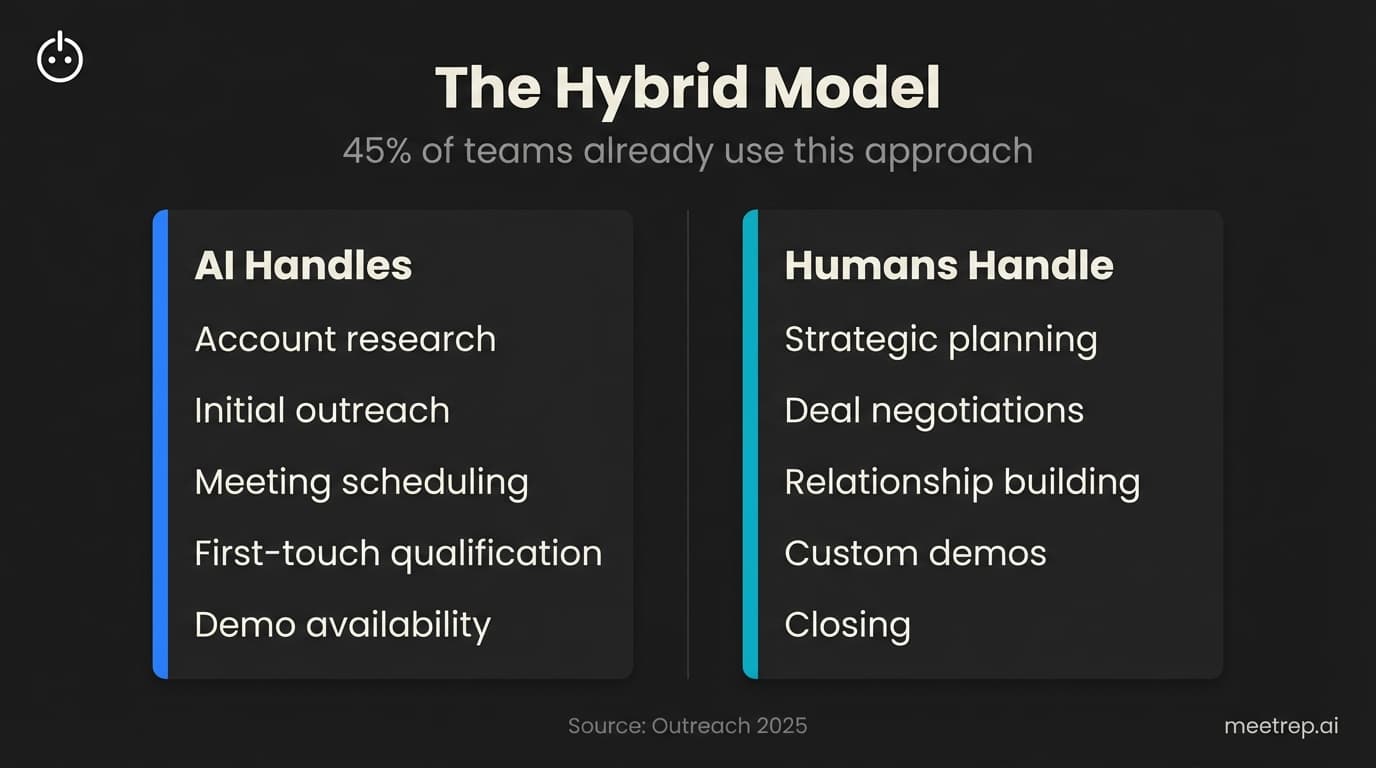
What's working is the hybrid model. Humans for strategy, relationship-building, and complex conversations. AI for research, initial outreach, and qualification.
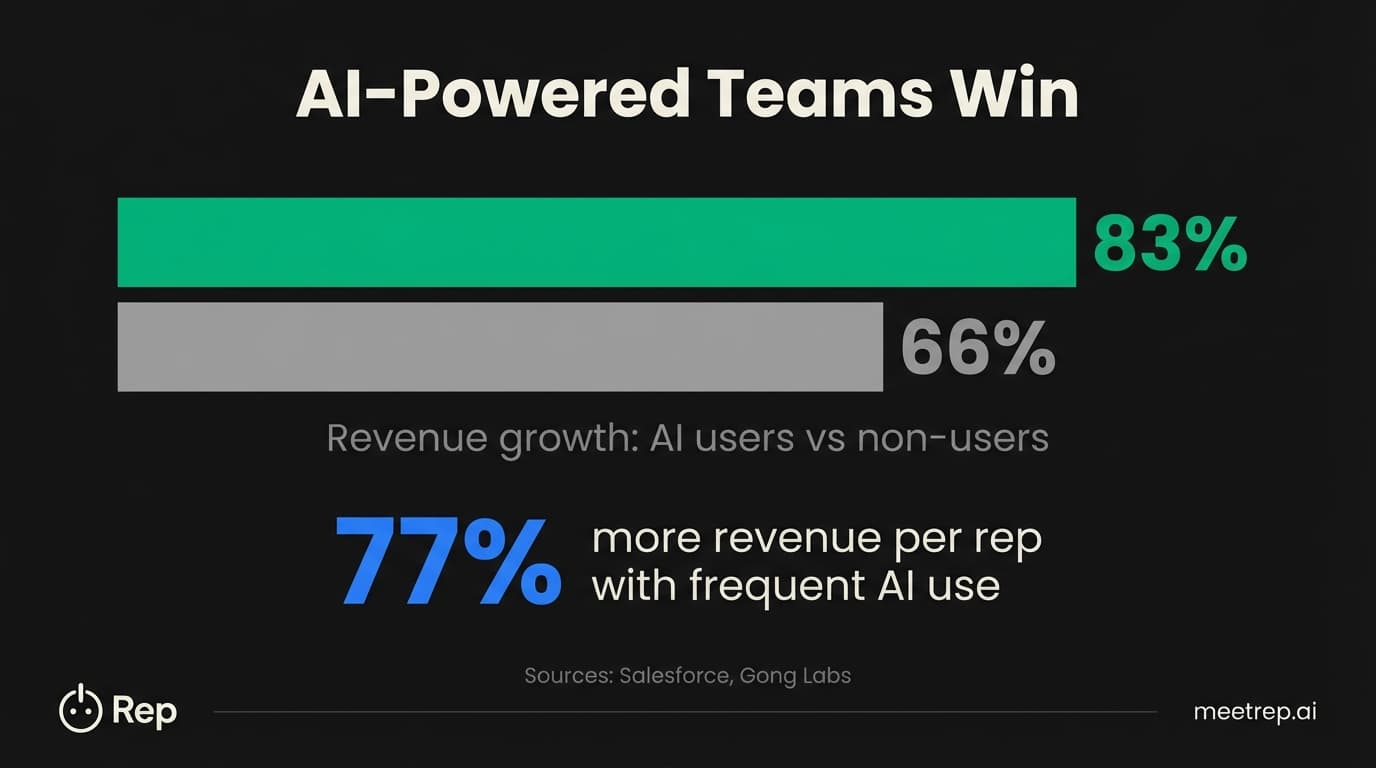
The Data:83% of sales teams using AI grew revenue last year compared to 66% without AI, per Salesforce. But it's the combination that works. Teams frequently using AI generate 77% more revenue per rep. Not teams that replaced humans with AI.
Here's what the model looks like in practice:
AI handles:
- Account research and enrichment
- Initial outreach sequences
- Meeting scheduling
- First-touch qualification
- Demo availability (this is where Rep fits)
Humans handle:
- Strategic account planning
- Complex deal negotiations
- Relationship building
- Custom demos for enterprise
- Closing
At Rep, we designed specifically for one piece of this: the demo bottleneck. Our AI agent joins video calls, shares its screen, and walks prospects through your product live—with real conversation, real navigation, real answers. It's not replacing your AEs. It's handling the 2am demo request from the prospect in Singapore that would otherwise wait 18 hours.
How to actually evaluate these tools (A real framework)
Vendors will demo you their best case. Here's how to test reality:
- Document your current bottleneck first. Is it data quality (Layer 1)? Sequence execution (Layer 2)? Coaching (Layer 3)? If you don't know, you'll buy the wrong tool.
- Test data accuracy with live verification. Pull 100 contacts from any database and verify 20 manually. If accuracy is below 80%, factor that into your ROI calculations.
- Confirm bi-directional CRM sync. Ask specifically: "If I update a field in Salesforce, does it update in your system? And vice versa?" One-way sync creates data drift.
- Run a real pilot with real prospects. Not test data. Real prospects. For 2-3 weeks minimum. Track deliverability and response rates against your current baseline.
- Calculate true TCO including ramp time. The average SaaS sales rep ramp is now 5.7 months—up 32% from 2020. Factor training and adoption time into your decision.
- Get references from similar-sized teams. Ask about support quality specifically. "Their so-called 'customer support' is non-existent" is a direct quote from a Trustpilot review. That's not rare.
- Negotiate contract flexibility explicitly. After the 2025 security breaches, you need exit options. No multi-year auto-renewals without clear cancellation windows.
Here's what I've learned building sales automation tools: the teams that win aren't the ones with the most sophisticated stack. They're the ones who nail the fundamentals—accurate data, adopted tools, clear process—and layer AI on top thoughtfully.
The hybrid model works. 45% of teams already use it. The question isn't whether to adopt AI-powered outbound sales software—it's whether you'll do it strategically or reactively.
If you're losing deals to demo scheduling friction—if prospects request demos and wait days for a calendar invite—that's a gap we built Rep specifically to close. An AI agent that joins video calls, shares its screen, and demos your product live, 24/7. No more lost momentum while prospects wait.

Nadeem Azam
Founder
Software engineer & architect with 10+ years experience. Previously founded GoCustomer.ai.
Nadeem Azam is the Founder of Rep (meetrep.ai), building AI agents that give live product demos 24/7 for B2B sales teams. He writes about AI, sales automation, and the future of product demos.
Frequently Asked Questions
Table of Contents
- What outbound sales software actually does in 2026
- The hidden cost of choosing wrong (or choosing nothing)
- The modern outbound stack: Four layers that actually matter
- Seven features that separate winners from time-wasters
- Top outbound platforms compared (honestly)
- The hybrid model: What's actually working
- How to actually evaluate these tools (A real framework)
Ready to automate your demos?
Join the Rep Council and be among the first to experience AI-powered demos.
Get Early AccessRelated Articles
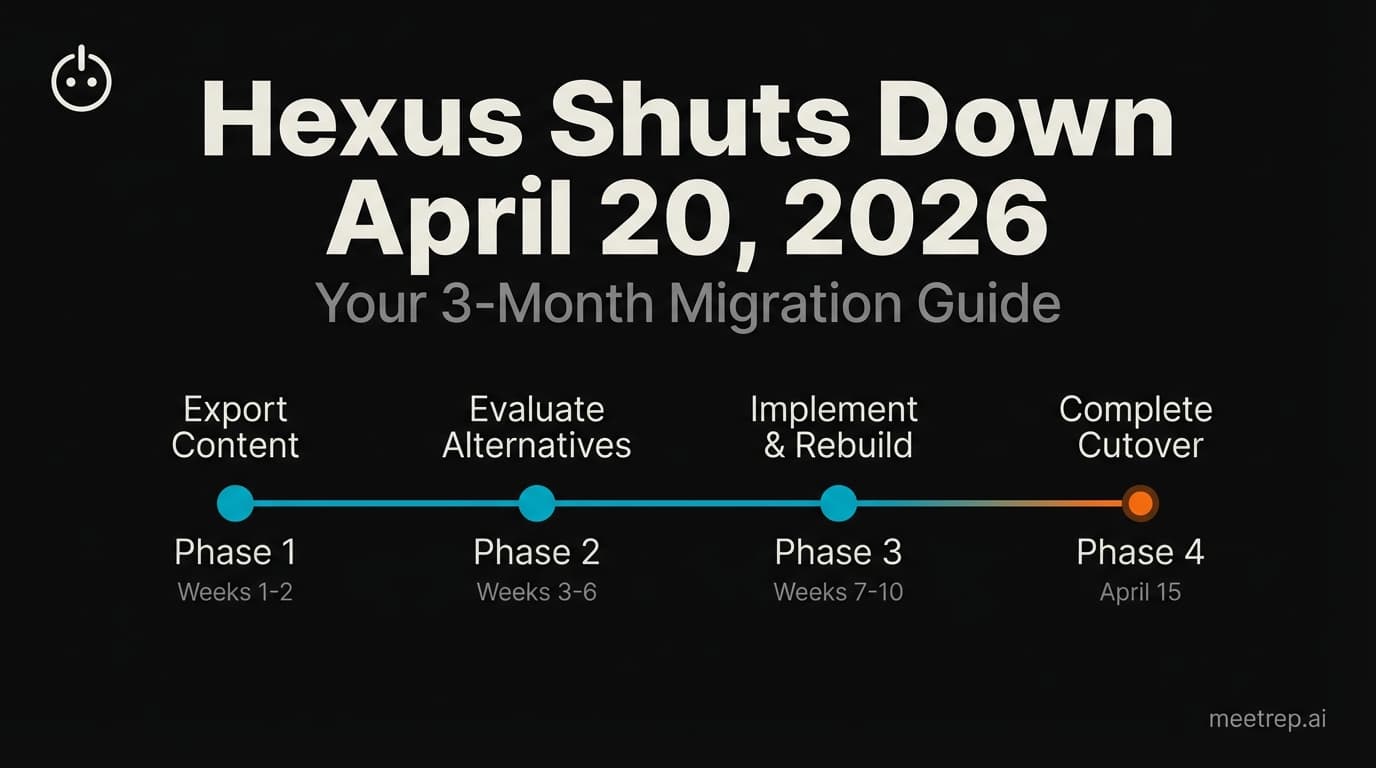
Hexus Acquired by Harvey AI: Congrats & What It Means for Demo Automation Teams
Hexus is shutting down following its acquisition by Harvey AI. Learn how to manage your migration and discover the best demo automation alternatives before April 2026.
Why the "Software Demo" is Broken—and Why AI Agents Are the Future
The traditional software demo is dead. Discover why 94% of B2B buyers rank vendors before calling sales and how AI agents are replacing manual demos to scale revenue.
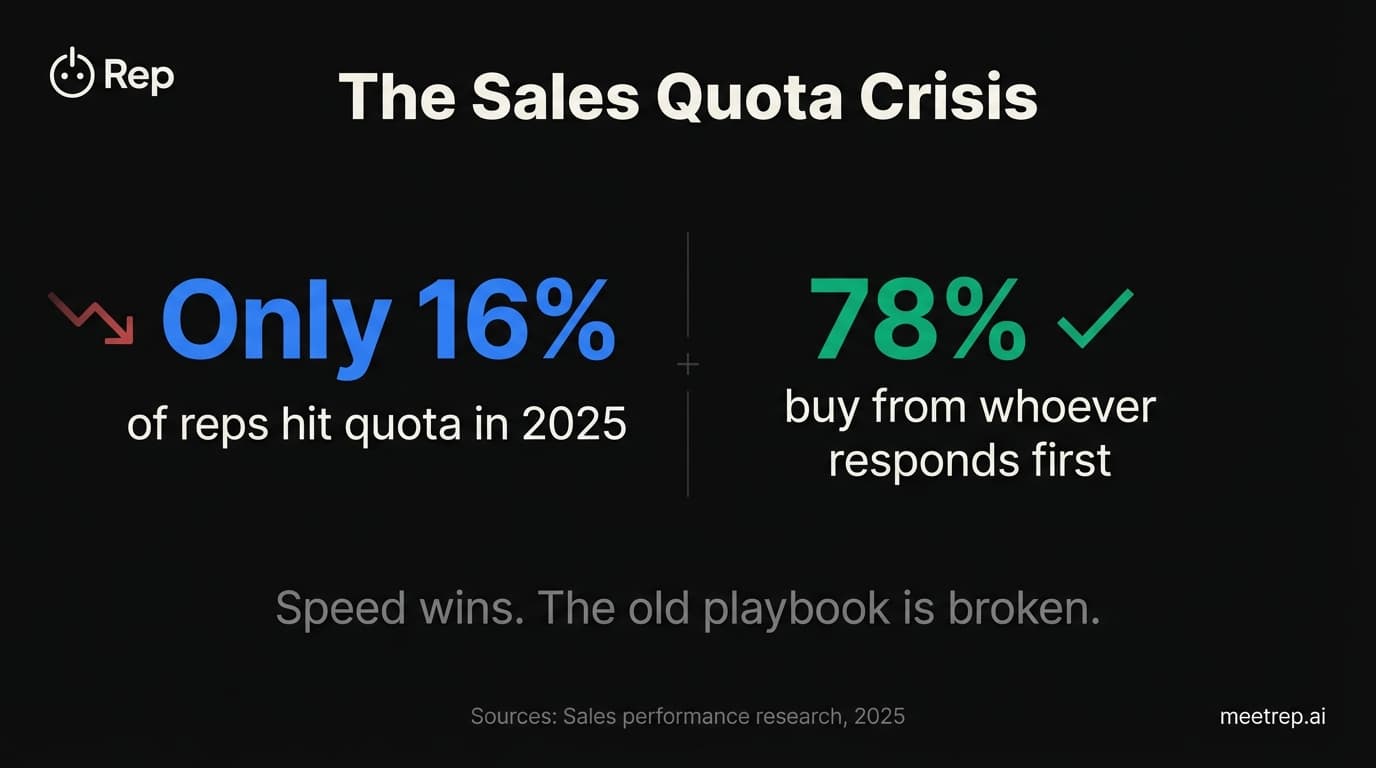
Why Autonomous Sales Software is the Future of B2B Sales (And Why the Old Playbook is Dead)
B2B sales is at a breaking point with quota attainment at 46%. Discover why autonomous 'Agentic AI' is the new standard for driving revenue and meeting the demand for rep-free buying.