Mastering Qualifying Customers: The 2026 Playbook

Executive Summary
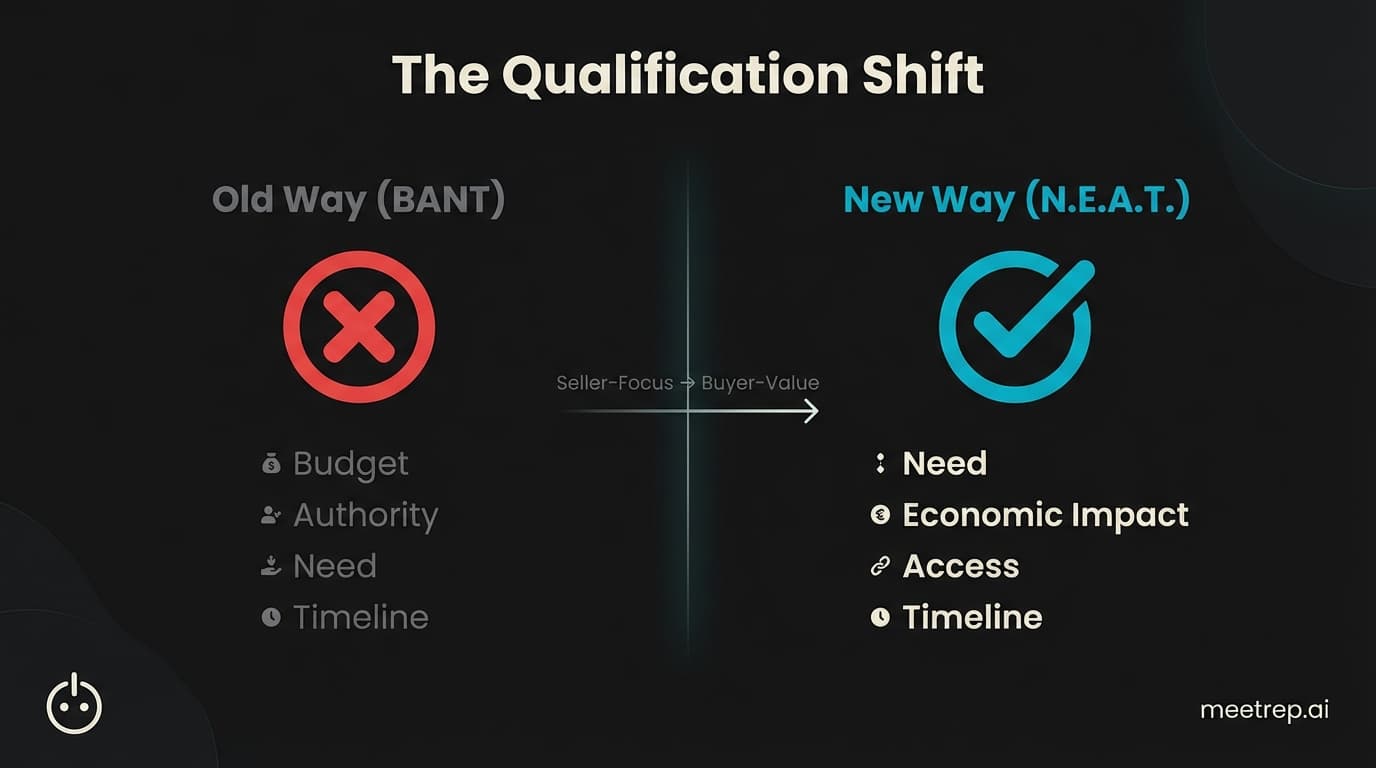
- BANT is dead: Modern buyers resent interrogation. Use signal-based qualification (N.E.A.T. or MEDDIC) instead.
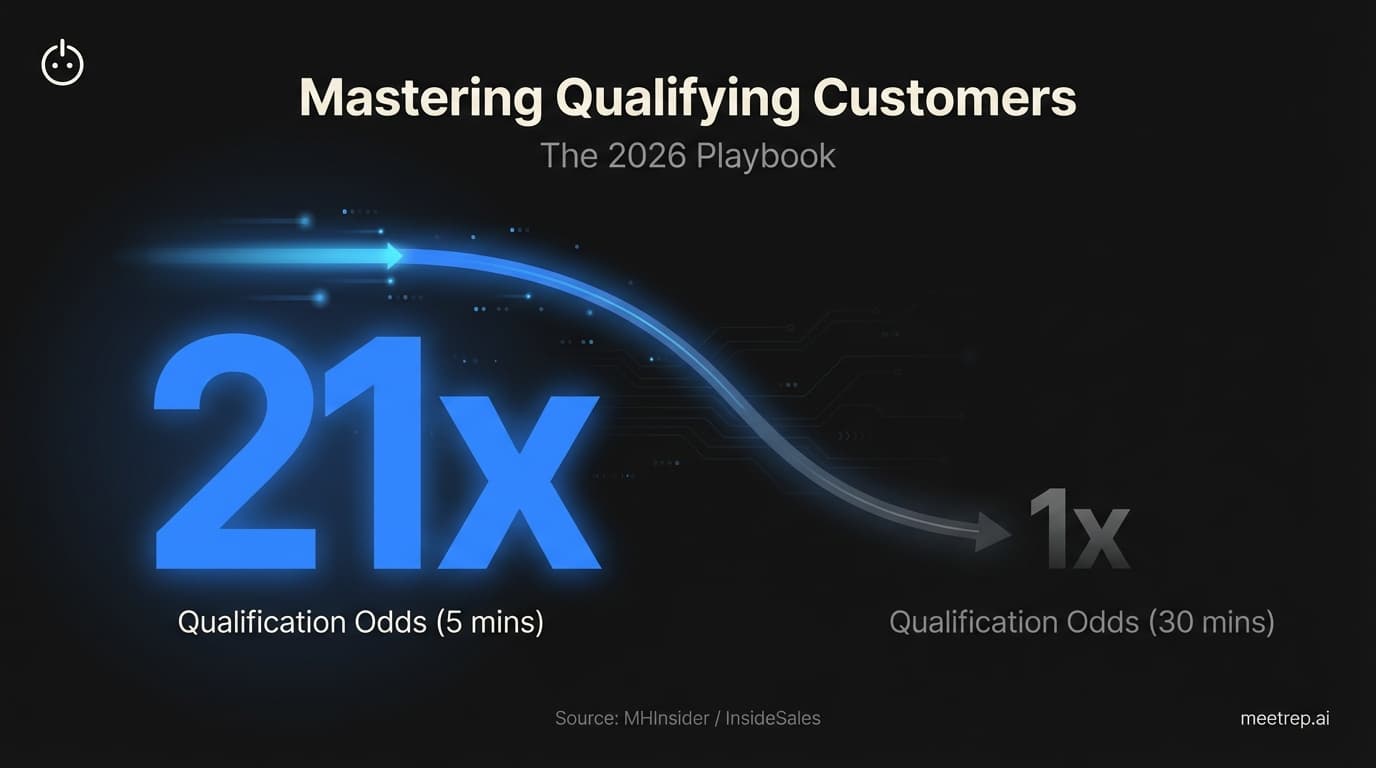
- Speed is the new filter: If you miss the 5-minute window, your qualification odds drop by 95%.
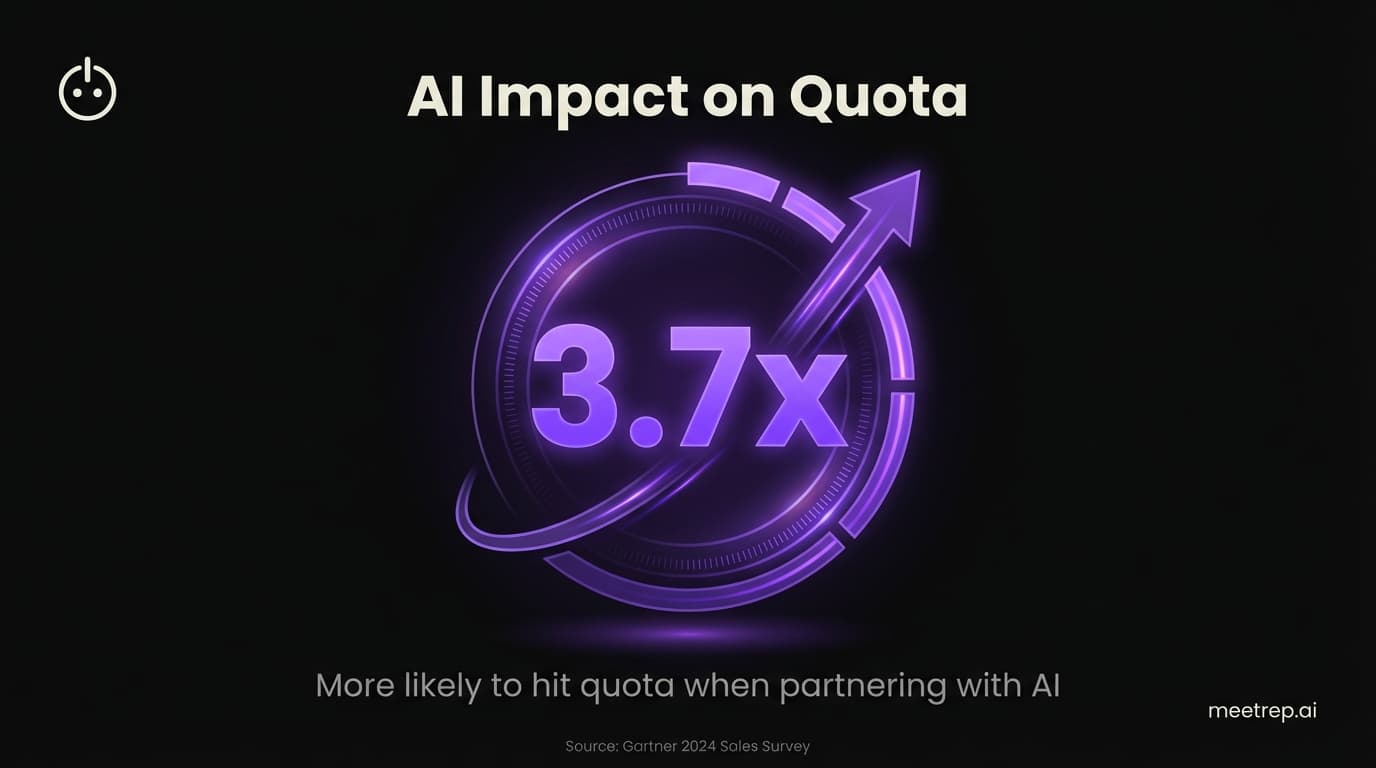
- AI is the answer: Sellers partnering with AI are 3.7x more likely to hit quota.
- Show, don't tell: Letting AI demonstrate the product acts as a self-qualification tool.
In 2026, speed isn't just an advantage. It is survival.
Research confirms that responding to a lead within five minutes increases your odds of qualifying them by 21x.
But here's the problem.
37% of your buyers are researching you while your SDR team is asleep.
I saw this disconnect firsthand while building sales automation tools at GoCustomer.ai. We had teams crushing their call metrics—dialing hundreds of numbers—yet missing quota. Why? Because they were "busy" qualifying people who were never going to buy. Meanwhile, the high-intent buyers went to competitors who responded faster.
You don't need more leads. You need a better filter.
This guide isn't about asking "What's your budget?" faster. It is about moving from manual checklists to Agentic Qualification—using AI to qualify customers 24/7 so your humans only talk to closers.
Why Traditional Qualification is Failing Your SDR Team
Qualifying customers is the process of evaluating potential buyers against your Ideal Customer Profile (ICP) to determine their likelihood of purchasing. Historically, this meant a human asking a checklist of questions. Today, manual qualification is the biggest bottleneck in your pipeline.
Think about your current process. A lead comes in. An SDR picks it up (maybe 30 minutes later, maybe the next day). They book a "discovery call." The prospect shows up expecting to see the product. Instead, they get interrogated about their budget.
The result? Friction. And lost revenue.
According to HubSpot, 67% of lost sales are a result of sales reps not properly qualifying potential customers.
The issue isn't that reps are bad at their jobs. It's that the job has changed. Buyers are now 80% of the way through their journey before they want to talk to a human. If you gate them with a 20-minute manual qualification call, you lose them.
What we learned at GoCustomer: We found that forcing a "qualification call" before showing the product increased drop-off rates by nearly 40%. Buyers today want to verify value before they verify budget.
The New Standard: Signal-Based Qualification
If manual checklists are out, what's in?
Signal-based qualification. This means looking at behavioral data to determine intent rather than relying solely on what a prospect tells you.
When we built Rep, we designed the architecture to look for actions, not just answers. Did the prospect navigate to the pricing page? Did they ask about "SSO" (an enterprise signal) or "free tier" (a hobbyist signal) during the demo?
Here is the shift you need to make:
| Feature | Old Way (BANT) | New Way (Signal/N.E.A.T.) |
|---|---|---|
| Focus | Seller's needs (Budget/Authority) | Buyer's pain (Need/Impact) |
| Timing | First call interrogation | Continuous assessment |
| Data Source | Verbal answers | Behavioral signals + enrichment |
| Gate | "Do you have budget?" | "Does this solve your pain?" |
My recommendation? Drop BANT. It focuses on the seller's timeline ("Can you buy now?"), not the buyer's problem.
Instead, use N.E.A.T. for initial qualification:
- Need: Does the prospect have a pain we solve?
- Economic Impact: Do they understand the financial value?
- Access to Authority: Can they get us to the decision-maker?
- Timeline: Is there a compelling event driving this?
This framework invites conversation. BANT shuts it down.
The Role of AI Agents in Qualification
AI agents—specifically Agentic AI—automate customer qualification by engaging leads via voice or chat 24/7, analyzing behavioral signals, and handing off only ready buyers to humans.
This is different from the "chatbots" of 2023. Those were decision trees ("Press 1 for Sales"). Agentic AI, like what we're building at Rep, can join a video call, demonstrate the product, answer complex questions, and qualify the customer based on their reactions.
Why does this matter? Because of the "Humanly Impossible" Gap.
Research shows that the odds of qualifying a lead decrease by 21x if the response time increases from 5 minutes to 30 minutes.
Be honest. Can your human SDRs hit a 5-minute response time at 2 AM?
The Data: According to Martal Group, 37% of B2B buyers do their research outside of regular business hours. If you rely on humans alone, you are automatically ignoring over a third of your market.
This isn't about replacing SDRs. It is about arming them. A Gartner report from late 2024 revealed that sellers who effectively partner with AI tools are 3.7 times more likely to meet quota than those who don't.
Think about that. Nearly 4x the success rate. That isn't a small optimization; that is a different game entirely.
3 Steps to Build an Automated Qualification Playbook
You can't just "turn on AI" and hope for the best. You need a playbook. Here is the exact process I recommend for modern SDR teams.
1. Define "Qualified" with Data (Not Gut Feeling)
Most teams guess at their ICP. They say, "We want companies with 50+ employees."
Why 50? Why not 40?
Look at your last 50 closed-won deals. What did they actually look like? Maybe your sweet spot is actually 20-100 employees using HubSpot CRM. Be specific. If a prospect uses a competitor that is impossible to migrate from, that is a knockout signal. Teach your AI to look for that tech stack signal immediately.
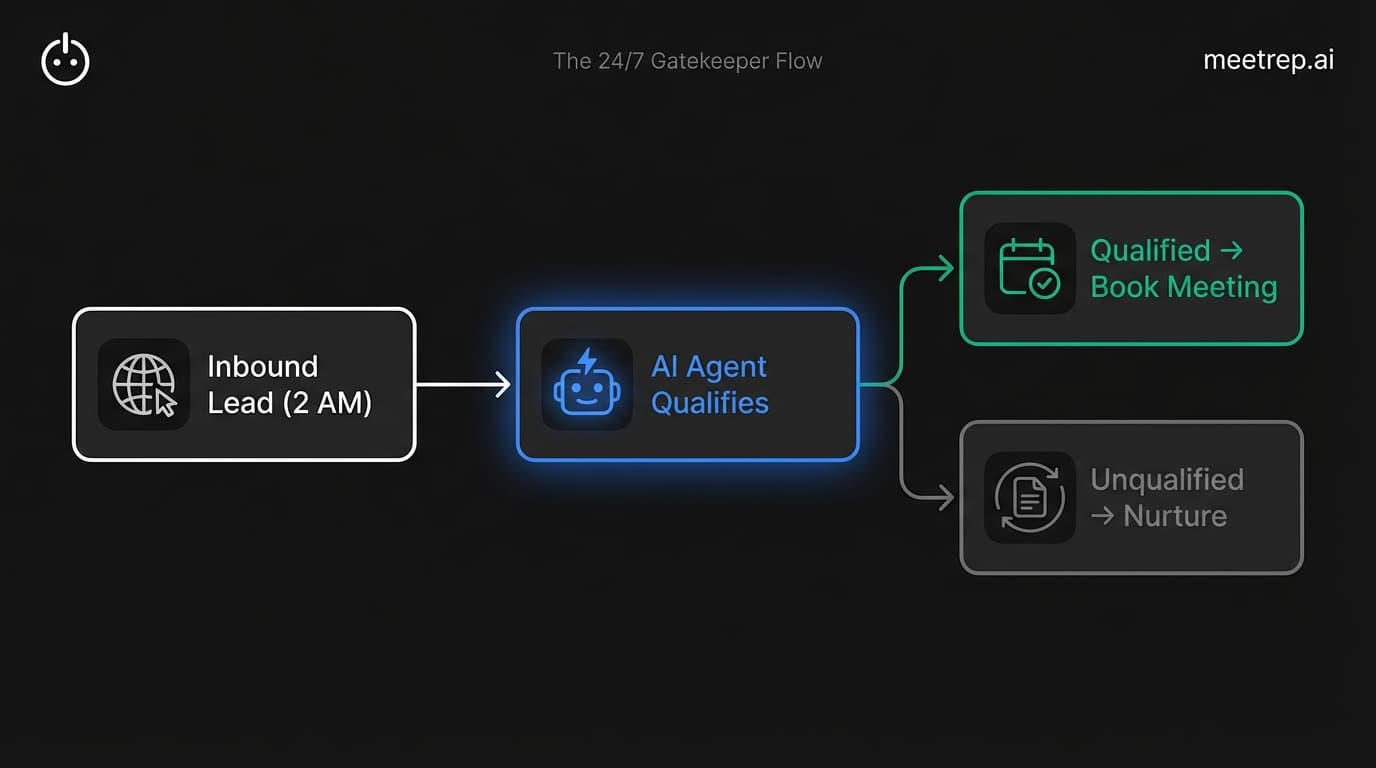
2. Deploy the 24/7 Gatekeeper
This is where tools like Rep fit in. Place an AI agent at the front of your inbound funnel.
When a prospect clicks "Get a Demo" at 9 PM:
- The AI agent joins immediately (hitting the 5-minute window).
- It shows the product (satisfying the buyer's need for information).
- It asks qualifying questions naturally during the demo flow. ("How are you handling [problem] right now?")
If the prospect is a qualified buyer, the AI books a meeting with your AE. If they're a student or a competitor, the AI politely directs them to self-serve resources. Your AE wakes up to a calendar of qualified meetings, not "discovery calls" with tire kickers.
Key Insight: Early AI deployments in sales have already shown the ability to boost win rates by 30% or more, according to Bain & Company. The efficiency gains pay for the software in weeks.
3. Enrich, Don't Interrogate
Stop asking for information you can find elsewhere.
Use enrichment tools (like Clearbit or ZoomInfo) to fill in company size, revenue, and tech stack. This frees up your AI agent (or human rep) to ask second-order questions:
- Instead of: "How big is your company?"
- Ask: "I see you're scaling past 200 employees—does that mean compliance is becoming a blocker for you?"
That is a qualification question that builds trust.
Real-World Success: How Top Teams Are Doing It
This isn't theoretical. Companies are already shifting to automated, "show-me-first" qualification.
Take Darwinbox, an HR tech company. They faced a flood of leads and a bottleneck in scheduling. By implementing interactive demos (a form of automated qualification), they saw a 35-40% increase in inbound MQLs.
Why? Because allowing customers to "touch" the product acted as a self-qualification filter. Serious buyers engaged deeply. Casual browsers dropped off.
Or look at Google. By using revenue intelligence tools to automate data capture and qualification insights, their reps got back approximately 12% of their time annually. That's weeks of selling time returned to the team.
Common Mistake: Don't assume automation means "impersonal." In a 2025 survey, 72% of customers said they expect personalized experiences. An AI agent that knows your name and answers your specific technical questions is far more personal than a generic form that says "We'll get back to you in 48 hours."
The Bottom Line
The era of "dialing for dollars" and manual BANT checklists is over. It was dying in 2024. In 2026, it is officially buried.
If you are an SDR manager, you have two choices. You can keep pushing your team to work faster than is humanly possible, trying to hit that 5-minute window at midnight. Or, you can build a system that qualifies customers while you sleep.
My take? The teams that win this year won't be the ones with the most SDRs. They will be the ones with the best agents.
Don't let qualified pipeline slip through the cracks just because it came in after 5 PM.
See how Rep handles 24/7 qualification.Book a demo with Rep (or let our AI show you the product right now).

Nadeem Azam
Founder
Software engineer & architect with 10+ years experience. Previously founded GoCustomer.ai.
Nadeem Azam is the Founder of Rep (meetrep.ai), building AI agents that give live product demos 24/7 for B2B sales teams. He writes about AI, sales automation, and the future of product demos.
Frequently Asked Questions
Table of Contents
- Why Traditional Qualification is Failing Your SDR Team
- The New Standard: Signal-Based Qualification
- The Role of AI Agents in Qualification
- 3 Steps to Build an Automated Qualification Playbook
- Real-World Success: How Top Teams Are Doing It
- The Bottom Line
Ready to automate your demos?
Join the Rep Council and be among the first to experience AI-powered demos.
Get Early AccessRelated Articles
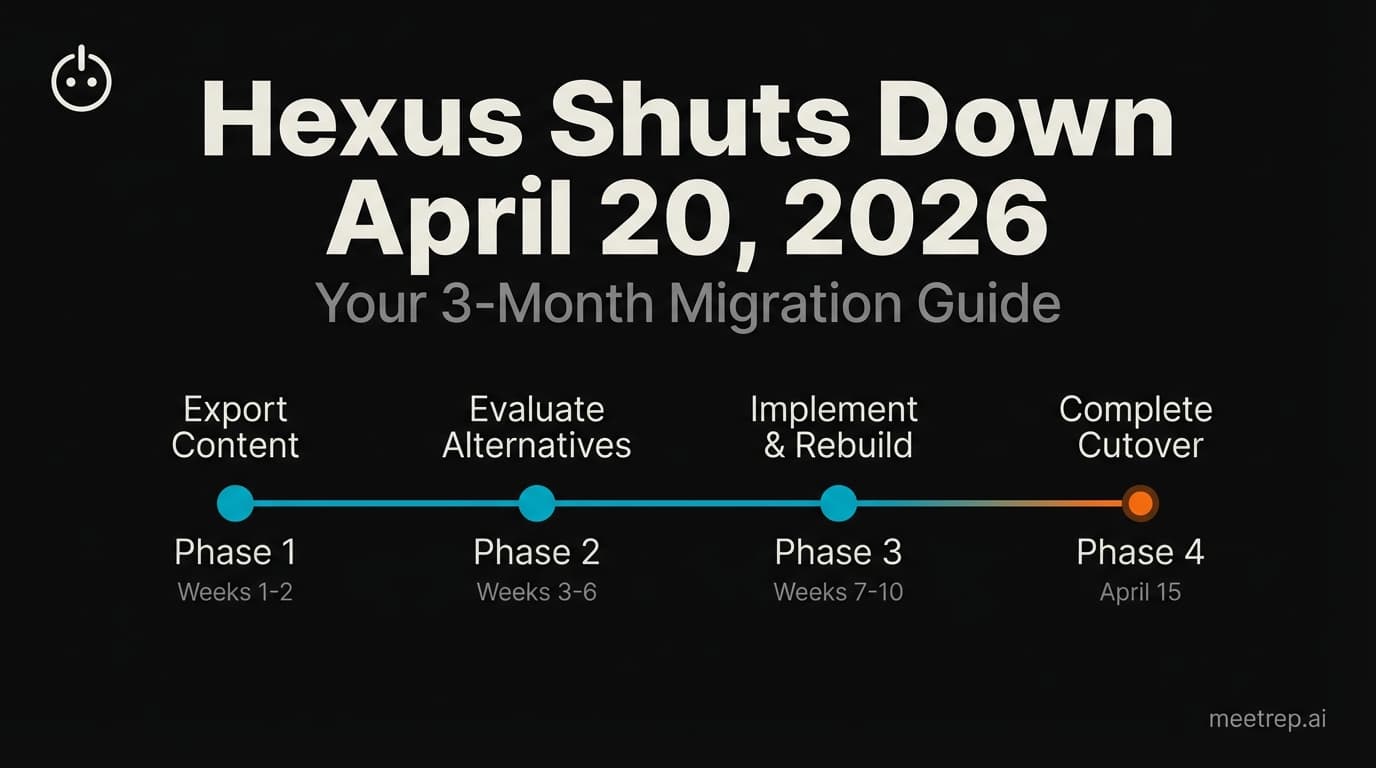
Hexus Acquired by Harvey AI: Congrats & What It Means for Demo Automation Teams
Hexus is shutting down following its acquisition by Harvey AI. Learn how to manage your migration and discover the best demo automation alternatives before April 2026.
Why the "Software Demo" is Broken—and Why AI Agents Are the Future
The traditional software demo is dead. Discover why 94% of B2B buyers rank vendors before calling sales and how AI agents are replacing manual demos to scale revenue.
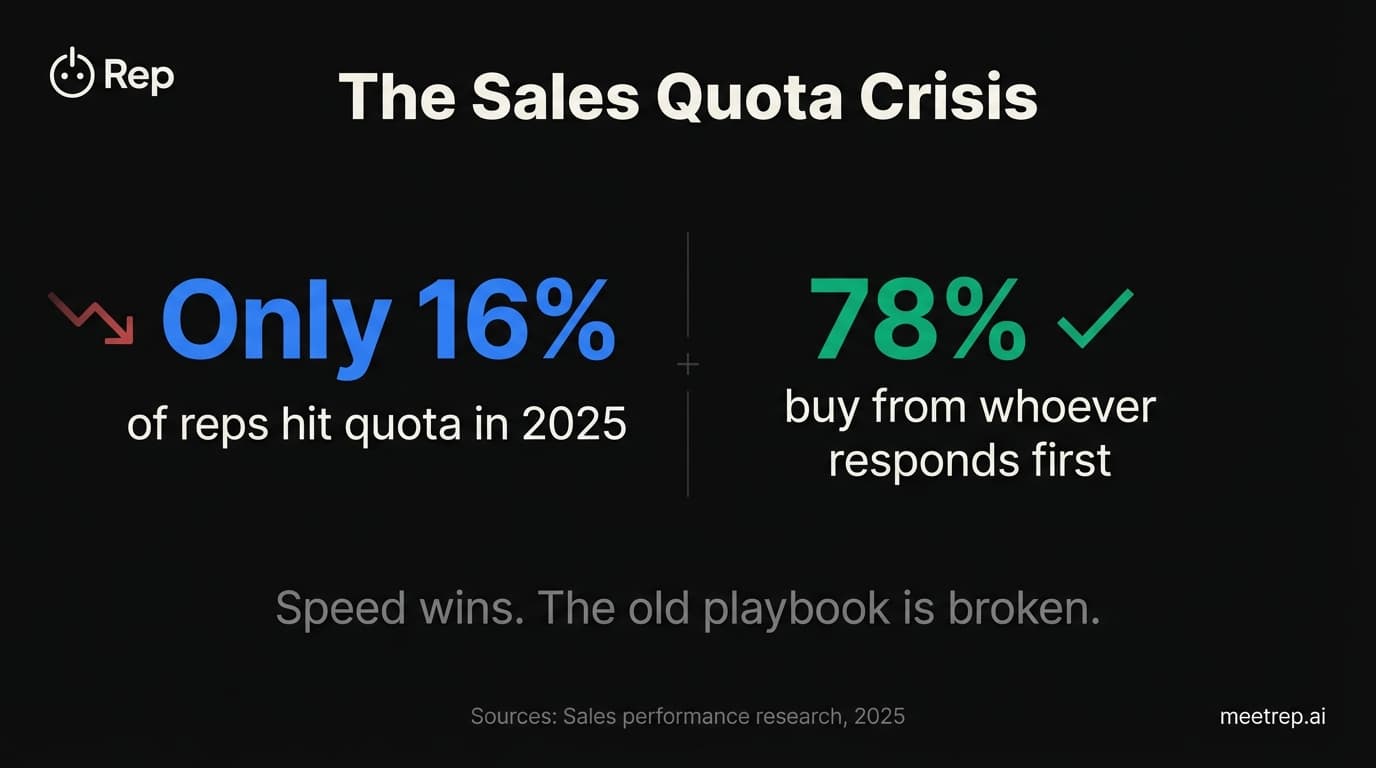
Why Autonomous Sales Software is the Future of B2B Sales (And Why the Old Playbook is Dead)
B2B sales is at a breaking point with quota attainment at 46%. Discover why autonomous 'Agentic AI' is the new standard for driving revenue and meeting the demand for rep-free buying.