Mastering How To Run A Discovery Call: A Playbook

Executive Summary
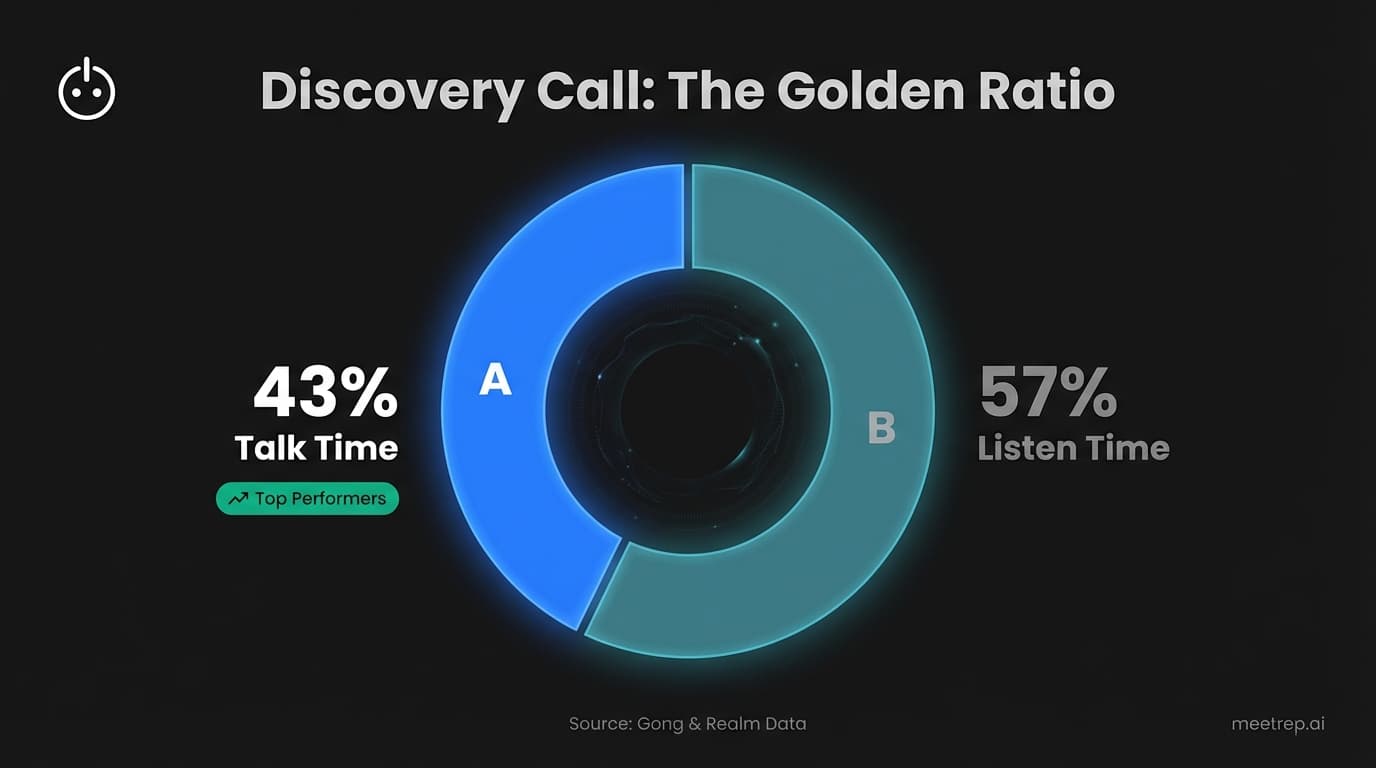
- Talk less: Top performers only speak 43% of the time.
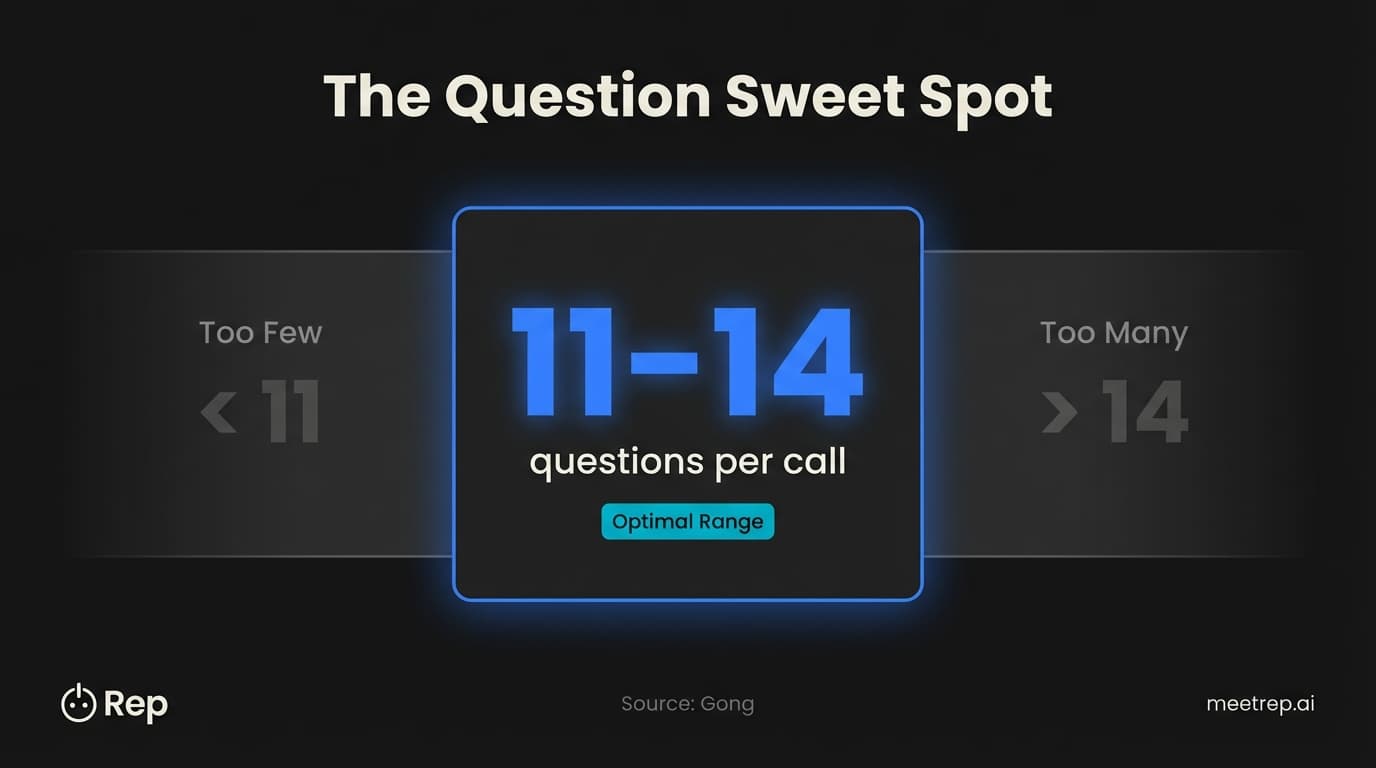
- Ask 11-14 questions: Any more is an interrogation; any less is guessing.
- Use SPICED: Situation, Pain, Impact, Critical Event, Decision.
- Multi-thread: Involving 2+ stakeholders boosts win rates by 34%.
- Automate the rest: AI agents can now handle initial discovery at scale.
The "quota crisis" isn't a theory. It is math.
In 2024, only 16% of sales reps hit their quota. Even the optimistic reports? They place that number at just 24%.
That is terrifying.
Every Sales VP knows the feeling. You queue up a call recording, hoping for gold. Instead, you hear your rep talking too much, asking surface-level questions, and treating prospects like they're filling out a DMV form.
The result? Deals stall. Prospects ghost. You lose to "no decision."
I’ve been there. Building GoCustomer.ai, and now Rep, I've seen thousands of sales interactions. The difference between the reps who hit 200% of quota and the ones who miss isn't "natural talent." It is a specific, repeatable process.
This post isn't about "building rapport" or generic advice. This is the data-backed playbook on how to run a discovery call that actually closes deals in 2026.
The Anatomy of a Perfect Discovery Call
A Discovery Call is the critical first step in the sales process where a seller diagnoses a prospect's current state, identifies the gap to their desired future state, and qualifies the opportunity using frameworks like SPICED.
It is not a feature dump. It requires a specific balance of listening, questioning, and agenda-setting.
But what does that actually look like? Let's look at the numbers.
The 43:57 Golden Ratio
If there is one metric to track, it's this.
According to data from Gong and Realm, top-performing salespeople speak for only 43% of the call. Average or weak performers? They dominate the airtime, talking for 65-72% of the session.
Think about that. The reps losing deals are doing most of the talking.
The Data: Top performers listen 57% of the time. If your reps are talking for 45 minutes of a one-hour call, they aren't doing discovery. They're doing a monologue.
The Question Sweet Spot
"Just ask more questions" is bad advice. There is a ceiling.
Data analyzing millions of calls shows the optimal number of questions is between 11 and 14.
Ask fewer than 11, and you haven't dug deep enough to uncover pain. Ask more than 14, and the call starts to feel like a police interrogation. Win rates actually decline after that point.
And it’s not just about quantity. It’s about timing. Top performers don't front-load their questions. They spread them out, creating a conversation rather than a checklist.
The "Next Steps" Cliff
This drives me crazy. You have a great call. The prospect seems engaged. Then the call ends with, "I'll send you an email."
That is a death sentence for your deal.
Close rates drop by 71% when clear next steps aren't discussed on the first call. Yet, only 17% of discovery calls involve thorough time spent scheduling that next interaction.
If you don't book the next meeting on the meeting, you are actively throwing revenue away.
The Frameworks Winning in 2026
You cannot wing discovery. You need a framework.
But BANT (Budget, Authority, Need, Timing) is outdated. In a world where 80% of B2B interactions are digital, buyers do their own research. They don't need you to tell them what their budget is. They need you to help them make a decision.
Here is how the two modern heavyweights compare:
| Feature | SPICED | MEDDPICC |
|---|---|---|
| Best For | SaaS / Recurring Revenue | Enterprise / Complex Deals |
| Focus | Customer Impact & Urgency | Qualification & Process Control |
| Key Element | Critical Event: What happens if they don't buy by X date? | Paper Process: Navigating legal/procurement. |
| Why it wins | Focuses on the "Why Change?" | Prevents "No Decision" in big orgs. |
SPICED (Situation, Pain, Impact, Critical Event, Decision)
I love SPICED because it forces you to focus on Impact.
It's not enough to know the prospect has a problem (Pain). You need to quantify what that problem costs them (Impact). And then you find the Critical Event. Is there a board meeting coming up? A product launch?
If there is no deadline, there is no urgency.
MEDDPICC (Metrics, Economic Buyer, Decision Criteria, Decision Process, Paper Process, Identify Pain, Champion, Competition)
If you are selling six-figure deals, SPICED isn't enough. You need MEDDPICC.
The addition of "Paper Process" is the critical differentiator. I've seen so many deals die because a rep didn't understand the legal review timeline until it was too late.
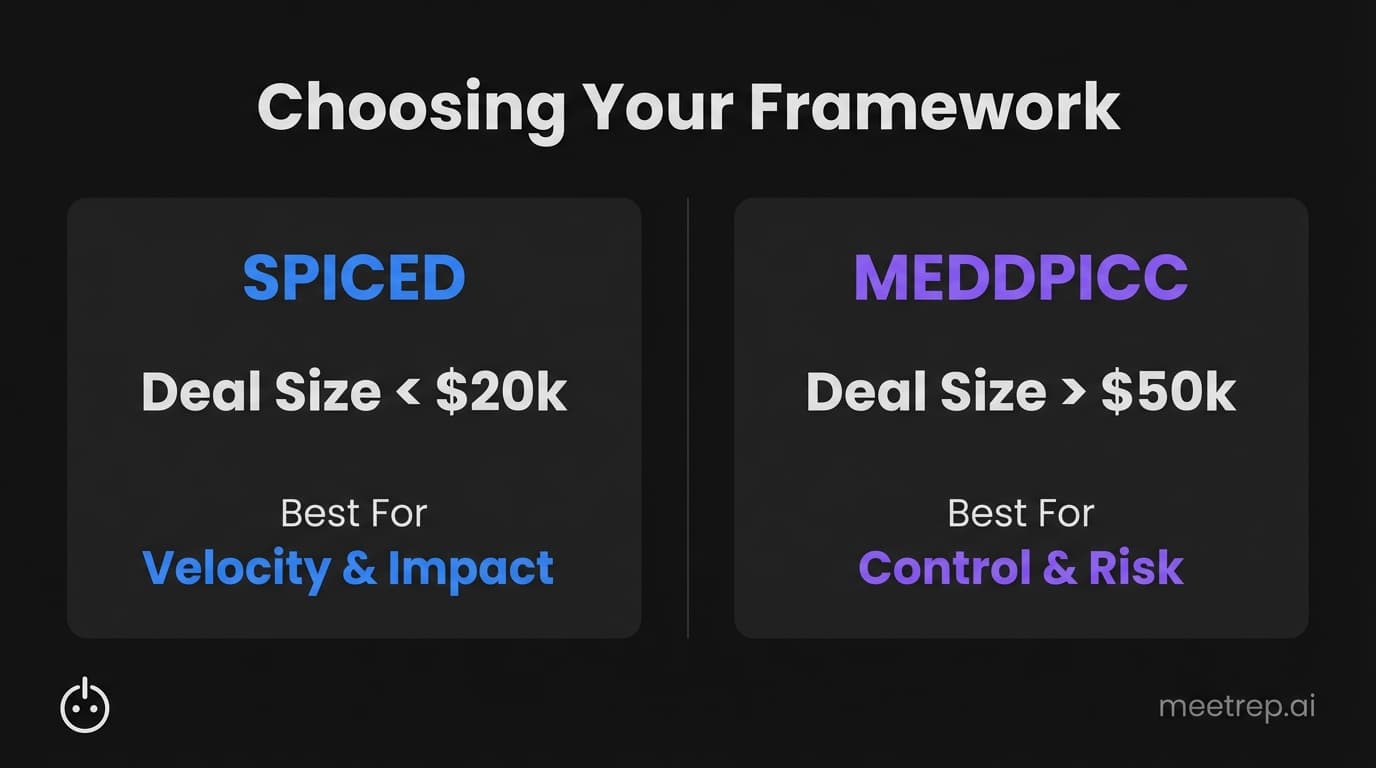
My recommendation: If your ACV (Average Contract Value) is under $20k, use SPICED. It's faster and customer-centric. If you're selling enterprise deals over $50k, you need the rigor of MEDDPICC to avoid getting stuck in procurement hell.
Multi-Threading: The Deal Saver
Multi-threading means involving multiple stakeholders from the prospect's company in the deal. It sounds obvious. Yet most reps cling to their one "Champion" like a lifeline.
That is a mistake.
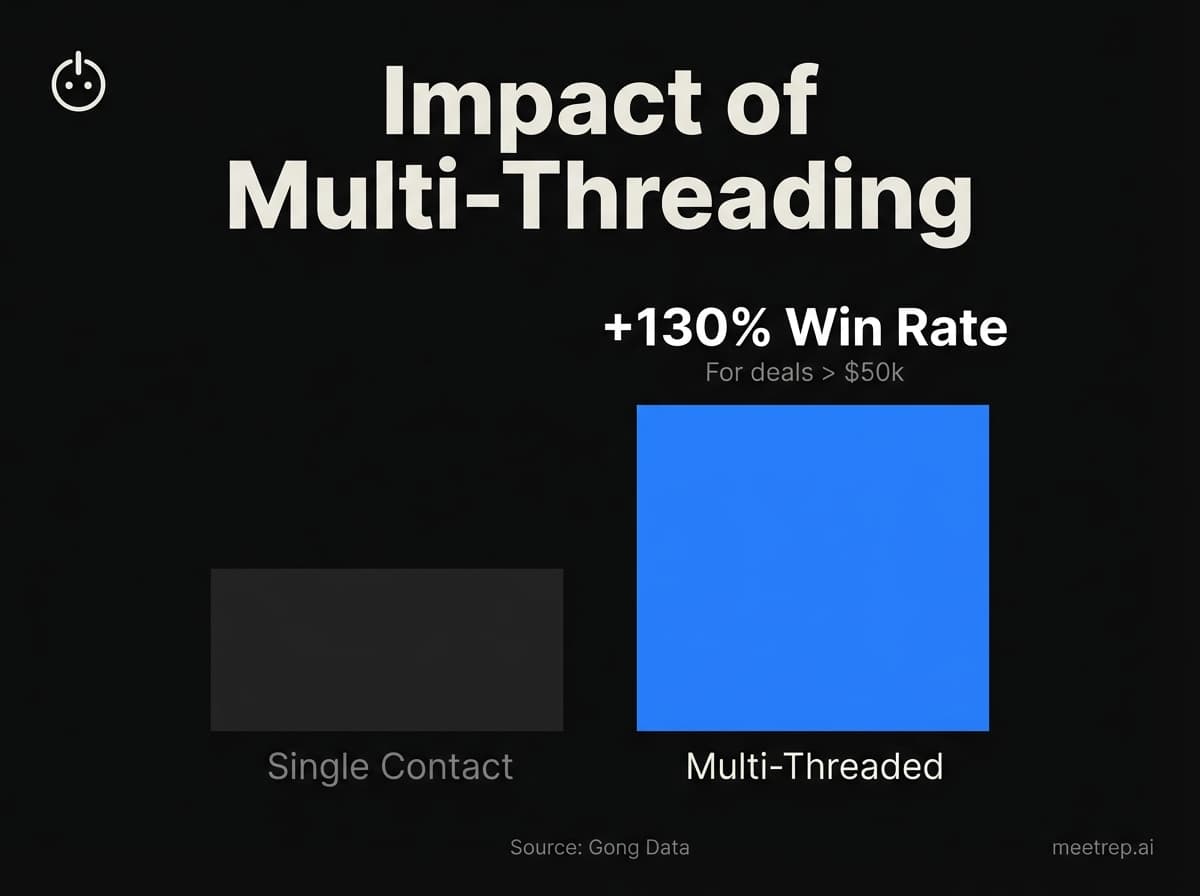
According to Gong Labs, deals that are multi-threaded have a 34% higher win rate.
But here's the kicker: for deals over $50k, multi-threading boosts win rates by 130%.
Why? Because in 2026, nobody buys alone. Buying committees are getting larger. If your rep is only talking to one person, and that person leaves or gets overruled, your deal is dead.
Common mistake: Asking your champion "Who else decides?" usually gets a vague answer. Instead, ask: "Typically, when your company buys software like this, who from Legal and IT needs to sign off?" Be specific.
The Future: Autonomous Discovery
Here is the hard truth about discovery calls: they don't scale.
Your best AEs have limited calendar slots. Your SDRs burn out asking the same qualification questions 50 times a day. And meanwhile, 33% of buyers (and 44% of millennials) say they prefer a seller-free experience.
We built Rep because we saw this gap. We realized that AI agents shouldn't just send emails—they should handle the initial conversation.
Why we built Rep this way: Most "AI for sales" tools just transcribe calls. We wanted an agent that does the call. Rep joins the video room, shares its screen, navigates the browser, and answers questions in real-time. It handles the discovery grunt work so your humans can focus on closing.
This shifts the model. Instead of your SDRs doing 30 "Are you qualified?" calls a week, your AI agent handles the first touch. It qualifies the lead, answers the basics, and books a meeting with your AE only when the buyer is ready.
You stop losing leads to scheduling friction. You stop burning out your team. And you give buyers the instant answers they want.
The Bottom Line
The days of "spray and pray" discovery are over. With quota attainment at 16%, you can't afford to waste leads on bad process.
Master the 43:57 listen-to-talk ratio. Adopt a rigorous framework like SPICED. Multi-thread every deal over $20k. These are the human skills that build trust and close big deals.
But for the initial qualification? For the "tell me about your product" calls? Stop forcing your expensive humans to do robotic work. Let an autonomous agent handle the first mile.

Nadeem Azam
Founder
Software engineer & architect with 10+ years experience. Previously founded GoCustomer.ai.
Nadeem Azam is the Founder of Rep (meetrep.ai), building AI agents that give live product demos 24/7 for B2B sales teams. He writes about AI, sales automation, and the future of product demos.
Frequently Asked Questions
Table of Contents
- The Anatomy of a Perfect Discovery Call
- The Frameworks Winning in 2026
- Multi-Threading: The Deal Saver
- The Future: Autonomous Discovery
- The Bottom Line
Ready to automate your demos?
Join the Rep Council and be among the first to experience AI-powered demos.
Get Early AccessRelated Articles
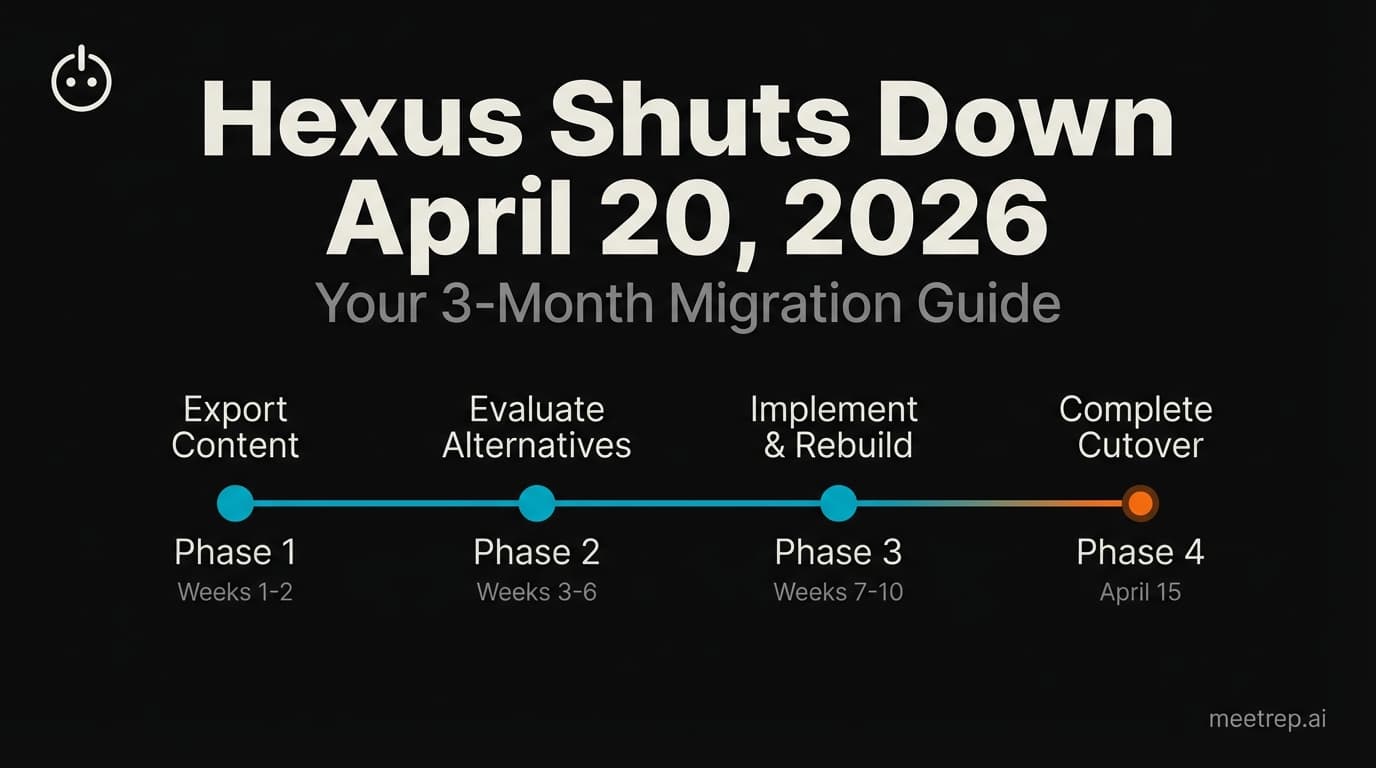
Hexus Acquired by Harvey AI: Congrats & What It Means for Demo Automation Teams
Hexus is shutting down following its acquisition by Harvey AI. Learn how to manage your migration and discover the best demo automation alternatives before April 2026.
Why the "Software Demo" is Broken—and Why AI Agents Are the Future
The traditional software demo is dead. Discover why 94% of B2B buyers rank vendors before calling sales and how AI agents are replacing manual demos to scale revenue.
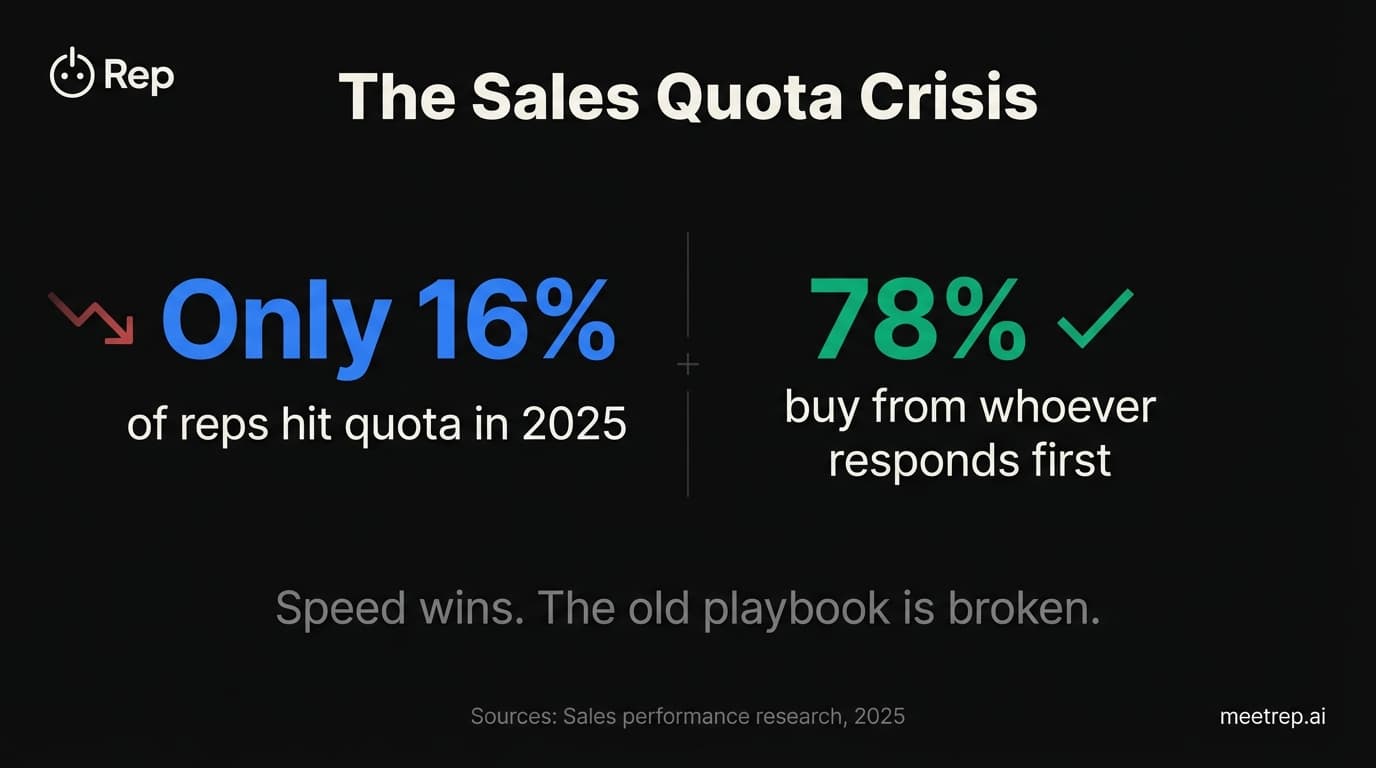
Why Autonomous Sales Software is the Future of B2B Sales (And Why the Old Playbook is Dead)
B2B sales is at a breaking point with quota attainment at 46%. Discover why autonomous 'Agentic AI' is the new standard for driving revenue and meeting the demand for rep-free buying.