Mastering How To Reduce No-Shows For Sales Demos: The 2026 Guide

Executive Summary
- The Benchmark: The average B2B no-show rate is 6.5%, but hits 18% in EdTech.
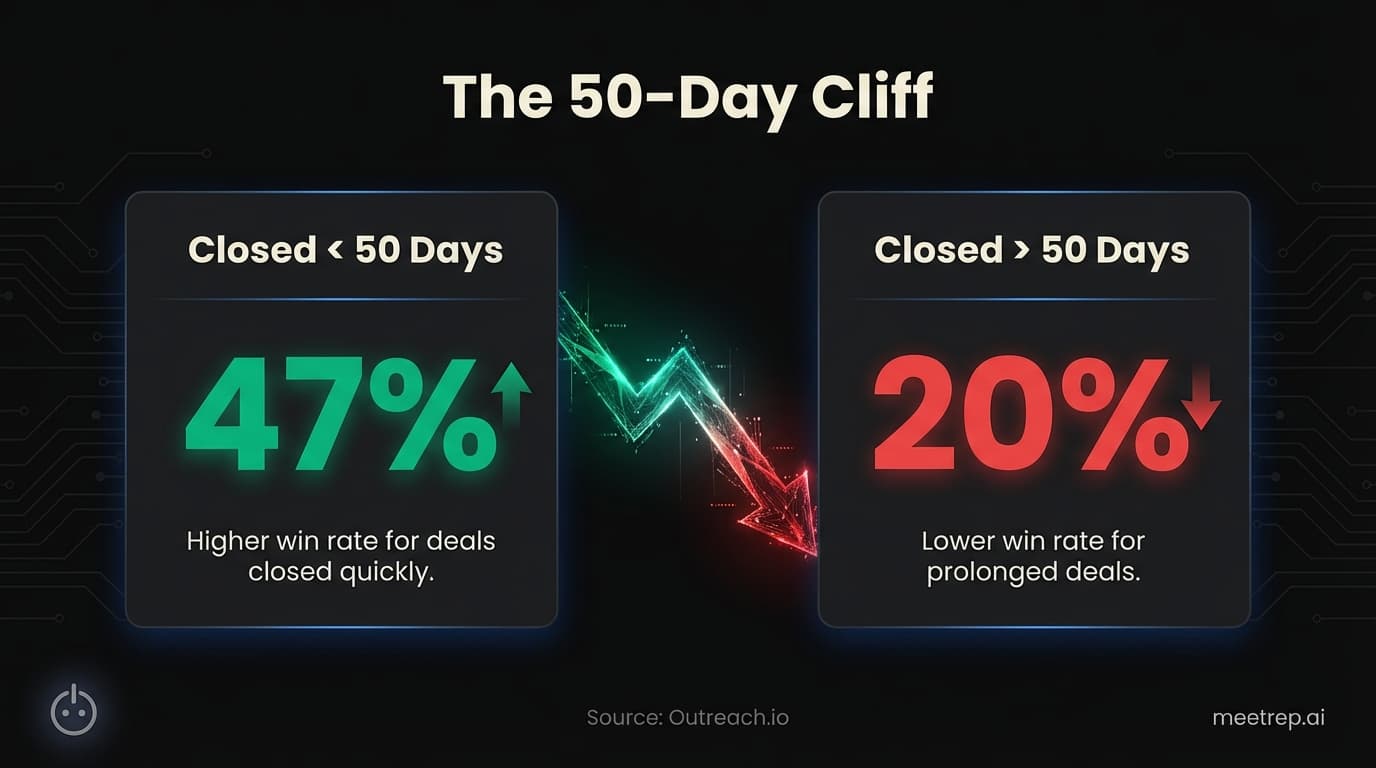
- The Cost: Deals dragging past 50 days see win rates drop by over 50%.
- The Fix: Move from "reminding" to "pre-selling." Use SMS (carefully).
- The Future: Replace the calendar entirely with instant AI demos.
In 2025, the average cold call conversion rate plummeted to just 2.3% according to Salesso. It is harder than ever to book a meeting.
So when your team finally gets a "yes," and that prospect ghosts them?
It’s not just annoying. It’s expensive.
I’ve built sales automation tools for years—first at GoCustomer and now at Rep. I’ve seen the backend data. When a prospect fails to show, you don't just lose an hour. You lose momentum. And in a market where only 25% of reps hit quota (Spotio), you cannot afford leaky bucket logistics.
It’s brutal. But it’s solvable.
Here is exactly how to reduce no-shows, based on 2026 data—not generic advice.
What Is a "Good" No-Show Rate in 2026? (Benchmarks)
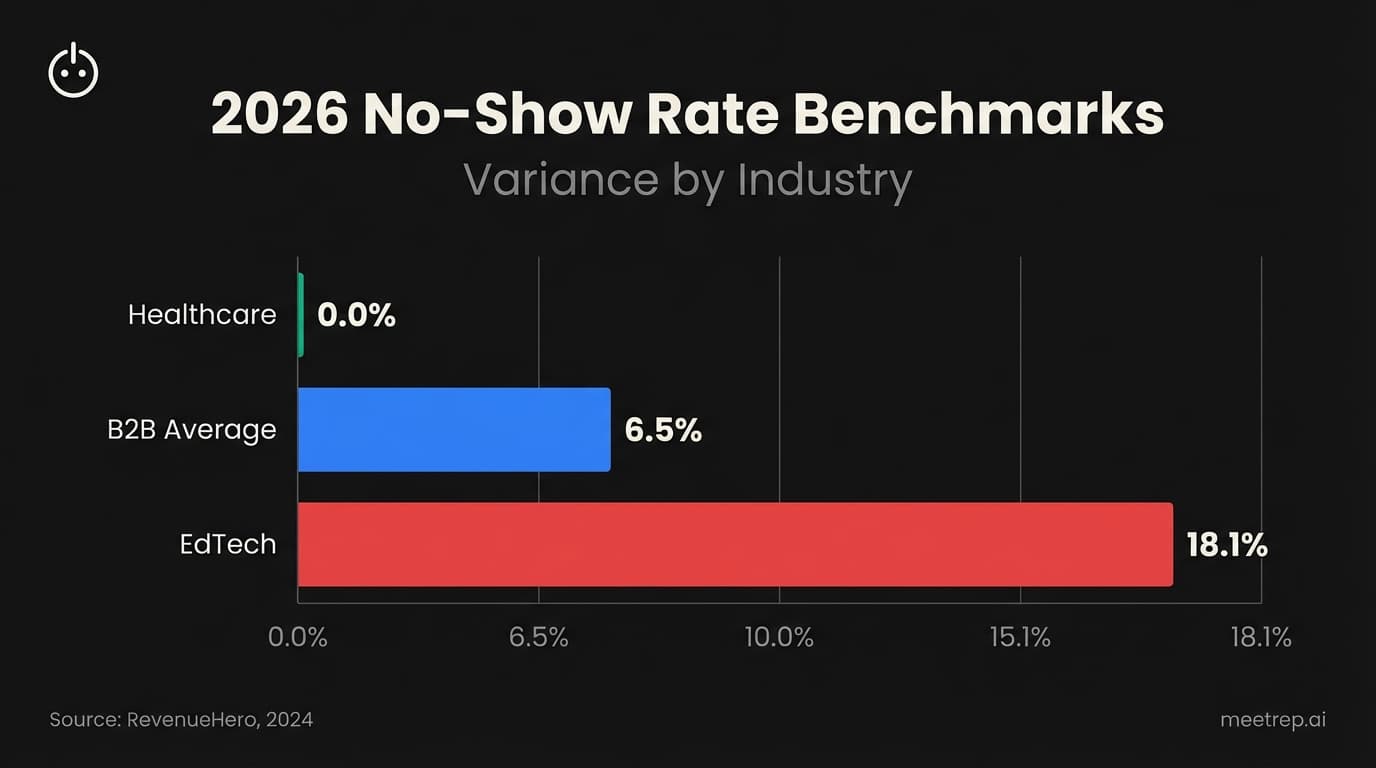
A "good" sales demo no-show rate is typically under 15% for most B2B industries, with the overall market average sitting at 6.5% as of late 2024. If your team is seeing rates above 20%, your process—not your product—is broken.
But averages lie.
At GoCustomer, we learned quickly that selling to developers is different from selling to doctors. You need to benchmark your team against your specific sector, not a generic "B2B" number.
According to data from RevenueHero, the variance is massive:
| Industry | No-Show Rate | Context |
|---|---|---|
| Healthcare | 0.0% | High respect for appointments; hard to book, hard to break. |
| Developer Tools | 1.2% | Technical buyers usually show up if the tech interests them. |
| IT & Security | 1.8% | High intent; urgency often drives attendance. |
| Data & Analytics | 2.8% | Process-oriented buyers. |
| Average B2B | 6.5% | The baseline you should aim to beat. |
| Education / EdTech | 18.1% | High volatility; often involves committees or busy academics. |
Key Insight: If you sell to developers and have a 10% no-show rate, you are failing. If you sell to universities and have 10%, you are actually outperforming the market. Context is everything.
Why Prospects Ghost (It’s Not Just "Busyness")
Prospects ghost because the perceived value of the meeting has dropped below the pain of attending it. That’s it. It’s rarely a calendar conflict. It’s a priority conflict.
Most SDR managers think the solution is "more reminders." Send an email 10 minutes before. Ping them on LinkedIn. Call their cell.
Stop.
That’s nagging. It doesn't solve the core issue.
Through my experience building Rep and analyzing thousands of sales cycles, I’ve identified three actual reasons they don't show:
- The Value Gap: The invite just says "Demo with Rep." It feels optional. If they don't know exactly what they'll learn, they will prioritize their own internal meeting over yours.
- Friction: You booked the meeting 5 days out. In those 120 hours, their urgency cooled. They forgot why they filled out the form.
- The "50-Day" Fear: This is subtle but real. Prospects sense when a sales process is going to be slow.
The Data: According to Outreach, opportunities closed within 50 days have a 47% win rate. Deals that drag beyond that drop to 20% or lower. No-shows are the primary cause of deal drag.
When a prospect ghosts, they aren't just being rude. They are signaling that your process is too slow or too low-value for them.
5 Proven Strategies to Slash No-Show Rates
So how do you fix this? We can’t control the prospect’s schedule, but we can control the setup. Here are five strategies that actually move the needle on how to reduce no-shows.
1. The "Value-Add" Confirmation (Stop "Checking In")
Never send an email that says, "Just confirming our time for tomorrow." It’s weak. It adds zero value.
Instead, send a pre-read or a micro-demo.
"Looking forward to showing you how we automate X tomorrow. In the meantime, here is a 30-second preview of the dashboard we’ll be covering."
This re-hooks their interest. It reminds them why they booked. Tools like Consensus or our own platform, Rep, can generate these assets. You are selling the meeting, not just the product.
2. Intelligent Multi-Channel Reminders
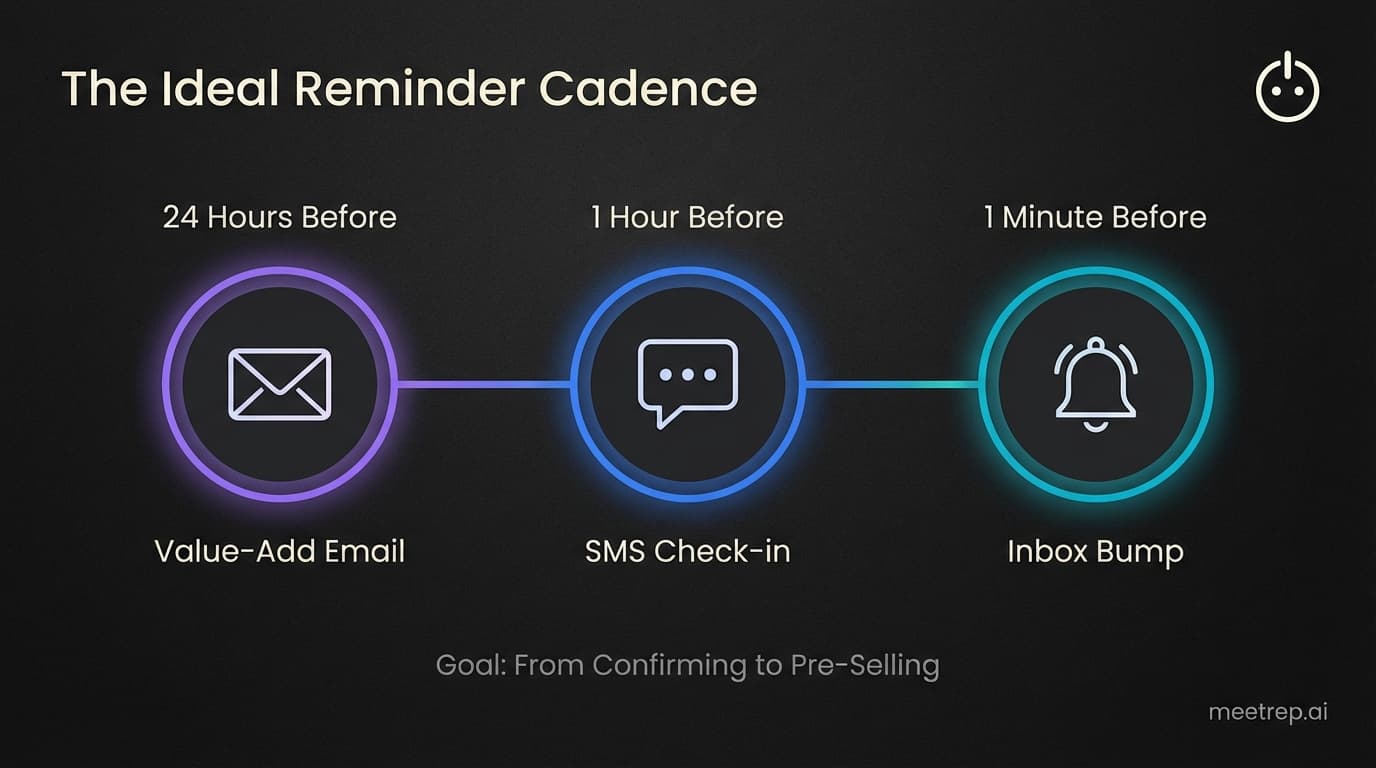
Yes, you need reminders. But the channel matters more than the frequency.
Data from RevenueHero shows that automated SMS reminders can reduce no-show rates by 30–40%.
The Ideal Cadence:
- 24 Hours Before (Email): The "Value-Add" confirmation (agenda + content).
- 1 Hour Before (SMS): "Hi [Name], looking forward to our chat in an hour. Let me know if anything comes up."
- 1 Minute Before (Email): "Bumping this to the top of your inbox. Here is the Zoom link."
Use SMS carefully. If you sell to traditional industries, stick to email. If you sell to tech/startups, SMS is standard.
3. Enable One-Click Rescheduling
Make it easy for them to bail responsibly.
This sounds counterintuitive. Why give them an out? Because a reschedule is 10x better than a no-show. A no-show wastes your rep's prep time and emotional energy. A reschedule just moves the block.
Include a "Need to reschedule? Click here" link in every confirmation invite.
4. Comp on "Held" Meetings, Not Booked
At GoCustomer, we saw this mistake constantly. Managers paid SDRs for "meetings booked."
The result? SDRs pressured low-intent leads into slots they had no intention of keeping.
Shift your compensation model. Pay for Sales Qualified Meetings (SQMs) or "meetings held." Suddenly, your SDRs will start confirming appointments aggressively. They will qualify harder. They won't book the "maybe" prospect just to hit a metric.
5. Speed to Lead (The 5-Minute Rule)
The longer the gap between interest and contact, the higher the ghost rate.
If a prospect fills out a form and books a meeting for 4 days later, the no-show risk is high. If they book for this afternoon, the risk is near zero.
According to Spotio, responding within 5 minutes increases engagement 9x. Prioritize "instant booking" on your calendar tools.
The Role of AI in Eliminating No-Shows (Rep Integration)
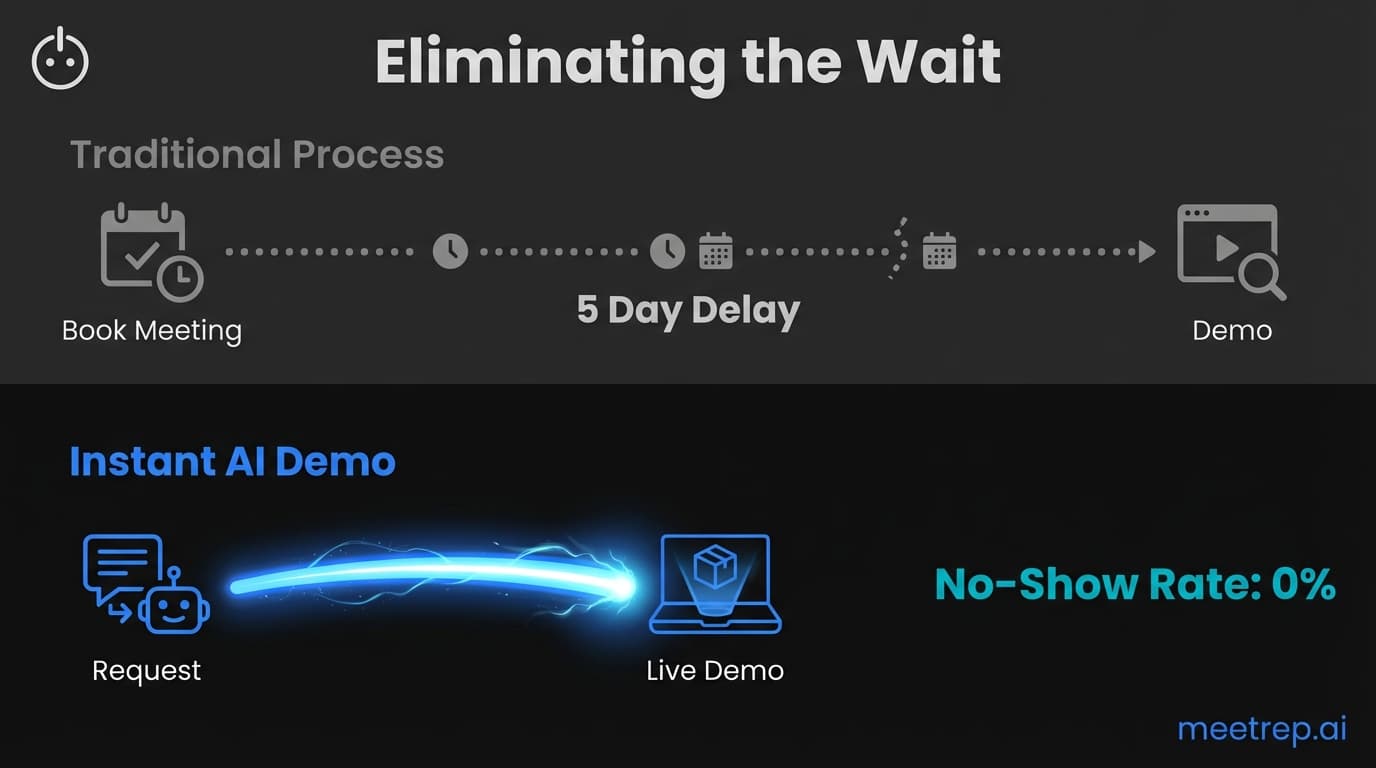
Here is a controversial take: The best way to reduce no-shows is to eliminate the "show" part entirely.
Why are we still asking prospects to book a time for "next Tuesday at 2 PM"? That is friction. That is a chance for them to lose interest.
We built Rep to solve this architectural flaw in sales.
Instead of a calendar link, Rep allows you to offer an instant, autonomous demo. The prospect clicks "Start Demo," and an AI agent joins a video room immediately—24/7. It speaks with them, shares its screen, navigates your actual product, and answers questions.
Why this kills no-shows:
- Zero Latency: The demo happens at the exact moment of peak intent.
- No Scheduling: There is no calendar invite to ignore.
- Human-Like Interaction: It’s not a video they watch; it’s a conversation.
The Data:Gong found that sellers frequently using AI generate 77% more revenue per rep. Speed and availability are the new currency.
If you can replace a "scheduled first call" with an "instant AI demo," your no-show rate for that stage drops to absolute zero. Because the meeting happens now.
Real-World Success Stories
This isn't theory. Companies are already using automation and smarter processes to fix this leaky bucket.
| Company | The Challenge | The Solution | The Result |
|---|---|---|---|
| Gainsight | Demo inefficiency | Demo automation (Demostack) | 25% increase in win rates; response time cut from days to <1 hour. Source |
| Asana | Scaling presales | Automated product experiences | Saved 400 FTE hours and boosted win rates to 57%. Source |
| Synack | Maintenance overload | Demo automation | Cut build time from 100+ hours to <10 hours. Source |
These companies realized that waiting for a human to become available was hurting their conversion. By automating the early stages—either through better scheduling logic or full AI demos—they removed the friction that causes no-shows.
The Bottom Line
A no-show isn't just an empty calendar slot. It's a signal.
It tells you that your process is slower than your prospect's interest. You can try to fix this with more aggressive email reminders, and that might help a little. But the real fix is structural.
Reduce the friction. Shorten the time-to-value. And where possible, stop making them wait for next Tuesday.
My recommendation? Look at your calendar right now. If your SDRs are booking meetings 5+ days out, you are in the danger zone. Tighten the window, send value before the call, and don't let a 2.3% conversion rate go to waste.
Don't let your calendar become a graveyard of good intentions. See how Rep can turn "booked" into "closed" by offering demos instantly.

Nadeem Azam
Founder
Software engineer & architect with 10+ years experience. Previously founded GoCustomer.ai.
Nadeem Azam is the Founder of Rep (meetrep.ai), building AI agents that give live product demos 24/7 for B2B sales teams. He writes about AI, sales automation, and the future of product demos.
Frequently Asked Questions
Table of Contents
- What Is a "Good" No-Show Rate in 2026? (Benchmarks)
- Why Prospects Ghost (It’s Not Just "Busyness")
- 5 Proven Strategies to Slash No-Show Rates
- The Role of AI in Eliminating No-Shows (Rep Integration)
- Real-World Success Stories
- The Bottom Line
Ready to automate your demos?
Join the Rep Council and be among the first to experience AI-powered demos.
Get Early AccessRelated Articles
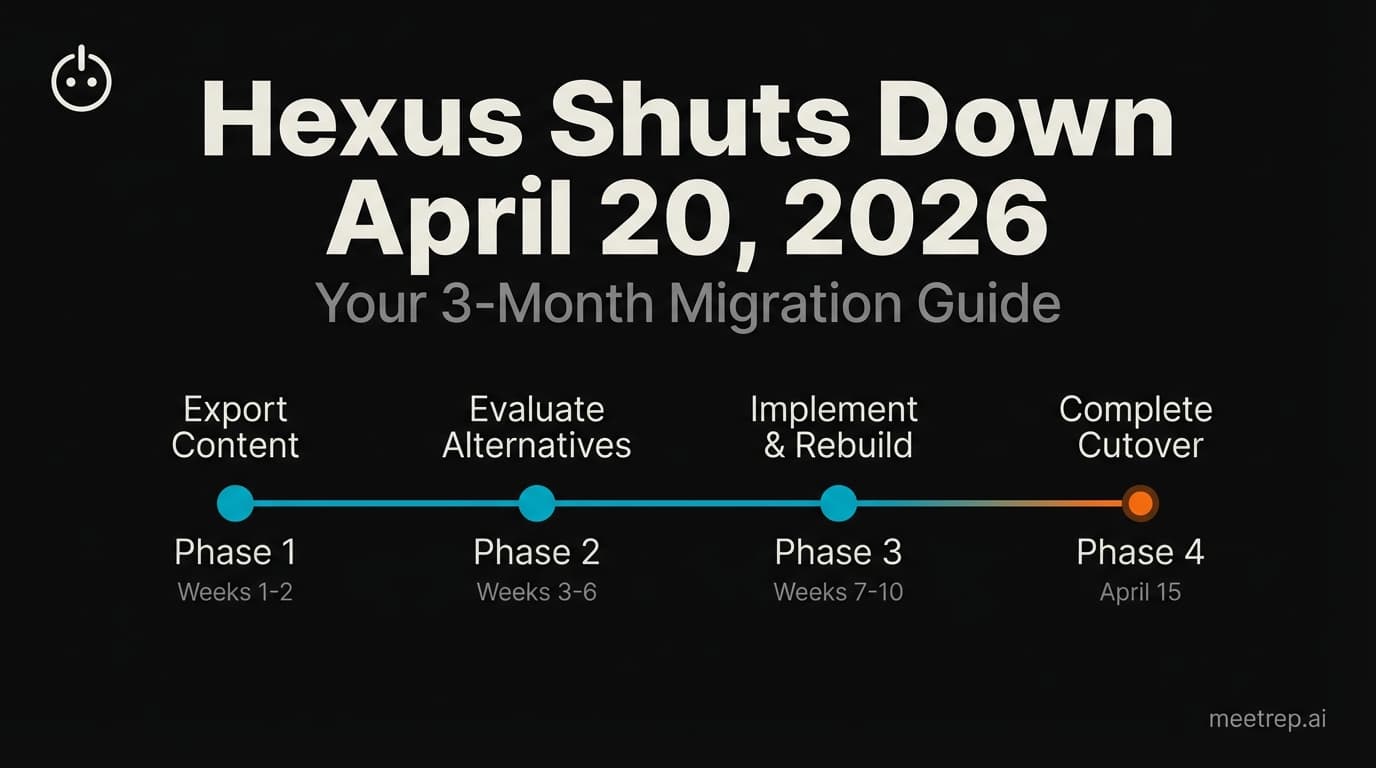
Hexus Acquired by Harvey AI: Congrats & What It Means for Demo Automation Teams
Hexus is shutting down following its acquisition by Harvey AI. Learn how to manage your migration and discover the best demo automation alternatives before April 2026.
Why the "Software Demo" is Broken—and Why AI Agents Are the Future
The traditional software demo is dead. Discover why 94% of B2B buyers rank vendors before calling sales and how AI agents are replacing manual demos to scale revenue.
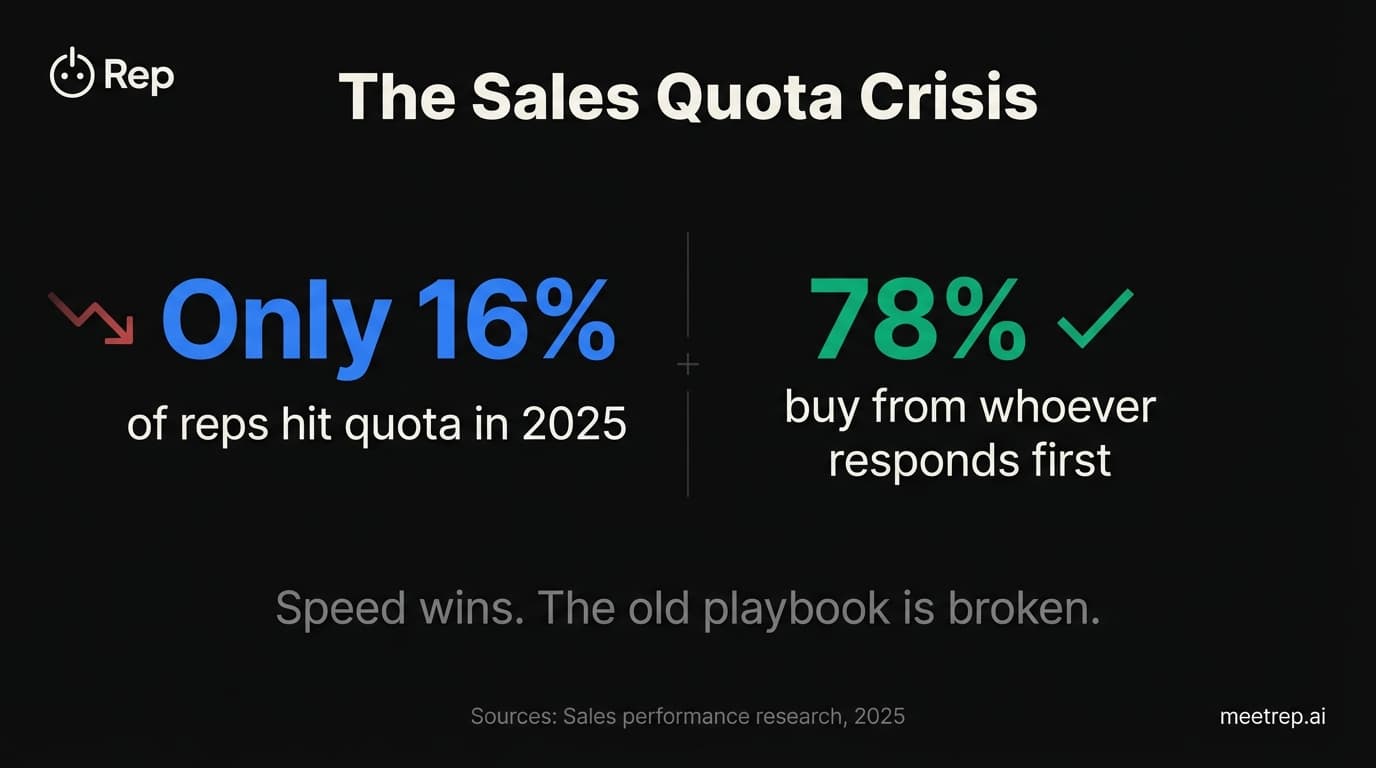
Why Autonomous Sales Software is the Future of B2B Sales (And Why the Old Playbook is Dead)
B2B sales is at a breaking point with quota attainment at 46%. Discover why autonomous 'Agentic AI' is the new standard for driving revenue and meeting the demand for rep-free buying.