Mastering Discovery Questions Examples: The 2026 Playbook for SDR Managers

Executive Summary
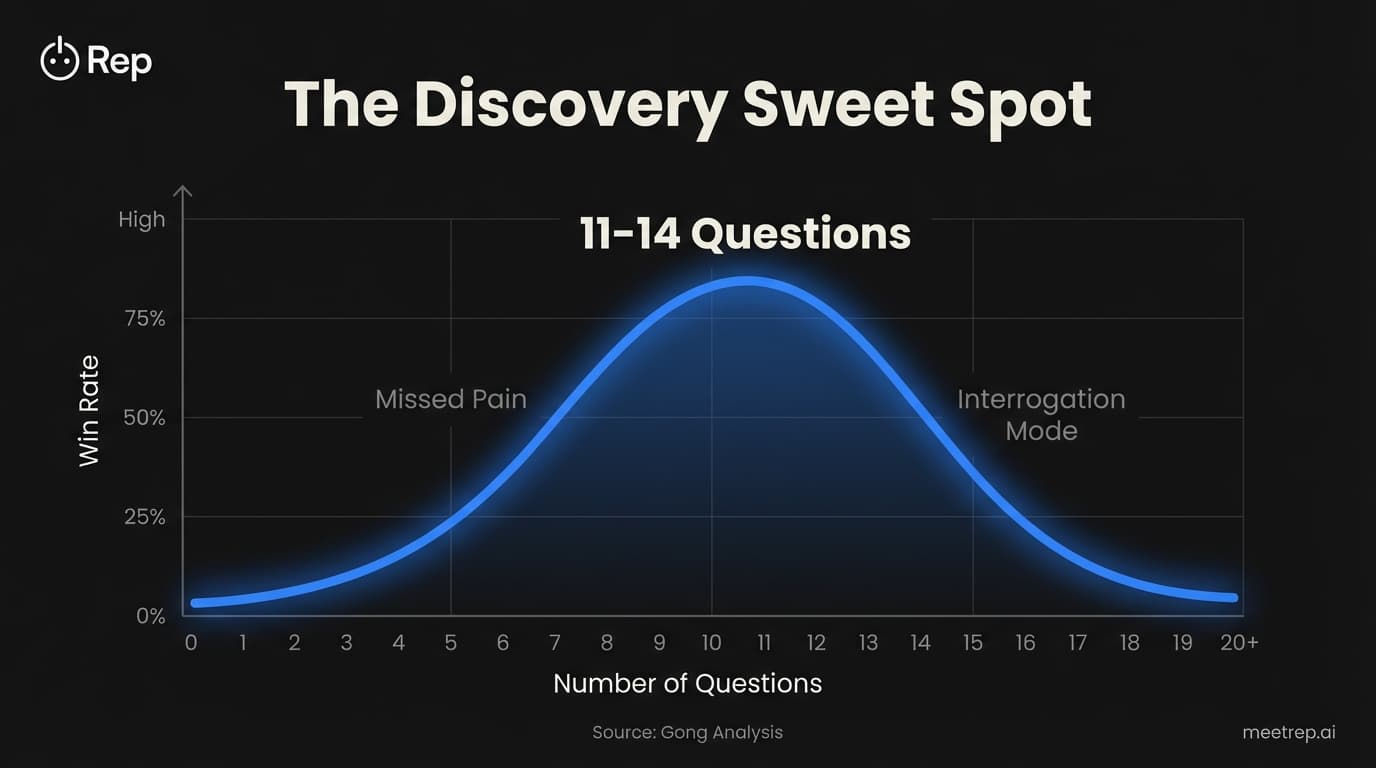
- The Magic Number: Top reps ask 11–14 questions per call. Fewer is lazy; more is an interrogation.
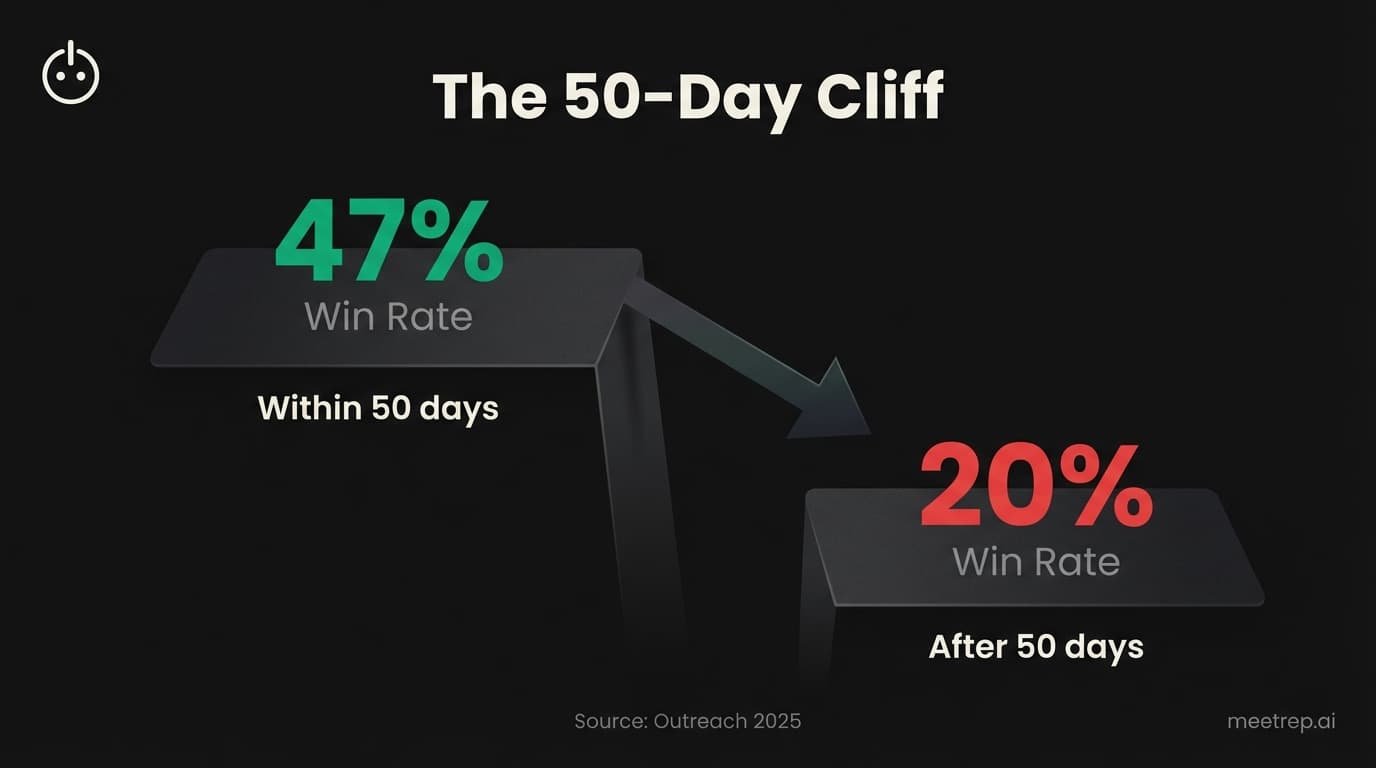
- The Speed Limit: Deals closed within 50 days have a 47% win rate. Discovery must create urgency.
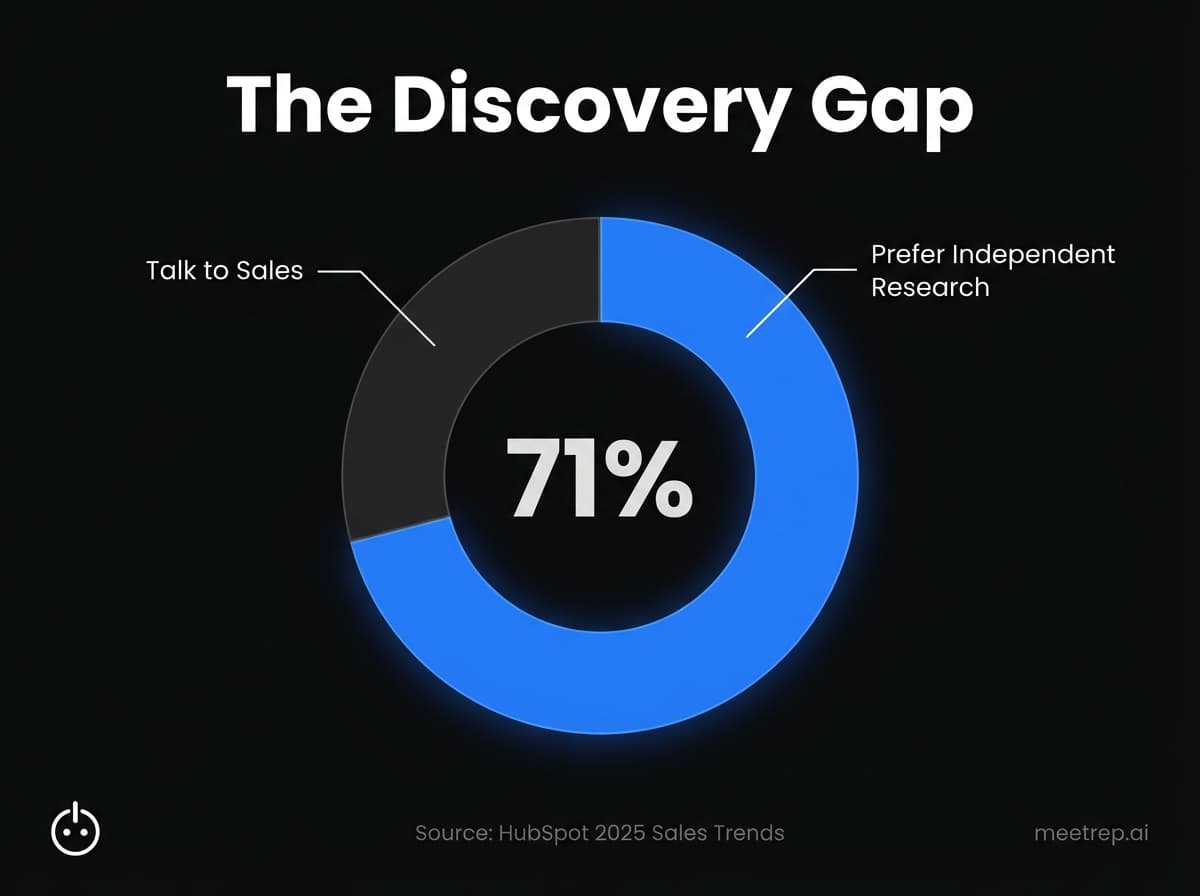
- The Silent Majority: 71% of buyers want to research alone. You need a strategy for them (autonomous agents), not just a script for your humans.
The "generic discovery call" is dead.
Whatever playbook you used in 2023 is likely hurting you today. We know this because the data is brutal: the average cold call success rate has dropped to just 2.3% in 2025, according to Cognism’s State of Cold Calling Report.
I’ve built two sales automation platforms, GoCustomer.ai and now Rep. I’ve analyzed the architecture of thousands of deals. The pattern is always the same. Deals don't die because the product failed. They die because the discovery failed.
The reps who are winning right now aren't just "asking questions." They are engineering a gap between where the prospect is and where they need to be.
Here is the data-backed playbook on exactly what to ask.
The "Magic Number" of Discovery Questions (Data-Backed)
Top-performing sales professionals ask between 11 and 14 questions during a discovery call.
Ask fewer, and you miss the context needed to close. Ask more, and the prospect feels like they're in a police station, not a business meeting.
This isn't my opinion. This comes from Gong’s analysis of millions of sales conversations, which found a direct correlation between this specific range and higher conversion rates.
But here is the nuance most SDR managers miss.
It’s not just about hitting the number. It’s about the depth of the questions. Low performers front-load their calls with "checklist" questions (budget, timeline, authority). High performers back-load the call with "impact" questions.
Key Insight: While top reps ask 11-14 questions, they also listen more. The goal isn't to get through the list; it's to get the prospect to talk for 55% of the call.
5 Categories of Discovery Questions (With Examples)
If you hand your reps a list of 50 random questions, they will fail. They will sound robotic.
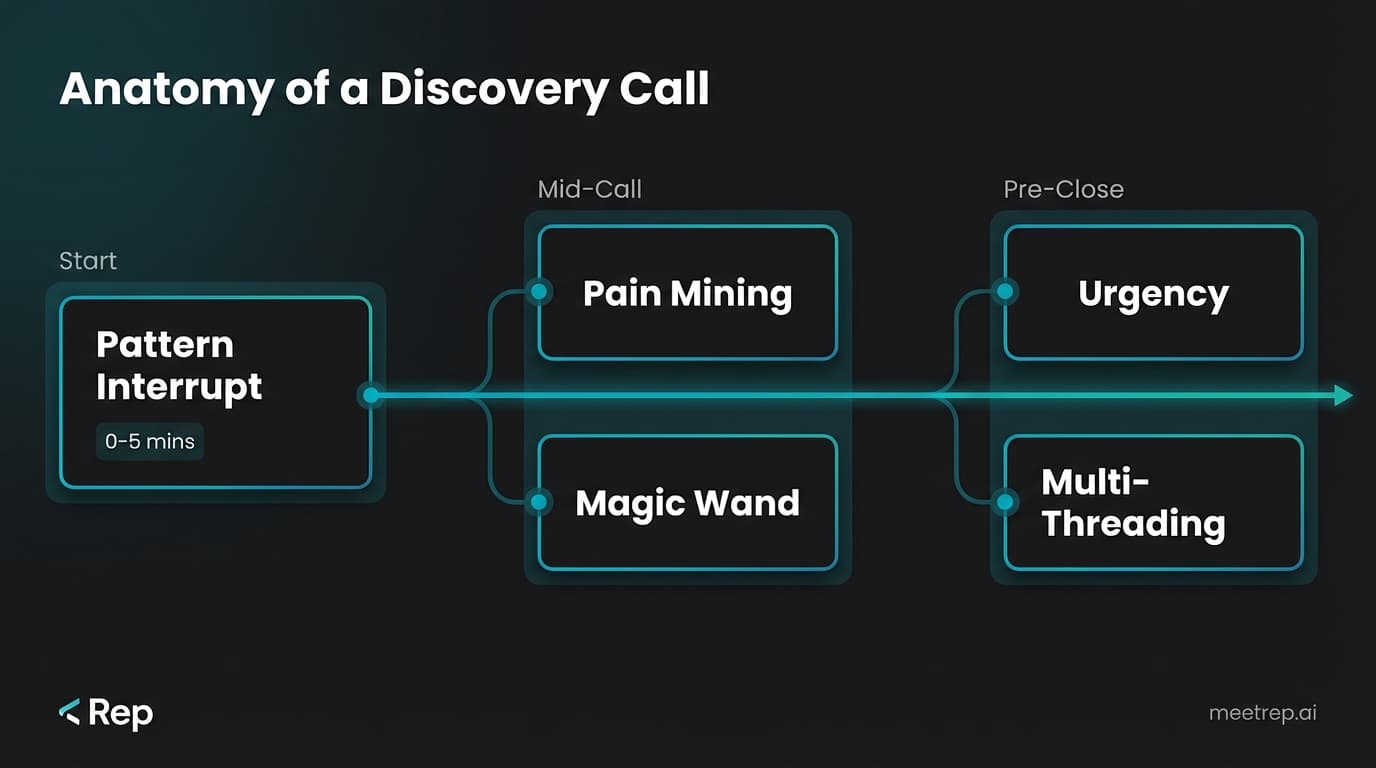
Instead, teach them these five categories. These are designed to move a prospect from "just looking" to "need this now."
1. The "Pattern Interrupt" Openers
Most discovery calls start the same way. "How are you today?""Can you tell me about your role?"
Prospects are on autopilot. You need to wake them up.
Try these examples:
- "I'm sure you don't take every call... what specifically prompted you to take this one?"
- "I noticed [Competitor X] just released a feature similar to what you're building. How is that impacting your roadmap?" (Shows you did homework).
- "Usually, when I speak to a VP of Sales, they're worried about X or Y. Which one is closer to home for you?"
2. Pain & Loss Mining (The Cost of Inaction)
Humans are wired to avoid loss more than they are to gain value.
If you only ask about "goals," you get fluffy answers. If you ask about "problems," you get real data.
Try these examples:
- "What happens if you do nothing and stick with the status quo for another six months?"
- "You mentioned [Process X] is slow. How is that affecting your team's quarterly KPIs?"
- "Is this a 'nice to solve' or a 'need to solve' issue for the board?"
My recommendation: Be careful here. If you push on pain without having earned trust, you look manipulative. Use a soft tone: "Can I ask a tough question about that?"
3. The "Magic Wand" / Solution Fit
This is a classic for a reason. You need the prospect to visualize the future state.
Try these examples:
- "If you could wave a magic wand and fix one part of this workflow instantly, what would it be?"
- "Let's say you implement a solution today. What does success look like in 6 months?"
- "What have you tried in the past that failed? Why do you think it didn't work?"
4. Timeline & Urgency (The 50-Day Rule)
This is the most critical section for 2026.
According to Outreach's Sales 2025 Data Analysis, opportunities closed within 50 days have a 47% win rate. Once a deal drags past that 50-day mark, your win probability drops to 20% or lower.
Speed is not just a tactic. It is a survival mechanism.
Try these examples:
- "Is there a specific deadline or event driving this timeline?"
- "What is the cost to the business if this isn't solved by [Date]?"
- "If we can't get this live by Q3, does the project get scrapped?"
5. Multi-Threading (The Buying Committee)
Deals are getting more complex. The "Single Decision Maker" is a myth in enterprise sales. You need to know who else is in the room.
Try these examples:
- "Who else cares about solving this problem?"
- "When you've bought software like this before, who else needed to sign off?"
- "How does your CFO usually evaluate these types of investments?"
| Question Type | Goal | Best For |
|---|---|---|
| Pattern Interrupt | Break autopilot | First 2 minutes |
| Pain Mining | Uncover cost of inaction | Mid-call |
| Magic Wand | Visualize success | Mid-call |
| Urgency | Establish timeline | Pre-close |
| Multi-Threading | Identify blockers | Pre-close |
The "Silent" Discovery: Handling the 71% Who Don't Want to Talk
Here is the elephant in the room.
You can have the best discovery questions examples in the world. You can train your SDRs for weeks. But you are still missing the majority of your market.
Why?
Because 71% of prospects prefer to conduct independent research rather than speaking with a sales representative, according to HubSpot’s 2025 Sales Trends Report.
Think about that. 7 out of 10 qualified buyers are researching you, visiting your site, and looking for answers. But they aren't booking a demo because they don't want to be "discovered" by a human yet.
This is the gap we built Rep to solve.
At Rep, we realized that forcing every interaction through a human bottleneck was costing us deals. We needed a way to perform discovery digitally.
We use autonomous AI agents to handle this "Silent Discovery." When a prospect visits your site, Rep can join a video room, give a live, interactive product demo, and—specifically—ask these discovery questions while it demos.
Why we built Rep this way: An AI agent can ask, "What brought you here today?" or "What problem are you trying to solve?" at 2 AM on a Saturday. It captures the answers, qualifies the lead, and hands the transcript to your human AE. It turns the "dark funnel" into actionable pipeline.
Red Flags: Questions to Avoid in 2026
Some questions scream "amateur." If you hear your reps asking these, stop the tape and coach them immediately.
1. "What keeps you up at night?" Just stop. It’s a cliché. It sounds like a bad LinkedIn influencer post. Be specific instead: "What is the biggest risk to your Q3 goals?"
2. "What is your budget?" (Too Early) BANT (Budget, Authority, Need, Timing) is fading. In modern sales, budget is often created, not allocated. If you ask this in the first 5 minutes, you signal that you care more about your commission than their problem.
3. "Can I tell you about our features?" No. Nobody cares about your features. They care about their problems. Frame features as solutions to the pain points they just admitted to.
Common Mistake: Asking "Yes/No" questions.
- Bad: "Is this a priority?" (Answer: Yes/No)
- Good: "Where does this rank compared to other priorities like X and Y?" (Answer: Context)
The Role of AI in Scaling Discovery
There is a massive shift happening. According to Salesforce, 83% of sales teams using AI saw revenue growth in the last year.
But most teams are using AI wrong. They use it to write emails.
The real advantage is using AI to analyze and scale discovery.
- Analysis: Tools like Gong or Chorus analyze your 11-14 questions to tell you which ones landed.
- Scale: Tools like Rep perform the discovery for you on inbound traffic that isn't ready for a human.
Sellers who frequently use AI generate 77% more revenue than those who do not, according to Gong’s 2025 insights. If you aren't using tools to scale your discovery, you are fighting a losing battle against the math.
The math is clear. You have about 50 days to close a deal before your odds drop by half. You have 11-14 questions to get it right. And you have a market where 71% of people don't want to talk to you yet.
You can't solve this by just "working harder."
You need to upskill your humans to ask better, deeper questions. And you need to deploy AI agents to handle the rest.
If you want to clone your best discovery rep and have them work 24/7, see how Rep automates discovery demos.

Nadeem Azam
Founder
Software engineer & architect with 10+ years experience. Previously founded GoCustomer.ai.
Nadeem Azam is the Founder of Rep (meetrep.ai), building AI agents that give live product demos 24/7 for B2B sales teams. He writes about AI, sales automation, and the future of product demos.
Frequently Asked Questions
Table of Contents
- The "Magic Number" of Discovery Questions (Data-Backed)
- 5 Categories of Discovery Questions (With Examples)
- The "Silent" Discovery: Handling the 71% Who Don't Want to Talk
- Red Flags: Questions to Avoid in 2026
- The Role of AI in Scaling Discovery
Ready to automate your demos?
Join the Rep Council and be among the first to experience AI-powered demos.
Get Early AccessRelated Articles
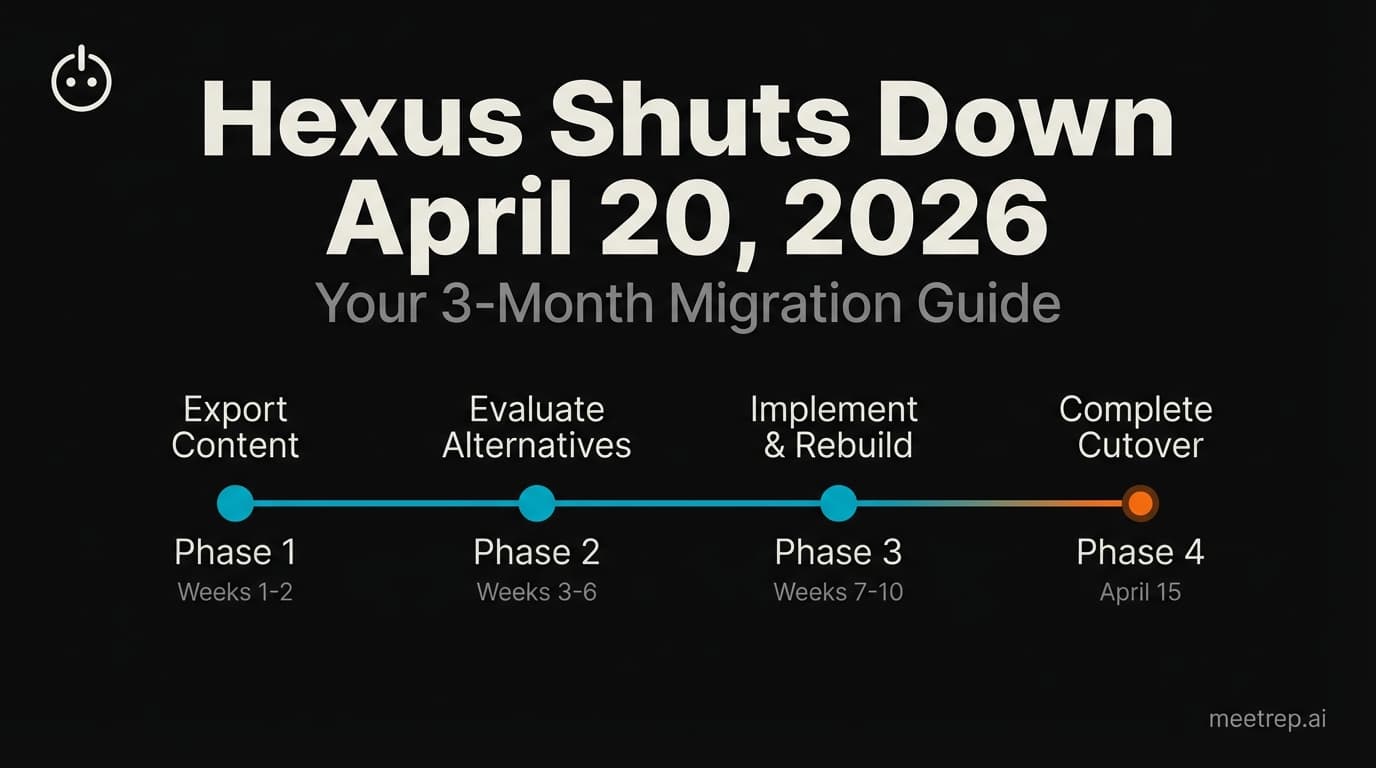
Hexus Acquired by Harvey AI: Congrats & What It Means for Demo Automation Teams
Hexus is shutting down following its acquisition by Harvey AI. Learn how to manage your migration and discover the best demo automation alternatives before April 2026.
Why the "Software Demo" is Broken—and Why AI Agents Are the Future
The traditional software demo is dead. Discover why 94% of B2B buyers rank vendors before calling sales and how AI agents are replacing manual demos to scale revenue.
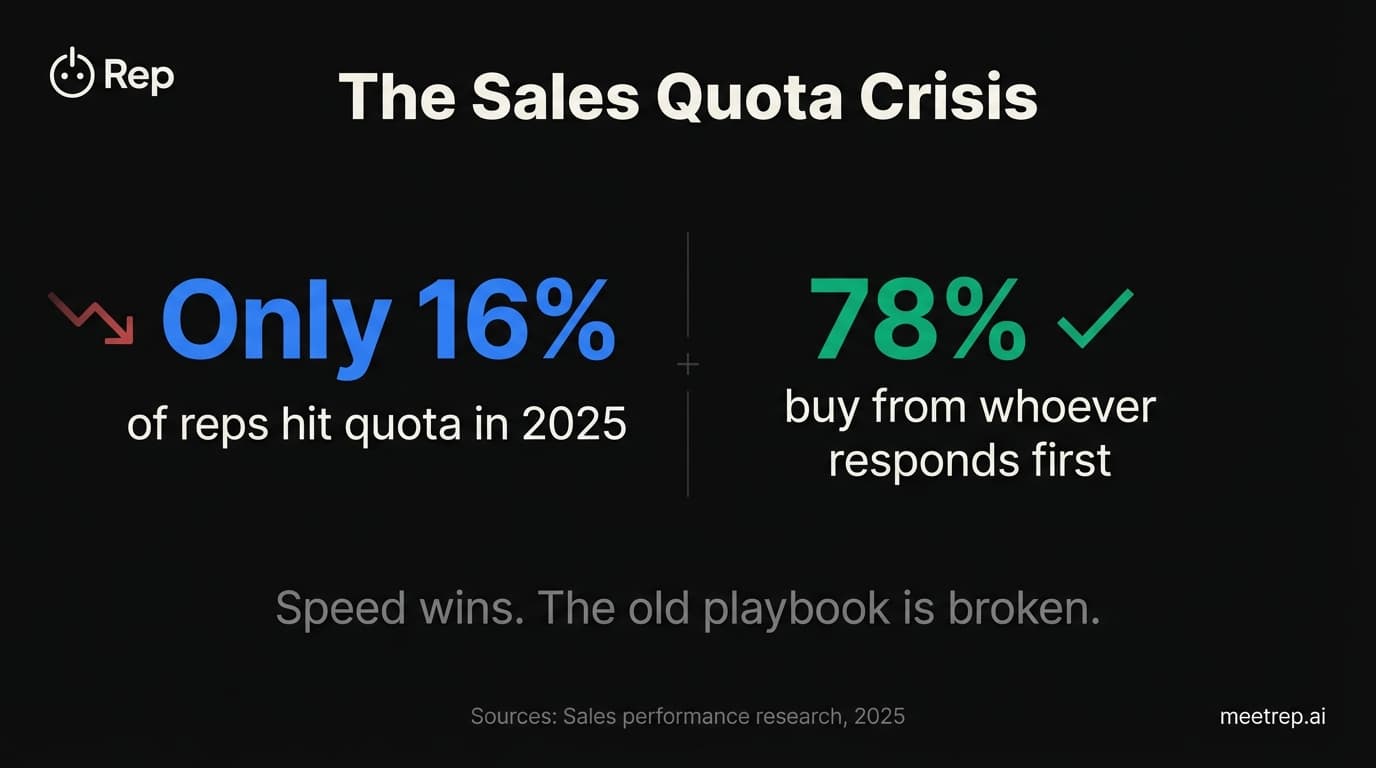
Why Autonomous Sales Software is the Future of B2B Sales (And Why the Old Playbook is Dead)
B2B sales is at a breaking point with quota attainment at 46%. Discover why autonomous 'Agentic AI' is the new standard for driving revenue and meeting the demand for rep-free buying.