Mastering Discovery Call Meaning: A Playbook for SDR Managers (2026 Edition)

Executive Summary
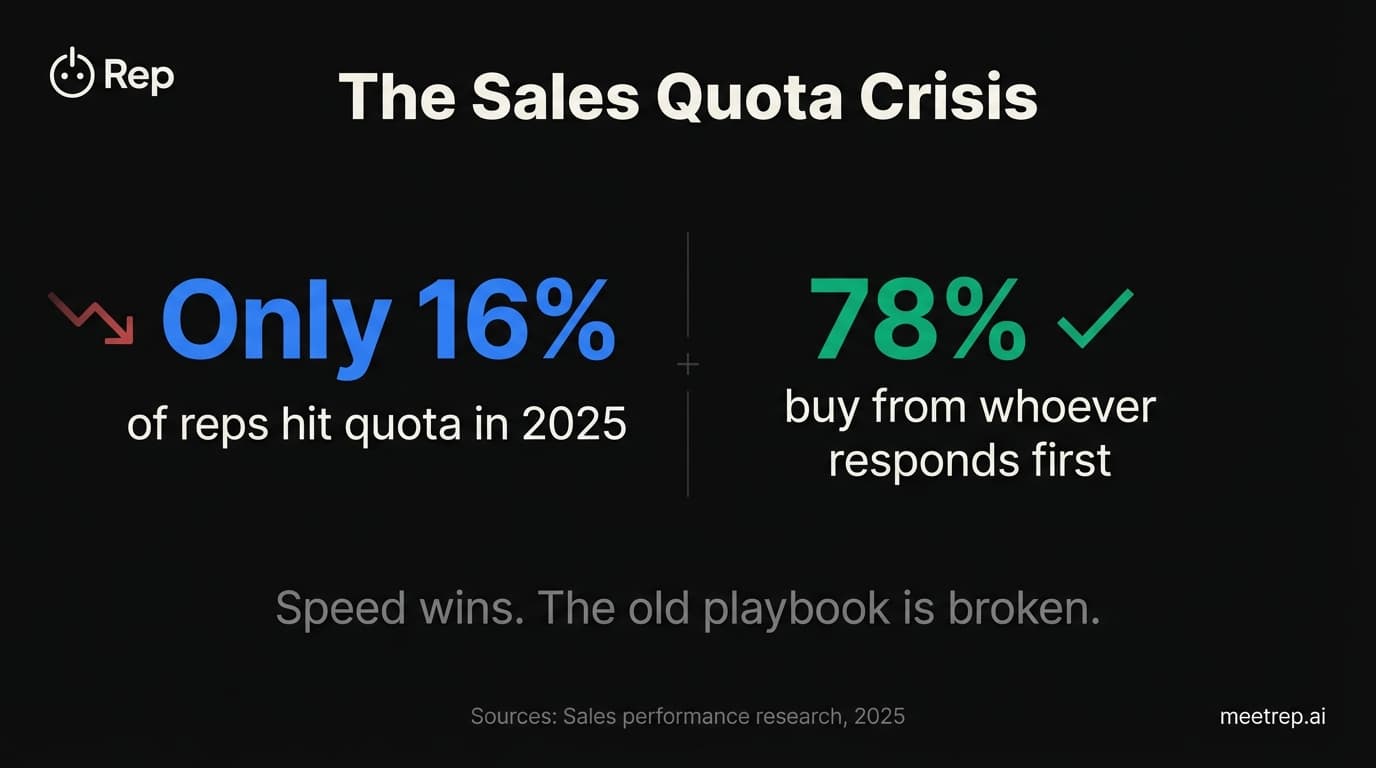
- The Crisis: Quota attainment sits at 43%, and sales cycles are now 106 days long.
- The Mistake: Only 18% of buyers think sellers are prepared for calls.
- The Fix: A structured discovery framework that prioritizes "disqualification" over pitching.
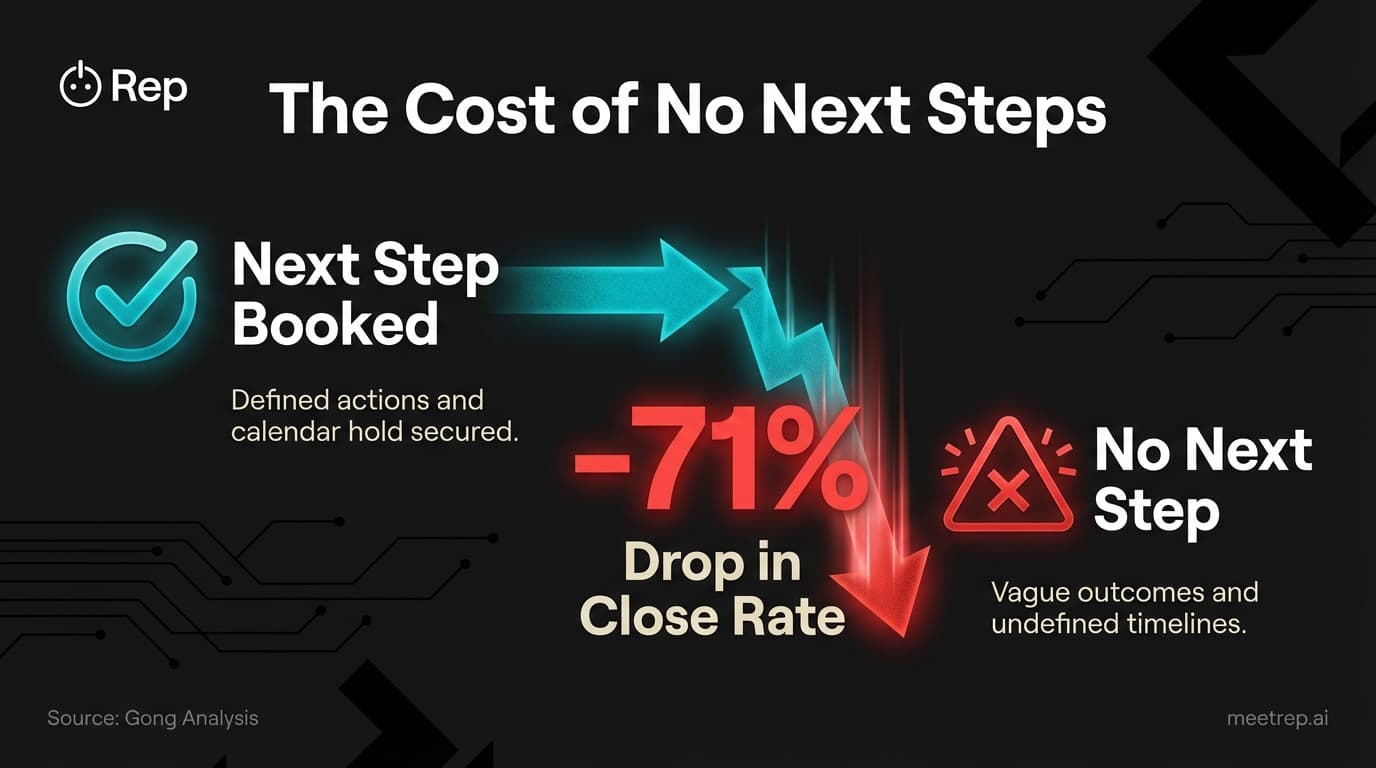
- The Lever: Missing "Next Steps" drops close rates by 71%.
- The Future: How autonomous agents like Rep handle technical discovery 24/7.
What is a Discovery Call? (The 2026 Definition)
A discovery call is the initial qualification conversation between a sales representative and a prospect, designed to determine mutual fit rather than pitch a product. Unlike a cold call, the prospect has expressed interest. The primary goal is to uncover pain points, budget, and timeline to disqualify poor fits early.
That's the textbook definition. But let's look at what this actually means in practice.
Most SDRs think discovery means "asking a list of questions before I show the demo."
Huge mistake.
If your reps are doing that, they're turning a strategic conversation into an interrogation. In 2026, with buyers doing 70% of their research before they talk to you, discovery is about diagnosis.
Discovery vs. Qualification vs. Demo
To get this right, you have to separate these three distinct phases. At Rep, we see thousands of call transcripts, and the biggest failure mode is blending these together.
| Feature | Qualification Call | Discovery Call | Product Demo |
|---|---|---|---|
| Goal | Is this worth a meeting? | Can we solve their problem? | How do we solve it? |
| Duration | 5-15 minutes | 30-45 minutes | 45-60 minutes |
| Key Metric | Conversion to Disc | Pipeline Created | Technical Win |
| Owner | SDR | AE / SDR | AE / SE / Rep Agent |
| Mindset | Filter | Diagnose | Prove |
The "Death Valley" of Discovery: Why Calls Fail
We know the definition. So why are win rates hovering around 20.2%?
Because most discovery calls are terrible.
I don't say that to be mean. I say it because the data proves it. According to the RAIN Group, only 18% of buyers believe salespeople are well-prepared for conversations.
That means 82% of the time, your prospect thinks your rep is winging it.
The "Next Steps" Cliff
Here is the single scariest statistic in sales right now.
According to data analysis from Gong, close rates drop by 71% when "next steps" aren't discussed and agreed upon during the first call.
Seventy-one percent.
If your rep has a great 30-minute chat, builds rapport, laughs at the prospect's jokes, but hangs up with "Let me follow up via email," they have statistically torched the deal.
What we learned at GoCustomer: When we analyzed our own failed deals early on, 90% of them lacked a concrete "Up-Front Contract" for the next step. We fixed this by forcing a calendar invite while on the call. Win rates stabilized almost immediately.
The "Talk-to-Listen" Ratio
Another massive red flag? The sound of your rep's voice.
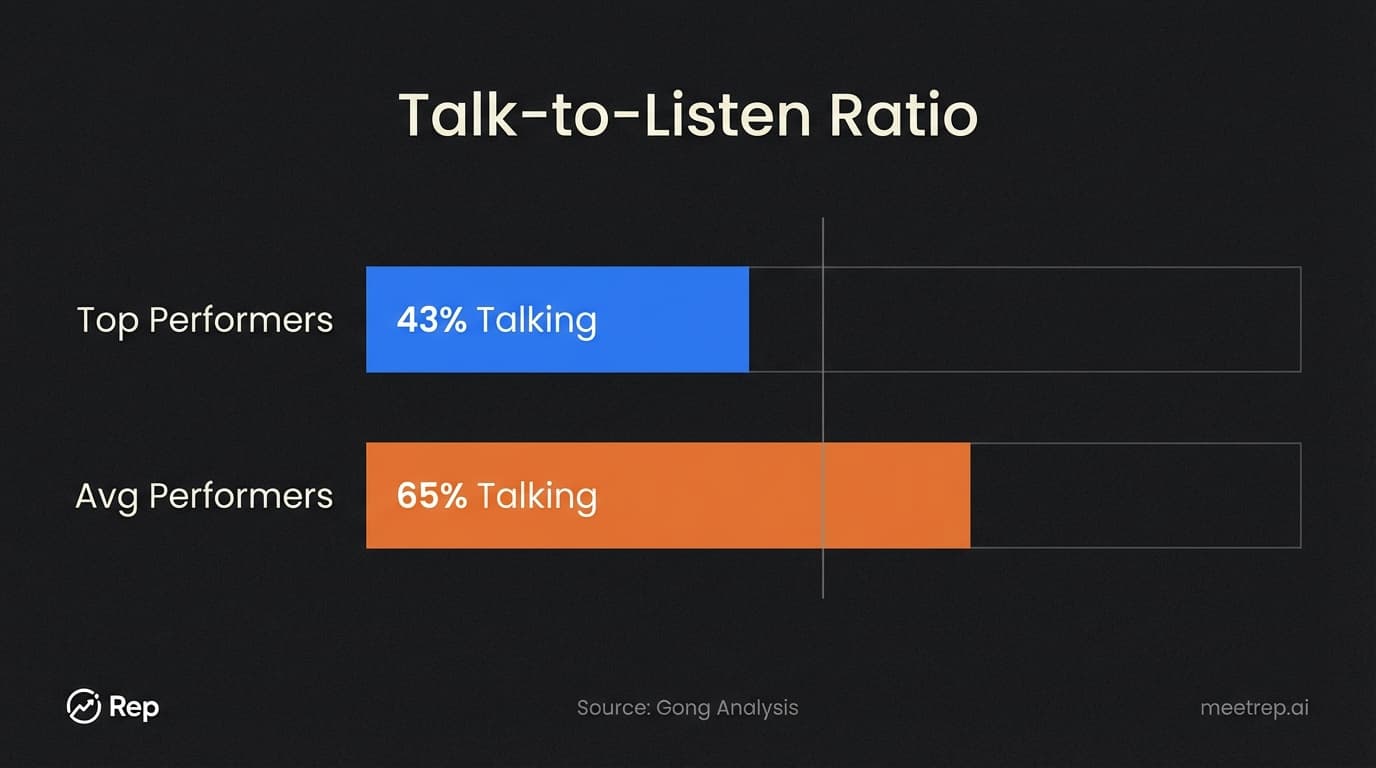
Gong's data shows a clear split:
- Top performers: Talk 43% of the time.
- Average/Weak performers: Talk 65% of the time.
When reps are unprepared (that 18% stat again), they fill the silence with noise. They feature dump. They explain things the prospect didn't ask about.
The 4-Step Discovery Framework (Verified)
You can't fix personality, but you can fix process. This is the framework we used to scale our sales orgs, and it's what we built into the logic of our AI agents at Rep.
Step 1: Preparation (The 18% Fix)
Before the zoom room opens, the rep needs context.
This doesn't mean "I saw you went to Penn State." That's 2015 advice.
It means knowing their tech stack, their recent news, and their likely pain points based on their role. In 2026, tools like Clay or 6sense should be feeding this directly into your CRM. If your rep asks "So, what CRM do you use?"—and that info is public—they've already lost trust.
Step 2: The Up-Front Contract
This is a Sandler Training concept that remains undefeated. Start the call by setting the rules.
"By the end of this call, we should both know if this is a fit. If it is, we'll schedule a technical demo. If not, we'll part ways as friends. Does that sound fair?"
This removes the pressure. It gives your rep permission to say "no."
Step 3: Diagnosis (The Multi-Threading Check)
This is where the magic (or failure) happens.
Your rep needs to uncover the gap between Current State and Future State. But here's the kicker: they need to find out who else cares.
Win rates are 34% higher on multi-threaded deals (involving more than one stakeholder) compared to single-threaded ones.
The Question to Ask:"Who else on your team will be losing sleep if this problem isn't fixed by Q3?"
Step 4: The Pivot & Next Step
Once the pain is confirmed, pivot to the solution. Not the whole demo. Just the specific piece that heals the pain.
Then, the critical moment: The Next Step.
Do not leave the call without a calendar invite sent and accepted. Remember the 71% drop.
Discovery Call Questions That Actually Work (Data-Backed)
Most lists of "discovery questions" are fluff. They focus on feelings rather than business logic.
Based on the 106-day sales cycle reality, you need questions that create urgency.
The Situation Questions (Limit these):
- "Walk me through your current process for handling inbound leads."
- "What tools are you currently stitching together to make that work?"
The Pain Questions (Dig deeper):
- "You mentioned the manual data entry is annoying. How many hours a week is your team actually losing to that?"
- "What happens if you don't fix this problem in the next 6 months?"
The Impact Questions (The Money):
- "If we could automate that discovery step, how would that impact your team's quota attainment?"
Key Insight: Notice the pattern? These questions force the prospect to do the math. They aren't asking "Do you like saving time?" They are asking "What is the cost of staying the same?"
The Role of AI in Modern Discovery
Here is the part where I might upset some traditionalists.
I believe the era of the human-only discovery call is ending for the mid-market.
The data supports this shift. Salesforce reports that 81% of sales teams are now using AI to boost productivity.
But most teams are using AI passively. They use Gong or Chorus to record calls and tell them what they did wrong after the deal is dead.
That's an autopsy, not a cure.
Autonomous Discovery
We are moving toward Autonomous Sales Agents.
At Rep, we built an agent that doesn't just listen—it speaks. It joins the video room, shares its screen, navigates your actual product, and conducts the discovery and demo simultaneously.
Why does this matter for "Discovery Call Meaning"?
Because an AI agent never forgets to ask for the next step. It never talks too much (we programmed the talk-ratio). It never shows up unprepared because it has instant access to your entire knowledge base.
Why we built Rep this way: We realized that the "Preparation Gap" (that 18% stat) was a human limitation. Humans get tired. They have bad days. They forget to research. An AI agent can handle the initial discovery 24/7 with perfect playbook adherence, handing off only the qualified, educated buyers to your closers.
This allows your human reps to focus on the emotional side of the sale—the negotiation and the relationship—while the AI handles the technical discovery and qualification.
The Bottom Line
The "Quota Crisis" isn't going to fix itself. With attainment at 43%, doing more of the same—more unrecorded calls, more "winging it," more skipped next steps—is a recipe for missing another year.
You have the data. You know that missing the "next step" agreement kills 71% of your deals. You know that talking more than 43% of the time signals weakness.
My advice? Stop treating discovery as a "get to know you" chat. Treat it as the most rigorous part of your funnel. Whether you use a strict human playbook or deploy an autonomous agent like Rep to handle it for you, consistency is the only way out of the death valley.
Don't let your team be part of the 91%.
Ready to fix your discovery consistency?See how Rep works.

Nadeem Azam
Founder
Software engineer & architect with 10+ years experience. Previously founded GoCustomer.ai.
Nadeem Azam is the Founder of Rep (meetrep.ai), building AI agents that give live product demos 24/7 for B2B sales teams. He writes about AI, sales automation, and the future of product demos.
Frequently Asked Questions
Table of Contents
- What is a Discovery Call? (The 2026 Definition)
- The "Death Valley" of Discovery: Why Calls Fail
- The 4-Step Discovery Framework (Verified)
- Discovery Call Questions That Actually Work (Data-Backed)
- The Role of AI in Modern Discovery
- The Bottom Line
Ready to automate your demos?
Join the Rep Council and be among the first to experience AI-powered demos.
Get Early AccessRelated Articles
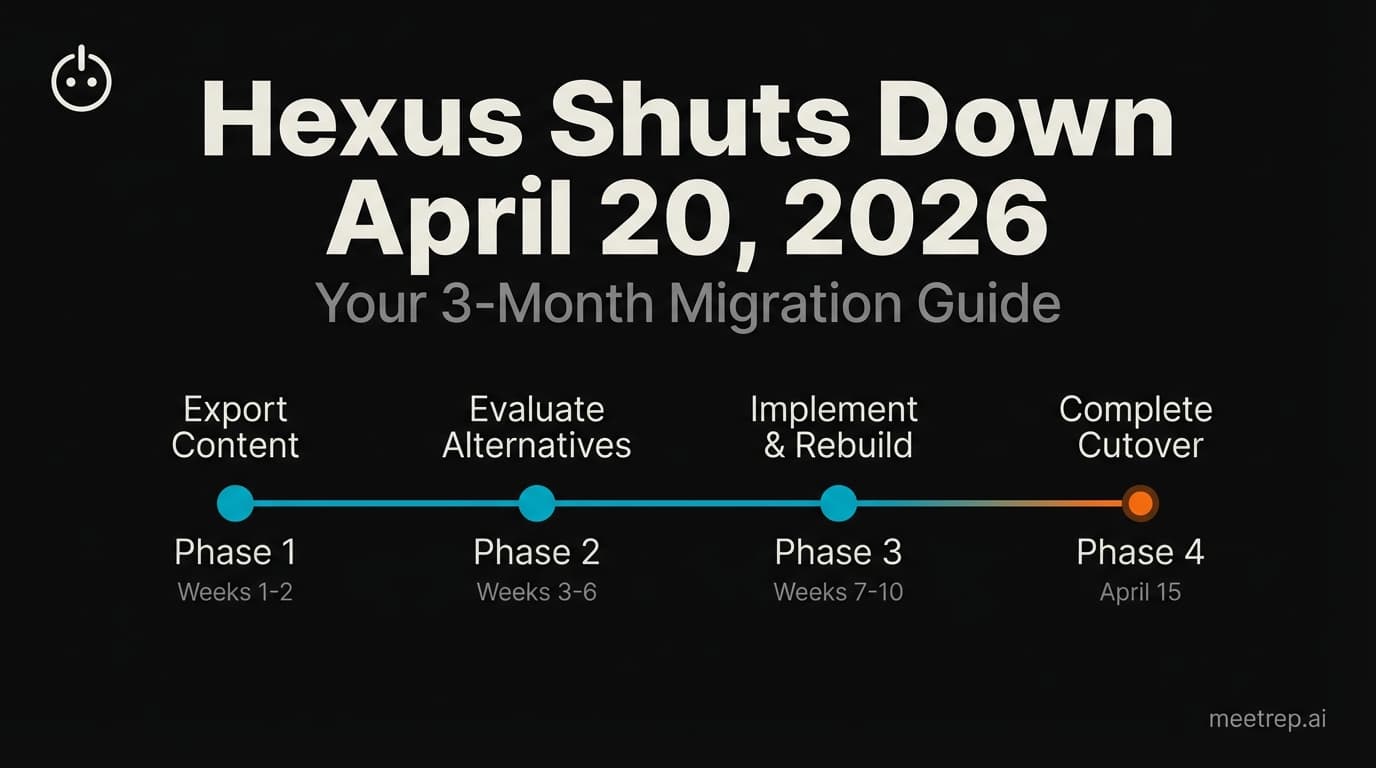
Hexus Acquired by Harvey AI: Congrats & What It Means for Demo Automation Teams
Hexus is shutting down following its acquisition by Harvey AI. Learn how to manage your migration and discover the best demo automation alternatives before April 2026.
Why the "Software Demo" is Broken—and Why AI Agents Are the Future
The traditional software demo is dead. Discover why 94% of B2B buyers rank vendors before calling sales and how AI agents are replacing manual demos to scale revenue.
Why Autonomous Sales Software is the Future of B2B Sales (And Why the Old Playbook is Dead)
B2B sales is at a breaking point with quota attainment at 46%. Discover why autonomous 'Agentic AI' is the new standard for driving revenue and meeting the demand for rep-free buying.