The Future of Leading Demo Automation Platforms: From Click-Through to Autonomous Agents

Executive Summary
- The Crisis: 50–60% of qualified leads drop off before the demo meeting ever happens.
- The Shift: The market is moving from "Interactive Product Tours" (marketing assets) to "Autonomous Agents" (digital workers).
- The Buyer: 61% of B2B buyers now prefer a rep-free buying experience.
- The Fix: Leading platforms now use Agentic AI to navigate live software, not just display screenshots.
We have a math problem in sales, and throwing more bodies at it isn't working.
The "Speed to Lead" rule says you need to respond to a prospect within five minutes to qualify them. But human SDRs sleep. They take lunch. They have weekends. Meanwhile, your buyers are researching at 11 PM on a Tuesday, waiting for a calendar link that might put them in a meeting three days later.
That delay is killing your funnel.
I’ve built sales automation products for years—first at GoCustomer and now at Rep. What I’ve learned is that the gap between "Demo Request" and "Demo Held" is where pipeline goes to die.
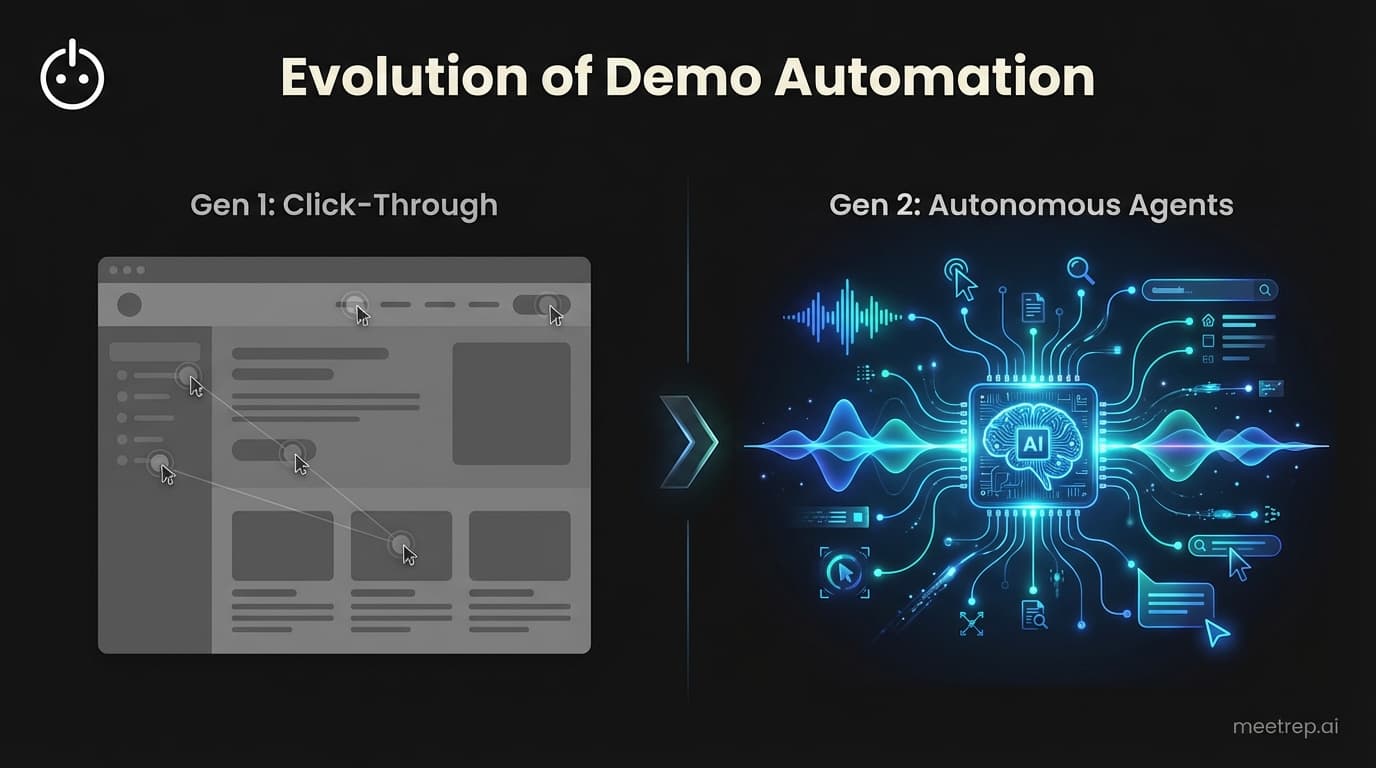
Leading demo automation platforms are evolving to fix this. We are moving away from passive, click-through screenshots (Gen 1) toward fully autonomous AI agents (Gen 2) that can actually talk, navigate, and sell.
Here is why that shift is happening and what it means for your RevOps strategy.
What Are Leading Demo Automation Platforms?
A demo automation platform is software that allows revenue teams to create, personalize, and share product demonstrations without requiring a live sales representative.
Historically, these tools fell into two buckets: video libraries (like Consensus) or interactive screenshot captures (like Navattic or Storylane). These tools are excellent for marketing—they let prospects "click around" a sandbox environment on your website.
But a new category is emerging: Autonomous AI Agents.
Unlike the previous generation, these aren't just slide decks disguised as software. Tools like Rep (and others like 11x in the prospecting space) use Agentic AI. This means the software doesn't just display a picture of your product; it logs into your actual application, joins a video call, and navigates the live interface while speaking with the prospect in real-time.
It’s the difference between sending someone a brochure and sending them a digital employee.
The "Drop-Off" Crisis: Why RevOps Needs a Change
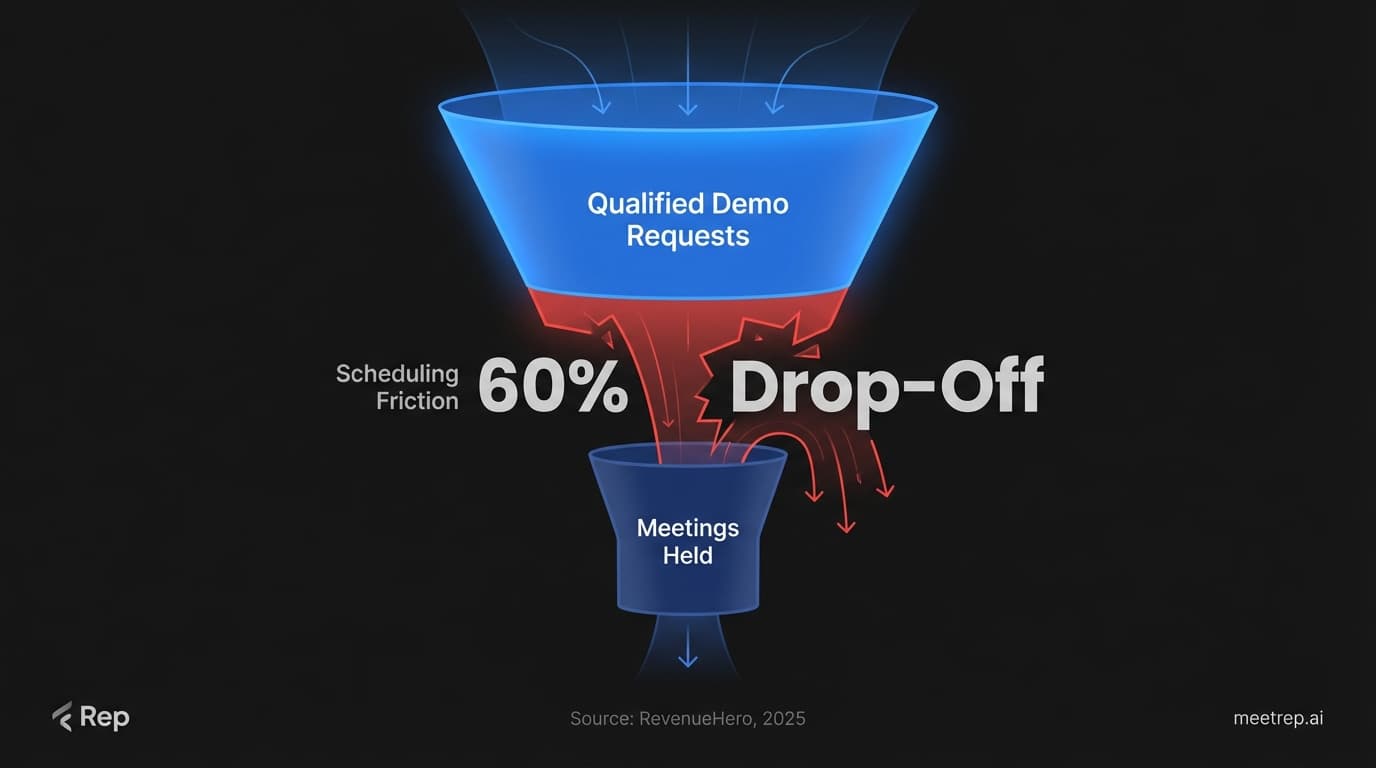
If you look at your funnel data, you’ll likely see a massive leak between the "Hand Raiser" stage and the "Meeting Held" stage.
According to 2025 data from RevenueHero, the typical conversion rate from a qualified demo request to an actual held meeting is only 50–60%.
Think about that. You paid for the ads. You wrote the content. The prospect finally said, "Yes, I want to see this." And then half of them vanished. Why? Because they couldn't find a time that worked, or they lost interest during the three-day wait for an SDR to email them back.
At GoCustomer, we obsessed over this friction. We realized that scheduling is the enemy of conversion.
Plus, trying to solve this with humans is expensive. Martal Group reports that the fully loaded cost for a US-based SDR is now $90,000–$100,000 per year, with a turnover rate hovering around 40%. You are paying a premium for humans to do work that is often repetitive, administrative, and limited by time zones.
Key Insight: You don't have a lead generation problem. You have a "Speed-to-Demo" problem.
The Shift: "Click-Through" Tours vs. Autonomous Agents
The term "demo automation" is confusing because it currently refers to two very different technologies.
If you are evaluating leading demo automation platforms, you need to understand the architectural difference between Interactive Product Tours (Gen 1) and Autonomous Agents (Gen 2).
One is a marketing asset. The other is a sales worker.
| Feature | Interactive Product Tours (Gen 1) | Autonomous AI Agents (Gen 2) |
|---|---|---|
| Examples | Navattic, Storylane, Walnut | Rep, 11x (Alice), Regie.ai |
| Technology | HTML/Screenshot Capture | Live DOM Navigation & Voice AI |
| Interaction | Prospect clicks explicitly defined "hotspots" | Prospect speaks naturally; AI responds |
| Experience | Silent, solo reading experience | Conversational, interactive meeting |
| Flexibility | Rigid (on rails) | Adaptive (can jump to different features) |
| Primary Goal | Website conversion / Marketing | SDR replacement / Pipeline generation |
My take: Interactive tours are fantastic for your "Product" page. They replace the old "Watch Video" button. But they do not replace the sales meeting. They can't answer questions, handle objections, or build rapport.
Autonomous agents, however, are designed to take the meeting so your human reps don't have to.
Do Buyers Actually Want "Rep-Free" Experiences?
This is the most common objection I hear: "People buy from people."
And sure, for a six-figure enterprise deal involving six stakeholders and a security audit, that is true. You need a human AE.
But for the initial discovery and demo? The data says otherwise.
According to Gartner's 2025 Sales Survey, 61% of B2B buyers prefer an overall rep-free buying experience.
Buyers are tired. They don't want to be "qualified." They don't want to answer BANT questions before they are allowed to see the software. They want answers, and they want them now.
The Data: 73% of B2B buyers actively avoid suppliers who send irrelevant outreach or force friction-heavy processes (Gartner).
When we built Rep, we didn't design it to trick people into thinking it was human. We designed it to give buyers what they actually want: immediate access. If a prospect wants to see how the "Reporting" module works at 2 AM, an autonomous agent can show them. A human can't.
Solving the RevOps Data Nightmare
Here is the part that usually gets RevOps leaders excited (or at least, as excited as we get about data hygiene).
Human reps are terrible at data entry. They forget to log calls. They don't update Salesforce. They leave the "Next Steps" field blank.
Openprise's 2025 State of RevOps Survey found that 99% of RevOps professionals struggle with technical data issues.
This is the hidden advantage of autonomous agents. A software robot never forgets to log a call.
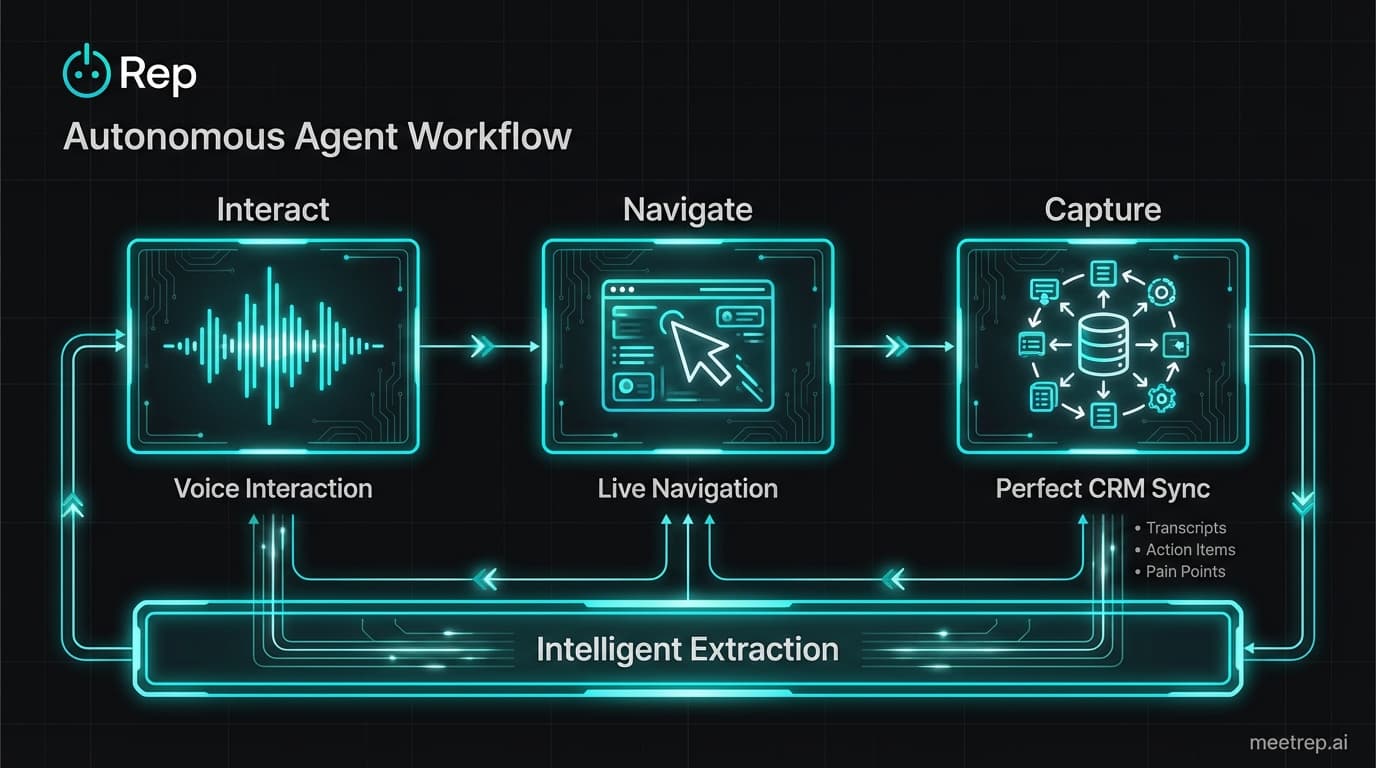
Leading demo automation platforms that use agentic AI automatically capture:
- The Transcript: Every word spoken.
- The Action Items: Extracted automatically.
- The Pain Points: Tagged and pushed to the CRM.
- The Sentiment: Was the buyer angry? Confused? Excited?
At Rep, we built an intelligent extraction engine specifically for this. It doesn't just record the call; it listens for specific triggers—like a competitor mention or a budget question—and maps that directly to your CRM fields.
This means your forecasting is based on actual conversation data, not just "gut feel" from your sales team.
How to Evaluate the Leaders in 2026
If you are looking to add this technology to your stack, look for these three capabilities. If a platform is missing them, it’s likely stuck in the "Gen 1" era.
1. Agentic AI vs. Scripted Chatbots
Does the tool use Large Language Models (LLMs) to understand context, or is it just a decision tree? Scripted chatbots fail the moment a buyer asks a question that isn't in the script. Gartner predicts that by 2028, 33% of enterprise software applications will include agentic AI, up from less than 1% in 2024. Don't buy a glorified decision tree.
2. Live Navigation vs. Screen Capture
Can the tool navigate your actual product? Screen captures break the moment you update your UI. They require constant maintenance. An autonomous agent that logs into your live environment (like a real user) is always showing the latest version of your software.
3. Voice Interaction
Chat is fine for support, but sales happens in conversation. The best platforms now support low-latency voice interaction that feels natural.
What we learned at GoCustomer: The hardest part of automation isn't the tech; it's the trust. If the AI sounds robotic or takes 5 seconds to respond, the buyer checks out. Latency matters more than feature breadth.
Final Thoughts
The era of "Please select a time on my calendar" is ending. It's too slow, too expensive, and frankly, buyers hate it.
We are entering the era of the Digital Worker.
You don't need another tool that helps your reps work 5% faster. You need a way to stop losing 50% of your qualified pipeline to scheduling friction. Whether you use Rep or another agentic platform, my advice is the same: stop gating your product behind a human calendar.
Let the AI handle the discovery. Let your humans handle the close.

Nadeem Azam
Founder
Software engineer & architect with 10+ years experience. Previously founded GoCustomer.ai.
Nadeem Azam is the Founder of Rep (meetrep.ai), building AI agents that give live product demos 24/7 for B2B sales teams. He writes about AI, sales automation, and the future of product demos.
Frequently Asked Questions
Table of Contents
- What Are Leading Demo Automation Platforms?
- The "Drop-Off" Crisis: Why RevOps Needs a Change
- The Shift: "Click-Through" Tours vs. Autonomous Agents
- Do Buyers Actually Want "Rep-Free" Experiences?
- Solving the RevOps Data Nightmare
- How to Evaluate the Leaders in 2026
- Final Thoughts
Ready to automate your demos?
Join the Rep Council and be among the first to experience AI-powered demos.
Get Early AccessRelated Articles
Hexus Acquired by Harvey AI: Congrats & What It Means for Demo Automation Teams
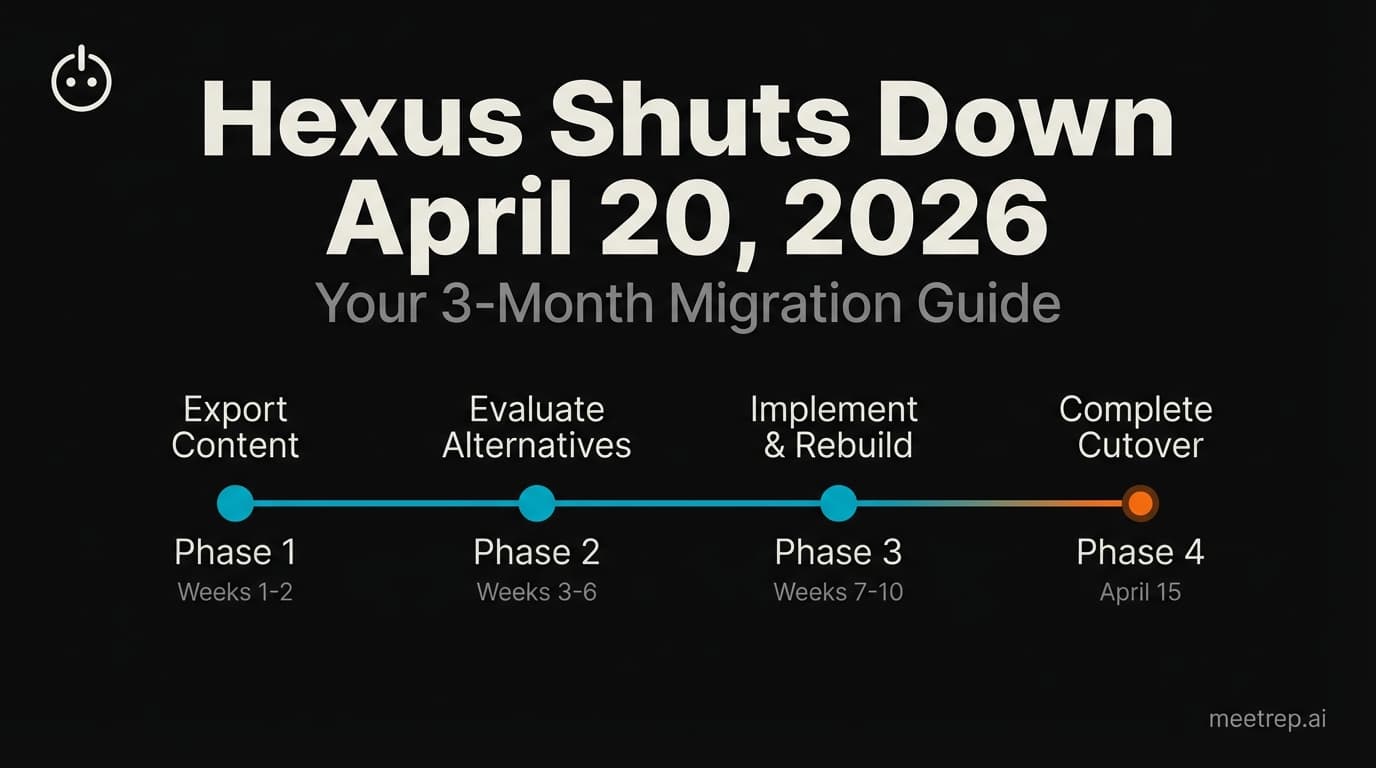
Hexus is shutting down following its acquisition by Harvey AI. Learn how to manage your migration and discover the best demo automation alternatives before April 2026.
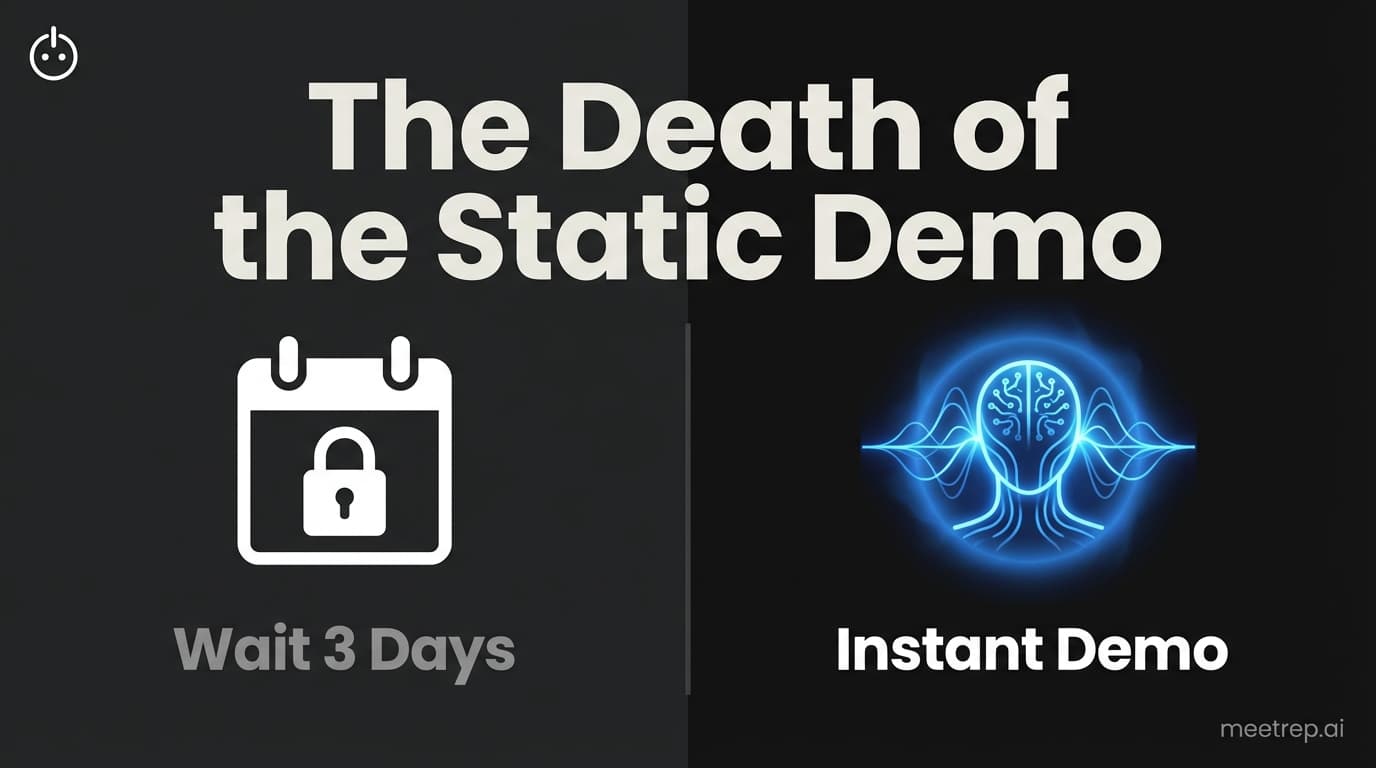
Why the "Software Demo" is Broken—and Why AI Agents Are the Future
The traditional software demo is dead. Discover why 94% of B2B buyers rank vendors before calling sales and how AI agents are replacing manual demos to scale revenue.
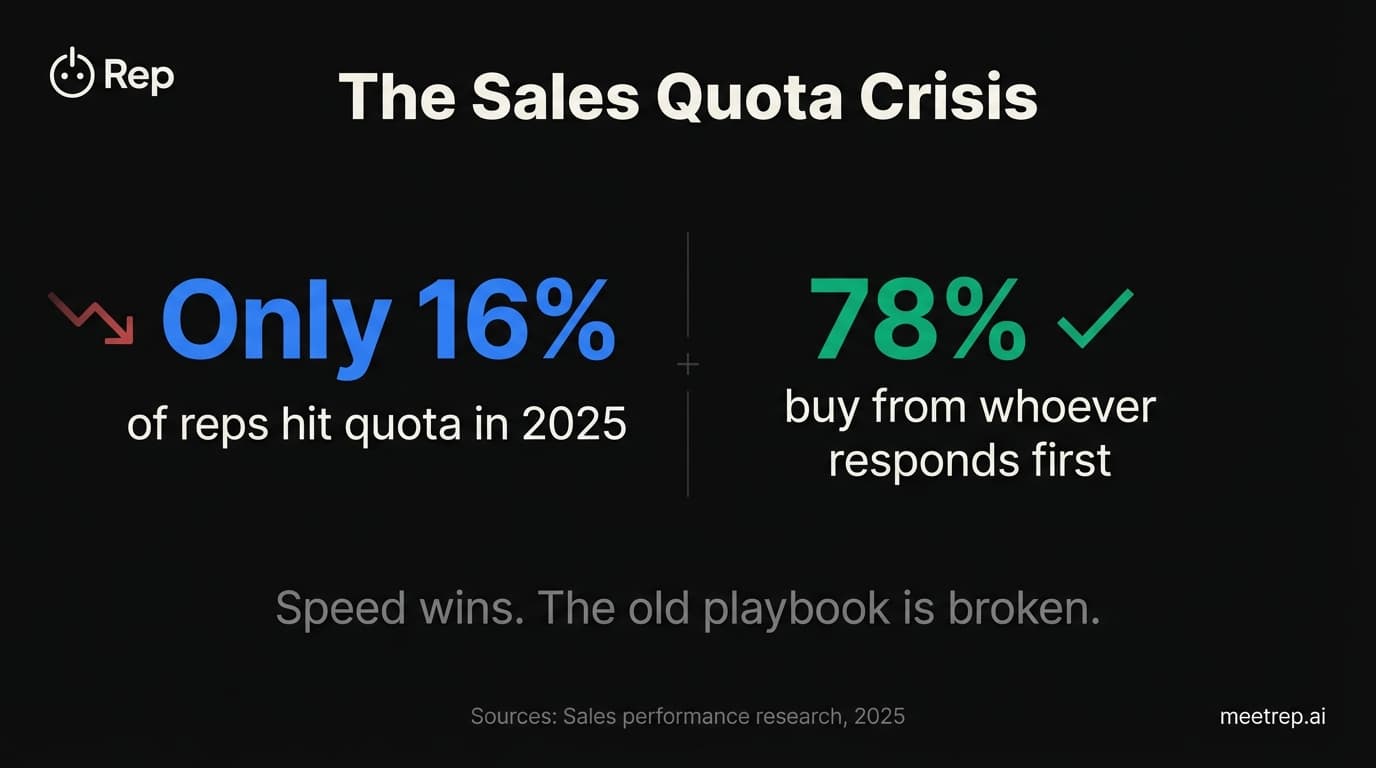
Why Autonomous Sales Software is the Future of B2B Sales (And Why the Old Playbook is Dead)
B2B sales is at a breaking point with quota attainment at 46%. Discover why autonomous 'Agentic AI' is the new standard for driving revenue and meeting the demand for rep-free buying.