Lead Qualification: The Complete Guide to Qualifying Prospects

Executive Summary
- 67% of lost sales stem from poor qualification—it's your biggest revenue leak
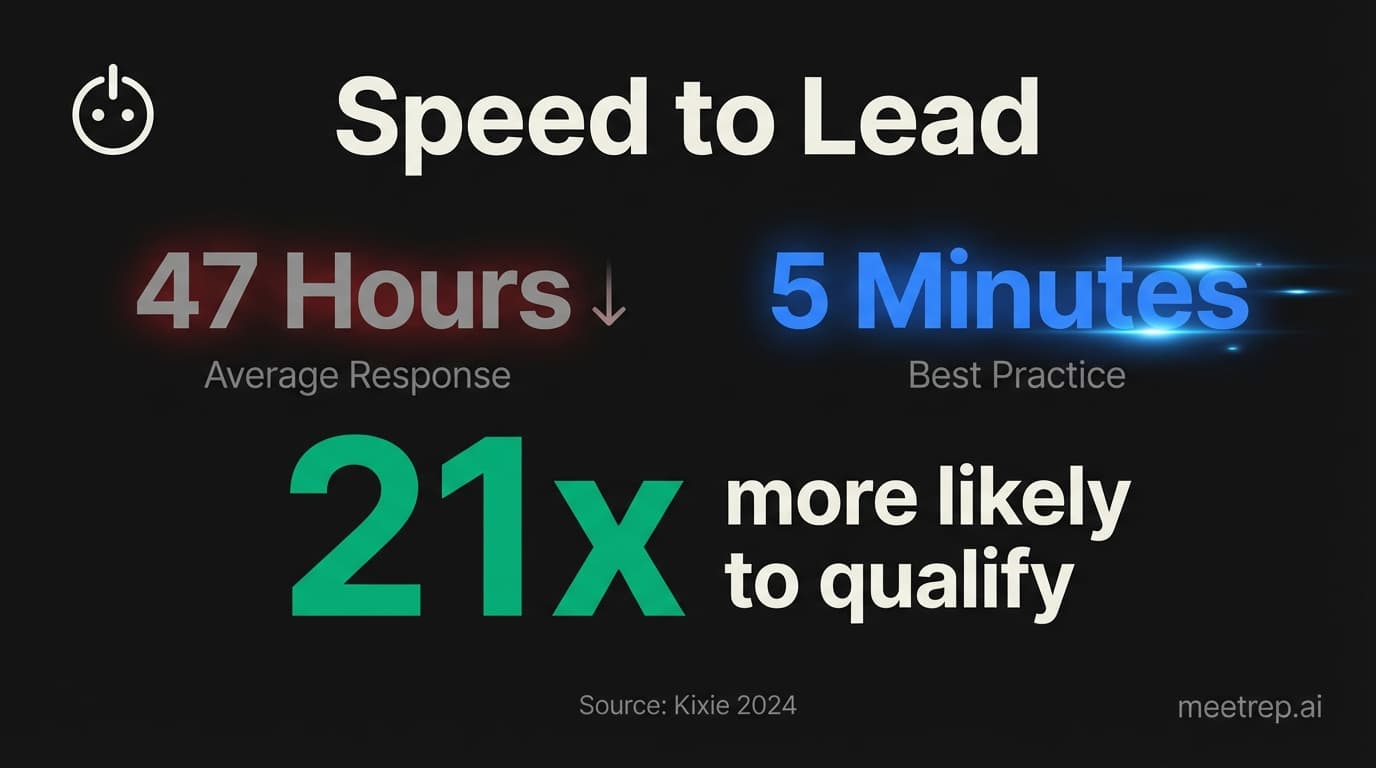
- Average response time is 47 hours, but 5 minutes = 21x better qualification odds
- BANT alone fails with today's 8-13 person buying committees—you need MEDDIC or MEDDPICC for complex deals
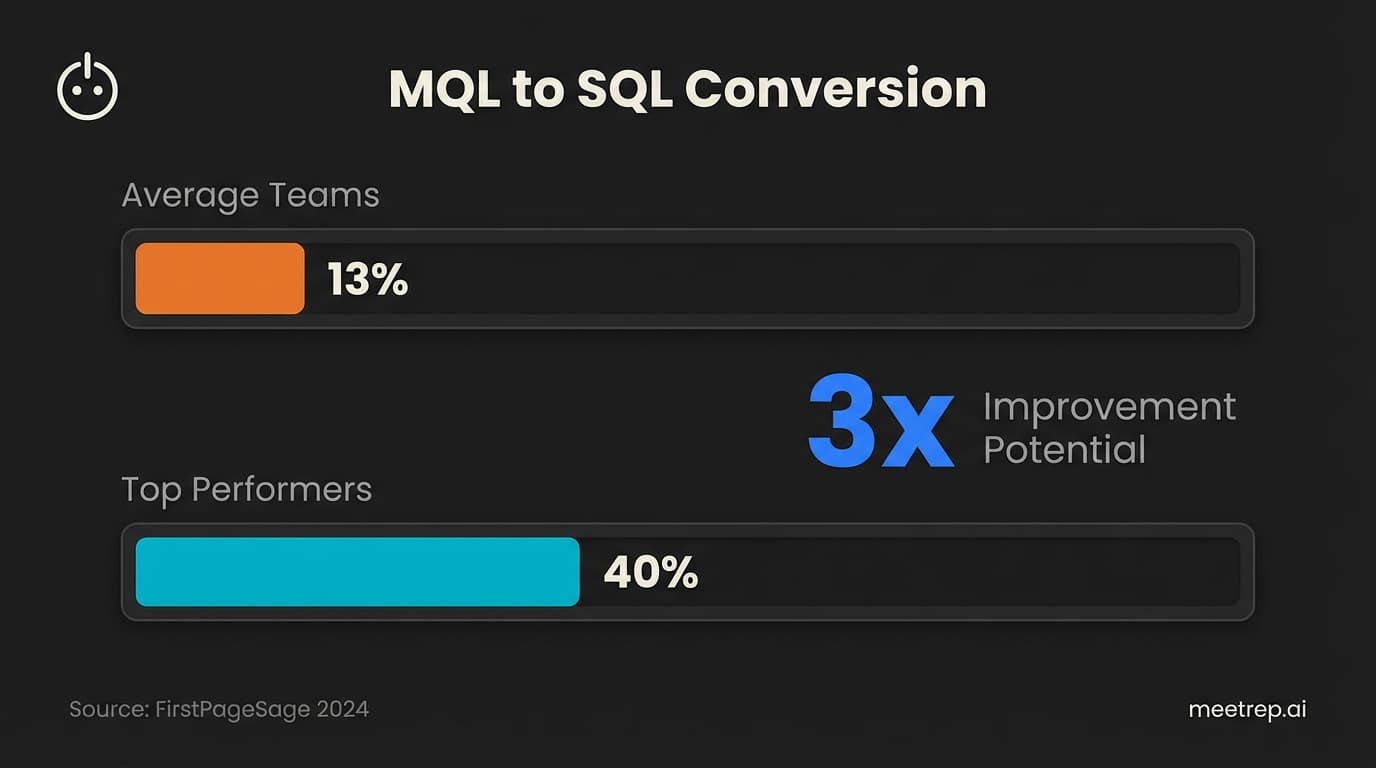
- Only 13% of MQLs convert to SQLs; top teams hit 40% with proper scoring
- 83% of teams using AI for qualification grew revenue vs 66% without
Here's what kills me about lead qualification in most companies: the average B2B team takes 47 hours to respond to an inbound lead. Two full days. Meanwhile, responding in the first 5 minutes makes you 21x more likely to qualify that lead.
And that gap? It represents millions in lost revenue.
I've spent years building sales automation tools—first at GoCustomer.ai, now at Rep—and I've watched this pattern destroy pipeline after pipeline. Lead qualification isn't just a process. It's the difference between a predictable revenue engine and a leaky funnel where 67% of potential sales slip through the cracks.
This guide breaks down what actually works: the frameworks worth using, the questions that separate real buyers from tire-kickers, and how AI is changing qualification in ways most teams haven't caught up to yet.
What is lead qualification (and why most teams get it wrong)
Lead qualification is the process of evaluating potential customers to determine their readiness, willingness, and ability to buy. It involves assessing prospects against specific criteria—budget, authority, need, timeline—to identify which leads deserve your team's time and which should be disqualified or nurtured.
Simple definition. But here's where teams mess it up.
They treat qualification like a checklist instead of a conversation. They ask surface-level questions and accept surface-level answers. "Do you have budget?" gets a "yes" even when no budget exists.
The real goal isn't just to qualify leads. It's to disqualify faster.
Key Insight:Only 25% of leads actually qualify for direct sales engagement. That means 75% of the leads your SDRs are working shouldn't be in their queue at all.
And qualification has gotten harder. The average B2B buying committee now involves 8-13 stakeholders. You're not qualifying a person anymore. You're qualifying a committee.
This is why old frameworks fail. We'll get to that.
The hidden cost of unqualified leads
Every unqualified lead your team works is time stolen from a deal that could close.
The math is brutal. Sales reps spend only 28-30% of their time on actual selling activities. The rest? Admin, data entry, internal meetings—and chasing leads that were never going to buy.
When we were building GoCustomer.ai, I watched this play out constantly. Teams would celebrate MQL volume while their AEs drowned in junk. Marketing blamed sales for poor follow-up. Sales blamed marketing for sending garbage leads. Sound familiar?
Here's what that finger-pointing actually costs:
| Cost Type | Impact |
|---|---|
| Rep time wasted | 70% on non-selling activities, including unqualified leads |
| Marketing budget burned | 79% of marketing leads never convert to sales |
| Pipeline accuracy | Unqualified deals inflate forecasts, causing missed projections |
| Rep morale | Constant rejection from bad leads leads to burnout |
| Opportunity cost | Every hour on a bad lead is an hour not spent on a good one |
Look, I've seen the impact firsthand. At one company we worked with, SDRs were spending 6 hours a day on leads that had zero chance of closing. Six hours. That's not a process problem—that's a revenue emergency.
The Data: At a 13% average MQL-to-SQL conversion rate, 87% of marketing-generated leads fail to convert. Top performers using behavioral scoring hit 39-40%. That's a 3x difference based purely on qualification rigor.
MQL vs SQL: Understanding lead types
Before we talk frameworks, let's clear up the terminology that causes half the sales-marketing arguments.
| Lead Type | What It Means | Who Owns It | Typical Conversion |
|---|---|---|---|
| MQL (Marketing Qualified Lead) | Engaged with content, fits demographic criteria, shows interest but isn't sales-ready | Marketing | 13% convert to SQL |
| SAL (Sales Accepted Lead) | MQL that sales agrees to work—the handoff moment | Sales accepts from Marketing | Varies by process |
| SQL (Sales Qualified Lead) | Discovery completed, buying intent confirmed via qualification framework | Sales | ~21% win rate average |
| PQL (Product Qualified Lead) | Used product (trial/freemium), hit usage thresholds | Product/Sales | 40%+ when defined well |
The MQL-to-SQL gap is where most pipeline problems hide. Marketing celebrates MQL volume. Sales complains about quality. Nobody fixes the actual problem: unclear qualification criteria at the handoff.
My recommendation? Define SQL criteria together. Marketing and sales in the same room, agreeing on exactly what "qualified" means. Budget confirmed? Authority mapped? Timeline within 90 days? Write it down. Then hold both sides accountable.
Speed-to-lead: The first 5 minutes
This is where I get fired up.
The data on response time is so clear, so overwhelming, that I genuinely don't understand why companies ignore it. And yet.
- Average B2B response time: 42-47 hours
- Responding in 5 minutes vs 30 minutes: 21x more likely to qualify
- Responding in 1 minute: 391% conversion boost
- Within 1 hour vs 24+ hours: 60x better odds
Two days. That's how long the average company takes to respond while the prospect has already talked to three competitors, lost interest, or solved the problem themselves.
What we learned at GoCustomer: Response time was the single biggest predictor of whether a lead would convert. Not lead score. Not company size. Not even how "hot" the form submission seemed. Just: did we get back to them fast?
This is why AI demo automation matters. Not because AI is magical—but because AI doesn't sleep. When a prospect requests a demo at 2am, an AI agent can engage immediately. Show them the product. Capture behavioral signals. Hand off a warm, pre-qualified lead when your team wakes up.
At Rep, we built around this exact problem. Prospects click, join a video room, and an AI agent gives them a live product walkthrough on the spot. No scheduling friction. No 47-hour gap.
Modern qualification frameworks compared: BANT, MEDDIC, CHAMP, and when to use each
Here's my hot take: BANT should not be your default framework in 2026.
BANT worked when one person made buying decisions. Budget, Authority, Need, Timeline—simple, clean, easy to train new SDRs. But the average buying committee has grown to 8-13 stakeholders. BANT doesn't help you map a committee. It qualifies one person and leaves you blindsided when the "decision-maker" turns out to need six other approvals.
That said, BANT isn't useless. It's just insufficient for complex deals.
| Framework | Best For | Key Elements | Strengths | Weaknesses |
|---|---|---|---|---|
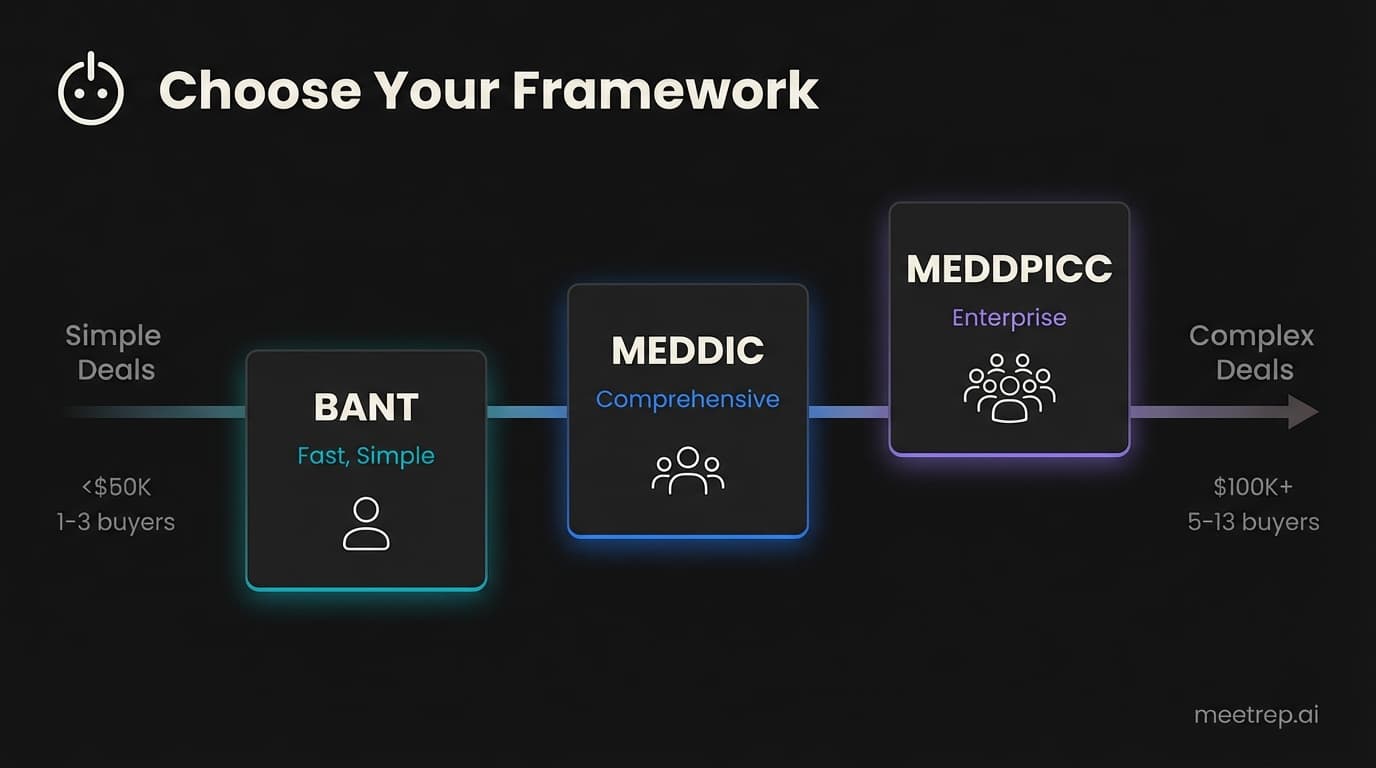
| BANT | High-volume, transactional ($5-50K), 1-3 decision-makers | Budget, Authority, Need, Timeline | Fast, easy to train, clean DQ criteria | Ignores buying committees, seller-centric |
| MEDDIC | Enterprise, complex ($100K+), 5-13 stakeholders | Metrics, Economic Buyer, Decision Criteria, Decision Process, Identify Pain, Champion | Comprehensive, excellent forecasting | Time-intensive, requires training (2-3 months) |
| MEDDPICC | Large enterprise, regulated industries | MEDDIC + Paper Process, Competition | Most thorough, handles legal/procurement | Longest framework, only for experienced sellers |
| CHAMP | B2B SaaS, consultative selling | Challenges, Authority, Money, Priority | Customer-centric, builds trust | Less structured, may extend cycle |
| ANUM | Inside sales, outbound | Authority, Need, Urgency, Money | Quick qualification, rigid DQ | May miss influencers |
So which framework should you use?
- Deal size under $50K with short cycles? Stick with BANT or ANUM.
- Deal size over $100K with multiple stakeholders? MEDDIC minimum. MEDDPICC if you're in enterprise with legal and procurement hoops.
- B2B SaaS with consultative sales motion? CHAMP works well.
- Selling a new category where budgets don't exist yet? Look at FAINT (Funds, Authority, Interest, Need, Timing).
The real insight isn't which framework to pick. It's this: 75% of reps don't follow methodologies consistently. The framework only works if people actually use it. That's why more teams are embedding qualification into their tools—automated scoring, required fields, AI-assisted discovery—instead of trusting humans to remember a checklist.
The questions that actually qualify (and disqualify) prospects
Generic discovery questions get generic answers. "Do you have budget for this?" "Yes, we're always looking at solutions." Useless.
Here are the questions that separate real qualification from checkbox theater:
Need/Challenge Questions (Find the pain)
- "What happens if you don't solve this problem in the next 6 months?"
- "Walk me through the last time this cost you time or money."
- "How are you handling this today, and what's broken about that approach?"
Authority/Committee Questions (Map the buying group)
- "Who else is involved in evaluating solutions like this?" (Critical for 8-13 person committees)
- "Have you purchased similar solutions before? Who was involved then?"
- "Who will be most impacted by this decision?"
Budget Questions (Get real about money)
- "Have you set aside budget specifically for solving this?"
- "What other investments are you weighing this quarter?"
- "If ROI was proven, could you find budget?" (Good for new categories)
Timeline/Urgency Questions (Separate browsers from buyers)
- "When do you need this implemented by?"
- "What's driving that timeline?"
- "Are you evaluating this now, or researching for later?" (This is a DQ question)
Disqualification Questions (Ask early)
- "Is solving this a priority for you this quarter?"
- "On a scale of 1-10, how urgent is this?" (Anything under 7 = nurture, not qualify)
- "Are you the right person I should be talking to about this?"
Key Insight: The goal of qualifying questions isn't to get "yes" answers. It's to find the truth fast. A quick DQ is worth more than a slow "maybe" that clogs your pipeline for months.
And here's something most guides don't mention: 63% of leads inquiring about B2B services won't convert for at least 3 months. Timeline qualification prevents you from abandoning leads prematurely—or wasting time on ones that aren't ready.
How AI is changing qualification in 2026
I'll be honest: most "AI qualification" is just fancy form logic. A chatbot asks "What's your budget?" and routes based on the answer. That's not intelligence. That's a flowchart.
But actual AI qualification? That's different. And it's where this space is headed.
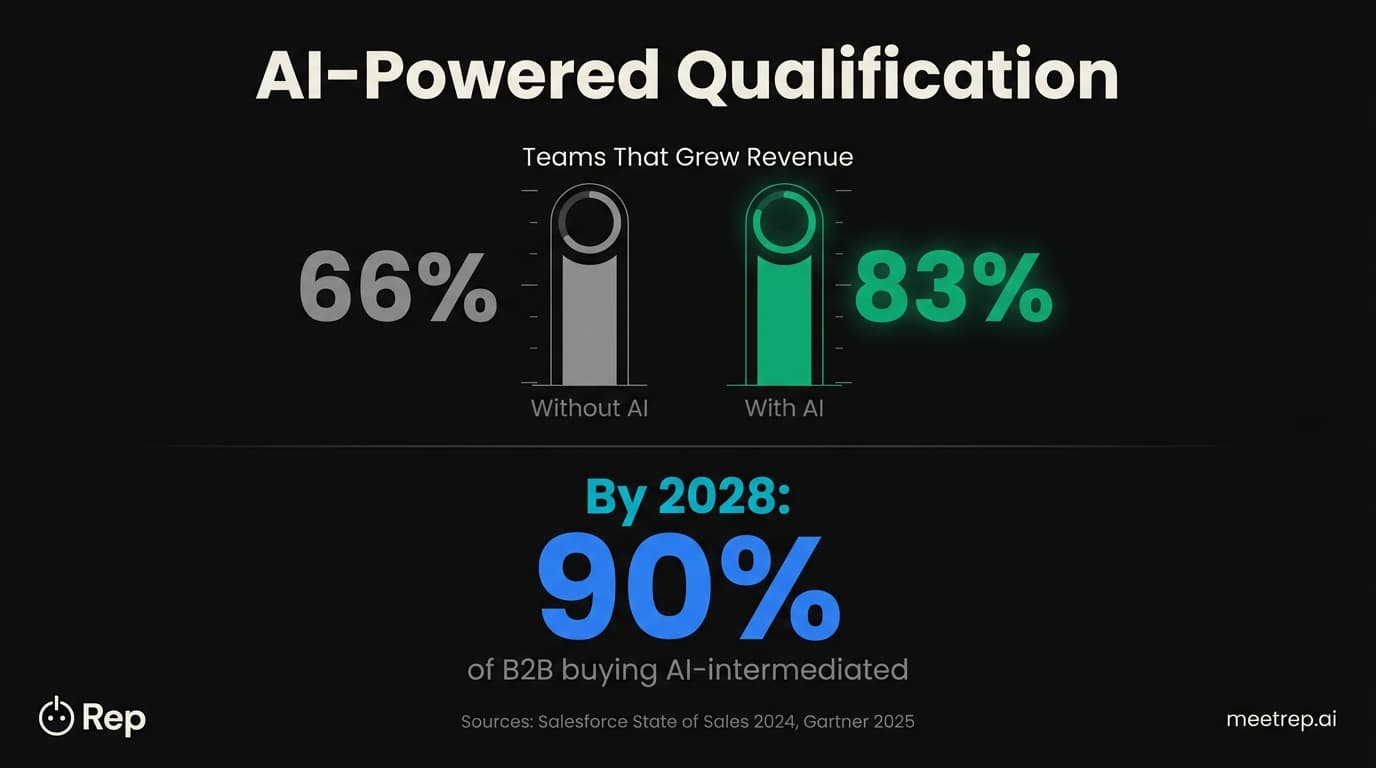
Gartner predicts that by 2028, 90% of B2B buying will be AI agent-intermediated, pushing over $15 trillion through AI exchanges. That's not a typo. Fifteen trillion.
What does this mean for qualification?
Behavioral qualification beats self-reported data. When a prospect interacts with an AI demo, you see what they actually do—not what they claim on a form. Did they spend 4 minutes on the pricing page? That's a budget signal. Did they replay the integration section three times? Probably involving IT. Did they share the demo link with four colleagues? That's your buying committee revealing itself.
70% of the buying process is completed before sales rep involvement. Qualification has to happen digitally, during that 70%, or you're only seeing 30% of the picture.
AI solves the consistency problem. Remember that stat about 75% of reps not following methodologies? AI doesn't forget to ask the timeline question. It doesn't skip steps when it's tired. It qualifies every lead the same way.
The results speak clearly.83% of sales teams using AI grew revenue vs 66% without. AI-powered lead scoring shows 40% improvement in qualification accuracy.
But let me be clear about what AI cannot do: close a $1M enterprise deal with 13 stakeholders requiring human relationship-building and political navigation. AI handles initial vetting so your humans can focus on the complex work. That's the division of labor that makes sense.
Your lead qualification checklist
Here's a practical checklist you can use starting tomorrow:
Before the Call
- Lead enriched (company size, industry, tech stack verified)
- Response time under 5 minutes for inbound leads
- Company research completed (recent news, funding, hiring)
- Stakeholders identified via LinkedIn (map the committee)
During Discovery (First 10 Minutes)
- Primary pain point confirmed
- Consequences of inaction identified
- Other stakeholders mapped ("Who else feels this pain?")
- Authority confirmed or escalation needed
- Urgency check: 1-10 scale (under 7 = nurture track)
- Timeline captured with driving event
During Discovery (Minutes 10-20)
- Budget/funds explored (direct or indirect)
- Decision process mapped
- Competition identified
- Success metrics defined
- Champion identified (who will advocate internally?)
After the Call
- Qualification decision: SQL, Nurture, or DQ
- Next steps confirmed with specific date
- CRM updated with framework scores and notes
- If multiple stakeholders: meeting scheduled with 2+
- If DQ'd: reason documented, nurture sequence assigned
Common lead qualification mistakes
Using BANT for enterprise deals. BANT assumes one decision-maker. Enterprise has 8-13. You'll qualify your contact and miss the committee entirely.
Prioritizing MQL volume over quality. When 79% of marketing leads never convert, celebrating volume is celebrating waste. Implement scoring before the handoff.
Responding slowly. 47 hours is the average. 5 minutes is the goal. That gap costs you 21x in qualification odds. If you can't staff for instant response, automate it.
Asking surface-level questions. "Do you have budget?" gets a "yes" even when budget isn't allocated. Dig deeper: "What other investments are competing for that budget this quarter?"
Qualifying once and assuming it holds. Buying committees change. Priorities shift. Champions leave companies. Re-qualify at each stage.
Not disqualifying fast enough. 75% of leads passed to sales are wasting rep time. Build explicit DQ criteria. If urgency is under 7/10, DQ. If no authority, DQ. Don't be afraid to say no.
Relying on processes that reps ignore. 75% don't follow methodologies consistently. Embed qualification into your tools—required fields, automated scoring, AI-assisted discovery—instead of hoping for compliance.
Lead qualification isn't complicated. But it is rigorous. And most teams skip the rigor.
The pattern I've seen across GoCustomer and now Rep is always the same: teams that treat qualification as a real discipline—with frameworks, fast response, and ruthless disqualification—build predictable pipeline. Teams that treat it as a checkbox exercise wonder why forecasts miss and reps burn out.
My prediction: within two years, the gap between teams using AI for qualification and those doing it manually will be insurmountable. The speed advantage alone—5 minutes vs 47 hours—compounds into market share.
If you're curious how autonomous demo platforms handle qualification through behavioral signals, see how Rep works. But whether you use us or not, fix your response time. That's the single highest-ROI change you can make.

Nadeem Azam
Founder
Software engineer & architect with 10+ years experience. Previously founded GoCustomer.ai.
Nadeem Azam is the Founder of Rep (meetrep.ai), building AI agents that give live product demos 24/7 for B2B sales teams. He writes about AI, sales automation, and the future of product demos.
Frequently Asked Questions
Table of Contents
- What is lead qualification (and why most teams get it wrong)
- The hidden cost of unqualified leads
- MQL vs SQL: Understanding lead types
- Speed-to-lead: The first 5 minutes
- Modern qualification frameworks compared: BANT, MEDDIC, CHAMP, and when to use each
- The questions that actually qualify (and disqualify) prospects
- How AI is changing qualification in 2026
- Your lead qualification checklist
- Common lead qualification mistakes
Ready to automate your demos?
Join the Rep Council and be among the first to experience AI-powered demos.
Get Early AccessRelated Articles
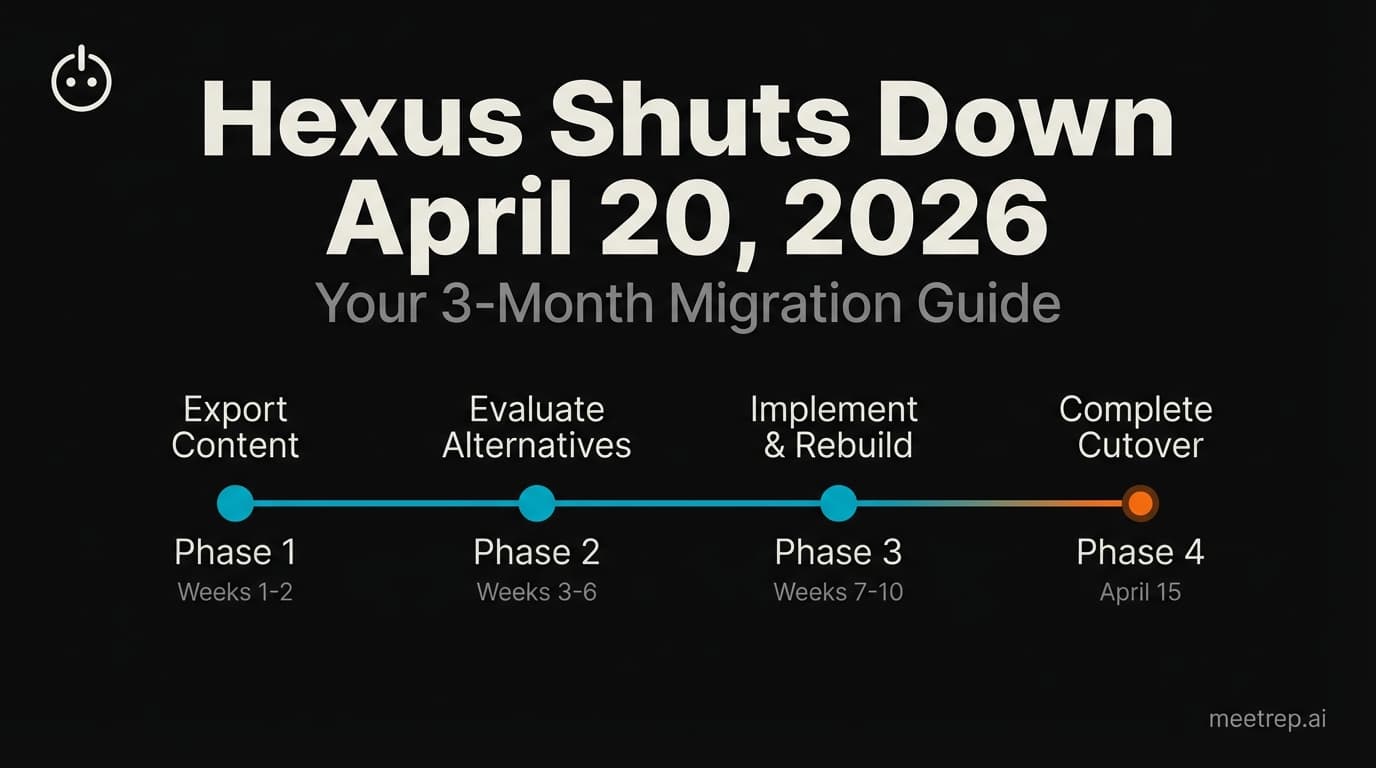
Hexus Acquired by Harvey AI: Congrats & What It Means for Demo Automation Teams
Hexus is shutting down following its acquisition by Harvey AI. Learn how to manage your migration and discover the best demo automation alternatives before April 2026.
Why the "Software Demo" is Broken—and Why AI Agents Are the Future
The traditional software demo is dead. Discover why 94% of B2B buyers rank vendors before calling sales and how AI agents are replacing manual demos to scale revenue.
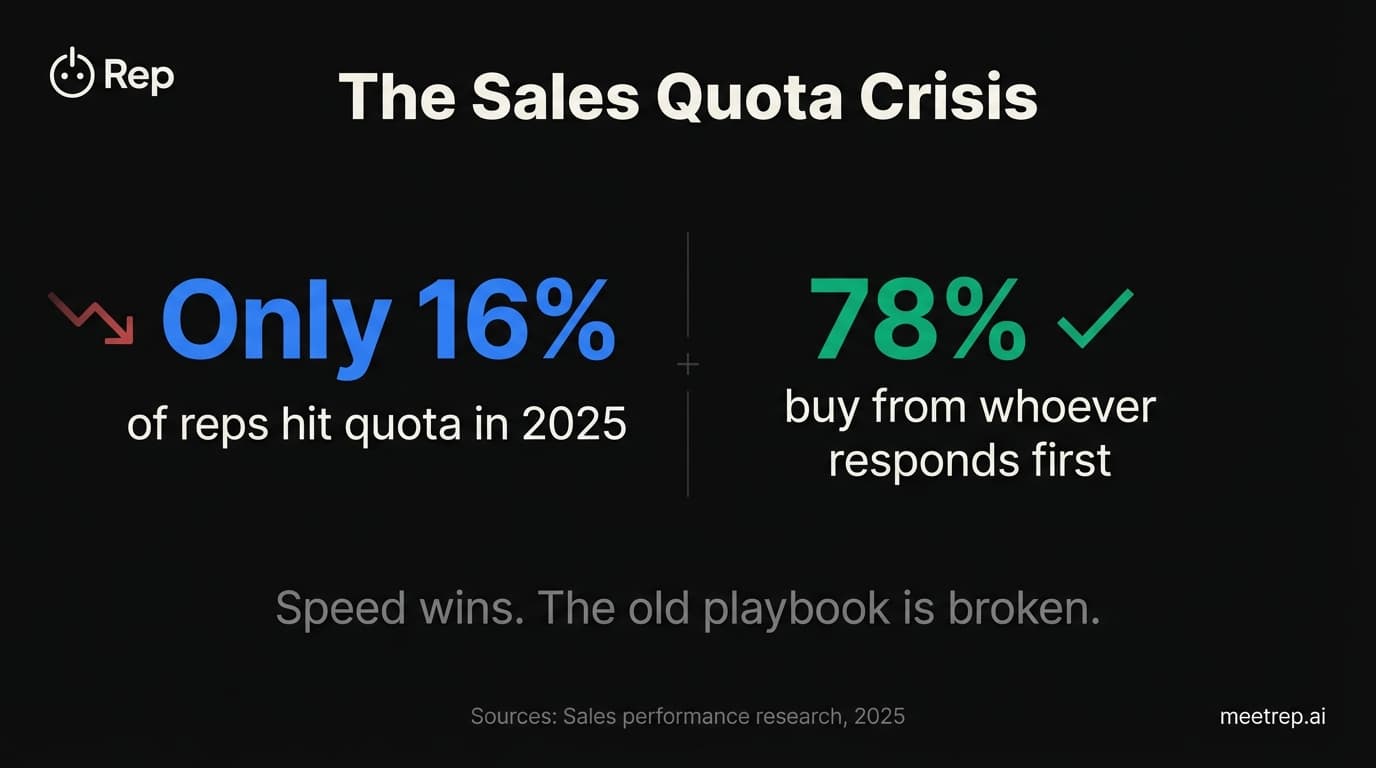
Why Autonomous Sales Software is the Future of B2B Sales (And Why the Old Playbook is Dead)
B2B sales is at a breaking point with quota attainment at 46%. Discover why autonomous 'Agentic AI' is the new standard for driving revenue and meeting the demand for rep-free buying.