Interactive Sales Tools: Why Static Presentations Are Costing You Deals

Executive Summary
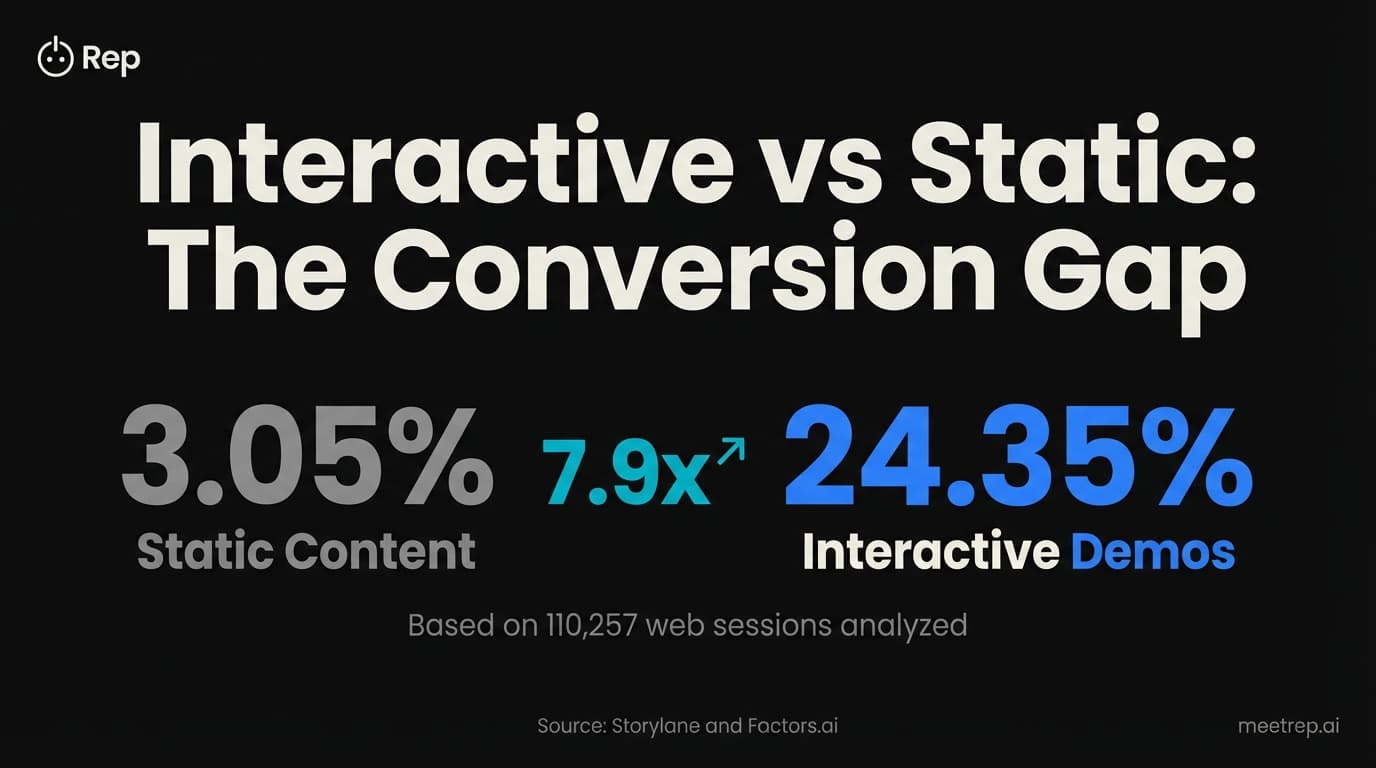
- Interactive sales tools convert at 7.9x the rate of static content (24.35% vs 3.05%)
- The market has split into click-through demos (self-serve exploration) and autonomous AI (live, guided demonstrations)
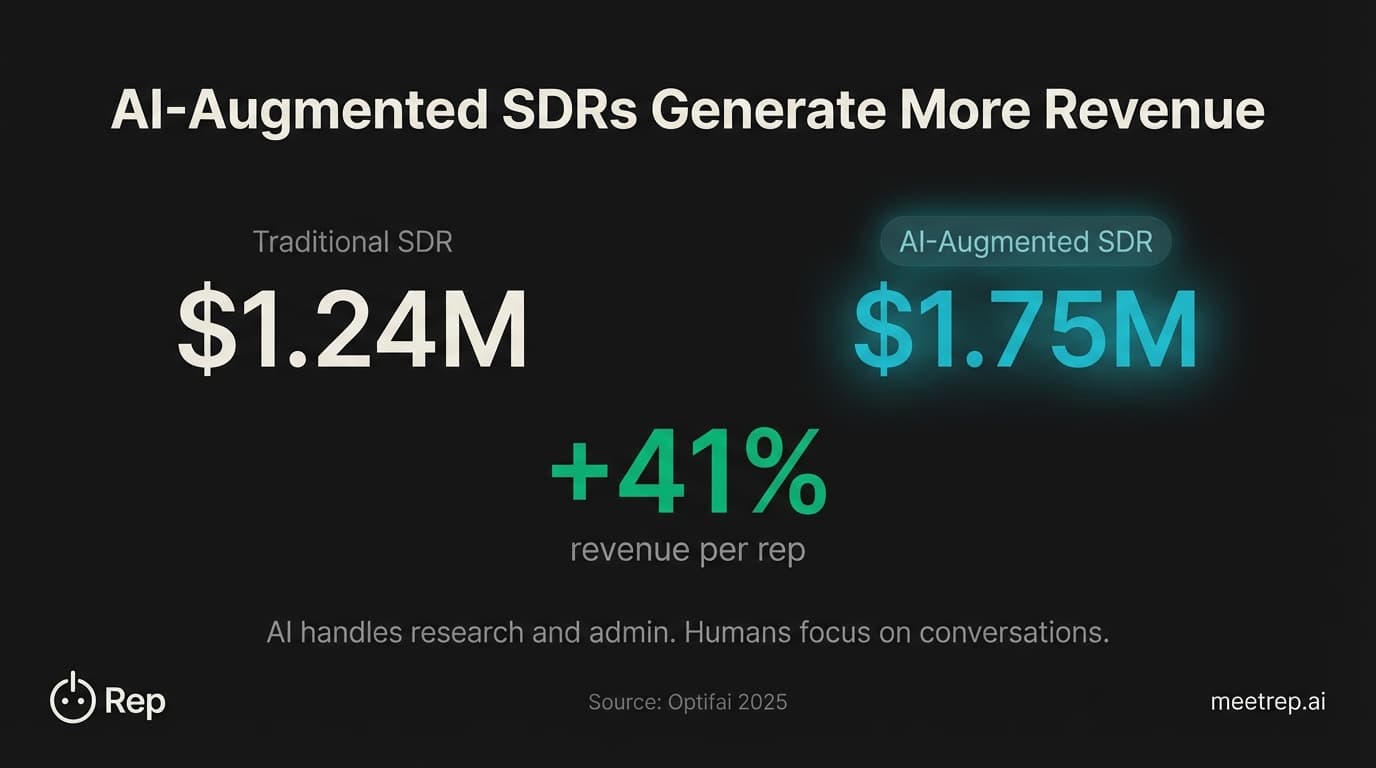
- Sales teams using AI generate 77% more revenue per rep than those who don't
- With buying committees averaging 22 people, you can't manually demo everyone—tools must scale
- Speed matters: 78% of buyers purchase from whoever responds first
Two-thirds of your audience has already tuned out. That's the reality of static presentations in 2025—65% of people disengage within the first five minutes, according to Forrester research. You haven't even gotten to the product yet. And they're already mentally composing their "let me think about it" email.
I've spent years building sales automation tools, first at GoCustomer.ai and now at Rep. Here's what I've learned: the companies winning deals aren't just "engaging" buyers. They're completely rethinking how demonstrations work. Interactive sales tools have split into two distinct categories—and most vendors won't tell you which one you actually need.
This post breaks down what's working, what's hype, and how to choose.
What Are Interactive Sales Tools—And Why Do They Work?
Interactive sales tools are software that lets prospects actively experience your product instead of passively watching slides. They range from clickable product tours to AI agents that conduct live demonstrations. The common thread? Buyers do something, not just sit there.
The data on why they work is hard to argue with. Storylane and Factors.ai analyzed 110,257 web sessions and found interactive demos achieve 24.35% conversion rates versus 3.05% for static pages. That's a 7.9x improvement. Deal conversion tells the same story: 10.1% with interactive versus 3.1% without—a 3.2x lift.
But here's what most comparisons miss: "interactive" isn't one thing anymore.
The Data: Interactive demos don't just convert better on websites. They close deals faster. The same Storylane study found sales cycles dropped 18%—from 33 days to 27 days—when interactive tools were part of the process.
The market has bifurcated into two categories with fundamentally different use cases. Conflating them leads to bad purchasing decisions. So let me be specific about what each actually does.
Click-Through Demos: Self-Serve Discovery at Scale
Click-through demos are pre-recorded, self-guided product tours. Tools like Navattic, Walnut, Storylane, and Arcade capture your product interface—either as screenshots or HTML—and let prospects explore on their own.
Think of them as interactive brochures. Really good interactive brochures.
Where they shine:
- Website embeds where visitors can explore before requesting a call
- Leave-behinds after sales calls for stakeholders who missed the meeting
- Top-of-funnel education when buyers want to self-qualify
- Product-led growth motions where self-serve is the strategy
The strength is scale. You build the demo once. Thousands of prospects can experience it. No human required. And the analytics show you exactly where people drop off, what features they care about, and which accounts are engaging.
Navattic's 2025 research found that ungated demos (no form required) achieve 10% higher engagement. And 71% of top-performing demos are ungated. The lesson? If you're going to let people explore, don't put walls in their way.
Common mistake: Using click-through demos for conversion-stage buyers who have specific questions. These tools can't answer questions. They can only show pre-built paths. That's fine for education. It's frustrating for someone ready to buy who wants to know "can it do X?"
Autonomous AI Agents: Live Demonstrations Without Human Availability
This is the newer category, and it's completely different.
Autonomous AI agents—like what we're building at Rep—join live video calls, share their screen, control your actual product in real-time, and converse with prospects. They're not showing screenshots. They're walking someone through the live software while answering questions.
It's the difference between a recorded tour and a knowledgeable guide who can respond to what you ask.
Where this makes sense:
- 24/7 demo availability without burning out your team
- Initial qualification calls before handing off to AEs
- Speed-to-lead situations where response time determines who wins
- Coverage gaps when your team can't scale with demand
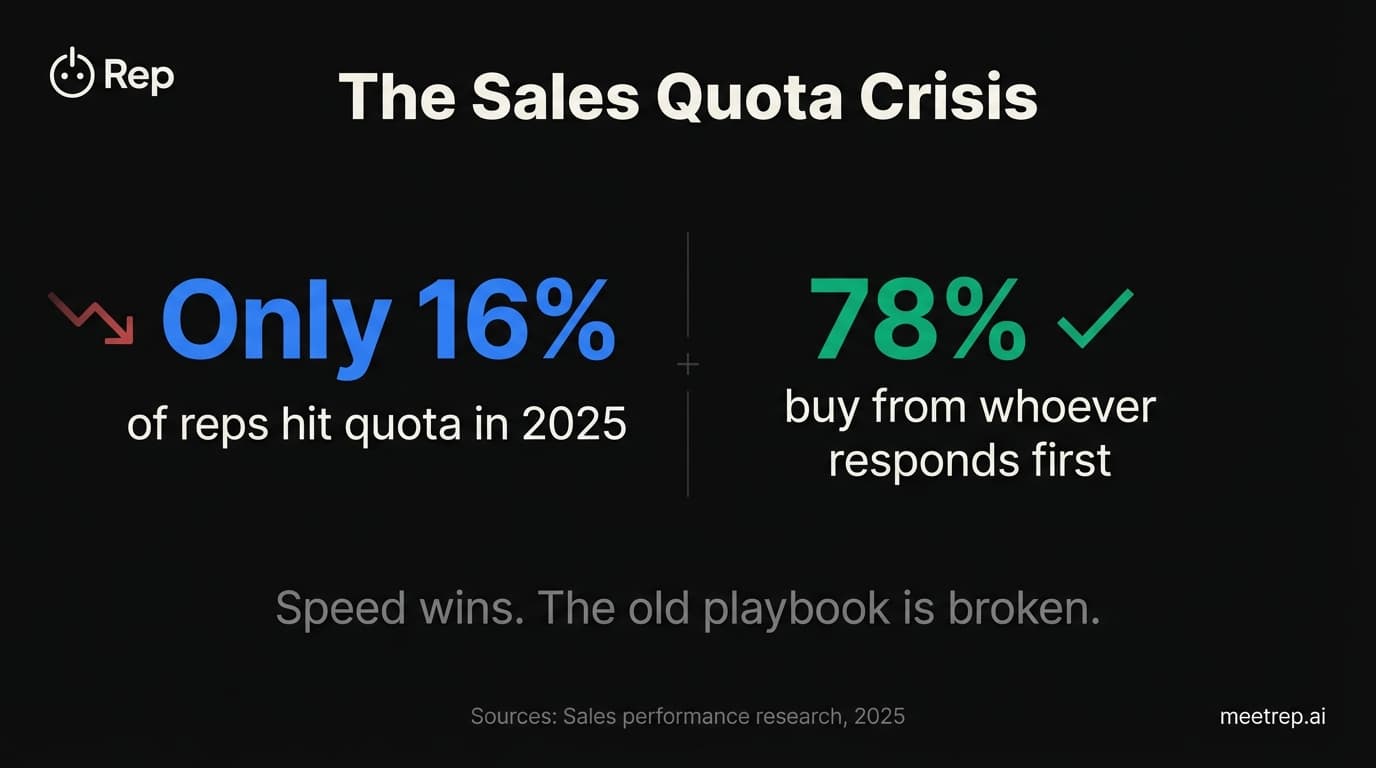
The speed argument is worth dwelling on. LeadAngel's research found that every 10-minute delay in response time reduces conversion chances by 400%. And Lead Connect's data shows 78% of customers buy from whoever responds first.
A coffee break can cost you the deal. Literally.
What we learned building Rep: The hardest technical challenge isn't the AI conversation—it's reliable browser automation. Controlling a real product, handling loading states, recovering from unexpected UI changes. Screenshot-based tools sidestep this entirely. We chose the harder path because live product control is what actually answers the "can it do X?" question in real-time.
The Revenue Gap Is Real: 77% More Per Rep
Here's the stat that should concern anyone not paying attention to AI in sales.
Gong's State of Revenue AI Report (December 2025) analyzed actual performance data and found that sales teams using AI generate 77% more revenue per representative than those who don't. Not 7%. Not 17%. Seventy-seven percent.
That's not an efficiency gain. That's a different competitive class.
And the gap extends beyond revenue. Organizations embedding AI as a core driver of their go-to-market strategy are 65% more likely to increase win rates, according to the same Gong Labs research.
| Metric | Without AI Tools | With AI Tools | Difference |
|---|---|---|---|
| Revenue per rep | Baseline | +77% | Massive gap |
| Win rate improvement likelihood | Baseline | +65% | Strong advantage |
| Demo-to-close rate | 25% average | 38% with interactive | +52% improvement |
Sources: Gong State of Revenue AI Report December 2025, Optifai Sales Ops Benchmark 2025
Outreach's January 2026 report found that 45% of high-performing sales teams have already adopted hybrid human-AI models. The other 55%? They're playing catch-up.
This isn't futurism. It's what's happening now.
The 22-Person Problem: Why You Can't Demo Everyone Manually
Buying committees have exploded. LinkedIn's B2Believe 2025 data via SPOTIO shows the average B2B buying group now includes 22 people. That's up from estimates of 7-10 just a few years ago.
Twenty-two people. Think about what that means for your demo capacity.
Your AE runs a great demo with the champion. But the champion needs to sell internally to 21 other stakeholders. What do they have to work with? Maybe they take notes. Maybe they remember 60% of what you covered. Maybe they try to re-explain your product positioning while getting half of it wrong.
This is where interactive sales tools become essential—not optional.
Click-through demos give champions shareable assets. They can send a link to the CFO who wants to understand pricing implications. The security lead who wants to see the admin panel. The end user who wants to know what their daily workflow looks like.
Consensus's 2025 B2B Buyer Behavior Report found that prospects who viewed 9 or more demos achieved 8-10x higher close rates. That's not because they were better prospects. It's because more stakeholders actually understood what they were buying.
Key Insight: The winning vendor is on the buyer's Day One shortlist 95% of the time. If 22 people are involved in the decision and you've only influenced 3 of them with live demos, you're losing to competitors who equipped their champion with tools to reach the other 19.
Choosing Between Categories: A Decision Framework
So which do you need? Maybe both. Here's how I think about it.
Choose click-through demos when:
- You want to educate top-of-funnel visitors at scale
- Your product is straightforward enough to explore solo
- You need leave-behind content for multi-stakeholder deals
- You're running a product-led growth motion
Choose autonomous AI when:
- Speed-to-lead is a competitive differentiator
- You need 24/7 coverage across time zones
- Buyers have questions that require real-time answers
- Your team is capacity-constrained on initial demos
My recommendation—consider both when:
- You have high website traffic (click-through for education) AND high meeting volume (AI for conversations)
- Your buying process spans self-serve discovery and guided evaluation
- You want to maximize coverage across the entire buyer experience
| Feature | Click-Through Demos | Autonomous AI Agents |
|---|---|---|
| Interaction model | User explores alone | AI guides in real-time |
| Content type | Screenshots or HTML capture | Live browser + voice |
| Best for | Website embeds, self-serve | Video meetings, 24/7 coverage |
| Can answer questions | No—fixed paths only | Yes—conversational |
| Maintenance | Update when UI changes | Controls live product |
| Human requirement | None | None |
| Funnel stage sweet spot | TOFU/MOFU | MOFU/BOFU |
Representative tools: Click-through (Navattic, Walnut, Storylane, Arcade); Autonomous AI (Rep)
The Quota Crisis Makes This Urgent
Here's the uncomfortable context: only 25% of sales reps are hitting quota right now.
Three out of four reps are missing. That's not a training problem. That's a systemic capacity problem.
Reps spend hours on repetitive demos. They chase leads across time zones. They lose deals because they couldn't respond fast enough. Meanwhile, their quota keeps climbing—up 7.5% while win rates dropped from 23% to 19%, according to Sailes 2024 data.
The math doesn't work. You can't outwork a capacity constraint. You have to change the model.
Look—interactive sales tools aren't a nice-to-have in this environment. They're how you close the gap between what's expected and what's possible.
My take: I think we're at an inflection point. The teams adopting AI and interactive tools now will pull ahead in a way that's hard to reverse. The 77% revenue gap per rep isn't going to shrink as these tools get better. It's going to widen.
Implementation Reality: What Actually Gets Adopted
The fear with any new tool is shelfware. You buy it, your team ignores it, and you've wasted budget.
Highspot's State of Sales Enablement 2025 report found that companies with unified enablement platforms are 42% more likely to improve win rates. The keyword is "unified." Tools that live outside your workflow don't get used.
For click-through demos, integration means:
- Embedding on your website (not a separate URL people forget)
- CRM sync so engagement data surfaces where reps already work
- Slack notifications when target accounts engage
For autonomous AI, integration means:
- Calendar connections for instant booking
- CRM logging of conversations and action items
- Handoff workflows when human follow-up is needed
What we built into Rep: Every demo session automatically extracts action items, pain points, and follow-up questions. That data goes where your team already looks—not into a separate dashboard they have to remember to check. My goal was reducing friction to the point where adoption isn't a change management project.
The shift from static to interactive isn't a trend. It's a response to how buying has changed.
Committees are larger. Time is shorter. Competition is faster. The teams that adapt—with the right mix of click-through tools for scale and AI agents for live engagement—will outperform those clinging to slide decks by a margin that keeps widening.
At Rep, we're building the autonomous AI side of this equation. But regardless of which tools you choose, the era of static presentations is over.
The question isn't whether to change. It's whether you do it before or after your competitors.

Nadeem Azam
Founder
Software engineer & architect with 10+ years experience. Previously founded GoCustomer.ai.
Nadeem Azam is the Founder of Rep (meetrep.ai), building AI agents that give live product demos 24/7 for B2B sales teams. He writes about AI, sales automation, and the future of product demos.
Frequently Asked Questions
Table of Contents
- What Are Interactive Sales Tools—And Why Do They Work?
- Click-Through Demos: Self-Serve Discovery at Scale
- Autonomous AI Agents: Live Demonstrations Without Human Availability
- The Revenue Gap Is Real: 77% More Per Rep
- The 22-Person Problem: Why You Can't Demo Everyone Manually
- Choosing Between Categories: A Decision Framework
- The Quota Crisis Makes This Urgent
- Implementation Reality: What Actually Gets Adopted
Ready to automate your demos?
Join the Rep Council and be among the first to experience AI-powered demos.
Get Early AccessRelated Articles
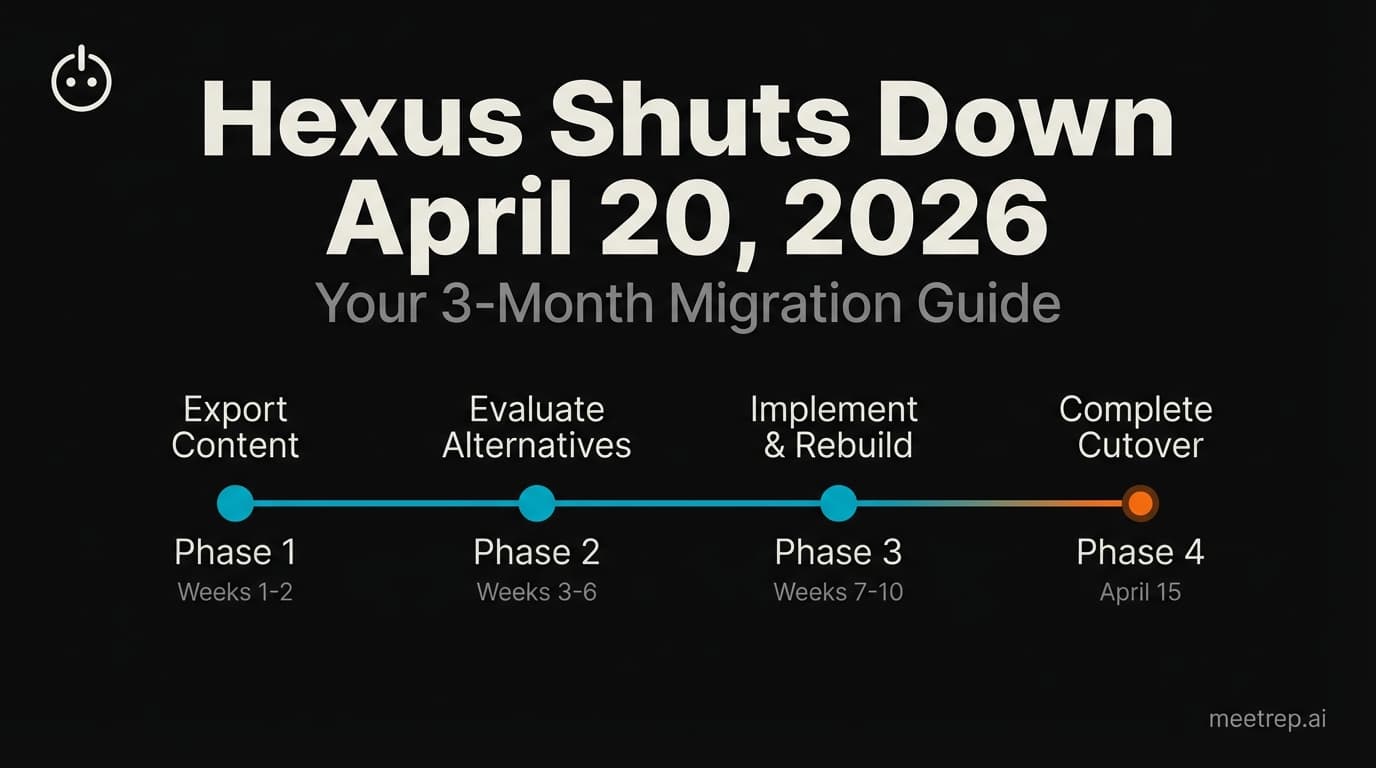
Hexus Acquired by Harvey AI: Congrats & What It Means for Demo Automation Teams
Hexus is shutting down following its acquisition by Harvey AI. Learn how to manage your migration and discover the best demo automation alternatives before April 2026.
Why the "Software Demo" is Broken—and Why AI Agents Are the Future
The traditional software demo is dead. Discover why 94% of B2B buyers rank vendors before calling sales and how AI agents are replacing manual demos to scale revenue.
Why Autonomous Sales Software is the Future of B2B Sales (And Why the Old Playbook is Dead)
B2B sales is at a breaking point with quota attainment at 46%. Discover why autonomous 'Agentic AI' is the new standard for driving revenue and meeting the demand for rep-free buying.