How to Scale Your SDR Team's Demo Capacity Without Hiring Another Rep

Executive Summary
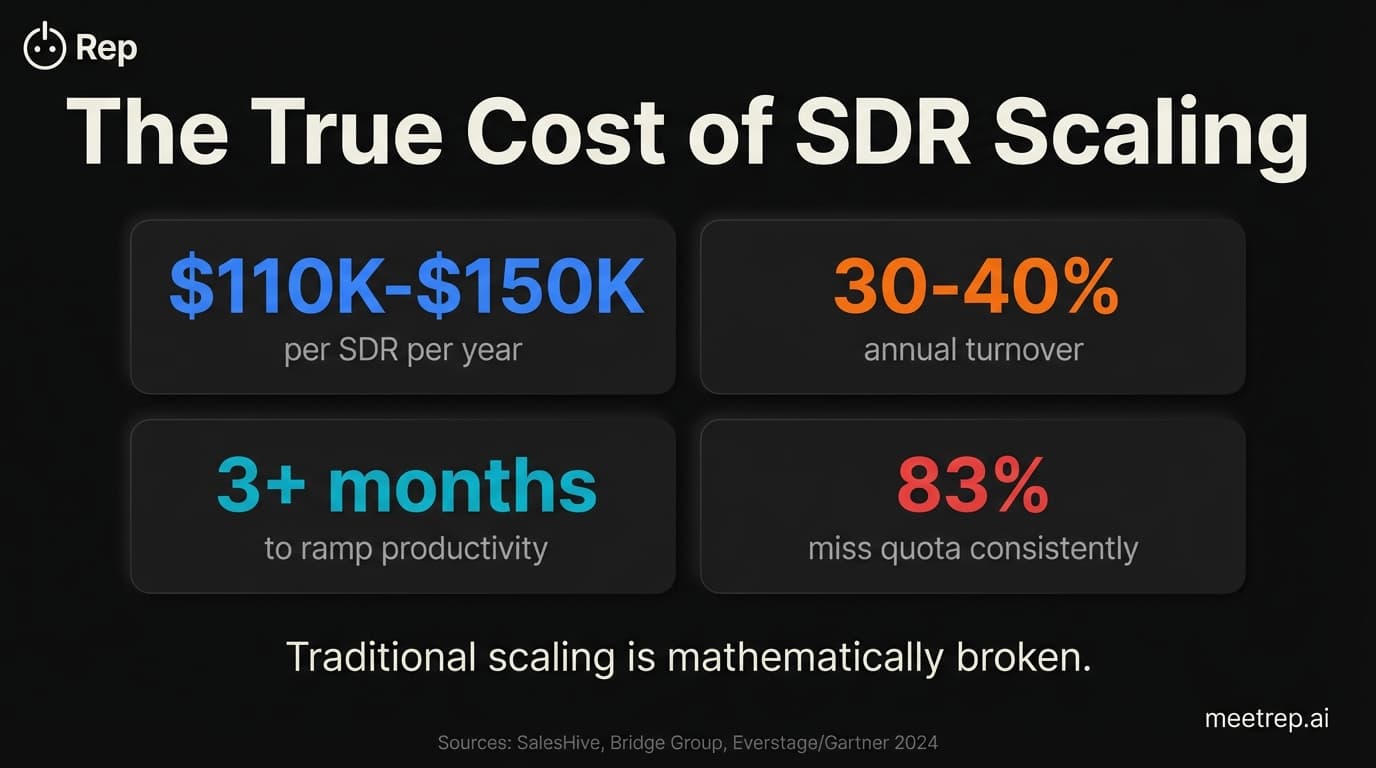
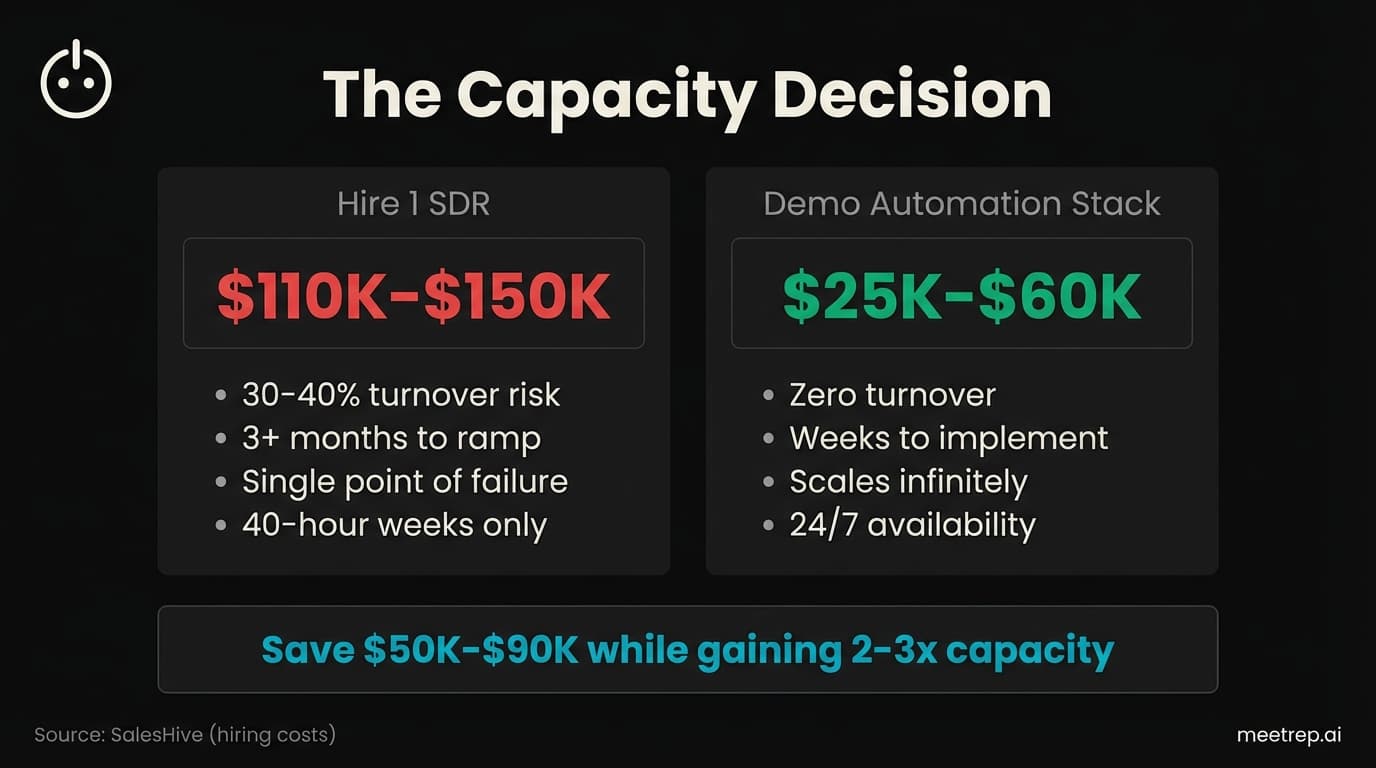
- A fully-loaded SDR costs $110K-$150K/year—and you'll lose 30-40% of them annually
- The real bottleneck isn't SDR headcount. It's demo capacity and the time wasted on repetitive early-stage demos.
- Three strategies work: demo automation, intelligent routing, and AI-assisted prospecting
- Companies like Wrike and Sovos have cut live demos by 35-67% while increasing pipeline
- You can start with one change this quarter and scale from there
Your pipeline targets just went up 40%. Your headcount budget didn't. And every time you think about scaling your SDR team, you run the math on what another hire actually costs—then quietly close the spreadsheet.
I've been there. When we built GoCustomer.ai, we watched companies struggle with this exact problem. The math on linear scaling simply doesn't work anymore. But here's what I've learned after building sales automation products for years: you don't need to hire your way to more demo capacity. The teams winning right now are scaling demos 2-3x without adding a single seat.
This isn't theory. I'll show you exactly how they're doing it.
The Hidden Math That Makes Traditional SDR Scaling Impossible
Let's talk about what scaling your SDR team actually costs—because the number on the job posting is a lie.
A fully-loaded SDR runs $110,000-$150,000 per year. That's base salary, variable comp, benefits, tech stack ($6,000-$7,000 in tools alone), management overhead, and office costs. Now multiply that by the number of SDRs you think you need.
But wait. It gets worse.
Average SDR tenure is 14-16 months. That means you're not getting 14-16 months of productivity—you're getting about 11-13 months after a 3.1-3.2 month ramp. So you've invested $140K for roughly one year of peak performance before the cycle restarts.
The Data: With 30-40% annual turnover, a 10-person SDR team loses 3-4 reps per year. At $100,000-$115,000+ per departure in replacement costs, that's $300K-$400K annually just to stay at the same headcount. Not to grow. To stay even.
And here's the part that really stings: 83.4% of SDRs fail to consistently hit quota, according to Gartner's 2024 data. So most of that $110K+ investment underperforms expectations anyway.
Sound familiar?
This is why traditional scaling hits a wall. You can't hire your way out of a math problem this broken.
Where Your SDRs' Time Actually Goes (And Why It Matters)
The conventional answer to "we need more demos" is "hire more SDRs." But that assumes your current SDRs are maxed out doing valuable work.
They're not.
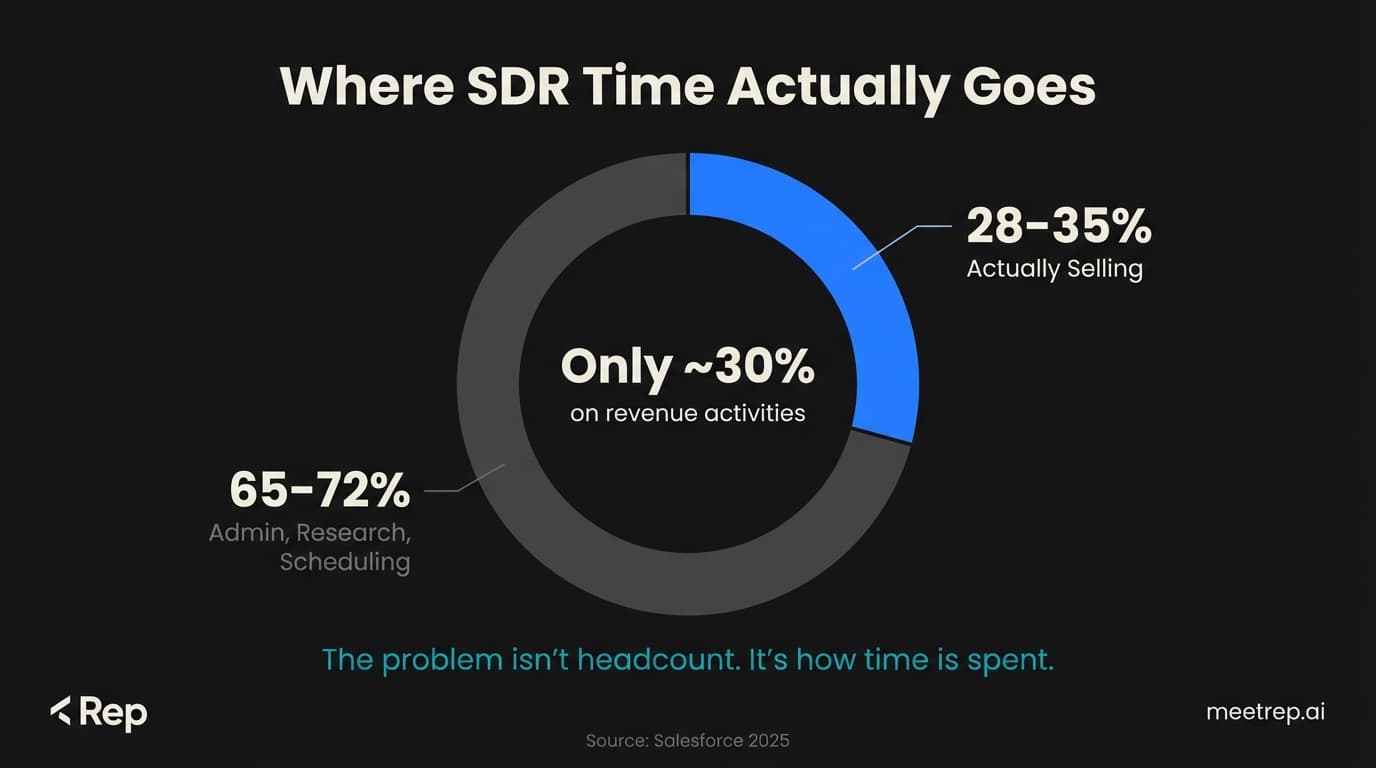
According to Salesforce's 2025 research, reps spend only 28-35% of their time actually selling. The other 65-72%? Admin work. CRM updates. Research. Scheduling ping-pong. And yes—giving the same intro demo for the twentieth time this month.
What we learned at GoCustomer: When we analyzed where SDR time went, repetitive demos were the biggest surprise. These weren't complex technical discussions. They were the same 15-minute product overview, repeated endlessly for prospects who may or may not be qualified. Every demo looked identical. And every one required a human to show up. My frustration with this inefficiency is what eventually led us to build something different.
That's not a headcount problem. That's an efficiency problem. And efficiency problems have different solutions than headcount problems.
The teams that figured this out stopped asking "how do we hire more SDRs?" and started asking "how do we free our SDRs from work that doesn't need a human?"
Three Strategies That Actually Scale Demo Capacity
So what do you do when you can't hire but need more demos? I've seen three strategies work consistently—and the best teams combine all three.
| Strategy | What It Does | Best For | Example Result |
|---|---|---|---|
| Demo Automation | Delivers interactive demos without live reps | High-volume intro demos, after-hours coverage | Sovos: 67% reduction in live SE calls |
| Intelligent Routing | Gets prospects to the right rep instantly | Eliminating scheduling friction, reducing no-shows | Chili Piper: 5x meeting increase |
| AI-Assisted Prospecting | Accelerates qualification and outreach | Faster lead processing, prioritization | Qlik: 67% faster lead qualification |
Let me break down each one.
Strategy 1: Demo Automation for Repetitive Demos
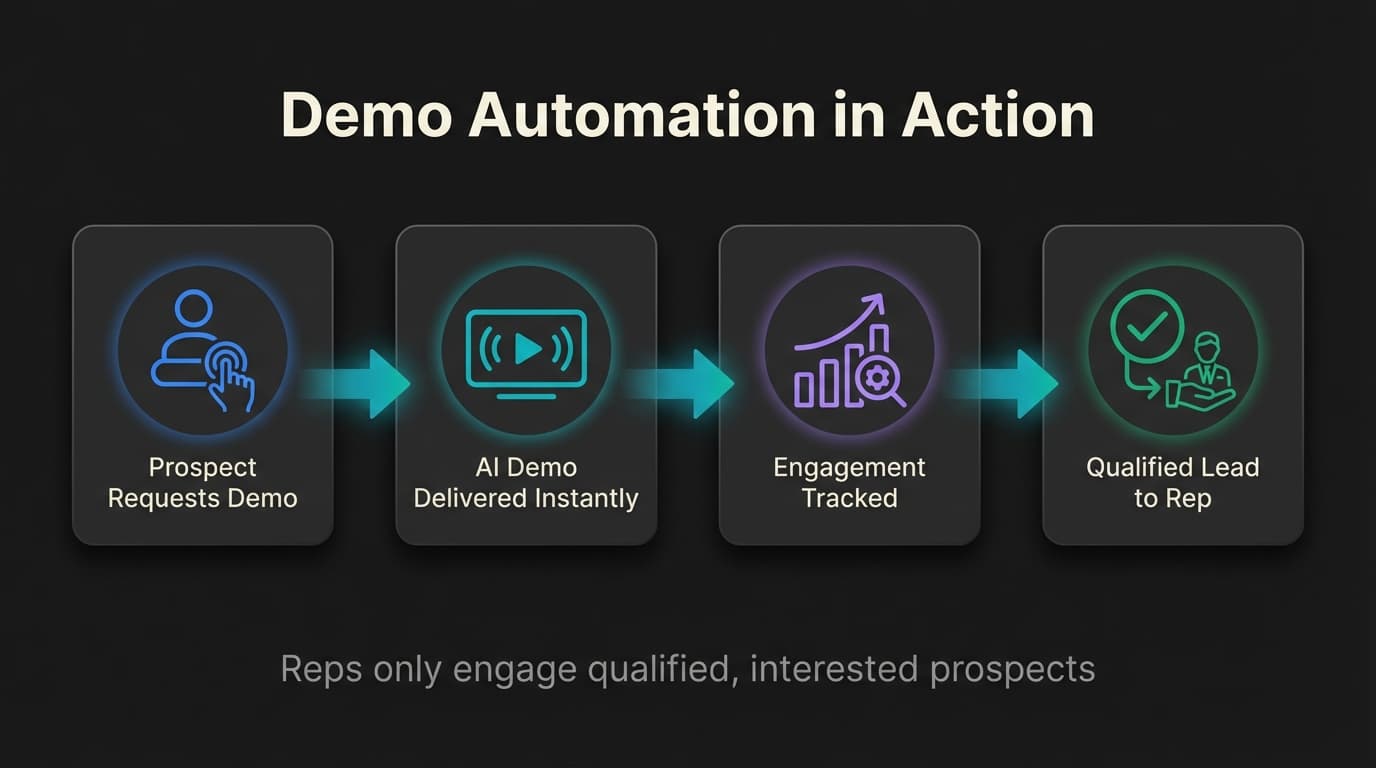
Demo automation is the use of software to create, personalize, and deliver product demonstrations at scale—without requiring a live sales rep to be present. This includes everything from pre-recorded interactive demos that prospects can explore on their own, to AI-powered solutions that conduct live demonstrations in real-time. The core benefit is enabling buyers to experience your product 24/7 while freeing your team to focus on deals that actually need human expertise.
This isn't about replacing your best AEs on complex enterprise deals. It's about handling the flood of early-stage demos that eat your team's time.
Sovos, a tax compliance software company, had a 9-person presales team drowning in unqualified demos. Over 50% of their demo requests were repetitive or didn't meet qualification criteria. Their solution engineers were showing up to 80%+ of sales calls—most of which didn't need their expertise.
After implementing demo automation, they saw a 67% reduction in live SE calls and a 60% faster SMB sales cycle. Their average deal closed in 39 minutes of viewing time versus weeks of scheduling back-and-forth.
Wrike saw similar results: they added 15% capacity without hiring and cut live demos by 35%. Their presales team now focuses on the complex deals that actually need human expertise.
Key Insight: Demo automation works best for standardized intro demos, product overviews, and self-serve exploration. Keep your live demos for multi-stakeholder deals, custom requirements, and late-stage negotiations where human judgment matters.
Strategy 2: Intelligent Routing to Eliminate Friction
The fastest demo request in the world doesn't matter if prospects wait 47 hours to hear back. (Yes, that's the actual average lead response time according to SalesRoads research.)
Intelligent routing tools like Chili Piper and RevenueHero instantly connect inbound demo requests to the right rep—no scheduling ping-pong, no lead sitting in a queue.
The numbers are striking. Chili Piper's own SDR team of 17 reps booked 580 meetings in a single quarter after implementation. At one event, they booked 97 meetings. But the stat that matters most: zero no-shows from meetings booked through their personal pages.
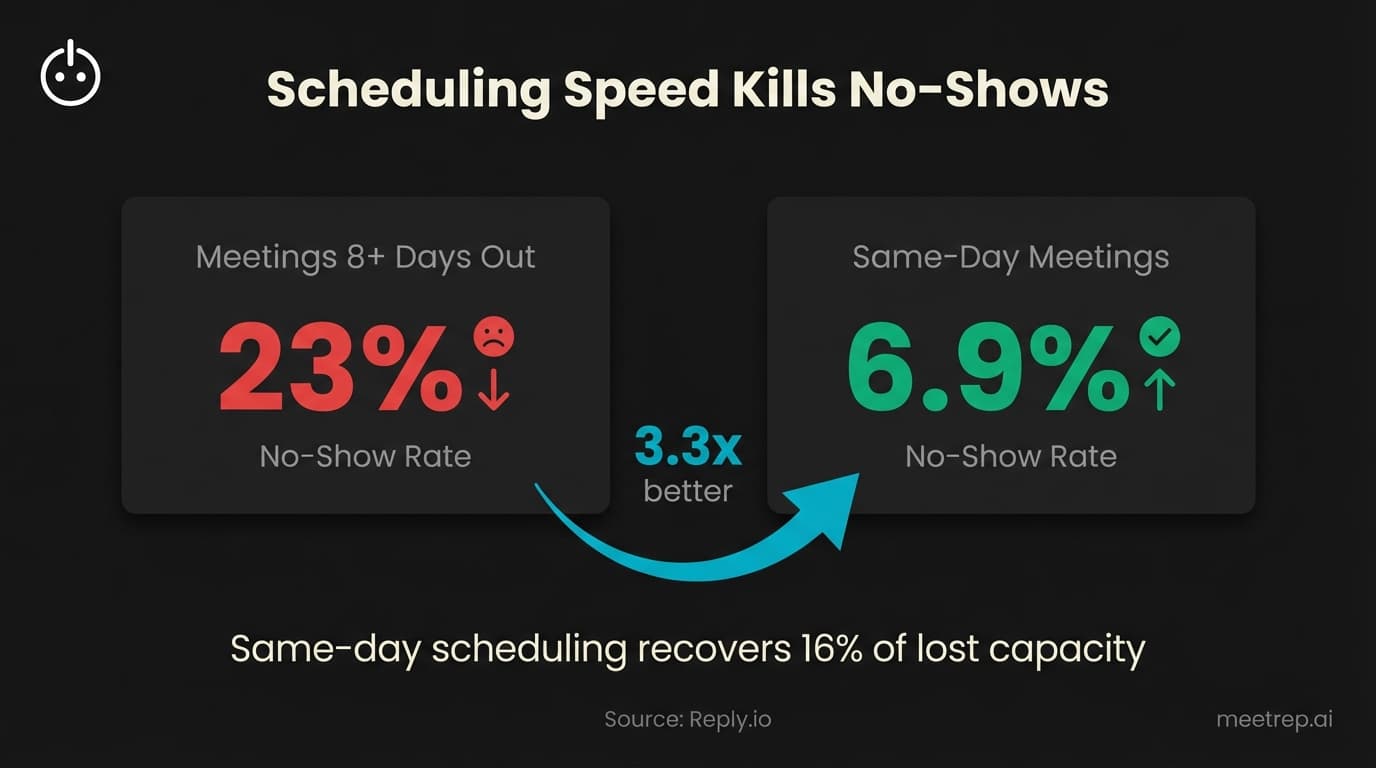
No-shows are a hidden capacity killer. If your team has a 20-25% no-show rate (common in B2B), you're losing a quarter of your demo capacity to prospects who simply don't show up. Same-day scheduling cuts that dramatically—Reply.io's analysis of 2,900 meetings found same-day bookings had only 6.9% no-show rates versus 23% for meetings scheduled 8+ days out.
Strategy 3: AI-Assisted Prospecting and Qualification
This is where tools like Salesloft, Outreach, and newer AI SDR platforms come in. They don't replace the demo—they speed up everything before and after it.
Qlik implemented Salesloft and saw their lead qualification time drop from 21 days to 7 days—a 67% improvement. In a single quarter, they influenced $14 million in pipeline and saw reply rates hit 39%.
The efficiency gain here isn't about doing more outreach. It's about doing smarter outreach. When SDRs spend less time researching and more time on qualified conversations, demo capacity goes up even without any automation of the demo itself.
When to Use Automated Demos vs. Live Demos
Here's a question I get constantly: "Our product is too complex for automated demos."
Maybe. But probably not for the reasons you think.
The complexity objection usually comes from imagining a single automated demo replacing your senior SE's two-hour technical deep-dive. That's the wrong comparison. The right comparison is: what demo does a prospect need at each stage?
| Stage | Prospect Need | Best Approach |
|---|---|---|
| Discovery | "What does this product actually do?" | Automated/AI demo |
| Evaluation | "How does it solve my specific problem?" | Live demo, potentially AI-assisted |
| Technical Validation | "Will it integrate with our stack?" | Live SE demo |
| Final Stakeholder | "Show the CFO before we sign" | Recorded/on-demand demo |
Interactive demos convert at 38% compared to 25% for traditional screen shares, according to Optifai's 2025 analysis of 939 B2B companies. That's a 52% improvement—not because interactive is magic, but because buyers can engage at their own pace and focus on what matters to them.
This is why we built Rep to handle live AI-powered demos. The product joins video meetings, shares its screen, navigates your actual product, and has real conversations with prospects. It's not a recorded video or a sandbox environment—it's a live demo that happens to be conducted by AI. For early-stage demos where the conversation is relatively predictable, this frees your SDRs to focus on qualified prospects who need human expertise.
My recommendation: Start by auditing your current demos. How many follow the same script? How many could a well-trained AI handle? For most teams, that number is 40-60% of total demo volume. That's your automation opportunity.
Building Your Demo Capacity Stack
You don't need to overhaul everything at once. Here's how to think about prioritizing—and my honest take on what matters most.
If your biggest problem is demo volume: Start with demo automation. Tools like Consensus, Navattic, and Rep address this directly. Consensus and Navattic excel at self-serve interactive demos. Rep handles live AI-conducted demos for when you need real conversation.
If your biggest problem is no-shows and scheduling: Start with routing. Chili Piper or Calendly with proper configuration can cut your no-show rate in half and eliminate the back-and-forth that adds days to your sales cycle.
If your biggest problem is SDR efficiency overall: Start with your sales engagement platform. Salesloft and Outreach have mature AI features for prioritization, sequencing, and analytics that help SDRs focus on the right activities.
How to evaluate any tool in this stack:
- Does it integrate with your existing CRM and calendar?
- Can you measure time saved per rep per week?
- What's the implementation timeline? (If it's more than 30 days, be skeptical)
- Do they have customers in your space with documented results?
| Tool Category | Options | Typical Annual Cost |
|---|---|---|
| Demo Automation | Consensus, Navattic, Rep, Demostack | $25K-$60K |
| Routing/Scheduling | Chili Piper, Calendly, RevenueHero | $15K-$30K |
| Sales Engagement | Salesloft, Outreach, Apollo.io | $20K-$50K |
Compare that to $110K-$150K per SDR hire, and the ROI math becomes clear.
Measuring What Matters
When you shift from headcount scaling to capacity scaling, your metrics need to shift too.
Track these:
- Demos delivered per week (without corresponding headcount increase)
- Show rate (target: 80%+, achievable with same-day routing)
- Time from demo request to demo delivered (compression = capacity gain)
- SDR time spent on demos vs. prospecting (should shift toward prospecting)
- Pipeline per SDR (should increase as they focus on higher-value activities)
Stop obsessing over:
- Demos per SDR (misleading if you're automating correctly)
- Activities per day (vanity metric that doesn't measure outcomes)
- Raw headcount benchmarks (your situation is different from the "average")
The goal isn't to make SDRs busier. It's to make them more effective by removing work that doesn't require human judgment.
The equation has changed. You can't hire your way to 2x demo capacity—the math doesn't work. But you can build systems that multiply what your current team can do.
Start with one bottleneck. Demo automation if volume is killing you. Routing if scheduling friction is the issue. Then expand from there.
The SDR leaders I talk to who've made this shift aren't just hitting their numbers. They're doing it with less burnout, lower turnover, and better conversion rates than when they were trying to scale through headcount alone.
If you want to see how Rep handles the live demo piece of this puzzle—AI that joins meetings, shares its screen, and has real conversations with prospects—book a demo. We built it specifically for this problem.

Nadeem Azam
Founder
Software engineer & architect with 10+ years experience. Previously founded GoCustomer.ai.
Nadeem Azam is the Founder of Rep (meetrep.ai), building AI agents that give live product demos 24/7 for B2B sales teams. He writes about AI, sales automation, and the future of product demos.
Frequently Asked Questions
Table of Contents
- The Hidden Math That Makes Traditional SDR Scaling Impossible
- Where Your SDRs' Time Actually Goes (And Why It Matters)
- Three Strategies That Actually Scale Demo Capacity
- When to Use Automated Demos vs. Live Demos
- Building Your Demo Capacity Stack
- Measuring What Matters
Ready to automate your demos?
Join the Rep Council and be among the first to experience AI-powered demos.
Get Early AccessRelated Articles
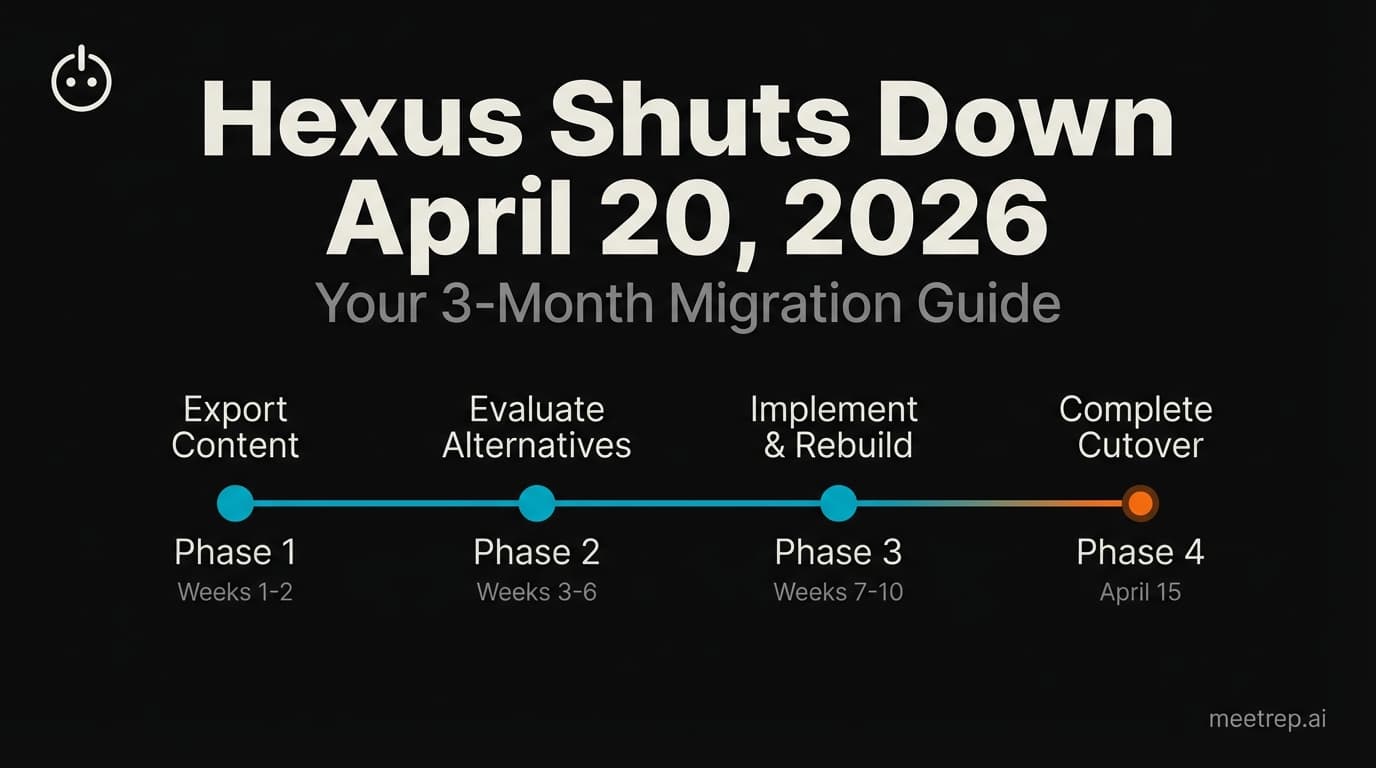
Hexus Acquired by Harvey AI: Congrats & What It Means for Demo Automation Teams
Hexus is shutting down following its acquisition by Harvey AI. Learn how to manage your migration and discover the best demo automation alternatives before April 2026.
Why the "Software Demo" is Broken—and Why AI Agents Are the Future
The traditional software demo is dead. Discover why 94% of B2B buyers rank vendors before calling sales and how AI agents are replacing manual demos to scale revenue.
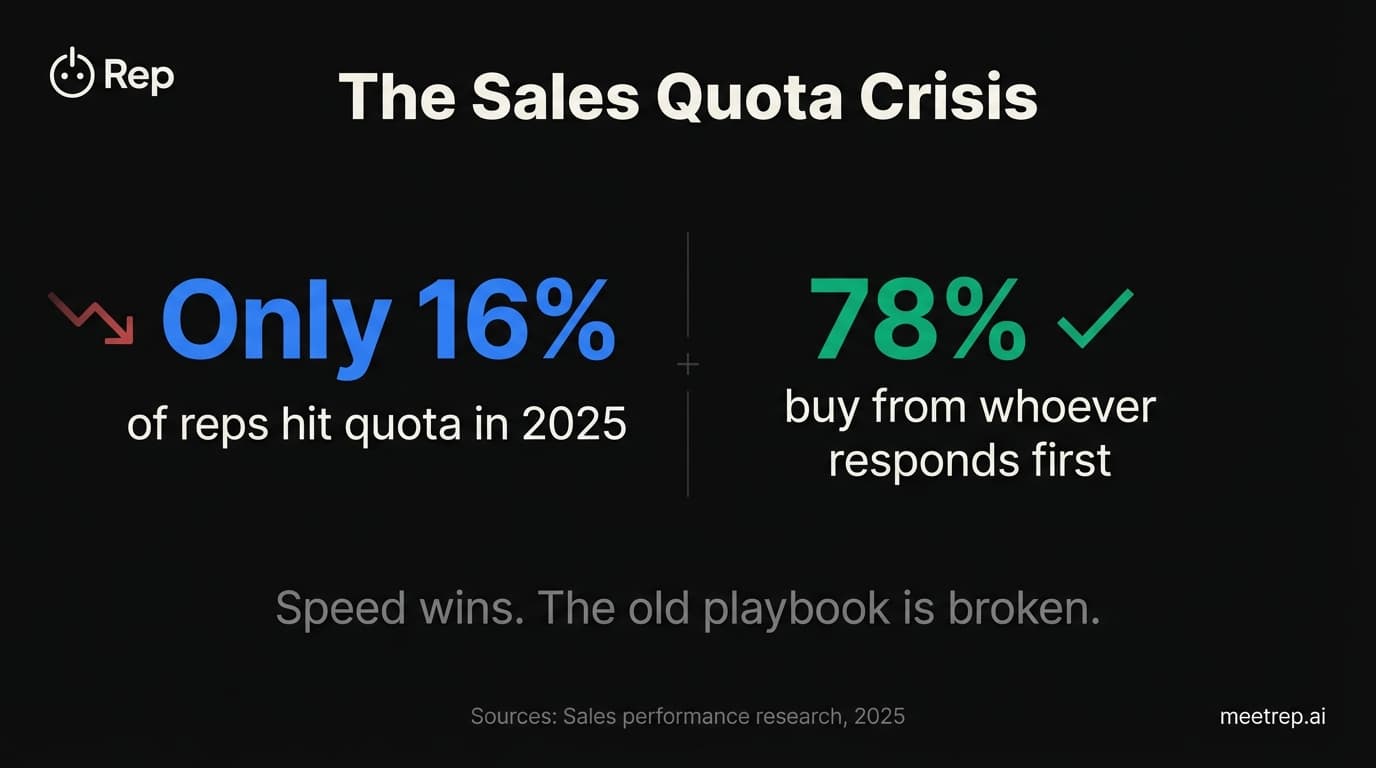
Why Autonomous Sales Software is the Future of B2B Sales (And Why the Old Playbook is Dead)
B2B sales is at a breaking point with quota attainment at 46%. Discover why autonomous 'Agentic AI' is the new standard for driving revenue and meeting the demand for rep-free buying.