How to Create a Demo in Under 10 Minutes (No Code Required)

Executive Summary
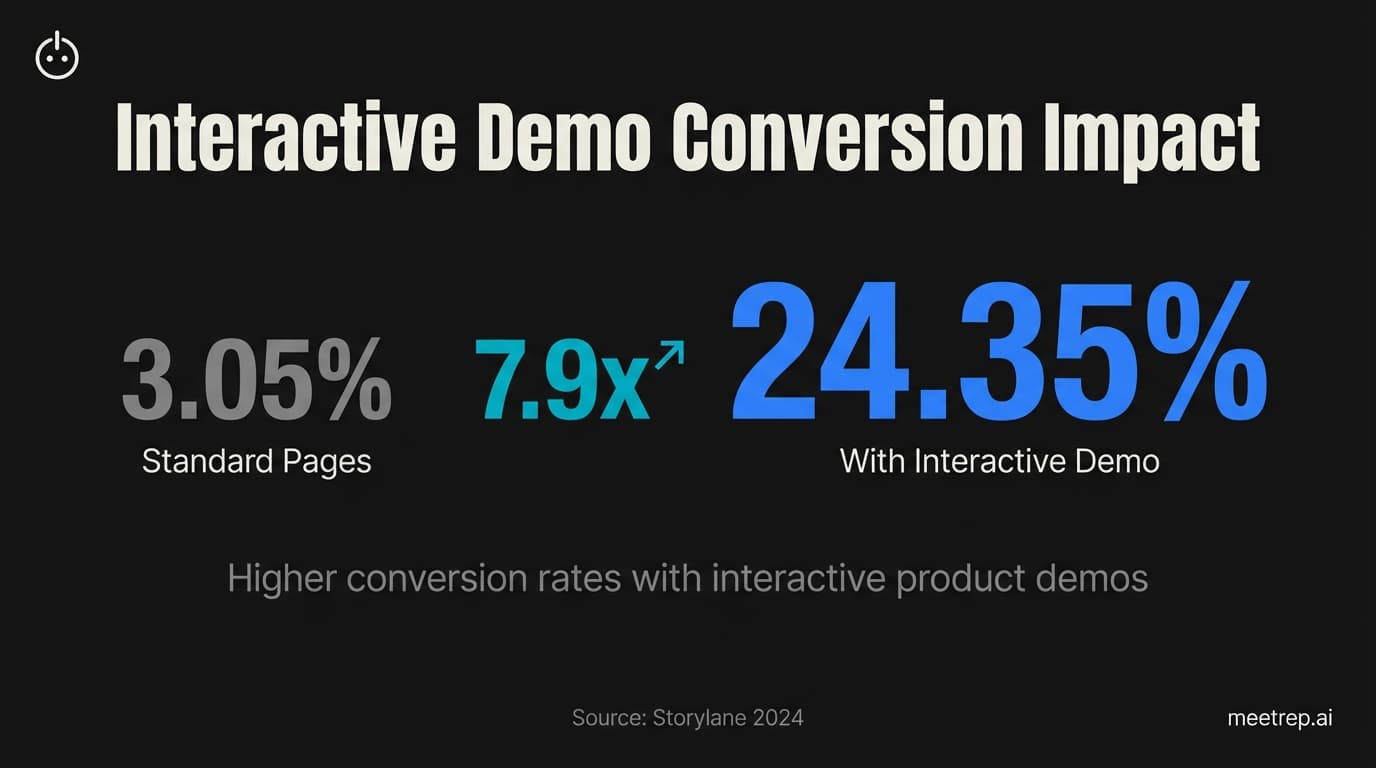
- Interactive demos convert at 24.35% vs 3.05% for standard pages—a 7.9x improvement
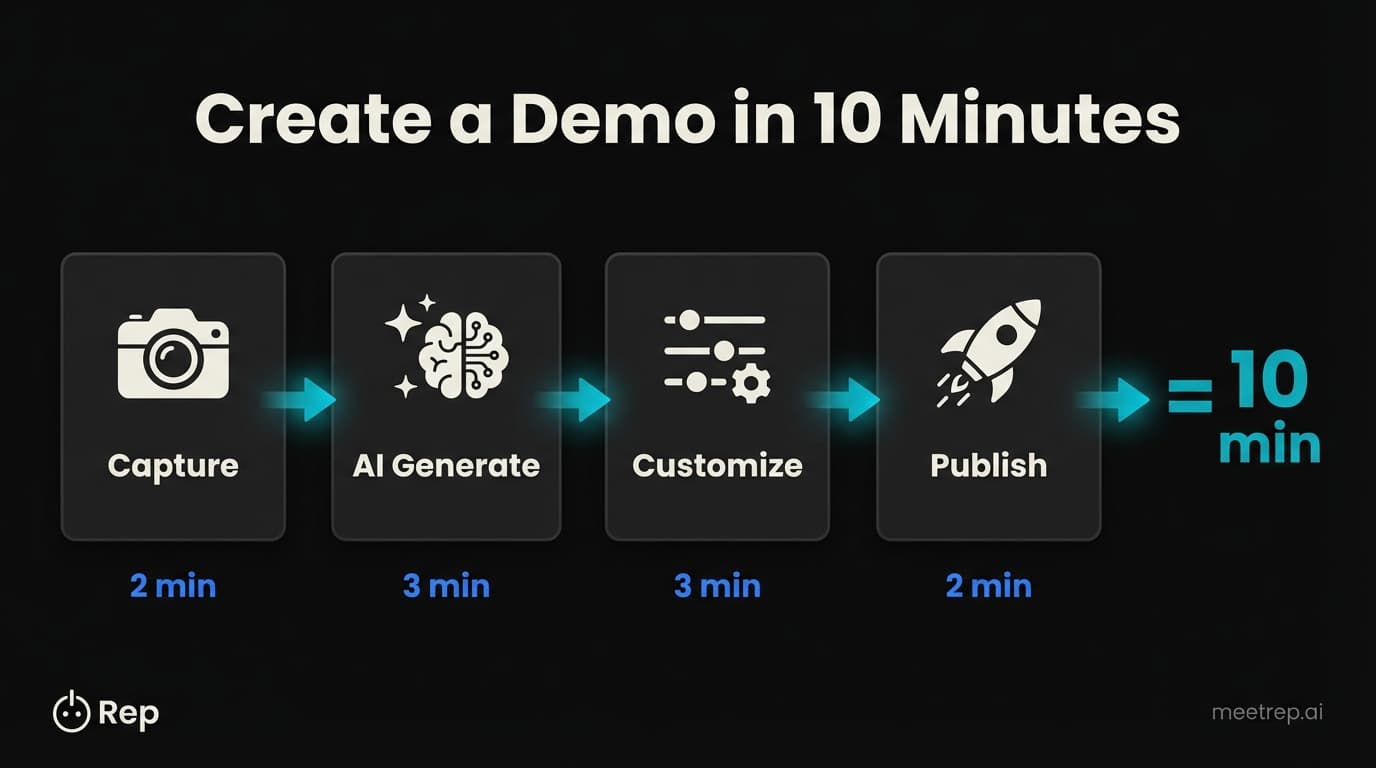
- You can build and deploy a working demo in under 10 minutes with modern AI-powered tools
- The difference between "interactive" and "autonomous" demos matters for your use case
- Setup time has dropped from 100+ hours to under 10 minutes with the right approach
Your SDRs are spending 41% of their day on admin tasks. Not selling. Not demoing. Admin. Meanwhile, prospects are researching your competitors at 2 AM when nobody's around to show them what your product actually does.
I've built two sales automation products—GoCustomer.ai (exited October 2024) and now Rep. And here's what I learned the hard way: the bottleneck isn't your product. It's the gap between "interested" and "demo scheduled."
This guide shows you exactly how to create demo experiences in under 10 minutes. Not the watered-down screenshot walkthroughs. Real, live product demonstrations that run while you sleep.
What is an autonomous demo (and why it's different from interactive tours)?
An autonomous demo is an AI-driven sales presentation where a voice-enabled agent joins a video meeting, shares its screen, navigates your live product, and answers prospect questions in real-time. It's not a recording. It's not a click-through. It's a conversation.
That's different from what most people think of when they hear "demo automation."
Interactive demos—the kind you get from tools like Navattic, Arcade, or Storylane—are click-through experiences. You capture screenshots or HTML, add tooltips, and embed them on your website. Prospects click through at their own pace. Silent. Self-guided.
Both have their place. But they solve different problems.
| Feature | Interactive Click-Through | Autonomous Demo |
|---|---|---|
| Interaction mode | Silent clicking + tooltips | Voice conversation + live video |
| Environment | Cached HTML / screenshots | Live browser / sandbox |
| Q&A capability | Pre-set paths only | Real-time AI answers |
| Best for | Marketing/TOFU lead gen | Sales qualification/MOFU-BOFU |
| Prospect effort | Self-guided exploration | Guided conversation |
| Setup time | 6 min to 2+ hours | ~10 minutes |
The Data:61% of B2B buyers prefer a rep-free buying experience, according to Gartner's 2025 survey. But "rep-free" doesn't mean "no help." It means "help on my terms, when I want it."
Interactive demos work well for top-of-funnel awareness. Someone lands on your website, wants to explore, doesn't want to talk to anyone yet. Perfect.
But when a prospect has questions—specific, technical, "will this work for my use case" questions—a click-through won't cut it. That's where autonomous demos fill the gap.
What you need before you start (2-minute prep)
Before you create a demo, you need three things. That's it. Not a 47-page requirements doc. Not a committee meeting. Three things.
1. Access to your product. You need login credentials for a demo environment. Not production (unless you want prospects poking around real customer data). A sandbox, a demo account, or a staging environment works.
2. A rough outline of what to show. Not a script. An outline. What's the "aha moment"? According to Arcade's benchmarks, 12 steps is the optimal demo length—more than that and completion rates drop. What 12 steps matter most?
3. Answers to 5-10 common questions. What do prospects always ask? What objections come up? You'll need this for the knowledge base.
Common mistake: Over-preparing. I've seen teams spend weeks building "the perfect demo" before launching anything. Ship a basic version. Learn what questions come up. Improve from there.
If you've got those three things, you can create demo experiences in under 10 minutes. Let me show you how.
Step 1: Capture your product workflow (2 minutes)
This is where the 10-minute promise either holds up or falls apart. The old way—manually screenshotting every step, writing annotations, mapping click paths—took hours. Sometimes days.
Modern tools have collapsed that.
The screenshot/HTML approach: Tools like Arcade and Storylane let you capture your product interface with a browser extension. Click through your product normally. The tool records. Arcade reports an average of 6 minutes from purchase to published demo.
The AI capture approach: This is what we built at Rep with Live Demo Learning Mode. Instead of clicking through silently, you perform the demo as you would for a real prospect—on a video call, talking through it. The AI watches, captures the navigation path, records your explanations, and builds the demo automatically.
Why did we build it this way? Because the talking track matters as much as the clicking. When you capture both together, you don't have to recreate the narrative later.
Why we built Rep this way: At GoCustomer, I watched teams struggle with the gap between "what we captured" and "what we actually say to prospects." They'd build beautiful click-throughs, then realize the talking points were all in someone's head. Capturing both simultaneously solves that.
Focus on the Golden Path. Not every feature. Not edge cases. The 5-12 steps that show your core value. Under 5 minutes total duration—SmartCue's research shows that's the optimal length for completion.
Step 2: Let AI generate your demo flow (3 minutes)
Here's where modern demo automation setup earns its keep.
After capture, AI tools automatically generate:
- Annotations and hotspots — Highlighting where to click, what to notice
- Talking points — What to say at each step
- Navigation logic — How steps connect, where to branch based on questions
- FAQ responses — Answers pulled from your knowledge base
With Rep, this happens during the Live Demo Learning Mode session. The AI extracts features, capabilities, value props, and demo tips in real-time. It then asks clarifying questions if anything's unclear—what we call inline validation.
And here's what most people miss: knowledge base integration.
Your AI demo configuration is only as good as what it knows. If a prospect asks "does this integrate with HubSpot?" and the answer isn't in your knowledge base, you get either silence or a hallucinated answer. Neither is good.
Spend 60 seconds uploading:
- Product docs
- FAQ documents
- Feature specs
- Sales playbooks (if you have them)
This isn't optional. It's what separates demos that build trust from demos that break it.
Step 3: Customize and personalize (3 minutes)
Personalization drives results. Gainsight saw a 25% increase in win rate when using customized demos versus standard ones.
But personalization doesn't mean rebuilding from scratch for every prospect.
Dynamic variables work.
Most tools support tokens like {{company_name}} or {{use_case}}. Set them once, populate automatically from your CRM.
One-click branding works. Logo, colors, fonts. Takes 30 seconds.
Multi-language support works. Tools like Supademo support 15+ languages with AI-generated voiceovers.
What doesn't work: spending 3 hours customizing a demo for a prospect who might not show up. Quick demo creation is about speed to value—get something live, then iterate.
Key Insight: The first demo doesn't need to be perfect. It needs to exist. You'll learn more from 10 actual prospect interactions than from 10 hours of internal refinement.
Step 4: Publish and share (2 minutes)
You've captured the workflow. AI generated the structure. You've customized the basics. Now it goes live.
Embedding options:
- Website embed (homepage, pricing page, features page)
- Email links (sales sequences, nurture campaigns)
- Calendar integration (instant booking triggers demo)
- CRM integration (track engagement in Salesforce, HubSpot)
For autonomous demos (like Rep): You get a shareable link. Prospects click it, join a video room, and the AI agent handles the rest—greeting them, sharing screen, navigating your product, answering questions.
For interactive click-throughs: Embed code drops into your website. Or share direct links via email. Most tools provide analytics on who watched, how long, which features they engaged with.
The Data: Companies with 47-hour average lead response times are losing to competitors who respond in minutes. 78% of B2B customers buy from the first responder. When your demo is available 24/7, you become the first responder by default.
Total time for all four steps: approximately 10 minutes.
Honestly, I know that sounds too good. So let me address the skepticism directly.
"10 minutes seems unrealistic"—here's the reality check
I built this product. I still had to convince myself the 10-minute claim wasn't marketing fluff.
Here's what I learned:
The 10-minute benchmark is real—but it's a baseline.Arcade's data shows 6 minutes average from purchase to publish for their platform. That's a simple interactive demo. Add voice, add knowledge base integration, add customization—you're at 10-15 minutes for a more complete setup.
Complex products take longer the first time.Synack reduced their demo build time from 100+ hours to under 10 hours with Demostack. That's still a huge improvement, but it wasn't 10 minutes. Enterprise products with complex environments need more setup.
The 10-minute window is for subsequent demos. Once your knowledge base is built, once your navigation patterns are captured, spinning up variations is fast. First demo: maybe 30 minutes. Fifth demo: 5 minutes.
What slows people down:
- Overthinking the initial structure (ship something simple first)
- Not having demo credentials ready
- Trying to show everything instead of focusing on the Golden Path
- Skipping knowledge base setup (then being surprised when AI can't answer questions)
If you're over 30 minutes on your first basic demo, something's wrong with the tooling—or you're over-engineering it.
Benchmarks: What success looks like in 2026
Once your demo is live, what should you measure?
| Metric | Median | Top 10% | Top 1% | Source |
|---|---|---|---|---|
| Click-through rate | 8% | 40% | 67% | Arcade, Dec 2024 |
| Completion rate | ~40% | 55% | 61.6% | Navattic, 2024 |
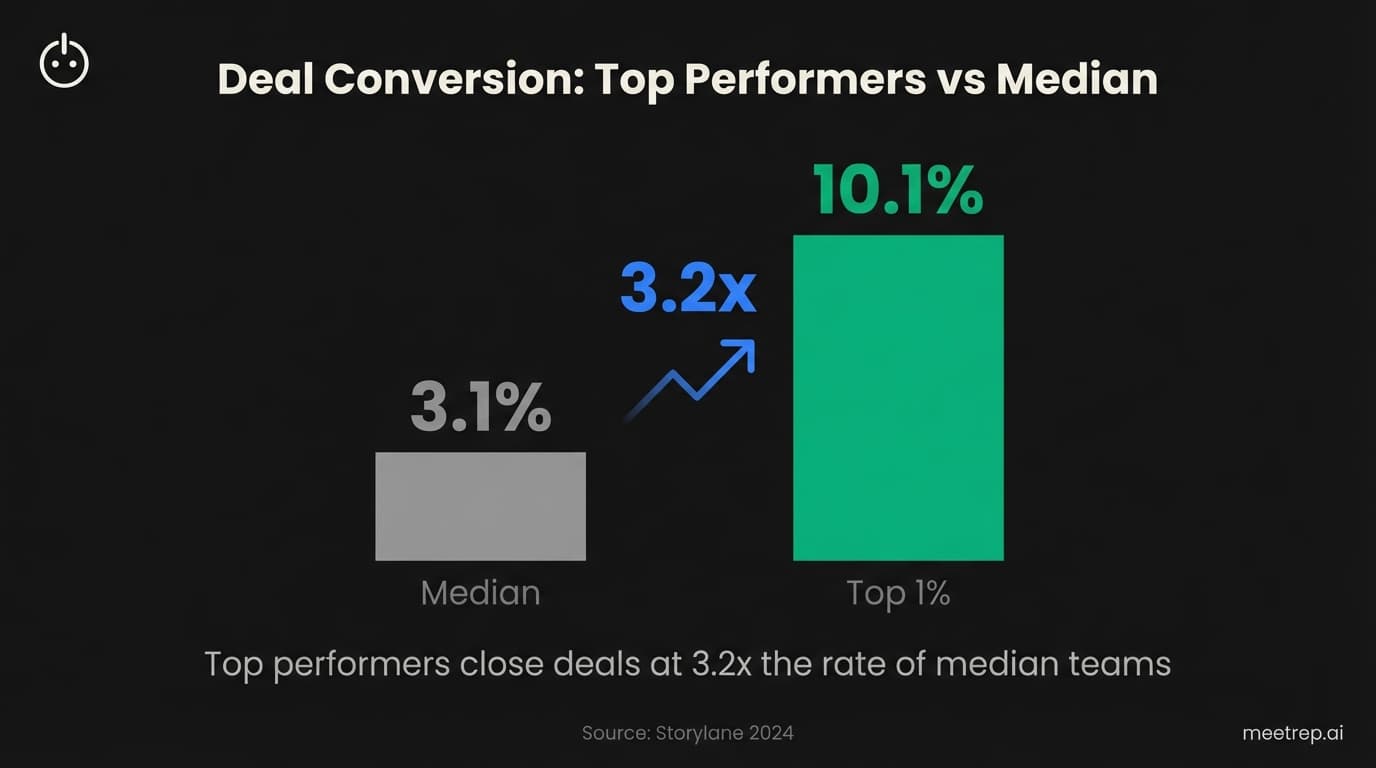
| Deal conversion (with demo) | 3.1% | 7% | 10.1% | Storylane, Oct 2024 |
| Sales cycle impact | Baseline | 10% faster | 18% faster | Storylane, Oct 2024 |
That 3.2x improvement in deal conversion (10.1% vs 3.1%) is the number that gets CFO attention. And the 6-day reduction in sales cycles (33 days to 27 days) means faster revenue recognition.
Key Insight:81% of buyers have picked their winner before talking to sales, according to 6sense's research. Demos aren't just about converting—they're about being in the consideration set at all.
Real results: Companies that got this right
Look, I'm skeptical of case studies that only show wins. But these numbers come from named companies with named executives, so I'll share them.
Gainsight + Demostack:
- Challenge: 48-hour demo response time. Required 5 demo calls per prospect.
- Results: 25% increase in win rate. Cut 3 of 5 demo calls. Response time dropped to 1 hour.
- Quote: "Demostack demos closely replicate the look and feel of our actual products and are easy to customize." — David Greene, Sr. Manager, SC Enterprise
Sovos + Consensus:
- Challenge: 9-person presales team. 2-week demo lag. SMB deals moving slowly.
- Results: 67% reduction in live SE calls. 60% faster SMB sales cycle.
- Quote: "My team is more impactful because of Consensus. Customers come to live calls with specific questions now." — Duston Littlefield, Director, Global Practice Lead of Presales
Synack + Demostack:
- Challenge: 100+ hours to build initial demo environment. Constant maintenance.
- Results: Demo build time dropped to under 10 hours. Reclaimed 20% of weekly time (that's 1 working day).
- Quote: "That's 1 working day per week on just demo hygiene!" — Tim Nordvedt, Solution Architect
Sila + Rep:
- Challenge: High-value inbound leads going cold. Manual qualification bottleneck.
- Results: Added $1 million+ in pipeline value within 4 months. 24/7 lead qualification.
The pattern: setup time drops dramatically, SE capacity gets unlocked, deals close faster.
Common mistakes that kill your demo ROI
I've watched enough implementations to see the patterns.
Mistake 1: Feature dumping. Showing everything instead of the "aha moment." Prospects don't care about your 47 features. They care about the 2-3 that solve their specific problem. 12 steps maximum, according to Arcade's benchmarks.
Mistake 2: Perfectionism before launch. Your first demo will be wrong. It will miss questions. It will show the wrong things. That's fine. You learn more from real prospect feedback than from internal review cycles.
Mistake 3: Ignoring the knowledge base. AI demos without proper knowledge grounding either stay silent on questions or hallucinate answers. Neither builds trust. Spend the extra 10 minutes uploading docs.
Mistake 4: Set-and-forget. Products change. Features launch. Pricing updates. Stale demos are worse than no demos—they erode credibility. Build demo updates into your release process.
Mistake 5: Not tracking analytics. If you don't know where prospects drop off, you can't fix it. Watch completion rates. Track which features get engagement. Optimize based on data.
Demo automation tools compared [2025-2026]
The market is crowded. Here's how the major players compare:
| Tool | Best For | Starting Price | Demo Format | Setup Time | Notable Result |
|---|---|---|---|---|---|
| Rep | Autonomous AI demos + qualification | Contact for pricing | Live video + voice agent | ~10 minutes | Sila: $1M+ pipeline |
| Consensus | Enterprise presales at scale | $8.99/user/mo | Interactive video | 1-2 hours | Sovos: 67% SE reduction |
| Storylane | No-code marketing demos | $40/user/mo | HTML/Screenshot | 30-60 minutes | 7.9x conversion lift |
| Arcade | Fastest time-to-market | Freemium | Screenshot/Video | ~6 minutes | 67% top-tier CTR |
| Navattic | Website PLG tours | $500/5 seats/mo | HTML/Screenshot | 1-2 hours | Free tier available |
| Demostack | Enterprise sandbox/clones | $55,000/year | Product clone | 10-40 hours initial | Gainsight: 25% win lift |
My honest take: Interactive click-throughs (Arcade, Storylane, Navattic) are great for top-of-funnel website visitors who want to explore alone. Autonomous demos (Rep) are for mid-funnel qualification where prospects need to ask questions and get real answers. Different tools for different stages.
The gap between "interested prospect" and "demo scheduled" is where deals die. 83.4% of SDRs miss quota monthly. Part of that is because they're spending 41% of their time on admin instead of selling. Part of it is because prospects go cold waiting 47 hours for a response.
You can create demo experiences in under 10 minutes now. Not eventually. Not after a 6-week implementation. Now.
Whether you use interactive click-throughs for website visitors or autonomous AI agents for mid-funnel qualification—or both—the tooling exists to get something live today.
We built Rep because I wanted our team's best demo available 24/7, not just when someone was awake and free. If that resonates, see how Rep works.

Nadeem Azam
Founder
Software engineer & architect with 10+ years experience. Previously founded GoCustomer.ai.
Nadeem Azam is the Founder of Rep (meetrep.ai), building AI agents that give live product demos 24/7 for B2B sales teams. He writes about AI, sales automation, and the future of product demos.
Frequently Asked Questions
Table of Contents
- What is an autonomous demo (and why it's different from interactive tours)?
- What you need before you start (2-minute prep)
- Step 1: Capture your product workflow (2 minutes)
- Step 2: Let AI generate your demo flow (3 minutes)
- Step 3: Customize and personalize (3 minutes)
- Step 4: Publish and share (2 minutes)
- "10 minutes seems unrealistic"—here's the reality check
- Benchmarks: What success looks like in 2026
- Real results: Companies that got this right
- Common mistakes that kill your demo ROI
- Demo automation tools compared [2025-2026]
Ready to automate your demos?
Join the Rep Council and be among the first to experience AI-powered demos.
Get Early AccessRelated Articles
Hexus Acquired by Harvey AI: Congrats & What It Means for Demo Automation Teams
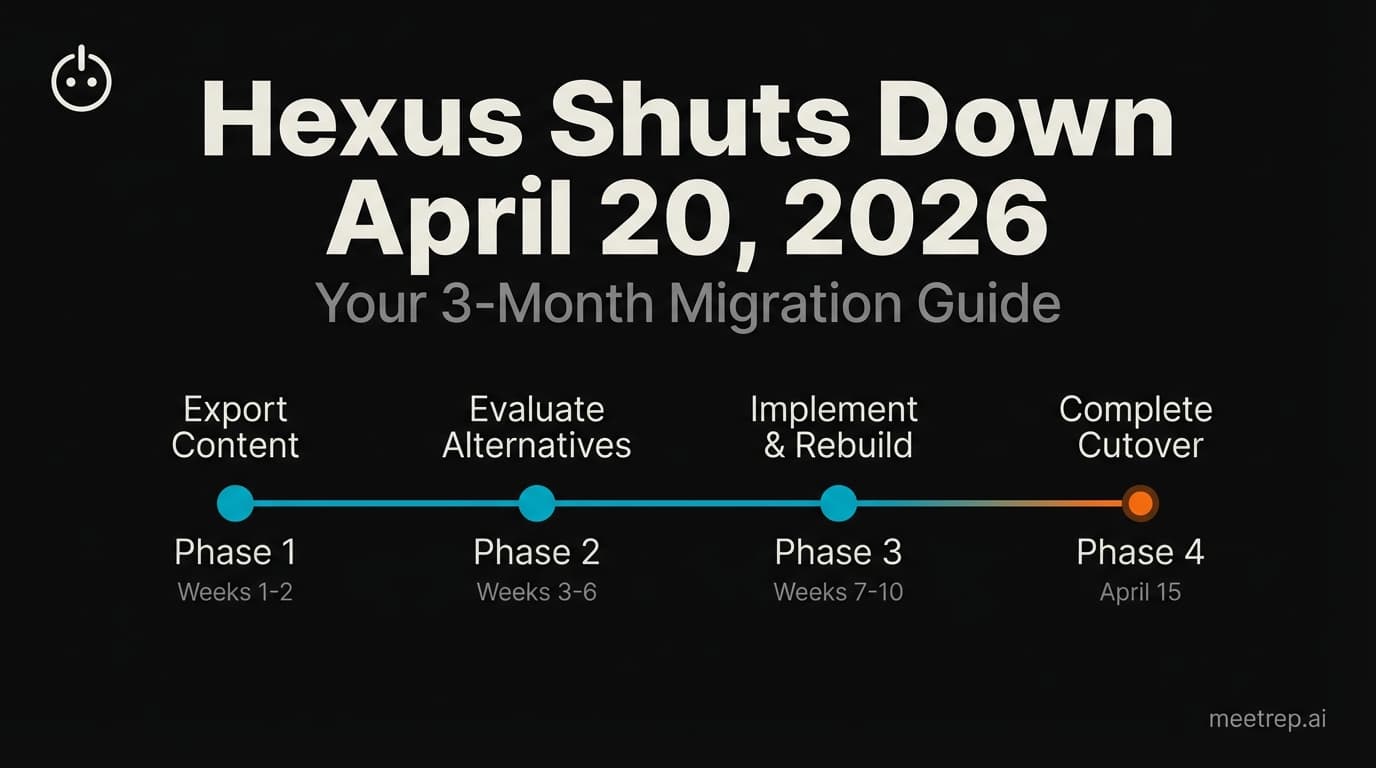
Hexus is shutting down following its acquisition by Harvey AI. Learn how to manage your migration and discover the best demo automation alternatives before April 2026.
Why the "Software Demo" is Broken—and Why AI Agents Are the Future
The traditional software demo is dead. Discover why 94% of B2B buyers rank vendors before calling sales and how AI agents are replacing manual demos to scale revenue.
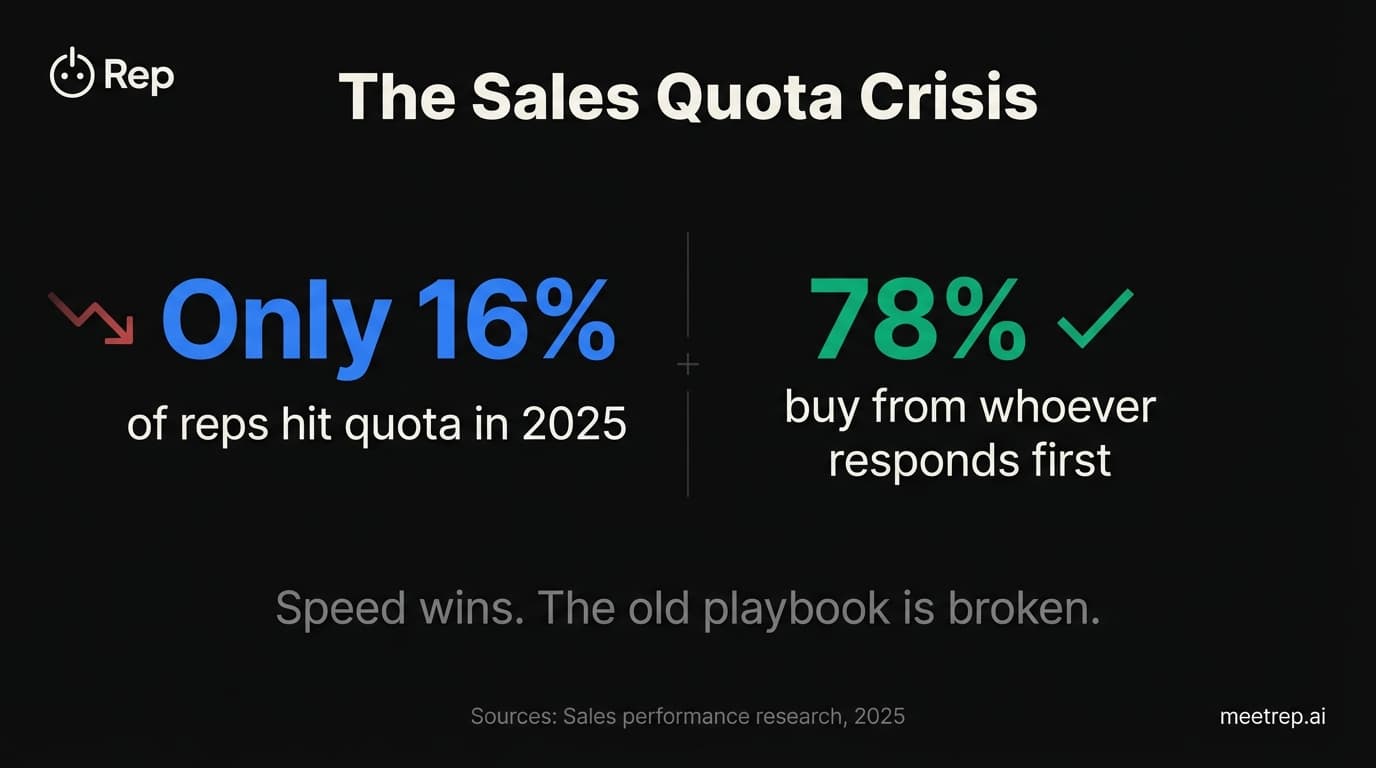
Why Autonomous Sales Software is the Future of B2B Sales (And Why the Old Playbook is Dead)
B2B sales is at a breaking point with quota attainment at 46%. Discover why autonomous 'Agentic AI' is the new standard for driving revenue and meeting the demand for rep-free buying.