The ROI of Enterprise Sales Demo Software Pricing: New Data (2026)

Executive Summary
- The Waste: You are paying expensive technical talent (~$167k/year) to demo to the 35% of prospects who will never buy.
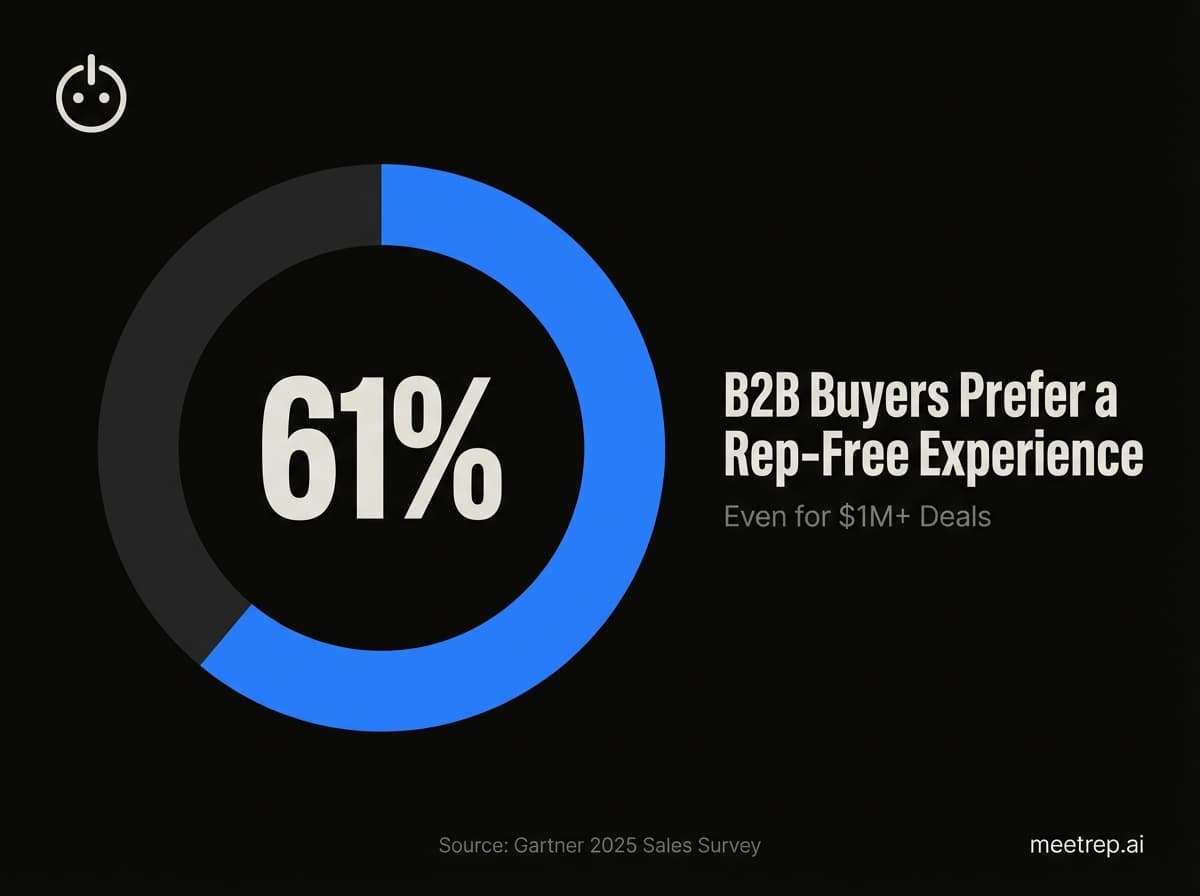
- The Shift: 61% of B2B buyers now prefer a rep-free experience.
- The Pricing: Enterprise demo platforms range from $9k to $55k/year, but autonomous agents are changing the model from "seats" to "work performed."
- The Fix: Shift TOFU (Top of Funnel) demos to autonomous agents to reclaim ~20% of SE capacity.
The most expensive line item in your sales budget isn't your CRM. It isn't your data enrichment tool. And it certainly isn't your demo software license.
It's the human sitting in the chair.
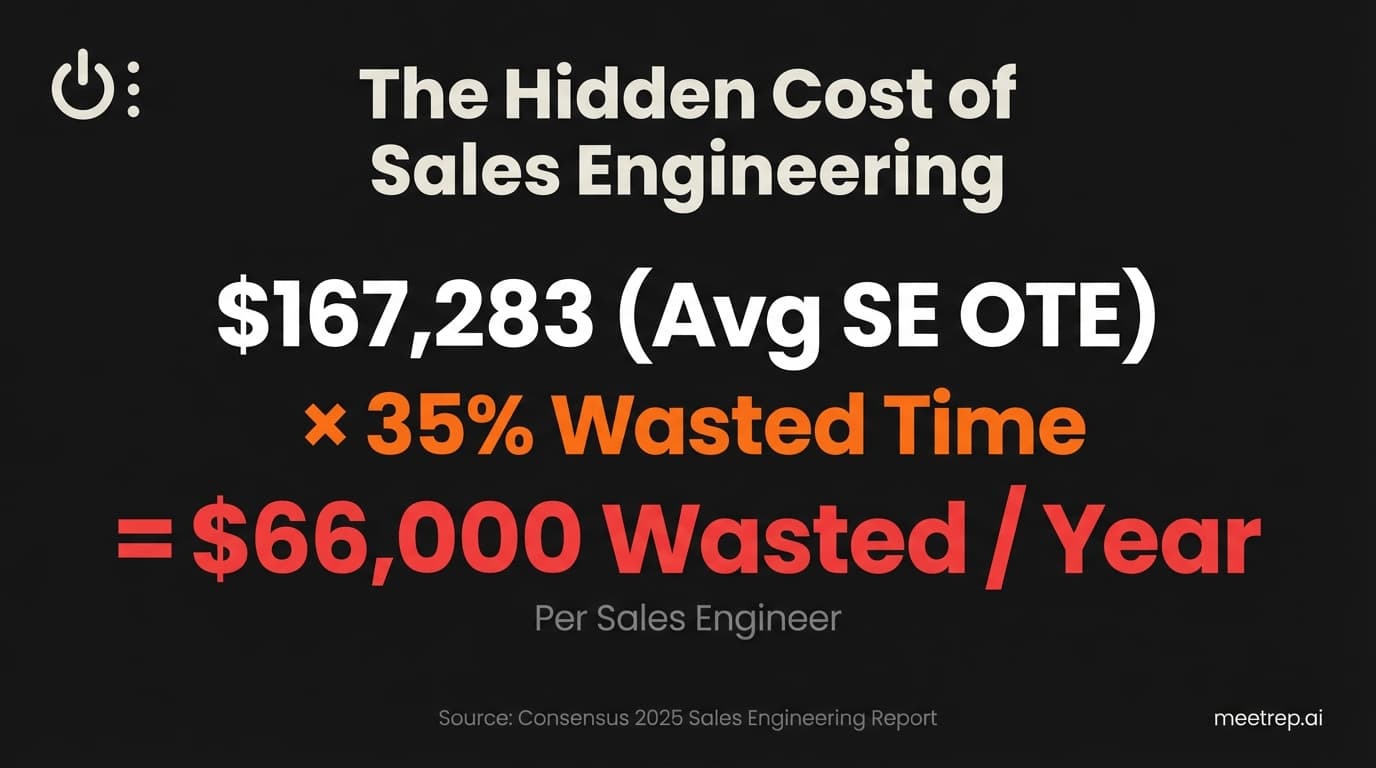
According to new 2025 data from Consensus, the average Sales Engineer (SE) now commands a total on-target earnings (OTE) of $167,283. That’s a heavy number. But here’s the part that keeps CFOs up at night: those expensive experts spend 35% of their time giving demos to unqualified leads.
I’ve seen this firsthand. When we built GoCustomer.ai, we realized that throwing more humans at the top of the funnel wasn't scaling. The math didn't work. Now, building Rep, I’m seeing a shift in how RevOps leaders evaluate costs. It's no longer about comparing a $20k software license to a $50k license.
It's about comparing a $50k license to a $167k headcount.
This post breaks down the true enterprise sales demo software pricing market for 2026 and the ROI of switching from human-led to autonomous agents.
The Hidden Cost of the "Human-Only" Demo
Before we look at software pricing, we have to look at the labor cost. If you think your demo strategy costs $0 because you haven't bought a tool yet, you're missing the massive drain on your P&L.
Enterprise sales demo software pricing must include the cost of the operator.
Here is the math. According to the 2025 Sales Engineering Compensation Report by Consensus, the average SE base salary is $123,946, plus $43,337 in variable commission.
That means every hour an SE spends on a Zoom call costs the company roughly $80 to $100 in direct burden.
But that’s just the salary. The real cost is opportunity.
In my experience, a standard enterprise demo takes about 90 minutes of SE time:
- 30 minutes of prep (customizing the deck/environment).
- 45 minutes on the call.
- 15 minutes of follow-up/CRM entry.
If your SE does 10 demos a week, and 35% are unqualified (a verified stat from the same Consensus report), you are burning roughly $5,500 per SE, per month on dead-end leads.
That’s $66,000 a year wasted. Per SE.
So when we talk about software pricing, keep that $66,000 figure in mind. Any tool that eliminates that waste pays for itself instantly.
Key Insight:70% of sales deals now require presales support. The bottleneck isn't leads; it's the technical capacity to demo to them.
2026 Pricing Models: Interactive vs. Autonomous
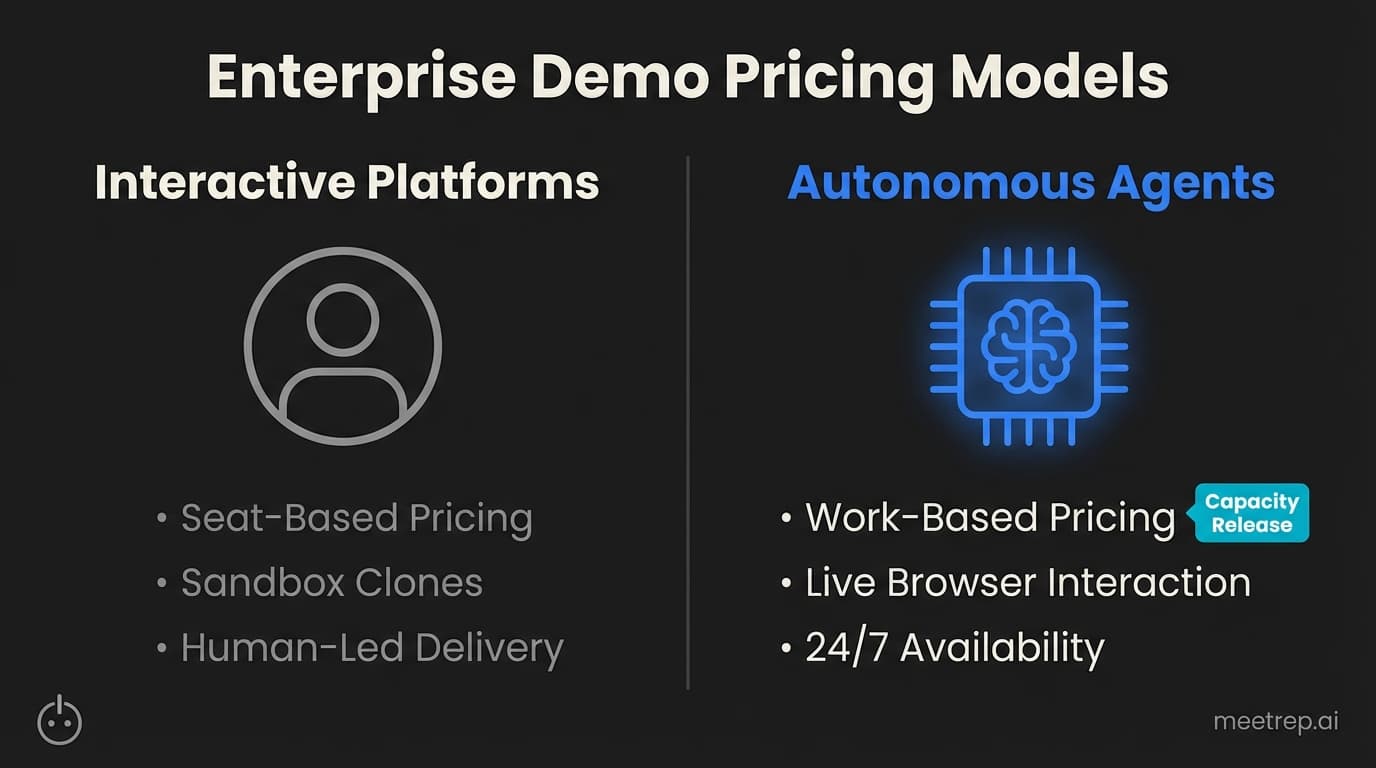
The market has split into two categories. You have "Interactive Demo Platforms" (click-through software) and "Autonomous Agents" (AI that does the work). The pricing models are fundamentally different.
Interactive Platforms (Demostack, Walnut, Navattic) These tools let you clone your product and create safe "sandboxes." Pricing is typically an annual license fee based on the number of seats (editors).
Autonomous Agents (Rep, 11x) These are newer. They join calls, talk, and click for you. Pricing is often based on capacity (digital workers) or traffic/usage.
Here is the estimated pricing breakdown for 2026:
| Category | Platform | Estimated Annual Cost (Enterprise) | Pricing Model | Best For |
|---|---|---|---|---|
| Interactive | Demostack | ~$55,000+ [1] | Platform Fee + Seats | Engineering-heavy teams needing deep product clones. |
| Interactive | Walnut | ~$9,200 - $20,000+ [2] | Tiered Subscription | Sales teams needing quick, personalized overlays. |
| Autonomous | Rep | Usage/Volume Based | Traffic / Conversations | Teams wanting a 24/7 "Live" demo experience. |
| Autonomous | 11x | ~$60,000 [3] | Per "Digital Worker" | Replacing SDR outbound work. |
[1] Source: Storylane/Vendr Aggregated Data[2] Source: Demoboost Pricing Analysis[3] Source: SDRX 11x Pricing
My take on the pricing models
At GoCustomer, we learned that seat-based pricing (charging per user) creates friction. You end up limiting who gets access to the tool to save money.
That’s why, at Rep, we lean toward models based on work performed. If the AI handles 1,000 demos, you pay for that value. If it handles 10, you pay less. It aligns the software cost with the revenue outcome.
Common Mistake: Don't just compare the license fee. A $20k tool that requires a human to build every demo manually is more expensive than a $50k tool that automates the creation process.
The "Rep-Free" Buyer Reality (Why You Have No Choice)
You might be thinking, "This tech sounds cool, but do buyers actually want it?"
Yes. In fact, they are demanding it.
The data is undeniable. According to Gartner's 2025 Sales Survey, 61% of B2B buyers prefer an overall "rep-free" buying experience.
This isn't just for small deals. We are seeing this trend move upmarket. Even for purchase decisions valued at $1 million or more, 33% of buyers are willing to transact without a seller [4].
Why the shift?
- Speed. Buyers don't want to wait 4 days for your AE's calendar to open up.
- Objectivity. They want to see the product, not slide 14 of your corporate deck.
- Control. They want to explore at their own pace.
This creates a paradox for RevOps. You need to be "rep-free" to satisfy the buyer, but you need to be "consultative" to close the enterprise deal.
This is exactly why we built Rep to be an autonomous voice agent, not just a click-through tool. Interactive click-throughs are lonely. They lack context. Rep joins the video room, shares its screen, and actually talks. It bridges the gap between "self-serve speed" and "consultative selling."
[4] Source: Valve / Forrester
Calculating the ROI: A CFO's Framework
When you pitch this to your CFO, do not talk about "features." Talk about "Capacity Release."
CFOs are currently dedicating 25% of their total AI budgets specifically to "AI agents" (digital labor), according to Salesforce research. They have the money. They just need the business case.
Here is the formula to calculate ROI:
ROI Formula:(SE Hours Saved × Hourly Burden) + (Conversion Uplift Value) - (Software Cost) = Net Savings
Let's look at the inputs for that formula using real verified data:
1. Efficiency Gains (The Cost Cut)
Customer stories from the field show massive efficiency jumps. Synack, a security platform, used demo automation (Demostack) to cut their demo build time from 100+ hours to under 10 hours [5].
If you save 90 hours of SE time a month, at $100/hour fully burdened, that is $9,000/month in savings. The software pays for itself on efficiency alone.
2. Conversion Uplift (The Revenue Boost)
This is where it gets interesting. Gainsight reported an 8% increase in close-win rates after implementing demo automation [6].
Why? Because the prospects were better educated before they ever spoke to a human. By the time they reached an AE, they understood the product.
The Data:74% of CFOs believe AI agents will both reduce costs and drive revenue growth, expecting a revenue uplift of approximately 20% [Salesforce].
[5] Source: Demostack Customer Story: Synack[6] Source: Demostack Customer Story: Gainsight
Conclusion
The era of paying humans to perform robotic tasks is over.
If your Sales Engineers are spending their days answering "Does it integrate with Salesforce?" and clicking the same five buttons for unqualified leads, you are burning cash. You are paying $167,000 a year for work that a software agent could do for a fraction of the cost.
My recommendation? Stop looking at demo software as a "tool" for your SEs. Start looking at it as digital labor that frees your SEs to do what they do best: close the complex, high-value deals that actually require human ingenuity.
The technology is ready. The buyers are asking for it. The only question is whether you’ll adopt it before your competitors do.
Ready to see an autonomous agent in action? See how Rep works.

Nadeem Azam
Founder
Software engineer & architect with 10+ years experience. Previously founded GoCustomer.ai.
Nadeem Azam is the Founder of Rep (meetrep.ai), building AI agents that give live product demos 24/7 for B2B sales teams. He writes about AI, sales automation, and the future of product demos.
Frequently Asked Questions
Table of Contents
- The Hidden Cost of the "Human-Only" Demo
- 2026 Pricing Models: Interactive vs. Autonomous
- The "Rep-Free" Buyer Reality (Why You Have No Choice)
- Calculating the ROI: A CFO's Framework
- Conclusion
Ready to automate your demos?
Join the Rep Council and be among the first to experience AI-powered demos.
Get Early AccessRelated Articles
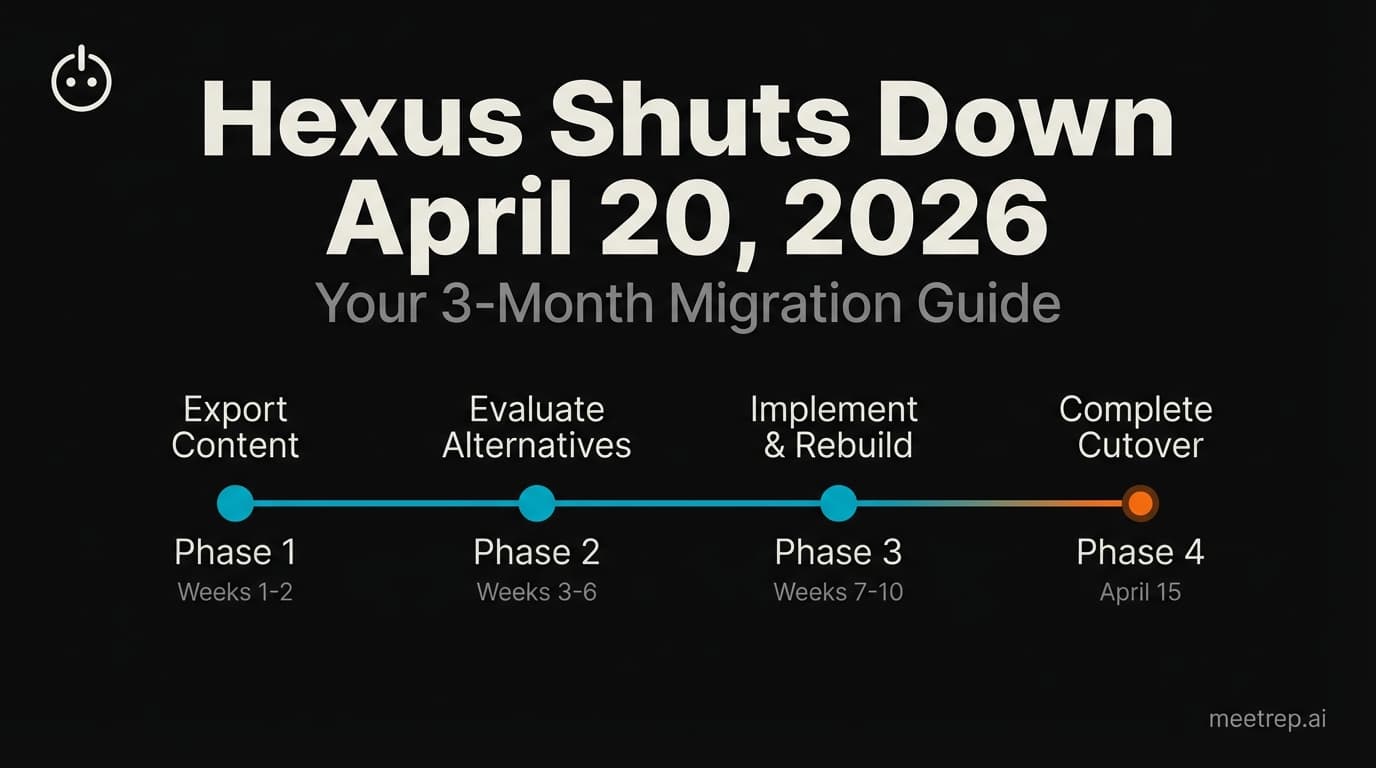
Hexus Acquired by Harvey AI: Congrats & What It Means for Demo Automation Teams
Hexus is shutting down following its acquisition by Harvey AI. Learn how to manage your migration and discover the best demo automation alternatives before April 2026.
Why the "Software Demo" is Broken—and Why AI Agents Are the Future
The traditional software demo is dead. Discover why 94% of B2B buyers rank vendors before calling sales and how AI agents are replacing manual demos to scale revenue.
Why Autonomous Sales Software is the Future of B2B Sales (And Why the Old Playbook is Dead)
B2B sales is at a breaking point with quota attainment at 46%. Discover why autonomous 'Agentic AI' is the new standard for driving revenue and meeting the demand for rep-free buying.