Enterprise Sales Demo Automation: A Founder’s Guide to Scale

Executive Summary
- Enterprise buyers prioritize speed; 33% want a seller-free experience.
- Video-based "demos" (click-throughs) are hard to maintain and lack depth.
- True autonomy requires browser automation, not just screen recording.
- Security is the biggest hurdle; you need edge security and role-based access.
- The goal isn't replacing reps—it's removing the repetitive "feature dump."
The old enterprise sales playbook is dying.
You know the drill: a prospect requests a demo. An SDR qualifies them 24 hours later. Then—if they’re lucky—they get on an AE’s calendar five days after that.
It's slow. It's painful. And it's expensive.
By the time the actual enterprise sales demo happens, the buyer has already looked at three competitors who gave them immediate access.
I’ve seen this erosion firsthand. First building GoCustomer.ai, and now at Rep. The friction isn't just annoying your buyers; it's training them to buy from someone else.
We are entering a time where buyers expect the "Amazon experience" for B2B software. They want to see the product now. Not next Tuesday at 2:00 PM EST.
But here’s the problem. Most "automation" tools on the market are just fancy video players. They don't solve the core issue of interactivity.
If you’re a VP of Sales or a Founder, you don’t need more buzzwords. You need a way to scale technical selling without hiring 50 more Sales Engineers.
What Is An Autonomous Enterprise Sales Demo?
An autonomous enterprise sales demo is a live, interactive product walkthrough delivered by AI, not a human. Unlike static video tours or "click-through" demos, an autonomous agent joins a video call, shares its screen, logs into your actual live application, and answers voice questions in real-time.
It’s the difference between watching a movie trailer and having a conversation.
Most people confuse "demo automation" with "interactive product tours." Let’s clear that up.
Interactive Tours (The Old Way): You take screenshots or video clips of your product. You stitch them together with HTML. The user clicks "Next" to see the next slide. It’s safe. But it’s rigid. If your product UI changes, you have to re-record everything.
Autonomous Agents (The New Way): An AI agent logs into your software. It controls the browser. It speaks to the prospect. If the prospect asks, "Show me the reporting dashboard," the AI clicks on the dashboard. It’s live.
Key Insight: If your "demo" breaks every time your engineering team pushes a UI update, you haven't built an automated sales motion. You've just built a maintenance nightmare for your product marketing team.
Why The "Human-Only" Model Is Failing
I love sales teams. I build software for them. But we have to be honest about the math.
According to Gartner, 33% of all buyers desire a seller-free sales experience. For millennials, that number shoots up to 44%.
Buyers are doing 80% of their research before they ever talk to you. When they finally request a demo, they aren't looking for a "discovery call" where you ask them about their budget. They want to see if the thing actually works.
At GoCustomer.ai, we learned this the hard way. We tried to force every lead through a human qualification process.
The result? We lost qualified leads who just didn't want to jump through hoops.
When we talk about the enterprise sales demo, we aren't talking about the final negotiation or the complex solution architecture meeting. We are talking about the first touch.
The "Feature Dump" Trap Audit your team’s first calls. How many of them are 15 minutes of repetitive "Here is the dashboard, here are the settings, here is how you add a user"?
That is low-value work. High-paid AEs shouldn't be doing it.
My Recommendation: Automate the "Feature Dump." Let the AI handle the "what does this button do" questions 24/7. Save your AEs for the "how does this solve my specific million-dollar problem" conversations.
The Architecture: Video vs. Browser Automation
This is where things get technical. If you’re buying software for your team, you need to understand this distinction.
There are two ways to build demo automation.
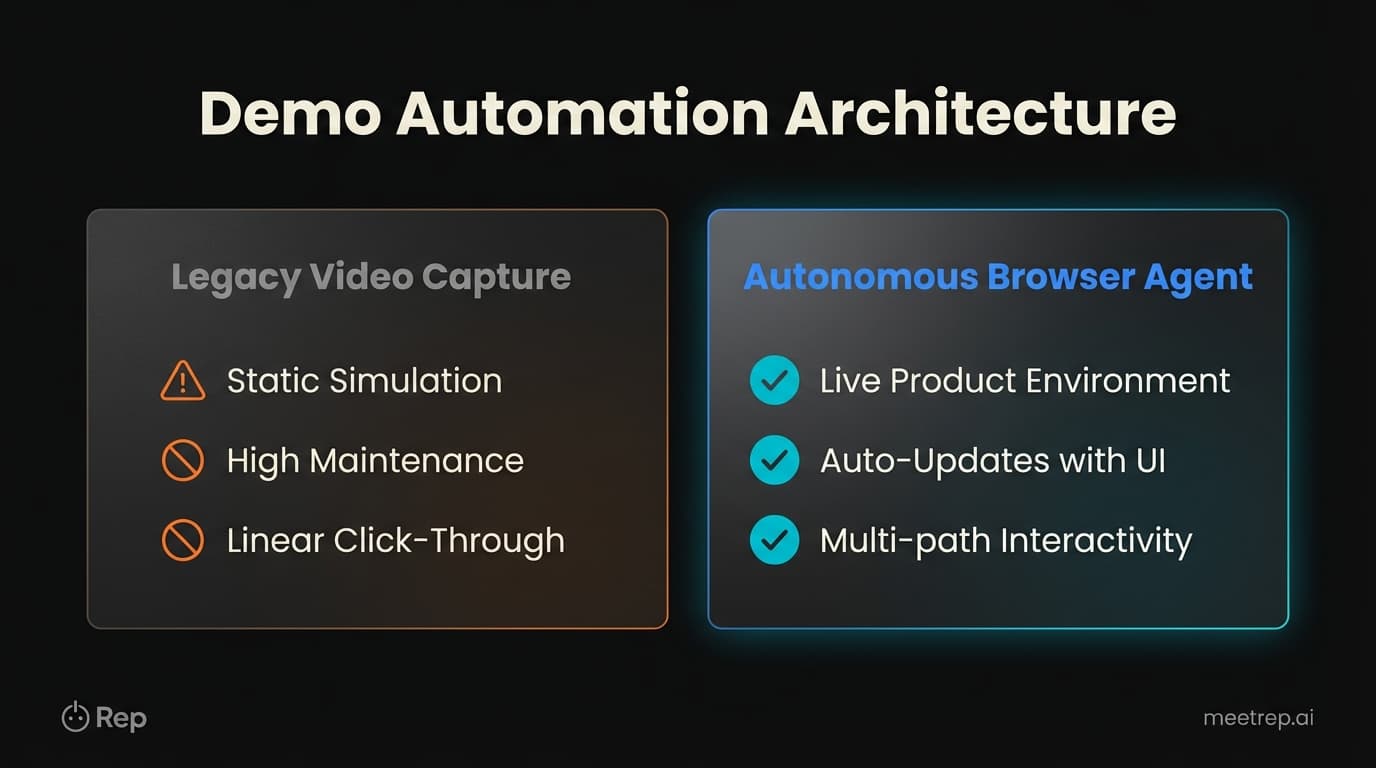
1. The DOM Capture / Video Method
Tools like Walnut or Navattic work by capturing the HTML/CSS of your site (DOM capture) or recording video. They create a "sandbox" replica.
2. The Browser Automation Method (The Rep Way)
This is what we built at Rep. The AI uses a headless browser to log into your actual demo environment.
Here is the breakdown:
| Feature | Video / DOM Capture | Browser Automation (Rep) |
|---|---|---|
| Realism | Low (Simulation) | High (Actual Product) |
| Maintenance | High (Re-record on UI changes) | Low (Auto-updates with product) |
| Interactivity | Linear (Click "Next") | Multi-path (Click anything) |
| Q&A | None (Scripted text only) | Voice (Real-time answers) |
| Ideal For | Website Marketing Assets | Live Sales Demos |
Why we built Rep this way: We chose browser automation because enterprise software is messy. A rigid, linear slide show can't demonstrate the power of a complex ERP or cybersecurity platform. You need to show the real thing. Plus, maintaining 50 different "interactive tours" every time the UI changes is a full-time job.
Security: The Elephant in the Room
"Nadeem, I can't let an AI bot log into my Salesforce instance."
I hear this every week. You’re right. You shouldn't.
Security is the primary reason enterprise teams hesitate to adopt AI agents. If you are selling to a bank or a healthcare provider, you cannot play fast and loose with data.
When evaluating enterprise sales demo automation, you need to look at three layers of security:
- Authentication: How does the agent log in? At Rep, we use encrypted credential storage and OAuth 2.0. The agent only has the permissions of the "Demo User" role you assign it. It can't delete your production database.
- Edge Security: The conversation needs to happen in a secure environment. We use TLS encryption in transit. The video room itself needs to be ephemeral—it exists for the demo and then closes.
- Data Isolation: Does the AI learn from one customer and accidentally spill secrets to another? (This is the "ChatGPT fear"). You need organization-scoped memory.
Common Mistake: Don't give your AI agent "Admin" access just to make the setup easier. Create a specific "Sales Demo" user role in your product with read-only permissions. Treat the AI agent exactly like you would a junior sales engineer.
How to Implement Without Mutiny
If you drop an AI agent on your sales team and say, "This replaces you," you will have a mutiny by lunch.
Humans fear replacement. It's natural.
But in my experience, the best AEs actually love this tech once they understand it. Why? Because they hate the low-level demos. They hate the no-shows.
Here is the implementation path that works:
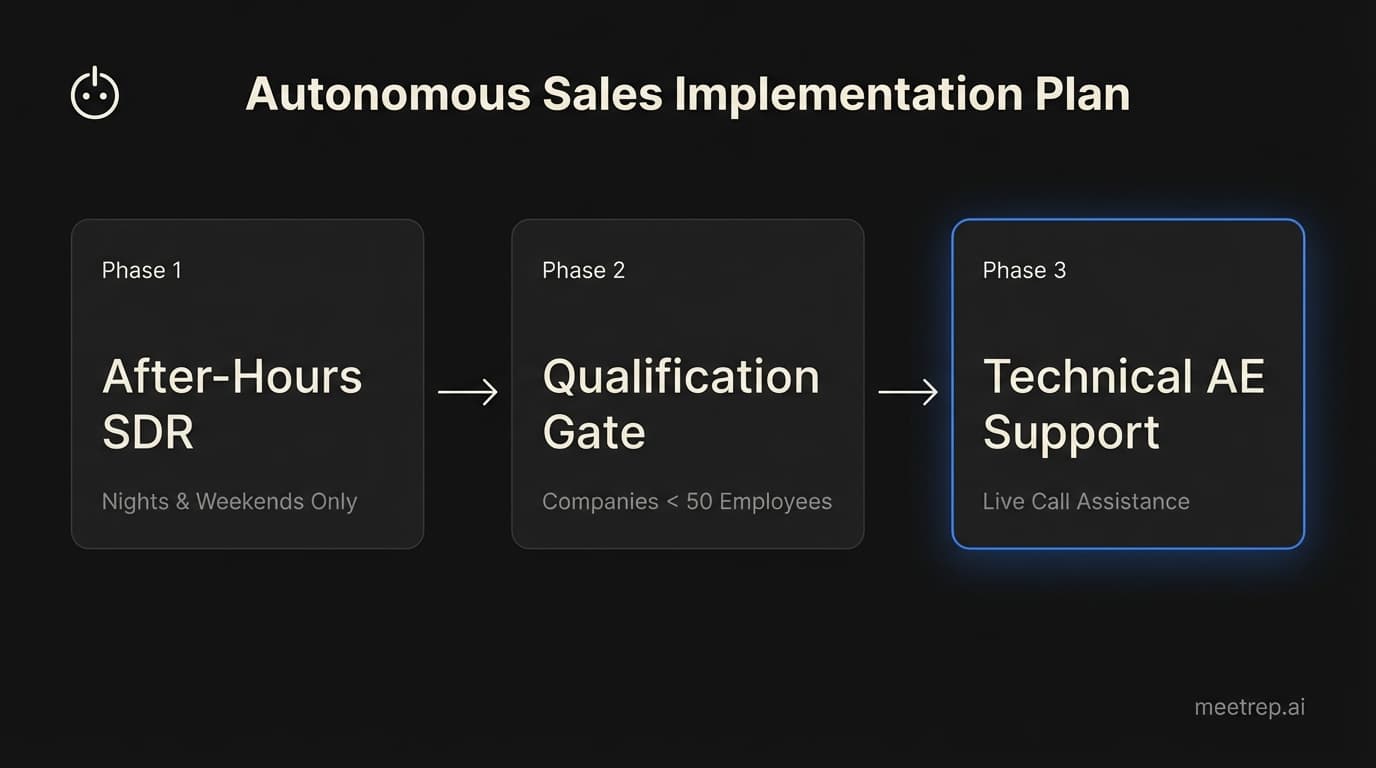
Phase 1: The "After Hours" SDR
Don't put the AI on your main "Book a Demo" button yet. Put it on your "nights and weekends" shifts.
- Trigger: Lead comes in from a timezone where your SDRs are asleep.
- Action: Offer an immediate AI demo.
- Result: You capture demand that usually goes cold.
Phase 2: The Qualification Gate
Use the AI to qualify smaller leads.
- Trigger: Company size < 50 employees.
- Action: "Our enterprise team is booked, but you can see a live interactive demo right now with Rep."
- Result: You filter out the tire-kickers. Your AEs only talk to serious buyers who have already seen the product.
Phase 3: The Technical AE Support
This is the advanced play.
- Trigger: A prospect asks a highly technical question during a live call.
- Action: The AE invites the AI agent into the call to answer the technical specs or pull up a specific compliance document.
- Result: The AE looks like a superhero with instant answers.
Measuring Success: Metrics That Matter
Don't just measure "number of demos given." That’s a vanity metric.
If you are automating your enterprise sales demo, look at these three numbers:
| Metric | Why It Matters | Benchmark Target |
|---|---|---|
| Speed to Lead | How fast does a prospect see the product? | < 5 minutes |
| DQ Rate (Disqualification) | How many "bad fits" did the AI filter out? | 20-30% |
| Demo-to-Opportunity | How many AI demos convert to a pipeline deal? | 15%+ |
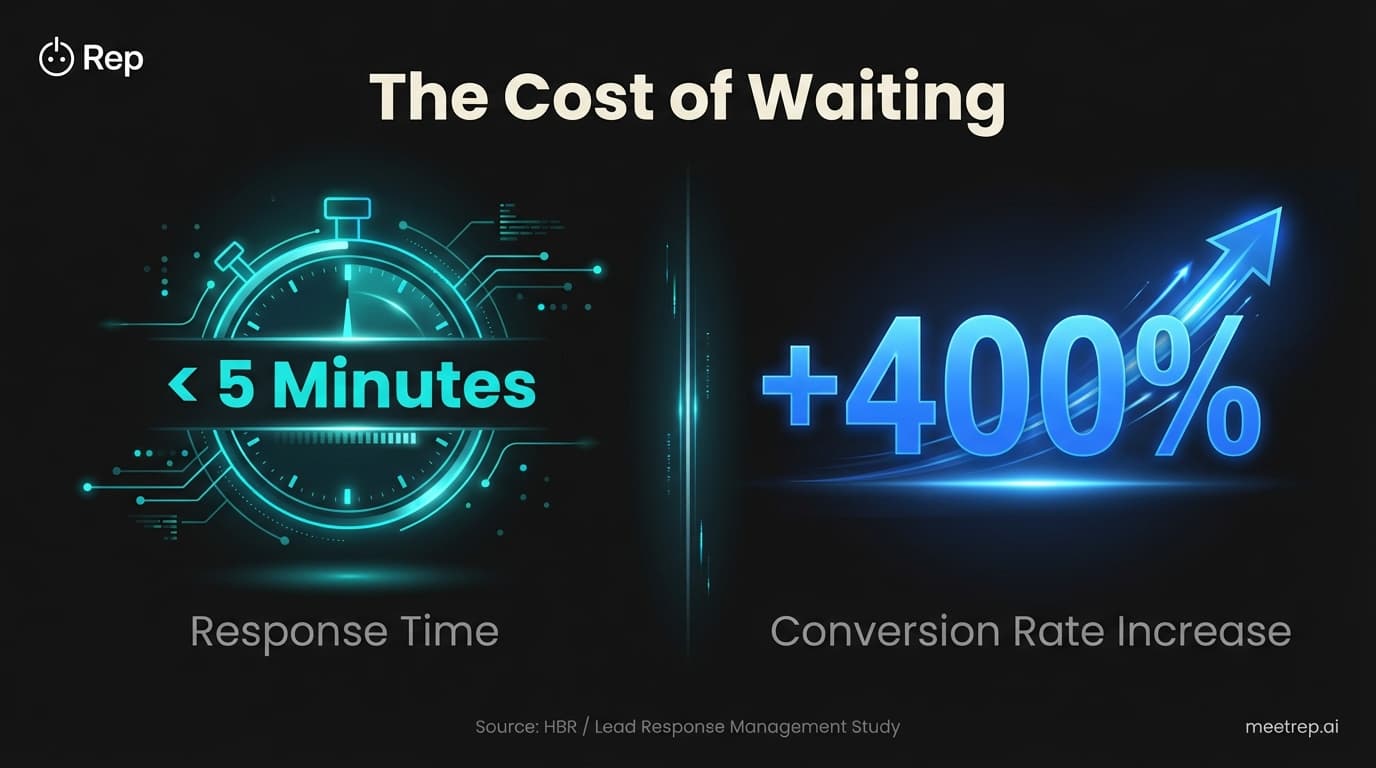
What we learned at GoCustomer: Speed is the only competitive advantage left. The famous Lead Response Management Study showed that response times under 5 minutes increased conversion rates by nearly 400% compared to a wait of just 10 minutes. The AI guarantees that 5-minute window.
The Future Is Hybrid
Look, I’m building an AI company. You’d expect me to say "AI will do everything."
But I don't believe that.
Enterprise sales is fundamentally about trust. People buy from people.
However, the definition of "selling" is changing. The educational part—the learning, the exploring, the verifying—is moving to machines. The relational part—the trust, the strategy, the partnership—stays with humans.
The companies that win in 2025 won't be the ones with the most salespeople. They will be the ones who respect their buyer's time enough to offer autonomy.
Don't let your calendar be the bottleneck that kills your Q4 pipeline.
If you want to see what a truly autonomous, browser-based demo looks like, you can test it yourself. See how Rep works and decide if your sales process is ready for the upgrade.

Nadeem Azam
Founder
Software engineer & architect with 10+ years experience. Previously founded GoCustomer.ai.
Nadeem Azam is the Founder of Rep (meetrep.ai), building AI agents that give live product demos 24/7 for B2B sales teams. He writes about AI, sales automation, and the future of product demos.
Frequently Asked Questions
Table of Contents
- What Is An Autonomous Enterprise Sales Demo?
- Why The "Human-Only" Model Is Failing
- The Architecture: Video vs. Browser Automation
- Security: The Elephant in the Room
- How to Implement Without Mutiny
- Measuring Success: Metrics That Matter
- The Future Is Hybrid
Ready to automate your demos?
Join the Rep Council and be among the first to experience AI-powered demos.
Get Early AccessRelated Articles
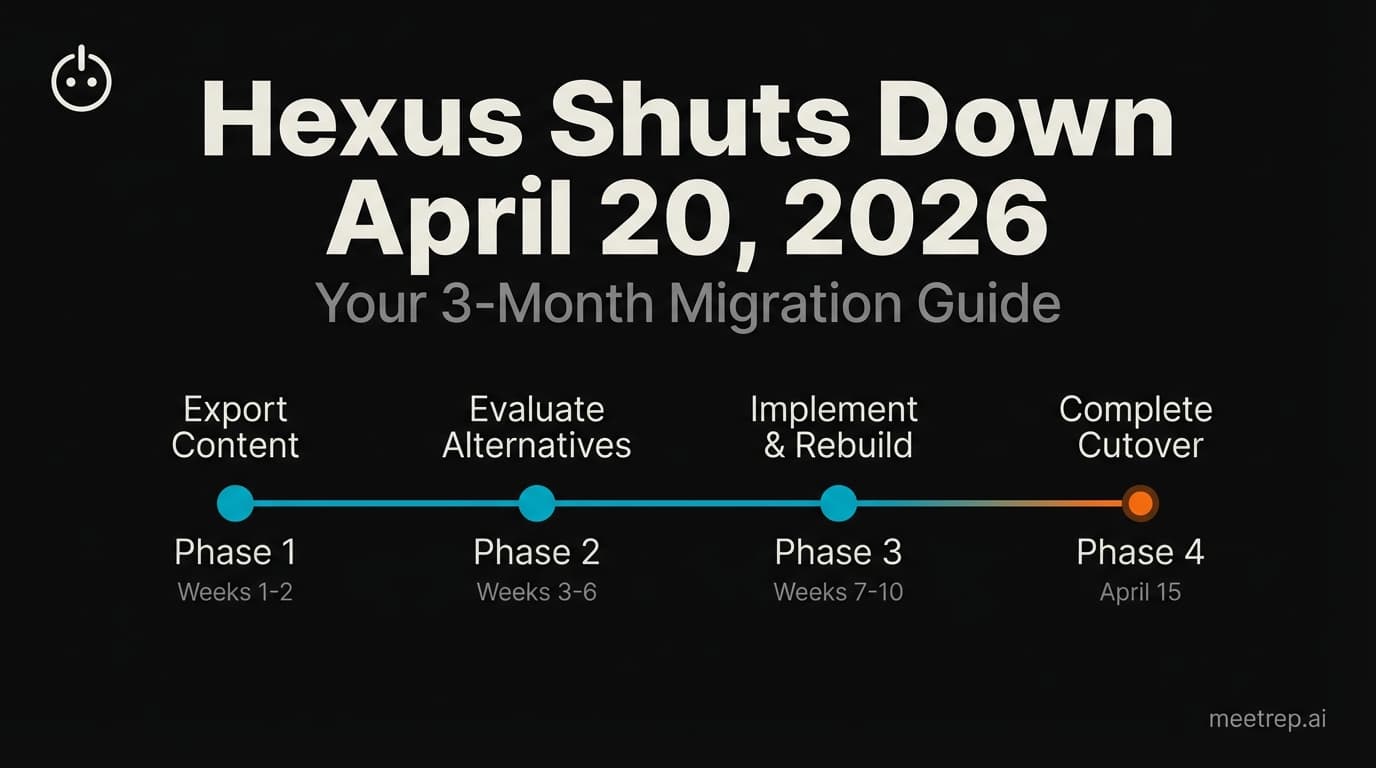
Hexus Acquired by Harvey AI: Congrats & What It Means for Demo Automation Teams
Hexus is shutting down following its acquisition by Harvey AI. Learn how to manage your migration and discover the best demo automation alternatives before April 2026.
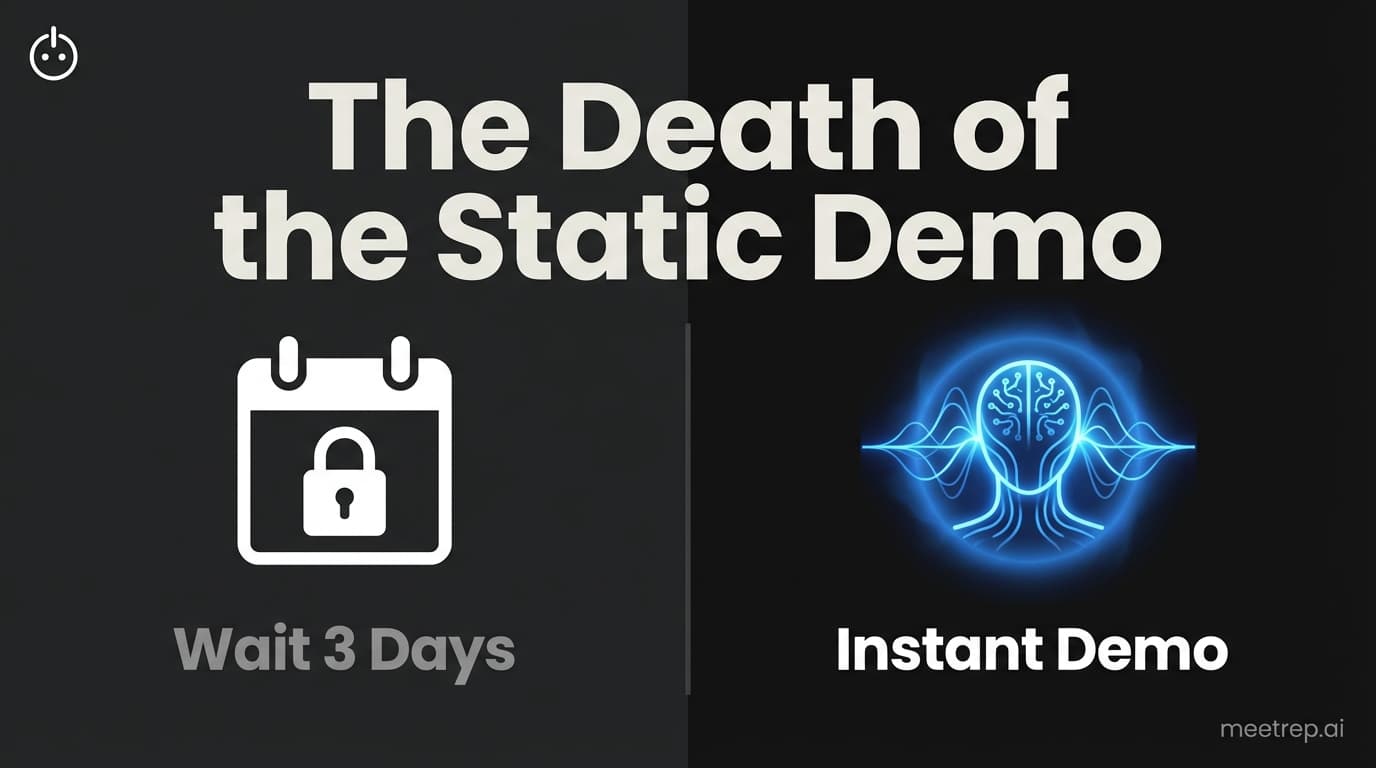
Why the "Software Demo" is Broken—and Why AI Agents Are the Future
The traditional software demo is dead. Discover why 94% of B2B buyers rank vendors before calling sales and how AI agents are replacing manual demos to scale revenue.
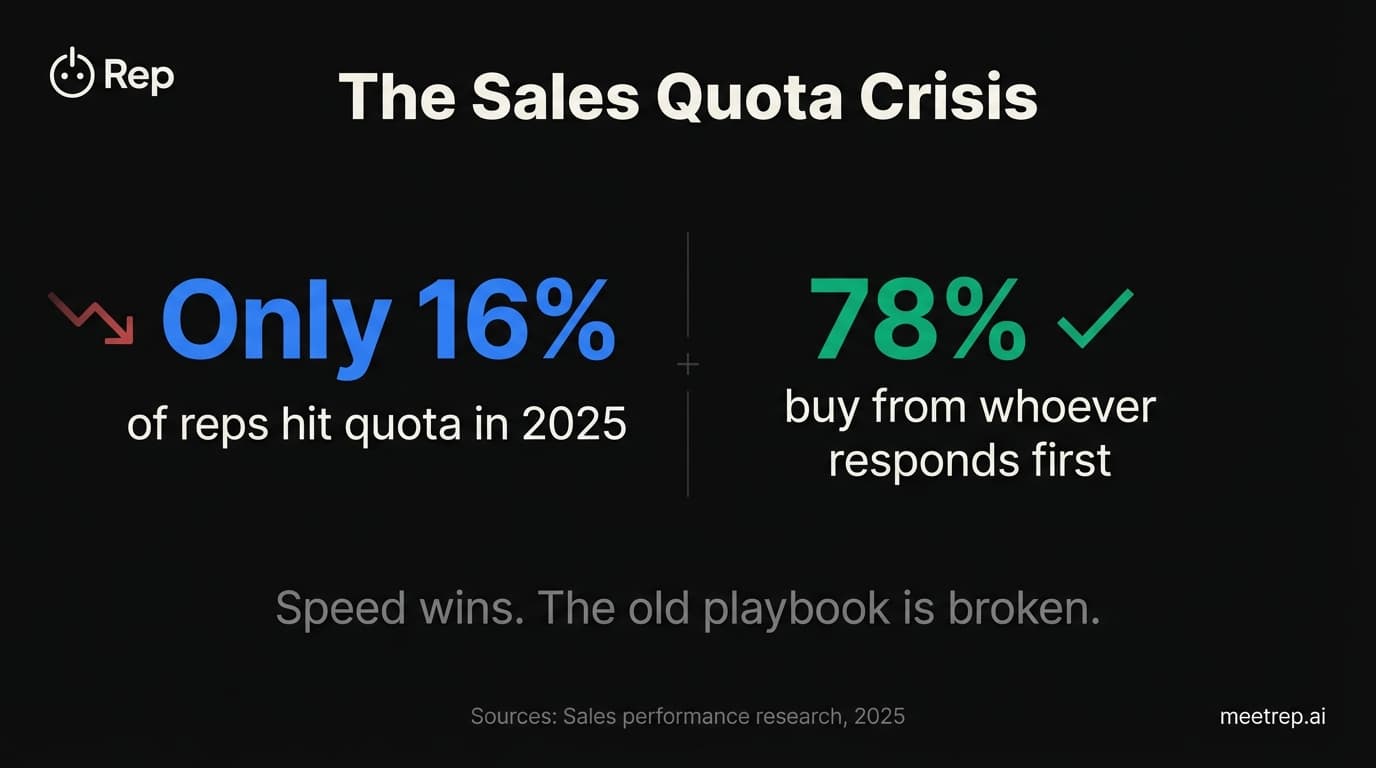
Why Autonomous Sales Software is the Future of B2B Sales (And Why the Old Playbook is Dead)
B2B sales is at a breaking point with quota attainment at 46%. Discover why autonomous 'Agentic AI' is the new standard for driving revenue and meeting the demand for rep-free buying.