Discovery Call Template: Scripts and Frameworks That Actually Work

Executive Summary
- Modern buyers complete 70-90% of their research before talking to you—your discovery must add value they can't Google
- The average deal involves 11-13 stakeholders—single-threaded discovery kills deals
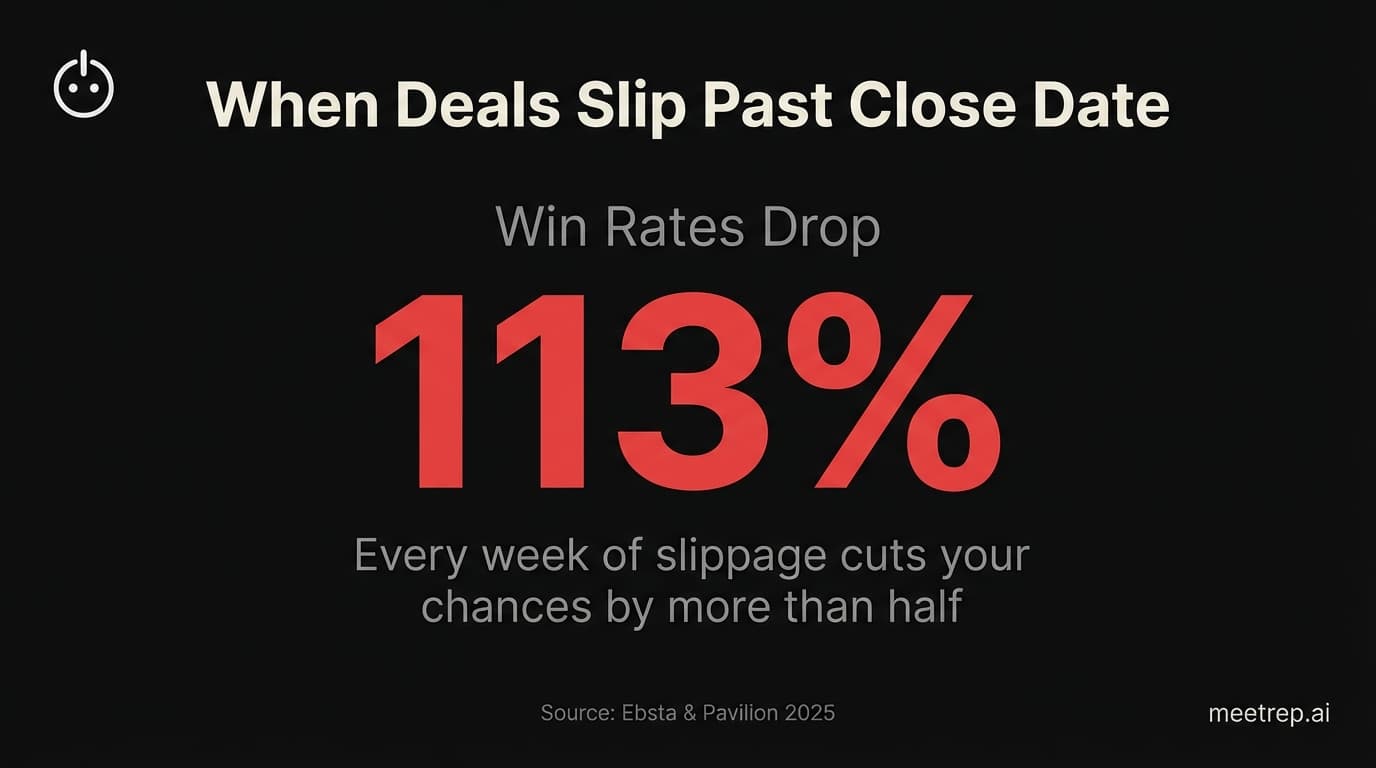
- When deals slip past their expected close date, win rates drop by 113%
- Use the 5-stage framework and 20-question bank below to run discovery that actually qualifies
Here's a stat that should worry you: 86% of B2B purchases stall during the buying process. Not because the product was wrong. Not because the price was too high. Because the discovery process failed to uncover what actually mattered.
I've built two sales automation companies—GoCustomer.ai and now Rep. And the pattern is always the same: deals die in discovery, not in negotiation.
The problem? Most discovery call template resources are built on research from 2017. Nine years old. The buying world has changed. Your framework should too.
This guide gives you a discovery call template that works in 2026—built on current research, tested approaches, and the hard lessons we learned shipping sales tools to hundreds of teams.
What Is a Discovery Call?
A discovery call is the first structured conversation between a sales rep and a prospect after initial interest is expressed. The primary purpose is to understand the prospect's challenges, goals, and decision-making process—while determining whether there's mutual fit. Discovery calls typically last 15-30 minutes and focus on qualification, not selling.
But here's what's changed: your prospect has already done the work.
According to 6sense's 2024 B2B Buyer Experience Report, 81% of B2B buyers have already picked their preferred vendor before contacting sales. And MTD Sales Training found that 70-90% of the buying journey is complete before prospects speak to a salesperson.
So what's the point of discovery?
Simple. Your job isn't to educate them about solutions—they've done that research. Your job is to understand their specific situation deeply enough to show how you solve their unique problem. And to qualify whether this deal is real.
Key Insight: Discovery isn't about gathering information they could tell anyone. It's about uncovering insights they haven't fully articulated to themselves yet.
| Discovery Call | Demo Call |
|---|---|
| Focus: Questions and listening | Focus: Showing and explaining |
| Goal: Qualify fit and understand needs | Goal: Prove your solution solves their specific problem |
| Talk ratio: Rep speaks ~40-45% | Talk ratio: Rep speaks ~60-70% |
| Outcome: Qualification decision | Outcome: Advancement to proposal |
| Position: First substantive conversation | Position: After discovery is complete |
Why Discovery Matters More Than Ever in 2026
Discovery has always been important. But the stakes are higher now.
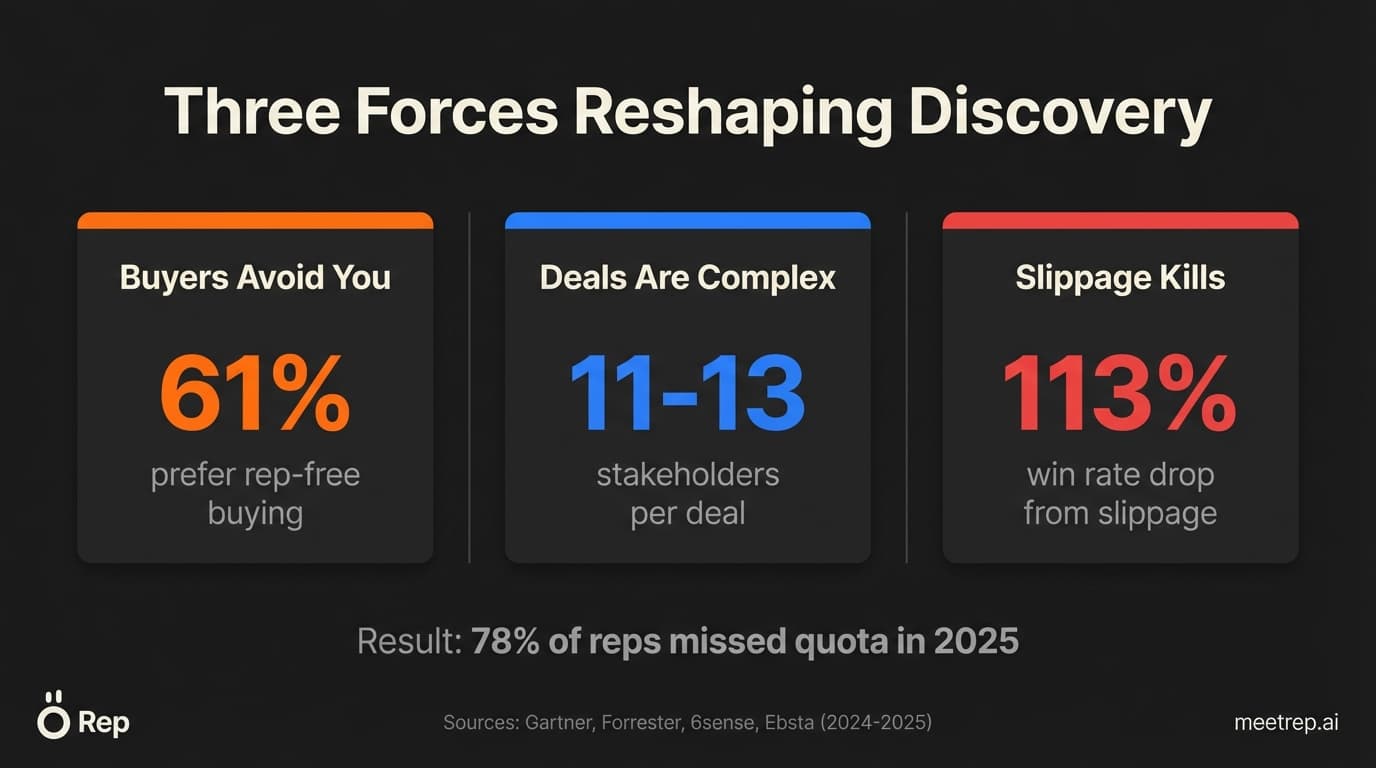
Three forces have converged to make discovery the make-or-break moment in your sales process:
Force 1: Buyers want to avoid you.
Gartner's June 2025 survey found that 61% of B2B buyers prefer a rep-free buying experience. And 73% actively avoid suppliers who send irrelevant outreach. They're not avoiding sales calls because they hate salespeople. They're avoiding wasted time.
This means your discovery call can't be a fishing expedition. You need to know enough before the call to make the conversation valuable from minute one.
Force 2: Deals involve more people than ever.
The average B2B buying group is now 11-13 people, according to Forrester and 6sense. And 89% of B2B purchases involve two or more departments.
Single-threaded discovery is a death sentence. If you're only talking to one person, you're not running discovery—you're having a conversation that won't lead anywhere.
Force 3: Slippage kills deals.
This is the stat that changed how I think about discovery. According to Ebsta and Pavilion's 2025 GTM Benchmarks, when deals slip past their expected close date, win rates drop by 113%.
Read that again. Not 13%. Not 30%. 113%.
The Data: Every week you let a deal slip without a compelling event, your chance of winning drops by more than half. Source: Ebsta & Pavilion 2025
Discovery is where you find the compelling event—or realize there isn't one. Skip this step, and you're building pipeline that will stall.
The result of these three forces? 64% of sales reps fell short of quota in 2024, according to Gong. And 78% missed quota in 2025, up from 69% the year before.
Discovery isn't just important. It's the difference between being in the 22% who hit quota and the 78% who don't.
How to Structure a Discovery Call: The 5-Stage Framework
Most discovery frameworks fail because they're too rigid. You follow the checklist, ask your 15 questions, and wonder why the prospect never called back.
The problem isn't the questions. It's the approach.
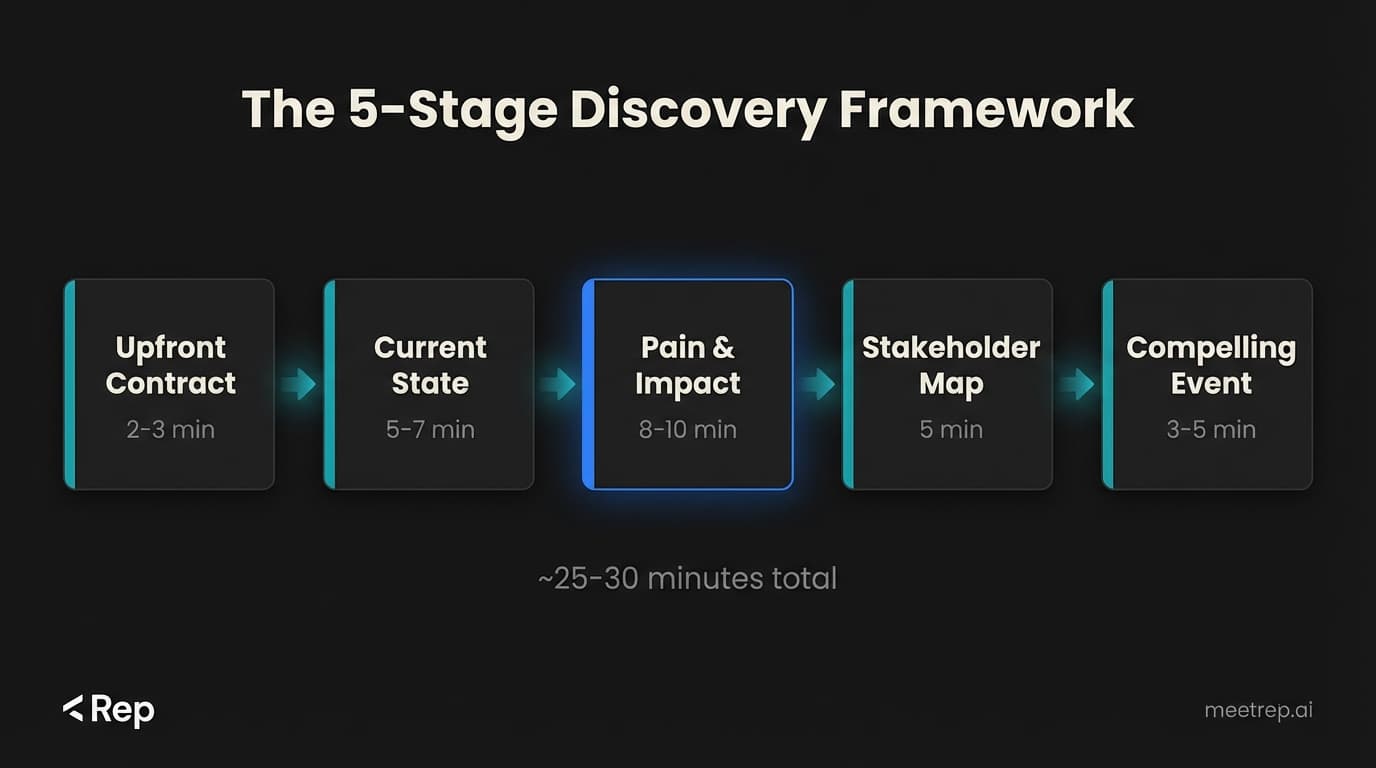
Here's the framework I recommend—built on current research and what actually works in conversations with modern buyers:
Stage 1: The Upfront Contract (2-3 minutes)
Start by aligning expectations. This isn't small talk—it's setting the rules of engagement.
What to cover:
- Confirm time available
- State the purpose of the call
- Share what you plan to cover
- Ask what they want to get from the conversation
- Get agreement to proceed
Example opener:
"Thanks for making time. I've got us down for 30 minutes—does that still work? My goal is to understand what you're dealing with around [problem area] and see if there's a fit. If there is, we'll talk next steps. If not, I'll point you to resources that might help. Before we dive in—what would make this a good use of your time?"
This does two things: it respects their time, and it surfaces their real agenda early.
Stage 2: Current State Questions (5-7 minutes)
Before you can understand their pain, you need to understand their world.
Focus on:
- How they currently handle the process you're replacing
- What tools and systems they use
- How long they've been doing it this way
- What's working that they want to preserve
Don't just collect facts. Listen for friction. The way they describe their current state tells you everything about their pain tolerance.
Stage 3: Pain and Impact Exploration (8-10 minutes)
This is where most discovery calls fail. Reps identify surface pain ("Our process is slow") but never get to the business impact ("We're losing $400K per quarter in delayed deals").
Hot take: The best discovery doesn't feel like discovery. It feels like a conversation where you're genuinely trying to understand their business. The moment it feels like an interrogation, you've lost.
Instead of a linear checklist of questions, use what 30 Minutes to President's Club calls a "Discovery Tree." When they mention a problem, follow that thread deeper:
- "You mentioned X—how is that impacting [specific metric]?"
- "What have you tried to solve this already?"
- "Who else in the organization feels this pain?"
- "What happens if this doesn't get solved in the next 90 days?"
Three "so what?" questions deep is where the real insight lives.
Stage 4: Stakeholder Mapping (5 minutes)
Remember: 11-13 people are involved in the average B2B decision. You need to know who they are.
Questions to ask:
- "Who else needs to sign off on this?"
- "Which departments are involved in this decision?"
- "What's your typical process for evaluating vendors?"
- "Who would block this if they disagreed?"
Outreach's research shows that multi-contact deals are 37% more likely to close. Discovery is where you identify who else needs to be in the conversation.
Stage 5: Compelling Event and Next Steps (3-5 minutes)
This is the most important stage. And it's where most reps fall apart.
A compelling event is a deadline or trigger that forces a decision. Without one, deals drift. And drifting deals die—remember that 113% win rate drop from slippage.
Questions to uncover compelling events:
- "What's driving the timeline for this?"
- "Is there a specific event or deadline we're working toward?"
- "What happens if this doesn't get solved by [date]?"
Then: book the next meeting while you're on the call. Don't say "I'll send some times." Don't say "Let's reconnect next week." Pull up the calendar and get it scheduled.
What we learned at GoCustomer: The #1 predictor of whether a deal would close wasn't the quality of the product demo. It was whether the next meeting was booked before the current call ended. Every day of delay cut conversion rates.
20 Discovery Call Questions That Work
I'm going to share 20 questions organized by the stage they belong to. But first, a warning.
These aren't magic words. The power isn't in the specific phrasing—it's in knowing when to ask them and how to follow up based on the answer.
Salesgenie's 2025 research found that top-performing reps ask 39% more questions than average performers. But they don't just ask more questions—they ask better follow-ups.
Opening Questions (3)
1. "What prompted you to take this call today?"
This is better than "tell me about yourself" because it gets to motivation immediately. Their answer tells you whether this is urgent or exploratory.
2. "What research have you already done on solutions like ours?"
Acknowledges the 70-90% journey they've completed. Shows respect. Also tells you what they already know so you don't waste time.
3. "Before we dive in, what would make this a good use of your time?"
Surfaces their agenda. Sometimes it's different from what you expected.
Situation Questions (4)
4. "Walk me through your current process for [X]."
Open-ended. Gets them talking. Listen for friction.
5. "What tools and systems are you using for this today?"
Reveals tech stack, potential integration needs, and what they're comparing you to.
6. "How long has this been your approach?"
Short tenure = open to change. Long tenure = you'll need to overcome inertia.
7. "What's working well that you'd want to preserve?"
This is underrated. Shows you're not trying to rip and replace everything. Also reveals their priorities.
Pain and Impact Questions (5)
8. "You mentioned [problem]—how is that impacting [metric/department]?"
Ties surface pain to business impact. This is where deals get real.
9. "What have you tried already to solve this?"
If they've tried nothing, urgency is low. If they've tried a lot, you're dealing with a sophisticated buyer.
10. "Who else in the organization feels this pain most acutely?"
Multi-threading entry point. Also reveals whether this is one person's problem or an organizational priority.
11. "What happens if this doesn't get solved by [timeframe]?"
Loss framing. Forces them to articulate consequences.
12. "On a scale of 1-10, how urgent is solving this?"
Direct. Cuts through polite answers. Follow up with "What would make it a 10?"
Decision Process Questions (4)
13. "Who else needs to sign off on this decision?"
Must ask. Average is 11-13 people. If they say "just me," dig deeper.
14. "Which departments are involved in decisions like this?"
89% involve 2+ departments. Know who they are.
15. "What's your typical process for evaluating vendors?"
Reveals their buying process. Are there formal RFPs? Committees? Executive sign-offs?
16. "What criteria will you use to make the final decision?"
Tells you exactly what you need to prove in the demo.
Closing Questions (4)
17. "What's driving your timeline for this decision?"
Hunting for the compelling event.
18. "If you solve this, what does success look like for you personally?"
Identifies whether they're a potential champion. Personal wins matter.
19. "Based on what we've discussed, does it make sense to schedule a deeper dive?"
Gets commitment. Not "let me send you some info."
20. "I have [date/time] available—does that work for a follow-up?"
Book it now. Not later. Now.
Key Insight: The questions aren't the magic. The follow-up is. When they answer, don't move to the next question. Go deeper. "Tell me more about that." "What did you mean by X?" "Why is that?" Three levels deep is where deals are won.
Discovery Call Script Example (With Branching)
Templates are useful. But calls don't follow templates.
Here's a script structure with branching paths for common scenarios. Think of it as a map, not a railroad track.
Opening (First 90 Seconds)
"Hi [Name], thanks for making time. Before we jump in, I want to make sure this is valuable for you. I've blocked 30 minutes to understand [specific challenge from your research], and if there's a fit, we'll schedule next steps. If not, I'll point you to resources that might help. Does that work?"
If they agree: Move to current state questions.
If they say "Just show me the demo":
"I get it—you've done your research and want to see the product. Here's what I've found works best: if I show you a quick 3-minute snippet of the most relevant feature, would you be open to a few questions afterward so I can make sure I'm showing you the right things? That way we avoid the generic demo that doesn't apply to your situation."
This respects their preference while earning the right to discover.
During the Call
When they mention a problem: Don't move on. Go deeper.
"You mentioned [problem]. How is that impacting [their metric or department]?"
[Listen]
"What have you tried already to solve it?"
[Listen]
"Who else on the team is feeling that impact?"
Three levels. Then move on.
When they mention a stakeholder: Map the buying committee immediately.
"You mentioned [name] from Finance needs to sign off. Who else typically weighs in on decisions like this?"
When they mention a timeline: Find the compelling event.
"You said you want this in place by Q3. What happens if it's not live by then?"
Closing
"Based on what you've shared, here's what I'd recommend for next steps: [specific action]. I've got [date] at [time] available—does that work?"
If they hedge:
"What would need to happen for you to move forward?"
If they agree:
"Great. I'll send the invite now. In the meantime, could you loop in [stakeholder they mentioned] so we're all aligned? I'll send a recap email within 24 hours."
Never end with "I'll follow up next week." That's how deals slip. And slipping kills deals.
Discovery Call Mistakes That Kill Deals
I've listened to hundreds of discovery calls. Some from our customers, some from recordings shared in sales communities. And the same patterns show up over and over.
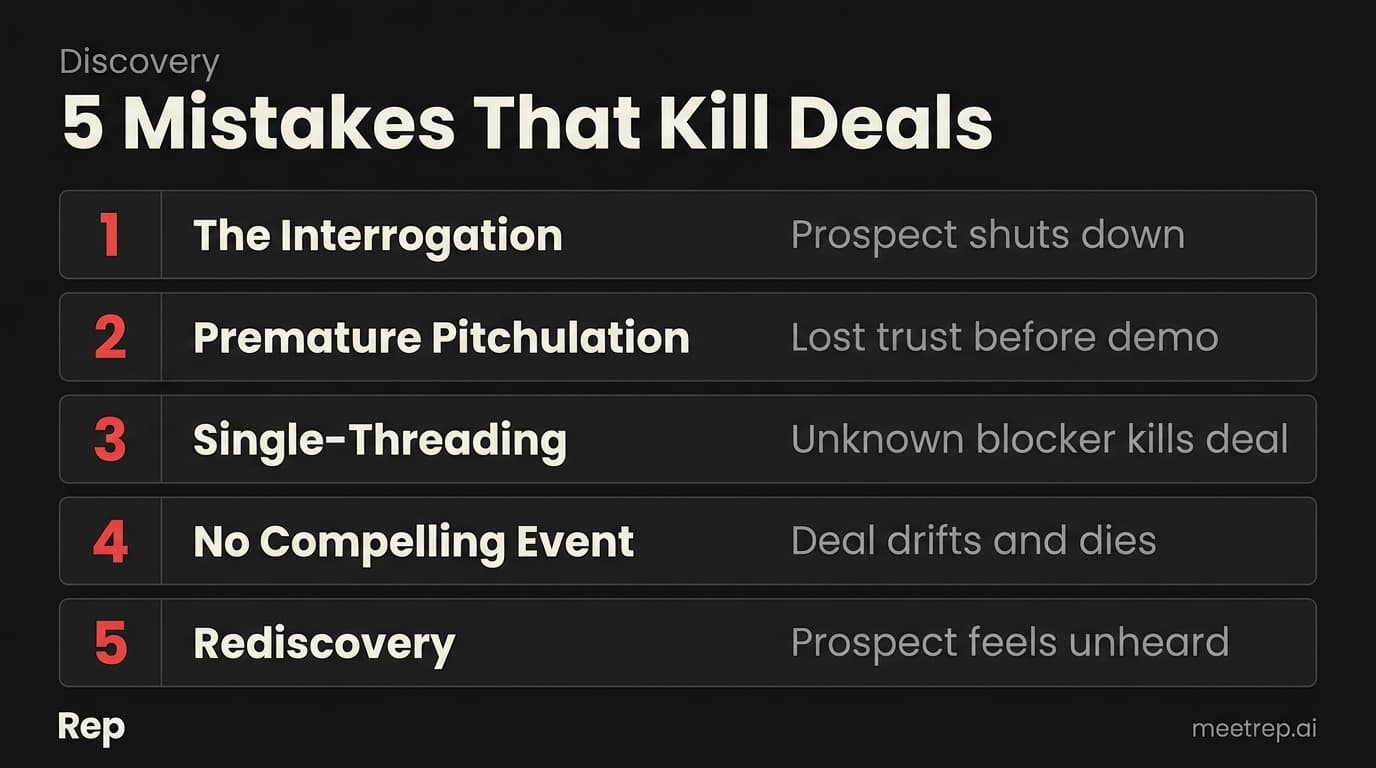
Here are the mistakes that kill deals:
Mistake 1: The Interrogation
Back-to-back questions without context, rapport, or acknowledgment. The prospect feels like they're being processed, not understood.
GTMnow documented this pattern: "After 10 straight questions back-to-back, the prospect had shut down. Finally, they asked, 'Sorry, before you ask any more questions, can you just tell me what it is you do?'"
Sound familiar?
The fix: Treat it like a conversation. Acknowledge answers. Share relevant context. Make it feel like two people solving a problem together.
Mistake 2: Premature Pitchulation
You hear a pain point and immediately jump to how your product solves it. You haven't earned the right to pitch yet.
GTMnow calls this "pitchulation"—"when salespeople can't resist pausing their discovery to spray the prospect with a non-stop product pitch."
The fix: Diagnosis before prescription. You wouldn't trust a doctor who prescribed medication before examining you. Discovery earns you the right to demo.
Common mistake: Slides in discovery calls. Gong's research shows discovery calls with slides are 17% less likely to book a follow-up meeting. Save the slides for the demo.
Mistake 3: Single-Threading
You're having great conversations with one contact. You've done five calls with them. They're excited. Then they go silent.
What happened? Someone else in the buying committee killed the deal. Someone you never talked to.
Multi-contact deals are 37% more likely to close. Single-threaded deals are almost half as likely to succeed.
The fix: Ask about other stakeholders in every discovery call. Get introductions early. Don't wait until the proposal stage.
Mistake 4: No Compelling Event
The deal feels good. The prospect is interested. But there's no deadline. No trigger. No reason to decide this quarter versus next year.
These deals drift. And drifting deals die. 113% win rate drop from slippage.
The fix: Find the compelling event or create one. "What happens if this isn't solved by [date]?" If there's no answer, the deal isn't real yet.
Mistake 5: Rediscovery
The SDR already asked basic questions. The prospect answered them. Then the AE gets on the call and asks the same questions again.
Pclub.io captured this frustration: "Prospects often share information with the SDR who schedules the call, only to repeat it to the AE. This is frustrating and creates a bad impression."
The fix: Review the notes. Acknowledge what they've already shared. Start deeper.
What to Do After Discovery: Maintaining Momentum
Discovery doesn't end when the call ends. The follow-up determines whether the deal moves forward or stalls.
The 24-Hour Rule
Send a follow-up email within 24 hours. Not 48. Not "later this week." Twenty-four hours.
Spotio's research shows 35-50% of sales go to the vendor that responds first. Speed signals seriousness.
What to include in your follow-up:
Subject: Next steps: [Their Company] + [Your Company]
Hi [Name],
Thanks for the conversation today. Based on what you shared, here's what stood out:
Pain Points:
- [Specific challenge 1] impacting [metric/department]
- [Specific challenge 2] costing approximately [quantified impact]
Next Steps:
- [Specific action] by [date]
- [Meeting] on [date] with [stakeholders]
What I need from you:
- [Data/access/intro to stakeholder] by [date]
If anything changes with your timeline around [compelling event], let me know.
Multi-Thread Immediately
CC other stakeholders on the follow-up email. Get them in the loop before they become blockers.
Set Interim Checkpoints
Don't schedule your next meeting for three weeks out with silence in between. Deals go dark in silence.
Send relevant content. Share case studies. Keep the conversation alive without being annoying. One touchpoint per week minimum.
My recommendation:Outreach found that deals with meetings scheduled have 32-day shorter sales cycles. Keep booking meetings. Momentum kills slippage.
Discovery is where deals are won or lost. Not in the demo. Not in the negotiation. In those first 30 minutes where you either understand their world or become another vendor pitch they ignore.
The frameworks here work. We've used variations of them across hundreds of deals at GoCustomer and Rep. But frameworks are just scaffolding. The real work is caring enough about the prospect's problem to actually listen—and being honest enough with yourself to disqualify when there isn't a fit.
If you're looking to scale your initial demos without sacrificing quality, Rep handles live product demonstrations autonomously—24/7, with real conversations and real-time answers. It's designed to handle the early-stage demos so your reps can focus on the discovery and closing conversations that matter most.

Nadeem Azam
Founder
Software engineer & architect with 10+ years experience. Previously founded GoCustomer.ai.
Nadeem Azam is the Founder of Rep (meetrep.ai), building AI agents that give live product demos 24/7 for B2B sales teams. He writes about AI, sales automation, and the future of product demos.
Frequently Asked Questions
Table of Contents
- What Is a Discovery Call?
- Why Discovery Matters More Than Ever in 2026
- How to Structure a Discovery Call: The 5-Stage Framework
- 20 Discovery Call Questions That Work
- Discovery Call Script Example (With Branching)
- Discovery Call Mistakes That Kill Deals
- What to Do After Discovery: Maintaining Momentum
Ready to automate your demos?
Join the Rep Council and be among the first to experience AI-powered demos.
Get Early AccessRelated Articles
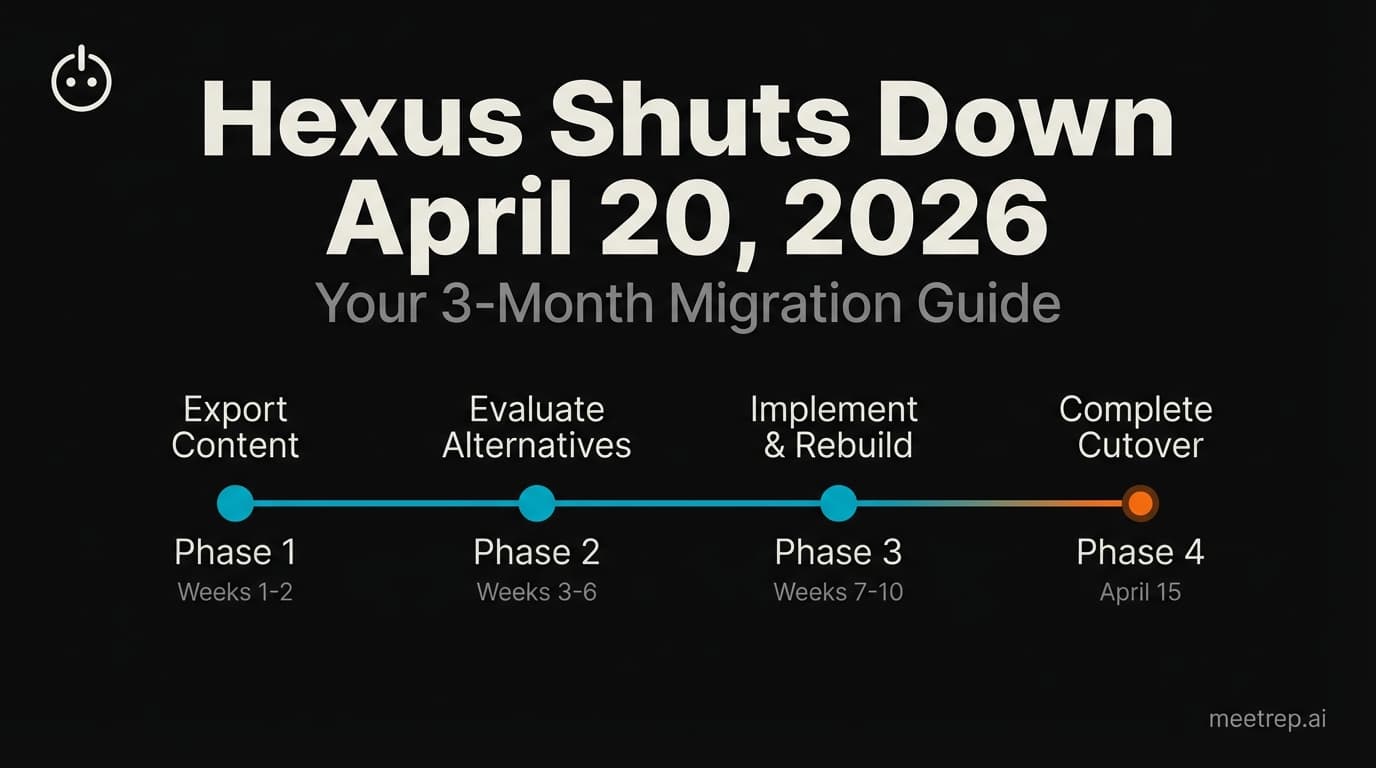
Hexus Acquired by Harvey AI: Congrats & What It Means for Demo Automation Teams
Hexus is shutting down following its acquisition by Harvey AI. Learn how to manage your migration and discover the best demo automation alternatives before April 2026.
Why the "Software Demo" is Broken—and Why AI Agents Are the Future
The traditional software demo is dead. Discover why 94% of B2B buyers rank vendors before calling sales and how AI agents are replacing manual demos to scale revenue.
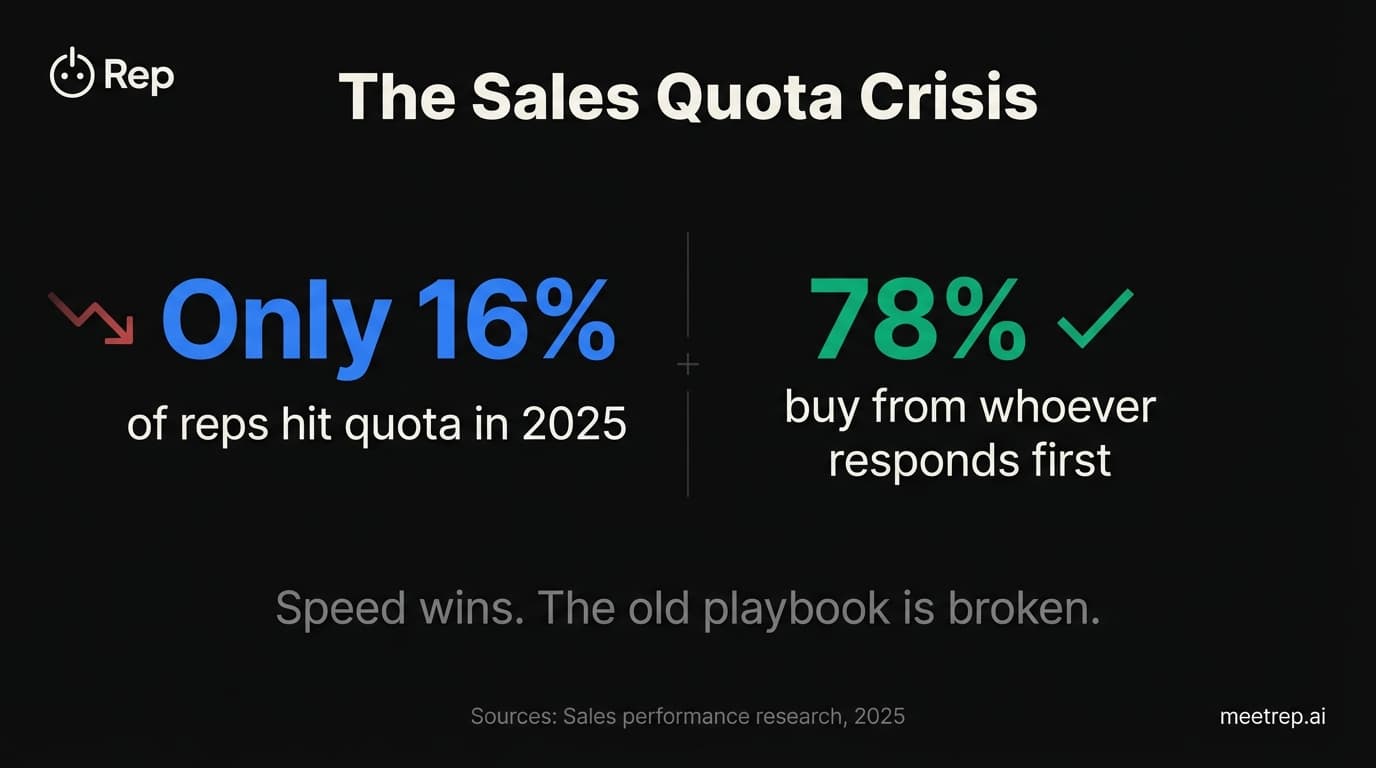
Why Autonomous Sales Software is the Future of B2B Sales (And Why the Old Playbook is Dead)
B2B sales is at a breaking point with quota attainment at 46%. Discover why autonomous 'Agentic AI' is the new standard for driving revenue and meeting the demand for rep-free buying.