Demodesk Alternative: How to Choose Between an AI Agent and a Virtual Meeting Room

Executive Summary
- Demodesk is a virtual meeting room that helps human-led demos with real-time coaching, playbooks, and AI transcription. Best for coaching teams and closing complex deals.
- Rep is an autonomous AI agent that conducts demos independently—joining calls, sharing its screen, and navigating your product 24/7. Best for speed-to-lead and scaling demo capacity.
- The real decision isn't "which tool" but "human-led vs AI-led" for different stages of your funnel.
- Our recommendation: Use Rep to handle the 42-hour response gap; use Demodesk to coach reps on closing calls.
If you're searching for a Demodesk alternative, you've probably noticed something odd. The tools that keep appearing—Walnut, Navattic, Storylane—solve a completely different problem than Demodesk does. And Rep? We're in a third category entirely.
That's not an accident. The demo automation market has fractured. There's no single "best" tool anymore. There's only the right tool for your specific sales motion.
So here's the question that actually matters: Do you want software that helps your reps run better meetings, or an AI agent that runs demos while your reps sleep?
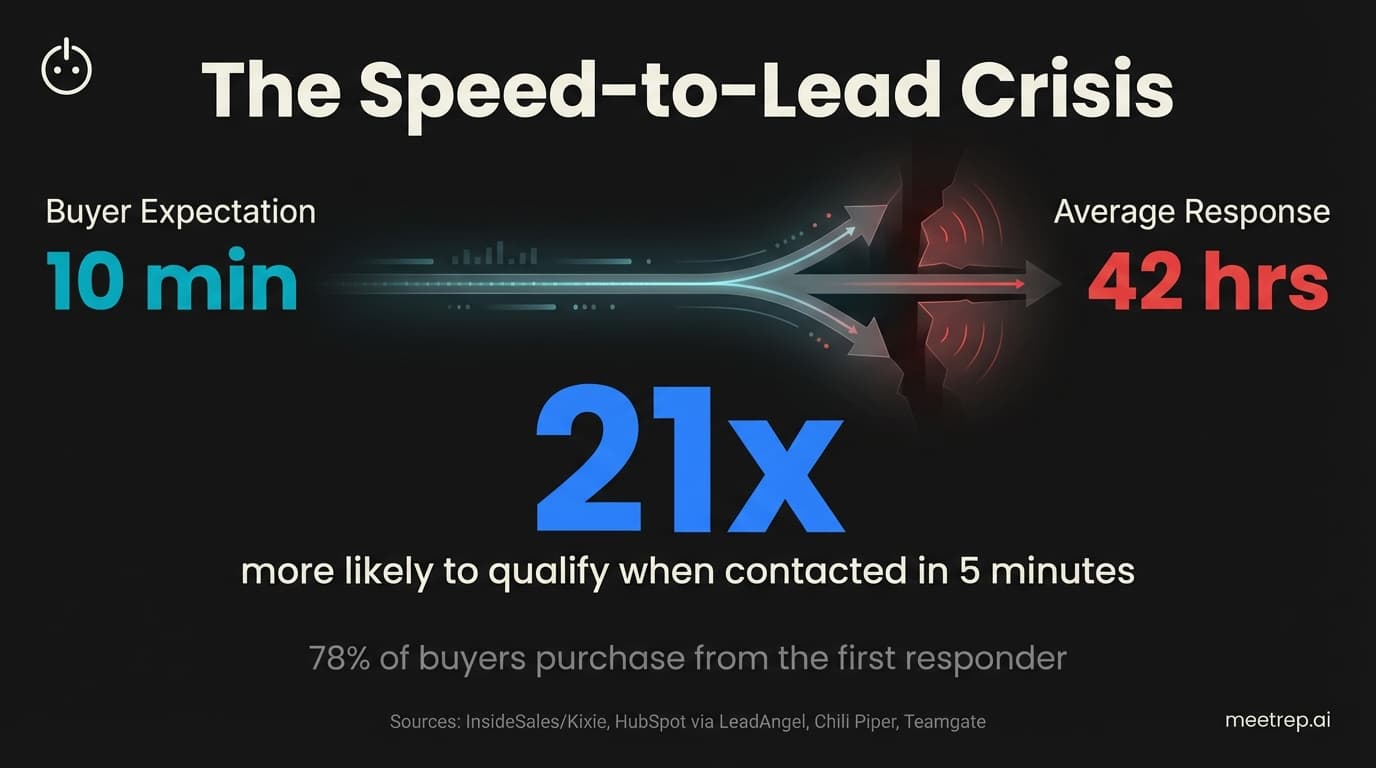
At Rep, we built an autonomous demo agent because we watched the math stop working. According to Salesforce's 2024 State of Sales Report, reps spend only 28-30% of their week actually selling. The rest? Admin, prep, scheduling, and waiting. Meanwhile, Chili Piper's research shows the average B2B lead response time is 42 hours—but buyers expect a response in 10 minutes.
Something has to give.
What Is Demodesk? The Human Co-Pilot
Demodesk is a virtual meeting platform designed for sales coaching and live demo support. It acts as a co-pilot—providing real-time playbooks, battle cards, and AI transcription to help human sellers run better calls. The key word there is "human." Every demo still requires a rep in the room.
That's not a criticism. It's the architecture.
Demodesk does several things well. Their browser-based meeting rooms require no downloads for participants. The AI Coach scores calls in real-time and provides post-call feedback. Transcription works in 98 languages. And their CRM integrations (Salesforce, HubSpot) automatically sync notes and next steps.
But here's what Demodesk explicitly doesn't do: autonomous demos. No 24/7 availability. No AI voice agent answering questions. No self-serve product walkthroughs. If your rep isn't logged in, no demo happens.
Key Insight: Demodesk uses the term "AI Sales Agents" in their marketing, but this refers to administrative agents that update your CRM and write notes—not agents that conduct demos. The distinction matters when you're evaluating alternatives.
Demodesk Pricing
Demodesk's current pricing runs €39-49/month per user depending on commitment:
| Plan | Price | What's Included |
|---|---|---|
| Coaching & AI (Annual) | €39/mo per user | Full AI suite, all integrations |
| Coaching & AI (Monthly) | €49/mo per user | Same features, no commitment |
| Enterprise | Custom | SSO, dedicated support |
The seat-based model means costs scale linearly with headcount. A 20-person sales team runs €780-980/month before enterprise features.
What Is Rep? The Digital Worker
Rep is an autonomous AI sales agent that joins video calls, speaks with a human-like voice, shares its screen, and navigates your actual product to conduct demonstrations—all without human involvement. We built it as a "digital worker," not a meeting tool.
Here's what happens when a prospect clicks your Rep demo link: Rep joins the video room, greets them naturally, shares its screen, logs into your product with demo credentials, and walks them through features while answering questions in real-time. The prospect gets a live, interactive demo. Your sales team gets the recording, transcript, and extracted insights (action items, pain points, objections) afterward.
The core technology difference is browser automation. Rep doesn't play pre-recorded videos. It controls a real browser, clicks real buttons, and navigates your actual product interface live. If a prospect asks to see a specific feature, Rep can navigate there mid-demo.
Why we built Rep this way: At GoCustomer, we learned that the first-touch demo is often the biggest bottleneck in the funnel. It's repetitive for reps. It's time-sensitive for buyers. And it doesn't require the nuanced selling skills your best AEs bring to closing calls. We built Rep to handle that specific workload.
The Real Comparison: Virtual Room vs Autonomous Agent
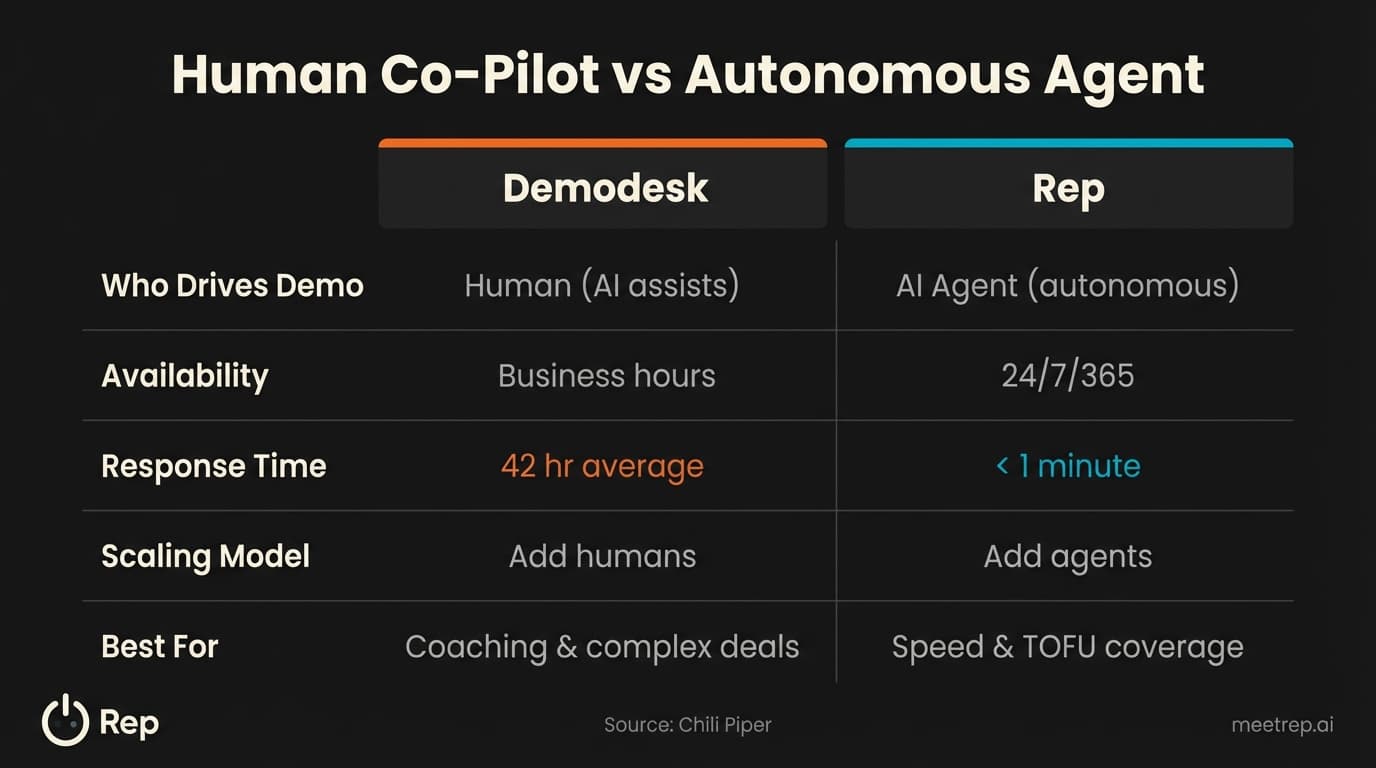
Comparing Demodesk and Rep feature-by-feature misses the point. They're solving different problems entirely. But since you're evaluating alternatives, here's the honest breakdown:
| Dimension | Demodesk | Rep |
|---|---|---|
| Who drives the demo | Human rep, AI assists | AI agent, autonomous |
| Availability | Business hours (human-dependent) | 24/7/365 |
| Primary use case | Coaching reps, closing complex deals | Qualification demos, TOFU coverage |
| Response time | 42-hour average (human scheduling) | Under 1 minute |
| Scaling model | Linear (add humans) | Add agents without headcount |
| Demo consistency | Varies by rep skill | Same quality every time |
| Core technology | Video conferencing + coaching | Browser automation + voice AI |
| Cost structure | Per seat (~$59/mo) | Per agent/usage |
Neither approach is universally better. But they're not interchangeable.
The Data:According to Teamgate's 2024 research, 78% of customers buy from the first company that responds. Yet the average B2B response time is 42 hours. That gap is exactly what autonomous agents address.
Why "Agentic AI" Changes the Conversation
Here's the context that explains why this market is splitting. Gartner has identified "Agentic AI" as a top strategic technology trend for 2025. Their prediction: by 2028, 15% of day-to-day work decisions will be made autonomously through agentic AI. Up from 0% in 2024.
And this shift is already visible in buyer behavior. According to Gartner's December 2024 research, 35% of B2B buyers already engage with interactive demos during purchasing. That number is climbing.
That's not about chatbots getting smarter. It's about AI that takes action, not just analyzes or generates text.
Demodesk is generative AI. It creates call summaries, suggests talking points, and generates follow-up emails. All valuable. But a human still makes every decision and takes every action.
Rep is agentic AI. It decides when to click, what to show next, how to answer a question. The human isn't in the loop during execution—they review results afterward.
Hot take: Most tools calling themselves "AI" in sales tech are really just generative wrappers. They help humans work faster. Agentic AI is different—it handles entire workflows end-to-end. The demo automation category is where this shift is becoming concrete.
The Speed-to-Lead Problem (Why This Matters Now)
Let me make this tangible. Here's what the research says about response time:
- Leads contacted within 5 minutes are 21x more likely to qualify than those contacted after 30 minutes (InsideSales/Kixie)
- 82% of consumers expect a response within 10 minutes (HubSpot via LeadAngel)
- 78% buy from the first responder (Teamgate 2024)
- Average B2B response time: 42 hours
The math is brutal. Your prospects expect a response in 10 minutes. Your competitors take 42 hours. And qualification rates drop 21x if you're not in the 5-minute window.
No amount of meeting coaching fixes a 42-hour delay. That's not a training problem. It's a capacity problem.
What we learned at GoCustomer: When we tracked where leads dropped out of our funnel, the biggest leak was the gap between "request demo" and "demo actually happens." Days would pass. Interest cooled. Competitors responded faster. We didn't need better demos—we needed faster demos.
What Buyers Actually Say About Demodesk
Honestly, I read through the G2, Capterra, and GetApp reviews to understand what users experience. Demodesk scores well—4.6-4.8 stars typically—but the complaints reveal limitations worth knowing.
Technical friction:
- "About 40% of meetings are shifted off the platform after the meeting started as somebody could not connect" (GetApp verified user)
- "Requires a very strong internet connection" (G2 verified user)
- "The mobile experience is insufficient" (Software Advice)
AI accuracy gaps:
- "AI transcription and speaker recognition inaccuracies... commonly misattributed speech" (tl;dv comparison)
- "Sometimes I mention specific software but the tool does not identify them and rate me on a lower score" (G2 verified user, August 2024)
Contract concerns:
- "Canceling is not possible online and interaction with support is required" (GetApp verified review)
These aren't dealbreakers for meeting coaching use cases. But if you're expecting Demodesk to solve availability or response time problems, it won't.
When to Choose Demodesk
Demodesk makes sense when:
- You're coaching a large AE team and need real-time playbook delivery during calls
- Your sales cycle is complex and consultative, requiring human judgment on every call
- You have dedicated meeting coaching as a priority, not just demo delivery
- Your main goal is rep performance optimization, not demo automation
- You already have adequate demo coverage and want to improve quality, not quantity
Look, Demodesk is genuinely good at what it does. The virtual meeting room concept works. The coaching features are solid. If your problem is "our reps need help running better meetings," Demodesk addresses that.
When to Choose Rep
Rep makes sense when:
- Inbound volume exceeds your demo capacity—you're dropping or delaying leads
- Response time is hurting conversion—prospects expect faster than you can deliver
- You need 24/7 coverage for global time zones or after-hours requests
- First-touch demos are repetitive and don't require senior AE involvement
- You want to scale without linear headcount growth
- Consistency matters—you need every prospect getting the same quality demo
The honest answer: Rep handles the demos humans shouldn't do. The repetitive TOFU qualification calls. The midnight demo requests from overseas. The same feature walkthrough your SDRs have given 500 times.
My recommendation: Don't think of this as either/or. Use Rep to book the meeting and qualify the lead. Use Demodesk (or Gong, or whatever coaching tool you prefer) to help your humans close. That hybrid approach matches the right tool to the right problem.
The Competitor Landscape (Other Alternatives)
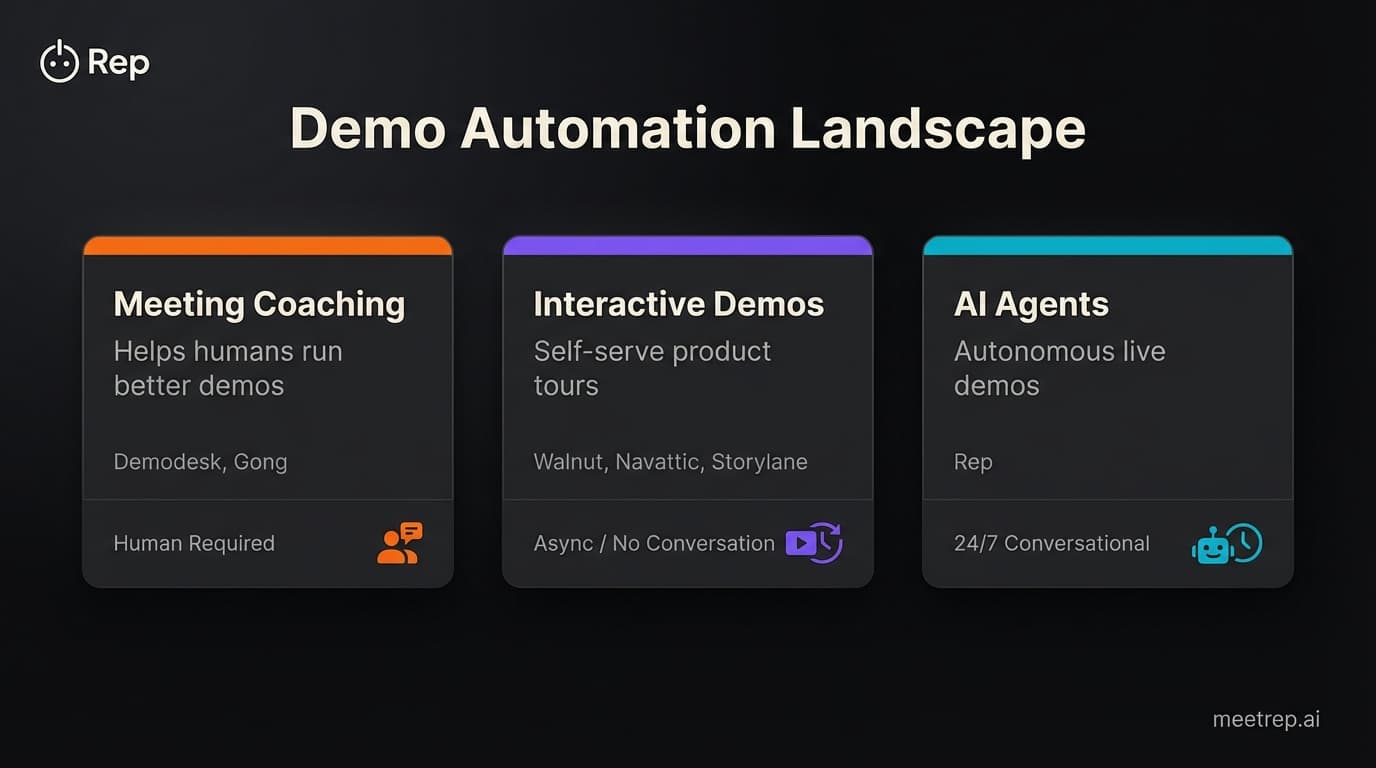
If neither Demodesk nor Rep fits, here's what else shows up when people search for alternatives:
Interactive demo builders (async, self-serve):
- Storylane — Multi-format interactive demos, ~$6-12K/year
- Navattic — No-code product tours, free tier to $1K/month
- Walnut — HTML-based interactive demos, ~$9.2K/year minimum
Sandbox environments:
Meeting intelligence (post-call analysis):
The pattern: most "Demodesk alternatives" are either async demo builders (no live conversation) or meeting intelligence tools (post-call, not real-time coaching). Rep is the only autonomous agent conducting live conversational demos.
How Much Does Demo Automation Cost?
Let's break down the economics across categories:
| Category | Example Tools | Typical Pricing |
|---|---|---|
| Meeting coaching | Demodesk | €39-49/user/month |
| Interactive demos | Walnut, Navattic, Storylane | $6K-55K/year |
| AI agents | Rep | Contact for pricing |
Implementation costs add another layer. According to GetContrast.io research, implementation costs range from $5,000 to $50,000 depending on customization needs. Training typically requires 20-40 hours for initial onboarding.
The ROI question is different for each category:
- Meeting coaching ROI = rep performance improvement × deals closed
- Interactive demo ROI = self-serve conversions + rep time saved
- AI agent ROI = leads converted that would otherwise be lost to delays
The Data:Walnut's 2024 benchmarks show the average B2B SaaS demo-to-close ratio is 15-20% (1 closed deal per 4-6 demos). Top performers hit 20-30%. If you're below 15%, improving demo quality helps. If you're at 20%+ but can't handle volume, capacity is your constraint.
The demo automation market used to be simple. Now it's split into meeting support, interactive content, and autonomous agents. If you came here looking for a Demodesk alternative, the real question is whether you need a better meeting room or a different approach entirely.
My prediction: most B2B sales teams will use both categories within three years. Autonomous agents for speed and coverage. Human-assisted tools for complex closes. The winners will be whoever figures out the handoff.
If you want to see what an autonomous demo agent actually looks like in action, Rep runs live demos of itself. No scheduling, no waiting. That's kind of the point.

Nadeem Azam
Founder
Software engineer & architect with 10+ years experience. Previously founded GoCustomer.ai.
Nadeem Azam is the Founder of Rep (meetrep.ai), building AI agents that give live product demos 24/7 for B2B sales teams. He writes about AI, sales automation, and the future of product demos.
Frequently Asked Questions
Table of Contents
- What Is Demodesk? The Human Co-Pilot
- What Is Rep? The Digital Worker
- The Real Comparison: Virtual Room vs Autonomous Agent
- Why "Agentic AI" Changes the Conversation
- The Speed-to-Lead Problem (Why This Matters Now)
- What Buyers Actually Say About Demodesk
- When to Choose Demodesk
- When to Choose Rep
- The Competitor Landscape (Other Alternatives)
- How Much Does Demo Automation Cost?
Ready to automate your demos?
Join the Rep Council and be among the first to experience AI-powered demos.
Get Early AccessRelated Articles
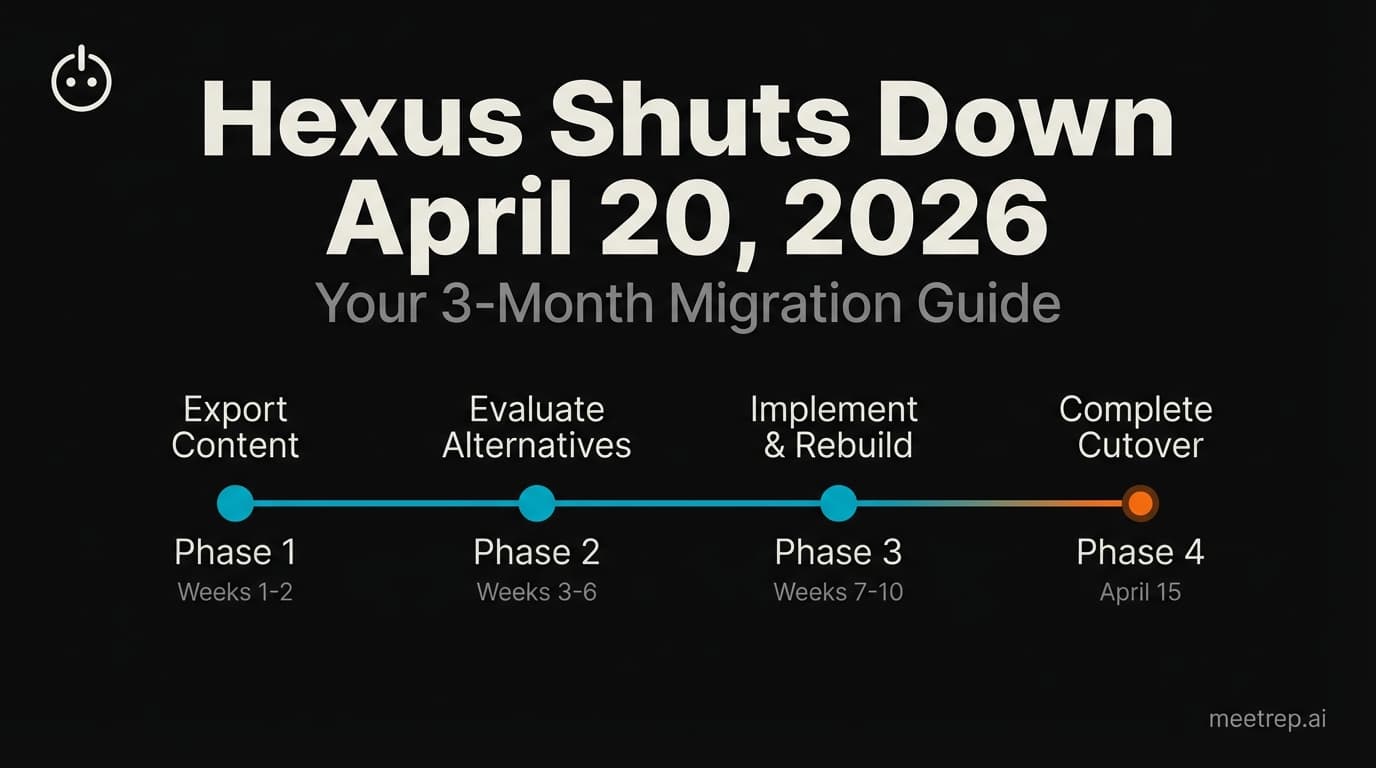
Hexus Acquired by Harvey AI: Congrats & What It Means for Demo Automation Teams
Hexus is shutting down following its acquisition by Harvey AI. Learn how to manage your migration and discover the best demo automation alternatives before April 2026.
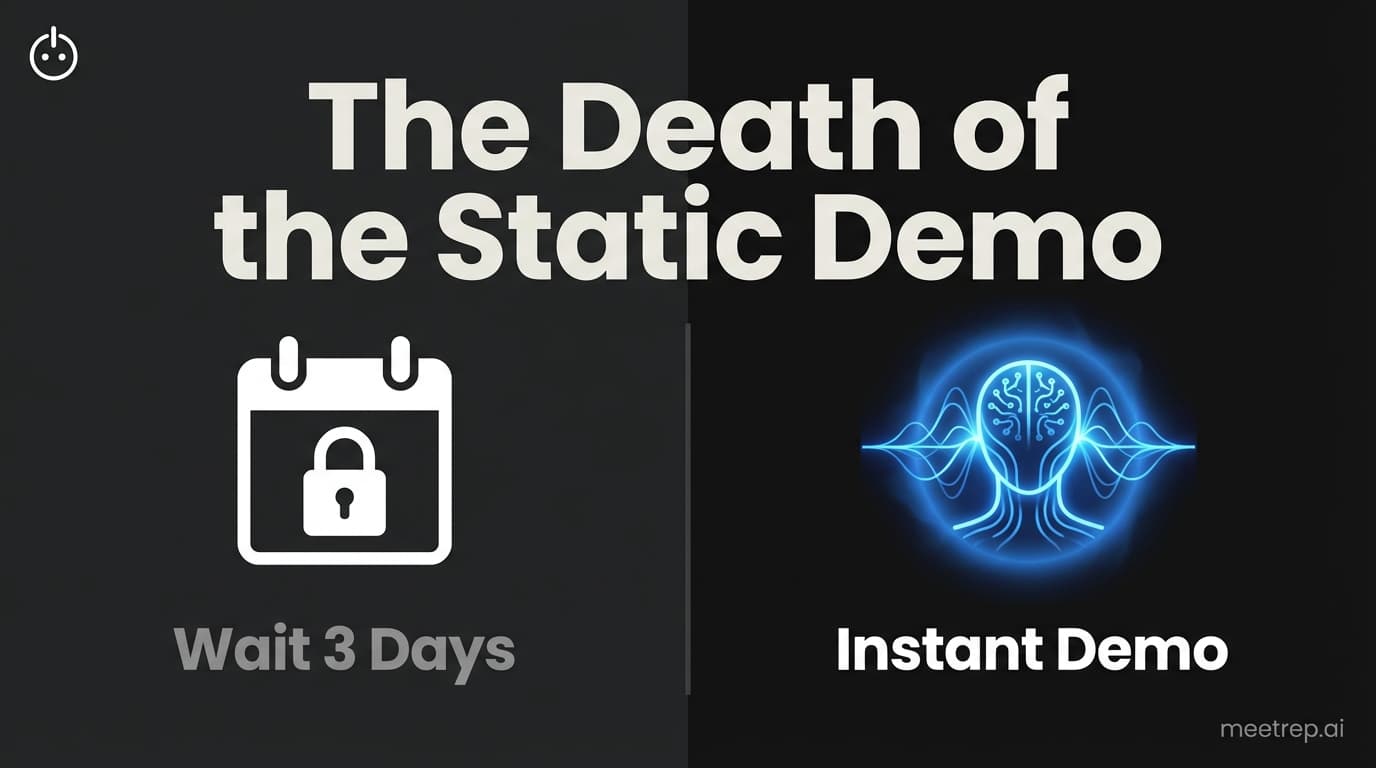
Why the "Software Demo" is Broken—and Why AI Agents Are the Future
The traditional software demo is dead. Discover why 94% of B2B buyers rank vendors before calling sales and how AI agents are replacing manual demos to scale revenue.
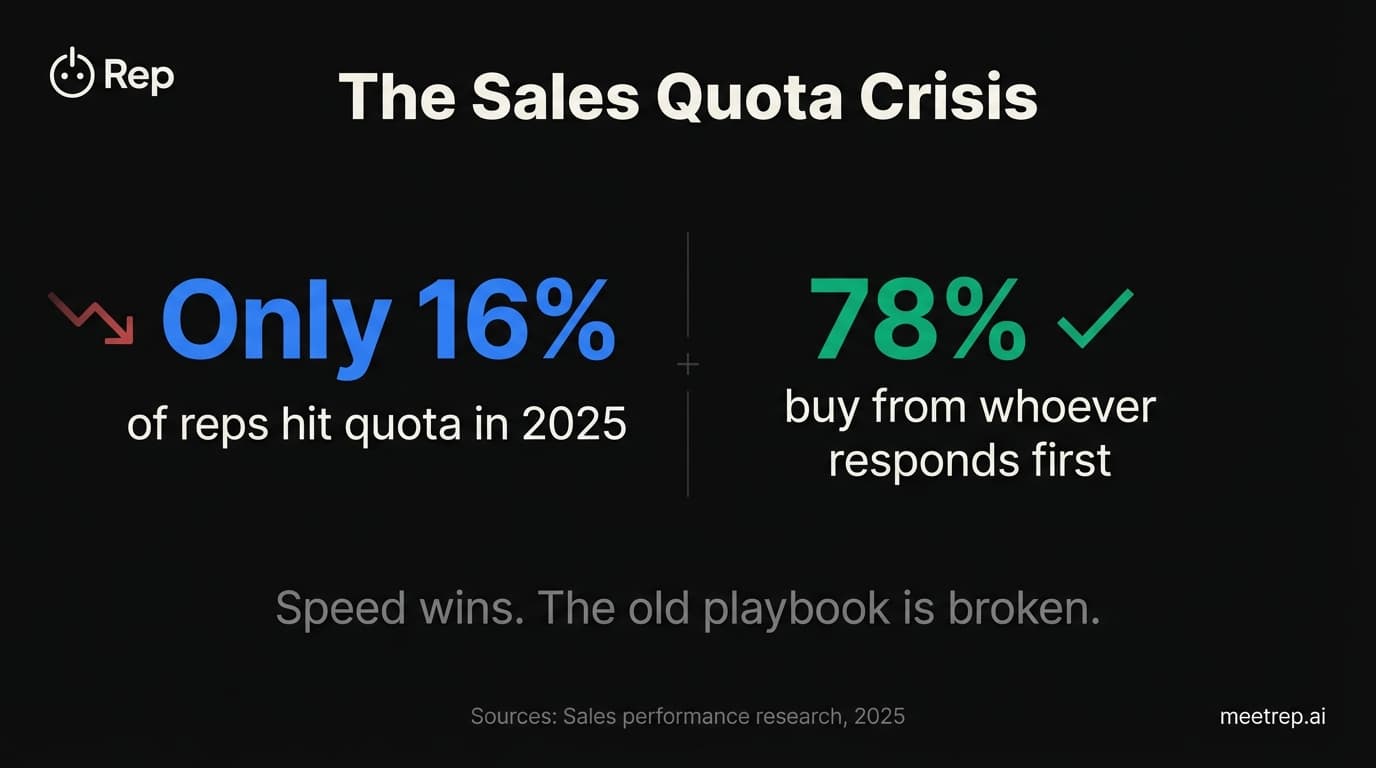
Why Autonomous Sales Software is the Future of B2B Sales (And Why the Old Playbook is Dead)
B2B sales is at a breaking point with quota attainment at 46%. Discover why autonomous 'Agentic AI' is the new standard for driving revenue and meeting the demand for rep-free buying.