Demo Video Production: The Complete Guide for Sales Teams

Executive Summary
- 91% of businesses now use video marketing—you're competing against everyone
- Traditional demo video production costs $1,000-$3,000 per minute and takes 2-4 weeks
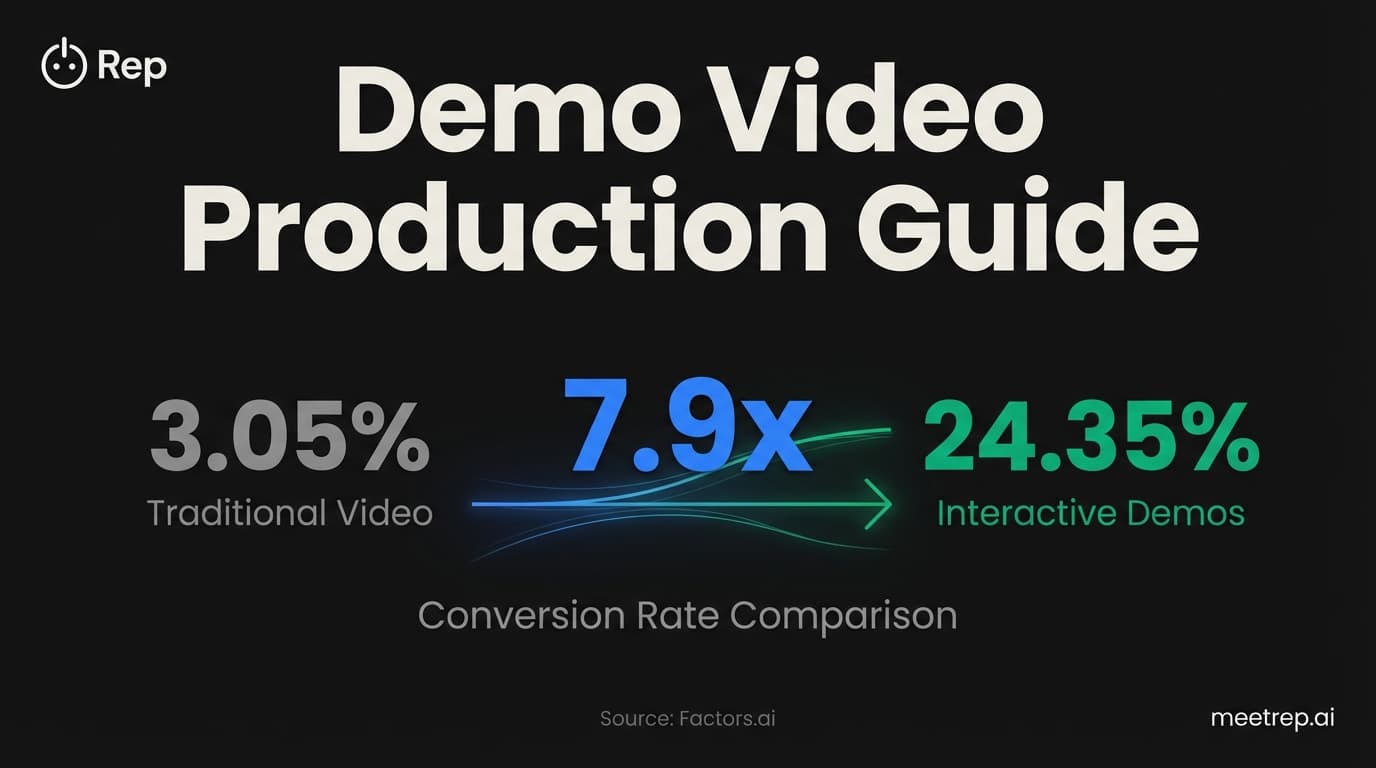
- Interactive demos convert at 24.35% vs. 3.05% for traditional approaches (7.9x improvement)
- 61% of B2B buyers prefer buying without talking to a rep at all
- The right approach depends on your goal: brand awareness (video), self-service evaluation (interactive), or full demo replacement (AI agents)
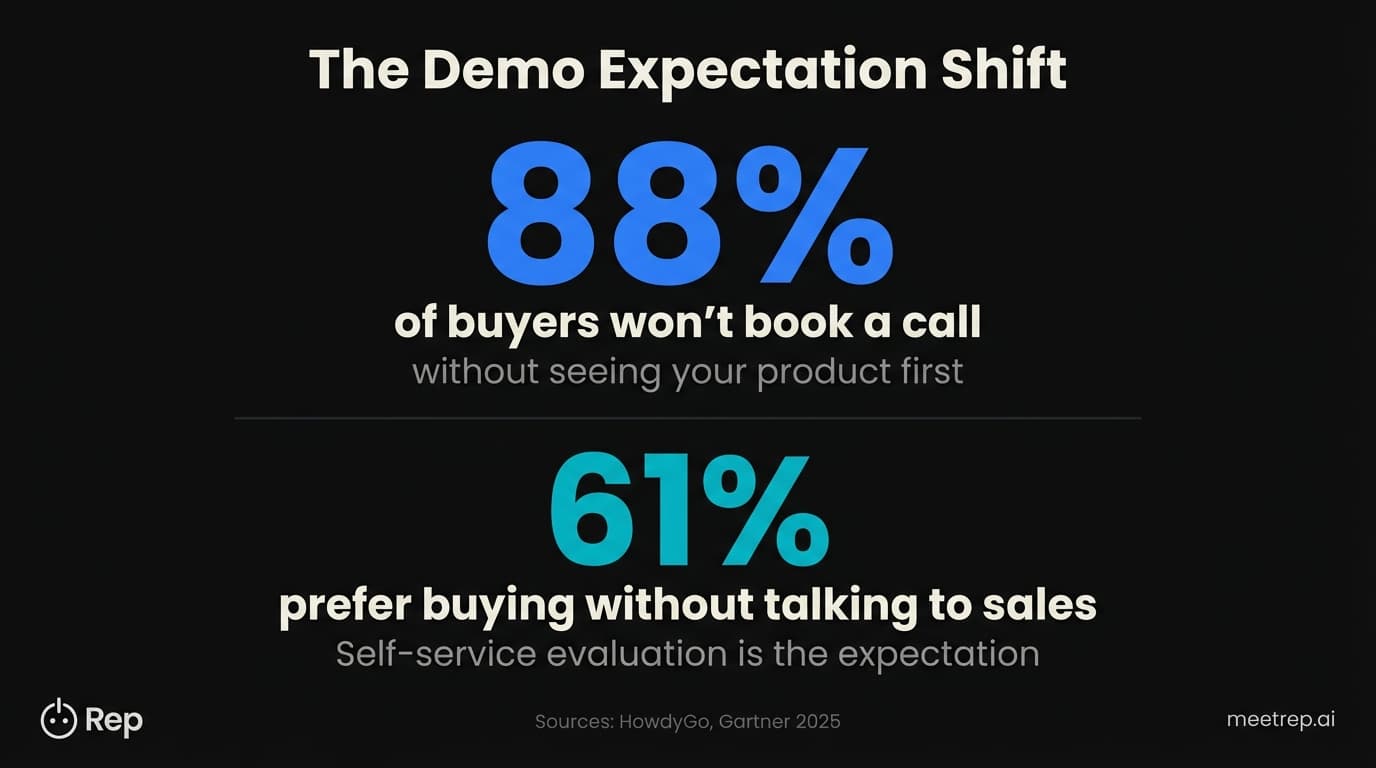
Here's an uncomfortable truth about demo video production: 88% of software buyers won't even book a sales call without seeing your product first. If you're gating your demos behind a "Contact Sales" form, your pipeline isn't protected. It's already dead.
I've spent years building sales automation tools—first at GoCustomer.ai, now at Rep. And the single biggest shift I've watched is this: buyers don't want to talk to your sales team until they've already decided your product might work. Demo videos aren't a nice-to-have anymore. They're the filter that determines whether prospects even enter your funnel.
This guide breaks down every approach to video demo creation—from traditional production to interactive platforms to autonomous AI agents. You'll get real costs, real timelines, and real results. No fluff.
Why Demo Videos Have Become Non-Negotiable
Demo video production is the professional process of creating visual content that demonstrates how a software product, application, or service actually works in practice. It encompasses everything from strategic planning and scriptwriting to screen recording, editing, and distribution—transforming complex product functionality into compelling visual narratives that educate prospects and accelerate purchasing decisions.
But that definition misses why it matters so much right now.
According to Wyzowl's 2026 State of Video Marketing, 91% of businesses use video as a marketing tool. That's not a trend. That's table stakes. And 85% of people say watching a video convinced them to buy a product or service.
But here's where it gets interesting—and where most teams get it wrong.
The game has changed. Gartner's 2025 B2B Buying Survey found that 61% of B2B buyers now prefer a completely rep-free buying experience. They want to research, evaluate, and often decide before ever talking to sales. Your demo video isn't just marketing content anymore. It's often the only "salesperson" a prospect encounters during their evaluation.
The Data:81% of sales professionals have lost a deal specifically because of a bad demo. Not a bad product. A bad demo. Quality isn't optional.
So what does this mean for your demo video strategy?
It means you can't just record a screen share with a voiceover and call it done. And it means understanding the three distinct approaches to demo production—because each serves a different purpose.
The Three Tiers of Demo Production in 2026
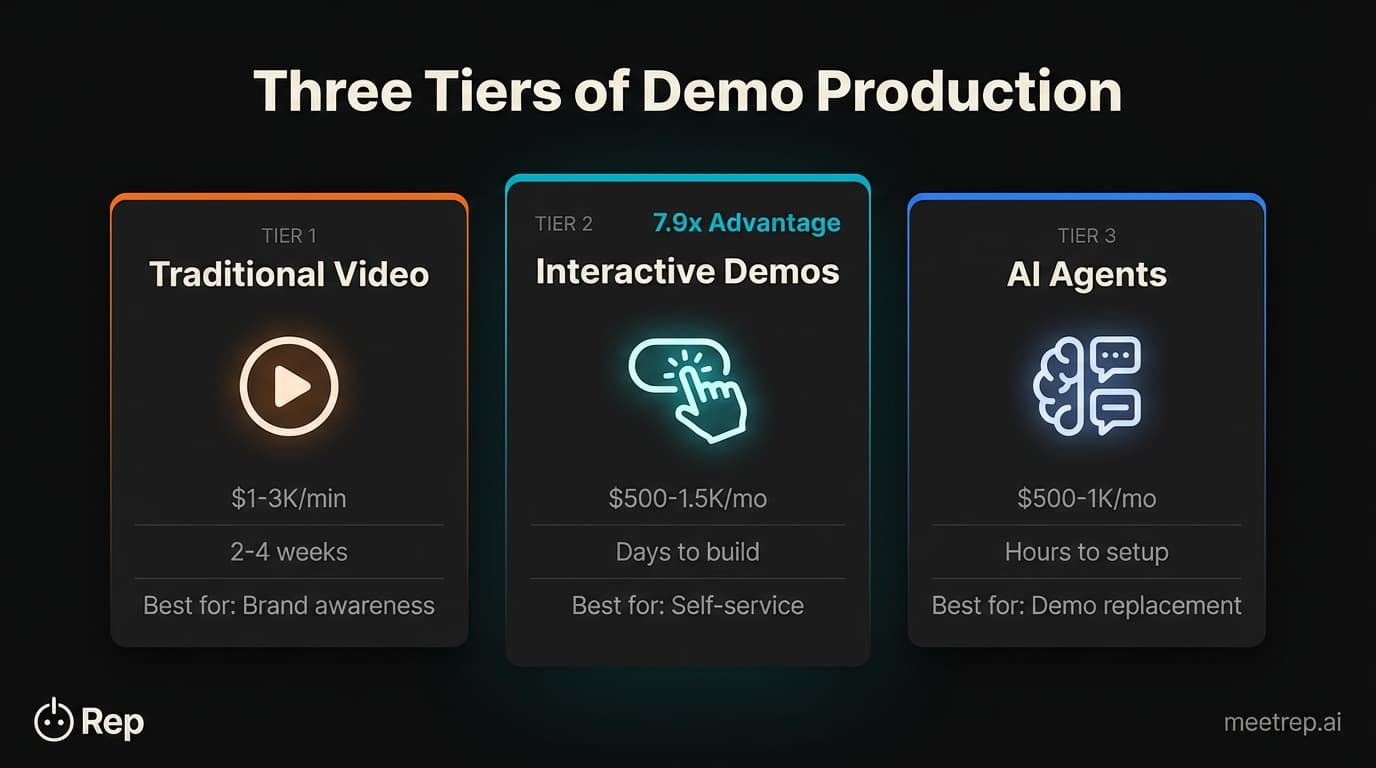
Not all demo content is the same. I think of demo production in three tiers, and the mistake most teams make is trying to force one tier to do everything.
Tier 1: Traditional Linear Video
This is what most people picture when they hear "demo video production." A recorded, edited video that plays the same way for every viewer.
Best for: Brand awareness, social media, email nurture sequences, YouTube content
Typical cost:$1,000-$3,000 per finished minute for professional production. A quality 3-minute product overview runs $5,000-$10,000 or more.
Timeline: 2-4 weeks from concept to final delivery
The tradeoff: Beautiful and polished, but completely static. Can't adapt to what a specific prospect cares about. Can't answer questions. Works well for top-of-funnel awareness, poorly for evaluation-stage buyers.
Tier 2: Interactive Click-Through Demos
Platforms like Navattic, Storylane, and Walnut let you create self-guided product tours. Prospects click through at their own pace, exploring the features they care about.
Best for: Website product pages, ungated self-service evaluation, sales enablement leave-behinds
Typical cost: SaaS subscription, usually $500-$1,500/month for team plans
Timeline: Days to configure, not weeks
The results speak for themselves: Interactive demos achieve 60% completion rates compared to roughly 40% for passive video. And conversion? Factors.ai found interactive demos convert at 24.35% versus 3.05% for traditional content—a 7.9x improvement.
Tier 3: Autonomous AI Agents
This is the newest category, and it's where I've focused with Rep. Instead of a recording or a click-through, an AI agent joins a video call, shares its screen, navigates your actual product, and has a real conversation with the prospect.
Best for: Replacing or supplementing SDR demo calls, 24/7 demo availability, handling technical Q&A at scale
Typical cost: SaaS subscription, usually $500-$1,000/month
Timeline: Hours to days for initial setup (knowledge upload and playbook validation)
What makes this different: The AI adapts in real-time. It answers questions using your knowledge base. It shows different features based on what the prospect asks about. It's not a recording pretending to be interactive—it's an actual conversation.
Key Insight: These three tiers aren't a ladder where "higher is better." They're different tools. Brand awareness campaigns still need polished video. Self-service evaluation needs interactive tours. Replacing the capacity constraints of your SDR team needs something that can actually converse. Pick based on your goal, not based on what sounds most innovative.
Traditional Demo Video Production: The Complete Workflow
If you're working with a demo video production company or building videos in-house, here's the standard process. I'll be direct about where teams typically waste time and money.
1. Define Your Target Audience
Who's watching this? A technical buyer evaluating integration capabilities needs a completely different video than a VP of Sales looking for ROI justification. Get specific: job title, technical level, stage in buying journey, top 3 questions they have.
2. Set Clear Objectives
What should happen after someone watches this? Be honest. A homepage overview video has a different job than a feature deep-dive for late-stage prospects. One video can't do everything.
3. Write a Compelling Script
The script is where most demo videos fail. The common mistake is listing features. Nobody cares about your features. They care about their problems.
Structure that works:
- Hook with a pain point (first 10 seconds)
- Show how the problem gets solved (not how the feature works)
- Keep it under 150 words per minute of video
- End with a single, clear next step
4. Create a Storyboard
Map out every screen, transition, and visual. This catches problems before you're in the editing room saying "wait, we didn't record that screen."
5. Set Up Recording
For app demo video production, you need:
- Screen recording software (Camtasia, ScreenFlow, or even Loom for simple walkthroughs)
- A decent microphone—audio quality matters more than video quality
- A clean demo environment with realistic (but not real) data
6. Record the Demonstration
Record in segments, not one continuous take. You'll thank yourself in editing. Move slowly—viewers need time to process what they're seeing.
7. Edit and Enhance
Add text callouts to highlight key actions. Background music (subtle). Smooth transitions. Cut the "ums" and dead air. This is where a demo video production company earns their fee—editing is time-intensive.
8. Optimize and Distribute
Export at appropriate quality for each channel. Embed on your site with a clear CTA. Track completion rates and drop-off points.
Common mistake: Spending $15,000 on a beautiful demo video, then embedding it with a play button that 80% of visitors never click. If the video isn't above the fold, autoplaying (muted), or gated behind something valuable, most people won't watch it.
How Much Does Demo Video Production Actually Cost?
Let's get specific about money. This is the table I wish I'd had when I was evaluating options.
| Production Approach | Cost Model | Typical Investment | Timeline | Best For |
|---|---|---|---|---|
| DIY Screen Recording | One-time (tools) | $0-$300 for software | Hours | Internal training, quick feature updates |
| Freelance Production | Per-project | $1,000-$5,000 per video | 1-2 weeks | Simple product overviews |
| Professional Agency | Per minute | $1,000-$3,000/minute finished | 3-4 weeks | Brand videos, flagship content |
| High-End Production | Per project | $20,000-$50,000+ | 4-8 weeks | TV/advertising quality |
| Interactive Platforms | Monthly SaaS | $500-$1,500/month | Days | Website, sales enablement |
| AI Agent Platforms | Monthly SaaS | $500-$1,000/month | Hours-days | Demo call replacement |
The hidden costs that blow budgets:
- Revisions: Most agencies include 1-2 rounds. Additional rounds cost extra.
- Updates: Product changes? Traditional video needs a reshoot. Budget for quarterly refreshes.
- Demo environment maintenance: Sales engineers spend 21 days per year just maintaining demo environments.
What we learned building Rep: The subscription model changes the math entirely. With traditional production, every update is a new project with a new invoice. With SaaS platforms—whether interactive or AI-powered—you can iterate constantly without incremental cost. That matters when your product ships updates every two weeks.
What Makes a Demo Video Actually Convert?
I've seen plenty of expensive demos that don't move pipeline. And I've seen scrappy videos that drive millions in revenue. The difference isn't budget. It's these factors:
1. It answers the question they're actually asking
89% of consumers say video quality impacts brand trust. But "quality" doesn't mean Hollywood production values. It means the video respects their time by directly addressing what they need to know.
2. It shows, not tells
Only 30% of SaaS companies actually show their real UI in demo videos. The rest use animations, mockups, or abstracted screenshots. That's a miss. Prospects want to see what they're actually going to use.
3. It's the right length for the context
For website visitors scanning: 60-90 seconds max. For prospects evaluating: 2-3 minutes. For technical deep-dives: longer is fine if it's specific.
Wistia's research shows instructional content gets 74% engagement for 3-5 minute videos. Generic promotional videos drop to 43%. The difference is whether you're teaching something useful or just talking about yourself.
4. It ends with an obvious next step
So they watched your demo. Now what? If your video ends with a logo and fade-to-black, you've wasted the moment of highest intent. Include a specific CTA—and make sure it matches where they are in the buying process.
The Case for Ungating Your Demos
I know what you're thinking. "If I give away the demo, how will I capture leads?"
Here's my take: that thinking is backwards.
The data is clear. 88% of software buyers won't book a meeting without seeing the product first. If your demo is locked behind a form, you're not protecting your pipeline. You're killing it. Those prospects aren't filling out your form and waiting for a call. They're going to your competitor who shows them the product immediately.
And 46% of sales teams skip demoing complex features because they're worried something will break. So even the people who do get through to a live demo often don't see your most powerful capabilities.
Ungating doesn't mean abandoning qualification. It means qualifying based on behavior rather than form fills. Someone who watches 80% of your demo and clicks on the pricing section three times? That's a qualified lead. Someone who filled out a form for a gated asset and never engaged again? That's a database entry, not a prospect.
Key Insight: The shift to ungated, self-service demos isn't about being generous with your content. It's about meeting the 61% of buyers who actively prefer to evaluate products without talking to sales. Either you make that possible, or they evaluate someone else.
When to Use AI-Powered Demo Solutions
Let me be direct about where autonomous AI demos make sense—and where they don't.
AI demos work well when:
- You have high volume of inbound demo requests that overwhelm your SDRs
- Your product can be demonstrated through browser navigation
- Prospects have technical questions that can be answered from documentation
- You need 24/7 availability across time zones
- Initial demos are relatively standardized before custom deep-dives
AI demos struggle when:
- Every deal requires completely custom discovery and scoping
- Your product doesn't have a demo environment (hardware, physical goods)
- The demo is primarily about relationship-building, not product understanding
- Compliance requirements prevent AI from accessing the necessary systems
At Rep, we built specifically for that first category. The AI joins video calls, shares its screen, navigates your actual product interface, and answers questions using your knowledge base. It's not a chatbot with canned responses—it's an agent that can show and tell simultaneously.
But I'm not going to pretend it replaces your top AE doing a strategic demo for a million-dollar deal. It replaces the repetitive, standardized demos that consume SDR time and create scheduling bottlenecks. Different problems, different solutions.
Real Results: What Demo Investments Actually Produce
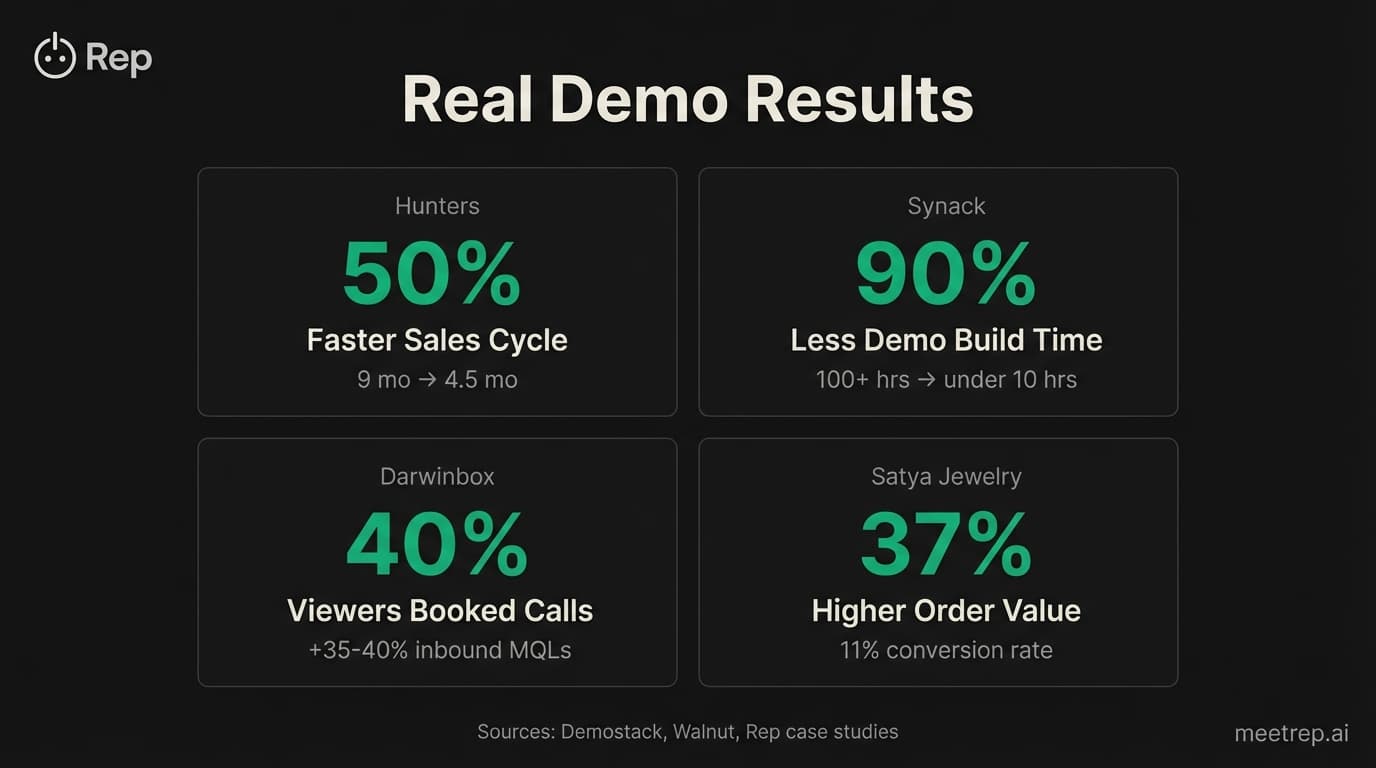
Case studies matter more than theory. Here's what actual companies achieved:
Hunters (Cybersecurity) implemented sandbox demos with Demostack. They had 9-month sales cycles for both enterprise and SMB. After implementation? Sales cycle cut by 50%—down to 4.5 months for both segments. Same product. Faster close.
Synack (Penetration Testing) was losing 20% of their work week to demo building and maintenance. One full day per week per solution architect, just keeping demo environments functional. After switching to automated demo tools? 90% reduction in demo build time—from 100+ hours to under 10.
Darwinbox (HR Tech) previously took 3-4 weeks to create each custom demo. After implementing Walnut interactive demos, creation dropped to minutes. Result: 40% of demo viewers booked sales calls, and inbound MQLs increased 35-40%.
Satya Jewelry (E-commerce) used Rep AI to handle product education and storytelling—explaining the meaning behind handcrafted pieces. Result: 37% increase in average order value, 11% conversion rate.
The pattern across all of these: faster production, more consistent quality, better conversion. The specific tool varies based on use case. The direction is consistent.
Building Your Demo Video Strategy
Here's how I'd approach this if I were starting from scratch:
Step 1: Audit what you have
What demos exist today? Where are they used? What are completion rates and conversion rates? Most teams can't answer these questions, which means they're flying blind.
Step 2: Map demos to buyer journey stages
| Stage | Content Goal | Best Format |
|---|---|---|
| Awareness | "What is this category?" | Polished brand video (60-90 sec) |
| Interest | "What does the product do?" | Product overview video (2-3 min) |
| Evaluation | "How does it actually work?" | Interactive click-through demo |
| Decision | "Will it solve my specific problem?" | Personalized demo or AI agent conversation |
Step 3: Start with the highest-impact gap
You probably don't need all four at once. Where are prospects dropping off? That's where to focus first.
Step 4: Build measurement from day one
Track: completion rates, drop-off points, CTA clicks, downstream conversion. If you can't measure it, you can't improve it.
The demo landscape has fundamentally shifted. Buyers want to see your product before they'll talk to you—61% prefer avoiding sales conversations entirely during evaluation. That's not a trend to fight. It's a reality to build for.
My recommendation: start with one approach that addresses your biggest gap. If nobody can see your product without scheduling a call, fix that first. If you're drowning in repetitive initial demos, that's a different problem with a different solution.
At Rep, we built for teams who need to scale demo conversations without scaling headcount. But whatever approach you choose, the worst option is doing nothing while your competitors make their products accessible to the buyers who refuse to wait.

Nadeem Azam
Founder
Software engineer & architect with 10+ years experience. Previously founded GoCustomer.ai.
Nadeem Azam is the Founder of Rep (meetrep.ai), building AI agents that give live product demos 24/7 for B2B sales teams. He writes about AI, sales automation, and the future of product demos.
Frequently Asked Questions
Table of Contents
- Why Demo Videos Have Become Non-Negotiable
- The Three Tiers of Demo Production in 2026
- Traditional Demo Video Production: The Complete Workflow
- How Much Does Demo Video Production Actually Cost?
- What Makes a Demo Video Actually Convert?
- The Case for Ungating Your Demos
- When to Use AI-Powered Demo Solutions
- Real Results: What Demo Investments Actually Produce
- Building Your Demo Video Strategy
Ready to automate your demos?
Join the Rep Council and be among the first to experience AI-powered demos.
Get Early AccessRelated Articles
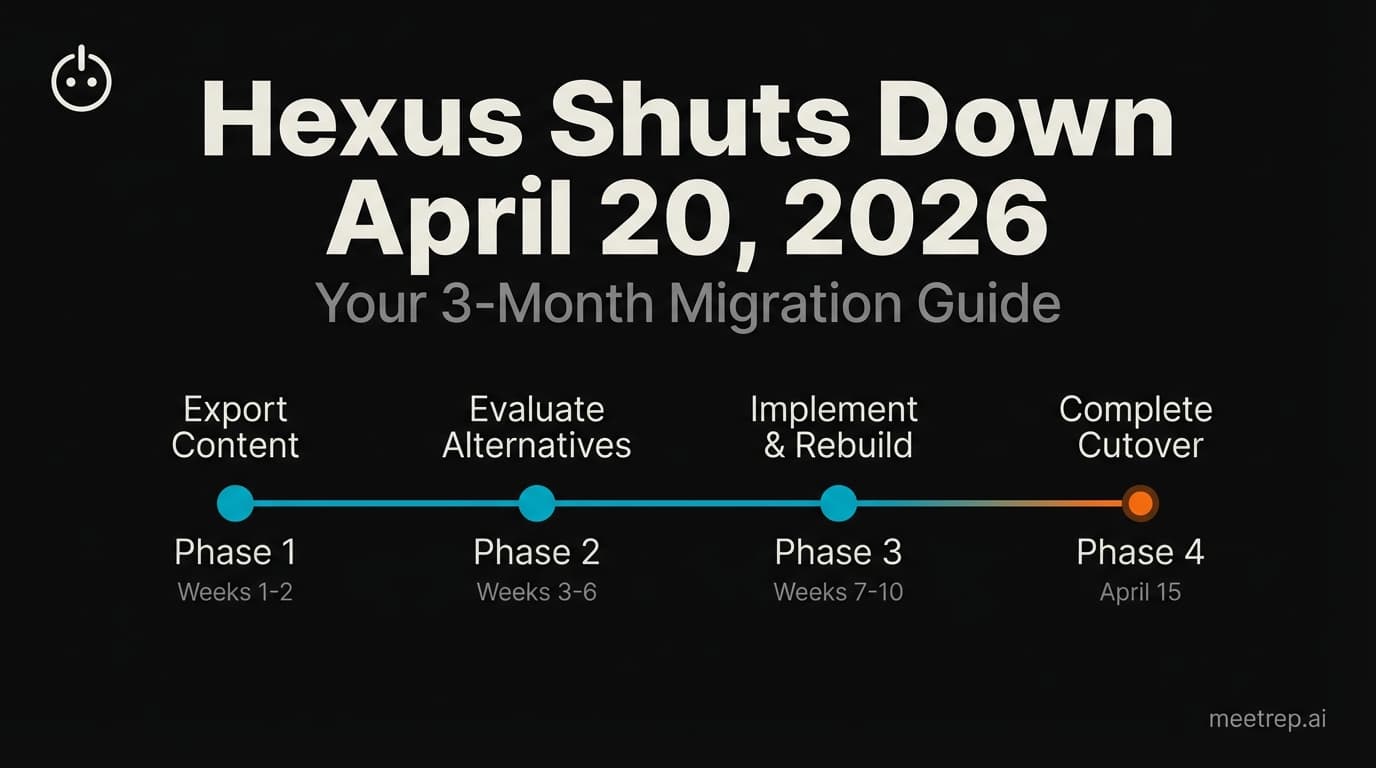
Hexus Acquired by Harvey AI: Congrats & What It Means for Demo Automation Teams
Hexus is shutting down following its acquisition by Harvey AI. Learn how to manage your migration and discover the best demo automation alternatives before April 2026.
Why the "Software Demo" is Broken—and Why AI Agents Are the Future
The traditional software demo is dead. Discover why 94% of B2B buyers rank vendors before calling sales and how AI agents are replacing manual demos to scale revenue.
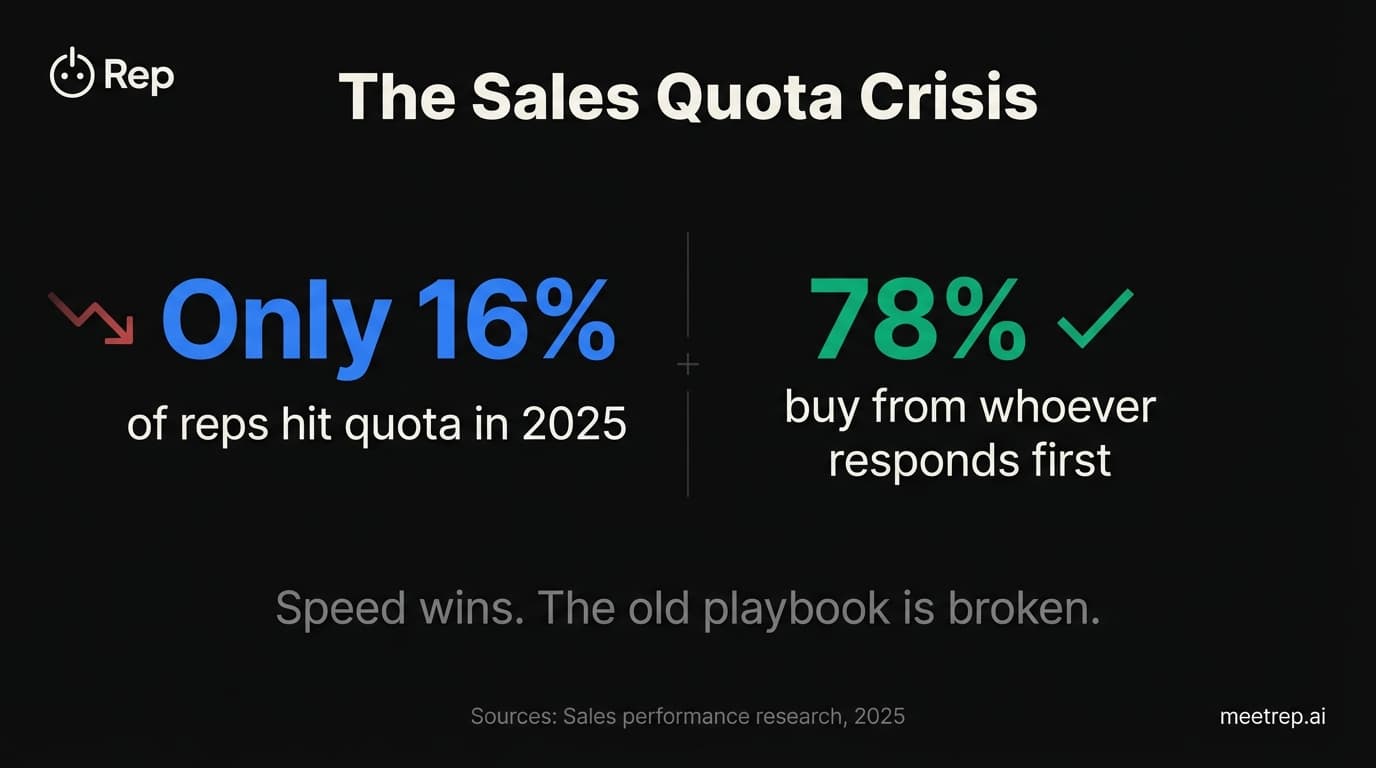
Why Autonomous Sales Software is the Future of B2B Sales (And Why the Old Playbook is Dead)
B2B sales is at a breaking point with quota attainment at 46%. Discover why autonomous 'Agentic AI' is the new standard for driving revenue and meeting the demand for rep-free buying.