Cybersecurity Demo Guide: How Sandboxed Demos Cut Sales Cycles in Half

Executive Summary
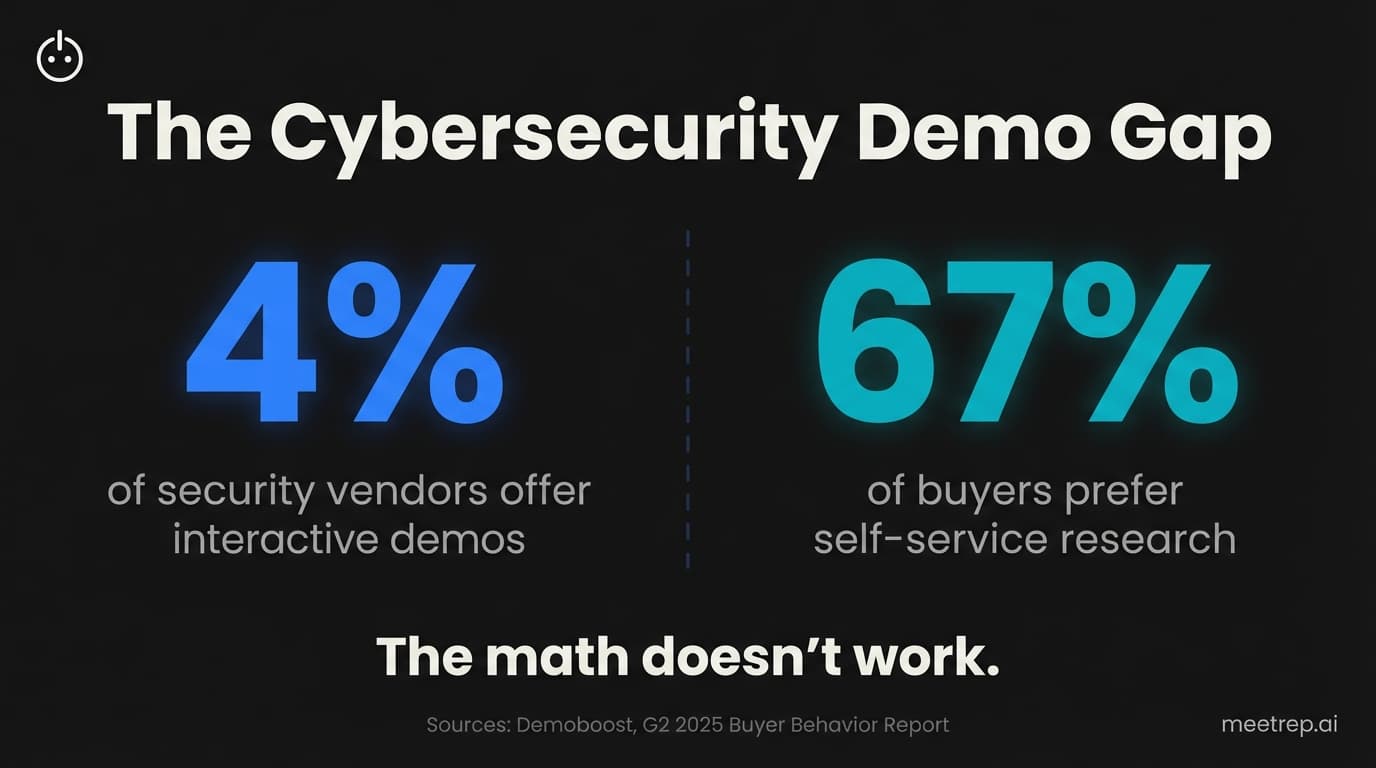
- Only 4% of cybersecurity vendors offer interactive demos—that's leaving money on the table
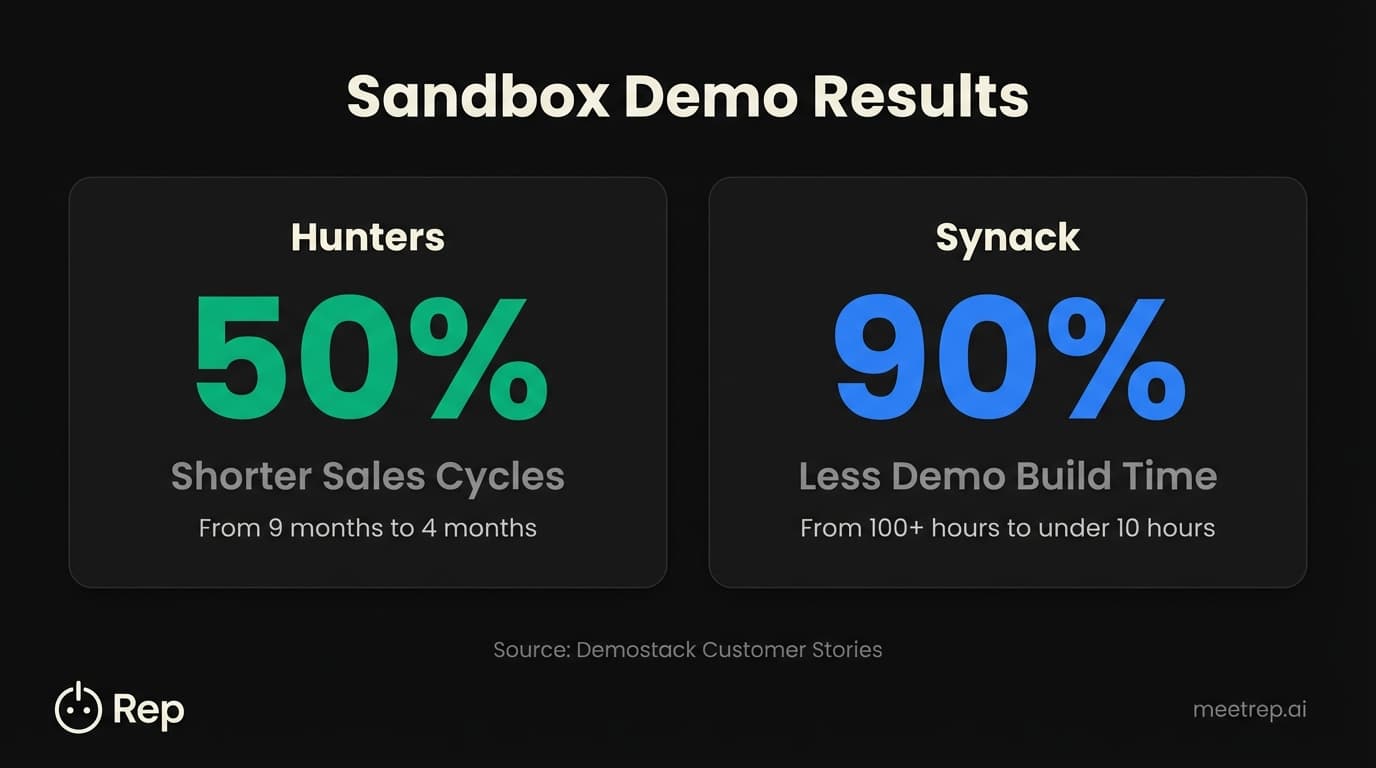
- Sandbox demos can cut sales cycles by 50% (Hunters went from 9 months to 4 months)
- The average security purchase involves 13 stakeholders, and 37% include the CFO
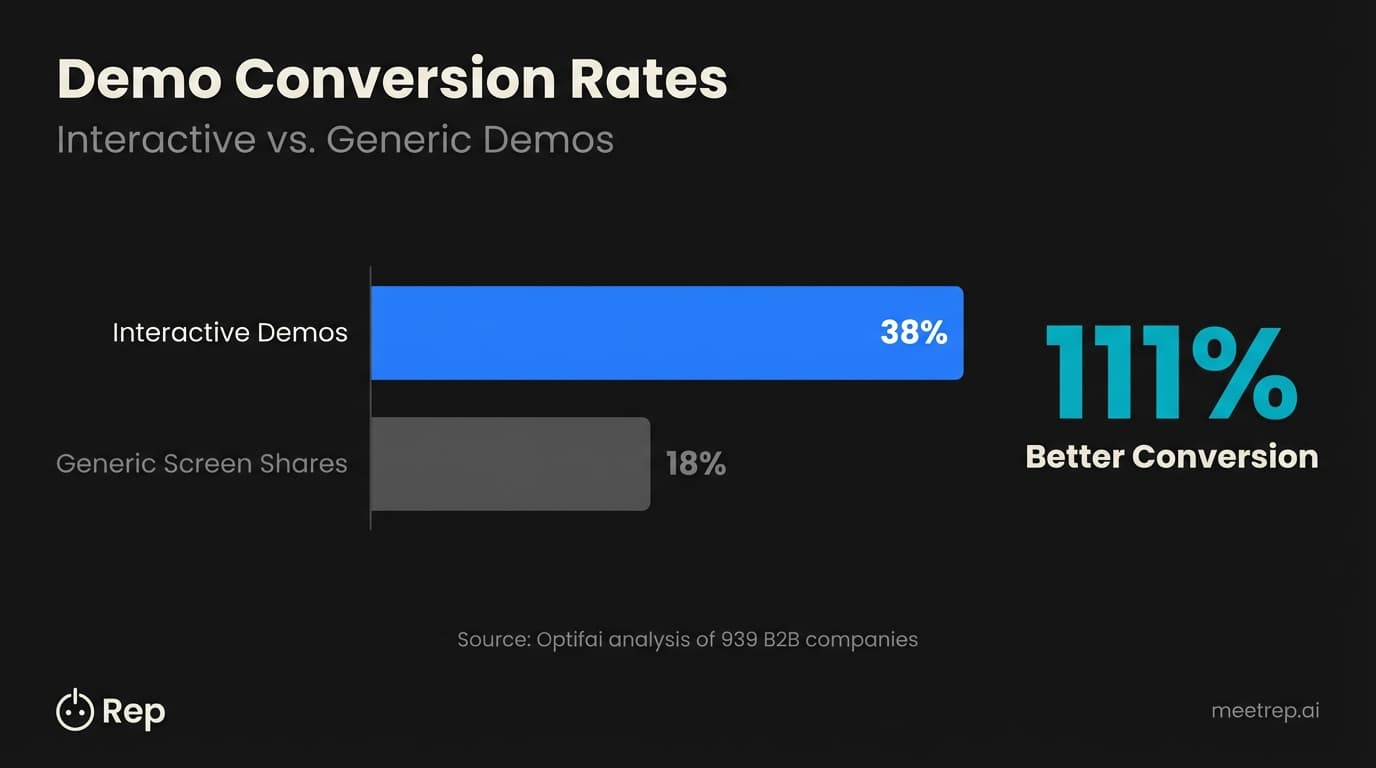
- Interactive demos convert at 38% vs 18% for generic screen shares—111% better
- Your SEs shouldn't spend 20% of their week building demo environments
Here's a stat that should make every cybersecurity sales leader uncomfortable: only 4% of security vendors offer interactive demos on their websites, according to Demoboost's research. Meanwhile, 67% of buyers prefer to research on their own before ever talking to sales.
That math doesn't work.
I've spent years building sales automation products—first at GoCustomer.ai, now at Rep. And the pattern I keep seeing in cybersecurity sales is this: vendors treat product access like a privilege to be earned, while buyers treat it like table stakes. The result? Nine-month sales cycles that crush pipeline velocity and burn out your best SEs.
This guide breaks down how to fix your cybersecurity demo strategy using sandboxed environments—with real data from companies that have actually done it.
Why Cybersecurity Sales Cycles Are Painfully Long
Cybersecurity sales cycles average 6-12 months, and enterprise deals often stretch beyond that. The reason isn't just "complex products." It's a broken buying process that neither side has fixed.
Start with the stakeholder math. Forrester's 2024 research found that the average B2B purchase now involves 13 stakeholders. For cybersecurity specifically, TechnologyAdvice reports that 60% of large enterprises have 6+ stakeholders in tech buying decisions—and 37% include CFO involvement. That's a lot of calendars to coordinate.
But here's what makes cybersecurity uniquely painful: the technical validation gauntlet.
Every serious buyer wants a POC. And POCs in security aren't quick. According to Demoboost, "POVs/POCs can be a huge drain on resources and this demand stretches the already overstretched presales teams further." Your SEs become bottlenecks. Your deal velocity tanks. And 58% of IT professionals say their buying process takes 3+ months—before they even reach a decision.
The Data:63% of B2B buyers take 3+ months to decide, and sales cycles for enterprise-focused startups jumped 36% between 2022 and 2023 according to Tomasz Tunguz's research via Capchase.
The problem compounds when you consider what happens on the vendor side. Traditional demo environments take 4-8 weeks minimum to configure—some teams report 3 months. Auth tokens expire. Products change. Demos break at the worst possible moment.
I've watched this pattern play out dozens of times. The SE scrambles to rebuild a broken demo environment. The prospect reschedules. Momentum dies. Three weeks later, you're starting the conversation over.
What Is a Sandboxed Cybersecurity Demo?
A sandboxed cybersecurity demo is an isolated demonstration environment that mirrors your actual product without connecting to production systems or real customer data. Prospects interact with realistic functionality—threat detection, dashboard workflows, alert management—in a controlled space where nothing they do can affect live operations.
This matters for security products specifically because of what's at stake.
Think about what you're asking prospects to do with a live demo. You're inviting them into an environment that handles threat intelligence, vulnerability data, maybe even incident response workflows. The security implications are obvious. And for regulated industries—healthcare, finance, government—it's often a non-starter.
Sandbox demos solve this by creating separation:
| Aspect | Sandbox Demo | Live Environment Demo |
|---|---|---|
| Data Security | Zero risk—uses dummy data | Potential data exposure risk |
| Stability | Consistent, controlled | Subject to real-time changes |
| Customization | Easy—edit text, logos, datasets | Limited customization |
| Engineering Dependency | None after setup | Often requires SE support |
| Scalability | Unlimited instances | Limited by infrastructure |
| Best For | Leave-behinds, self-service, partner enablement | Technical validation, POCs |
The tradeoff is authenticity. A sandbox can't prove that your threat detection catches real zero-days in a live environment. But here's my take: most prospects don't need that proof in the first conversation. They need to understand the product. They need to see if the interface makes sense. They need to show their colleagues something concrete.
Key Insight: Sandbox demos answer "Do I understand what this does?" Live POCs answer "Does this work in my environment?" Conflating the two stages is why demos take so long to schedule—you're trying to solve both problems at once.
The Business Case: What Sandbox Demos Actually Deliver
Let's talk numbers. Because "better demos" isn't a budget line item. Revenue impact is.
Hunters, a SIEM/SOC platform, cut their sales cycle from 9 months to 4 months using sandbox demos—a 50% reduction. Their VP of Sales, Hanan Levin, said it directly: "Demostack's Sandbox helped us cut the sales cycle by 50%."
That changes your pipeline math completely.
Synack, a pentesting platform, saw a different kind of win. Their demo build time dropped from 100+ hours to under 10 hours—a 90% reduction. Tim Nordvedt, their Solution Architect, noted they "previously spent 20% of work week on demo building & maintenance." That time now goes to actual selling.
And the conversion data backs this up broadly. Optifai's analysis of 939 B2B companies found that interactive demos where prospects control the experience convert at 38%—compared to 18% for generic screen shares. That's 111% better.
The Data: The demo automation market was valued at $1.5B in 2023 and is projected to hit $6.8B by 2032—an 18.2% CAGR. The market sees where this is going.
Why does this work? A few reasons:
First, time-to-product collapses. When a prospect can click a link and see your product immediately—no scheduling, no waiting—they stay engaged. The G2 2025 Buyer Behavior Report found that 67% of buyers prefer to research on their own before engaging sales. Give them something to research.
Second, you stop losing deals to scheduling friction. My hot take: most "lost" deals in cybersecurity aren't lost to competitors. They're lost to internal prioritization shifts while waiting for a demo slot. The prospect's budget gets reallocated. Their champion leaves. Their board changes priorities. A sandbox demo keeps momentum alive.
Third, you enable the entire buying committee. With 13 stakeholders involved, you can't demo personally to each of them. But you can send a link. Cyrebro, a SOC platform, enabled 200+ partner users to demo independently. Sarah Goldstein, their Head of Product Marketing, said the experience was "99% indistinguishable from our actual platform."
Five Questions Every Cybersecurity Demo Must Answer
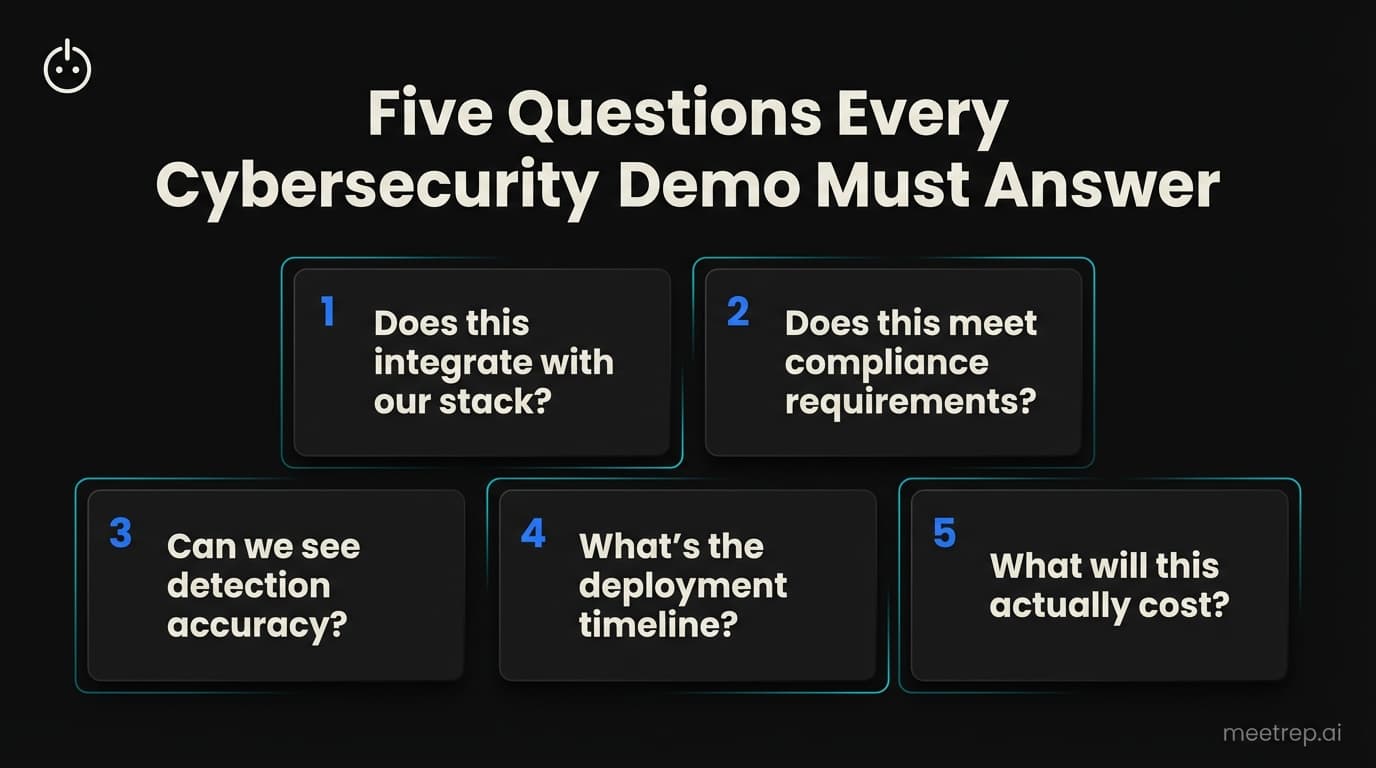
Whether you're demoing live or through a sandbox, your prospects are evaluating you against a mental checklist. Fail any of these, and the deal stalls.
I've seen this play out at GoCustomer and now at Rep: the deals that close fastest are the ones where the demo explicitly addresses these five questions.
1. Does this integrate with our existing stack?
The average enterprise runs 45 cybersecurity tools, according to Gartner's 2025 survey. Your product is joining a crowded stack. Prospects need to visualize how it fits—SIEM integration, SOAR workflows, EDR connections, whatever matters to them.
Key Insight: The most effective demos I've seen don't just show "we integrate with Splunk." They show data flowing between systems. That visual proof beats a features checklist every time.
2. Does this meet our compliance requirements?
SOC 2, ISO 27001, HIPAA, PCI DSS, FedRAMP—depending on your prospect's industry, compliance isn't optional. And security buyers are skeptical of claims. G2's 2024 report found that while 81% of buyers claim to consider vendor security incidents in their decisions, 48% still purchase without completing a full security assessment. That gap represents risk anxiety they'll project onto you.
3. Can we see detection accuracy in action?
For threat detection, XDR, or SIEM products, this is the core question. Prospects have been burned by products that "performed well during a PoC" but "don't deliver similar results once deployed," as Stellar Cyber documented in their POC guidance.
Don't oversell. "100% detection" claims are red flags to sophisticated buyers. Show realistic scenarios with honest results.
4. What's the actual deployment timeline?
This is where sandbox demos shine. You can show a realistic implementation path without the pressure of a live POC timeline. Be specific: "Most customers are live in 4-6 weeks, with full integration at 90 days."
5. What will this actually cost?
Total cost of ownership, not just license fees. 37% of cybersecurity purchases involve the CFO. They're thinking about implementation costs, training, ongoing maintenance, and what happens when headcount changes.
Building a Demo Program That Scales Without Burning Out Your SEs
Here's the uncomfortable truth about SE capacity: you can't hire your way out of the demo bottleneck.
SailPoint, an identity security company with 150+ SEs and 200+ integrations, found that their SEs were spending over an hour on pre-demo prep. That's unsustainable. They moved to a structured demo library approach and cut that time to minutes.
So how do you actually build this?
Start with a demo library, not a single demo. Different prospects need different stories. A CISO cares about risk reduction and board reporting. A SOC analyst cares about workflow efficiency and alert fatigue. A CFO cares about ROI and TCO. Build demos for each persona and use case.
Enable leave-behinds religiously. After every call, your prospect should have something to share internally. ColorTokens, a zero trust platform, found this approach delivered 2-3x faster time to value and 10x faster demo delivery. Venky Raju, their Field CTO, noted the "ability to build more demos than the videos we were creating."
Think about 24/7 availability. Your prospects don't work 9-5. They research at 11pm. They share links on weekends. If your demo requires a live SE, you're limiting yourself to business hours in your timezone.
This is where autonomous demo technology comes in. At Rep, we built an AI voice agent that joins video calls, shares its screen, and walks prospects through products in real-time—using stored demo credentials in isolated environments. The agent answers questions from a trained knowledge base, and the demo runs whenever the prospect clicks the link.
Why we built Rep this way: Security demos need isolation. We designed Rep to operate entirely within demo environments—no access to production systems, no customer data exposure. The AI navigates using stored credentials in sandboxed instances. It's the scalability of self-service with the interactivity of a live conversation.
Partner enablement is the multiplier. If you have a channel program, your partners need to demo your product. They don't have your SEs. Give them sandbox access with training, and suddenly your demo capacity multiplies. Cyrebro's 200+ partner users aren't Cyrebro employees—they're extensions of the sales motion.
Common Mistakes That Kill Cybersecurity Demo Effectiveness
I've watched a lot of demos fail. Not because of product limitations. Because of avoidable execution mistakes.
Mistake #1: Treating every conversation like a POC. Early conversations should build understanding, not prove technical fit. If you're spinning up custom environments for every first call, you're overinvesting in prospects who haven't earned it yet. Sandbox demos first. POCs for qualified buyers.
Mistake #2: Ignoring multi-threading. With 13 stakeholders and 89% of B2B purchases crossing multiple departments, you cannot rely on a single champion to carry your message. Your demo content needs to be shareable. Your leave-behinds need to work for audiences who weren't on the call.
Mistake #3: Hiding behind "complexity." I hear this constantly: "Our product is too technical for self-service demos." Maybe. But according to Demoboost, "most of cybersecurity is in need of scaling presales or enabling sales teams to participate in demonstrating the product." If your AEs can't do basic demos, that's a training problem, not a product problem.
Common mistake: Companies hide demo access behind "request a demo" forms with 3-week response times—while their competitors offer immediate product access. In 2025, that's competitive malpractice.
Mistake #4: Demo environments that break. Nothing destroys credibility faster than a demo that doesn't work. Scott Taschler captured this perfectly on LinkedIn: "Nothing brings a presentation to a halt more quickly, or awkwardly, than a demo that doesn't behave the way it's supposed to." Sandbox environments solve this. They're stable, controlled, and don't depend on production systems behaving correctly.
Mistake #5: No post-demo follow-up with substance. The demo ends. You send a "great meeting" email. Nothing happens. Instead: send the sandbox link. Send relevant case studies. Send a summary of what they said they cared about. Give them ammunition to sell internally.
Where This Goes Next
The gap between buyer expectations and vendor behavior is closing. Slowly, but it's closing. Buyers want self-service research paths. They want to evaluate products on their timeline. They want to share what they've learned with colleagues without scheduling another call.
The vendors who figure this out first will win disproportionate market share—especially in cybersecurity, where only 4% currently offer interactive demos.
My prediction: within 18 months, sandbox demos will be table stakes, not differentiators. The next wave is autonomous demos—AI agents that deliver live, interactive product experiences without human scheduling constraints.
That's what we're building at Rep. An AI sales agent that joins video calls, shares its screen, and walks prospects through your product in real-time. If you want to see what this looks like for cybersecurity demos, check out how it works.

Nadeem Azam
Founder
Software engineer & architect with 10+ years experience. Previously founded GoCustomer.ai.
Nadeem Azam is the Founder of Rep (meetrep.ai), building AI agents that give live product demos 24/7 for B2B sales teams. He writes about AI, sales automation, and the future of product demos.
Frequently Asked Questions
Table of Contents
- Why Cybersecurity Sales Cycles Are Painfully Long
- What Is a Sandboxed Cybersecurity Demo?
- The Business Case: What Sandbox Demos Actually Deliver
- Five Questions Every Cybersecurity Demo Must Answer
- Building a Demo Program That Scales Without Burning Out Your SEs
- Common Mistakes That Kill Cybersecurity Demo Effectiveness
- Where This Goes Next
Ready to automate your demos?
Join the Rep Council and be among the first to experience AI-powered demos.
Get Early AccessRelated Articles
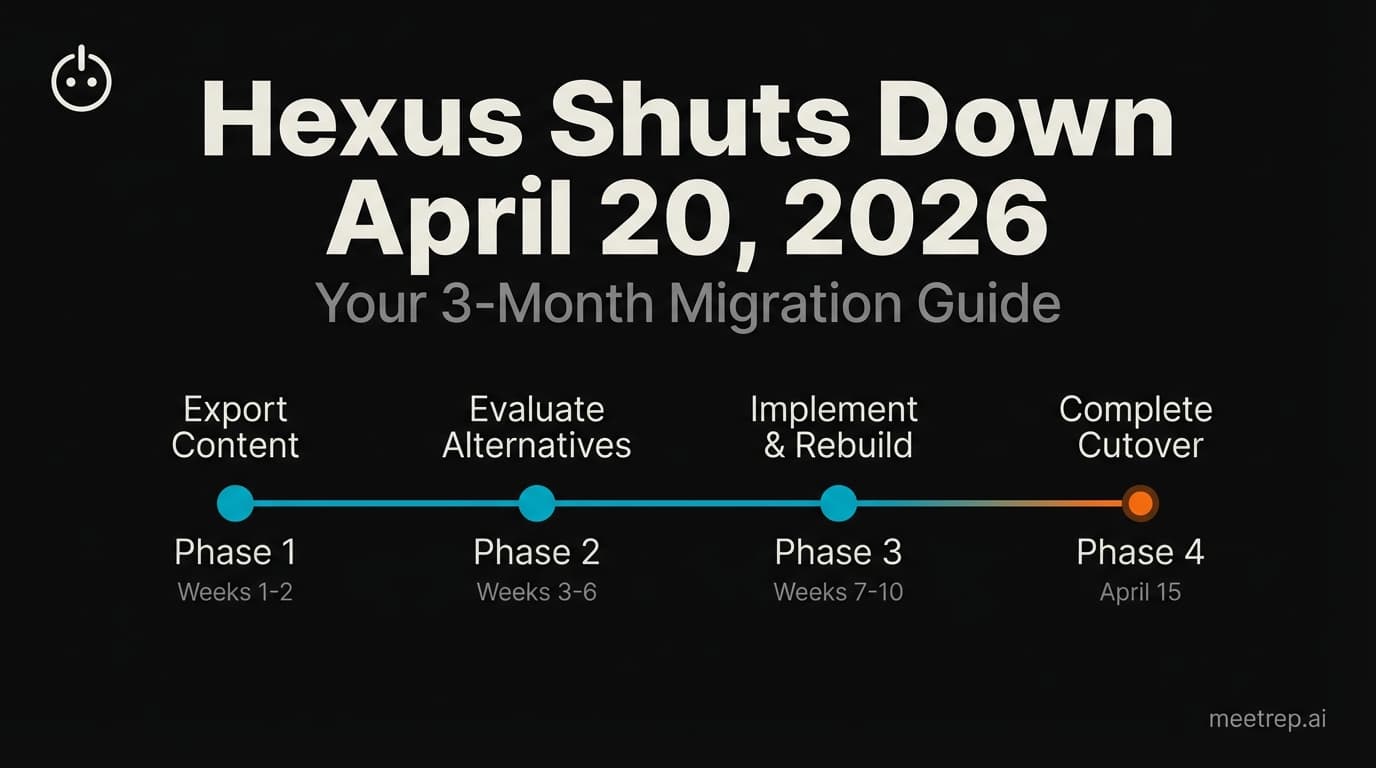
Hexus Acquired by Harvey AI: Congrats & What It Means for Demo Automation Teams
Hexus is shutting down following its acquisition by Harvey AI. Learn how to manage your migration and discover the best demo automation alternatives before April 2026.
Why the "Software Demo" is Broken—and Why AI Agents Are the Future
The traditional software demo is dead. Discover why 94% of B2B buyers rank vendors before calling sales and how AI agents are replacing manual demos to scale revenue.
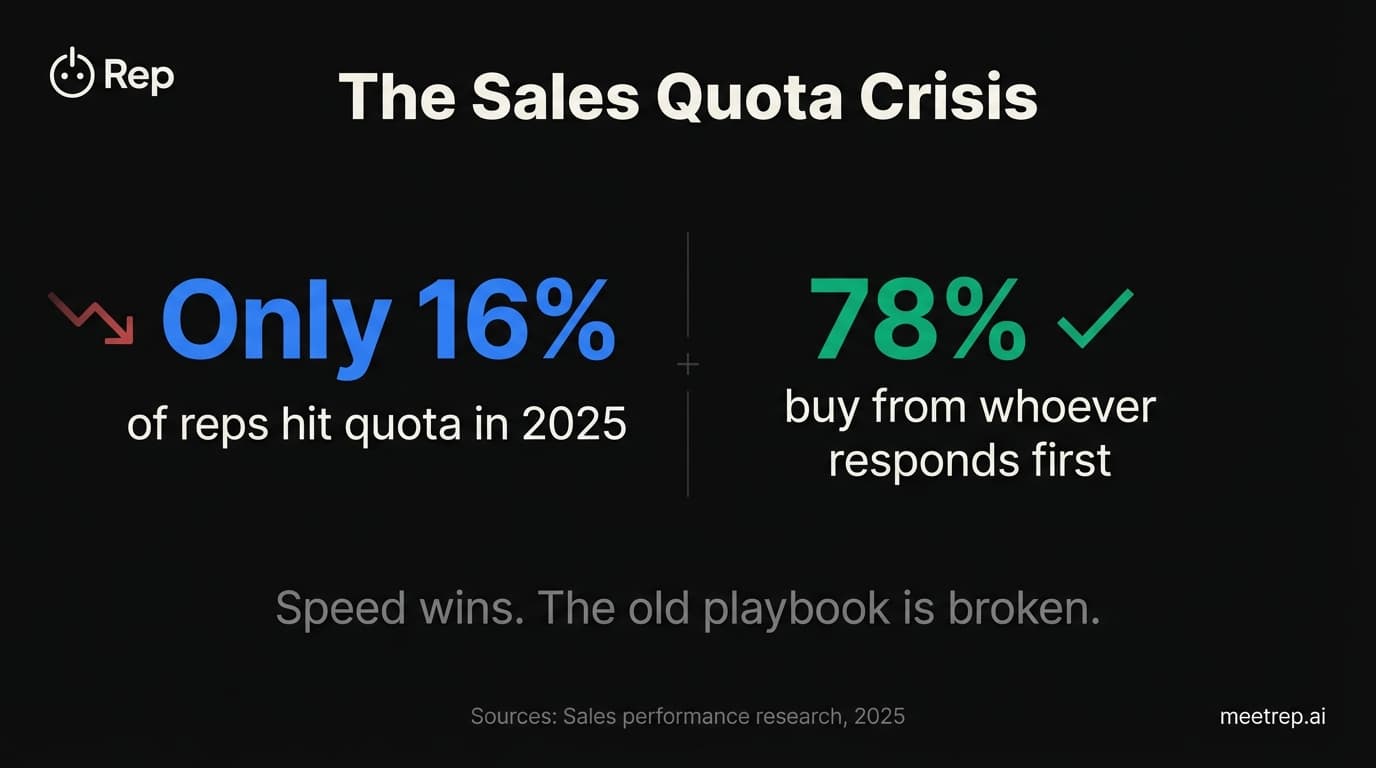
Why Autonomous Sales Software is the Future of B2B Sales (And Why the Old Playbook is Dead)
B2B sales is at a breaking point with quota attainment at 46%. Discover why autonomous 'Agentic AI' is the new standard for driving revenue and meeting the demand for rep-free buying.