Cold Email Software in 2026: An Honest Guide for SDR Teams

Executive Summary
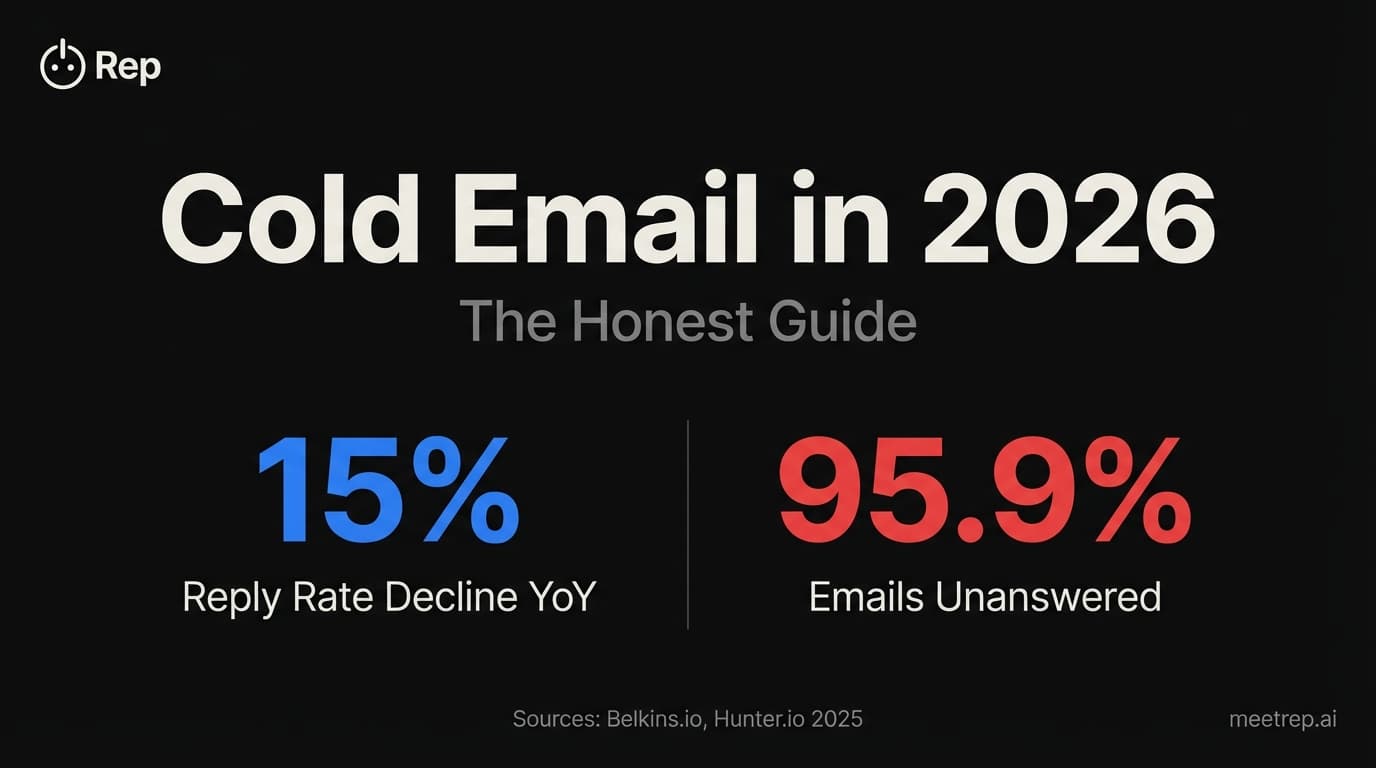
- Cold email reply rates average 5.1-5.8% in 2025—down 15% from last year
- Stop buying "one tool." Build a stack: Data layer + Sending layer + Conversion layer
- Deliverability is everything. 16.9% of emails never reach the inbox.
- The best teams focus on what happens AFTER the reply, not just getting one
- My top picks: Smartlead for agencies, Instantly for founders, Apollo for all-in-one, Clay for GTM engineers
Here's what frustrates me about cold email software guides: they're all written by vendors promoting themselves. Every tool claims to be "#1." Every comparison conveniently ranks the author's product at the top.
I'm not selling cold email software. I built GoCustomer.ai (a sales automation platform we exited in 2024) and now I'm building Rep (an AI demo platform). I've spent years in this space—not writing about it, but actually shipping products in it. So I have opinions. Strong ones.
The cold email market has changed dramatically. Reply rates dropped 15% year-over-year, falling from 6.8% to 5.8%. Open rates crashed from 36% to 27.7%. And 95.9% of cold emails go completely unanswered.
But here's the thing: cold email isn't dead. The old approach is.
What does cold email software actually do?
Cold email software is a specialized platform that sends personalized outreach emails to prospects you've never contacted before. These tools automate sequences, manage follow-ups based on recipient behavior, and optimize deliverability through features like email warmup and inbox rotation. The goal: get your message into the primary inbox and generate replies.
But let's be honest about what these tools can't do. They won't fix bad targeting. They can't make a weak offer compelling. And they definitely can't overcome the fundamental math problem: 95.9% of cold emails go unanswered.
That stat sounds brutal. It is. But here's the flip side that keeps cold email relevant: 73% of B2B buyers still prefer email over any other outreach form. More than phone calls. More than LinkedIn DMs. More than anything else.
So email works—when done right. The software you choose matters. But it matters less than most vendors want you to believe.
The Data: Targeted campaigns with fewer than 50 recipients achieve 5.8% reply rates. Campaigns with 1,000+ recipients? Just 2.1%. Source: Hunter.io 2025. The tool doesn't fix bad targeting.
Why your cold emails aren't working anymore
Let me be direct. If your cold email performance tanked in 2024, the problem probably isn't your software.
Three things changed:
Google and Yahoo got serious. In February 2024, both email providers started enforcing stricter authentication requirements. No SPF, DKIM, and DMARC? Your emails hit spam. Period. 54% of senders now use DMARC—up from 43% the year before. If you're in the other 46%, you're fighting with one hand tied behind your back.
Inboxes got more crowded. Everyone bought cold email software during the 2021-2023 boom. Now every prospect receives dozens of automated sequences daily. Open rates dropped from 36% to 27.7%. Not because email stopped working—because competition exploded.
AI made bad personalization easier. Every SDR now has ChatGPT writing their emails. The result? A flood of emails that sound like AI wrote them. Because AI did.
What we learned at GoCustomer: We saw customers obsess over subject line A/B tests while sending to garbage lists. The test results didn't matter because 16.9% of their emails never reached the inbox. Fix deliverability first. Optimize copy second.
The modern outbound stack: why one tool isn't enough
Here's my contrarian take: stop looking for one cold email tool to rule them all.
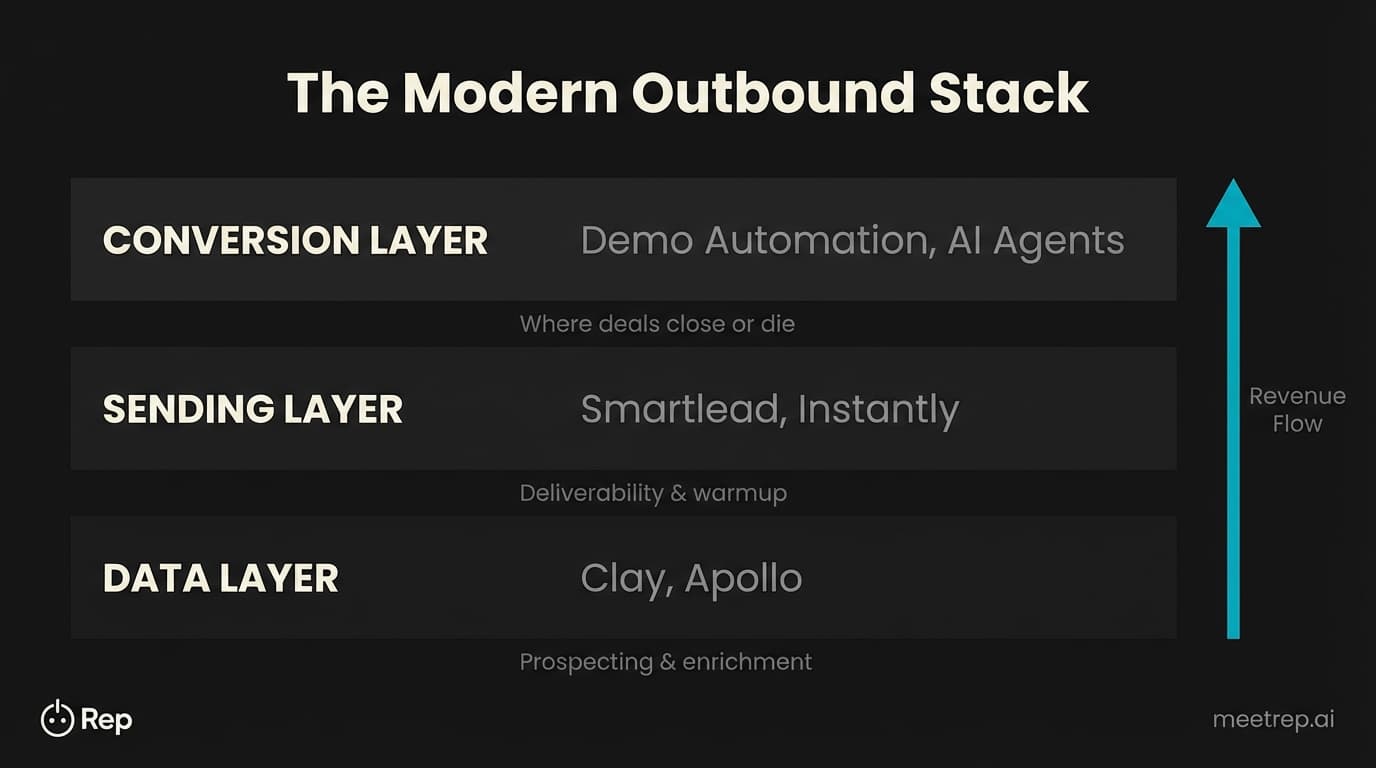
The market has unbundled. The teams crushing it in 2026 aren't using a single platform. They're building stacks with three distinct layers:
| Layer | Purpose | Example Tools | Why It's Separate |
|---|---|---|---|
| Data & Intelligence | Find and enrich prospects with buying signals | Clay, Apollo | Specialization in data quality and enrichment |
| Sending Infrastructure | Deliver emails to inboxes at scale | Smartlead, Instantly | Specialization in deliverability and warmup |
| Conversion | Turn replies into meetings and revenue | Demo automation, AI agents | Specialization in post-reply engagement |
Most comparison guides only cover the middle layer. That's a mistake.
The Data Layer is where Clay (valued at $3.1 billion as of December 2024) and Apollo dominate. Clay's waterfall enrichment pulls data from 50+ sources to maximize coverage. Apollo's built-in database of 275M+ contacts means you can prospect and send from one place. The rise of the "GTM Engineer" role—technical operators building automated revenue systems—is happening here.
The Sending Layer is where Smartlead and Instantly fight for market share. Both offer unlimited email accounts and built-in warmup. The battle is over deliverability infrastructure, not features.
The Conversion Layer is what everyone ignores. And it's where most campaigns actually fail.
The conversion gap: where cold email campaigns really fail
Here's the dirty secret: reply rate is a vanity metric.
Yes, really. Getting a reply is just the beginning. What happens next determines whether that reply becomes revenue.
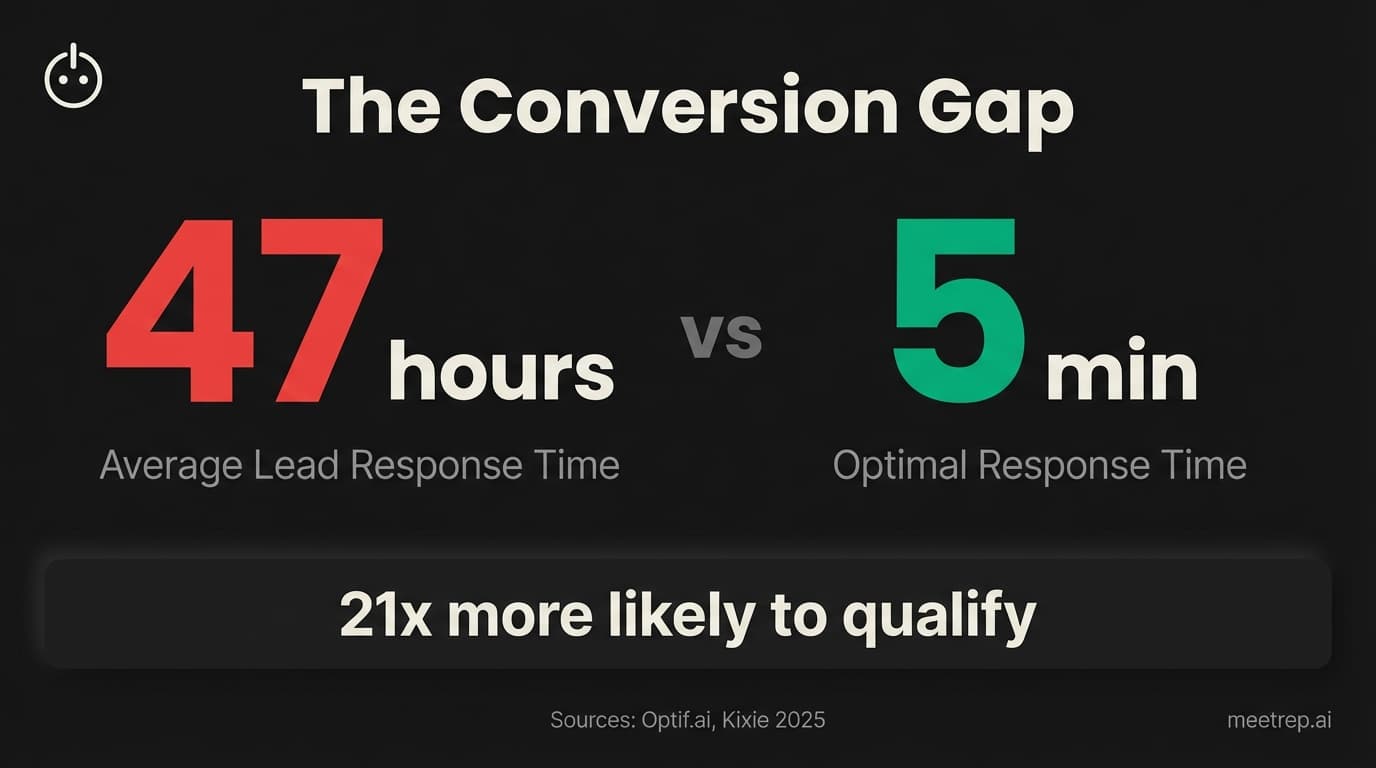
The Data:Average B2B lead response time is 47 hours. Almost two full days. But responding within 5 minutes makes you 21x more likely to qualify the lead. The gap between those numbers is where deals die.
Your cold email software generates a reply at 11 PM. Your prospect is interested. They want to see the product. What happens?
Traditional approach: "Great! Here's my Calendly link for next week."
That prospect has moved on by next week. They talked to your competitor who answered faster. They got distracted by something else. The urgency evaporated.
This is why I built Rep. When a prospect replies, they should be able to experience your product immediately—not wait days for a human's calendar to open up. An AI demo agent can engage the moment interest peaks, qualify the prospect, answer questions, and either book the meeting with the right rep or close the deal on the spot.
I'm biased, obviously. But the math doesn't lie: deals that extend beyond 50 days see win rates drop from 47% to roughly 20%. Speed matters more than most teams realize.
My recommendation: Don't evaluate cold email tools in isolation. Think about your full stack from first touch to closed deal. The sending infrastructure is just one piece.
Cold email software comparison: 8 tools ranked honestly
I've used or closely evaluated all of these. My criteria: deliverability, pricing transparency, actual user results (not marketing claims), and whether the tool fits a specific use case.
| Tool | Best For | Starting Price | Unlimited Mailboxes | Lead Database | G2 Rating | Notable Customer Result |
|---|---|---|---|---|---|---|
| Smartlead | Agencies | $39/mo | ✓ Yes | No | 4.7/5 | Wind Growth: 300% pipeline growth in 2.5 months |
| Instantly | Founders | $30/mo | ✓ Yes | Limited | 4.8/5 | AutoUp: 147 opportunities in one day |
| Saleshandy | Budget teams | $25/mo | ✓ Yes | 700M+ contacts | 4.6/5 | Best value for unlimited sending |
| Apollo | All-in-one | $49/mo | Limited | 275M+ contacts | 4.8/5 | Cyera: 75% more meetings with 50% less effort |
| Lemlist | Personalization | $32/mo | Limited | 450M+ contacts | 4.4/5 | Scalelab: 90%+ open rates |
| Clay | GTM Engineers | $149/mo | N/A (pairs with others) | Waterfall enrichment | 4.8/5 | API-first, $3.1B valuation |
| Reply.io | Mid-market | $60/mo | Limited | Limited | 4.6/5 | Bookkeeping Central: $1M+ in opportunities |
| Salesloft | Enterprise | Custom | Limited | None | 4.5/5 | Cisco, HBX Group (scaled 20 to 500 licenses) |
Let me break down the top picks by use case.
For agencies: Smartlead
If you're managing cold email for multiple clients, Smartlead wins. Unlimited email accounts, unlimited clients, white-labeling options. Their Five Element case study shows 2.48% conversion rate and 13 clients onboarded using the unlimited inbox feature. At $39/mo for the Pro plan, it scales without per-seat cost explosions.
For solo founders: Instantly
Instantly has the easiest interface I've seen. If you're a founder running your own outbound and don't want to think about deliverability infrastructure, start here. 40,000+ customers can't all be wrong. The $30/mo starting price includes warmup and unlimited accounts.
For all-in-one simplicity: Apollo
Apollo is the closest thing to "one tool for everything." Built-in database of 275M+ contacts means you prospect and send from the same place. The Ashby case study shows they quadrupled meetings with Apollo's outbound motion. Downside: per-seat pricing adds up fast for larger teams.
For technical teams: Clay
Clay isn't cold email software—it's a data orchestration platform that makes your cold email software better. Waterfall enrichment across 50+ data providers. API-first architecture. This is the tool GTM Engineers use to build automated prospecting systems. Pairs with Smartlead or Instantly for sending.
Common mistake: Buying per-seat software without calculating total cost at scale. Lemlist at $32/mo sounds cheap until you have five SDRs paying $58/seat each—that's $345/mo before adding extra sending accounts at $9 each. Always model your cost at 2x and 5x your current team size.
7 features that actually matter in cold email software
Most feature comparisons list 30+ items. Nobody cares about 90% of them. Here's what actually moves the needle:
1. Email warmup that actually works. Not all warmup is equal. Look for tools that generate real engagement signals (opens, replies, moves from spam to inbox), not just sending volume. 54% of senders now use DMARC—your warmup tool should flag authentication issues.
2. Inbox rotation across multiple accounts. This protects your domain reputation by spreading send volume. Essential if you're sending more than 100 emails/day.
3. Unified inbox for reply management. When you're running 10+ email accounts, managing replies in each inbox is a nightmare. Look for a "unibox" that consolidates everything.
4. Native CRM integration. Zapier works, but native integrations (HubSpot, Salesforce, Pipedrive) are smoother and less likely to break.
5. A/B testing with statistical significance. Many tools let you A/B test but don't tell you when results are actually meaningful. Look for confidence scoring.
6. Reply rate analytics, not just opens.Open rates are becoming unreliable due to bot opens. Focus on positive reply rate as your north star.
7. Multi-channel sequencing. Email-only campaigns are weaker than email + LinkedIn + calls. The best teams use hybrid approaches—43% blend inbound and outbound in the same motion.
Setting up for deliverability success
Your cold email software is only as good as your deliverability setup. Here's the technical checklist:
Authentication (non-negotiable):
- SPF record configured correctly
- DKIM signing enabled
- DMARC policy published (start with p=none, move to p=quarantine)
Domain strategy: Buy secondary domains for outbound. If something goes wrong, you don't want to torch your main business domain's reputation. I've seen companies lose the ability to send regular business emails because they ran aggressive cold campaigns from their primary domain.
Warmup timeline: New accounts should start at 5-10 emails/day and ramp over 4-6 weeks to 40-100/day. Patience here pays off.
Volume limits: Industry best practice is 40-100 emails per email account per day. Scale by adding accounts, not by increasing per-account volume.
The Data:16.9% of all emails never reach the inbox. That's 1 in 6 of your cold emails going straight to spam—and you'd never know unless you're monitoring deliverability.
Is cold emailing legal?
Yes—with caveats.
In the US: The CAN-SPAM Act requires accurate sender info, honest subject lines, a physical mailing address, and easy opt-out. B2B cold email is legal if you follow these rules.
In Europe: GDPR permits B2B cold email under "legitimate interest" for business contacts, but rules are stricter than the US. You need a genuine business reason for reaching out, and you must honor opt-outs immediately.
The real constraint:Google and Yahoo's February 2024 requirements set a 0.3% spam complaint rate threshold. Exceed it and you'll trigger deliverability collapse regardless of legal compliance.
The future: AI agents and the changing SDR role
I can't write about cold email software in 2026 without addressing the elephant in the room.
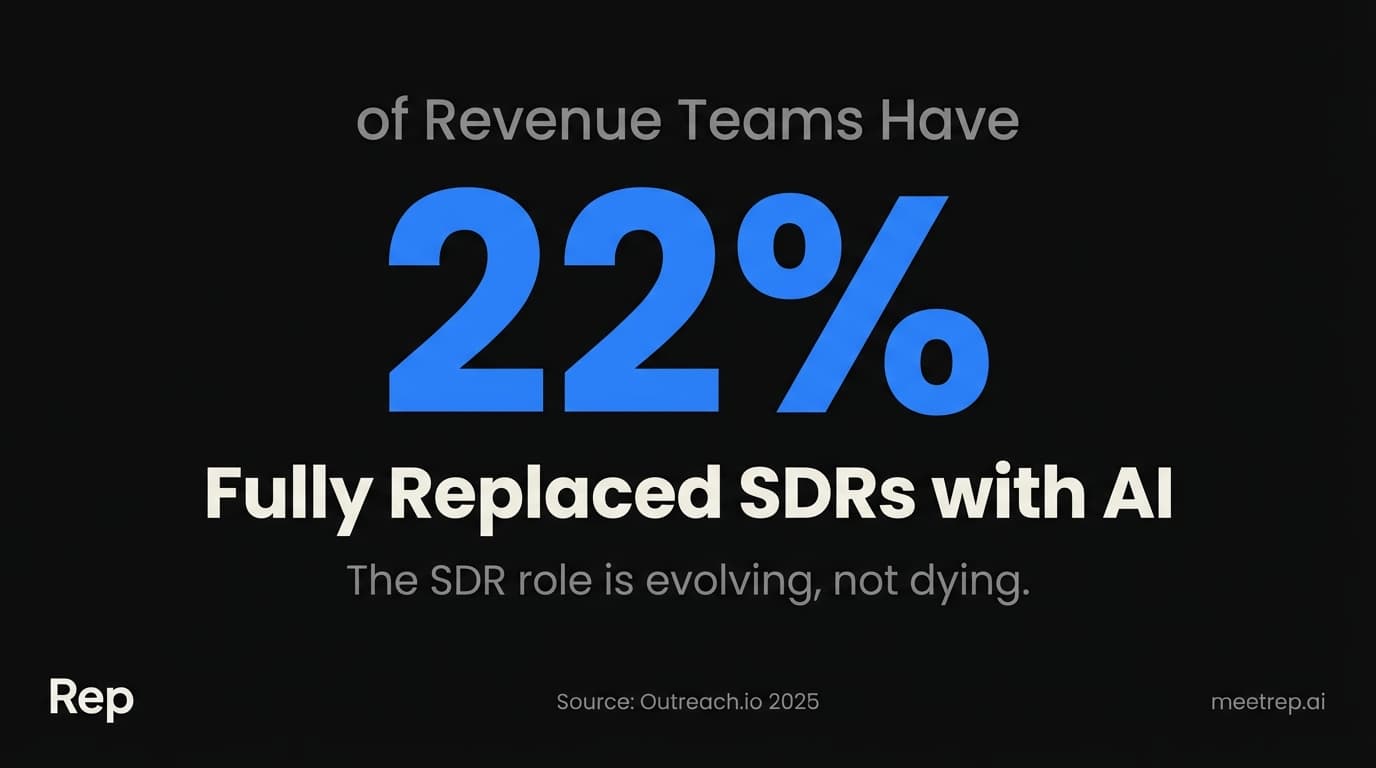
22% of revenue teams have fully replaced their SDR function with AI agents.
Tools like 11x (Alice) and Artisan (Ava) handle prospecting autonomously—finding leads, writing emails, sending sequences, and even booking meetings. This isn't future speculation. It's happening now.
My take? The SDR role isn't dying. It's evolving. The manual work—writing templated emails, copying data between tools, scheduling follow-ups—that's getting automated. What remains is strategy, judgment, and the human touch for high-value conversations.
The teams winning in 2026 aren't the ones clinging to old processes. They're the ones building systems where humans focus on what they're uniquely good at while AI handles the repetitive work.
Cold email still works. The tools have never been more powerful. But the game has shifted from volume to precision.
If I were building an outbound motion from scratch today, I'd spend less time comparing cold email software features and more time thinking about the full stack: how I'm finding the right prospects, how I'm reaching their inboxes, and—critically—how I'm converting replies into revenue before interest fades.
The sending infrastructure is the easy part. What happens after someone says "tell me more" is where most teams fumble.
Figure that out, and the software choice becomes secondary.

Nadeem Azam
Founder
Software engineer & architect with 10+ years experience. Previously founded GoCustomer.ai.
Nadeem Azam is the Founder of Rep (meetrep.ai), building AI agents that give live product demos 24/7 for B2B sales teams. He writes about AI, sales automation, and the future of product demos.
Frequently Asked Questions
Table of Contents
- What does cold email software actually do?
- Why your cold emails aren't working anymore
- The modern outbound stack: why one tool isn't enough
- The conversion gap: where cold email campaigns really fail
- Cold email software comparison: 8 tools ranked honestly
- 7 features that actually matter in cold email software
- Setting up for deliverability success
- Is cold emailing legal?
- The future: AI agents and the changing SDR role
Ready to automate your demos?
Join the Rep Council and be among the first to experience AI-powered demos.
Get Early AccessRelated Articles
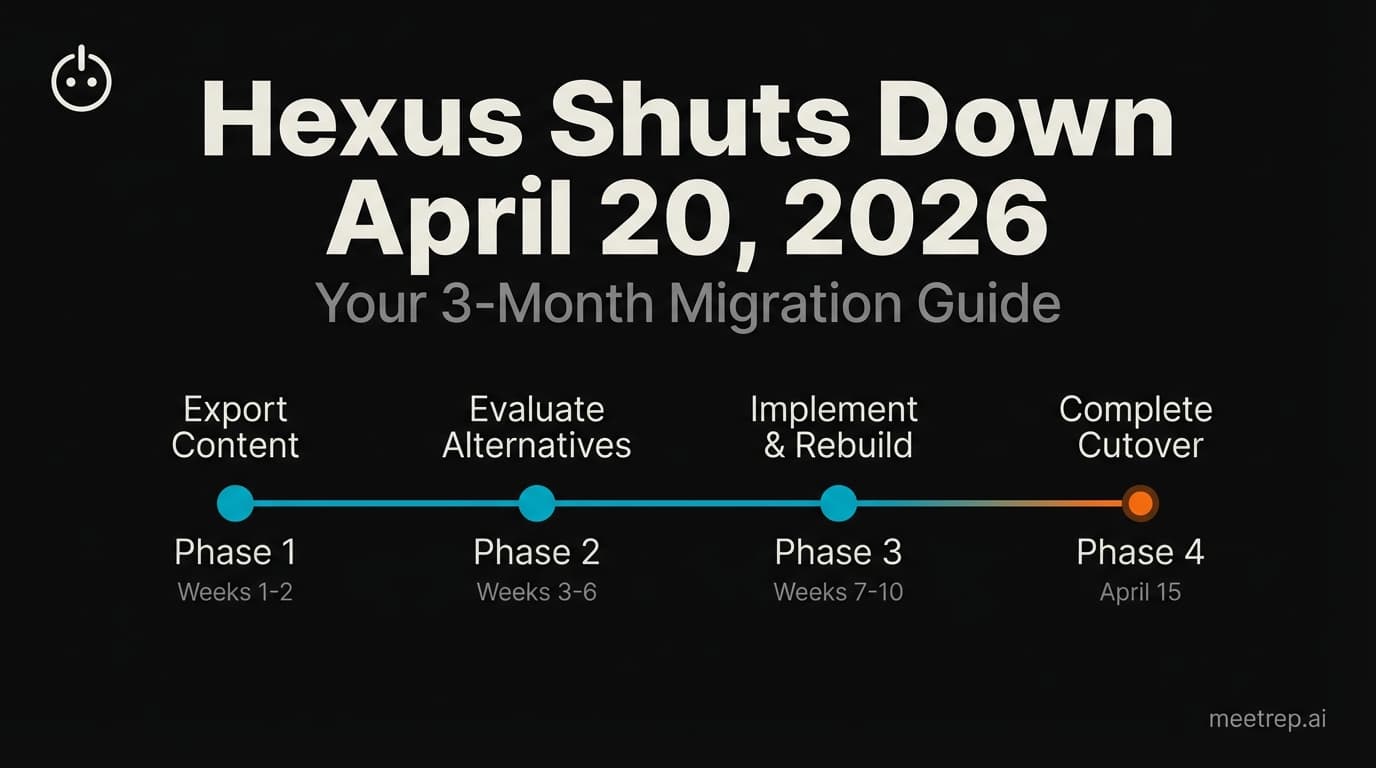
Hexus Acquired by Harvey AI: Congrats & What It Means for Demo Automation Teams
Hexus is shutting down following its acquisition by Harvey AI. Learn how to manage your migration and discover the best demo automation alternatives before April 2026.
Why the "Software Demo" is Broken—and Why AI Agents Are the Future
The traditional software demo is dead. Discover why 94% of B2B buyers rank vendors before calling sales and how AI agents are replacing manual demos to scale revenue.
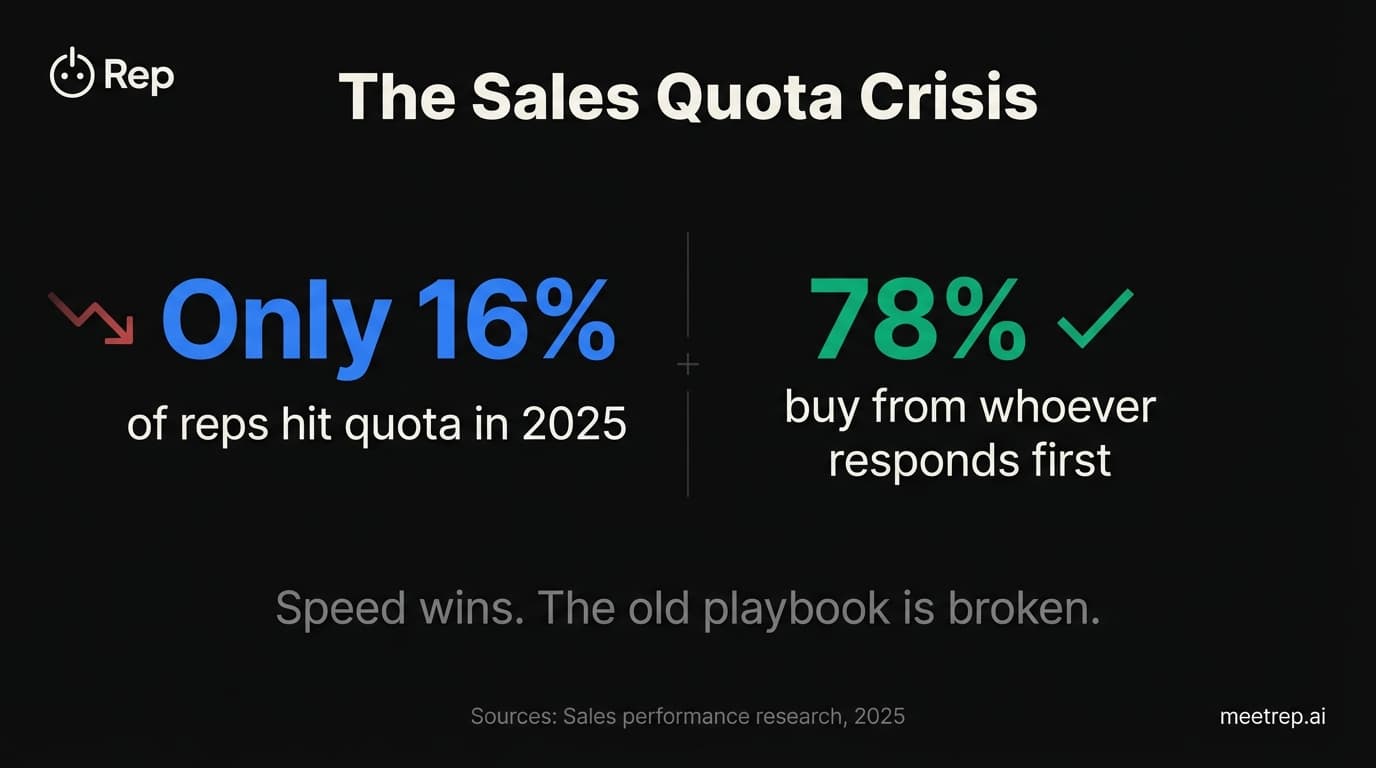
Why Autonomous Sales Software is the Future of B2B Sales (And Why the Old Playbook is Dead)
B2B sales is at a breaking point with quota attainment at 46%. Discover why autonomous 'Agentic AI' is the new standard for driving revenue and meeting the demand for rep-free buying.