Best Sales Discovery Questions: The 2026 Guide for SDR Managers

Executive Summary
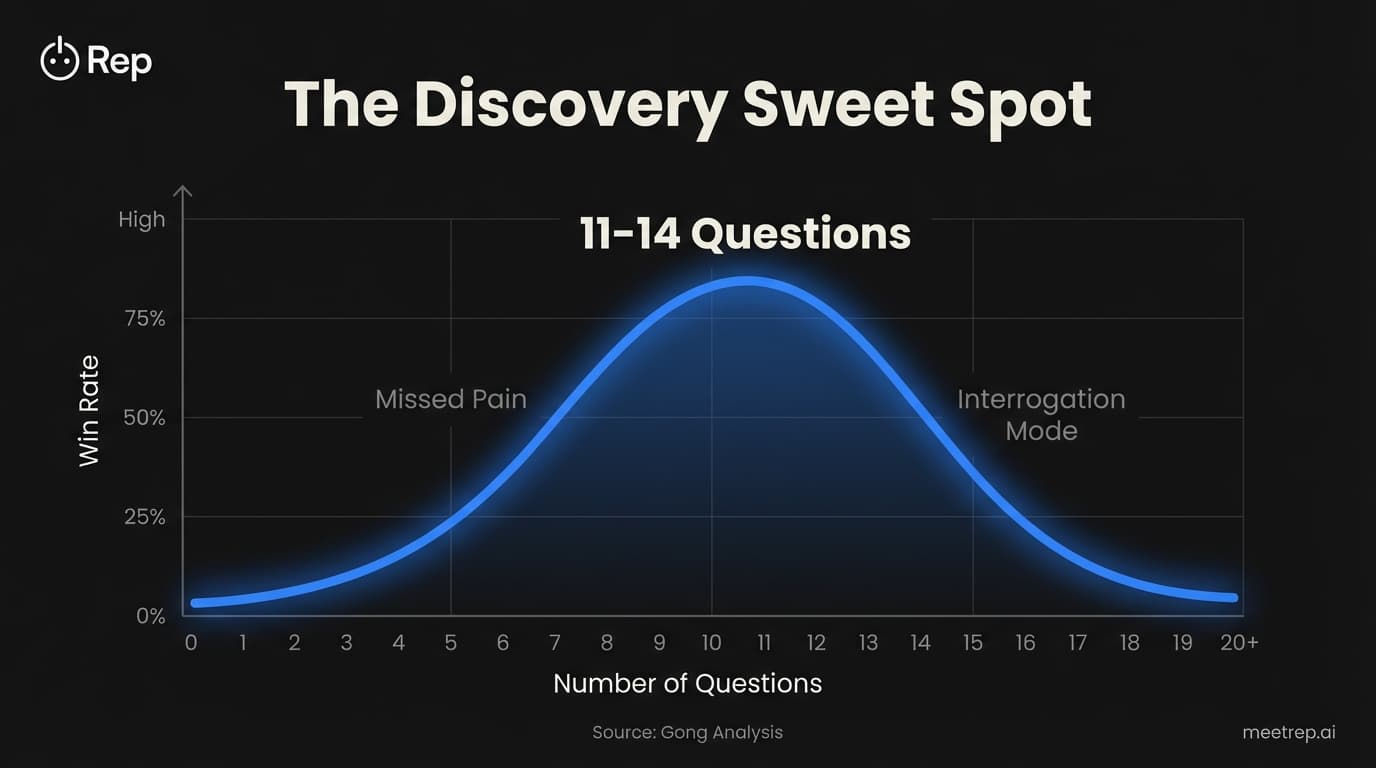
- Top performers ask 11-14 questions per call (Gong).
- Buyers are 69% done with their journey before they talk to you—skip the basic educational questions.
- Use MEDDIC to disqualify fast; bad leads kill pipeline velocity.
- Multi-threading questions are non-negotiable for deals over $50k.
You are racing against a clock you can’t see.
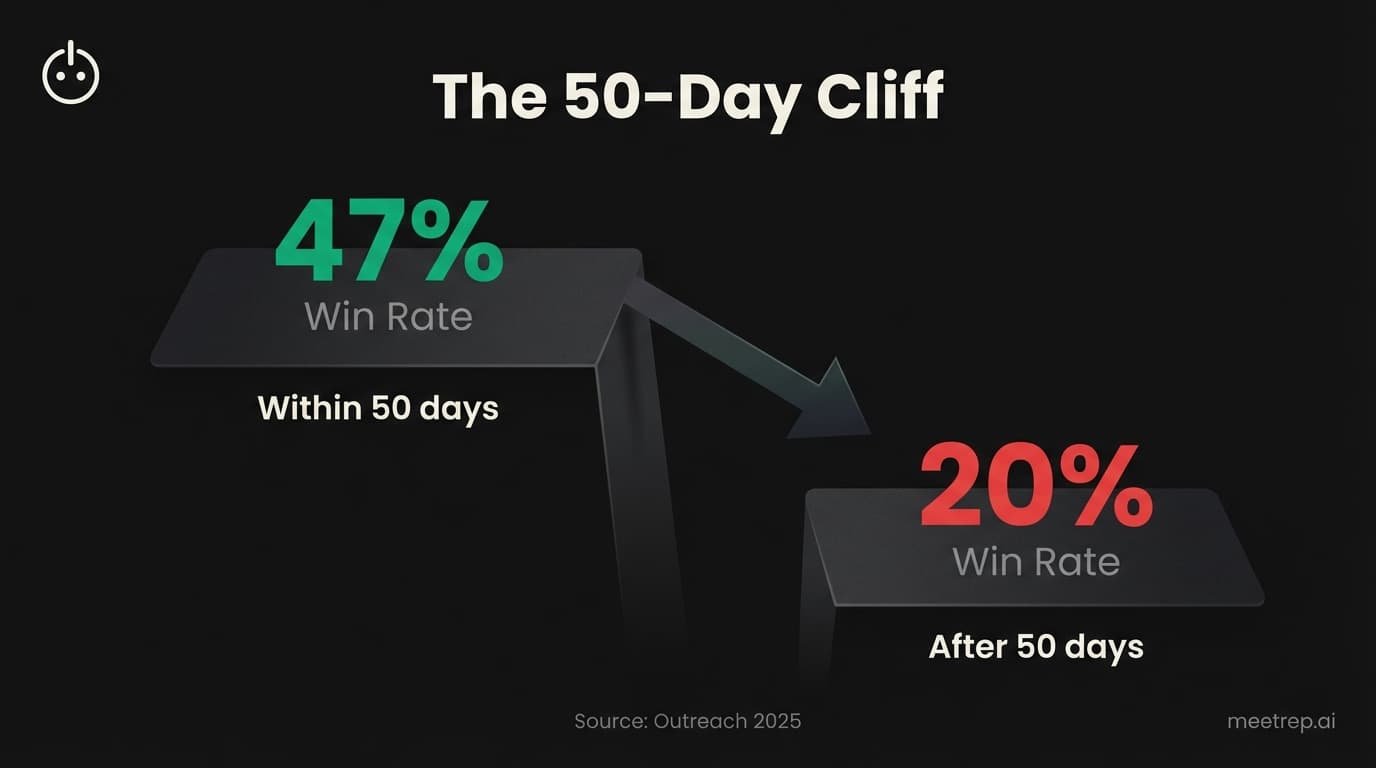
According to data from Outreach, deals closed within 50 days have a 47% win rate. Once you drag past that 50-day mark? Your odds plummet to 20% or lower.
Speed is the only metric that matters right now.
But here’s the problem I see most SDR managers facing: You tell your team to "move faster," so they start rushing. They skip the deep discovery. They pitch features before understanding the pain. They burn through leads like kindling.
I saw this constantly when we built GoCustomer.ai. Teams struggled to balance speed with depth. And now, building Rep, we’re seeing it again. The solution isn't to ask more questions. It's to ask the right ones, in a very specific order.
Below is the framework that balances speed and empathy, backed by the latest 2026 industry data.
The Science of Discovery: Why 11-14 Questions is the Magic Number
Before we get to the specific script, we need to define the goal.
Sales discovery is the diagnostic phase of the sales process where sellers uncover a prospect's pain points, financial impact, and timeline to determine if a solution is a viable fit.
The best sales discovery questions aren't random. There is a specific volume that correlates with success.
The data shows that 11 to 14 questions is the optimal range for a discovery call.
If you ask fewer than 11, you usually miss the real pain point. You end up pitching a solution to a problem the prospect doesn't have. But if you ask more than 14? It starts to feel like an interrogation. Win rates actually drop as the question count climbs into the 20s.
According to Gong’s analysis of millions of calls, the "sweet spot" is tight.
The Data: The best salespeople ask between 11 and 14 questions during discovery calls. They also listen 57% of the time, compared to average reps who listen less than half the time.
At Rep, we built our AI agents to stick to this range rigorously. Why? Because human reps get nervous. When a prospect gives a short answer, a nervous rep fills the silence with more questions (usually bad ones). An AI—or a disciplined top performer—knows to sit in the silence or ask a simple follow-up like, "Tell me more about that."
The Framework: MEDDIC for the 2026 Buyer
Random questions get random results. You need a structure.
In 2026, lead qualification is the #1 seller challenge according to Outreach's State of Sales. Inbound noise is at an all-time high. You cannot afford to treat every lead equally.
We rely on MEDDIC (Metrics, Economic Buyer, Decision Criteria, Decision Process, Identify Pain, Champion). It sounds old school. It’s not. It’s the only way to filter noise at scale.
Look at Rocketium. They implemented AI-driven MEDDIC scoring and saw a 180% improvement in win rates. They stopped chasing bad deals and focused on the ones that actually mapped to revenue.
Here is the breakdown of the questions you need to ask, categorized by purpose.
The 15 Best Sales Discovery Questions (Categorized)
You won't ask all of these in one call. Remember: 11-14 is the limit. Pick the ones that fit the flow.
Situation Questions (The Setup)
Use these sparingly. Buyers are already 69% through their journey before they call you. They don't want to repeat basic info you should have found on LinkedIn.
- "I see you’re currently using [Competitor/Tool]. How is that process handling your current volume?" Why it works: Shows you did your homework. Validate, don't investigate.
- "Walk me through your current workflow for [Process X] from start to finish." Why it works: Gets them visualizing the steps (and the friction).
- *"What triggered you to look into a solution like ours right now?" Why it works:* Uncovers urgency. If the answer is vague, the deal is likely dead.
- "Has the team tried to fix this internally before? What happened?" Why it works: Reveals past failures and skepticism you'll need to overcome.
Problem Questions (The Pain)
This is where the sale happens. You need to find the gap between where they are and where they want to be.
- "What is the single biggest barrier stopping you from hitting your Q3 goals?" Why it works: Focuses on business outcomes, not features.
- "How much time is your team spending on [manual task] each week?" Why it works: Quantifies the pain.
- *"What happens if you don't solve this problem in the next 6 months?" Why it works:* Loss aversion. If the answer is "nothing happens," disqualify them immediately.
- "It sounds like [Issue X] is a frustration. Is that just an annoyance, or is it actually blocking revenue?" Why it works: Separates nice-to-haves from need-to-haves.
Economic Buyer & Multi-Threading (The Budget)
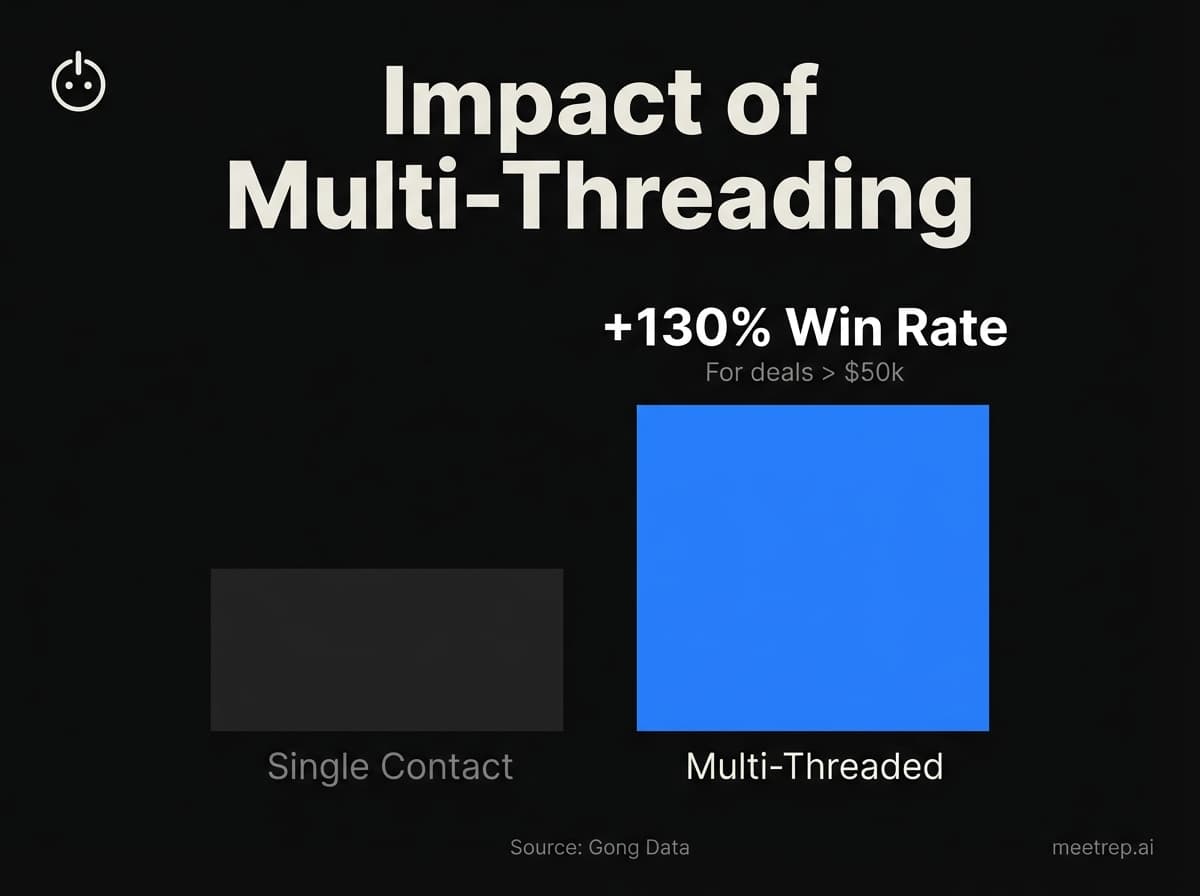
Single-threaded deals are dangerous. Gong data confirms that multi-threading boosts win rates by 130% in deals over $50k.
- "Who else cares about solving this problem?" Why it works: Identifies stakeholders without asking "who is the decision maker?"
- "Typically, an investment of this size requires sign-off from Finance and IT. How does your org usually handle that?" Why it works: Frames it as a standard process, not a challenge to their authority.
- "Whose budget will this come out of?" Why it works: Direct. Honest. Necessary.
Need-Payoff Questions (The Value)
Get them to sell the solution to themselves.
- "If you could fix this today, what would that mean for your personal targets?" Why it works: Connects business value to personal gain.
- "What would you do with the [X] hours you save by automating this?" Why it works: Makes the benefit tangible.
- "Why is now the right time to tackle this?" Why it works: Validates urgency one last time.
- "If we can solve [Problem], is there any reason we wouldn't be able to move forward by [Date]?" Why it works: The "negative close." It flushes out hidden objections early.
Founder's Take: Don't "front-load" all your questions. I see weak reps ask 10 questions in the first 5 minutes because they are terrified of silence. Top reps spread them out. It should feel like a tennis match, not a police interview.
The "Silent" Killer: Why Buyers Don't Feel Understood
You can ask all the right questions and still lose.
Why? Because asking isn't listening.
A sobering stat from Qwilr shows that only 13% of buyers believe a salesperson truly understands their needs. That means 87% of your prospects think you are just waiting for your turn to speak.
In my experience, this happens because reps are too focused on their checklist. They are looking at their screen, not the human.
The Fix: Commercial-Grade Listening
You need to validate before you move on. Use the "Labeling" technique (popularized by Chris Voss):
- Prospect: "We're just drowning in manual data entry."
- Bad Rep: "Okay, great. Question 4: What is your budget?"
- Good Rep: "It sounds like that data entry is actually pulling your team away from strategic work."
- Prospect: "Exactly. We can't even get to strategy."
See the difference? The good rep used a label ("It sounds like...") to prove they listened. This builds trust faster than any pitch.
Automating Discovery: The Rise of the AI SDR
Here is the reality of 2026. You can train your team on these questions. You can roleplay every Friday. But humans are inconsistent.
They get tired. They forget to ask about the Economic Buyer. They skip the pain questions because they want to be liked.
This is why we are seeing a massive shift toward AI-augmented discovery.
According to Gong's State of Revenue AI Report, sellers who frequently use AI generate 77% more revenue per rep.
Why is the gap so big? Consistency.
An AI agent (like Rep) never forgets to ask "What happens if you don't solve this?" It never gets tired at 4 PM. It captures 100% of the data and logs it perfectly in the CRM.
| Feature | Manual Discovery | AI Discovery (Rep) |
|---|---|---|
| Availability | Business Hours Only | 24/7 / On-Demand |
| Question Consistency | Varies by mood/energy | 100% adherence to playbook |
| Data Capture | Partial (messy notes) | Complete transcript + CRM sync |
| Bias | "Happy ears" (ignoring red flags) | Objective MEDDIC scoring |
Why we built Rep this way: We designed Rep to be an "Orchestrator." It handles the repetitive discovery and qualification calls, ensuring every lead is vetted against your specific questions. This frees up your human AEs to focus strictly on qualified deals where emotional intelligence and negotiation matter most.
The Verdict
Discovery isn't about checking boxes. It's about disqualifying the 80% of leads that will waste your time so you can focus on the 20% that will close.
Remember the "50-day cliff." If you aren't getting to the truth quickly, your odds of winning drop by half.
My advice? Take the 15 questions above. Strip out the ones that don't fit your style until you hit that 11-14 sweet spot. Build a tight playbook. And if your team is struggling to stick to it, look at tools that can enforce that consistency for you.
If you want to see how an AI agent handles discovery calls with perfect consistency—asking the right questions 24/7—see Rep in action.

Nadeem Azam
Founder
Software engineer & architect with 10+ years experience. Previously founded GoCustomer.ai.
Nadeem Azam is the Founder of Rep (meetrep.ai), building AI agents that give live product demos 24/7 for B2B sales teams. He writes about AI, sales automation, and the future of product demos.
Frequently Asked Questions
Table of Contents
- The Science of Discovery: Why 11-14 Questions is the Magic Number
- The Framework: MEDDIC for the 2026 Buyer
- The 15 Best Sales Discovery Questions (Categorized)
- The "Silent" Killer: Why Buyers Don't Feel Understood
- Automating Discovery: The Rise of the AI SDR
- The Verdict
Ready to automate your demos?
Join the Rep Council and be among the first to experience AI-powered demos.
Get Early AccessRelated Articles
Hexus Acquired by Harvey AI: Congrats & What It Means for Demo Automation Teams
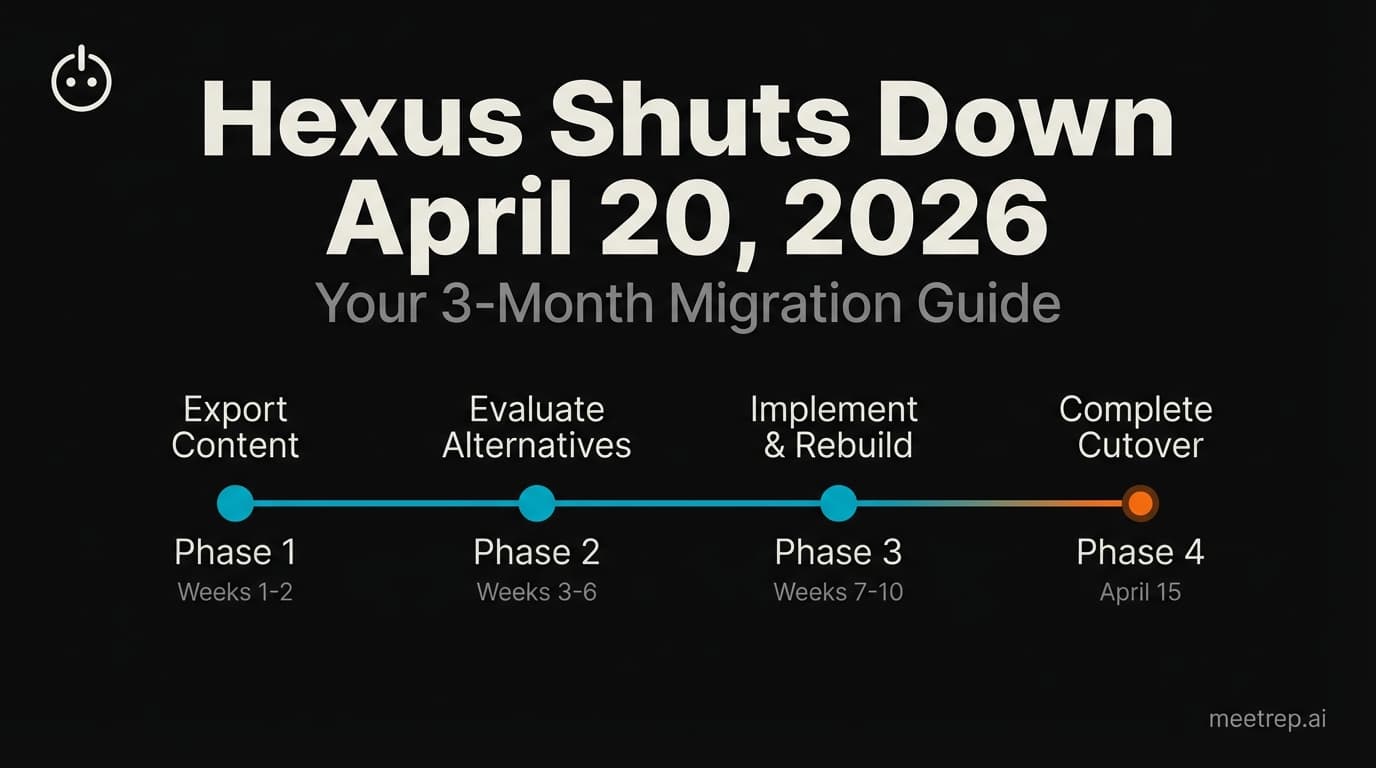
Hexus is shutting down following its acquisition by Harvey AI. Learn how to manage your migration and discover the best demo automation alternatives before April 2026.
Why the "Software Demo" is Broken—and Why AI Agents Are the Future
The traditional software demo is dead. Discover why 94% of B2B buyers rank vendors before calling sales and how AI agents are replacing manual demos to scale revenue.
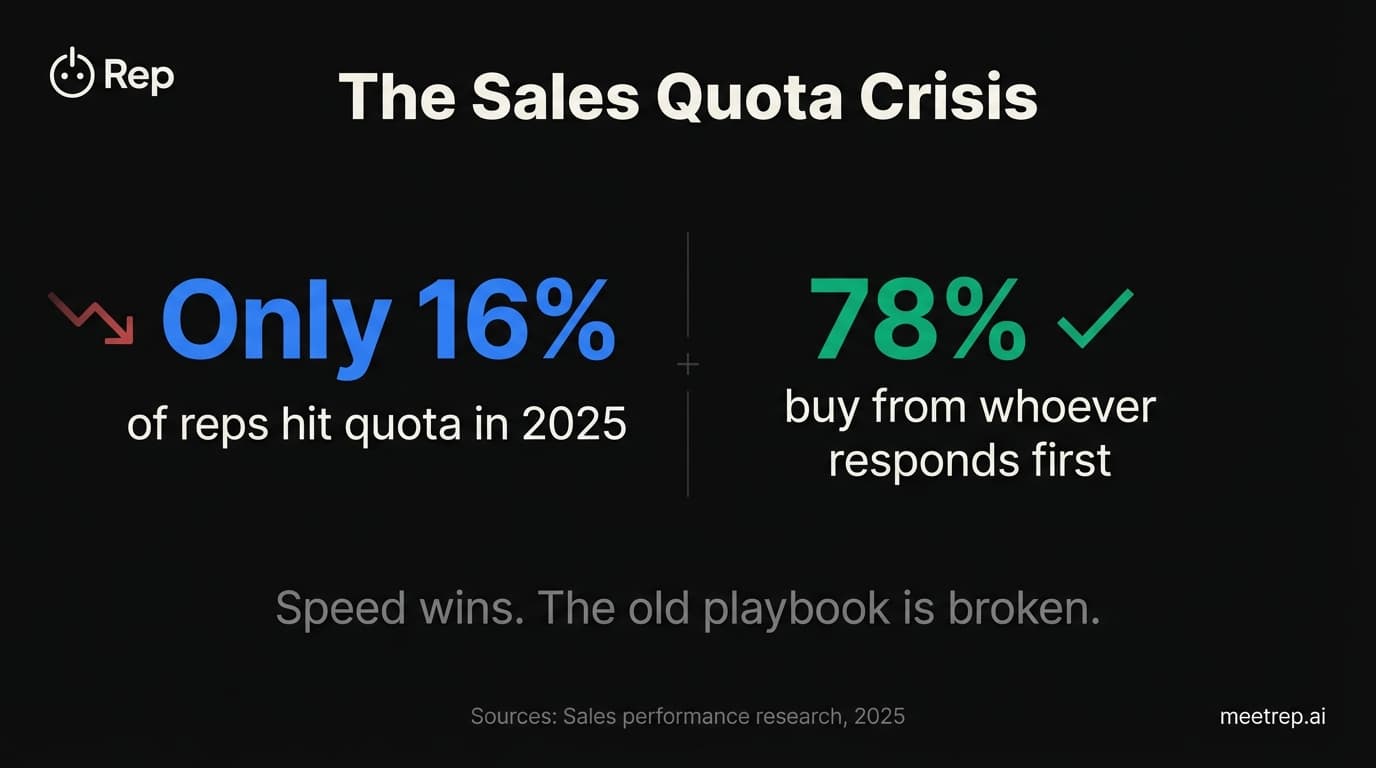
Why Autonomous Sales Software is the Future of B2B Sales (And Why the Old Playbook is Dead)
B2B sales is at a breaking point with quota attainment at 46%. Discover why autonomous 'Agentic AI' is the new standard for driving revenue and meeting the demand for rep-free buying.