Best Email Service For Cold Emails: A Founder’s Technical Guide (2025)

Executive Summary
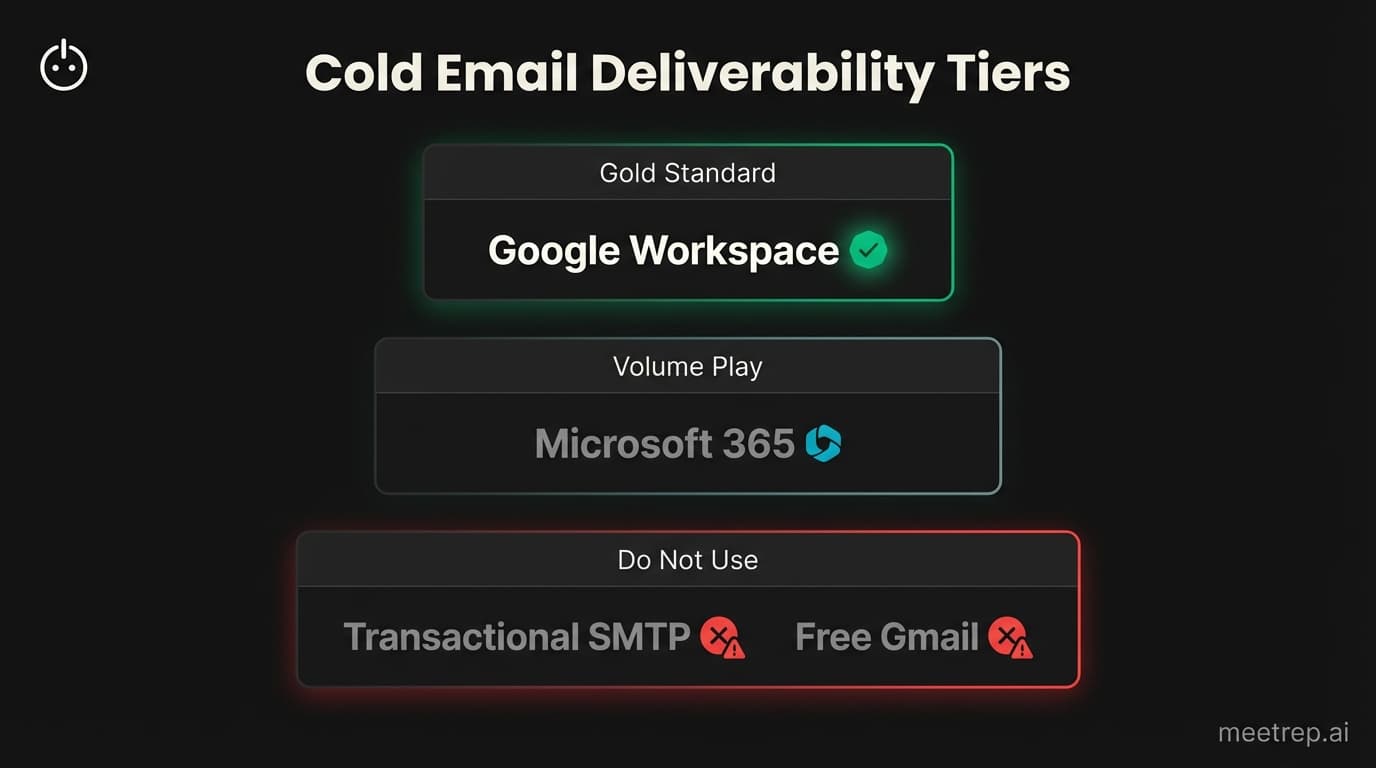
- Best Overall (Quality): Google Workspace. Highest trust score, best deliverability to B2B targets.
- Best for Volume (Cost): Microsoft 365. Cheaper, higher technical sending limits, but slightly lower deliverability to Gmail accounts.
- Best for Scale: "Burner" infrastructure (using tools like Mailforge) separate from your main corporate domain.
- Avoid: Transactional SMTPs (SendGrid/Mailgun) and cheap cPanel hosting. They will kill your open rates.
If you search for the "best email service for cold emails," you mostly get affiliate lists. They recommend whoever pays the highest commission.
That’s a problem.
Because if you pick the wrong infrastructure for your outbound campaigns, you don’t just lose a few leads. You burn your domain. You destroy your sender reputation. And digging yourself out of a spam-filter hole takes months.
I’m not a blogger writing reviews. I’m an engineer and founder who built sales automation platforms (GoCustomer.ai) and am currently building Rep. I’ve seen thousands of campaigns succeed and fail based on the plumbing behind them.
Here is the technical reality of which email service actually hits the primary inbox in 2025.
The Difference Between "Sending Tools" and "Email Services"
Before we compare providers, we need to clear up a common confusion.
The best email service for cold emails is not the software you use to write the sequences.
There are two layers to your stack:
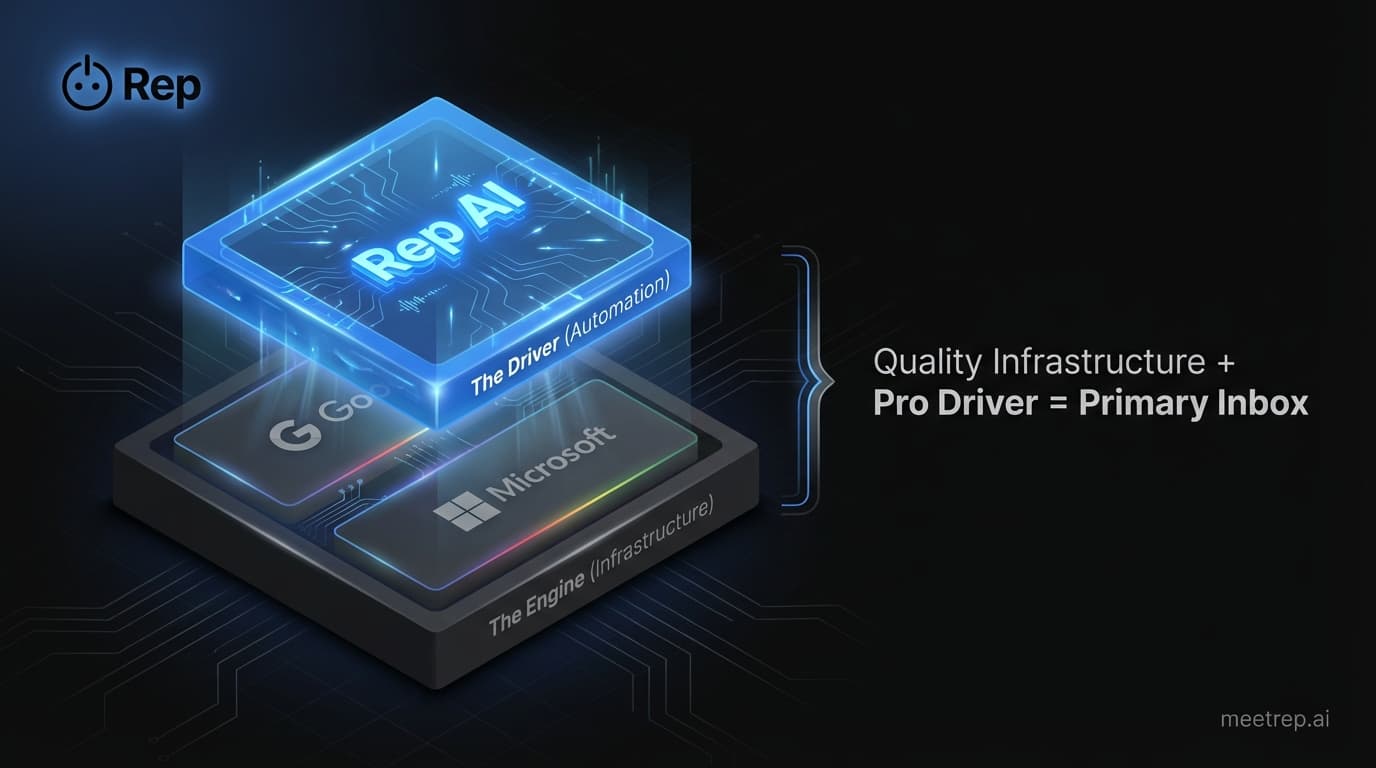
- The Inbox Provider (ESP): This is the infrastructure hosting the email address (Google, Microsoft, Zoho). They own the IP addresses and the servers.
- The Sending Platform (SEP): This is the automation tool that connects to the inbox to send emails for you (Smartlead, Instantly, Outreach, Rep).
This guide focuses on Layer 1.
Why? Because you can have the best copy and the best automation tool in the world, but if your Inbox Provider has "dirty" IP addresses, you go straight to spam.
Key Insight: Think of the Email Service as the engine and the Sending Platform as the driver. A professional driver (like Rep’s AI) can't win a race if the engine (hosting provider) explodes at the starting line.
Google Workspace: The Gold Standard
Google Workspace is the email service provided by Google for businesses. In my experience, it is the single most reliable option for B2B cold outreach.
Why? Because B2B buyers mostly use Google Workspace.
Spam filters often treat "internal" traffic more leniently. When a Google Workspace account emails another Google Workspace account, there is an inherent level of trust—assuming your DNS records (SPF, DKIM, DMARC) are set up correctly.
The Technical Pros
- IP Reputation: Google maintains pristine IP reputation. They are ruthless about banning spammers, which protects the network for legitimate users.
- Deliverability: In our tests at GoCustomer, Google-to-Google emails consistently had the highest placement in the "Primary" tab.
- Security protocols: Google forces strict authentication standards, which makes spoofing harder and trust higher.
The Downsides
- Cost: It's expensive. At ~$6/user/month (Starter plan), spinning up 50 inboxes for high-volume outreach costs $300/month.
- Ban Rate: Google is aggressive. If you scale too fast (going from 0 to 100 emails a day in a week), they will suspend the account.
My recommendation: Use Google Workspace for your high-value, low-volume accounts. If you are targeting Enterprise VPs where every email needs to land, pay the premium for Google.
Microsoft 365 (Outlook): The Volume Play
Microsoft 365 is the primary competitor to Google. For many SDR teams, this is the default choice for "burner" domains (secondary domains used specifically for outreach to protect the main brand).
The Technical Pros
- Higher Limits: Technically, Microsoft allows up to 10,000 recipients per day. Do not try this. Just because you can doesn't mean you should. But the ceiling is higher than Google's 2,000 limit.
- Cost Efficiency: You can often find deals or bundles (via GoDaddy or resellers) that make bulk inboxes cheaper than Google.
- Lenient Filters: Microsoft tends to be slightly less trigger-happy with account suspensions than Google.
The Downsides
- Deliverability to Gmail: This is the big one. Google's spam filters are naturally suspicious of outside traffic. We've seen Outlook-to-Gmail campaigns land in the "Promotions" or "Updates" folder more often than Google-to-Google.
- Setup Complexity: Managing 50 Outlook instances is generally more painful than managing 50 Google instances via the Admin Console.
Why You Should Never Use Transactional SMTP (SendGrid, Mailgun)
This is a hill I will die on.
Do not use SendGrid, Mailgun, Amazon SES, or Postmark for cold outreach.
These services are built for transactional email (password resets, receipts) and marketing blasts (newsletters). They use shared IP pools.
If you use SendGrid on a shared IP, you share your reputation with thousands of other companies. If one of them spams, your reputation takes a hit.
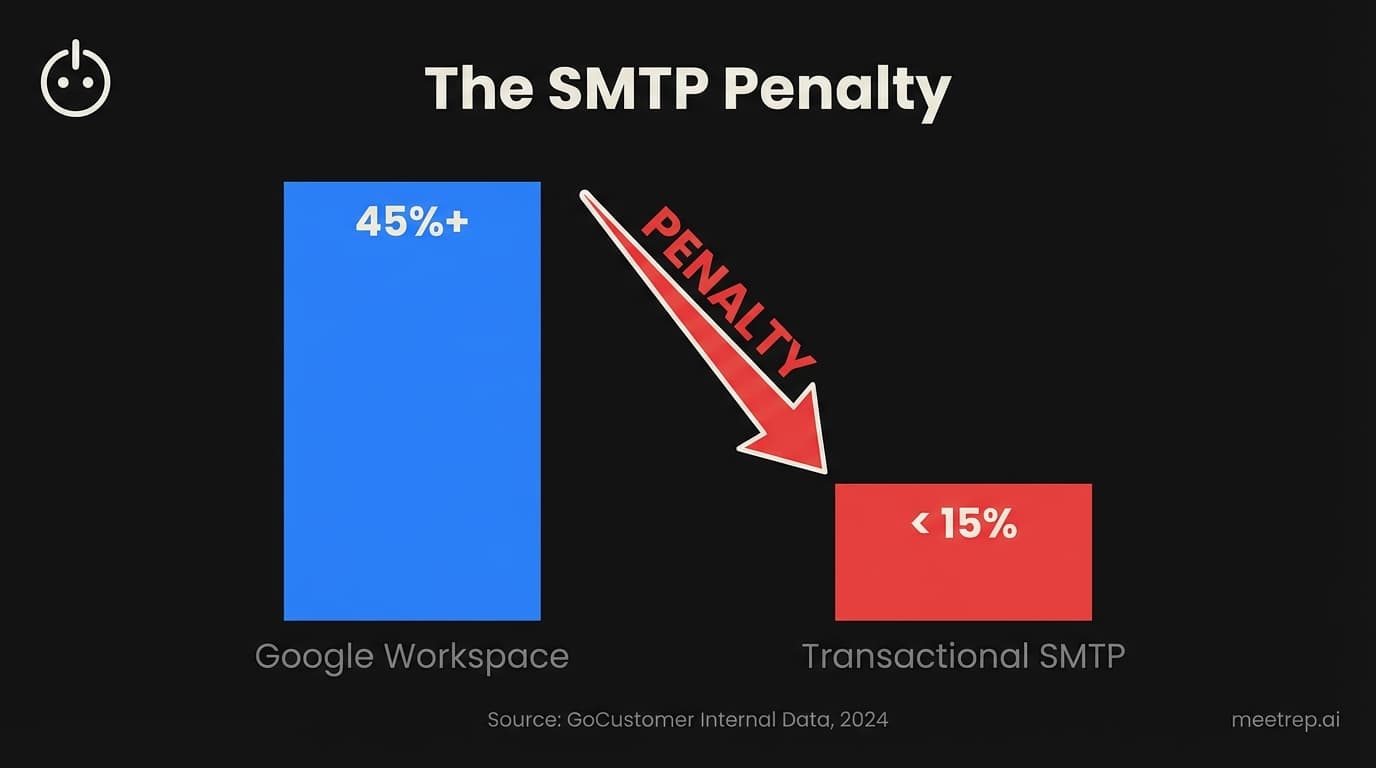
What we learned at GoCustomer: Users who tried to connect SMTP relays like SendGrid for cold outreach saw open rates drop below 15%. The headers in these emails scream "Bulk Marketing Automation" to spam filters. It’s a distinct technical signature that corporate firewalls hate.
Cold email should look like a 1-to-1 conversation. It should originate from a business mailbox, not a marketing server.
Comparison: Google Workspace vs. Microsoft 365
Here is how the two giants stack up for sales specifically.
| Feature | Google Workspace | Microsoft 365 |
|---|---|---|
| Cost | ~$6/user/mo | ~$6/user/mo |
| Deliverability | Excellent (especially to B2B) | Good (better for volume) |
| Sending Limits | 2,000/day (Strict) | 10,000/day (High ceiling) |
| Ban Sensitivity | High | Medium |
| Setup Speed | Fast (15 mins) | Medium (30 mins) |
| Best For | Quality > Quantity | Quantity > Quality |
The "Managed Infrastructure" Alternative
Recently, a third category has emerged. Tools like Mailforge or Infraforge allow you to spin up hundreds of inboxes instantly.
Technically, these often resell or provision minimal instances of reliable providers, or manage private mail servers with dedicated IPs.
Pros:
- You can set up 50 inboxes in 5 minutes.
- DNS records (SPF/DKIM/DMARC) are handled automatically.
- Cheaper than buying retail Google/Microsoft licenses.
Cons:
- If their IP range gets burned, you go down with them.
- You have less control over the underlying infrastructure.
I use these for testing and high-volume experimentation. But for my core sales team at Rep? We stick to Google Workspace.
Technical Essentials: It’s Not Just the Provider
You can buy the best email service in the world, but if your DNS is wrong, you will fail.
Regardless of which service you pick, you must configure three records. No exceptions.
- SPF (Sender Policy Framework): A text record in your DNS that lists the IP addresses authorized to send email for your domain.
- DKIM (DomainKeys Identified Mail): Adds a digital signature to emails so the receiver knows the message wasn't altered.
- DMARC: Tells the receiving server what to do if SPF or DKIM fails (e.g., "reject this email").
If you use Google Workspace, your SPF record looks like this:
v=spf1 include:_spf.google.com ~all
Without this, you look like a spoofer.
Common mistake: Sales teams often buy a new domain (e.g.,
getcompany.com) and start sending immediately. You must "warm up" the domain for 2-3 weeks. Sending 50 emails on Day 1 from a fresh domain is a guaranteed way to get flagged.
My Final Verdict
After building sales tech for years, here is my honest take on the best email service for cold emails:
- If you can afford it: Buy Google Workspace. The deliverability premium is worth it. The interface is better. The integration with tools is smoother.
- If you need 50+ inboxes on a budget: Mix Microsoft 365 with a managed infrastructure provider.
- The Hybrid Strategy: This is what smart teams do. Use Google Workspace for your Tier 1 accounts (CEOs, Enterprise). Use Microsoft/Infrastructure for Tier 2/3 accounts where volume matters more than precision.
Conclusion
The best email service for cold emails isn't about finding a "magic bullet" provider that bypasses spam filters. It's about risk management.
Google Workspace offers the best protection and trust, but it costs more. Outlook offers volume. But neither will save you if your content is spammy or your technical setup (DNS) is broken.
My advice? Start with Google Workspace on a dedicated secondary domain. Warm it up properly. Then, focus on what happens after they reply.
Because getting the email delivered is only step one. If you're spending all this effort just to get a demo booked, you should see how we're handling the next step at Rep—where an AI agent handles the live demo for you, instantly.
But first, fix your DNS records. Seriously.

Nadeem Azam
Founder
Software engineer & architect with 10+ years experience. Previously founded GoCustomer.ai.
Nadeem Azam is the Founder of Rep (meetrep.ai), building AI agents that give live product demos 24/7 for B2B sales teams. He writes about AI, sales automation, and the future of product demos.
Frequently Asked Questions
Table of Contents
- The Difference Between "Sending Tools" and "Email Services"
- Google Workspace: The Gold Standard
- Microsoft 365 (Outlook): The Volume Play
- Why You Should Never Use Transactional SMTP (SendGrid, Mailgun)
- Comparison: Google Workspace vs. Microsoft 365
- The "Managed Infrastructure" Alternative
- Technical Essentials: It’s Not Just the Provider
- My Final Verdict
- Conclusion
Ready to automate your demos?
Join the Rep Council and be among the first to experience AI-powered demos.
Get Early AccessRelated Articles
Hexus Acquired by Harvey AI: Congrats & What It Means for Demo Automation Teams
Hexus is shutting down following its acquisition by Harvey AI. Learn how to manage your migration and discover the best demo automation alternatives before April 2026.
Why the "Software Demo" is Broken—and Why AI Agents Are the Future
The traditional software demo is dead. Discover why 94% of B2B buyers rank vendors before calling sales and how AI agents are replacing manual demos to scale revenue.
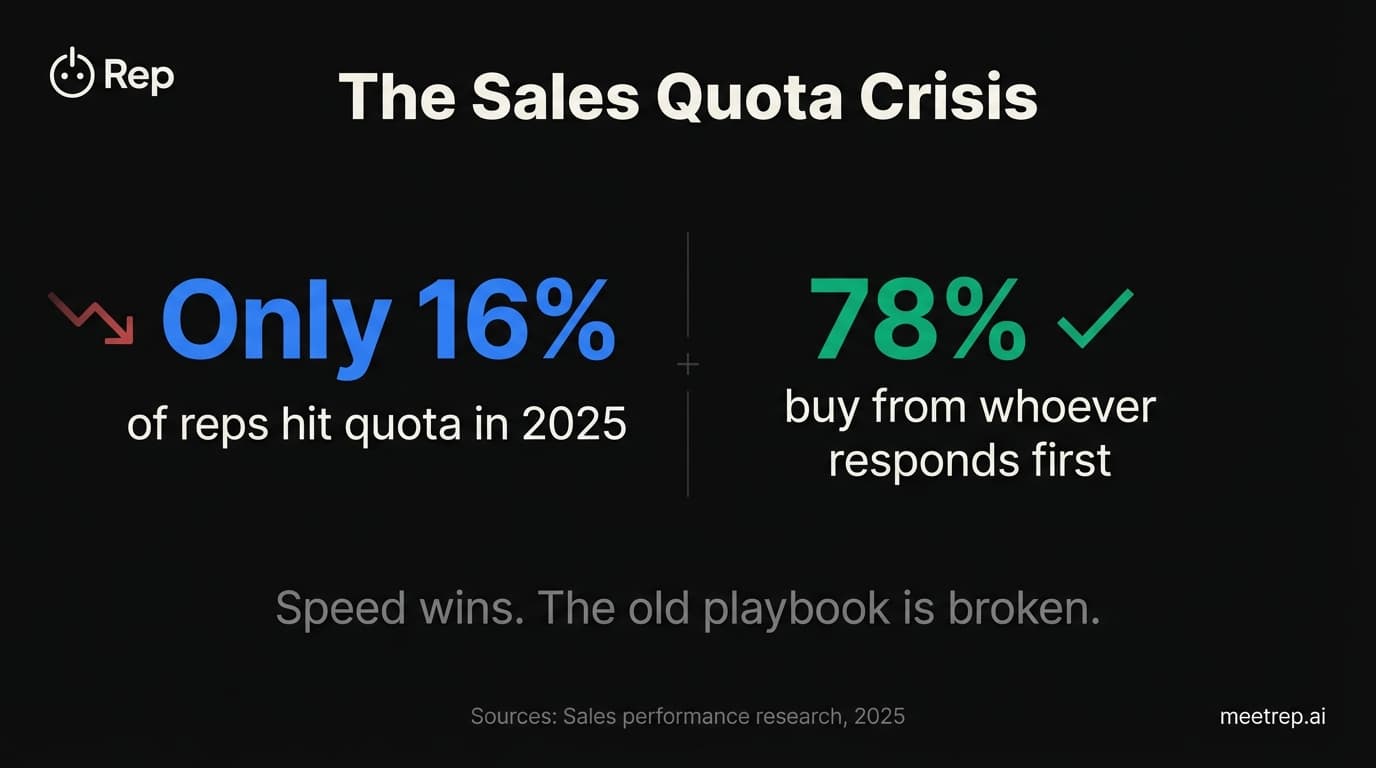
Why Autonomous Sales Software is the Future of B2B Sales (And Why the Old Playbook is Dead)
B2B sales is at a breaking point with quota attainment at 46%. Discover why autonomous 'Agentic AI' is the new standard for driving revenue and meeting the demand for rep-free buying.