Best Discovery Questions: A Complete Breakdown

Executive Summary
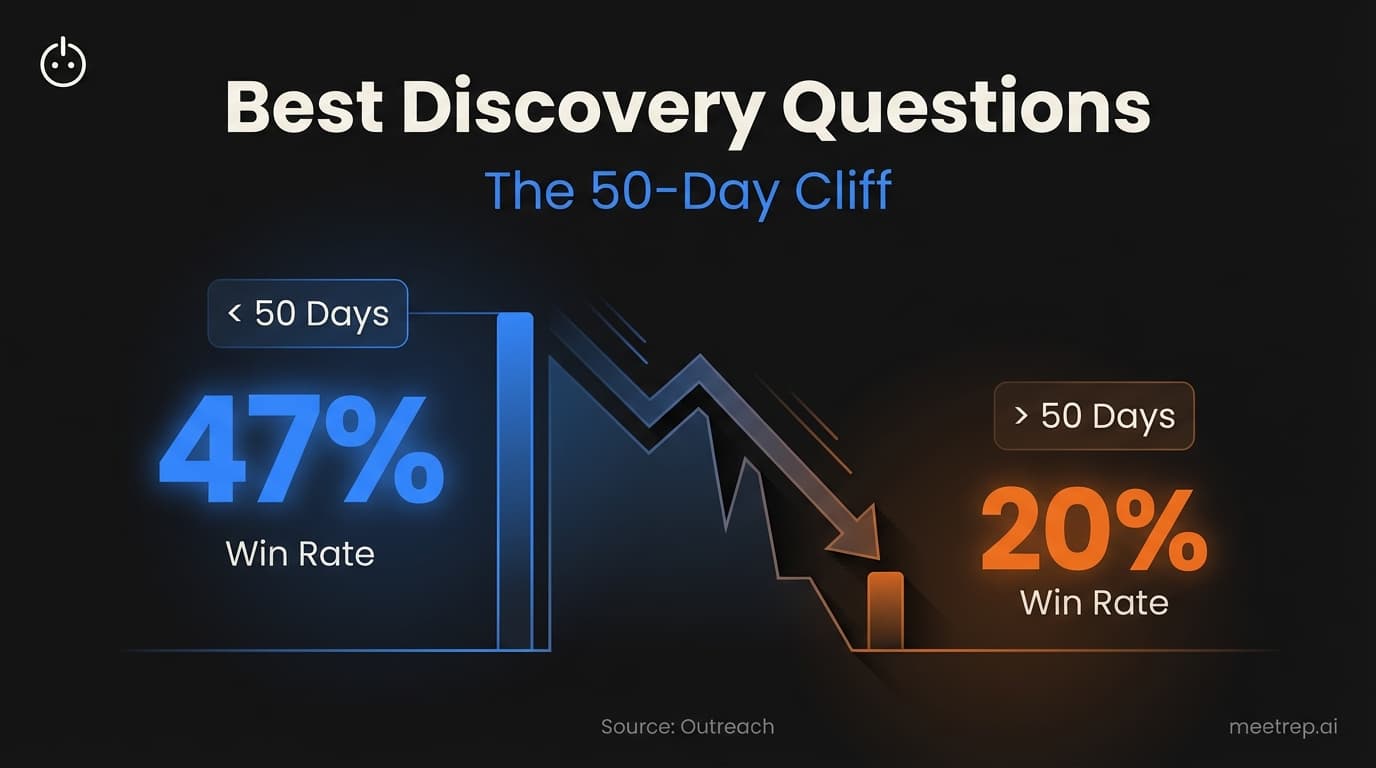
- Speed kills: Deals under 50 days close at 47%; over 50 days close at 20%.
- The Magic Number: Ask between 11–14 questions. More is not better.
- Talk Less: Top performers only discuss product features for 9% of the call.
- Mention Rivals: Early competitor mentions increase win rates by 32%.
Here is the brutal reality of sales in 2026: Speed is the only variable you can fully control.
According to data from Outreach, opportunities closed within 50 days have a 47% win rate. But if that deal drags past the 50-day mark? The win rate drops to just 20%.
Every question your SDRs ask either accelerates that timeline or adds friction.
I’ve seen this firsthand. At GoCustomer, and now building Rep, I’ve analyzed thousands of interactions. The mistake most teams make isn't that they don't ask questions. It's that they ask checklist questions ("What's your budget?") instead of momentum questions ("What happens if you don't fix this by Q3?").
This guide breaks down the best discovery questions to ask right now—not based on gut feeling, but on verified data regarding what actually closes deals.
The Science of a Perfect Discovery Call
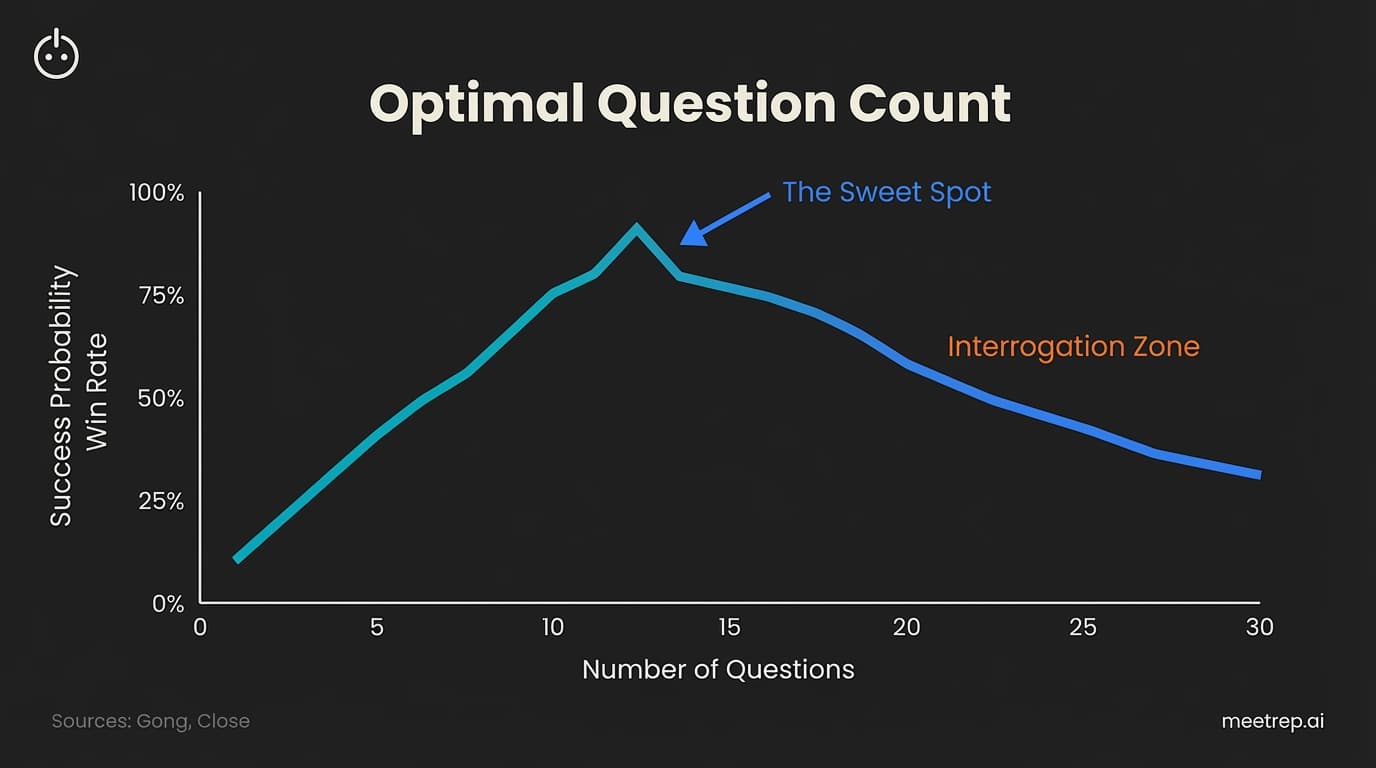
A perfect discovery call is a balance of precision and restraint. It is not an interrogation; it is a structured search for the "cost of inaction."
Most managers think more information is better. They want their reps to fill out every field in the CRM during the first call.
That is a huge mistake.
Data from Gong and Close shows that the "sweet spot" for discovery is 11–14 questions. Once you go past 14 questions, success rates actually decrease. You start to sound like a census taker, not a consultant. Buyers tune out.
The other metric that matters? The talk-to-listen ratio.
According to Notta, successful calls typically hit a 55:45 ratio (Prospect:Rep). But here’s the kicker: top performers only spend 9% of the call talking about product features.
If your reps are feature-dumping in the first 15 minutes, they aren't doing discovery. They're doing a premature demo. And it’s killing your win rates.
Discovery Call Benchmarks (2026)
| Metric | The Benchmark | Why It Matters |
|---|---|---|
| Question Count | 11–14 Questions | Balances curiosity with respect for time. |
| Talk Ratio | 45:55 (Rep:Prospect) | If you talk more than 45%, you're lecturing. |
| Feature Talk | 9% of Call | Discovery is about them, not your product. |
| Win Rate (<50 Days) | 47% | Speed is your most powerful asset. |
The Data: Opportunities closed within 50 days have a 47% win rate. Wait longer, and that drops to 20%. Source: Outreach
The 5 Categories of High-Impact Questions
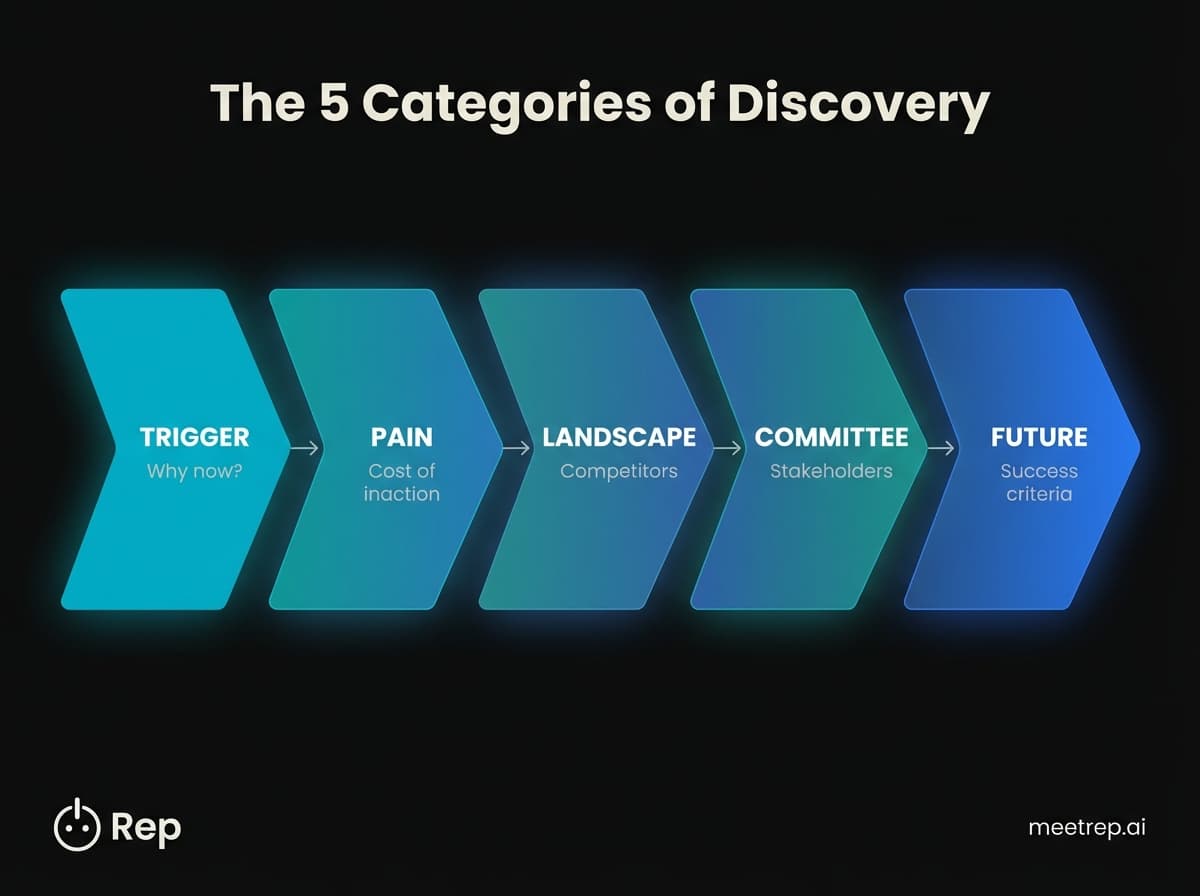
The best discovery questions fall into five distinct categories: Trigger, Pain, Landscape, Committee, and Future. Each category serves a specific purpose in moving the prospect from "interested" to "committed."
You don't need a script of 50 questions. You need one or two strong ones from each of these buckets.
1. The Trigger (Why Now?)
Most buyers sit on a problem for months. Something specific made them take a meeting today.
- "What prompted you to explore a solution right now?"
- "Why prioritize this project over everything else on your plate?"
If they can't answer this, there is no deal. There’s just curiosity.
2. The Pain (Cost of Inaction)
This is where 85% of reps fail. They identify the problem ("We need better reporting") but miss the impact of the problem ("We're losing $10k a month in unbilled hours").
- "What happens if you do nothing for the next six months?"
- "How is this issue affecting the team's morale/output?"
3. The Landscape (The Competition)
Here is a controversial take: You should bring up competitors.
Many sales leaders are terrified of this. They think mentioning a rival gives them free advertising. But according to Gong, early mentions of competitors actually increase the odds of winning an enterprise deal by 32%.
Why? Because it shows you aren't afraid. It positions you as a guide who knows the market.
- "What other solutions are you evaluating?"
- "How are you currently solving [Problem X]?"
4. The Committee (Stakeholders)
B2B buying committees are huge—typically 5 to 11 people. If your rep is only talking to one person, the deal is already at risk.
- "Who else needs to sign off on this for it to happen?"
- "How have you purchased software like this in the past?"
5. The Future (Success Criteria)
- "What does a home run look like for you in 90 days?"
| Category | The "Old Way" (Low Impact) | The "New Way" (High Impact) |
|---|---|---|
| Trigger | "What is your role?" | "Why prioritize this project now?" |
| Pain | "What is your budget?" | "What is the cost of doing nothing?" |
| Landscape | Avoiding competitors completely | "Who else are you evaluating?" |
| Committee | "Are you the decision maker?" | "Who else feels this pain?" |
Key Insight: Early competitive mentions increase win rates by 32%. Don't hide from the competition—frame the conversation. Source: Gong
Why Managers Are Worried (And How to Fix It)
There is a massive disconnect between how reps see themselves and how managers see them.
Data from Salesloft shows that while 73% of sellers rate their risk-detection skills as high, 56% of managers say their reps miss critical risks.
I see this constantly. Reps think they crushed the call because they had a "good conversation." But when you listen to the tape, they missed the fact that the prospect mentioned a hiring freeze or a competitor's pilot program.
The problem isn't usually laziness. It's cognitive load.
It is incredibly difficult to maintain a 45:55 listen ratio, navigate a conversation, build rapport, and take perfect notes simultaneously. Something has to give. Usually, it's the active listening.
Common Mistake: Assuming that because a rep is "busy" and has "good conversations," they are effective. Without data-driven insights, 43% of sellers rely on gut feeling. Source: Salesloft
The Role of AI in Modern Discovery
Sales teams using AI generate 77% more revenue per rep than those who don't. That is not a marginal improvement; that is a different game entirely.
At GoCustomer, we saw how hard it was for humans to be consistent. We all have bad days. We all forget to ask Question #4.
This is why we built Rep the way we did.
Rep isn't just a chatbot on a website. It’s an autonomous voice agent that joins the video call, shares its screen, and navigates the product live. But crucially, it handles the discovery layer automatically.
How this changes the math:
- Consistency: Rep asks the 11–14 questions every single time. It doesn't get tired. It doesn't forget.
- Visuals: Because Rep navigates the product while talking, it adheres to the "show, don't just tell" principle without violating the 9% feature-talk rule. It shows the solution naturally as it uncovers the pain.
- Data Capture: Reps hate CRM entry. Rep (the agent) extracts the answers—budget, timeline, competitors—and logs them.
This frees up your human SDRs to focus on the high-level relationship building and strategy, rather than data entry.
Why we built Rep this way: We realized that 69% of buyers prefer to research on their own before talking to a human. By letting an AI agent handle the initial discovery and demo, you capture that demand instantly—24/7—without burning out your human team.
Best Discovery Questions for Enterprise vs. SMB
The "best" question depends entirely on who you are selling to. An SMB owner cares about speed and price. An enterprise VP cares about risk and integration.
If you use an SMB script on an Enterprise buyer, you'll sound like an amateur. If you use an Enterprise script on an SMB buyer, you'll sound like a bureaucrat.
For SMB (Speed & Outcome)
Focus on immediate ROI and ease of implementation.
- "If you signed today, when would you need to be live?"
- "What manual task is eating up most of your team's week?"
For Enterprise (Risk & Consensus)
Focus on compliance, scale, and stakeholder management.
- "How does this initiative align with the company's 2026 strategic goals?"
- "Who in IT/Security needs to vet this before we proceed?"
| Feature | SMB Discovery | Enterprise Discovery |
|---|---|---|
| Primary Goal | Qualification & Speed | Risk Mitigation & Consensus |
| Stakeholders | 1-2 Decision Makers | 5-11 Stakeholders |
| Key Question | "Can we fix this today?" | "Who else needs to weigh in?" |
| Sales Cycle | <30 Days | 3-9 Months |
Conclusion
The era of "spray and pray" discovery is over. In 2026, you win by being fast (under 50 days), precise (11–14 questions), and data-driven.
My take? The teams that will dominate this year are the ones that stop treating AI as a "nice to have." If AI can generate 77% more revenue per rep, it's malpractice to ignore it. Let the AI handle the data capture and the rote questions so your humans can do what they do best: close deals.
Don't let your qualified leads slip through the cracks. See how Rep can automate your discovery and demos today.

Nadeem Azam
Founder
Software engineer & architect with 10+ years experience. Previously founded GoCustomer.ai.
Nadeem Azam is the Founder of Rep (meetrep.ai), building AI agents that give live product demos 24/7 for B2B sales teams. He writes about AI, sales automation, and the future of product demos.
Frequently Asked Questions
Table of Contents
- The Science of a Perfect Discovery Call
- The 5 Categories of High-Impact Questions
- Why Managers Are Worried (And How to Fix It)
- The Role of AI in Modern Discovery
- Best Discovery Questions for Enterprise vs. SMB
- Conclusion
Ready to automate your demos?
Join the Rep Council and be among the first to experience AI-powered demos.
Get Early AccessRelated Articles
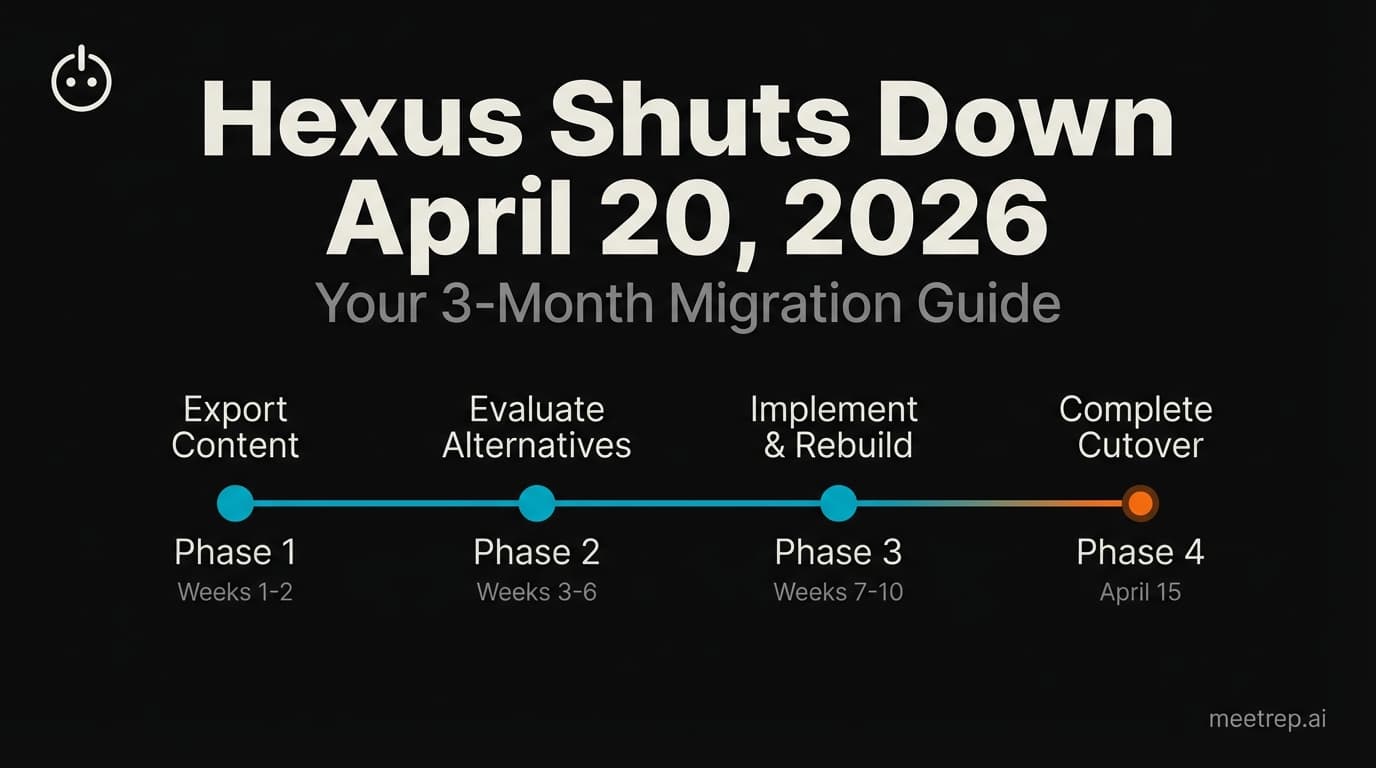
Hexus Acquired by Harvey AI: Congrats & What It Means for Demo Automation Teams
Hexus is shutting down following its acquisition by Harvey AI. Learn how to manage your migration and discover the best demo automation alternatives before April 2026.
Why the "Software Demo" is Broken—and Why AI Agents Are the Future
The traditional software demo is dead. Discover why 94% of B2B buyers rank vendors before calling sales and how AI agents are replacing manual demos to scale revenue.
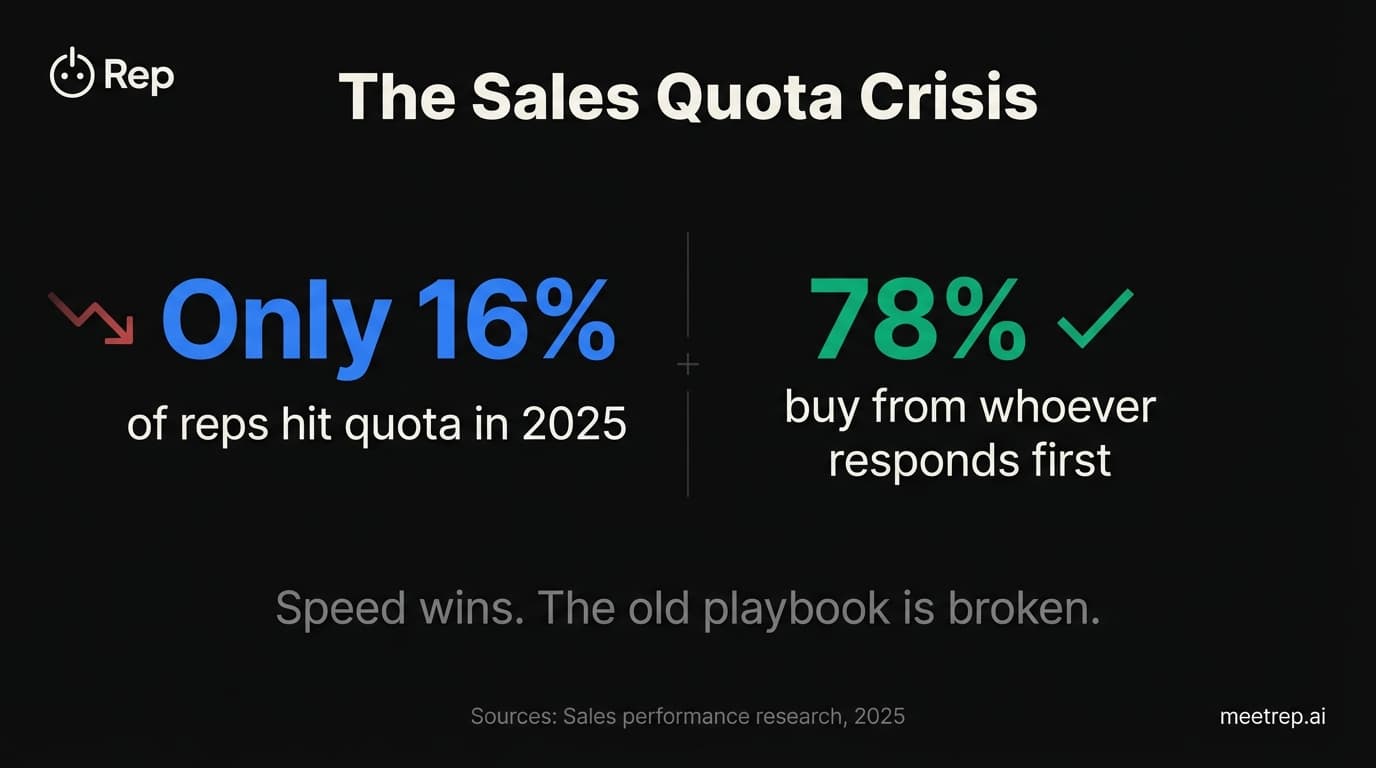
Why Autonomous Sales Software is the Future of B2B Sales (And Why the Old Playbook is Dead)
B2B sales is at a breaking point with quota attainment at 46%. Discover why autonomous 'Agentic AI' is the new standard for driving revenue and meeting the demand for rep-free buying.