Automated Sales Prospecting: The Complete Playbook for 2026

Executive Summary
- Sales reps spend only 28-30% of time selling—automation fixes this
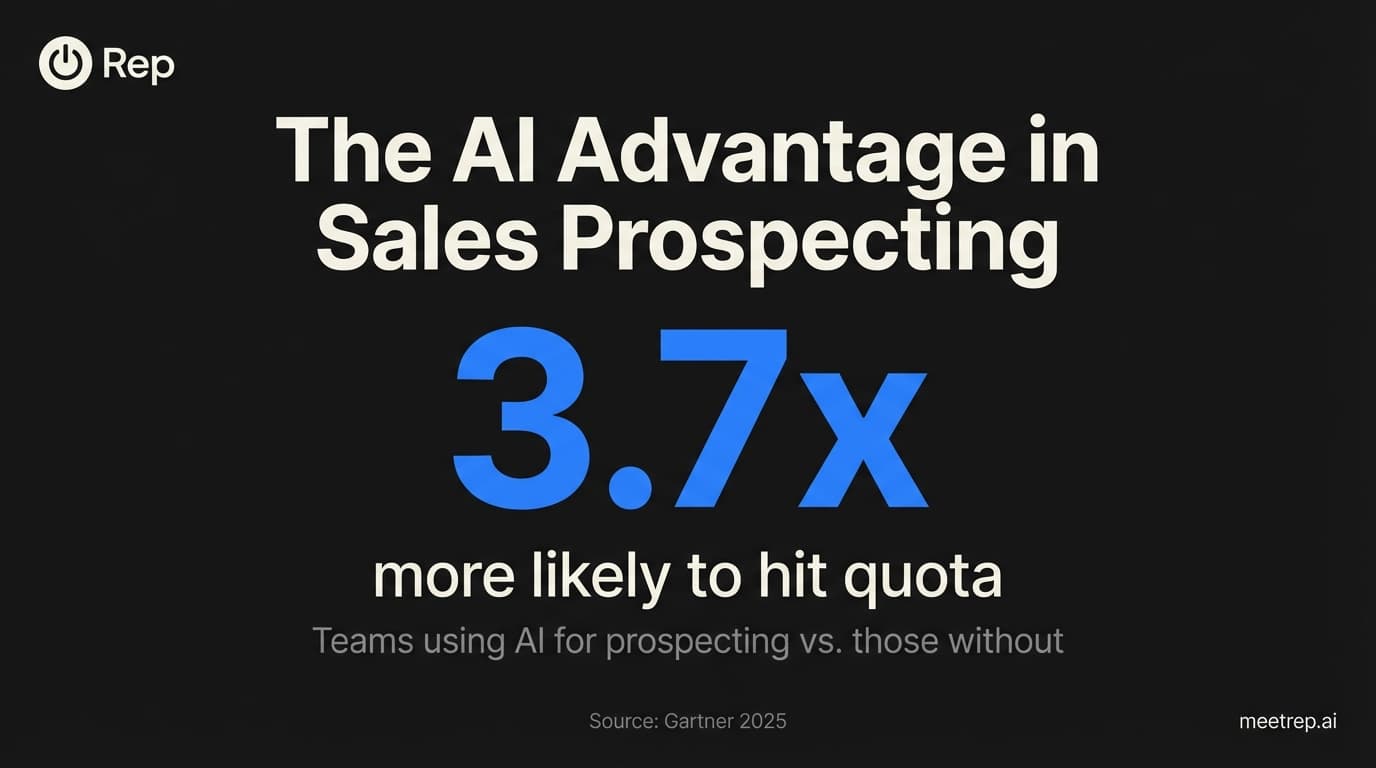
- Teams using AI are 3.7x more likely to hit quota (Gartner 2025)
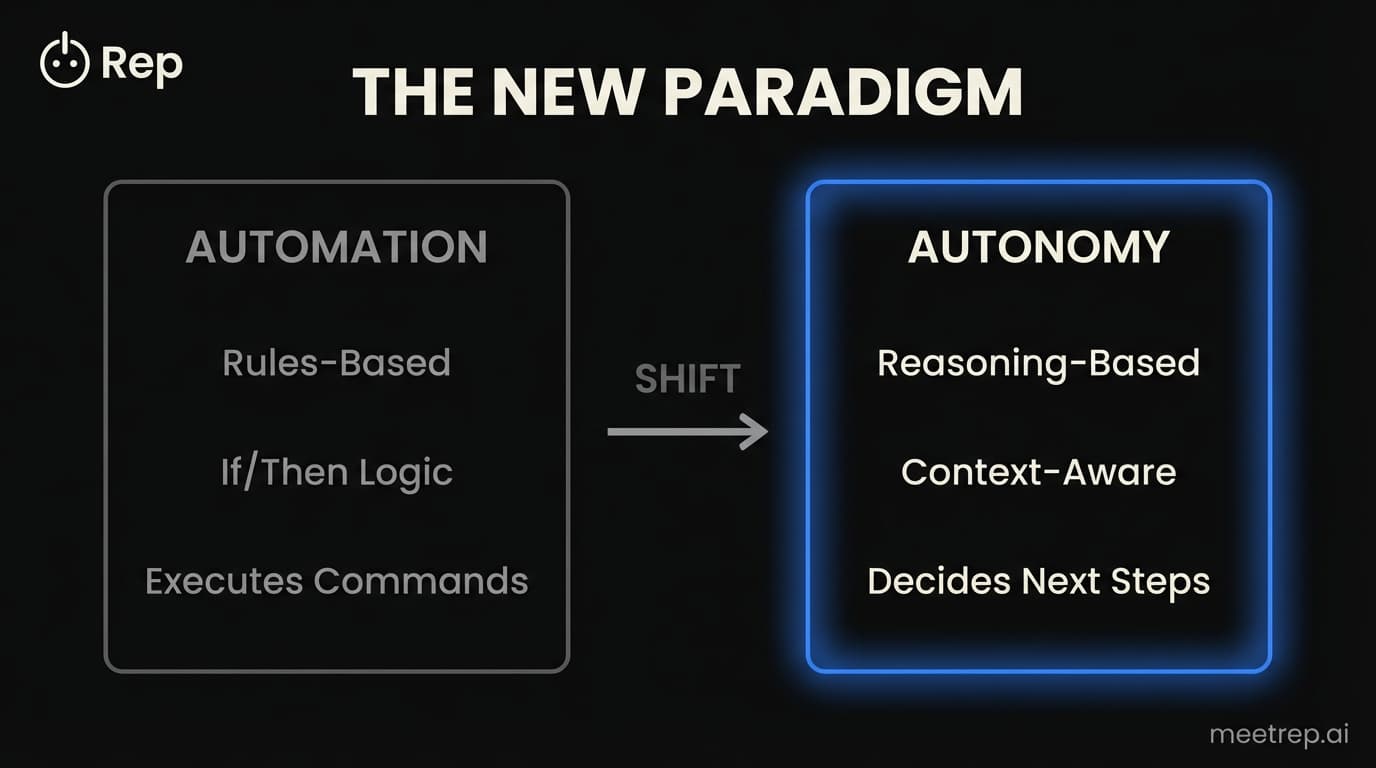
- The shift is from "automation" (rules) to "autonomy" (reasoning agents)
- Success requires data foundation first, AI layer second
- 7-step framework: unify data → define signals → deploy inbound agents → score leads → orchestrate outbound → automate sequences → human loop for complex deals
Your SDRs are spending 70% of their time on everything except selling. Research. Data entry. Scheduling. Follow-up admin. Meanwhile, 67% of sales reps don't expect to meet quota this year, and 84% missed it last year.
I've seen this play out twice now—first while building GoCustomer.ai, and now at Rep. The teams that win aren't just "automating more." They're thinking about automated sales prospecting completely differently than they were two years ago.
The old playbook—blast thousands of emails, hope for 1% response—is dead. Email-only campaigns saw lead rates drop 29% in 2025 alone. What's replacing it is something more interesting: autonomous agents that actually think, not just execute.
This is the playbook for what's working now.
What Is Automated Sales Prospecting in 2026?
Automated sales prospecting is the use of software and AI to identify, research, qualify, and engage potential buyers without constant manual intervention. The goal is simple: let your reps spend time on conversations that close deals, not on the busywork that leads up to them.
But here's what's changed. The tools of 2023-2024 were basically "if/then" machines. If prospect visits pricing page, then send email sequence. Rules-based. Predictable. Limited.
What's emerging now is completely different. Gartner predicts that by 2027, 95% of seller research workflows will begin with AI—up from less than 20% in 2024. We're not talking about AI that drafts emails. We're talking about autonomous agents that can research a prospect, identify buying signals, craft personalized outreach, and handle initial conversations without a human touching it.
The industry calls this "agentic AI." I think of it as the difference between giving someone a GPS that reads directions versus giving them a driver.
Key Insight: The shift isn't from manual to automated—it's from automation to autonomy. Rule-based tools execute what you tell them. Agentic AI reasons about what to do next.
Why Your Current Approach Is Failing
Let's be honest about the state of things.
Sales reps spend only 28-30% of their week actually selling. The rest? Data entry. Research. Scheduling. Admin. And it's gotten worse, not better.
Five years ago, booking an outbound meeting took 200-400 touchpoints. Today? 1,000-1,400 touchpoints according to industry benchmarks. The math doesn't work anymore.
Here's what I hear from sales leaders constantly: "We bought the tools. We're not seeing the results."
Sound familiar?
The problem usually isn't the tools. It's one of three things:
Bad data foundation. AI is only as good as the data it trains on. If your CRM is a mess—and 27% of reps don't even log their interactions—you're just automating garbage.
Single-channel thinking. Email-only lead rates fell 29% in 2025. The average prospect now needs 4.81 touches across multiple channels before responding. One channel doesn't cut it.
No human loop.75% of B2B buyers will still prefer human interaction for complex deals by 2030. Fully automated approaches hit a wall.
What we learned at GoCustomer: We built automation that could blast 10,000 emails a day. Impressive tech. Terrible results. The teams that succeeded weren't the ones who scaled volume—they were the ones who got the data right first. Automation without data hygiene is just faster failure.
What the Research Actually Shows
Before diving into the how, let's look at what's actually working—based on real data, not vendor marketing.
The numbers are stark. 83% of sales teams using AI grew revenue last year, compared to 66% without AI. That's not a small gap. And sellers partnering with AI are 3.7x more likely to meet quota according to Gartner's 2025 research.
But it's not just about revenue. 100% of reps using AI save at least 1 hour per week, with 38% saving 4-7 hours. That's a full day back per month for your top performers.
The pipeline impact is concrete too. 52% of teams report AI drove 10-25% pipeline increase. And 87% say AI-driven SDRs are effective or very effective.
The Data: Teams using AI for prospecting report 3.7x higher quota attainment than those without—but only 20% of companies feel prepared for implementation. The gap between "bought a tool" and "got results" is execution. [Source: Gartner 2025, Mirakl 2025]
Here's what actually moved the needle in documented case studies:
| Company | What They Did | Results | Source |
|---|---|---|---|
| Qlik | Salesloft for qualification + sequencing | 67% faster qualification, $14M pipeline, 39% reply rates | Salesloft 2024 |
| Sandler | HubSpot Breeze AI implementation | 50% shorter sales cycle, 4x SQLs | HubSpot 2024-2025 |
| Andela | Gong for coaching + enablement | 33% shorter cycles, 50% faster SDR ramp | Gong 2024 |
Not theoretical. Not projected. Actual results from named companies with specific numbers.
The 7-Step Framework for Automated Sales Prospecting
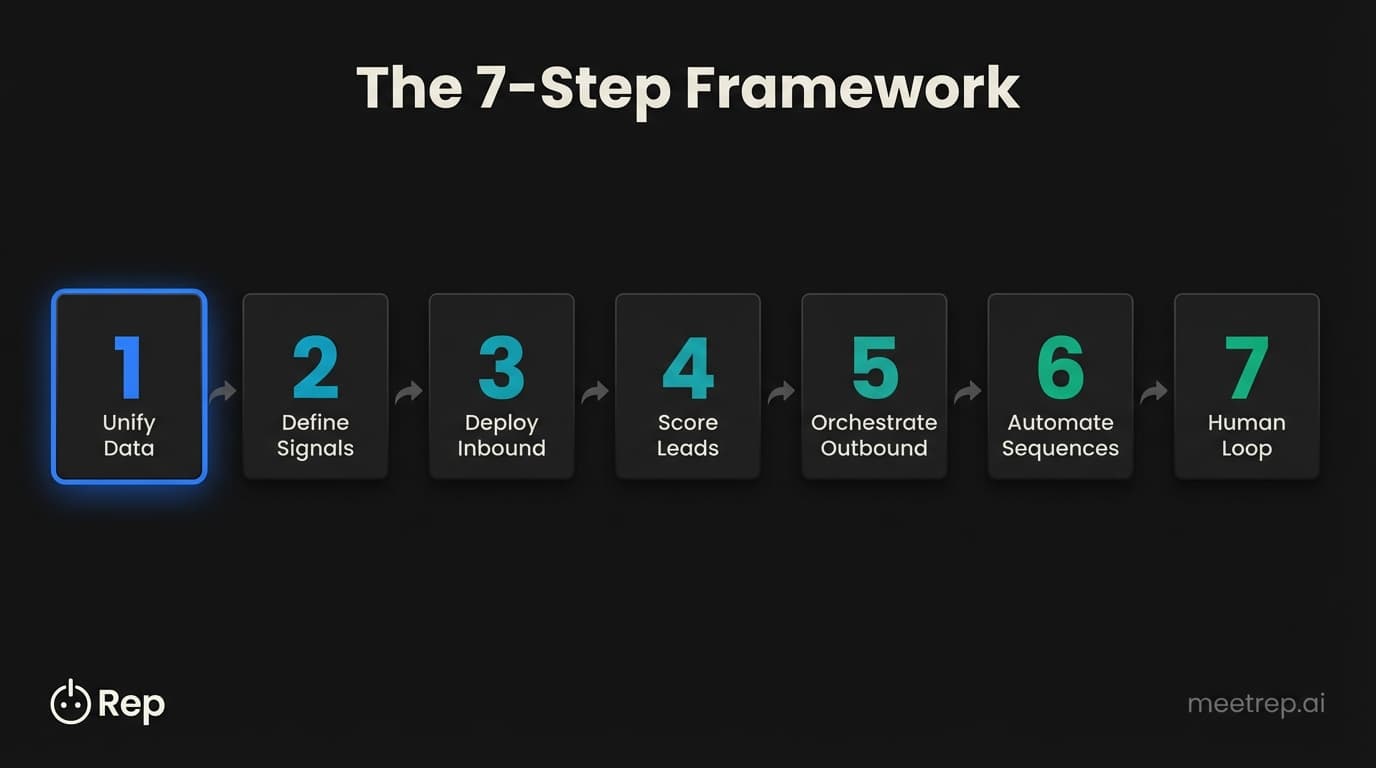
This is the framework I wish we'd had when building GoCustomer. It's what we use to advise teams now, and it's based on what's actually working in 2026—not what worked in 2023.
1. Unify Your Data Foundation
Before you buy any AI tool, fix your data. I know this isn't the exciting advice you wanted. But more than 4 out of 5 sellers cite data inaccuracy as their biggest AI obstacle according to BCG. You can't skip this.
What this looks like in practice:
- Audit your CRM for duplicate records, missing fields, outdated contacts
- Implement enrichment through tools like ZoomInfo, Apollo.io, or Clay
- Create data hygiene processes that run automatically
- Connect your intent data sources so signals flow to one place
This isn't glamorous work. But teams that skip it end up with automation that confidently sends the wrong message to the wrong person at the wrong time.
2. Define Signal-Based Triggers
Static lists are dead. "Everyone at companies with 500+ employees in fintech" is not a targeting strategy anymore.
Signal-based selling means you trigger outreach based on events that indicate buying intent: new funding rounds, leadership changes, tech stack additions, competitor mentions, job postings that signal growth.
72% of B2B buyers begin their purchasing journey with search, not with a salesperson. By the time they talk to you, they've done research. Your job is to show up when the signals indicate they're researching.
Tools like 6sense, Bombora, and G2 can surface intent signals. Clay can help you build workflows that act on them.
3. Deploy Inbound Agents
Here's the gap most prospecting stacks miss entirely: what happens when a prospect actually shows interest?
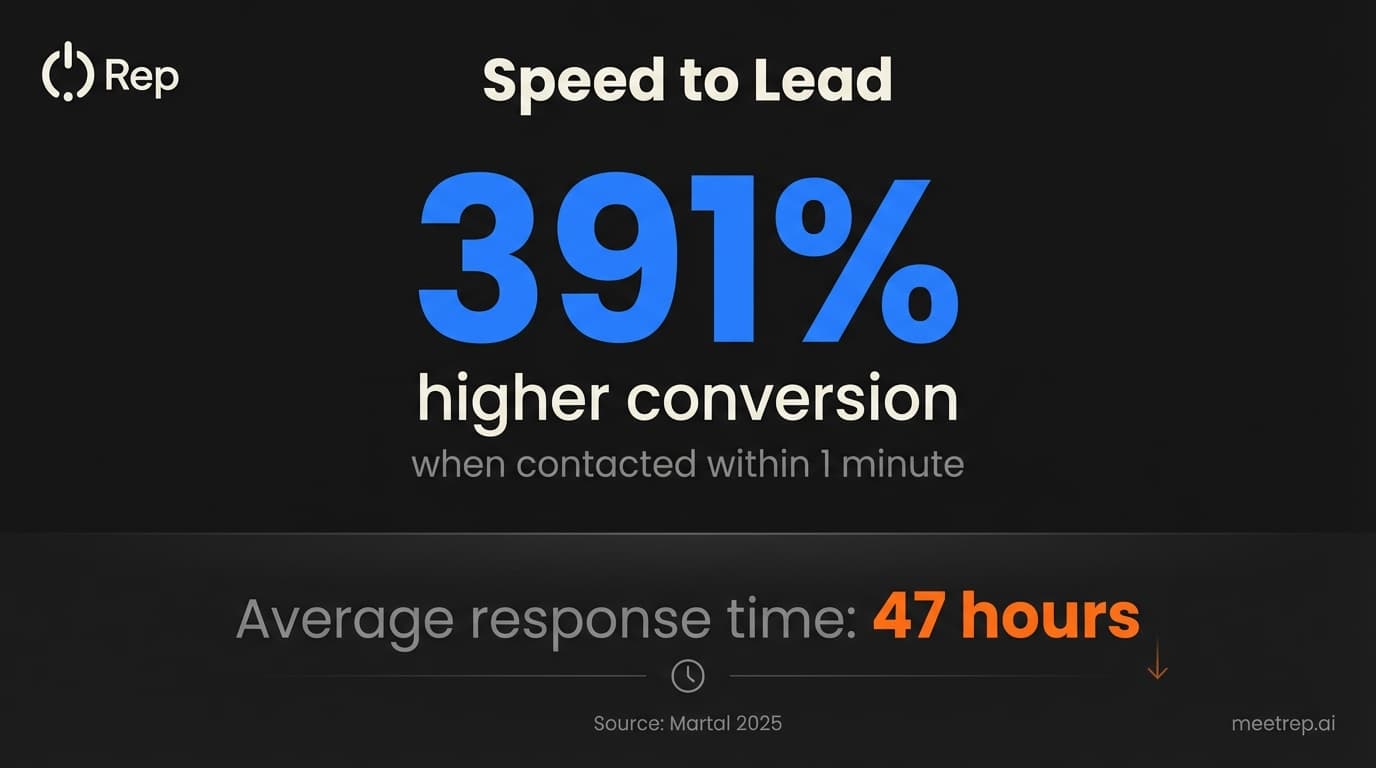
Speed to lead is everything. A lead contacted within 1 minute is 391% more likely to convert than one contacted after 30 minutes. But average response time? 47 hours.
That's where autonomous inbound agents matter. Not chatbots that collect emails and promise "someone will reach out." Actual AI that can engage, answer questions, and even demonstrate your product while the prospect's attention is hot.
At Rep, this is the problem we're solving—live product demos delivered by an AI agent that joins video calls, shares its screen, and walks prospects through your product. The prospect doesn't wait for your SDR's calendar to open up.
Lowe's saw conversion rates "more than double" when they deployed their AI assistant for product discovery. That's the power of instant engagement versus "we'll get back to you."
4. Implement AI-Powered Lead Scoring
Not every lead deserves the same treatment. Lead scoring helps you prioritize—but only if it's based on actual predictive signals, not arbitrary point values you made up in a conference room.
Modern lead scoring looks at:
- Engagement depth (what pages, how long, how often)
- Fit signals (firmographics, technographics, org structure)
- Intent signals (research activity, competitor comparisons)
- Behavioral patterns (timing, frequency, content consumed)
Razorpay implemented ML-based lead scoring and saw a 50% increase in monthly GMV with 70% reduction in team effort. The AI identified patterns humans couldn't see.
5. Orchestrate Multi-Channel Outbound
Email alone doesn't work anymore. I mentioned that email-only rates dropped 29% in 2025. And you need 4.81 touches on average to get a response.
Multi-channel orchestration means coordinated outreach across email, LinkedIn, phone, and even video—timed based on engagement signals, not arbitrary "Day 1, Day 3, Day 7" sequences.
54% of successful teams now use AI for personalized outbound emails. Tools like Outreach, Salesloft, and 11x.ai can handle the orchestration. But the key word is personalized. Automated doesn't mean generic.
6. Automate Email Sequences with Real Personalization
There's a difference between "Hi {first_name}, I noticed {company} is in the {industry} space" and actual personalization based on what you know about this specific prospect.
Real personalization means:
- Referencing specific signals (their recent funding, their job posting, their tech stack change)
- Connecting those signals to specific problems you solve
- Varying the angle based on role and likely priorities
Qlik achieved 39% email reply rates—that's not spray and pray. That's personalization at scale done right.
7. Human Loop for Complex Deals
Automation handles the volume. Humans close the deals.
45% of the most successful teams use a hybrid model—AI for research, qualification, and initial engagement, humans for relationship building and negotiation. And that's not going to change. Gartner projects that 75% of B2B buyers will still prefer human interaction for complex deals even by 2030.
The goal isn't to replace your AEs. It's to make sure they spend their time on qualified, engaged prospects who are ready for a real conversation—not on the 1,000 touches it took to get there.
Common mistake: Over-automation kills deals. I've seen teams set up fully automated sequences that run for 30 days with zero human oversight. Prospects get frustrated. Unsubscribe rates spike. Sender reputation tanks. The best automation has humans in the loop at key decision points.
Manual vs. Automated Prospecting: The Real Comparison
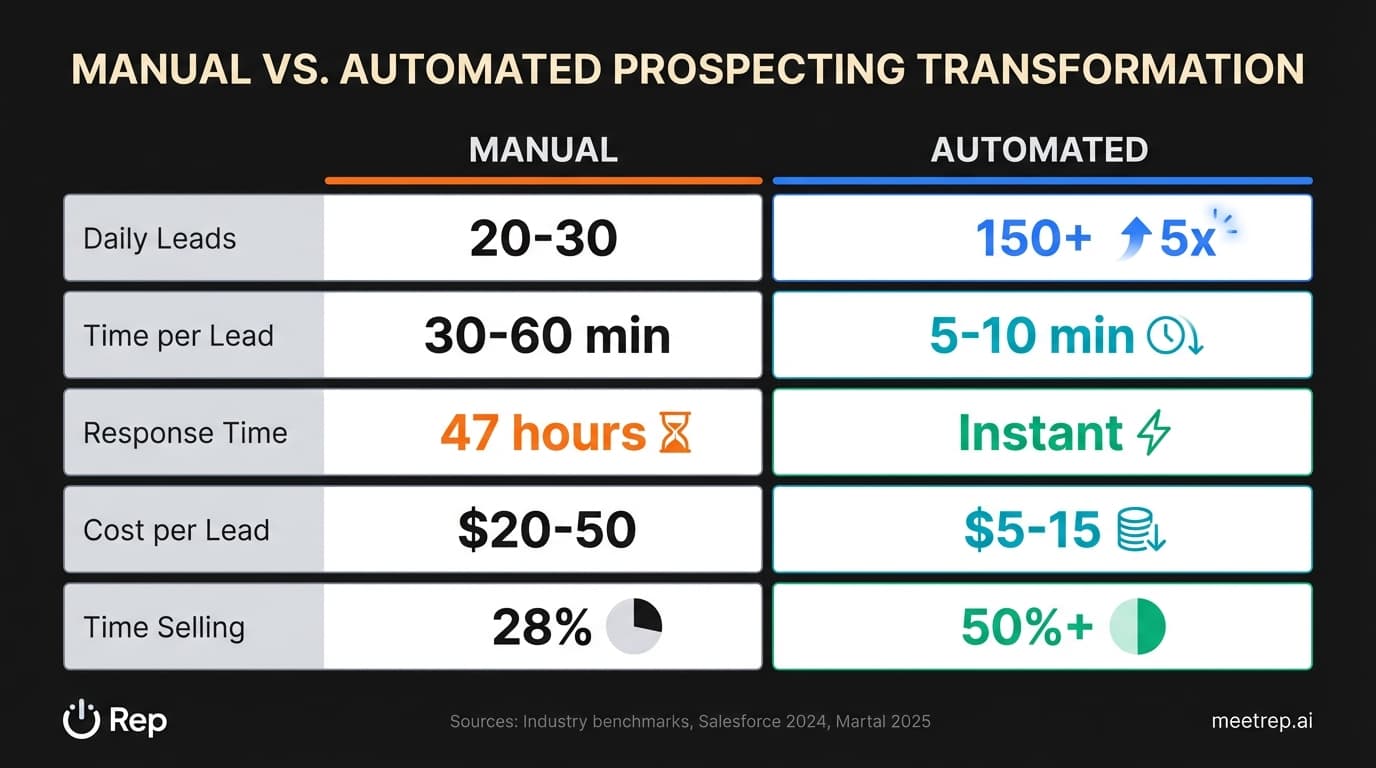
Let's put actual numbers on this:
| Metric | Manual Prospecting | Automated Prospecting | Improvement |
|---|---|---|---|
| Daily leads processed | 20-30 | 100-150+ | 5-7x |
| Time per prospect | 30-60 min | 5-10 min | 83% faster |
| Cost per lead | $20-$50 | $5-$15 | Up to 65% lower |
| Response time | 47 hours avg | Instant (with agents) | 391% conversion boost |
| Time spent selling | 28-30% | Target: 50%+ | 67% increase |
| Follow-up consistency | Variable | 100% | — |
| 24/7 availability | No | Yes | — |
Sources: Industry benchmarks, MarketsandMarkets 2025, Salesforce 2024, Martal 2025
The cost comparison gets even more dramatic when you factor in SDR economics. Fully loaded SDR cost runs $110K-$160K annually—that's 2-3x base salary when you include tools, management, overhead, and turnover. And with 39% annual SDR attrition, you're constantly retraining.
I'm not saying fire your SDRs. I'm saying stop having them do work that machines can handle.
Tools That Actually Work
I'm going to be direct about what categories matter and name specific tools—because vague "explore your options" advice helps no one.
Data and Enrichment:
- ZoomInfo — industry standard for contact data
- Apollo.io — solid all-in-one for SMB/mid-market
- Cognism — strong for GDPR-compliant European data
- Clay — flexible for custom enrichment workflows
Sales Engagement:
- Outreach — enterprise standard for sequences
- Salesloft — strong coaching features, see the Qlik results above
- Reply.io — good mid-market option
Autonomous Outbound:
- 11x.ai — "digital worker" approach to outbound prospecting
- Artisan — AI SDR with strong content marketing presence
Autonomous Inbound (Demo Automation):
- Rep — AI agent that joins video calls, shares screen, delivers live product demos 24/7
Conversation Intelligence:
- Gong — call analysis and deal intelligence (see Andela case study)
- Chorus — similar capabilities, now part of ZoomInfo
Enterprise Platforms:
- Salesforce — Agentforce for custom AI agents
- HubSpot — Breeze AI, particularly for mid-market (see Sandler case study)
Here's my take: the teams that will dominate prospecting over the next two years aren't the ones with the most expensive tools. They're the ones who understand that we've shifted from "automation" to "autonomy"—and who build their stack accordingly.
So here's the thing. That means data foundation first. Signal-based triggers, not static lists. Multi-channel orchestration, not email blasts. And critically, instant engagement when prospects show intent—not 47-hour response times.
At Rep, we're building for that last piece. When a prospect wants a demo at 2am, they shouldn't have to wait for your SDR's calendar. But regardless of what tools you choose, the framework is the same: get your data right, trigger on signals, engage instantly, and keep humans in the loop for what matters.
92% of executives plan to increase AI spending over the next three years. The question isn't whether your competitors will automate. It's whether you'll figure out how to do it right first.

Nadeem Azam
Founder
Software engineer & architect with 10+ years experience. Previously founded GoCustomer.ai.
Nadeem Azam is the Founder of Rep (meetrep.ai), building AI agents that give live product demos 24/7 for B2B sales teams. He writes about AI, sales automation, and the future of product demos.
Frequently Asked Questions
Table of Contents
- What Is Automated Sales Prospecting in 2026?
- Why Your Current Approach Is Failing
- What the Research Actually Shows
- The 7-Step Framework for Automated Sales Prospecting
- Manual vs. Automated Prospecting: The Real Comparison
- Tools That Actually Work
Ready to automate your demos?
Join the Rep Council and be among the first to experience AI-powered demos.
Get Early AccessRelated Articles
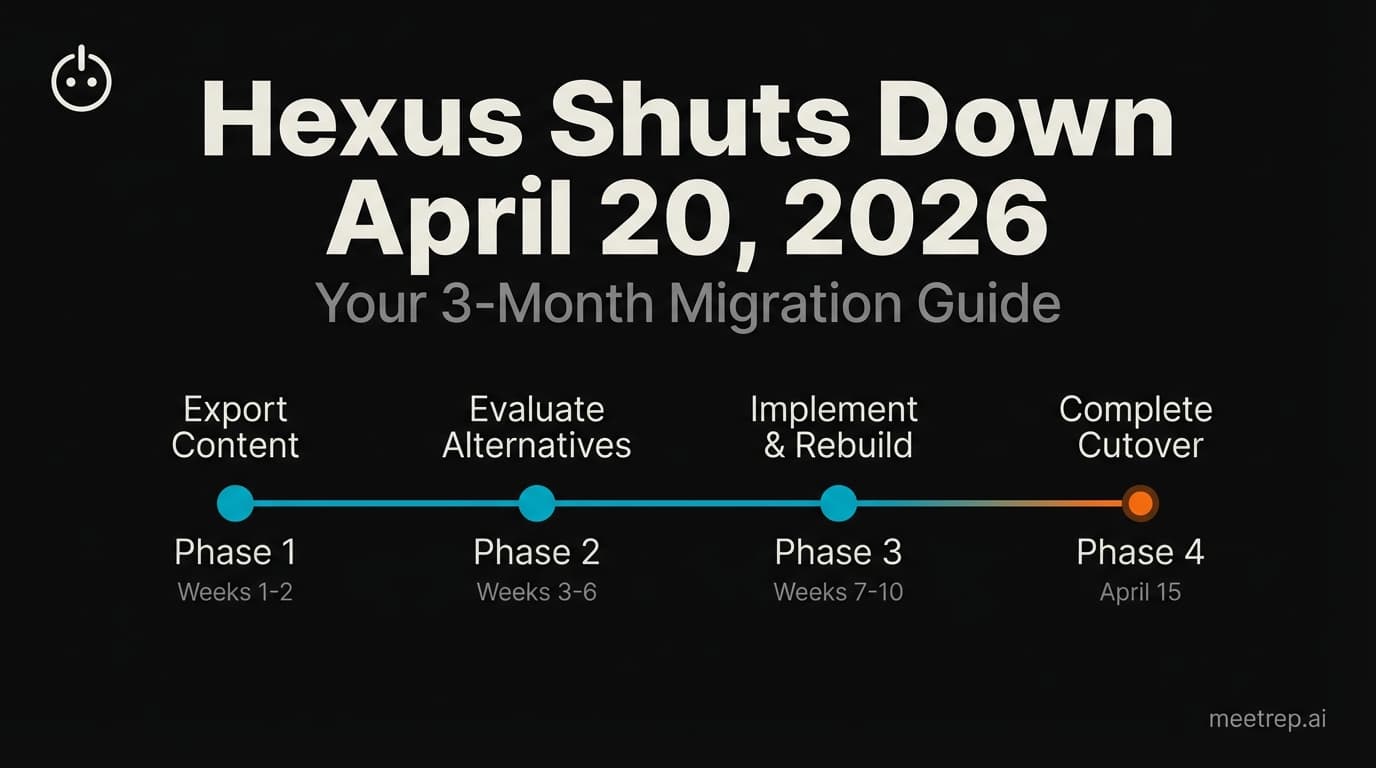
Hexus Acquired by Harvey AI: Congrats & What It Means for Demo Automation Teams
Hexus is shutting down following its acquisition by Harvey AI. Learn how to manage your migration and discover the best demo automation alternatives before April 2026.
Why the "Software Demo" is Broken—and Why AI Agents Are the Future
The traditional software demo is dead. Discover why 94% of B2B buyers rank vendors before calling sales and how AI agents are replacing manual demos to scale revenue.
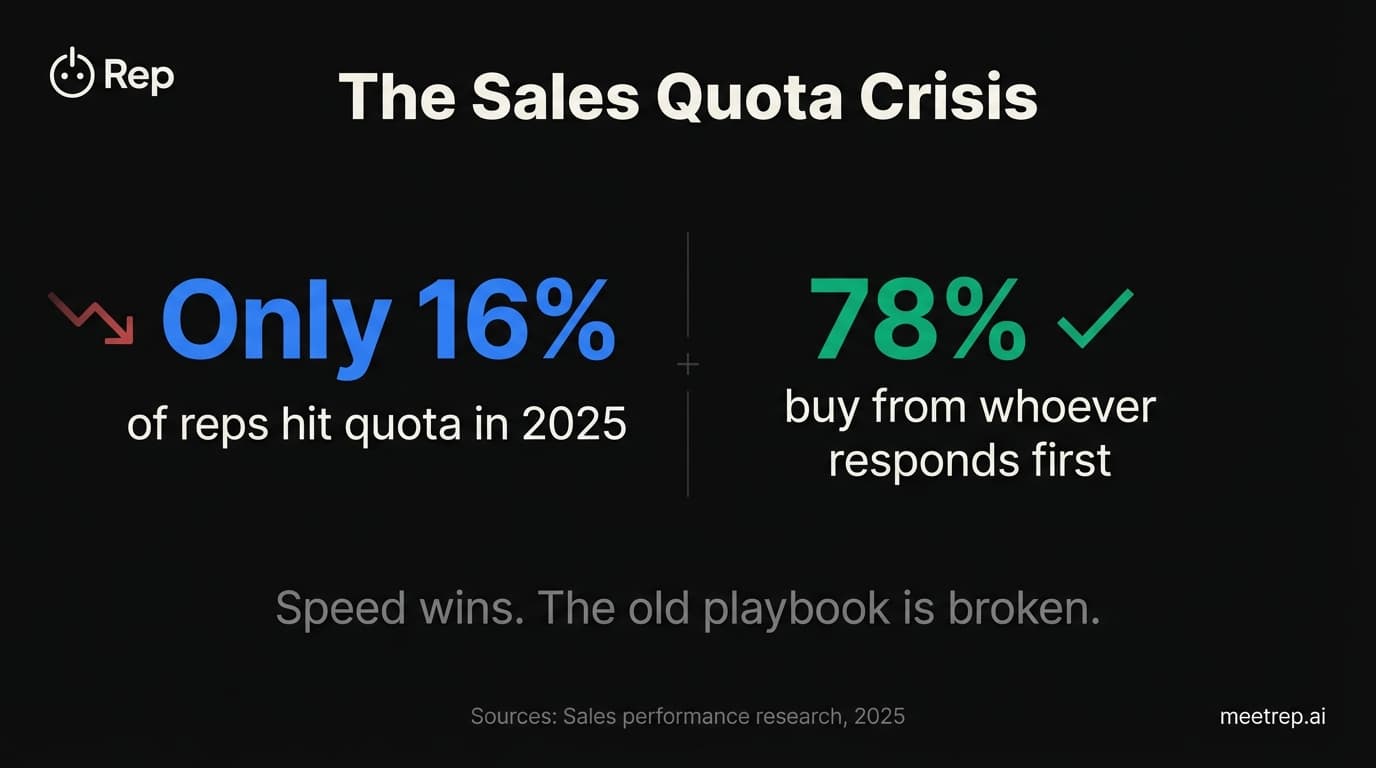
Why Autonomous Sales Software is the Future of B2B Sales (And Why the Old Playbook is Dead)
B2B sales is at a breaking point with quota attainment at 46%. Discover why autonomous 'Agentic AI' is the new standard for driving revenue and meeting the demand for rep-free buying.