AI Virtual Sales Assistant: Features, ROI, and What Actually Works in 2026

Executive Summary
- 81% of sales teams now use AI, but adoption doesn't equal results—the type of AI matters
- The market has split: outbound text bots (email/SMS) vs. inbound demo agents (video/voice)
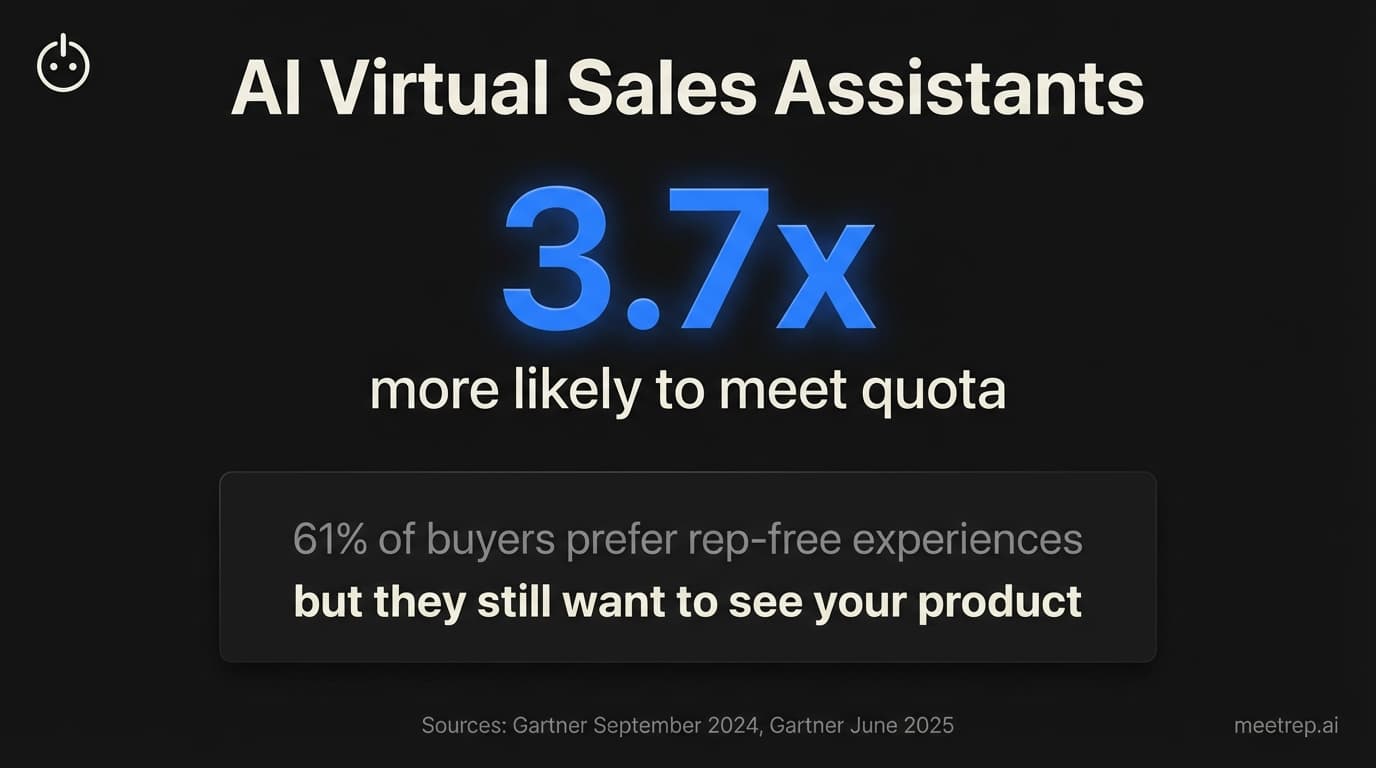
- 61% of B2B buyers prefer "rep-free" experiences, but they still want to see your product
- Teams using AI effectively are 3.7x more likely to meet quota (Gartner 2024)
- The real ROI comes from 24/7 demo availability, not just email automation
Here's the uncomfortable truth about AI virtual sales assistants: most buyers purchase the wrong type.
I'm not being dramatic. When we built GoCustomer.ai, I watched sales teams buy "AI-powered" tools that were really just email automation with a fancy wrapper. They expected a virtual sales assistant that could demo products and answer complex questions. What they got was a glorified mail merge.
The market has quietly split into two completely different categories. And vendors blur the lines because it helps them sell. But if you're a VP Sales or Sales Ops leader evaluating these tools, understanding this distinction is the difference between 3.7x quota improvement and expensive shelfware.
Let me break down what's actually happening—and what the data says works.
What Is an AI Virtual Sales Assistant? (And Why the Definition Matters)
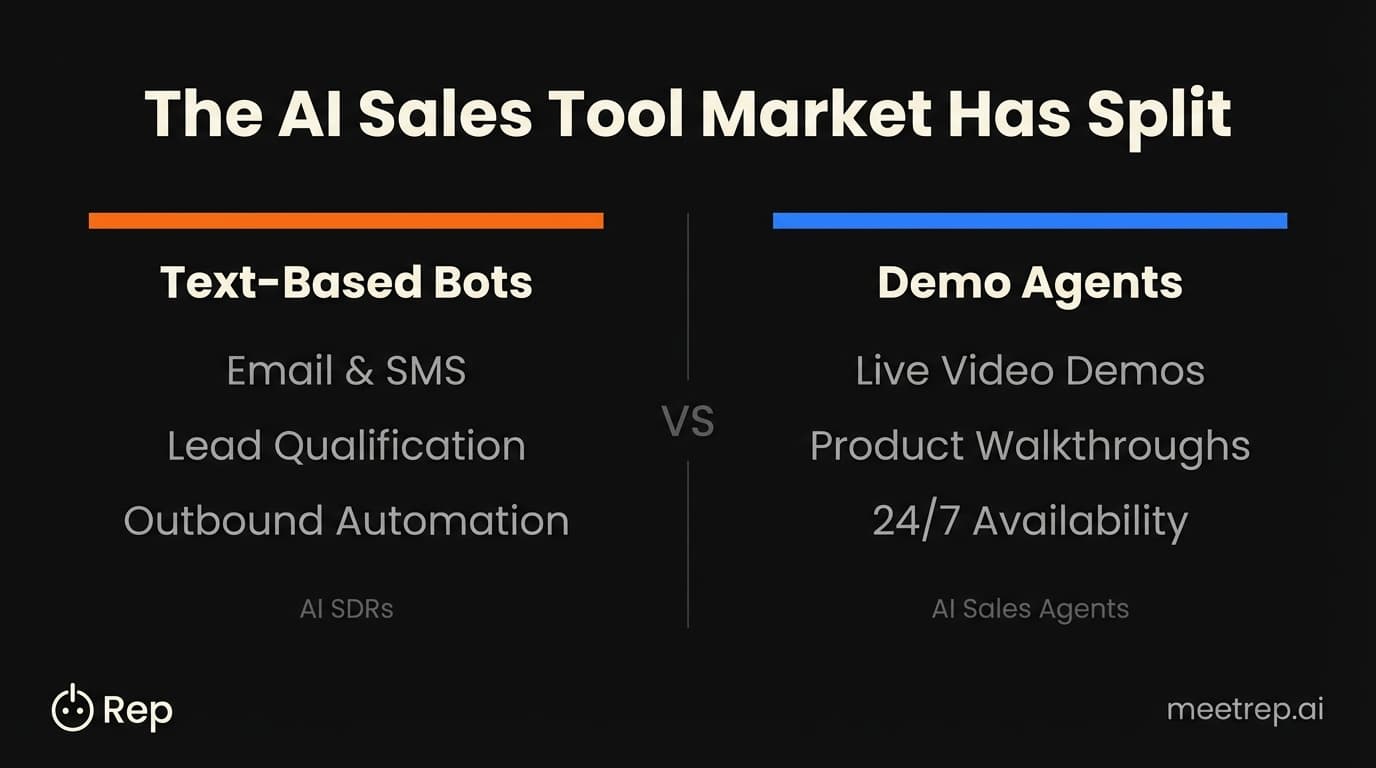
An AI virtual sales assistant is software that uses artificial intelligence to handle sales tasks—prospecting, qualifying, demonstrating products, answering questions—with varying degrees of autonomy. The key word is "varying." Some assist human reps. Some replace human tasks entirely. The difference is massive.
Here's where it gets confusing. Vendors use "AI sales assistant" to describe wildly different capabilities:
| Category | What It Actually Does | Autonomy Level | Examples |
|---|---|---|---|
| AI Sales Assistant | Helps reps with research, note-taking, CRM updates | Low (co-pilot) | Gong (analysis), Dialpad (coaching) |
| AI SDR | Sends automated emails/texts, basic lead qualification | Medium (supervised) | 11x, Artisan, Outreach |
| AI Sales Agent | Conducts demos, joins calls, handles conversations autonomously | High (independent) | Rep, Conversica |
That table represents three different products solving three different problems. Yet they're all marketed as "AI sales assistants."
Key Insight: Before evaluating any tool, ask: "Does this help my reps do their jobs, or does it do the job for them?" That single question eliminates 80% of the confusion.
When we started building Rep, we made a deliberate choice to build an agent, not an assistant. Why? Because the actual bottleneck in most sales orgs isn't email volume. It's demo capacity. More on that shortly.
Why Sales Leaders Are Searching for AI Assistants Right Now
So why the sudden interest? The data tells the story.
According to Salesforce's State of Sales Report 2024, surveying 5,500 sales professionals across 27 countries, 81% of sales teams are now experimenting with or have fully implemented AI. That's not early adopter territory anymore. That's mainstream.
But adoption isn't the driver. Pain is.
The productivity crisis is real.The same Salesforce research found that sales reps spend 70% of their time on non-selling activities. Data entry. Meeting prep. Follow-up scheduling. Admin work.
Think about that. You're paying full salary for 30% productivity.
The empty seat problem is expensive. According to Hoops HR and Forbes, unfilled sales roles cost companies $7,000-$10,000 per month in lost revenue. Every month you wait to hire—or can't hire—is bleeding money.
And buyer behavior has flipped. This one surprised me. Gartner's June 2025 Sales Survey found that 61% of B2B buyers now prefer an overall "rep-free" buying experience.
Let that sink in. The majority of your buyers are actively trying to avoid talking to your sales team.
But—and this is important—they still want to see your product. McKinsey's 2024 B2B Pulse Survey found 39% of B2B buyers are willing to spend $500,000+ in a single transaction through self-service channels. Half a million dollars. No human rep required.
That's not buyers hating sales. That's buyers hating friction. They want answers at 2 AM when they're actually researching. Not a calendar link for next Tuesday.
The Data: Teams without AI are falling behind fast. Salesforce 2024 found 83% of sales teams using AI saw revenue growth compared to just 66% without. That's a 1.3x advantage. And Gartner's September 2024 research, surveying 1,026 B2B sellers, showed reps who partner effectively with AI are 3.7x more likely to meet quota.
The 7 Features That Actually Matter (Not Marketing Fluff)
Every vendor lists "AI-powered" on their features page. Here's what separates tools that work from tools that become shelfware:
1. Live Video and Screen Sharing Capability
This is the dividing line. Most AI sales tools are text-based. Email sequences. Chat widgets. SMS. But 61% of buyers want rep-free experiences and they want to see the product.
Text can't solve that. You need AI that can join a video call, share its screen, and navigate your actual product.
At Rep, this was our core architectural decision. The AI joins video meetings, controls a real browser, and walks prospects through your product live. Not a pre-recorded video playlist. Not a click-through overlay. The actual product, navigated in real-time based on what the prospect asks.
Is this harder to build than an email bot? Yes. But it solves the actual bottleneck.
2. Natural Conversation Handling
"Press 1 for sales" killed IVR systems. Clunky chatbots are doing the same to AI. The bar for natural conversation is now high enough that stilted responses destroy trust immediately.
What to look for:
- Multi-turn conversation with context retention (it remembers what you discussed)
- Natural turn-taking (not awkward pauses or interruptions)
- Ability to handle unexpected questions (not just scripted paths)
3. Product Knowledge Integration
An AI that doesn't know your product is useless. But "knows your product" means different things to different vendors.
Bad: Generic AI trained on public internet data Better: AI trained on your uploaded documentation Best: AI that learns from watching actual demos and can answer questions the way your best rep would
This is why training methodology matters. Rep offers three ways to train: have it observe a live demo you give, upload recordings of existing demos, or upload documentation directly. The live demo approach captures the details and subtleties that documentation misses—like how you handle objections or which features you emphasize for different use cases.
4. Autonomous Action Execution
Here's the test: Can the AI complete a task end-to-end without human intervention?
- Assistant level: Drafts email, human sends it
- Agent level: Sends email, handles reply, books meeting, conducts demo
The second one scales. The first one just shifts work around.
5. CRM Integration
If the AI creates information silos, it creates problems. Every interaction, every insight, every action should flow back to your CRM. Non-negotiable for Sales Ops.
6. Intelligent Extraction
During conversations, valuable information surfaces: pain points, objections, competitors mentioned, timeline, budget signals. An AI that can automatically extract and categorize this saves hours of manual note-taking.
7. 24/7 Availability
Your best rep sleeps. Goes on vacation. Calls in sick. Has limited calendar slots.
AI doesn't. When a prospect wants a demo at 2 AM their time—when they're actually researching—the AI is there. This single capability addresses the response time crisis directly.
What we learned at GoCustomer: We built email automation first. It worked. But the biggest complaint from customers was still demo capacity. "Great, you got me more leads. Now I can't demo them all." That's when we realized the real leverage point was downstream.
The ROI Math: When AI Pays for Itself
Let's get specific. I've seen too many "up to X% improvement" claims without context.
Time Savings (Verified Data)
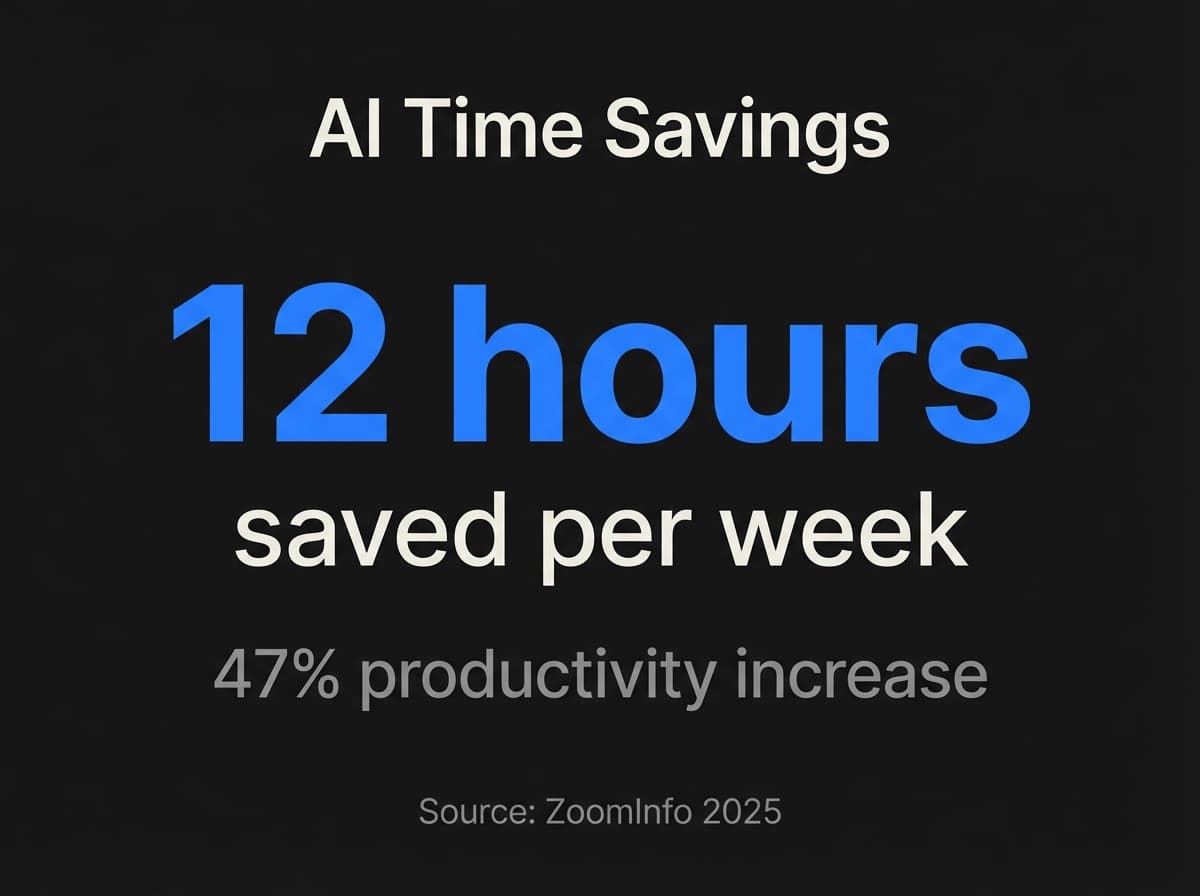
ZoomInfo's 2025 State of AI in Sales & Marketing, surveying 1,002 sales and marketing professionals, found AI users report a 47% productivity increase and save 12 hours per week.
Twelve hours. That's almost a full workday. Every week.
What does that time become? More qualified conversations. Better prep. Actually selling instead of admin work.
Revenue Impact (Named Examples)
Generic stats are easy to dismiss. Named companies with specific results aren't:
| Company | Industry | Result | Tool Used | Source |
|---|---|---|---|---|
| Pittsburgh Pirates | Sports | 325% increase in AI-influenced ticket revenue | Conversica | Conversica case studies |
| Demandbase | B2B Tech | 2X pipeline, 3X more meetings vs. human SDRs | Piper (Qualified) | Persana.ai |
| CenturyLink | Telecom | 20x ROI, 16-20% increase in qualified leads | Conversica | Conversica case study |
| Paycor | HR Tech | 141% increase in deal wins | Gong | Demand Gen Report Feb 2025 |
These aren't hypotheticals. These are named companies with quantified results.
The Empty Seat Comparison
Here's the math I find most compelling:
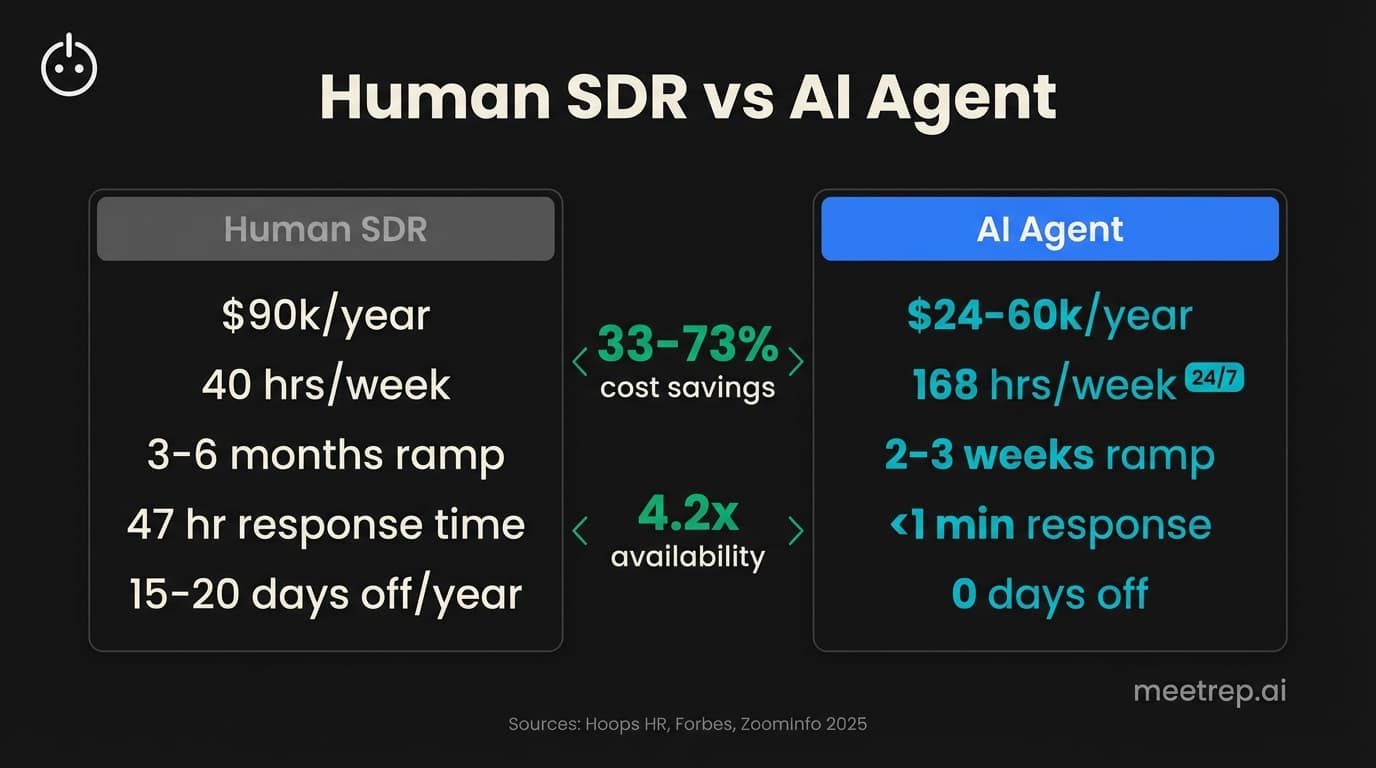
| Factor | Human SDR | AI Agent | Difference |
|---|---|---|---|
| Annual cost | $60-80k salary + benefits (~$90k total) | $24-60k depending on tool | 33-73% savings |
| Coverage | 40 hours/week | 168 hours/week (24/7) | 4.2x availability |
| Ramp time | 3-6 months | 2-3 weeks | 6-13 weeks faster |
| Sick days/vacation | 15-20 days/year | 0 | 100% uptime |
| Response time | 47 hours average | Under 1 minute | Near-instant |
And remember: every month with an unfilled territory costs $7,000-$10,000 in lost revenue. AI fills that seat immediately.
The Data: According to the Forrester Total Economic Impact study of Clari (September 2025), companies saw 398% ROI over three years with payback under six months. That's not a typical result—Clari is a mature platform—but it shows what's possible with proper implementation.
How to Choose the Right AI Sales Assistant (Decision Framework)
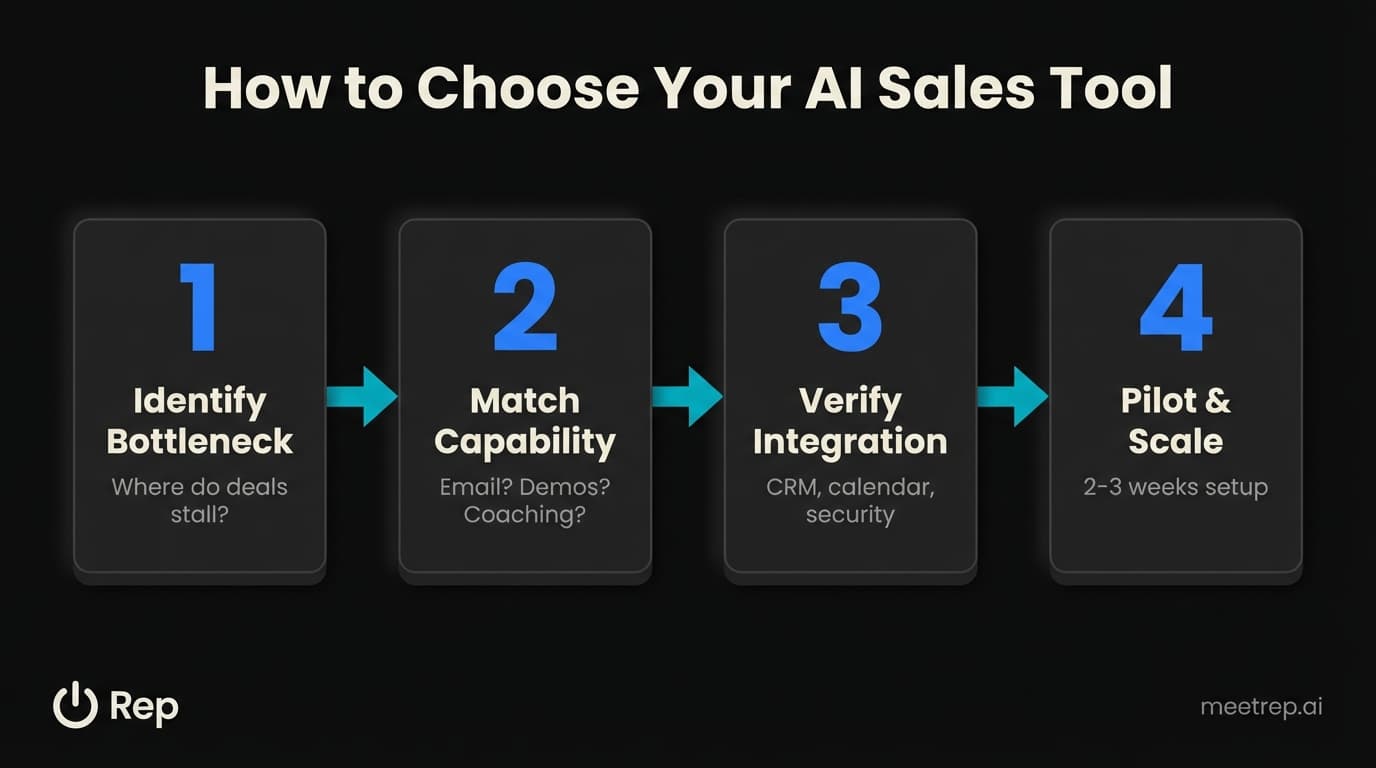
Here's the framework I wish I had when we were evaluating tools for GoCustomer:
Step 1: Identify Your Actual Bottleneck
This matters more than features. Ask:
- Are leads dying in the top of funnel? → You need outbound automation (11x, Artisan)
- Are demos the bottleneck? → You need an inbound demo agent (Rep, Conversica)
- Are reps inefficient on calls? → You need call intelligence (Gong, Dialpad)
If you're not sure, look at your data. Where do deals stall? Where do prospects drop off?
Step 2: Match Capability to Bottleneck
Simple flowchart:
- Primary need is outbound email/text prospecting? → 11x or Artisan
- Primary need is live video demos? → Rep
- Primary need is call coaching and analysis? → Gong
- Already deep in HubSpot ecosystem? → HubSpot Breeze
- Need high-volume email/SMS nurture? → Conversica
Step 3: Verify Integration Requirements
Before any demo, confirm:
- Does it integrate with your CRM? (Salesforce? HubSpot?)
- Does it work with your calendar system?
- Does it connect to your existing email?
- What's the security posture? (Ask specifically. Don't assume.)
Step 4: Set Realistic Implementation Expectations
Here's what actual implementation looks like:
Week 1-2: Integration and data connection. CRM, calendar, knowledge base setup.
Week 3: Training. Whether that's uploading recordings, providing documentation, or running live training sessions with the AI.
Week 4: Pilot. Limited scope. One product line, one geography, or one segment.
Month 2-3: Scale and optimize based on pilot learnings.
Two to three weeks of setup is normal. Not a product flaw—reality. Anyone promising "instant deployment" for an AI that handles complex sales conversations is either oversimplifying or selling you a template-based system that won't actually work.
Key Insight: G2 and Capterra reviews consistently mention "requires 2-3 weeks of handholding during setup." That's not a bug. Complex AI needs configuration. Treat it like hiring a new rep who needs onboarding—because functionally, that's what it is.
Addressing the Skepticism (What Could Go Wrong)
I talk to sales leaders every week. Here are the objections that come up repeatedly—and the honest answers:
"AI can't demo like a human"
Fair concern. And true for most tools. Text-based AI definitely can't. Pre-recorded demo playlists can't adapt to questions.
But AI that joins video calls and navigates your actual product live? That's different. It's not human. But it's available 24/7, it never gets tired, and it's consistent. For first-touch demos where the goal is qualification and education—not negotiation—it works.
"Buyers hate bots"
Do they? Or do they hate friction?
61% of buyers prefer rep-free experiences. 39% will spend half a million dollars without talking to a human. They don't hate bots. They hate waiting three days for a calendar link.
When the choice is "instant demo now" vs. "schedule a call for next week," instant wins. Every time.
"My data isn't clean enough"
Valid concern. Bad CRM data means bad AI output.
But here's the thing: most AI sales assistants learn from your content—documentation, demo recordings, knowledge base articles—not just CRM data. If your CRM is messy but your product documentation is solid, you can still get value.
Start there. Fix the CRM in parallel.
"It will replace my team"
This is the fear nobody says out loud. So I'll address it directly.
AI handles the tasks nobody wants: the 2 AM demo request, the low-probability lead that still needs a response, the repetitive intro demo that your senior AEs shouldn't be doing anyway.
Think of it as the SDR who works the graveyard shift. It feeds better-qualified, already-educated prospects to your human closers. That's augmentation, not replacement.
JPMorgan Chase deployed an internal AI tool that made advisors 95% faster at finding information. It didn't replace advisors. It made them more effective.
"ROI is uncertain"
I get it. You've seen tools fail before.
But consider the alternative math: every month you wait to decide costs $7,000-$10,000 in unfilled territory revenue. Even a tool that performs at 50% of promise beats that.
And the data isn't uncertain anymore. 83% of AI-using teams see revenue growth. 3.7x quota improvement for reps who use AI effectively. Multiple named companies with 20x+ ROI. The uncertainty window has closed.
What's Coming Next (2026-2028)
I'll make some predictions based on what we're seeing at Rep and what the research indicates:
The market will consolidate around agents, not assistants. Co-pilot tools that just help humans will lose to autonomous agents that complete tasks. Gartner predicts AI agents will outnumber human sellers by 10x by 2028.
Video-first AI will win the inbound demo battle. Text-based tools have peaked. Buyers want to see products. The tools that can show—not just tell—will capture that demand.
Multi-agent workflows will emerge. Imagine: AI SDR qualifies via email → AI Demo Agent conducts first demo → Human AE handles negotiation. The handoffs will get smoother.
Warning from Gartner: Melissa Hilbert, VP Analyst at Gartner Sales Practice, notes: "There's a value ceiling. Beyond a certain point, more AI does not mean more productivity. Layering additional prompts and tools onto already complex workflows risks overwhelming sellers and accelerating burnout."
The answer isn't more AI tools. It's the right AI tool for your specific bottleneck.
The AI sales assistant market is maturing fast. 81% of teams are already using AI in some form. The question isn't whether to adopt—it's which type matches your actual bottleneck.
My recommendation: if your problem is demo capacity—if qualified prospects are waiting too long for product conversations—look at AI agents that can join video calls and show your product live. That's the capability gap text-based tools can't fill.
The buyers have spoken. They want to see products, not read about them. They want instant access, not calendar friction. And they're willing to spend six figures without ever talking to a human.
The tools that match that behavior will win. The ones that don't will become expensive shelfware.
If you want to see what an AI that actually demos looks like, Rep is built specifically for this. It joins video calls, shares its screen, navigates your actual product, and answers questions in real-time. No pre-recorded playlists. No text-only limitations.
Worth a look if demos are your bottleneck.

Nadeem Azam
Founder
Software engineer & architect with 10+ years experience. Previously founded GoCustomer.ai.
Nadeem Azam is the Founder of Rep (meetrep.ai), building AI agents that give live product demos 24/7 for B2B sales teams. He writes about AI, sales automation, and the future of product demos.
Frequently Asked Questions
Table of Contents
- What Is an AI Virtual Sales Assistant? (And Why the Definition Matters)
- Why Sales Leaders Are Searching for AI Assistants Right Now
- The 7 Features That Actually Matter (Not Marketing Fluff)
- The ROI Math: When AI Pays for Itself
- How to Choose the Right AI Sales Assistant (Decision Framework)
- Addressing the Skepticism (What Could Go Wrong)
- What's Coming Next (2026-2028)
Ready to automate your demos?
Join the Rep Council and be among the first to experience AI-powered demos.
Get Early AccessRelated Articles
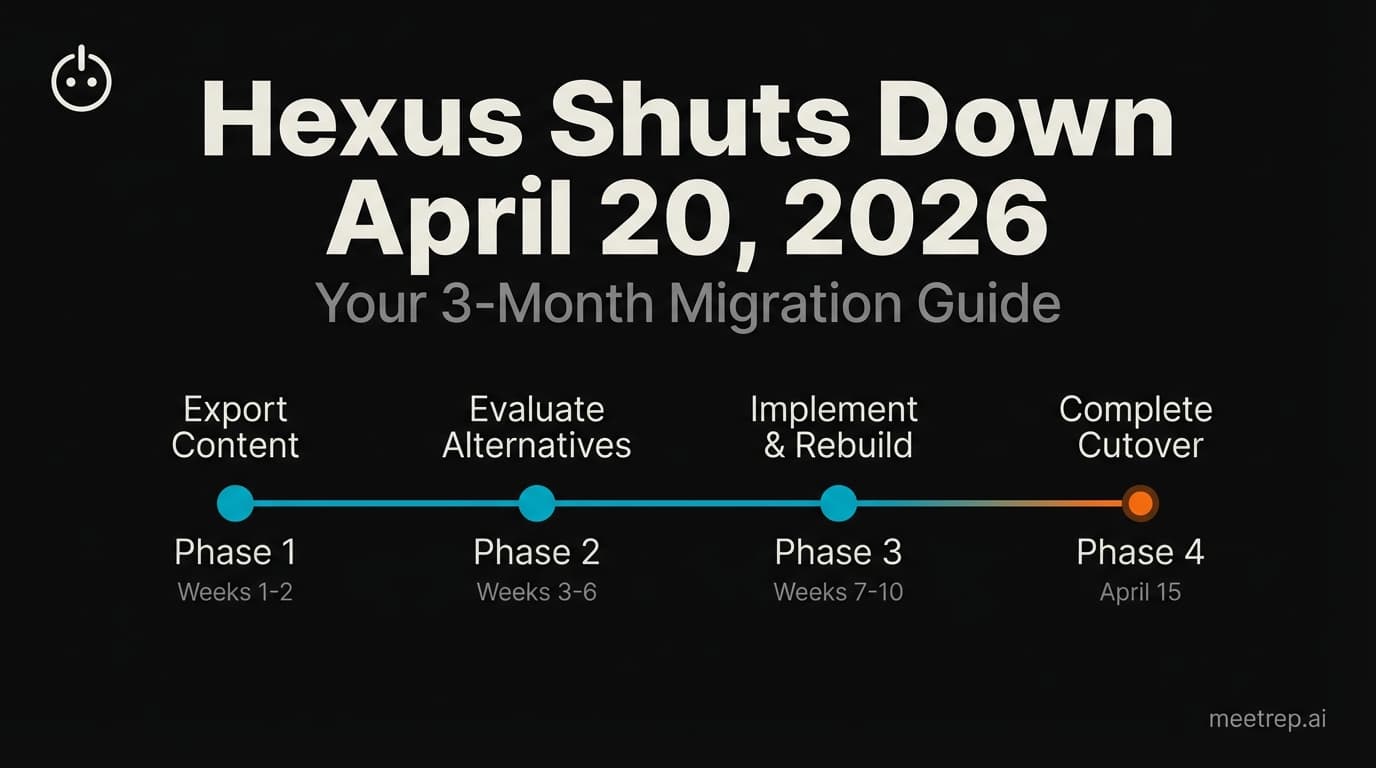
Hexus Acquired by Harvey AI: Congrats & What It Means for Demo Automation Teams
Hexus is shutting down following its acquisition by Harvey AI. Learn how to manage your migration and discover the best demo automation alternatives before April 2026.
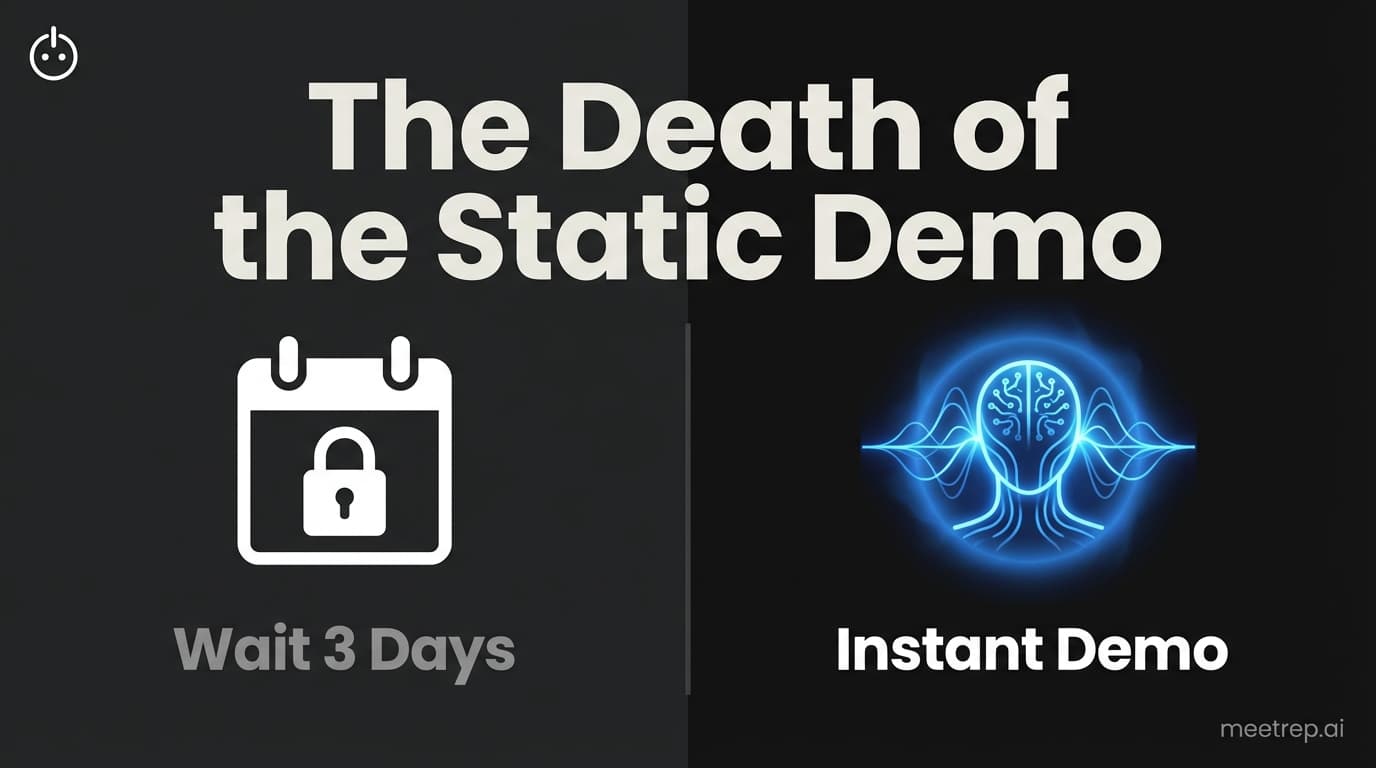
Why the "Software Demo" is Broken—and Why AI Agents Are the Future
The traditional software demo is dead. Discover why 94% of B2B buyers rank vendors before calling sales and how AI agents are replacing manual demos to scale revenue.
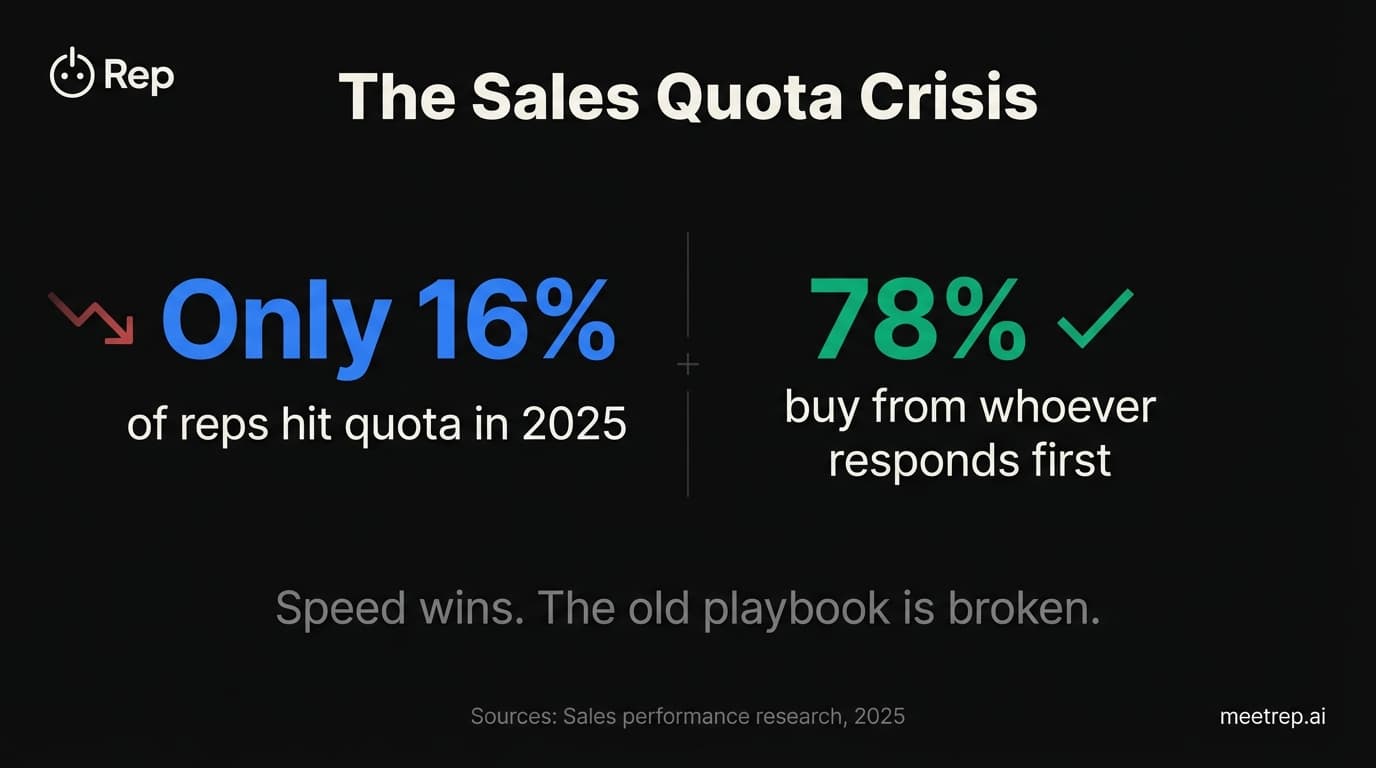
Why Autonomous Sales Software is the Future of B2B Sales (And Why the Old Playbook is Dead)
B2B sales is at a breaking point with quota attainment at 46%. Discover why autonomous 'Agentic AI' is the new standard for driving revenue and meeting the demand for rep-free buying.