AI SDR: The 2026 Guide for Leaders

Executive Summary
- The Shift: Buyers demand digital, instant interactions (80% of the journey).
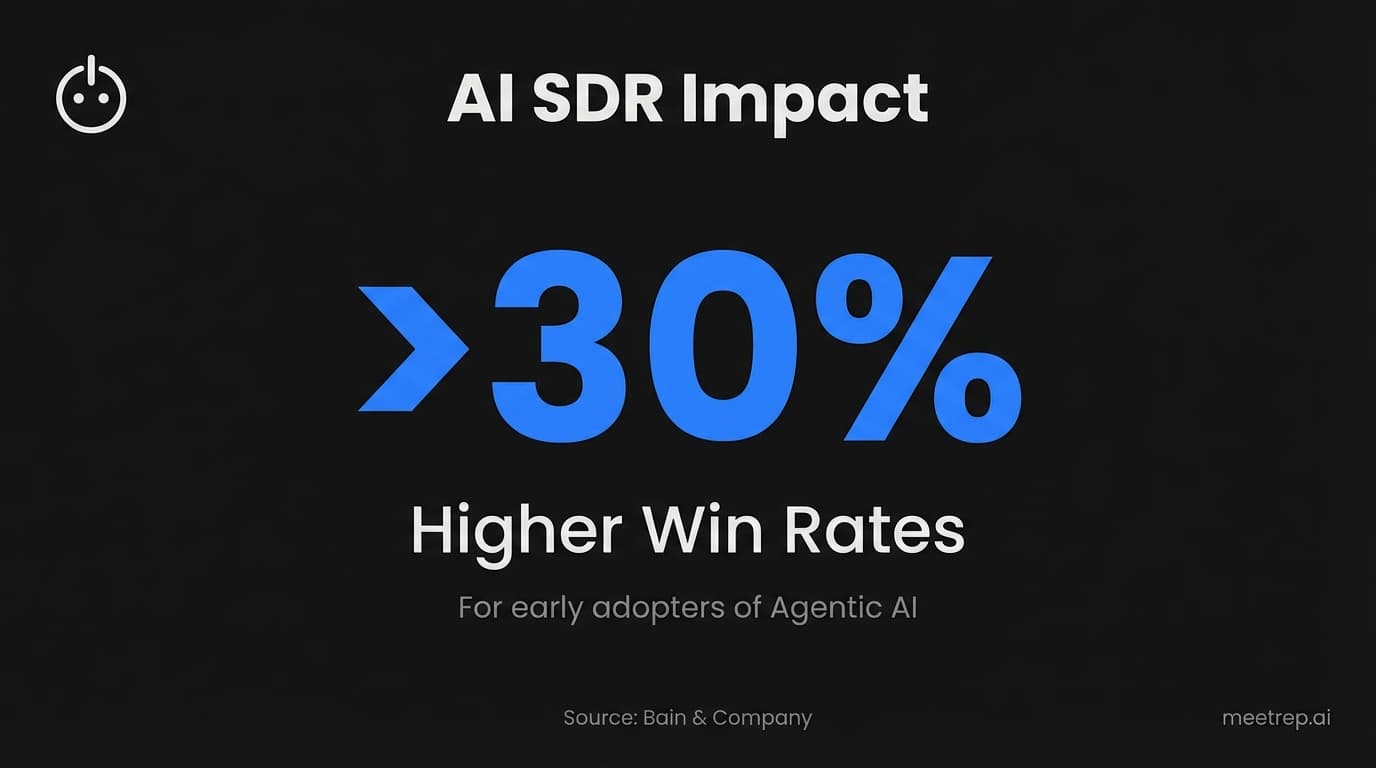
- The Win: Early adopters are seeing >30% higher win rates and massive cost reductions.
- The Strategy: Stop using AI for volume. Use "Signal-Based Selling" and "Inbound Agents."
- The Reality: This isn't a "set and forget" tool. You need a human-in-the-loop strategy.
By Nadeem AzamFounder, Rep (meetrep.ai)
The traditional SDR model is breaking. I don’t say that lightly.
After building sales automation tools at GoCustomer.ai and now at Rep, I’ve watched the math change. You used to be able to hire junior reps, give them a script, and get results. But buyers have moved on.
According to Gartner, 80% of B2B sales interactions between suppliers and buyers will occur in digital channels by 2025. Buyers want to self-serve. They want answers now, not on a qualification call scheduled for next Tuesday.
If you’re reading this, you’re likely balancing two fears: the fear of missing out on the efficiency of an AI SDR, and the fear of ruining your brand with robotic spam.
This guide cuts through the noise. We’ll look at what Agentic AI actually is, why "spray and pray" is dead, and how to build a hybrid team that actually closes deals.
What Is an AI SDR?
An AI SDR (Artificial Intelligence Sales Development Representative) is an autonomous software agent that automates early-stage sales tasks. Unlike simple chatbots of the past, modern "Agentic AI" SDRs use generative AI to research prospects, execute personalized multi-channel outreach (email, voice, LinkedIn), qualify inbound leads, and even conduct live product demonstrations 24/7.
As of 2025, 56% of sales professionals use AI daily according to industry data, with adopters being twice as likely to exceed quotas compared to non-users.
But here is where most leaders get confused. They think "AI SDR" just means "automated email blaster." That’s a mistake. (A big one).
Real Agentic AI doesn't just follow a script. It reasons. It plans. It looks at a website, sees the company is hiring for a VP of Engineering, and drafts a message referencing that specific role. It’s a digital worker, not a macro.
The 3 Types of AI SDRs You Need to Know
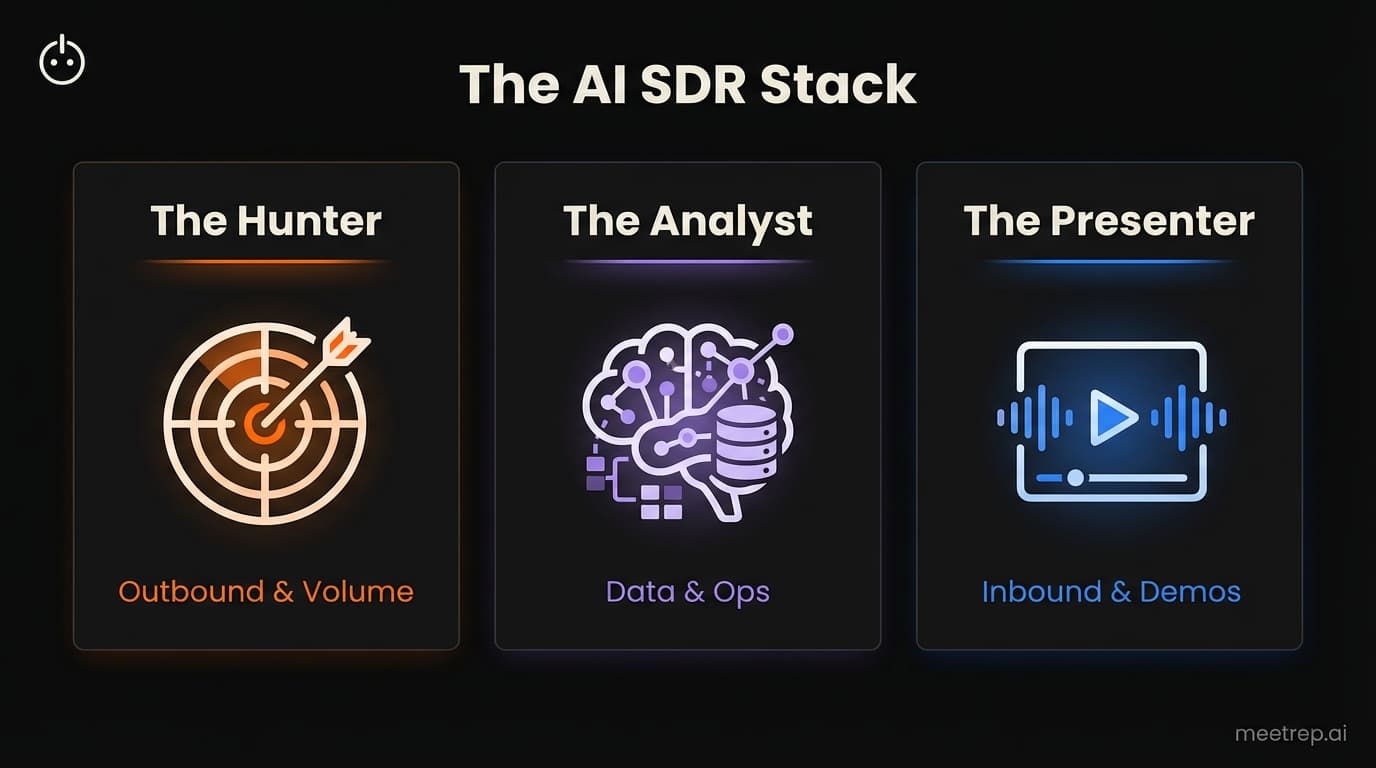
When we built the architecture for Rep, we looked at the entire stack. We realized that "AI SDR" is actually a catch-all term for three distinct types of agents.
You need to know the difference, or you'll buy the wrong tool.
1. The Hunter (Outbound)
These agents focus on finding net-new business. They scrape data, find emails, and send outbound sequences. They are effectively an unlimited army of researchers and emailers.
- Examples: 11x.ai (Alice), Artisan (Ava).
- Best for: Top-of-funnel volume and initial engagement.
- The Risk: If you don't calibrate them correctly, they can burn through your total addressable market (TAM) with generic messaging in days.
2. The Analyst (Data & Ops)
These aren't always customer-facing. They act as the "brain," enriching data and scoring intent so your Hunters know who to target. They run "waterfall enrichment"—checking multiple data providers to find the one valid email address or phone number.
- Examples: Clay, Salesforce Agentforce.
- Best for: Building the lists that power the other agents.
3. The Presenter (Inbound & Demo)
This is the gap most teams miss. These agents handle the "speed-to-lead" problem. They join live calls, answer questions via voice, and demonstrate the product instantly.
- Examples: Rep.
- Best for: Converting high-intent website traffic and 24/7 qualification.
Key Insight: Most leaders over-index on "The Hunter" (more emails!) and neglect "The Presenter." But if you drive traffic that you can't service instantly, you're burning cash.
Why Leaders Are Shifting to "Signal-Based Selling"
At GoCustomer.ai, we learned a hard lesson: Volume is not value.
In 2022, you could send 1,000 emails and get meetings. Today? Conversion rates for generic AI outreach have dipped to 0.5–1.5%according to Landbase. Inbox filters are smarter. Buyers are tired.
If you use an AI SDR just to send more emails, you will fail.
The winning strategy for 2026 is Signal-Based Selling. This means using AI to detect high-intent moments—a funding announcement, a new hire, a visit to your pricing page—and acting on that signal immediately.
The "Speed-to-Lead" Crisis
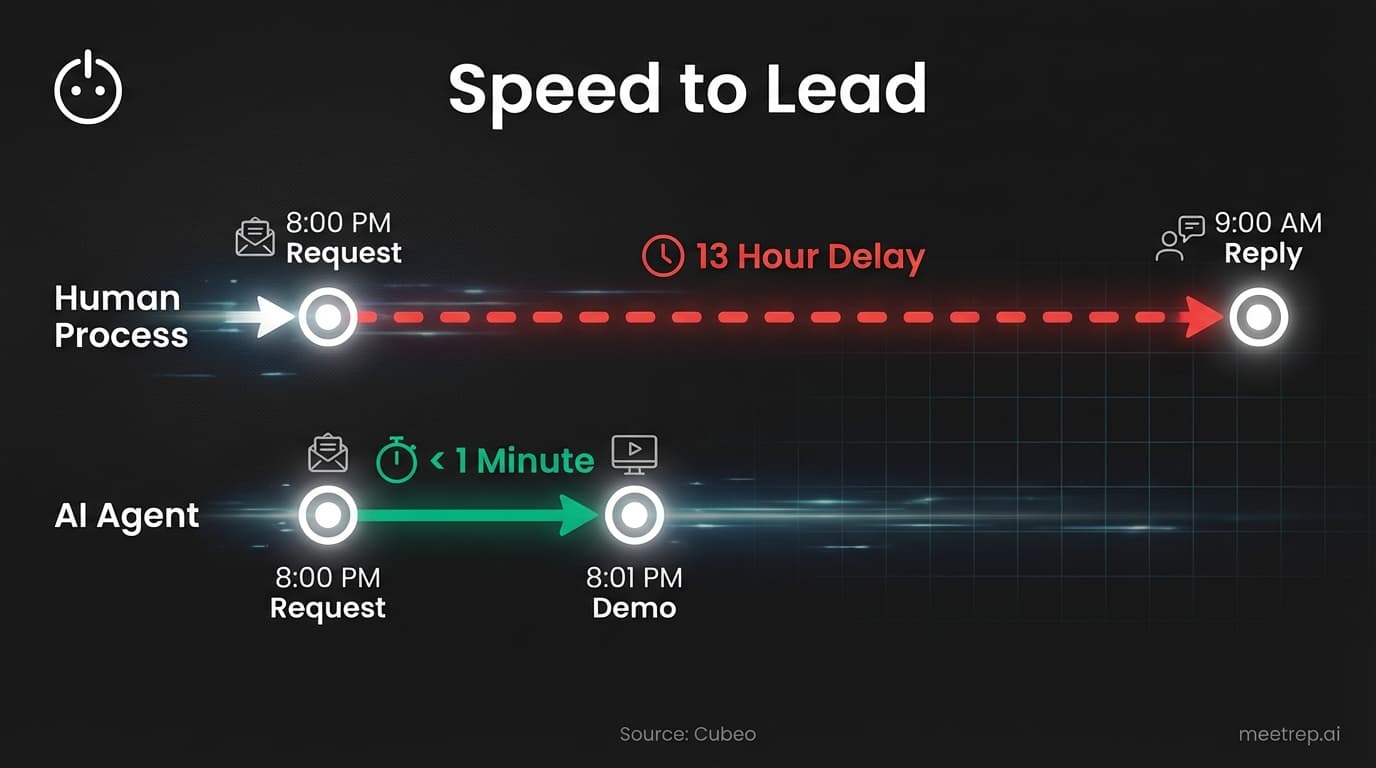
Here is the math that keeps me up at night.
- A prospect visits your site at 8 PM.
- They request a demo.
- Your human SDR replies at 9 AM the next day.
- Result: You likely lost the deal.
According to Cubeo, AI SDRs respond to inquiries in under a minute. That instant response—capturing the prospect while they are still thinking about you—is where the revenue is hiding.
The Economics: Human vs. AI SDR
Let's look at the P&L. I'm not suggesting you fire your team tomorrow. But you have to justify the spend.
Percepture reports that AI SDRs cost 70-80% less than human reps. But the real story is in the output.
| Feature | Human SDR | AI SDR |
|---|---|---|
| Availability | 8 hours/day, Mon-Fri | 24/7/365 |
| Annual Cost | ~$60k-$90k + benefits | ~$15k-$30k (subscription) |
| Ramp Time | 3-4 months | Instant |
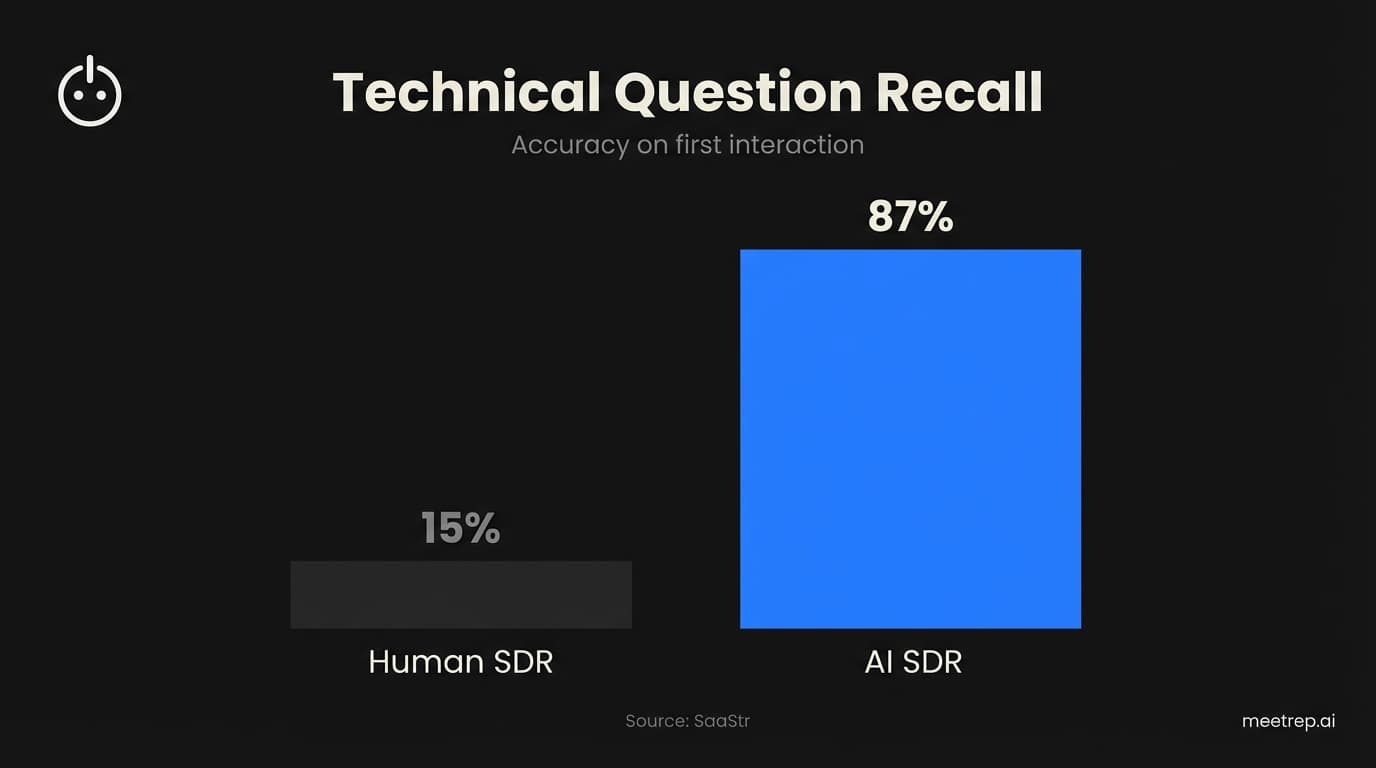
| Technical Recall | 15% accurate on first call | 87% accurate Source: SaaStr |
| Consistency | Variable (mood, burnout) | 100% Consistent |
The Data: According to SaaStr, AI SDRs answer technical questions correctly 87% of the time, compared to just 15% for human SDRs who often have to "park" questions for an Account Executive.
My Recommendation: The Hybrid Model
Don't view this as a replacement. View it as a promotion for your humans.
Let the AI handle the drudgery—the data entry, the initial qualification, the 2 AM demo requests. Let your human SDRs focus on the creative, complex deal-making that requires empathy.
Case Studies: Who Is Actually Winning?
You might be thinking, "This sounds great on paper, but does it work?"
The data says yes. Early AI deployments in sales have boosted win rates by more than 30%, according to Bain & Company.
Here are two verified examples of companies getting it right:
1. Connecteam (via 11x) Connecteam didn't just dabble; they went all in. By deploying digital workers, they handled 120,000 calls per month. The result? They saved $450,000+ annually in SDR salaries while seeing a 73% decrease in no-shows. Source: 11x Case Study.
2. SaaStr (via Artisan) Jason Lemkin’s team used AI for outbound. They didn't spam; they targeted. The result was $2M+ in closed revenue from AI-generated leads. Source: SaaStr.
Implementation Guide: How to Avoid "Bot Spam"
I’ve built these tools. I’ve seen the backend. Here is where implementations go wrong.
If you buy an AI SDR and point it at a dirty CSV list of leads, you will destroy your domain reputation. Guaranteed.
Step 1: Fix Your Data First
Garbage in, garbage out. Before you turn on an agent like Clay or 11x, your CRM data needs to be pristine. The AI will trust whatever you give it. If you tell it "John" works at "Apple" but John left six months ago, you look like a fool.
You need to set up Waterfall Enrichment. This means when your AI finds a lead, it doesn't just guess the email. It checks Provider A. If that fails, it checks Provider B. It verifies the email is valid before sending.
Step 2: Human-in-the-Loop Validation
At Rep, we built a feature called Inline Validation. Why? Because we don't trust the AI to guess your product messaging on day one.
In the early days, you need a human to review the "playbooks" the AI generates. Treat the AI like a new hire. You wouldn't let a Day 1 intern call your biggest prospect without listening in, right? Do the same here.
Common Mistake: Setting the AI to "Fully Autonomous" immediately. Start with "Co-Pilot" mode. Let it draft, you approve. Once it hits 95% accuracy, then let it run.
Step 3: Solve the Demo Gap
Outbound is sexy, but Inbound pays the bills.
If you have a "Book a Demo" button on your site that leads to a calendar form, you are losing deals. Replace it with an "Instant Demo" option powered by an agent. Capture the interest when it's hot.
This is where Rep sits. We don't just chat; our agent opens a browser, shares its screen, and clicks through your actual software to show the prospect exactly what they asked about. It satisfies the "Show Me" desire instantly.
The Future is Agentic
The "wait and see" period is over.
When we started building Rep, people asked if buyers would really talk to an AI. Now, the data from Gartner proves they actually prefer it for early-stage interactions.
Your competitors are likely already looking at this. They are looking to lower their CAC. They are looking to respond to leads in seconds, not hours.
My advice? Don't automate the spam. Automate the experience. Use AI to give your prospects what they actually want—answers, demos, and speed.
If you're ready to fix your "speed-to-lead" gap and let an AI handle your demos 24/7, see how Rep works.

Nadeem Azam
Founder
Software engineer & architect with 10+ years experience. Previously founded GoCustomer.ai.
Nadeem Azam is the Founder of Rep (meetrep.ai), building AI agents that give live product demos 24/7 for B2B sales teams. He writes about AI, sales automation, and the future of product demos.
Frequently Asked Questions
Table of Contents
- What Is an AI SDR?
- The 3 Types of AI SDRs You Need to Know
- Why Leaders Are Shifting to "Signal-Based Selling"
- The Economics: Human vs. AI SDR
- Case Studies: Who Is Actually Winning?
- Implementation Guide: How to Avoid "Bot Spam"
- The Future is Agentic
Ready to automate your demos?
Join the Rep Council and be among the first to experience AI-powered demos.
Get Early AccessRelated Articles
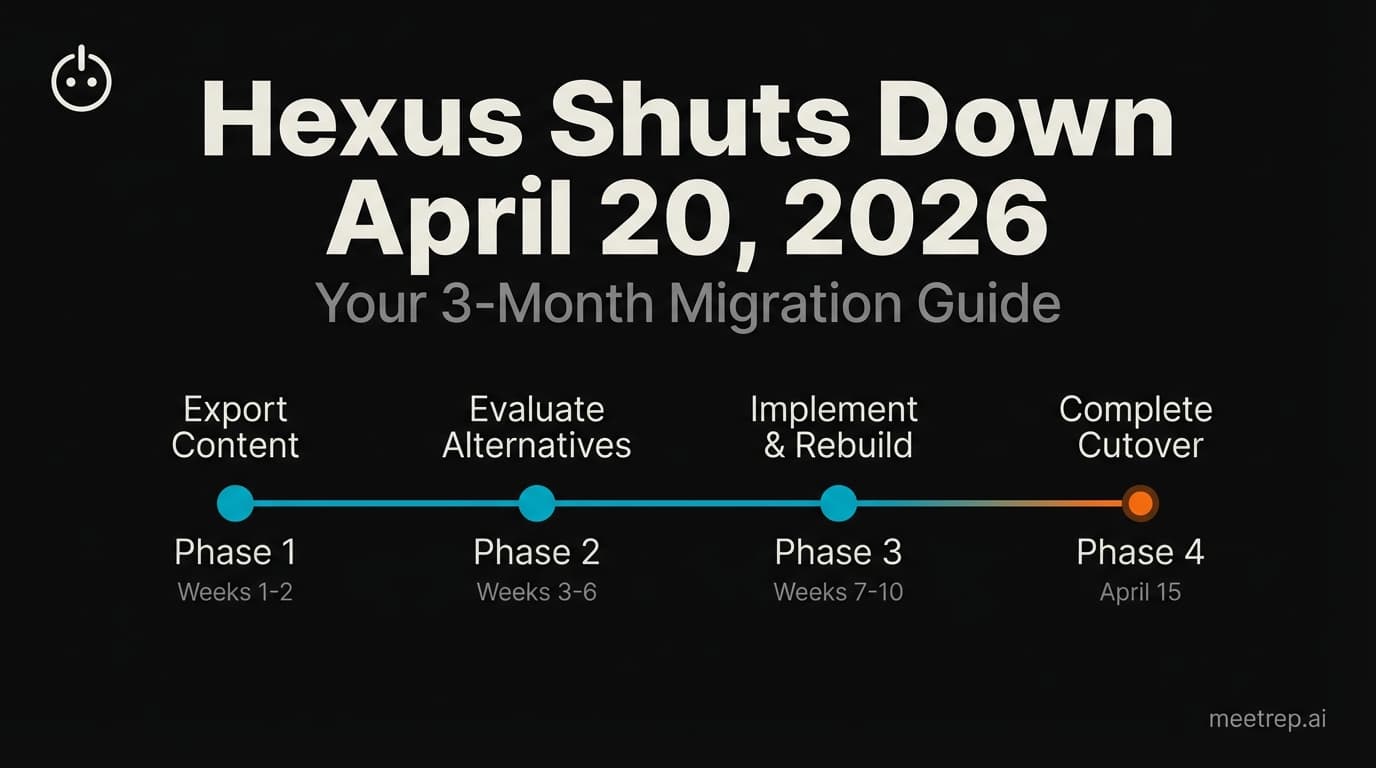
Hexus Acquired by Harvey AI: Congrats & What It Means for Demo Automation Teams
Hexus is shutting down following its acquisition by Harvey AI. Learn how to manage your migration and discover the best demo automation alternatives before April 2026.
Why the "Software Demo" is Broken—and Why AI Agents Are the Future
The traditional software demo is dead. Discover why 94% of B2B buyers rank vendors before calling sales and how AI agents are replacing manual demos to scale revenue.
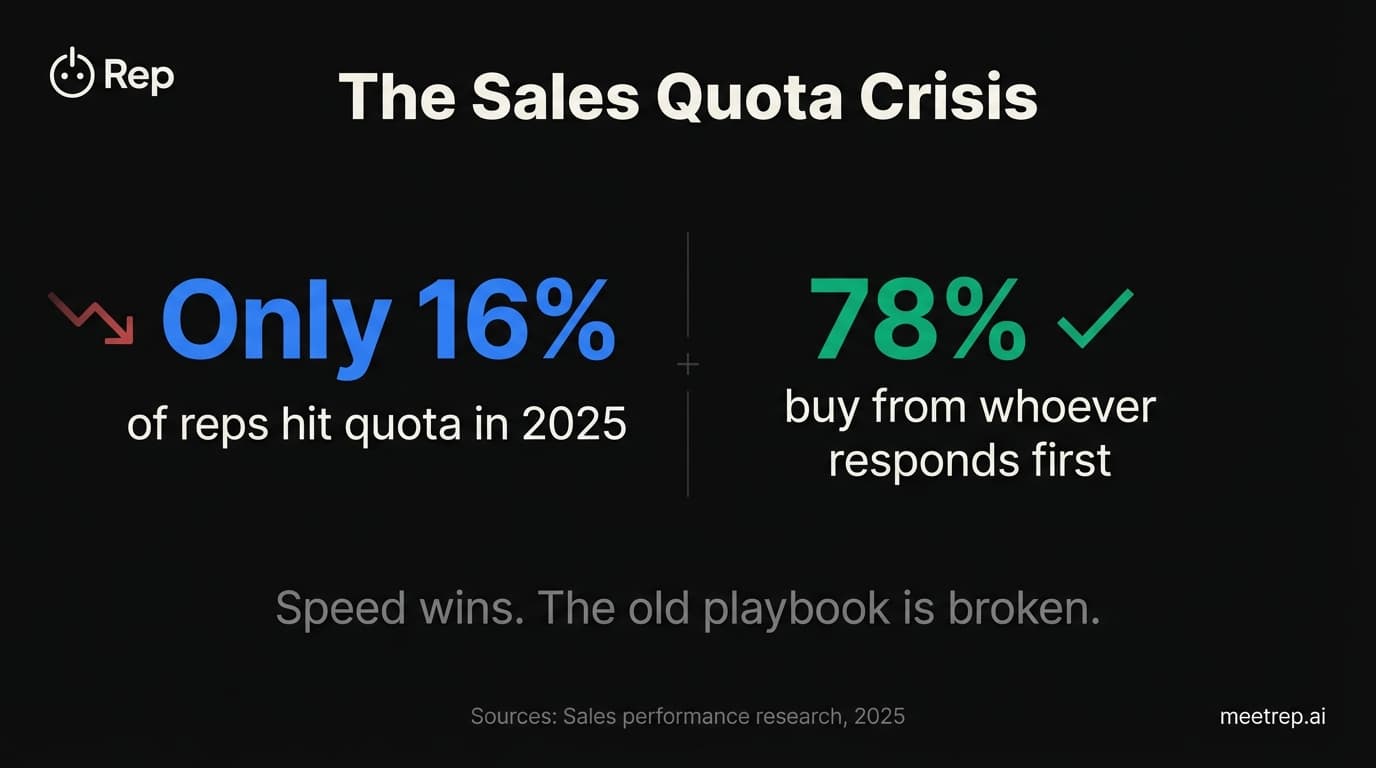
Why Autonomous Sales Software is the Future of B2B Sales (And Why the Old Playbook is Dead)
B2B sales is at a breaking point with quota attainment at 46%. Discover why autonomous 'Agentic AI' is the new standard for driving revenue and meeting the demand for rep-free buying.