AI Sales Tools in 2026: From "Co-Pilots" to Autonomous Agents

Executive Summary
- The shift: We are moving from "Co-pilots" (assistants) to "Agentic AI" (autonomous workers).
- The risk: 95% of pilots fail due to poor workflow integration, not bad tech.
- The stack: You need four specific layers: Signals (Clay), Intel (Gong), Demos (Rep), and Coaching (Lavender).
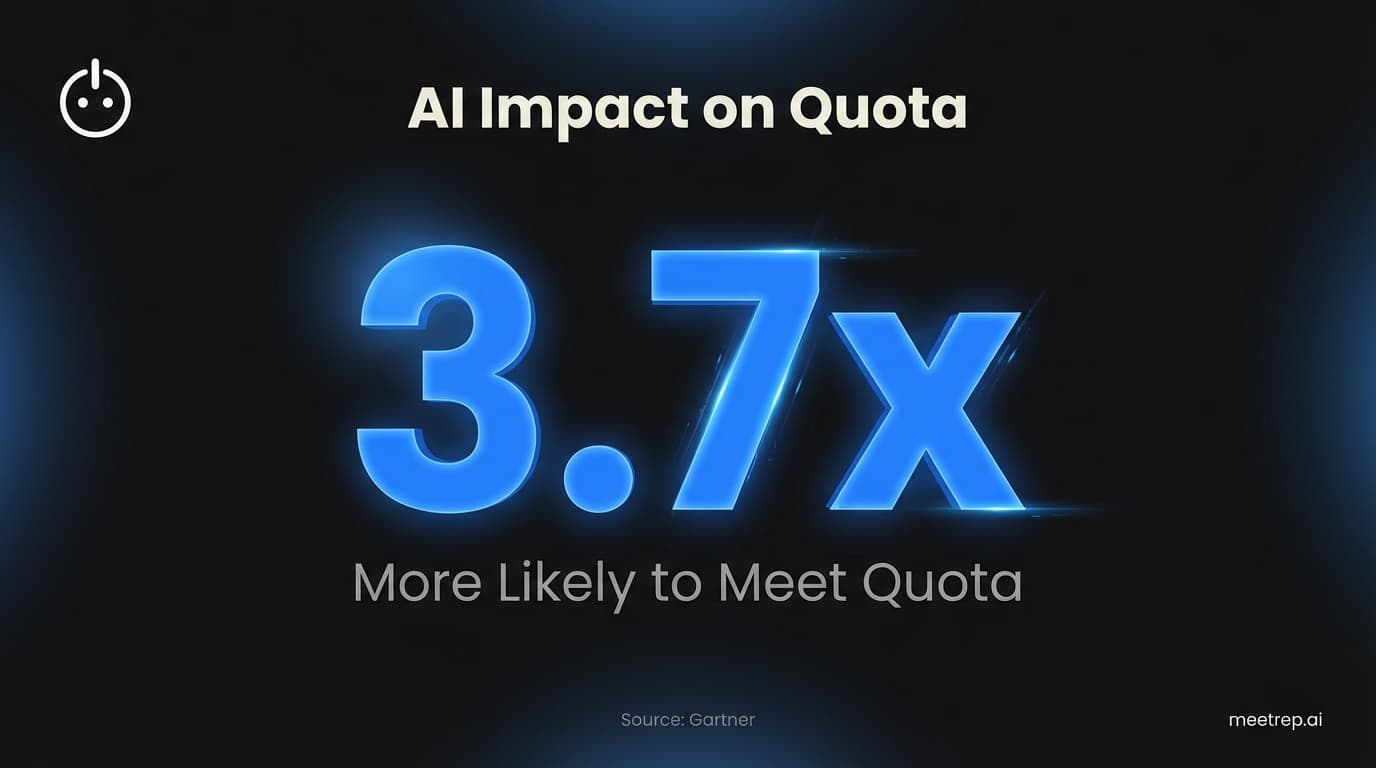
- The gain: Successful adoption increases quota attainment by 3.7x.
Here is the brutal truth about the market right now: If you are just buying "AI tools," you are probably wasting your budget.
I say this as a founder who has built sales automation products for years, first at GoCustomer and now at Rep. I’ve seen the backend of how these systems work. And I’ve seen the data. According to Gartner, sellers who effectively partner with AI are 3.7 times more likely to meet quota than those who don't.
That’s the upside.
But here is the statistic nobody likes to talk about. A recent MIT initiative found that 95% of AI pilot programs fail to deliver measurable revenue impact. They fail because of poor integration, "learning gaps," and the mistaken belief that a tool can fix a broken process.
So, how do you end up in the 5% that wins?
You have to stop looking for "assistants" and start hiring "agents."
What Are AI Sales Tools?
AI sales tools are software applications that use artificial intelligence—including generative AI, machine learning, and predictive analytics—to automate and enhance sales processes. Unlike traditional sales software, these tools can autonomously execute tasks like prospecting, lead scoring, and product demonstrations. Organizations use them to increase rep productivity, improve forecast accuracy, and scale personalized outreach.
But that definition is changing fast.
In 2024, an "AI tool" was a chatbot that helped you write an email. In 2026, an AI tool is a digital worker. It doesn't just help you write the email; it researches the prospect, drafts the message, sends it, handles the reply, and updates Salesforce.
Key Insight: The market helps you distinguish between Assistive AI (Co-pilots) and Agentic AI (Autonomous Agents). If you have to prompt it, it's a tool. If it prompts itself, it's a teammate.
The "AI Fatigue" Is Real (And How to Beat It)
If you feel overwhelmed by the sheer volume of new software, you aren't alone. "AI fatigue" is a real problem for sales leaders. You have 50 vendors pitching you every week, all claiming to "transform" your pipeline.
The result? Decision paralysis. Or worse, buying "shelfware"—tools that get purchased but never adopted by the team.
We saw this constantly at GoCustomer. Companies would buy our automation platform, but they wouldn't change their workflows. They tried to layer a Ferrari engine on top of a horse and buggy. The result wasn't speed; it was chaos.
According to Bain & Company, sellers still spend only about 25% of their working hours on direct selling. The rest is admin. The goal of AI isn't to make your reps "smarter" at admin. It's to take the admin away entirely.
My recommendation: Stop buying tools that promise to "empower" your reps to do admin faster. Buy agents that do the admin for them.
The 4 Categories of AI Sales Tools You Need
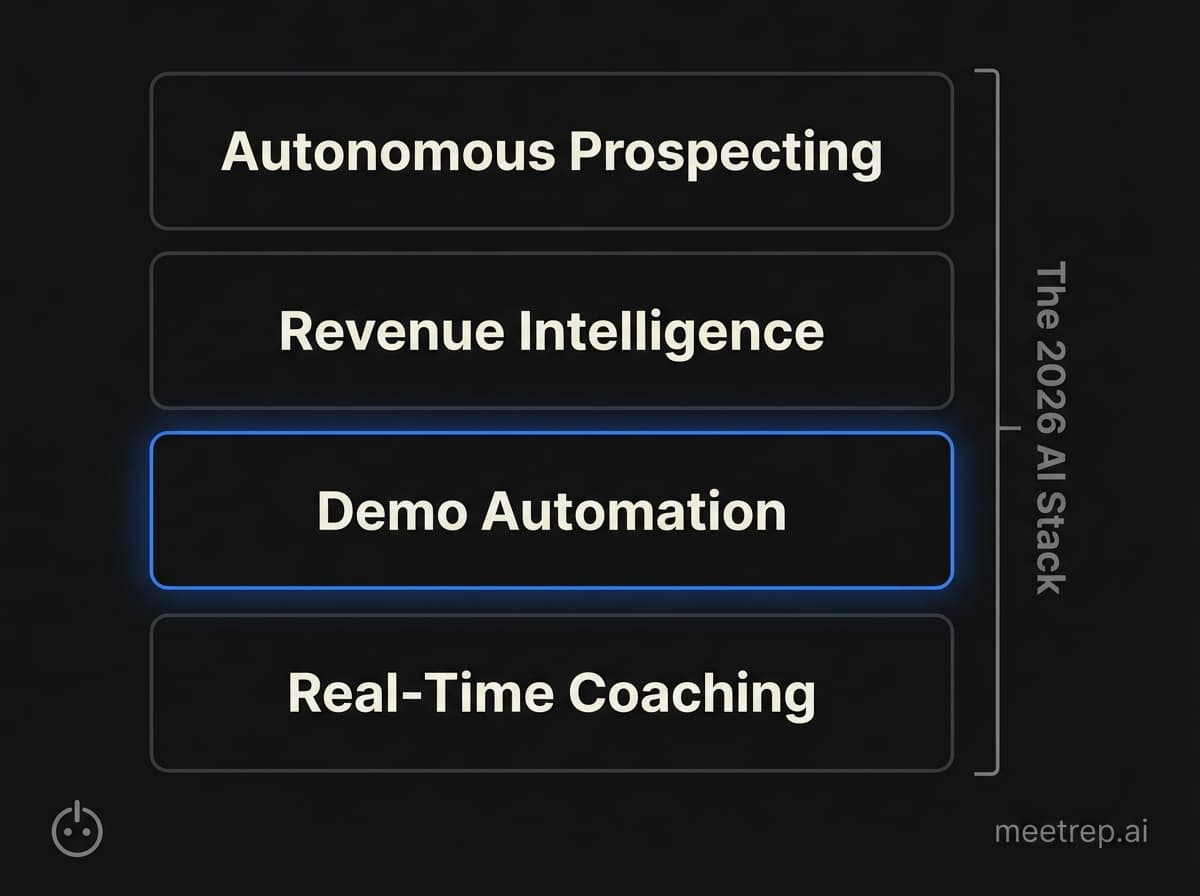
You don't need 20 tools. You need four.
Based on my experience building in this space, the modern stack has consolidated into four distinct layers. If you cover these, you cover the funnel.
1. Autonomous Prospecting (The "Digital SDR")
This is where the biggest shift has happened. We used to buy lists of static data. Now, we use "Waterfall Enrichment" and "Signal-Based Selling."
Tools like Clay have changed the game here. They don't just give you an email address. They cascade through multiple data providers until they find verified contact info, then scrape the web for "signals"—hiring freezes, funding rounds, new tech installs.
Then you have autonomous outbound agents like 11x.ai. These aren't just mail merge tools. They act as digital workers, finding leads and engaging them autonomously.
2. Revenue Intelligence (The "Truth Teller")
You likely know this category. Gong and Clari are the heavyweights.
But the value prop has shifted. It used to be about recording calls for training. Now, it's about forecast accuracy. With AI analyzing every interaction, predictive analytics are improving sales forecast accuracy by 20–30% (Source: Martal Group).
The AI listens to the call, reads the emails, and tells you: "This deal isn't going to close." It removes the optimism bias from your pipeline reviews.
3. Demo Automation (The "24/7 Closer")
This is the category we are obsessed with at Rep.
Historically, tools like Consensus or Walnut dominated this space. They are excellent at what they do: creating clickable, self-serve product tours. In fact, SAP saved over 16,000 demo hours annually using this approach.
But there was a gap.
Buyers wanted to talk to someone, but they didn't want to wait for a rep. A click-through tour is passive; you can't ask it questions. A human rep is active, but expensive and asleep half the day.
Why we built Rep this way: We designed Rep to fill the gap between a "clickable tour" and a "human call." Rep isn't a video player. It's an autonomous voice agent that joins the Zoom call, shares its screen, navigates your actual product, and answers questions live. It's the only way to offer a "human" experience at 2 a.m.
4. Real-Time Coaching (The "Invisible Manager")
Finally, you need tools that help your humans be better humans. Tools like Lavender (for email) or Demodesk (for meetings) act as real-time coaches.
They analyze the conversation as it happens and whisper in the rep's ear: "You're talking too much." "They mentioned pricing—bring up the ROI case study."
Agentic AI vs. Co-Pilots: Know the Difference
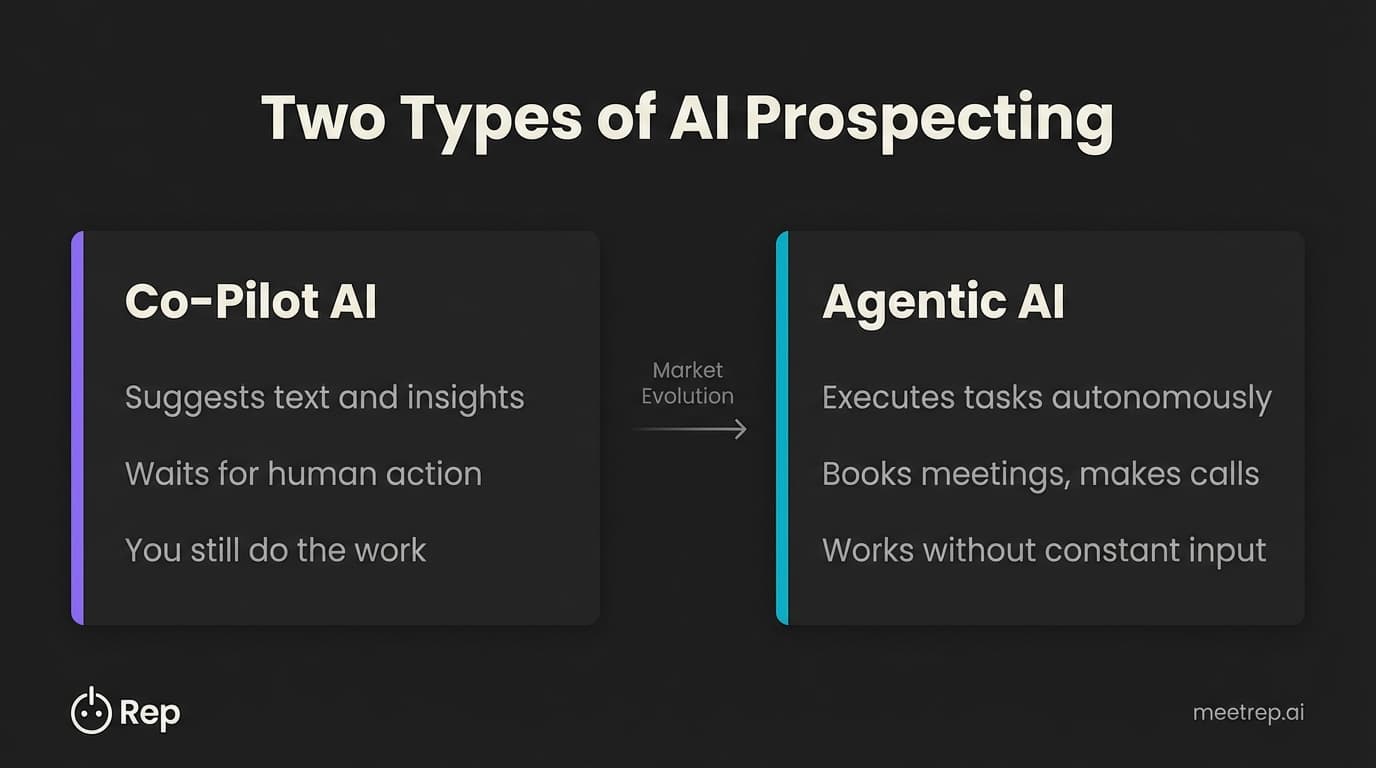
If you take one thing from this article, let it be this table. Understanding this distinction will save you from failing pilots.
| Feature | Co-Pilot (Assistive AI) | Agentic AI (Autonomous) |
|---|---|---|
| Role | Assistant / Sidekick | Digital Worker / Team Member |
| Trigger | Human prompts the AI | AI triggers itself based on events |
| Action | Drafts content, summarizes | Executes workflows, books meetings |
| Example | ChatGPT, Microsoft Copilot | Rep, 11x.ai, AutoGPT |
| Value | Saves minutes per task | Saves headcount / FTEs |
| Scalability | Linear (1 rep : 1 co-pilot) | Exponential (1 manager : 100 agents) |
Hot take: Co-pilots are a bridge technology. In five years, we won't pay $30/month for a tool that waits for us to type. We will pay for outcomes delivered by agents that run in the background.
Verified Success: Who Is Actually Winning?
Skepticism is healthy. But the data shows that when companies get this right, the results are massive.
- SAP: As mentioned, they saved 16,000 hours annually by automating the initial demo stage. That is the equivalent of 10 full-time employees.
- HubSpot Users: 63% of users report saving at least 4 hours per week per rep using basic automation features. That's 200 hours a year—five full weeks of selling time returned to the rep.
- Early Adopters: According to Bain & Company, early AI deployments in sales have boosted win rates by more than 30%.
The Data:56% of sales professionals now use AI daily. Those who do are twice as likely to exceed sales targets compared to non-users. (Source: LinkedIn State of Sales 2025)
How to Build Your Stack Without "Shelfware"
We made plenty of mistakes at GoCustomer. The biggest one? Assuming data would flow cleanly between systems. It never does.
If you are building your AI sales stack in 2026, follow these three rules:
- Start with the Data Layer: If your CRM data is messy, an AI agent will just automate bad decisions. Use tools like Clay to clean and enrich your data before you deploy an agent on it.
- Look for Autonomy: Don't ask "Does this help my rep write?" Ask "Does this do the writing for them?" The ROI comes from removing the task, not just speeding it up.
- Test for "Human-in-the-loop": The best agents allow human oversight. At Rep, for example, we built Inline Validation. The AI builds the demo playbook, but a human reviews it. You get the speed of AI with the safety of human judgment.
Conclusion
The window for "experimenting" with AI is closing. We are entering the deployment phase.
You can continue to have your highly paid Account Executives spend 75% of their time researching leads and giving the same "Intro to Product" demo for the thousandth time. Or you can offload that work to digital workers that don't sleep, don't quit, and don't make excuses.
My advice? Start with the bottlenecks. If your SDRs are drowning in research, look at Clay. If your AEs are booked solid with unqualified demos, look at Rep.
Don't let "AI fatigue" keep you from the 3.7x quota attainment waiting on the other side.

Nadeem Azam
Founder
Software engineer & architect with 10+ years experience. Previously founded GoCustomer.ai.
Nadeem Azam is the Founder of Rep (meetrep.ai), building AI agents that give live product demos 24/7 for B2B sales teams. He writes about AI, sales automation, and the future of product demos.
Frequently Asked Questions
Table of Contents
- What Are AI Sales Tools?
- The "AI Fatigue" Is Real (And How to Beat It)
- The 4 Categories of AI Sales Tools You Need
- Agentic AI vs. Co-Pilots: Know the Difference
- Verified Success: Who Is Actually Winning?
- How to Build Your Stack Without "Shelfware"
- Conclusion
Ready to automate your demos?
Join the Rep Council and be among the first to experience AI-powered demos.
Get Early AccessRelated Articles
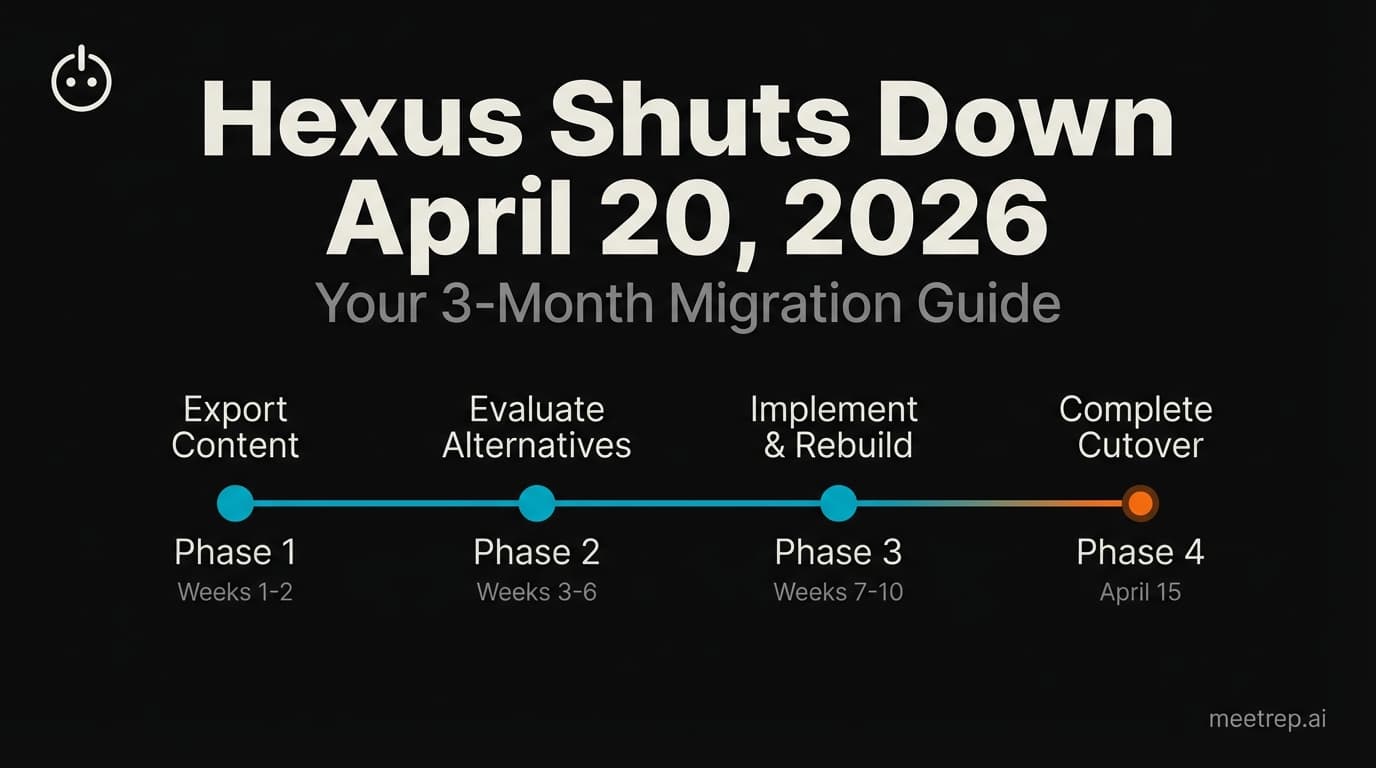
Hexus Acquired by Harvey AI: Congrats & What It Means for Demo Automation Teams
Hexus is shutting down following its acquisition by Harvey AI. Learn how to manage your migration and discover the best demo automation alternatives before April 2026.
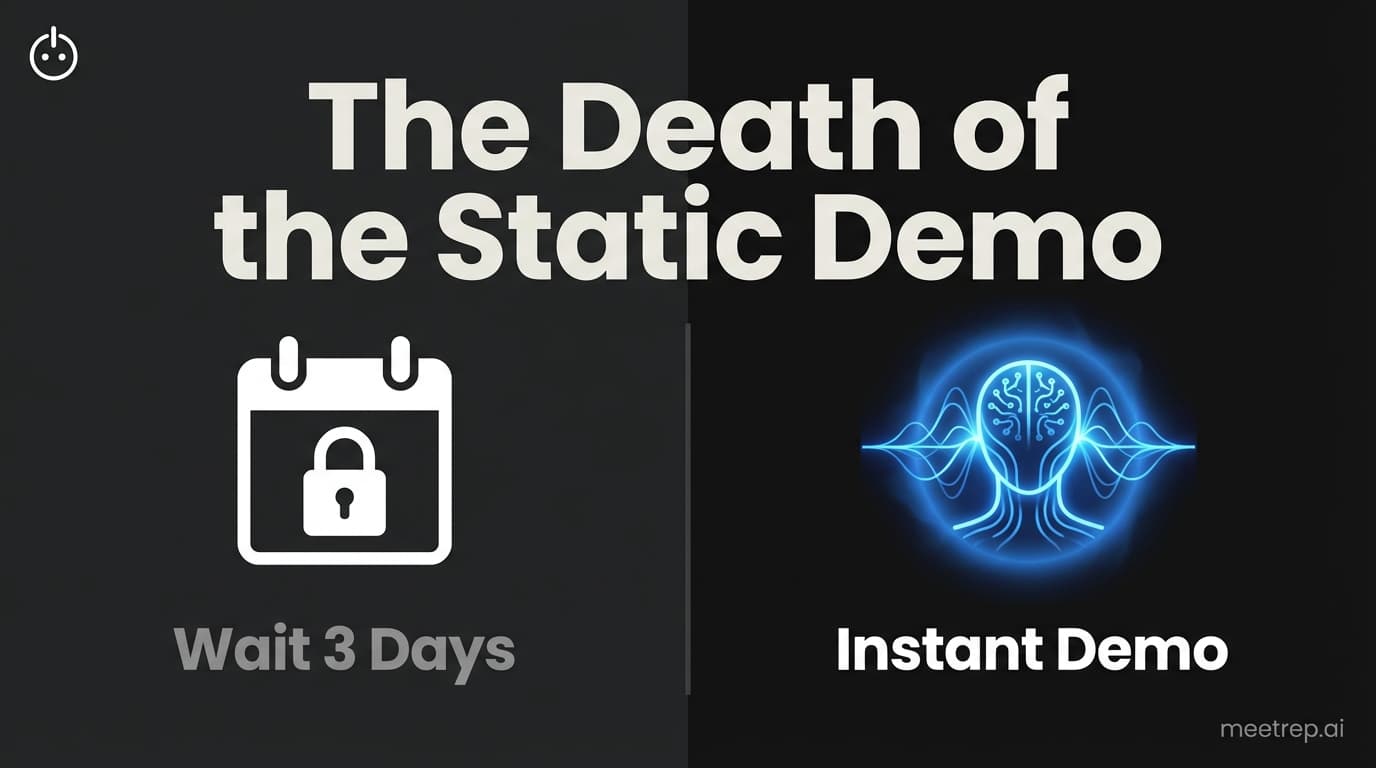
Why the "Software Demo" is Broken—and Why AI Agents Are the Future
The traditional software demo is dead. Discover why 94% of B2B buyers rank vendors before calling sales and how AI agents are replacing manual demos to scale revenue.
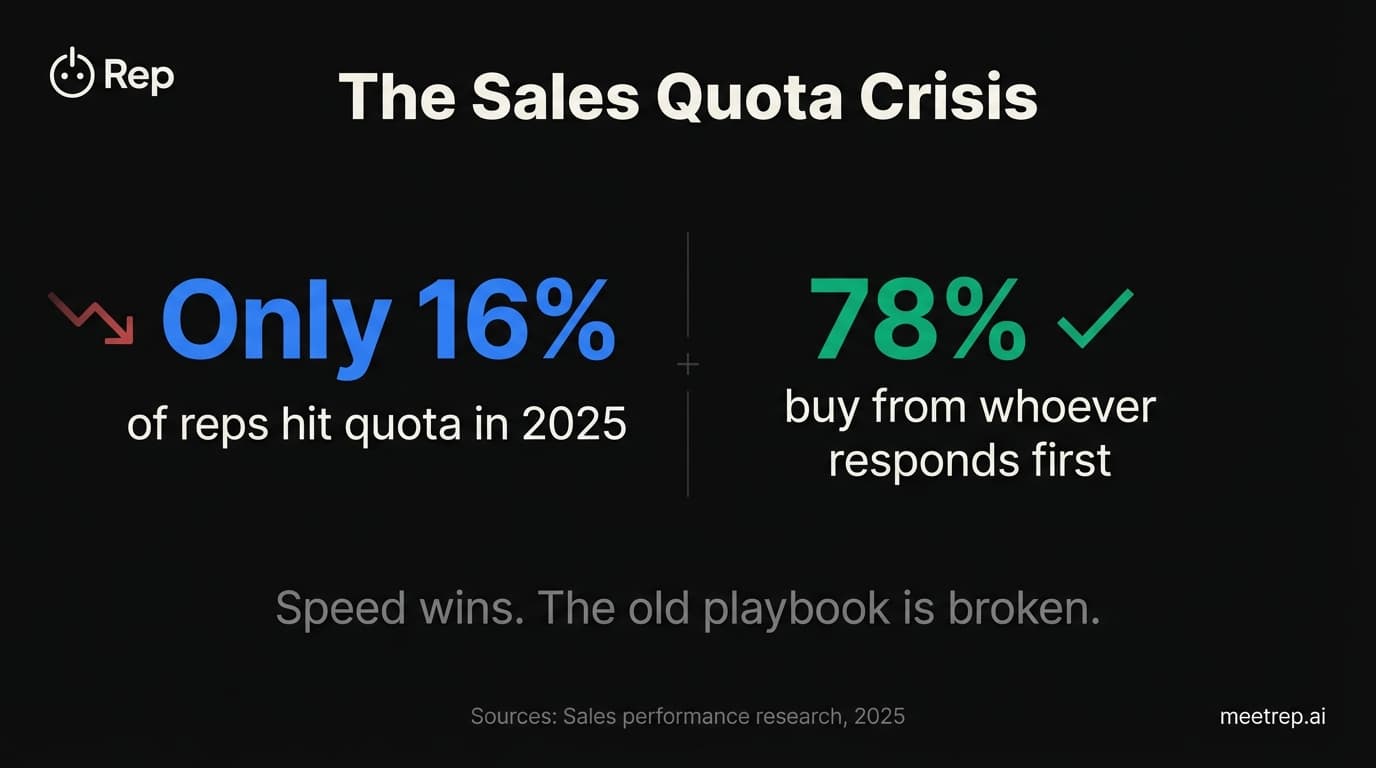
Why Autonomous Sales Software is the Future of B2B Sales (And Why the Old Playbook is Dead)
B2B sales is at a breaking point with quota attainment at 46%. Discover why autonomous 'Agentic AI' is the new standard for driving revenue and meeting the demand for rep-free buying.