AI Lead Generation: Tools, Tactics, and the Truth About What Actually Works

Executive Summary
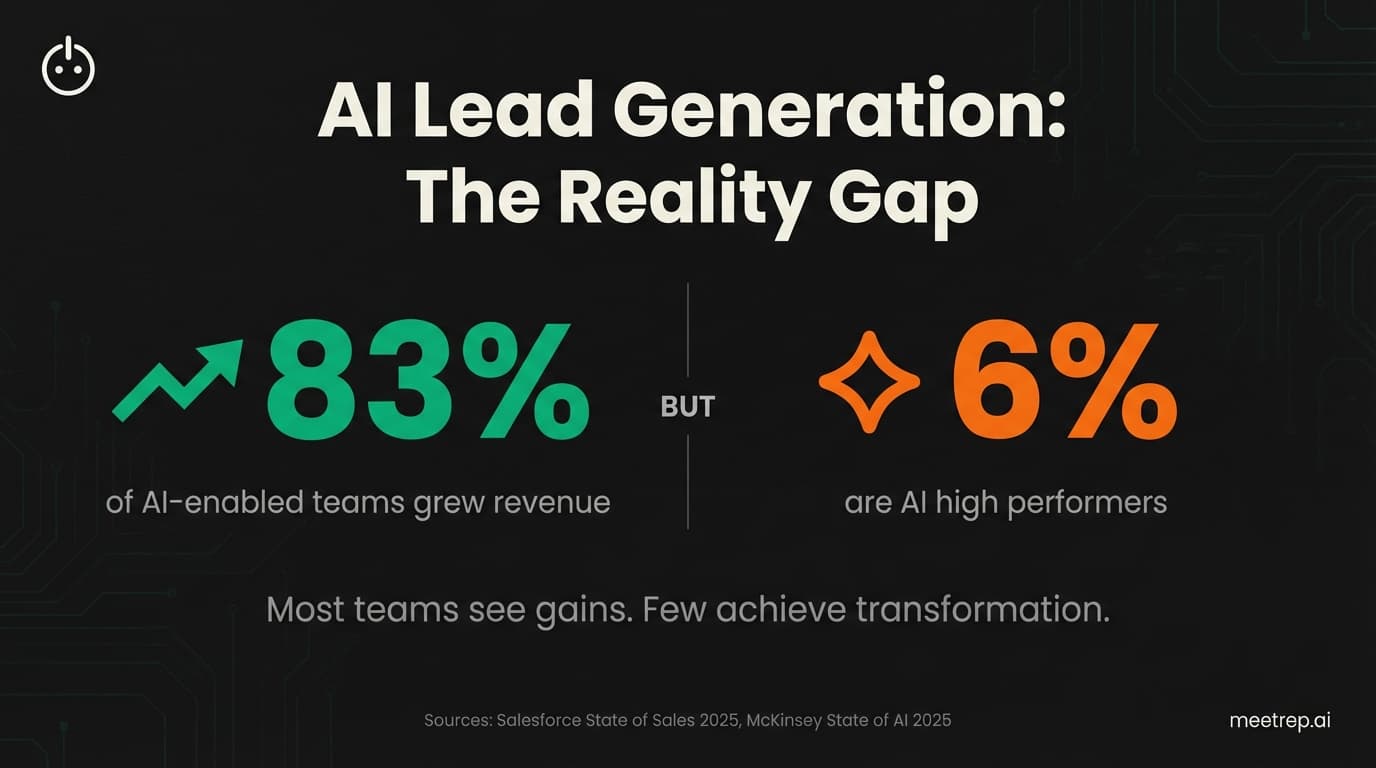
- 83% of AI-enabled sales teams grew revenue vs 66% without (Salesforce)—but most gains come from better research, not more volume
- The 2024-era "AI SDR" category largely failed; 2026 "Agentic AI" models work differently
- Cold email reply rates dropped 50% in two years—more automation isn't the answer
- The winners use AI for research and timing, then hand off to humans at critical moments
- Demo automation is the overlooked gap: AI books meetings, but humans still give repetitive intro demos
In Q3 2025, a single AI agent at HubSpot booked 11,000 meetings. It didn't sleep. It didn't complain about quota. And it didn't ask for commission.
That number sounds like marketing fluff. It's not—it comes from HubSpot's AiSummit 2025. And it represents the shift happening right now in AI lead generation: from tools that help humans send more emails to agents that execute entire workflows autonomously.
But here's what nobody mentions alongside that headline number. According to McKinsey's State of AI 2025, only 39% of companies report any measurable EBIT impact from AI. Most organizations are spending money without seeing bottom-line results.
I've built sales automation products for years—first with GoCustomer.ai, now with Rep. And I've watched plenty of "AI lead generation" tools become expensive spam machines. So let me share what's actually working, what's failing, and how to avoid wasting your budget on hype.
What Is AI Lead Generation (And Why 2026 Is Different)
AI lead generation is the use of machine learning and autonomous agents to identify, research, and engage potential buyers at scale. Unlike simple automation, modern AI lead generation software can execute complex workflows—researching a prospect's company, personalizing outreach based on trigger events, and qualifying leads through conversation—without constant human direction.
But that definition misses the real shift.
For most of 2023 and 2024, "AI lead generation" meant slapping GPT onto your email sequencer. The tools promised personalization at scale. What they delivered was slightly-less-generic spam at massive scale. Reply rates cratered. Domains got blacklisted. Sales leaders got burned.
The Data: Over the last two years, cold email reply rates fell at least 50%, according to Arjun Pillai, former ZoomInfo CDO and founder of Docket.
So what changed?
The shift from "Copilots" to "Agents." Copilots assist humans—they suggest edits, draft content, surface data. Agents execute autonomously. They don't wait for you to prompt them. McKinsey reports that 62% of organizations are now experimenting with AI agents, up dramatically from 2024.
This matters for AI powered lead generation because agents can now:
- Monitor trigger events (job changes, funding rounds, tech stack changes) and act immediately
- Research prospects across multiple data sources before sending anything
- Handle reply management, objection responses, and calendar booking without human involvement
- Qualify leads through actual conversation, not just form fills
The tools that work in 2026 aren't the ones sending more emails. They're the ones doing better research before sending anything at all.
Does AI Lead Generation Actually Work? (The Honest Answer)
Yes. And also no. It depends entirely on how you implement it.
The headline stats look great. According to Salesforce's 6th State of Sales report, 83% of sales teams using AI grew revenue, compared to 66% without it. Bain's Technology Report 2025 found that early AI deployments boosted win rates by more than 30%.
But dig deeper and the picture gets complicated.
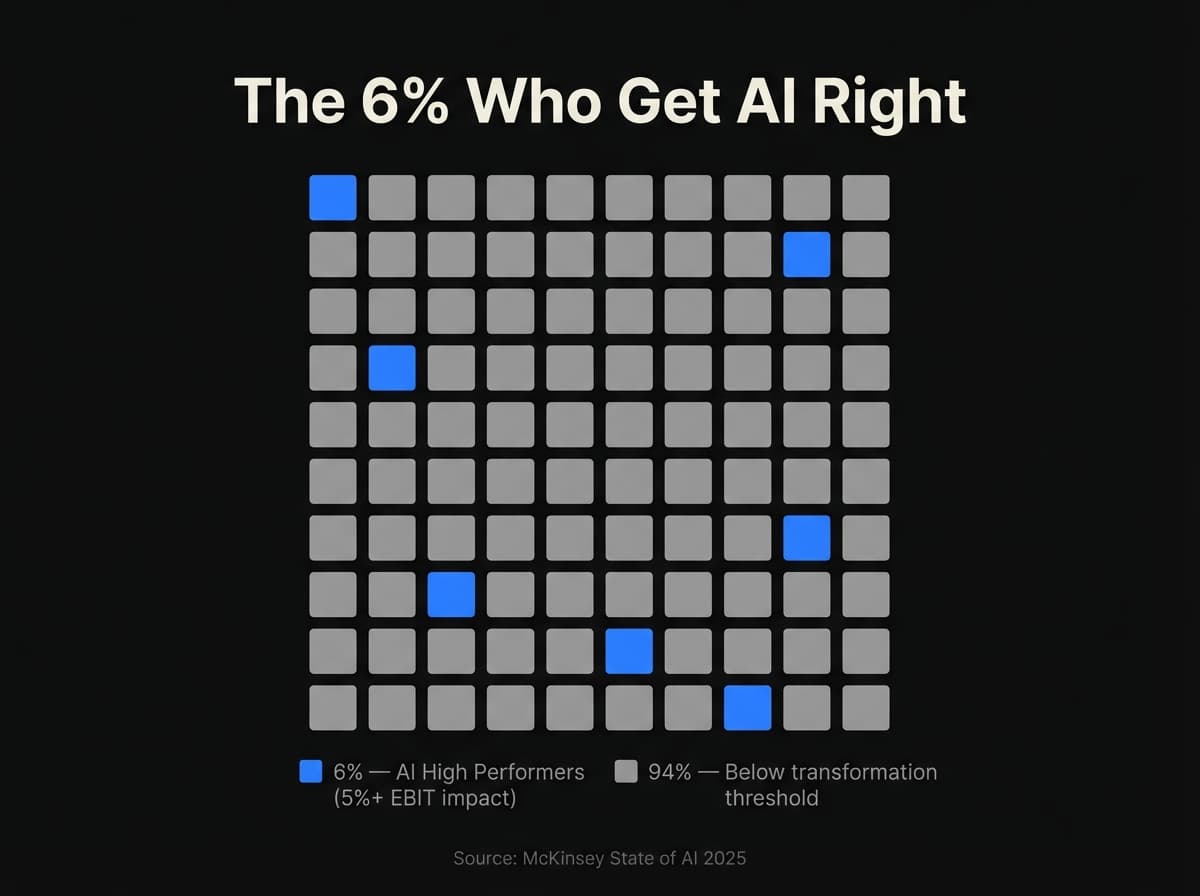
The Data: Only 6% of companies qualify as "AI high performers" (seeing 5%+ EBIT impact), according to McKinsey. The vast majority are spending on AI without measurable bottom-line results.
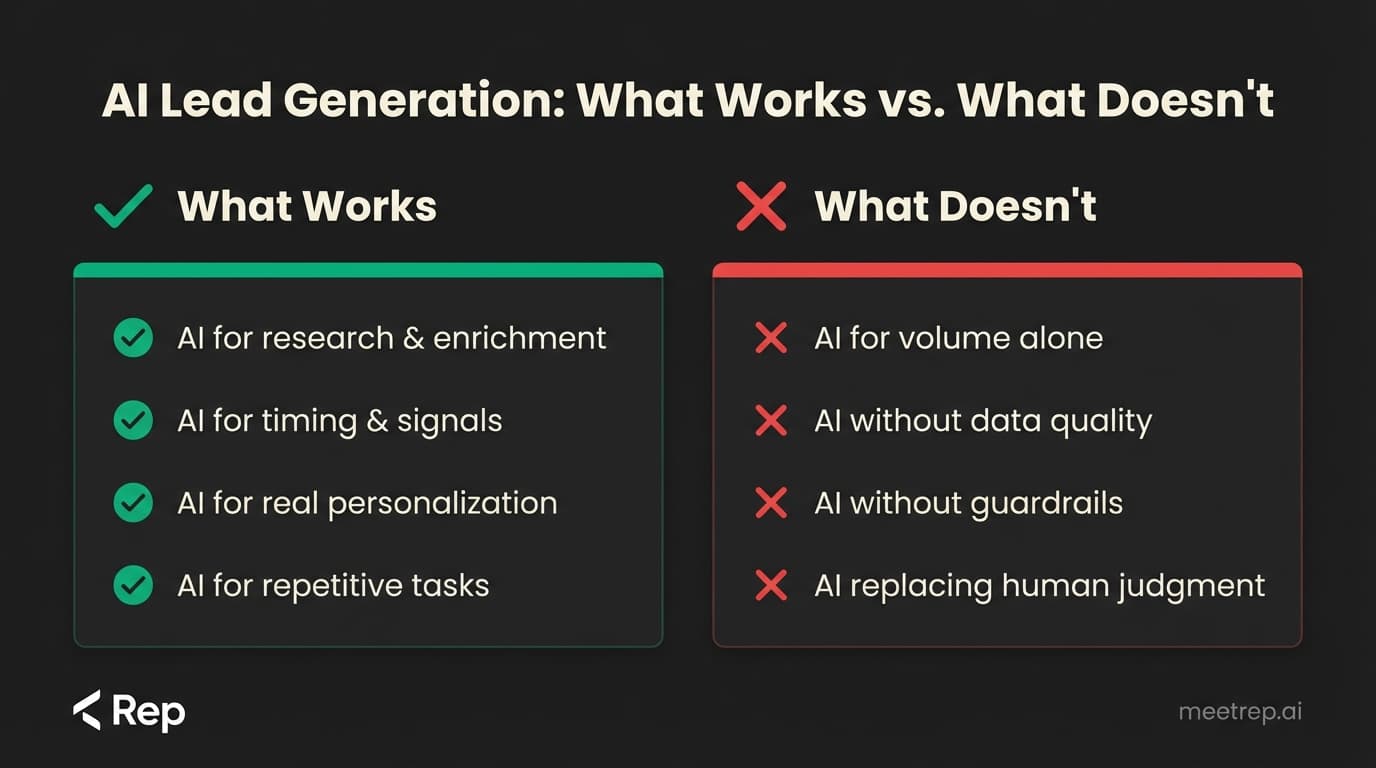
Here's what separates the 6% from everyone else:
What works:
- AI for research and enrichment (finding the right prospects, understanding their context)
- AI for timing (triggering outreach when signals indicate buying intent)
- AI for personalization (real personalization based on company data, not just name insertion)
- AI for handling the repetitive work humans hate (follow-ups, scheduling, basic qualification)
What doesn't work:
- AI for volume (sending 10x more generic emails)
- AI without data quality (garbage in, garbage out—automated)
- AI without guardrails (burning through your entire TAM in a weekend)
- AI replacing human judgment at critical moments (complex deals still need humans)
What we learned at GoCustomer: The teams that failed with our product were the ones who used it to do more of what wasn't working. The teams that succeeded used it to do the same amount of outreach, but better targeted and better timed.
The Three Types of AI Lead Generation Tools (The "Teammate Stack")
I think about AI lead generation tools as teammates, not software. Each has a role. Trying to make one tool do everything is like asking your SDR to also be your data analyst and your demo engineer.
Here's how the stack breaks down:
| Role | What They Do | Top Tools | Best For |
|---|---|---|---|
| The Researcher | Finds and enriches prospect data across multiple sources | Clay, Apollo, Cognism, ZoomInfo | Building accurate lists, enriching CRM data, finding verified contact info |
| The Hunter | Executes outbound sequences autonomously—emails, replies, booking | 11x (Alice), Artisan (Ava), Apollo | High-volume outbound when you have validated ICP and strong signals |
| The Closer | Handles demos, qualification calls, and product walkthroughs | Rep, Retell, Demostack | Scaling demos without scaling headcount, 24/7 coverage |
The Researcher: Data Quality First
The best AI lead generation software starts with data, not sending. Clay pioneered "waterfall enrichment"—cascading through 50+ data providers to find verified contact information. OpenAI uses Clay for their own outreach, doubling their enrichment coverage from ~40% to ~80%.
Why does this matter? Because every AI outbound tool is only as good as the data feeding it. Send perfect, personalized emails to wrong addresses and you've accomplished nothing except wasting money and hurting deliverability.
The Hunter: Autonomous Outbound Agents
This is where the category got a bad name. The 2024-era AI SDRs were essentially sophisticated spam bots. They could send a lot of emails fast. They couldn't tell the difference between a hot prospect showing buying signals and someone who'd never need your product.
The new generation—tools like 11x's Alice or Artisan's Ava—work differently. They research before they send. They respond to replies intelligently. They book meetings directly.
The Data:100% of AI SDR users saved time; 38% saved 4-7 hours per week, according to Outreach's 2025 research.
But—and this is important—the best results come when these tools are fed by signal-based triggers, not batch lists. "Email everyone who matches our ICP" produces spam. "Email companies that just announced funding and hired three sales roles this month" produces conversations.
The Closer: The Gap Nobody Talks About
Here's the problem I keep seeing: companies invest heavily in AI lead generation tools to book more meetings. They succeed. Meetings go up 50%. And then... their AEs are drowning in repetitive intro demos.
Sellers currently spend only about 25% of their time on actual selling, according to Bain. The rest goes to admin, research, internal meetings—and doing the same intro demo for the fifteenth time this week.
This is why I built Rep. Not to replace the complex negotiation or relationship-building that closes deals. But to handle the repetitive early-stage demos that eat up AE time. Rep joins video calls, shares its screen, walks through your actual product live, and answers questions in real-time. It's not a chatbot or a click-through. It's an AI that shows and tells.
Hot take: Most AI lead gen tools stop at booking the meeting. But the meeting itself—especially the intro demo—is often the biggest bottleneck. If you're scaling top-of-funnel without scaling your ability to handle those meetings, you're just moving the problem.
How to Implement AI Lead Generation Without Destroying Your Domain
The fears are real. I've seen companies:
- Burn through their entire TAM in two months
- Destroy domain deliverability with aggressive sending
- Damage brand reputation with cringe-inducing "personalized" messages
Here's how to avoid becoming a cautionary tale:
1. Start with data quality, not sending volume
Spend your first month on enrichment and list building. Use Clay or similar tools to verify contact data. Clean your CRM. Build segments based on actual signals.
2. Implement signal-based triggers
Don't email everyone who matches your ICP. Email people showing intent signals: job changes, company funding, tech stack changes, hiring patterns, content engagement.
3. Protect your domain
If you're scaling email outreach, use dedicated sending domains. Warm them properly. Stay under ISP radar. The UserGems team warns: "Increasing outreach from 50 to 5,000 emails/day triggers ISP scrutiny... domain reputation tanks."
4. Set TAM guardrails
An unsupervised AI agent can burn through your entire Total Addressable Market in a weekend. Set daily/weekly caps. Review outreach before scaling.
5. Keep humans in the loop at handoff points
AI handles research, initial outreach, and basic qualification. Humans take over for complex conversations, negotiation, and relationship building.
My recommendation: Don't treat AI lead generation as "set and forget." The companies seeing results review AI activity weekly, adjust targeting, and continuously refine what "good" looks like.
6. Measure what matters
Email volume is a vanity metric. Track:
- Reply rate (not open rate)
- Meeting-to-opportunity conversion
- Pipeline generated
- Revenue closed
If your AI tools are sending more but converting less, you have a targeting problem, not a scale problem.
The Named Results: What's Actually Working
Skeptical of case studies? Fair. But these have named companies and specific numbers:
Smartling (Apollo): 10x increase in rep productivity for this translation SaaS company by using AI-powered prospect discovery and sequencing.
Cyera (Apollo): 75% more meetings with 50% less effort. The data security company used AI to focus outreach on the highest-fit accounts.
Mutiny (Apollo): 200%+ increase in outbound revenue by combining AI list building with targeted sequences.
Barti Software (Breakout AI): 19%+ of pipeline influenced in first three months with AI SDR. More interesting: 9.82% lead capture rate versus 2-3% industry average, with zero response time on inbound.
HubSpot (Internal Breeze Agent): 11,000 meetings booked by a single AI agent in one quarter. They also saw 82% higher conversion rates using GPT-4 for 1:1 personalization at scale.
What do these have in common? None of them just "turned on AI and sent more emails." They combined AI tools with clear targeting, quality data, and intelligent triggers.
What Buyers Actually Want (The Uncomfortable Truth)
Here's something the AI lead gen vendors don't emphasize:
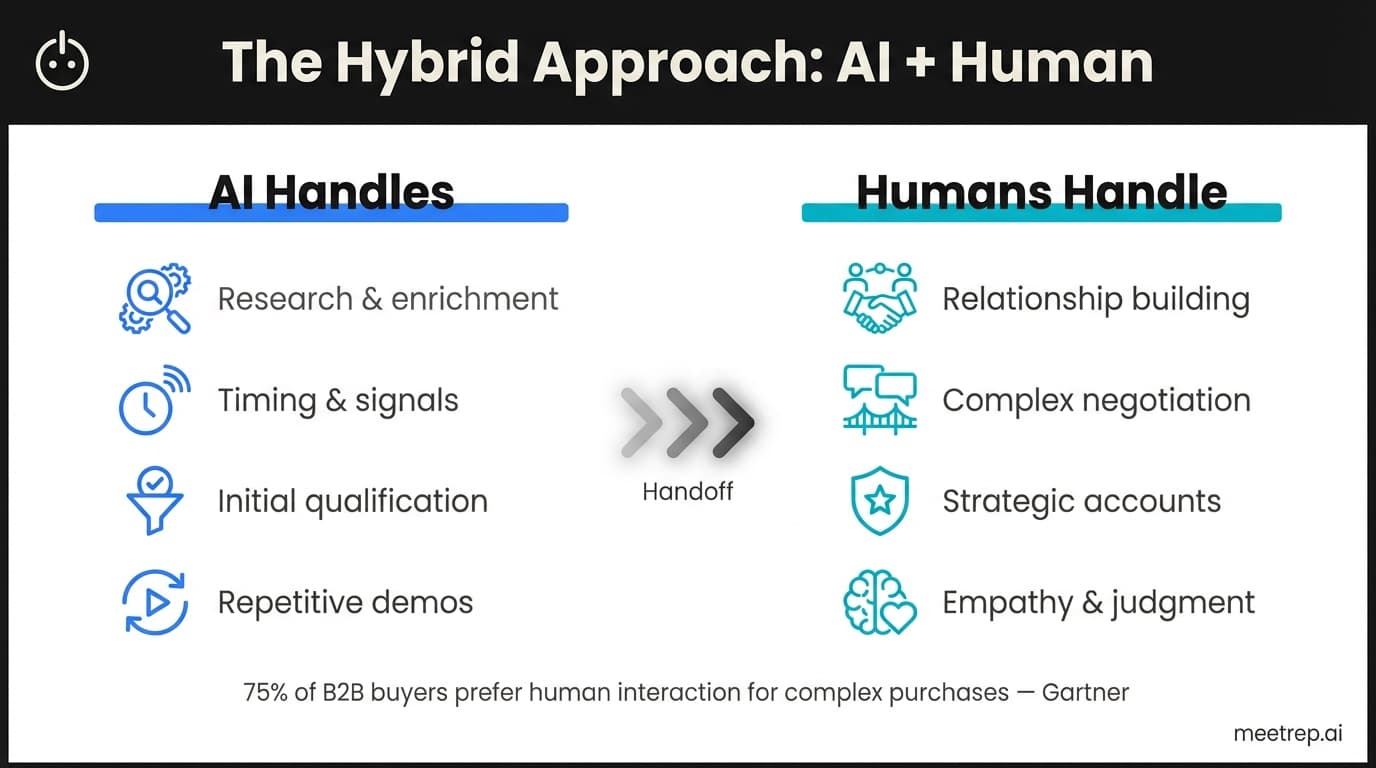
The Data: By 2030, 75% of B2B buyers will prefer sales experiences that prioritize human interaction over AI, according to Gartner.
That's not a prediction about technology failure. It's a prediction about buyer preference. People want to talk to people—especially for complex, high-stakes purchases.
So what does this mean for AI lead generation?
It means the goal isn't replacing human interaction. It's removing friction before human interaction and handling the repetitive work that doesn't require human judgment.
The hybrid approach works best. Use AI for:
- Research (so humans have context before every conversation)
- Timing (so outreach hits when buyers are receptive)
- Qualification (so humans talk to the right people)
- Repetitive demos (so humans focus on complex deals)
Keep humans for:
- Relationship building
- Complex negotiation
- Strategic accounts
- Anything requiring empathy or careful judgment
As one Reddit sales leader put it: "I've found a hybrid approach works best—AI for the heavy lifting and humans for the finesse."
The ROI Reality Check
Let's be honest about expectations.
| What Vendors Claim | What Data Shows |
|---|---|
| "AI transforms sales overnight" | 6% are "AI high performers" with 5%+ EBIT impact (McKinsey) |
| "AI agents will replace SDRs" | <40% of sellers will report AI agents improved productivity by 2028 (Gartner) |
| "10x productivity gains" | Most teams save 4-7 hours/week—helpful, not transformative (Outreach) |
| "AI personalization feels human" | Cold email reply rates down 50% despite AI adoption (Industry data) |
This isn't an argument against AI lead generation. It's an argument for realistic expectations.
The teams seeing real results:
- Start with one use case, prove ROI, then expand
- Measure pipeline and revenue, not activity metrics
- Accept that implementation takes months, not days
- Build human oversight into the process
Forrester reports that two-thirds of companies would accept less than 50% ROI on AI investments. That's... not great. But it also reflects realistic expectations for emerging technology.
My take? AI lead generation tools are worth it if you use them to do better outreach, not just more outreach. The ROI comes from quality improvements, not volume gains.
AI isn't coming for sales. It's already here. The question isn't whether to use AI lead generation tools—it's how to use them without becoming another cautionary tale about spam bots and burned TAM.
The pattern I see working: start with data quality (Clay), add signal-based outbound (11x or Artisan with triggers), and don't forget the demo bottleneck (that's where Rep fits). Keep humans in the loop at every handoff point. Measure pipeline and revenue, not email volume.
The companies winning aren't the ones sending the most messages. They're the ones sending the right message, to the right person, at the right moment—and then showing up with a demo when that person is ready to see the product.

Nadeem Azam
Founder
Software engineer & architect with 10+ years experience. Previously founded GoCustomer.ai.
Nadeem Azam is the Founder of Rep (meetrep.ai), building AI agents that give live product demos 24/7 for B2B sales teams. He writes about AI, sales automation, and the future of product demos.
Frequently Asked Questions
Table of Contents
- What Is AI Lead Generation (And Why 2026 Is Different)
- Does AI Lead Generation Actually Work? (The Honest Answer)
- The Three Types of AI Lead Generation Tools (The "Teammate Stack")
- How to Implement AI Lead Generation Without Destroying Your Domain
- The Named Results: What's Actually Working
- What Buyers Actually Want (The Uncomfortable Truth)
- The ROI Reality Check
Ready to automate your demos?
Join the Rep Council and be among the first to experience AI-powered demos.
Get Early AccessRelated Articles
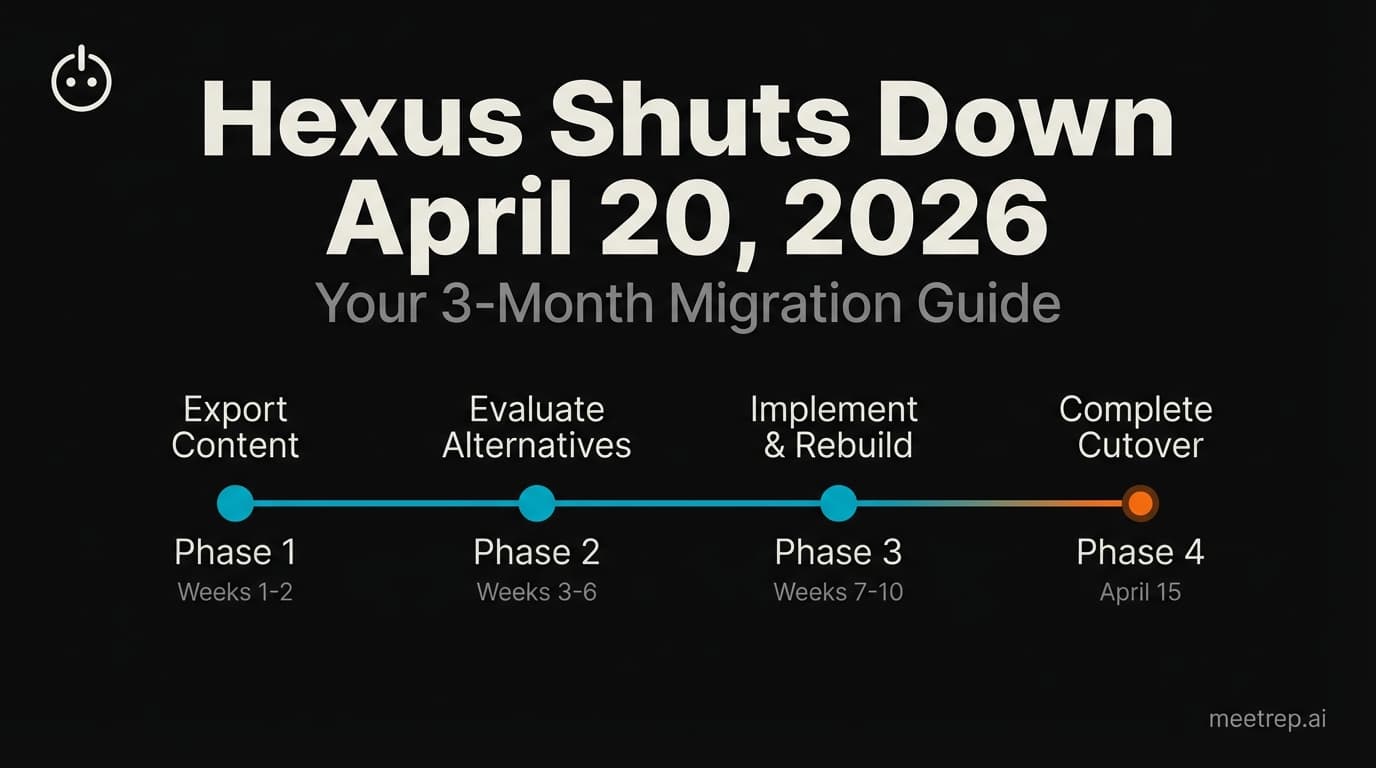
Hexus Acquired by Harvey AI: Congrats & What It Means for Demo Automation Teams
Hexus is shutting down following its acquisition by Harvey AI. Learn how to manage your migration and discover the best demo automation alternatives before April 2026.
Why the "Software Demo" is Broken—and Why AI Agents Are the Future
The traditional software demo is dead. Discover why 94% of B2B buyers rank vendors before calling sales and how AI agents are replacing manual demos to scale revenue.
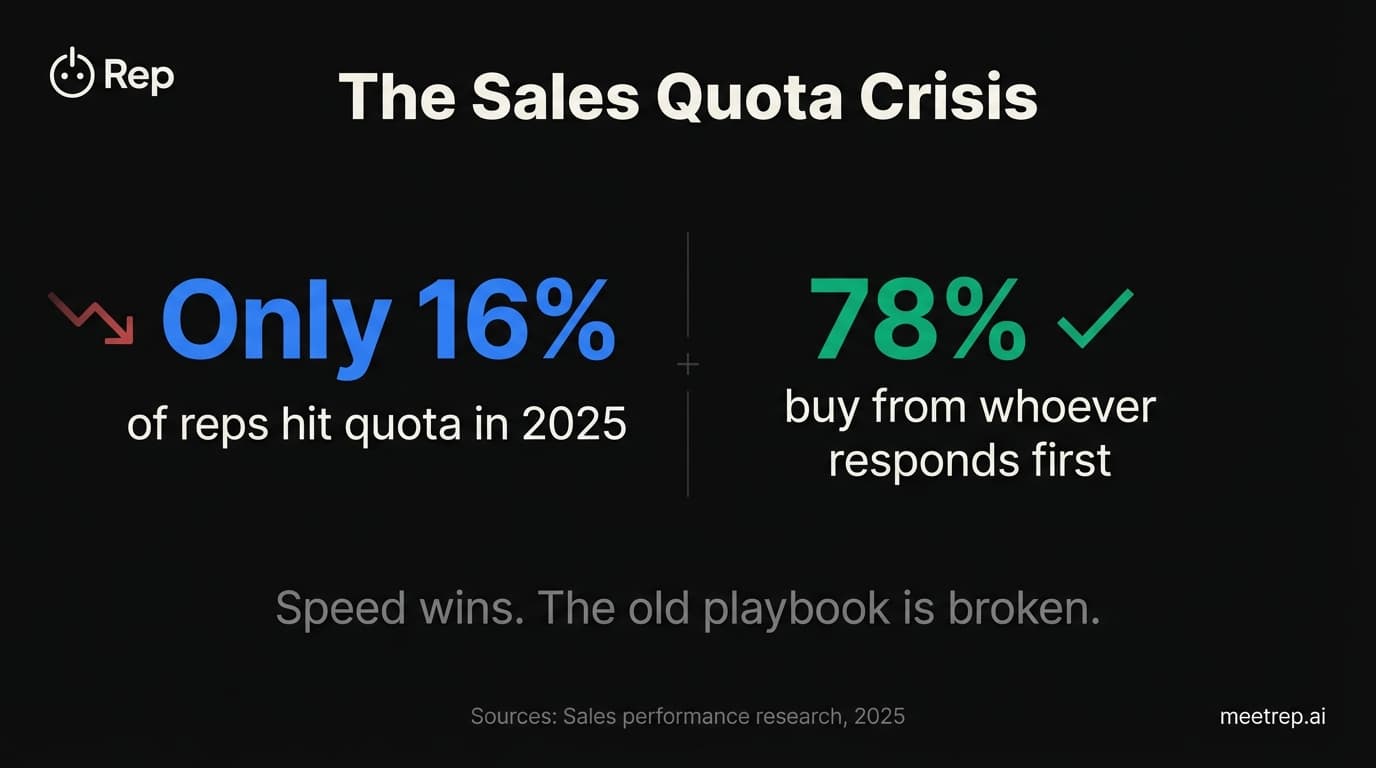
Why Autonomous Sales Software is the Future of B2B Sales (And Why the Old Playbook is Dead)
B2B sales is at a breaking point with quota attainment at 46%. Discover why autonomous 'Agentic AI' is the new standard for driving revenue and meeting the demand for rep-free buying.