AI for Sales in 2026: From "Writing Emails" to Digital Workers

Executive Summary
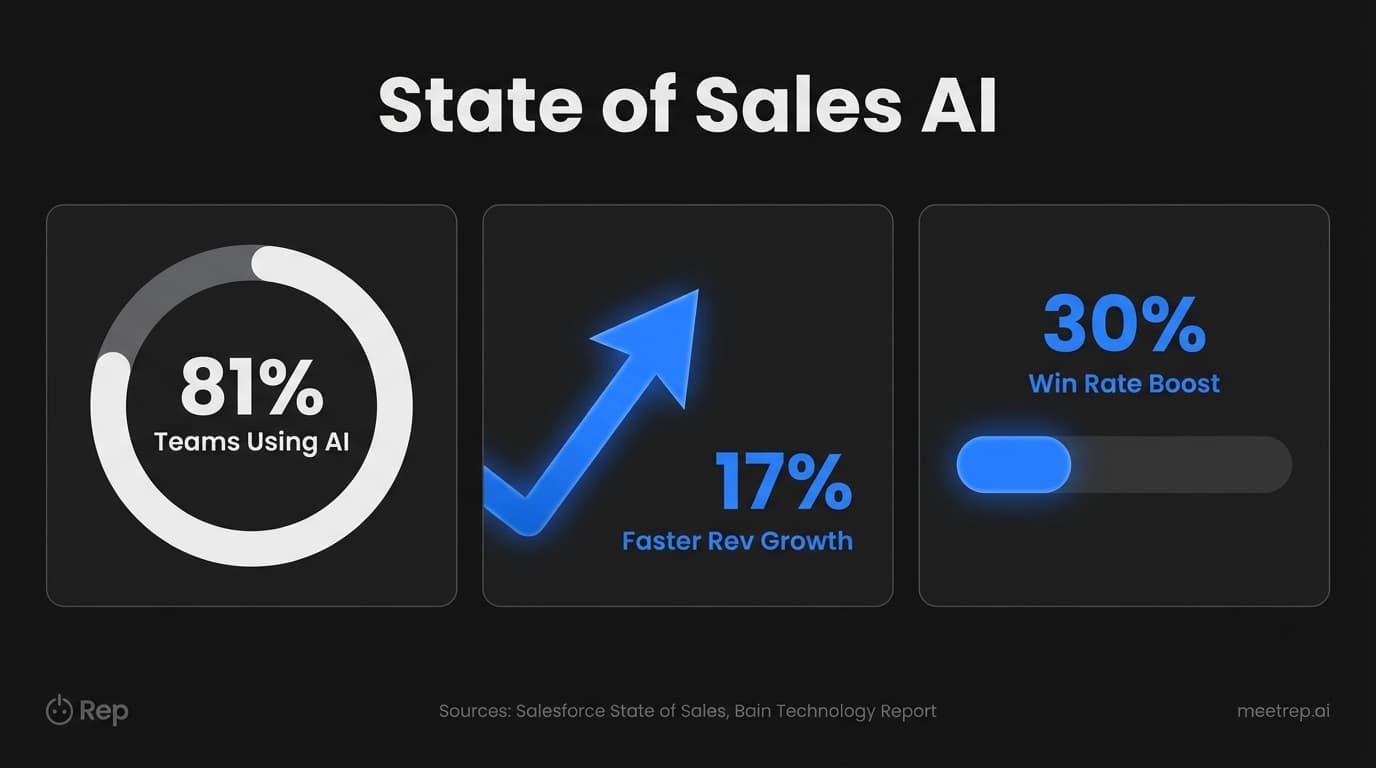
- Adoption is standard: 81% of sales teams now use AI, up from 39% in 2023.
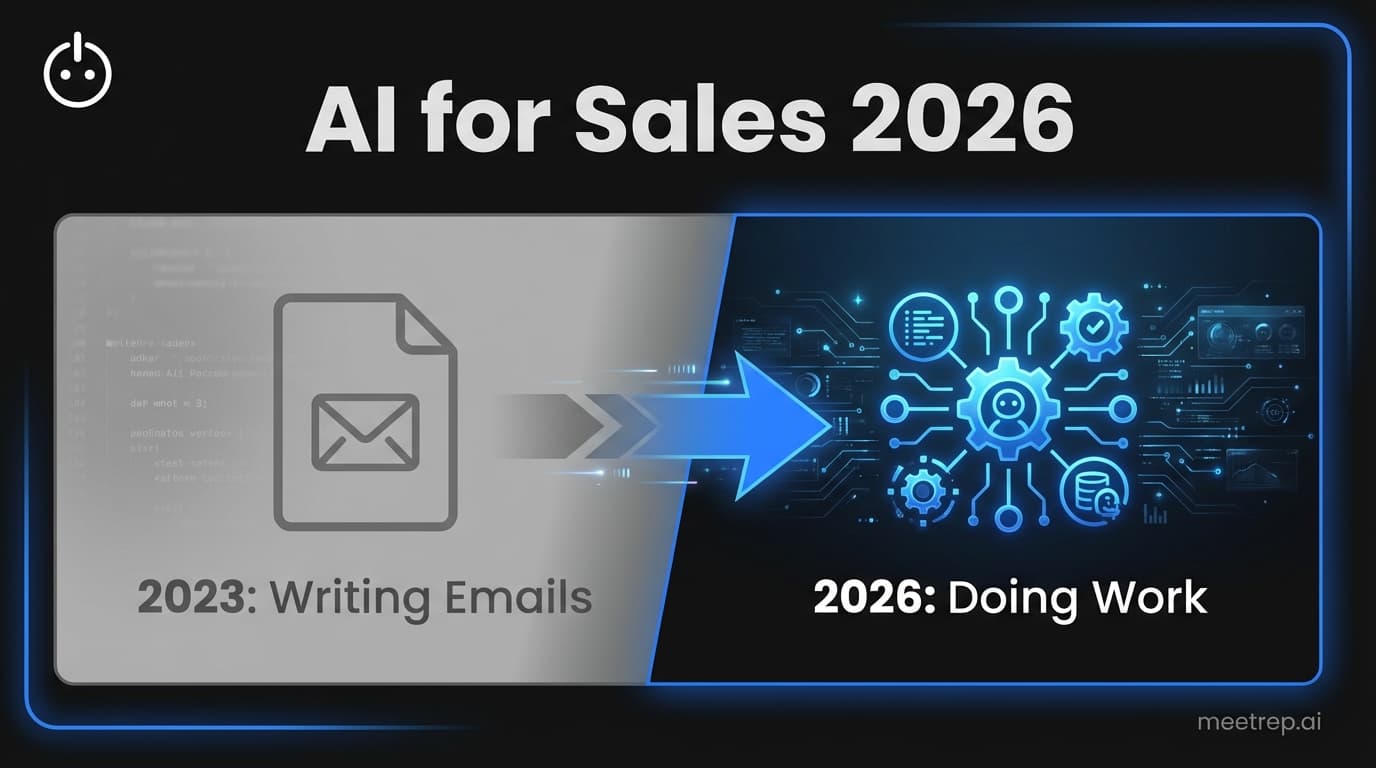
- The Shift: The market moved from Generative (writing) to Agentic (doing).
- The Gain: Teams using AI grow revenue 17% faster than those that don't.
- The Risk: Bad data and "spammy" bots are causing high churn. Clean data is non-negotiable.
If you think AI for sales is just about writing cold emails faster, you’re already behind. By 2025, 81% of sales teams had already adopted or experimented with AI, according to Salesforce and CloudApps. The market has shifted. We aren't just generating text anymore; we are deploying agents that do the actual work.
I saw this shift coming when I founded GoCustomer.ai. Back then, the goal was simple automation. But now, building Rep, I see the next phase clearly: Agentic AI.
This isn't about giving your reps a "copilot" to rewrite their paragraphs. It's about hiring "digital workers" that can research, qualify, and even demo your product while your team sleeps. But getting there requires cutting through a lot of noise.
The State of AI in Sales (2024-2026 Data)
AI for sales is the application of artificial intelligence—specifically agentic AI and machine learning—to automate the entire revenue lifecycle. Unlike simple automation, modern AI agents autonomously execute complex workflows like prospecting, live product demonstrations, and pipeline forecasting.
The adoption numbers don't lie.
According to Salesforce's State of Sales report, 83% of sales teams with AI saw revenue growth in the past year, compared to just 66% of teams without it.
Why the gap? Because the "Buying Network" has changed. Buyers don't want to talk to a human for basic information. Forrester notes that buying groups are relying heavily on digital self-serve channels. If you force them to wait for a scheduled call just to see the product, you lose.
It’s a brutal reality. We used to gate everything behind a "Book a Demo" button. Now, that button is a friction point.
The Data: Early AI deployments in sales have already boosted win rates by more than 30%, according to Bain & Company's Technology Report.
The teams winning right now aren't using AI to spam more people. They are using it to remove friction. They are using agents to give buyers what they want—information and access—instantly.
Generative vs. Agentic AI: Knowing the Difference
The biggest confusion I see among sales leaders is conflating "Generative AI" with "Agentic AI." They are not the same tool.
Generative AI creates content. It writes emails, summarizes calls, and generates images. It waits for a prompt. It is passive. Agentic AI pursues goals. It perceives its environment, reasons through steps, and executes workflows autonomously. It is active.
When we designed the architecture for Rep, we knew a "chat bot" wasn't enough. A bot waits for input. An agent (or Digital Worker) logs into a browser, navigates to a URL, and performs actions.
Here is how the two compare:
| Feature | Generative AI (The Copilot) | Agentic AI (The Digital Worker) |
|---|---|---|
| Primary Function | Creates content (text, images) | Executes workflows & makes decisions |
| Autonomy | Low (Requires prompts) | High (Goal-oriented) |
| Sales Use Case | Drafting cold emails | Navigating a live product demo |
| Outcome | Saves time on writing | Resolves entire business processes |
| Source | Salsify, Appen | Capacity, Forrester |
Key Insight: "Agentic AI is not just a step in the evolution of automation; it is a breakthrough capability that will become a competitive necessity." — Forrester, B2B Predictions 2025
Think of it this way: Generative AI is like a really fast intern who can write well but needs you to tell them exactly what to say. Agentic AI is like a seasoned BDR who knows the goal is "book meetings" and figures out the best way to get there.
Where AI Fails (The "Uncanny Valley" of Sales)
I'll be honest—not every AI implementation is a success story.
In 2025, we saw a massive wave of "AI SDRs" flood the market. Many of them were just wrappers around ChatGPT, firing off thousands of "I hope this finds you well" emails.
The result? Total chaos.
Buyers stopped opening emails. Domains got burned. Reddit threads from late 2025 highlight churn rates as high as 70% for some of these tools. Why? Because they lacked context. They were "Generative" (making noise) without being "Agentic" (doing research).
My recommendation: Don't buy a tool just because it promises volume. Volume without relevance is just faster failure. Look for tools that use "Atomic Insights"—a concept Gartner defines as synthesizing data into actionable perspectives before outreach even happens.
If your AI sends an email asking for a meeting without knowing the prospect just laid off 10% of their staff, that's not automation. That's brand damage.
3 Proven Use Cases (with Case Studies)
Forget the hype. Here are three specific ways companies are using agentic AI right now to drive revenue.
1. Inbound Conversion (Speed to Lead)
Speed is everything. InsideSales data shows conversion probability drops by 10x after just 5 minutes.
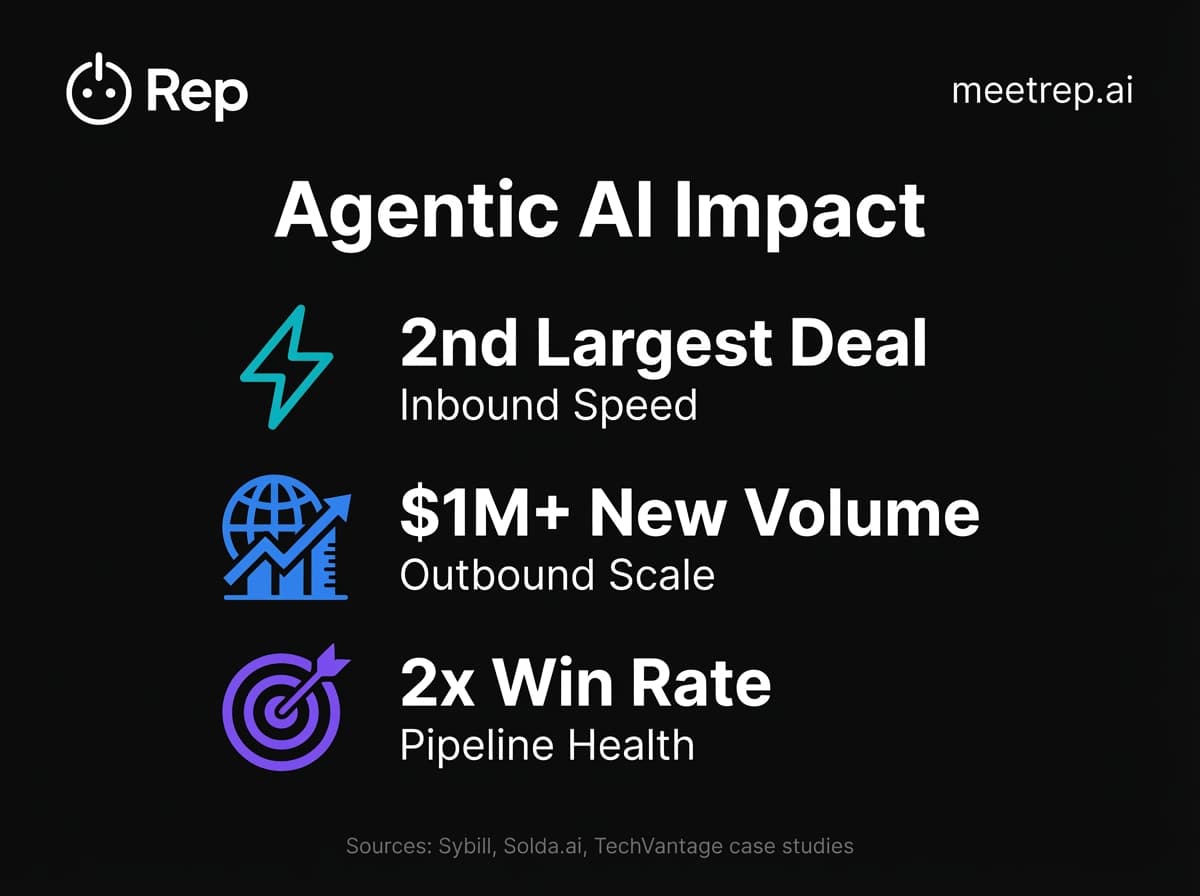
Sybill, an AI sales tool, faced a common problem: they couldn't staff their website 24/7. But their buyers were global. They implemented Rep (via ServiceBell) to handle inbound traffic.
On a Friday afternoon, a prospect from a conference visited their pricing page. Instead of a chatbot form asking for their email, they were greeted by an AI agent ready to talk. The agent qualified them and kept the conversation going.
The result? On Monday, that prospect signed the second largest contract in company history. Without the agent, that lead would have gone cold over the weekend.
2. Outbound at Scale
tbi bank needed to engage 2 million customers across Southeast Europe. Humanly impossible. Even with a massive call center, you can't dial that many numbers effectively. They deployed a voice sales agent from Solda.ai.
The agent didn't just "blast" calls. It processed 10,000 leads per day, operating 24+ lines simultaneously. But crucially, it held intelligent conversations. The outcome was $1M+ in additional new business volume. This is the power of infinite scalability.
3. Pipeline Health & Scoring
TechVantage was stuck with an 18% win rate. Their reps were chasing bad leads, wasting time on prospects who were never going to buy. They used Optifai to implement predictive lead scoring.
By automating the qualification logic, they doubled their win rate to 36% and reduced their deal cycle from 60 to 47 days. The AI flagged the high-probability deals, allowing the human reps to focus their energy where it actually mattered.
The Missing Link: The Autonomous Demo
Most of the "AI for Sales" conversation focuses on getting the meeting (SDRs) or recording the meeting (Gong/Chorus).
But what about running the meeting?
This is why we built Rep. In my experience building sales tech, I realized there was a massive gap in the middle of the funnel. You have the lead, they clicked the link... now what?
Usually, they have to wait.
They have to wait for a rep to wake up. They have to wait for a calendar slot next Tuesday.
Common mistake: Assuming your demo video library is enough. It's not. Passive video doesn't answer questions. It doesn't handle objections. It doesn't say, "Let me show you how that specific feature works for your use case."
An autonomous demo agent joins the video room, shares its screen, and navigates the actual product. It's not a video; it's a browser session driven by AI. Gartner predicts that by 2027, 95% of seller research workflows will begin with AI—and I'd bet that 50% of initial demos will be delivered by agents too.
Implementation Guide (How to Avoid the $12.9M Mistake)
If you are ready to deploy digital workers, don't just flip the switch. That is how you burn your TAM.
The $12.9 Million Problem: According to Gartner, poor data quality costs organizations an average of $12.9 million annually. If you feed an AI agent bad data, it will make bad decisions—at scale.
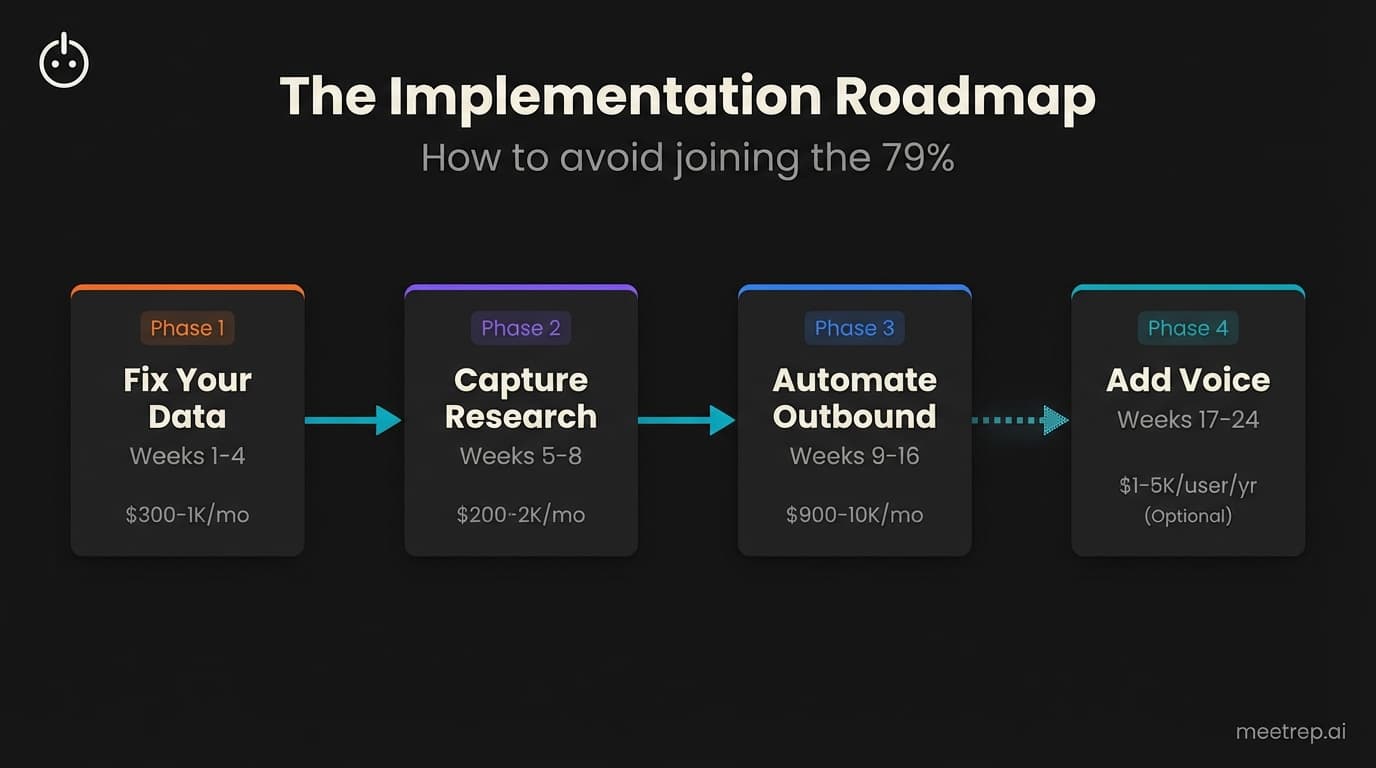
Here is the roadmap for a safe rollout:
1. Audit Data Hygiene
Before you buy an AI tool, clean your CRM. If your "Customer" field is wrong, your AI will try to sell to your existing clients. Awkward.
- Action: Run a deduplication audit. Ensure "Current Tech Stack" fields are populated if you rely on them for outreach triggers.
2. Define "Atomic Insights"
Don't just ask AI to "write an email." Train it to look for triggers.
- Action: Configure your AI to scan for funding news, hiring bursts, or tech stack changes. These are the atomic units of relevance. An email that says "Congrats on the Series B" is infinitely better than "I'd love to pick your brain."
3. Deploy "Digital Workers"
Assign agents to specific roles. Don't buy a "general AI."
- Action: Define the Job Description for your AI. Is it an "Inbound Qualifier"? Is it a "Demo Agent"? Treat it like a hire. Give it a quota. Measure it like a human.
4. Monitor & Calibrate
Keep a human in the loop.
- Action: At Rep, we use "inline validation" where the AI asks clarifying questions before it builds its playbook. For the first month, have a human manager review 10% of the AI's conversations.
I've been building in this space for years, and I've never seen a shift this fast. The move from "writing" to "doing" is happening right now.
My take? The companies that win in 2026 won't be the ones with the best prompts. They will be the ones that successfully integrate digital workers into their teams. They will stop treating AI as a tool and start treating it as headcount.
The "demo gap" is the next frontier. If you want to see what a digital worker looks like in action, see how Rep handles a live demo.

Nadeem Azam
Founder
Software engineer & architect with 10+ years experience. Previously founded GoCustomer.ai.
Nadeem Azam is the Founder of Rep (meetrep.ai), building AI agents that give live product demos 24/7 for B2B sales teams. He writes about AI, sales automation, and the future of product demos.
Frequently Asked Questions
Table of Contents
- The State of AI in Sales (2024-2026 Data)
- Generative vs. Agentic AI: Knowing the Difference
- Where AI Fails (The "Uncanny Valley" of Sales)
- 3 Proven Use Cases (with Case Studies)
- The Missing Link: The Autonomous Demo
- Implementation Guide (How to Avoid the $12.9M Mistake)
Ready to automate your demos?
Join the Rep Council and be among the first to experience AI-powered demos.
Get Early AccessRelated Articles
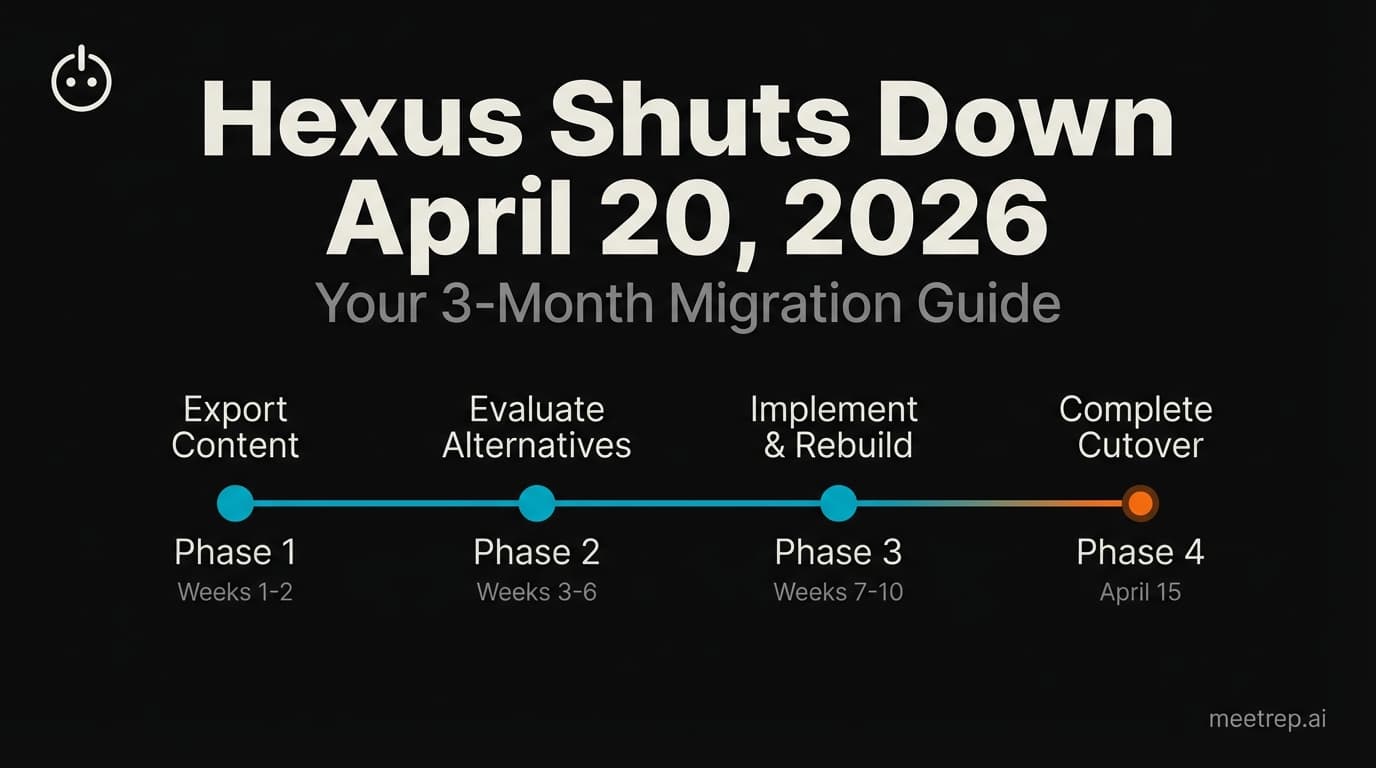
Hexus Acquired by Harvey AI: Congrats & What It Means for Demo Automation Teams
Hexus is shutting down following its acquisition by Harvey AI. Learn how to manage your migration and discover the best demo automation alternatives before April 2026.
Why the "Software Demo" is Broken—and Why AI Agents Are the Future
The traditional software demo is dead. Discover why 94% of B2B buyers rank vendors before calling sales and how AI agents are replacing manual demos to scale revenue.
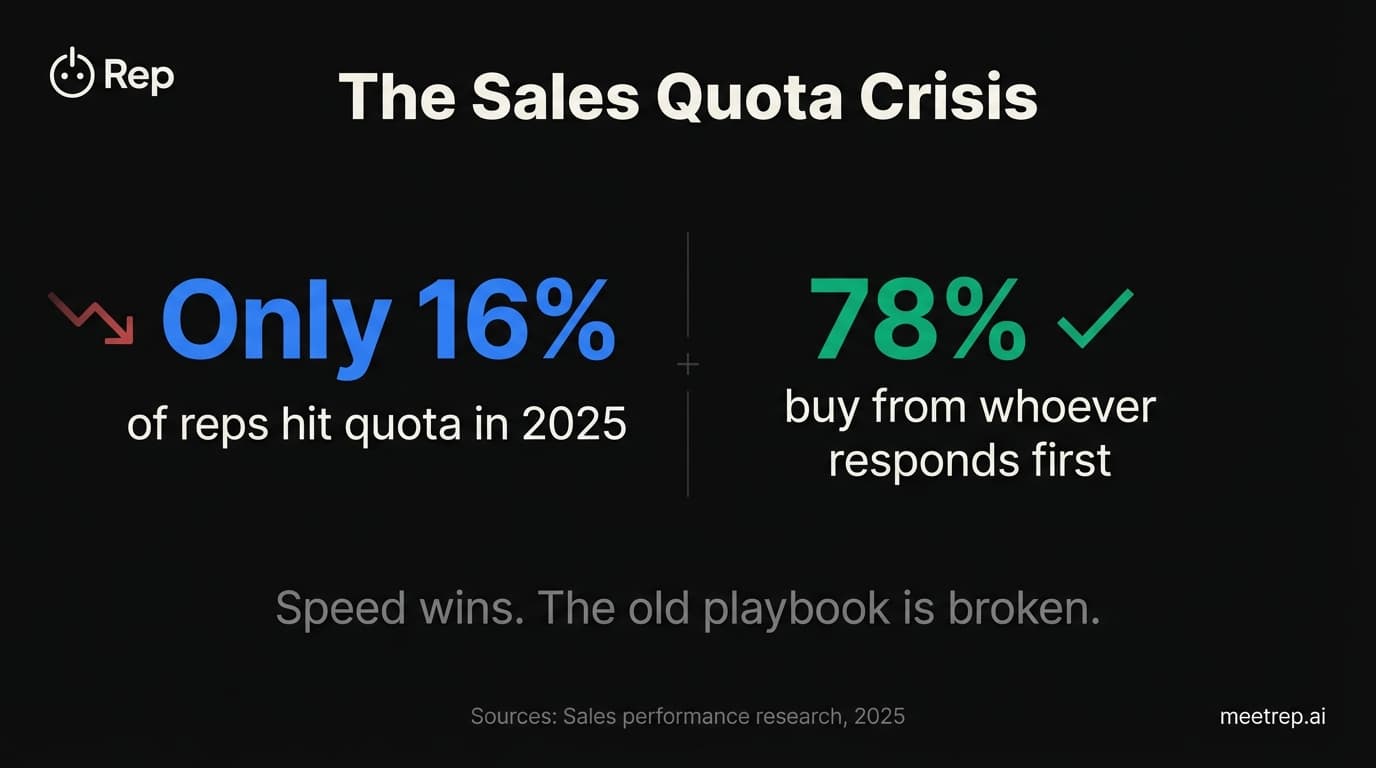
Why Autonomous Sales Software is the Future of B2B Sales (And Why the Old Playbook is Dead)
B2B sales is at a breaking point with quota attainment at 46%. Discover why autonomous 'Agentic AI' is the new standard for driving revenue and meeting the demand for rep-free buying.