Agentic AI vs Generative AI: What Sales Leaders Need to Know in 2026

Executive Summary
- Generative AI creates content when prompted. Agentic AI autonomously executes multi-step workflows to achieve goals.
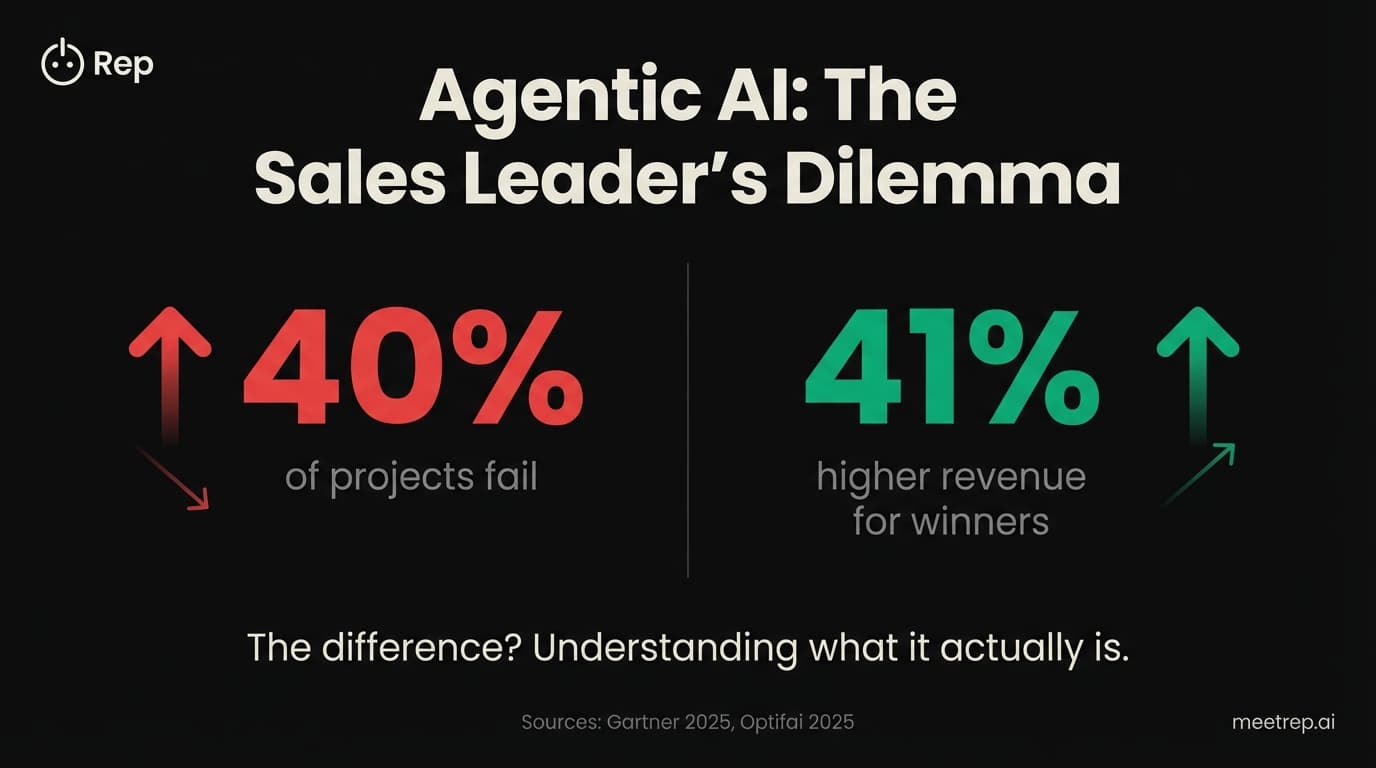
- 52% of enterprises have deployed AI agents in production, but 40%+ of projects fail due to poor planning
- Early adopters who get it right see 88% positive ROI and 41% higher revenue per rep
- The key difference: agentic AI acts, generative AI responds
- Success requires narrow focus, clear guardrails, and realistic expectations—not "boil the ocean" deployments
Everyone's talking about agentic AI. Most people are getting it wrong.
Here's the uncomfortable truth: 42% of sales and marketing professionals are already frustrated with their AI tools, according to ZoomInfo's 2025 survey. And Gartner predicts over 40% of agentic AI projects will be canceled by 2027 due to unclear value and inadequate planning.
But some companies are seeing 41% higher revenue per rep. Others are closing deals 38% faster.
The difference? Understanding what agentic AI actually is—and what it isn't.
I've been building AI sales automation tools since GoCustomer.ai. Now, at Rep, we're building an autonomous demo agent. I've watched teams waste months on the wrong approach. I've also seen what works. This is my honest breakdown.
The Real Difference: AI That Responds vs AI That Acts
Agentic AI is artificial intelligence that autonomously pursues goals with minimal human supervision. Unlike generative AI tools like ChatGPT that wait for your prompts, agentic AI receives an objective—"qualify this lead and book a meeting"—and independently plans, executes, and adapts to achieve it.
That's the core distinction. Generative AI answers. Agentic AI acts.
Think about how you use ChatGPT today. You prompt it. It responds. You prompt again. It responds again. You're driving. The AI is a passenger offering suggestions.
With agentic AI, you give the destination. The AI drives.
Key Insight: The shift from generative to agentic AI isn't about better language models. It's about giving AI the ability to take action in the world—clicking buttons, navigating software, making decisions, learning from outcomes.
Here's how the two compare across what actually matters for sales teams:
| Dimension | Generative AI | Agentic AI |
|---|---|---|
| Primary function | Creates content (text, images, code) | Takes autonomous actions to achieve goals |
| Human involvement | Requires prompts for each output | Operates with minimal supervision |
| Task complexity | Single-step content generation | Multi-step workflows across systems |
| Memory | Limited to conversation context | Maintains long-term memory across interactions |
| Decision-making | Responds to explicit instructions | Plans, prioritizes, adapts independently |
| Tool usage | Limited to built-in capabilities | Orchestrates multiple tools and APIs |
| Learning | Static after training | Improves through experience and feedback |
| Sales example | Drafts a prospecting email | Runs end-to-end outbound campaigns autonomously |
The market is moving fast. According to Gartner, 40% of enterprise applications will include agentic AI by the end of 2026. That's up from less than 5% in 2025.
And Google Cloud research shows 52% of executives say their organizations have already deployed AI agents in production. This isn't theoretical anymore.
How Agentic AI Actually Works (The 4-Step Process)
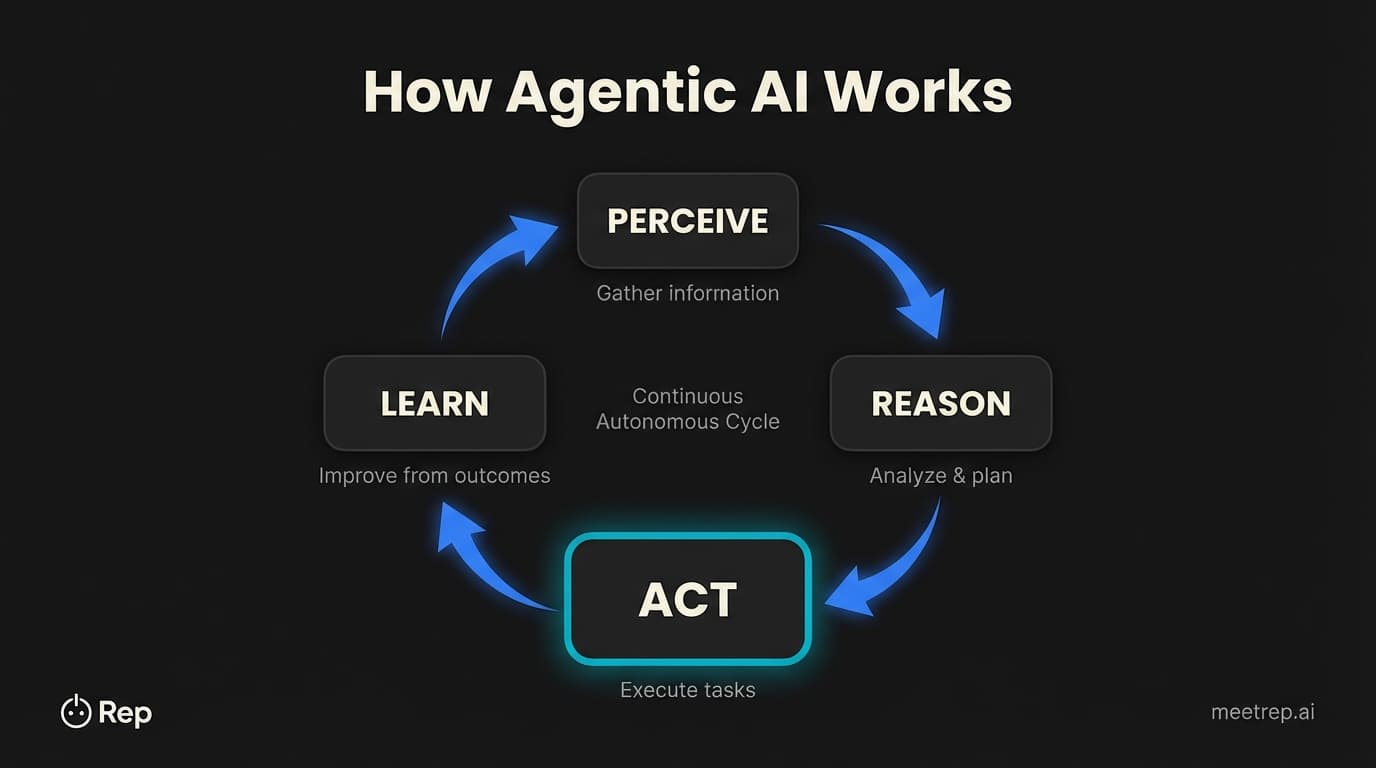
Agentic AI operates through a continuous cycle of perception, reasoning, action, and learning. Understanding this process explains why it can handle complex tasks that generative AI can't—and why it fails when any step breaks down.
The four steps:
- Perceive — The agent gathers information from its environment: CRM data, website traffic, prospect behavior, API responses, conversation context. It's constantly monitoring for triggers.
- Reason — Using large language models, the agent analyzes what it's perceived. It evaluates options, identifies the best approach, and breaks complex goals into executable steps. This is where the "intelligence" happens.
- Act — The agent executes: clicking buttons, filling forms, sending emails, booking meetings, updating records. This is the critical difference from generative AI—agentic AI does things in the real world.
- Learn — Based on outcomes, the agent refines its approach. What worked? What didn't? Memory systems store insights for future use.
At Rep, this is exactly how our demo agent works. It perceives when a prospect has questions (joins a video call). It reasons through which features to show based on the conversation. It acts by navigating the product and sharing its screen. And it learns which demo approaches convert best.
The Data: Multi-agent systems—where multiple specialized agents work together—outperform single-agent architectures by 90.2% on complex tasks, according to Anthropic research cited by Netcore. Architecture matters.
The velocity is remarkable. KPMG found that AI agent deployment quadrupled from 11% to 42% of organizations in just two quarters (Q1 to Q3 2025). When something moves that fast, you're either ahead of it or behind it.
Why 42% of Sales Leaders Are Frustrated (And What to Do About It)
Honestly, let's talk about the problems. Because if we don't, nothing else in this article matters.
ZoomInfo's 2025 survey of over 1,000 go-to-market professionals found 42% expressing dissatisfaction with AI tools. Their complaints? Data quality issues. Security concerns. Hallucinations.
Sound familiar?
The frustrations I hear from sales leaders fall into predictable patterns:
TAM Burning. One company I spoke with burned through their entire prospect database in two months using an AI SDR. 80% of messages were ignored. 20% of recipients unsubscribed. That's not automation—that's accelerated self-destruction.
Demo vs Reality Gap. "We see the demos... But when you actually try to build one? It gets stuck in a loop. It hallucinates." That's a direct quote from a practitioner on Medium. The gap between vendor demos and production reality remains massive.
Agent Washing. According to Security Boulevard, "Most current agentic systems are glorified wrappers—task orchestrators stitched together from APIs and LLMs." Many vendors are just relabeling chatbots.
Common mistake: Treating AI agents like magic. They're not. They're software that requires setup, guardrails, clean data, and realistic expectations. Skip any of those, and you're part of the 40% failure stat.
Here's what the data says about failure rates:
- Gartner predicts over 40% of agentic AI projects will be canceled by 2027 due to escalating costs, unclear business value, or inadequate risk controls
- Forrester warns that 75% of firms building their own "aspirational architectures" will fail
- S&P Global found that 42% of companies abandoned most AI initiatives in 2025—up from 17% in 2024
Gartner analyst Anushree Verma put it bluntly: "Most agentic AI projects right now are early stage experiments or proof of concepts that are mostly driven by hype and are often misapplied. This can blind organizations to the real cost and complexity of deploying AI agents at scale."
So what separates the winners from the 40% that fail?
What Actually Works: Lessons from Companies Getting It Right
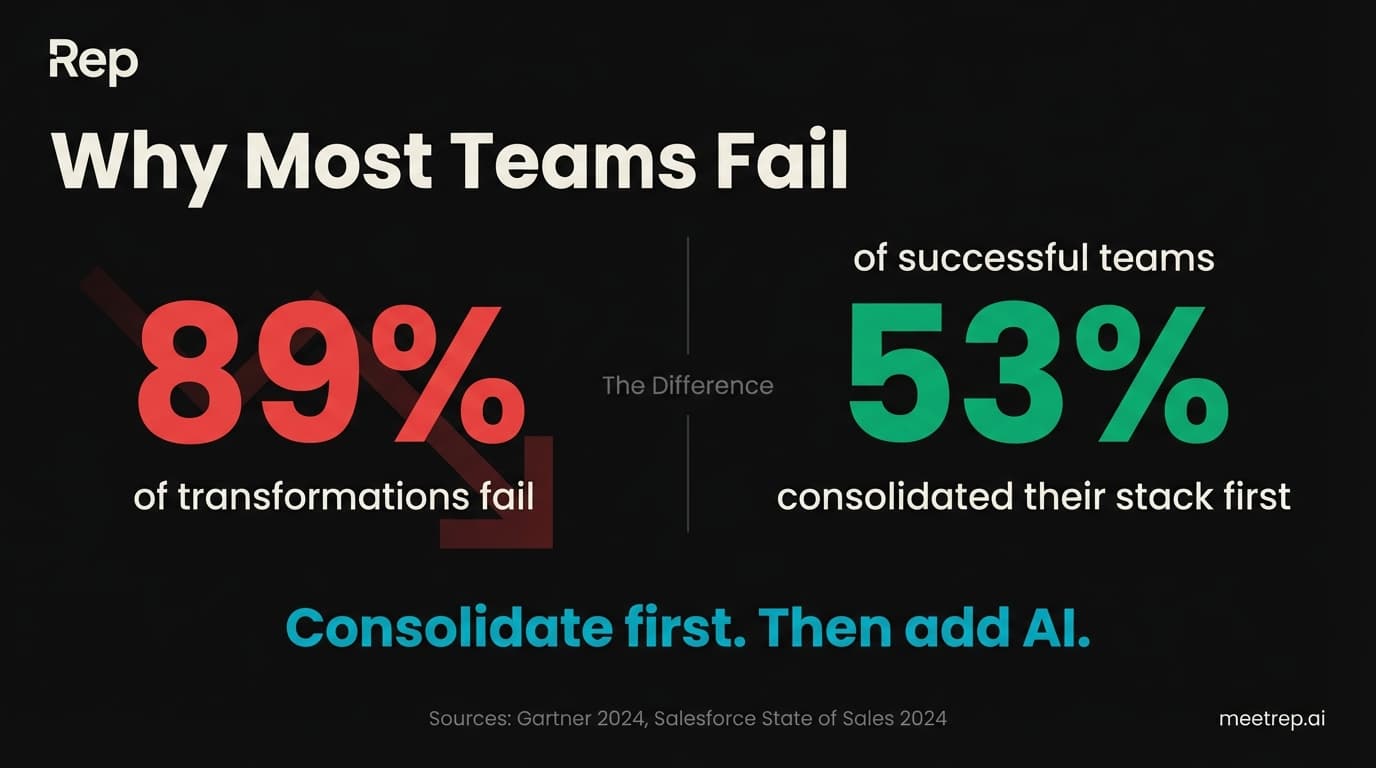
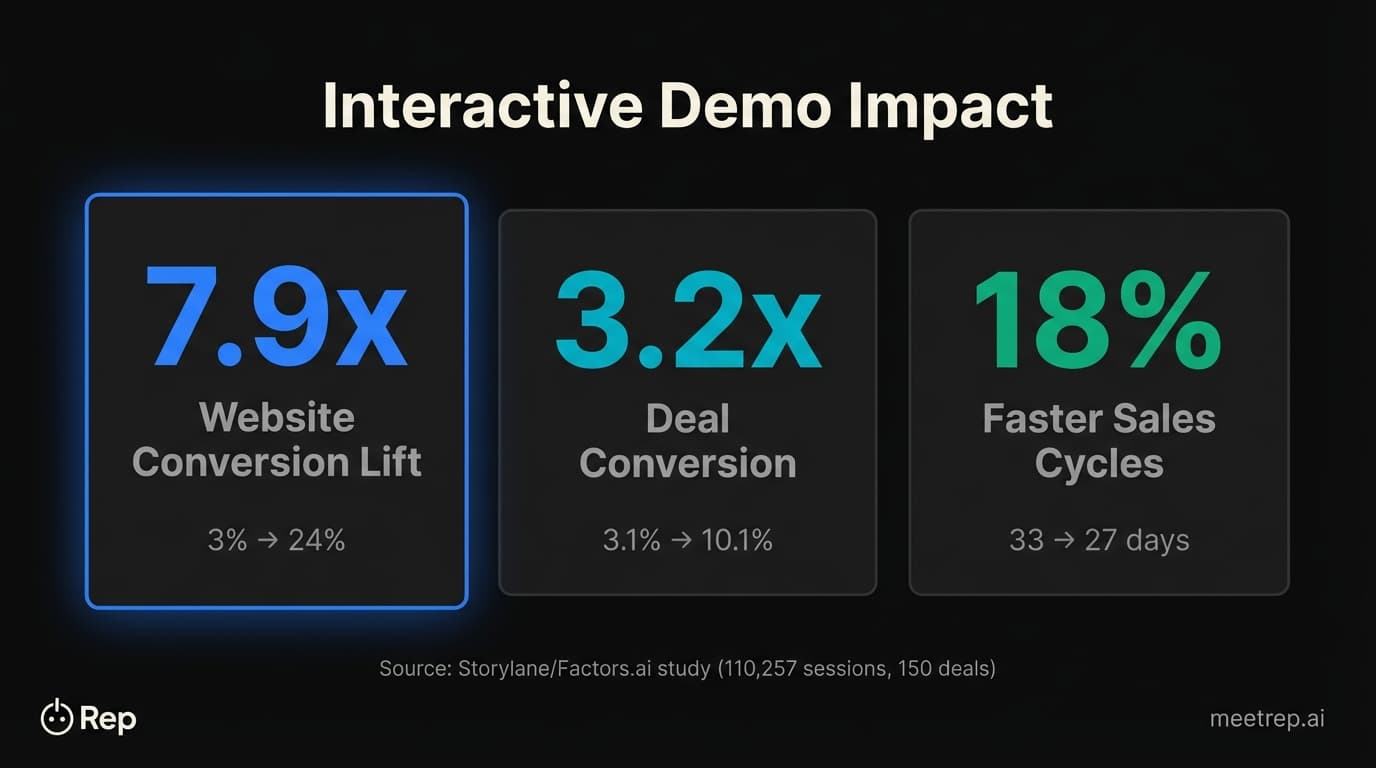
Not everyone is failing. And the pattern among winners is clear.
SaaStr replaced their 10-person sales team with 20 AI agents—and maintained revenue. According to Lenny's Podcast, they went from 7,000 to 70,000 emails per month. 15% of their London event revenue came from AI-generated outreach.
But here's what matters: they didn't try to automate everything. They focused on a specific workflow (outbound event promotion) with clear metrics.
Walmart uses Pactum AI for supplier negotiations. Results? 64-68% deal closure rate and 1.5-3% cost savings. Their fulfillment unit costs dropped 20%. Again—narrow focus, clear metrics.
Carnegie Learning deployed Salesforce's Agentforce for account research summaries. They cut research time by 92%—from 1 hour to 5-10 minutes per account. Specific task, measurable outcome.
OpenTable got 73% of customer queries handled autonomously within three weeks of deployment—a 50% improvement over their previous tool.
Key Insight: Every successful deployment I've seen shares three traits: narrow scope (one workflow, not "all of sales"), clear metrics (time saved, conversion rate, cost reduction), and appropriate guardrails (humans in the loop for edge cases).
The ROI data backs this up. Google Cloud research shows 88% of early adopters report positive ROI, compared to 74% average across all organizations. The early adopters aren't just lucky. They're focused.
And the productivity gains are real. According to Optifai's benchmark, AI-augmented sales reps achieve 41% higher revenue per rep ($1.75M vs $1.24M) with 18% fewer activities. That's not marginal improvement. That's a structural advantage.
The Honest Assessment: Is Your Team Ready?
Before you buy anything, answer these questions honestly.
Is your data clean? An IBM practitioner said it best: "AI does not fix your mess, it exposes it." If your CRM is a disaster, agentic AI will make it a faster disaster.
Do you have a specific bottleneck? "We want to use AI for sales" isn't a strategy. "We want to reduce time-to-demo from 72 hours to instant" is. The more specific, the better.
Can you define success metrics? If you can't measure it, you can't improve it—and you can't justify the investment when leadership asks.
Will your team actually use it?Gartner predicts that by 2028, AI agents will outnumber human sellers by 10X. But here's the kicker: fewer than 40% of sellers will report that AI agents improved their productivity. Adoption requires buy-in.
What we learned building Rep: The teams that succeed treat AI agents like new hires, not magic buttons. They train them (with real product knowledge), set clear boundaries (guardrails on what they can and can't do), and monitor performance (reviewing sessions, catching errors). The teams that fail deploy and disappear.
Here's my honest take: if you're not ready to invest time in setup, training, and ongoing refinement, you're not ready for agentic AI. Wait six months. The tools will be better and your data will be cleaner.
But if you're ready—and you pick the right use case—the upside is substantial.
Where to Start: A Realistic Framework
Based on what I've seen work, here's a practical approach:
Step 1: Audit your bottlenecks. Where do deals actually stall? Common candidates: demo scheduling (too slow), initial qualification (too manual), follow-up (too inconsistent), CRM updates (never happen).
Step 2: Pick ONE. Not two. One. The companies that fail try to automate their entire sales process. The companies that win automate one workflow and nail it.
Step 3: Choose tools that match the bottleneck. Different agents for different jobs:
- Outbound prospecting: 11x.ai, Artisan (email and voice)
- Demo delivery: Rep (live, visual product demos with voice)
- Customer support: Sierra, Salesforce Agentforce
- Negotiation: Pactum AI
Step 4: Start with bounded autonomy. Don't give agents free rein. Start with human-in-the-loop: the agent does the work, but a human reviews before sending. Once you trust it, expand the boundaries.
Step 5: Measure ruthlessly. Before/after on your specific metric. No hand-waving about "improved efficiency." Hard numbers.
| Approach | Failure Rate | Why |
|---|---|---|
| "Boil the ocean" (automate everything) | ~75% | Too complex, unclear value, no single owner |
| DIY from scratch | ~75% | Underestimate complexity, cost escalates |
| Focused single workflow | ~15-20% | Clear metrics, manageable scope, faster learning |
| Platform + customization | ~25-30% | Trade flexibility for proven architecture |
Why do I think demo automation is a smart starting point? It's high-value (every demo costs rep time), high-frequency (you do demos constantly), and measurable (demo-to-meeting conversion, time-to-demo). And unlike email blasts, you're engaging warm traffic—people who already want to see your product. No TAM burning.
That's why we built Rep as a live demo agent. It joins video calls, shares its screen, navigates your actual product, and answers questions in real-time. It's agentic AI applied to a specific, high-leverage bottleneck. (If you want to see it work, book a demo—ironically, with our AI.)
The shift from generative AI to agentic AI is real. And it's happening faster than most people realize—52% of enterprises already have agents in production.
But most projects will fail. That's not pessimism. That's the data.
My bet? The winners won't be companies that deployed the most AI. They'll be companies that deployed the right AI on the right bottleneck with the right guardrails. Specific. Measured. Realistic.
If demos are your bottleneck—and for most SaaS companies, they are—Rep can help. We built an autonomous agent that handles live product demos 24/7, so your team focuses on the conversations that close deals.
But whatever you choose, choose deliberately. The 40% failure rate isn't fate. It's avoidable.

Nadeem Azam
Founder
Software engineer & architect with 10+ years experience. Previously founded GoCustomer.ai.
Nadeem Azam is the Founder of Rep (meetrep.ai), building AI agents that give live product demos 24/7 for B2B sales teams. He writes about AI, sales automation, and the future of product demos.
Frequently Asked Questions
Table of Contents
- The Real Difference: AI That Responds vs AI That Acts
- How Agentic AI Actually Works (The 4-Step Process)
- Why 42% of Sales Leaders Are Frustrated (And What to Do About It)
- What Actually Works: Lessons from Companies Getting It Right
- The Honest Assessment: Is Your Team Ready?
- Where to Start: A Realistic Framework
Ready to automate your demos?
Join the Rep Council and be among the first to experience AI-powered demos.
Get Early AccessRelated Articles
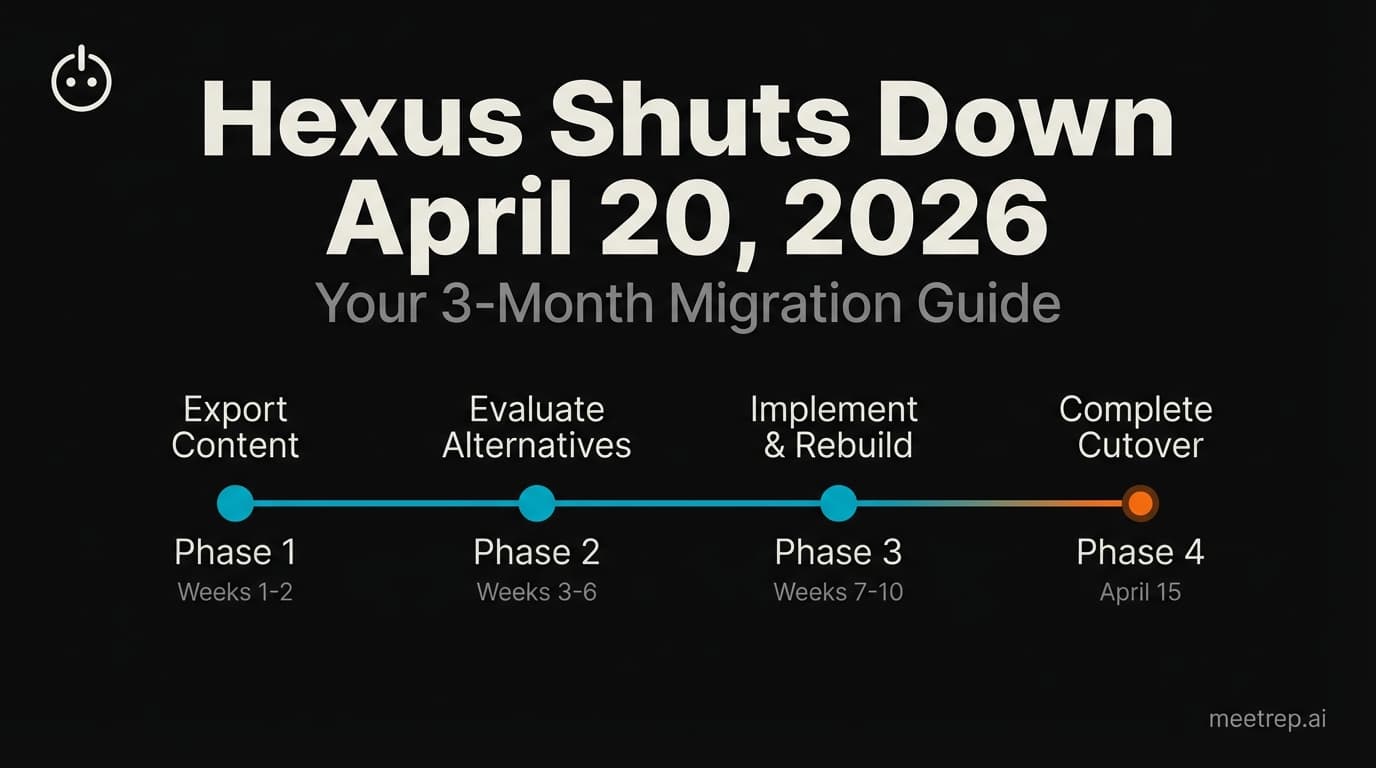
Hexus Acquired by Harvey AI: Congrats & What It Means for Demo Automation Teams
Hexus is shutting down following its acquisition by Harvey AI. Learn how to manage your migration and discover the best demo automation alternatives before April 2026.
Why the "Software Demo" is Broken—and Why AI Agents Are the Future
The traditional software demo is dead. Discover why 94% of B2B buyers rank vendors before calling sales and how AI agents are replacing manual demos to scale revenue.
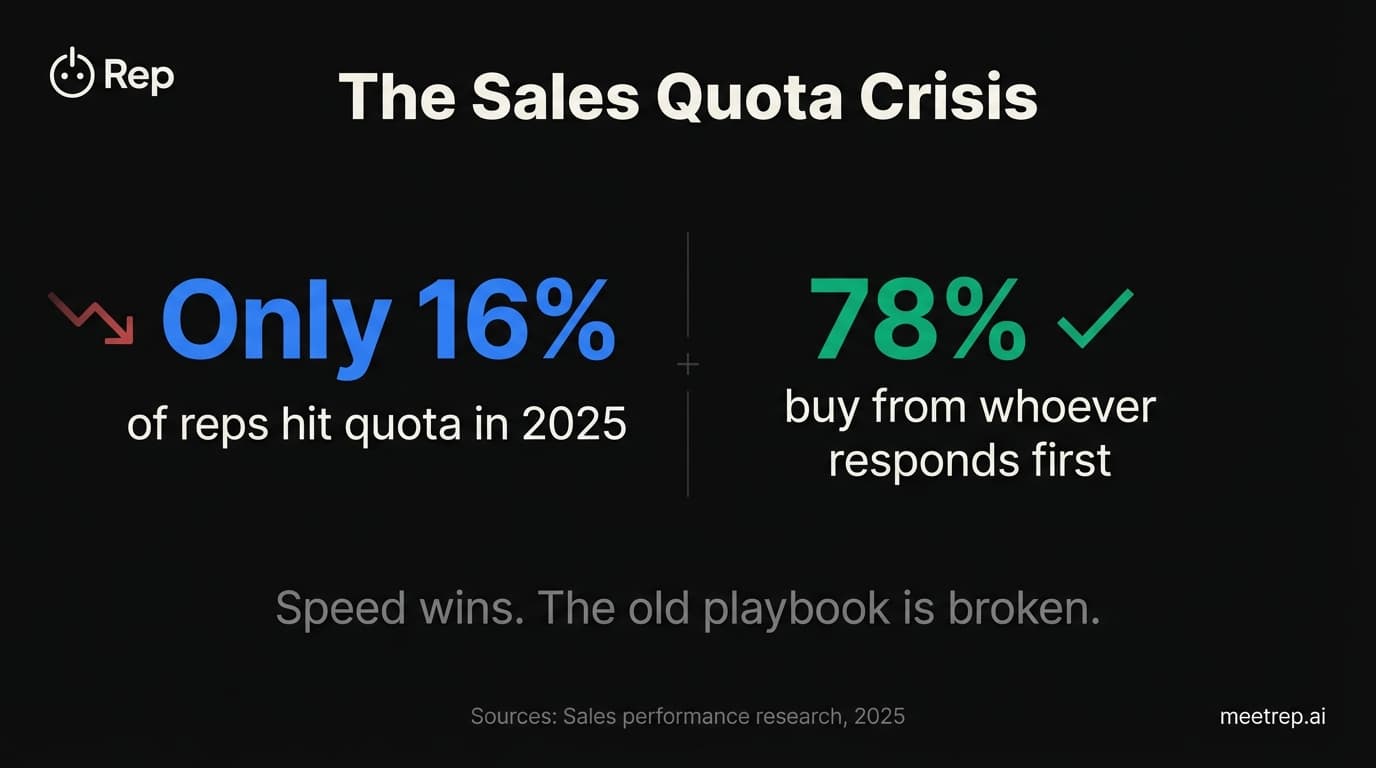
Why Autonomous Sales Software is the Future of B2B Sales (And Why the Old Playbook is Dead)
B2B sales is at a breaking point with quota attainment at 46%. Discover why autonomous 'Agentic AI' is the new standard for driving revenue and meeting the demand for rep-free buying.